Rolex Sells $13 Billion Per Year (Here's How)
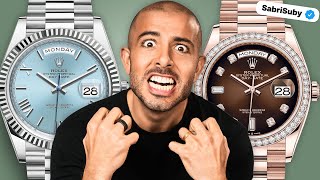
Rolex sells $13 billion a year by starting with direct response marketing, not brand prestige. In the 1920s, founder Hans Wilsdorf ran lead-gen ads with swimmers and fishbowl demos to build distribution, then scaled into the luxury brand we know. The lesson: find what sells first, improve the product from real feedback, then invest in brand.
Questions this video answers
$13 billion
30,000 employees
Over 1,800 authorized retailers worldwide
810,000 watches per year
25% of all Swiss watch sales
Chapters
Today I want to share a story with you about this guy, the $13 billion orphan founder of Rolex, Hans Wilsdorf. But first, we need to put an end to the debate of brand versus direct response marketing forever. So firstly, what is direct response marketing? Well, in my opinion, direct response marketing is any marketing campaigns or ads that you're running that elicits a direct response from your audience where you are making an ask, whether that's to generate a lead or to make a sale. And you have some kind of tracking mechanism attached to that ad so you can find out what is working and what isn't working. Where brand marketing is where, where you're using ad dollars to make an investment and build brand equity, you're basically delaying your ask. And traditionally, brand marketing is like you're putting out cute jingles or slogans and aspirational images of ads and there is zero tracking mechanism at all attached to those ads to find out the effectiveness of what is working and what isn't working. Now, the biggest mistake that I see businesses make is when they try and mimic and act like big brands when they don't even have a brand. They have a logo, they have a and a basic business card and they call that a brand. That is not a brand, that is a logo. And they look at all of these big brands and what they're doing and their advertising campaigns and they're like, well, those guys are really big. I should just copy what it is that they're doing. And then they do that and nothing works and their business dies. And it's because they're trying to be a big brand and not really look at how do these big brands actually get started? Did they start by running really expensive billboards and TVC campaigns and working with like huge celebrity influencers, or was it more grassroots? And that's the biggest mistake that they make is that they try and be like these big brands. They try to run huge billboard campaigns, try to work with celebrities and influences and spend a lot of money on building a brand when they don't have distribution yet. Where, if you have a look at most of these big brands and how they get started, is that how they get started? Do they fork out all of this money and just cross their fingers and hope and pray that this ad campaign works, or do they start a little bit more scrappy, a little bit more grassroots and try to get some momentum and then build a brand later on? Well, I'm going to answer all that and more in this video, but first let's get back to Rolex. So Rolex is one of the biggest luxury brands in the world and unquestionably the number one watch brand in the world, no matter how you look at it. Here are the stats.
$13 billion in revenue, 30,000 employees, over 1800 authorized retailers all around the world. They 810,000 watches per year. And Rolex accounts for a bonkers 25% of all Swiss watch sales.
There is a long, long list of celebrities that can be seen wearing Rolex in terms of like brand ambassadors that they have mutually exclusive contracts with. We're talking people like Roger Federer, Tiger woods, the elite, the best of the best in their known categories and their sporting arenas. Now there's lots to talk about in terms of the list of celebrities that can seen wearing Rolex. And they like to keep it completely under wraps whether they send watches to those celebrities or if they just buy them and wear them at their own account. But here is the list.
Roger Federer, Tiger Woods, Rihanna, Barack Obama, Dwayne the Rock, Johnson, Charlize Theron, Warren Buffett, Mark Wahlberg, Will Smith, Reese Witherspoon, Robert Downey Jr. Jennifer Aniston, Kevin Hart, Jason Statham, Daniel Craig, Ellen DeGeneres, Sofia Vergara, Victoria Beckham, Jennifer Lopez, Emily Ratajkowski and Jennifer Garner.
And the list goes on and on and on. But let's take a look at how it all began.
In 1927, Hans heard about a woman from London named Mercedes Gleicher, a British professional swimmer who was attempting to swim across the English Channel.
Now when he heard about this, he's like being the marketer that he was, saw the opportunity to basically partner with her. He gave her a Rolex to wear.
Around her neck and swim across the English Channel.
And she didn't make it all the way, but nonetheless, basically, Han started to run ads in the Daily Mail and.
This was the ad in the Daily Mail. Rolex introduces for the first time the greatest triumph in watchmaking. Rolex Oyster, the wonder watch that defies the elements. And this ad is a direct response.
Ad, as you can see down below here.
Send for this colored brochure. It's free.
So they're doing lead generation here. This is a direct response ad. They're trying to generate leads. They're not just putting out ads and hoping and praying that people see their brand and actually go into a retail shop and ask about it. They're generating leads and then they've got a back end list that they can mail. Any new watches that they launch, they can show people where their retailers are. And they can really build that relationship with that end user and build their brand story. But unless they had some kind of mechanism attached to it, then it's just brand advertising. But what you can see right here is one of the biggest luxury brands in the world using direct response marketing to build a list and start to build a relationship with that list. This worked like crazy, and Hans began to really start to ratchet up and scale his ad spend. Hans then brilliantly used fishbowls as like an element in retail shops where he had the Rolex Oyster in a fishbowl showing that it was waterproof. And this was really the first waterproof watch, really, that came out on the luxury market. That type of marketing is very demonstrable. And it's what you see in a lot of direct response ads. It's what you see in infomercials, where you're really showing the wow factor of what that element was and you're giving your product a talking point. You're not just showing the brand and saying, hey, like, we exist. This is really high quality stainless steel or gold. You're actually using what we call a unique mechanism and attaching that to your product and then not just sitting it on the retail shelves and just hoping it will sell, but actually setting up a retail display where your product is actually in a fishbowl. It gets people going, wow, like, what is this all about? It gets people talking about it and actually showing the mechanism behind your product itself. And Rolex really started to get a lot of attention and started to build their brand around their watches being used in extreme elements, whether it was swimmers or pilots going over the Himalayas. And then they slowly transitioned from that to being known for their incredibly high quality.
In 1928, he started a full blown influencer marketing campaign and worked with top British model Evelyn Lay. He ran ads with her hand in a fishbowl wearing a Rolex.
This went viral. And then he began to even run more influencer campaigns. He partnered with a pilot for the.
First expedition to fly over Mount Everest, flying six miles high in the Himalayas in 1933 wearing the standard Rolex Oyster Snow White watch.
Now, it would be very easy for a business just to look at Rolex as this huge luxury brand that they are today and just say, hey, I want to do what they're doing. They look at the partnerships with Roger Federer or sporting organizations like the tennis and the golf and think, yeah, I just need to do what these guys are doing and run big billboards with just my logo on it and build my brand. But if you really look at how the number one watch brand in the world got its start, it had its roots in direct response. It used influencer marketing campaign and then hijacked that attention and ran ads in the Daily Mail with a lead generation ad to really build their brand. And then over the years they just kept on investing in their brand and in their product so that they could transition into really building this huge, huge aspirational brand that they have today. Or they get confused and they think, oh, this business is only so big because their product is so great. They have the best product. And if you talk to watch experts, that's a huge, huge thing. For debate around Rolex having the best quality watches, but in terms of having the biggest watch brand, it's really unquestionable. All their metrics are off the charts and dwarf any of their closest rivals. In fact, they are the only watch company in the top 10 list of luxury brands worldwide. And they started to use that revenue to invest in their business and invest in their product, making it better and iterating. And then they developed the first ever self winding watch. And over the years they just kept that cycle going where they would run lots of marketing, build their business and then just keep on investing in building a great product. Now they're the only watch company still to this day that make their own gold. And their headquarters outshines the security of even the most maximum security prisons in the world. And here is a quote from Hans himself.
Only great marketing is needed to make a company successful. Hans Wilsdorf.
That's coming directly from the horse's mouth. Somebody who has billed one of the most iconic brands ever in history is saying that the emphasis is on marketing. That if you get the marketing right, then basically everything stems from that. And you can have the resources to go and keep on making those aggressive investments in creating the best product. But if you're looking at through the inverse way and you're trying to first create the absolute best product that exists before you have any distribution, this is the number one reason that I see businesses die. People think that if you have a great product then it should just sell itself. And what I have learned firsthand from generating my clients billions of dollars and really helping people go zero to one when they're just getting started, is that if you don't have distribution, then you simply don't have a business. And that's just the number one thing, is that most businesses, they can never ever just get one distribution channel dialed in and that causes their business to Die. A lot of them have great products. But if you don't have great distribution, then you simply don't have a business. You just have a product or you just have a service. Because poor sales rather than poor product is the number one reason why businesses fail. Because building a brand is a byproduct to distribution. If everybody's talking about you, if everybody knows about you, then by default you have a brand. But in order to have everybody talking about you and everyone knowing about you, you need to have a business model where the economics stack up. Where you can go out there and you can buy attention on Google or Facebook or YouTube or TikTok or billboards or radio or Spotify or whatever it happens to you can still make enough profit to keep that feedback loop going where you can keep on getting distribution. But if you look at it the other way, and if you just have a great product, but you're never able to get the distribution right because your economics don't stack up, then no one will talk about you. And then by default you don't have a brand. The whole debate around brand versus direct response marketing, that can go on forever. Now I believe that there is a time and a place for both of these where it's direct response marketing may be emphasized in the beginning where you're first trying to get things dialed in because that's where you can put ads out, you can find out what sticks, what is converting, what are the winning hooks, where are you getting the most roas so that you generate enough profit in the business to keep the business alive and you actually have customers. You can just dial in that one channel and use that feedback loop to keep iterating not only your messaging but also your product. Because you're using that distribution to get your product or certain out into the hands of your customers and then you're collecting that feedback directly from the marketplace to see what it is that they like and what they don't like. And then you've got enough surplus of cash to make the modifications to your product and then keep on advertising and keep iterating the product itself to then over time you earn the right to build a brand where people are like that is an awesome product because it's self funding your way to find product market fit and to really create a product that is exceptional. Where if you look at starting out, if you're going to be spending an enormous amount of money on building a brand and sitting around and holding hands with a bunch of branding experts as you burn white sage and pray to the branding gods that this business stacks up, I have learned firsthand that that is a very painful road to walk down. And the business graveyard are littered with bodies of businesses that have sexy brands but don't have any distribution. Where it can be said that as you keep on building a business that those long term investments that you make in building a brand, in building, you know, something that people actually talk about and they feel something when they see that there is incredible value in that. But unless you get your distribution right, then none of that stuff will ever stack up. So there is a time and a place and I really believe that it doesn't need to be mutually exclusive. There is really a hybrid between you can actually run ads and make an ask and make them be profitable and having tracking mechanisms in place to find out what's working and what's not and still inject brand values and still foster brand equity and have a long term brand that you are building up as you go out there and convert attention into money. So wherever you are on your journey, I urge you just to really look at thinking about how do you make distribution the central part to your business? How can you have an economic model in your business that supports you to be able to go out there and buy ads on whatever advertising channel that you please and to make that exercise profitable. But a word of warning, what you really want to do when you're beginning is just find one channel and get that one channel really dialed in before you start to add more channels. Because the more channels that you add, the more complexity and the higher the chances of everything going to hell in a handbasket. Then once you get that one channel right and it's dialed in and you're making investments in your product, in your customer experience, then you start to sprinkle in some and more of that branded advertising with tracking mechanisms, with direct response and being able to really go out there and build a brand that stands the test of time. So wherever you are on your journey, I hope this message helps. Hey guys, if you're enjoying these videos, please like subscribe and hit the bell button as we're dropping a video like this every other day on YouTube. And if you've got any questions, questions, just leave a comment below with hashtag heysubrey and I will do my best to get to it.










