Sabri Suby On Ecommerce Masters With Ben Gothard (full interview)
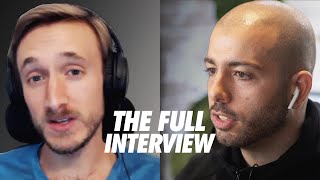
Sabri Suby built King Kong from sales into a major marketing agency by focusing on psychology over technology. He uses the halo strategy to gather market intel and design offers, and argues that mindset and grit matter more than any tactic for long-term success.
Chapters
Founder Sabri Subhi joins me now in the studio. I really look at business as an incredible vehicle to really, like, make good and make change in the world.
Ladies and gentlemen, welcome to another episode of E Commerce Mastery. I'm your host, Ben Gothard. And today we have the honor of speaking with a gentleman who has driven billions of dollars of business and online sales. The man, the legend, the one and only Sabri Subri. How you doing today, man?
Yeah, I'm good. Thanks for having me.
Absolutely, man. I appreciate you coming on the show so much and it really means a lot. It's truly an honor to be speaking with you today. And yeah. So I would love to really dig into your story of how Sabri Subi became the man, the legend and, you know, how you became you.
Sure. Look, that's a very loaded question. But I got my start when I was 17 in sales. That was my kind of first full time gig. I was selling ink cartridges over the phone in Byron Bay, Australia, a little beach town. And that was a real cold, hard slap to the face. I did that. I sucked really, really badly in the beginning. I figured out the sales game and committed to that. And then I ended up traveling the world selling everything that you imagine, door to door, face to face, over the phone, one to one, one to many in so many different industries. And I was always the number one top salesperson at every company that I ever worked. And that was kind of like I fell down the rabbit hole of business and entrepreneurship from sales being the gateway drug into that, so to speak. And then I came back to Australia. I've run a few businesses, I've run a few into the ground. I've built some, I've sold some. And in all of those different businesses, I was always tasked with how do we get new customers. That was always the pressing burning problem as it is for most business owners. And really started to kind of focus in on mastering that and finally solving that, regardless of what the business that I was in. And that's kind of what led, what has led me to be in the position I am now with King Kong. And I really look at business as a vehicle for change and being able to help people and change their life and give them translation transformations that would not be possible if it wasn't for the ability to be able to ring the cash register in a business and create customers. And that's really like what my focus is.
So I feel like there's a pretty big leap between being tasked with acquiring new customers and then growing your business to Doing billions of dollars in sales and being, I believe, the 17th fastest growing company in the country of Australia. Like, how did you bridge that gap? What were the fundamentals, the concepts, the principles that got you to that point?
Yeah, well, look, just to be clear, we don't do $1 billion of sales. We've generated $1.33 billion in reported client revenue for our, for our clients. In terms of the leap that was made in terms of, you know, going from zero to yes, being the 17th fastest growing business in Australia and the number one fastest growing agency, it's like, like, it's like any entrepreneurial background, like it's checkered with so many failures, like so many late nights, so much like work, you know, you get celebrated in public, in public for what you practice really intensely in private. And like, while it would be easy to say, like, I'm this overnight success and I just started my business in four years, you know, we're doing millions and millions of dollars and all of that kind of stuff, the reality of it is all of the success that I'm seeing now, all the seeds that I planted many, many years ago. So as I've been at this since I was 17 years old, but for me it was really the transition from doing one to one sales and then figuring out how to take that message that I was delivering over the telephone or knocking on somebody's door or speaking to a crowd and then being able to kind of capture that and automate it and then basically get leverage from that sales message and really scale it up. So that kind of led me, you know, I tried everything, like from all the gurus and the courses and the seminars and the books and all of that kind of shit. And it left me dead broke, right, and frustrated. And in a place where I was trying to, like, I was worried to kind of put food on the plate. And it was only once I put all of that stuff to bed, right from all of these so called gurus. And I just went back to the fundamentals of what I'd seen success with when I was actually on the front lines in the cold face of capitalism, getting brutal, bruised and bloody from the rejection and what I actually needed to say on the telephone to a prospect to get them to a point where they would transact with me, with the complete stranger who had cold called them and then asked for their credit card over the telephone. And then I took that message and those principles of exactly how I would open up, how would I get their attention, how I would build rapport, how would I agitate the problem and then get them to a point where they were actually willing to transact. And then I just basically applied that to marketing. And then I figured out, whoa, whoa, whoa, Like, I'm not the only one that's figured this out. There's like Robert Collier and these guys from hundreds of years ago, these kind of the grandfathers of advertising, so to speak, that a lot of them were door to door salespeople, selling ovens door to door and all kinds of crazy shit. And then they figured out how to do marketing. Right? So then I started to unpack that and figure out that I wasn't the only one that had traveled down this path. And really since then, it's been a journey in forging mastery and studying, being a student of, of markets and of people, not just of how to sell something.
It almost seems like after trying what everybody else said, you went back and applied a first principles approach to it where you figured out, okay, at the most basic fundamental level, what is working. And it seems like you then built upon that foundation and then scaled that up. So I'm curious to know, what were those fundamental principles? Like, what was that message that is uniquely yours that you built at that, at that, in that space?
Yeah, it really was, you know, boiling things down to its first principles and just looking at like, okay, forget what people say that you should do, but like, what should you do? Right? And the only way that you can find that out is by trial and error. So really I studied like human psychology and human behavior, you know, like the madness of crowds and all of these social science studies around how people act and how have they acted over the years. Right. And what has changed? Because a lot of people obsess over the technology or the, you know, the new text message abandonment cart sequence when someone comes to your checkout and all these real tactical, shiny things. And unfortunately, unfortunately, we're in a day and age and especially in a place where in the business building market where we've reached boiling point of this mass hysteria, where everyone thinks it's the funnel, that's the thing that determines if you're successful. All you need is a funnel. All you need is the technology. What I've realized over the years is that it is very rarely the technology that is the deciding factor of whether something is going to work or not. And I'm not saying, like, technology is incredible and we use a lot of it in our businesses, in our funnels and all that kind of stuff, but it's not the determining factor, because if you get the marketing and the psychology wrong, you can't get the technology right. It doesn't matter. So I really chose to spend my time and energy in becoming a master of human psychology. And not just the technology or not just the latest ad hack or the new like channel and medium. I want to study people and then regardless of what that new medium is, I can move into that market. And I understand humans and I understand people and I understand human psychology and behavior. And I just apply those models and those mental advertising models that I've built over the years to whatever advertising channel it is that I choose to advertise on. And I will go out there and I will take the lion's share of that market.
So is that like a proprietary thing that you can't really go into or can we go into that or.
Yeah, like there's nothing proprietary about it. It's very unsexy and it's what a lot of people don't want to do. I've got this strategy called the halo strategy and it's basically how to just invade any market and find out exactly the conversations that are being had in that market and how to go and collect intel from your dream buyers and then pump up your marketing offers on Stero. And the only way to do that is by doing the hard yards and go find out exactly what are those pressing problems that are keeping your prospects up at night. So you really want to go online, you want to go to forums, you want to go to Reddit, you want to go to Amazon reviews, YouTube comments section and really start to have a look around at what are these problems that keep on popping up, that are keeping your prospects up at night, tossing and turning in a vicious sweat, unable to sleep until they solve these problems, right? And then doing the opposite of what most people do. Most people, when they start a business and say, for instance in the drop shipping space or whatever it might be, they'll be like, I think this product is cool, let me go and sell this product right? Or I experienced a pain point and this product solved that problem, therefore let me go and sell that right? And that's the wrong way to go about it. Really, you want to go. And people do that and they build substantial businesses, right? But realistically, what a true master does is they go out and they study the market first and they find out like, what are people saying about the best selling product in that market, right? What other things that they don't like about that product? What is it that they do like, right? Then going and looking at the second best competitor and the third best competitor and having a look at where the gaps are in what it is that they're selling and what the drawbacks are and what the positives are, and then creating a product or service that fills all of those gaps and is much better than the best product or service in that category and then aggressively marketing the shit out of that way, better than anybody else in that market. Because if you do what the best is doing, but you only do it better, then you by default become the best person in that market. So that's really like, there's not like, yeah, there's this secret tool that you just apply it, man, and your business is going to blow up. Like, you have to go out there and be a fanatic student of your market and of your customers.
Okay, so we've done the research, we've identified the serious problems, we filled all of the gaps with our product. How do we actually go about first understanding what exactly the top competitor in the market is currently doing and then out marketing the shit out of them at the level that will then by default make us the best?
Yeah, what do you have to do, the steps in between? Well, basically the first thing that you have to do is you have to find out who those competitors are. So you know, if you basically are for instance, in that market and you start to research that market and you start to go on blogs and forums, Facebook Pixels on those blogs is on those forums and they're gonna start serving you ads, right? So then you start, okay, clicking on the ads and you start buying everything that these people are selling you. Then you, you go have a look, use tools like Semrush, and you have a look at like, who's spending the most on paid search, who has the best organic rankings. Then you research the founders of those companies and you start to listen to podcasts and video interviews and find out how much revenue that you're doing. And you start to do some work to find out who the 800 pound gorilla is in that space. And then you basically find out exactly what they're doing. You buy from them, you speak to them, you do everything that you need to do and you basically create a better product and a better service and you find out where they're advertising and you advertise a better product with better marketing in that same channel, more aggressively, more often, more frequently, and create a better experience for your customers and you will win.
So is like, who's a better marketer than you? Like, who are you competing with at the level of marketing that you're at right now?
Look, I don't. I don't really look at it. It's not like there's this Hunger Games for marketing, and I'm in there competing and stuff. Right. You know, I am really like, we have a saying in direct response where, like, the, the. The control is the enemy. So the only thing that I'm really looking at doing is bettering what I am doing. Right? And looking at, like, okay, well, how well are these ads pulling and what revenue are they bringing in and what kind of customers are they bringing in? And, you know, how many successful customers am I creating in my business and then just going up against myself every single day and trying to beat that person. Right? So it's not like I'm not. I'm not really focused on being a better marketer than people. I'm focused on getting my clients and my students way better results than. Than anybody. And let. My success is really determined by the value that I create in my marketplace. So, like, the number that we talk about is the amount of revenue that we've generated for our clients, because it doesn't matter how much revenue that we're doing if our clients aren't doing lots of revenue. And so that's where, you know, in a matter of seven years, we've been able to, well, not even seven years, six years, is generate our clients, you know, $1.33 billion in reported client revenue. And it's well north of that. That's just the number that we'. Right. I know it's. It far exceeds that. And that's really what I focus on. Right. I don't. I don't just focus on how do I become the best marketer, but it's how do I create the most value? Because a byproduct of creating that value is that I will be able to get a percentage of that value creation in my marketplace. And that will, what, in the long term, will lead to my success?
So when you're studying people and other humans, what, like, what vehicles of study do you use? Do you read books? Do you. Do you study people who have been successful? Do you study history? What vehicles of study do you utilize?
Yeah, all of the above. So pop culture memes. Books, number one. Watched shows on Netflix, number one. Trending content for that year. You know, number one, influences. I want to see where the market is going and be a, like, you know, a student of people and a student of markets. So it's not just one avenue. Like, it's not just books. Or it's not just this, it's not just that. You have to really keep your finger on the pulse of what's happening in society. Right. Whether or not you subscribe to the news or the propaganda or what's being peddled. As a marketer and as a business owner, you do have an obligation to at know where the madness of crowds is traveling, right where the buffalo are roaming. So like, unless you do that, then you will be left behind. And things change very frequently. The way that you talk to people needs to change very frequently. So it's the underlying principles of what drives people doesn't change, but definitely there are nuances to their behavior that changes.
Where do you see the future of commerce going, the future of the market at this point in time?
Definitely direct to consumer, really having a relationship with that business, and not only with that business, but with the founder and the team and the mission behind that business. Now we're seeing like this convergence of people's personal lives and the founder's life and the story and the business and it all really becoming like one and people digging up and wanting to know something about that person that they're transacting with. Whether it's like, what's the cause behind this, is it environmentally friendly, is it an ethical company and wanting to know more about those things. So really the Internet is just bringing down barriers to entry. It's removing platforms and hurdles in between direct communication with the customer and the business. And I see the businesses that like, if you think about traditionally the way that businesses is done in the old model, it's like you'll have a product, you'll go to a distributor, that distributor will get it into retailers, and then that retailer will sell it to the customer. Right? And it takes a long time and it's a very big feedback loop to actually get feedback from your customers. And now that you've removed all of those middlemen and all of those different chains and it's your dealing directly with the customer, a smart business owner will modify, pivot and adapt their product and their service based on the feedback of their customers for their product or their service to hit the bullseye of that market. And whoever can iterate and move very, very quickly and be the most customer focused with very good marketing are the ones that's going to win. But it's these people that ignore this. They ignore that the barriers have been removed and there is now much more of a need for storytelling and direct communication and community around businesses. They're the ones that are going, but I really see it just going direct to consumer, relationship based and removing any and all barriers around that.
So if that's where you see the market going and you've been developing this skill of marketing and understanding people, why would you not go and build a brand that's direct to consumer and just dominate the different markets that you've already had experience in?
Well, look, it depends on what drives you, right? If you're only about money or if you're like, my thing is not to sell like you know, little gadgets and gizmos and fidget spinners, right. It's well beyond money. So then just say for instance, if you get into a position where you're selling fidget spinners, right, and you've got all the money that you want and the quality of your life isn't increasing anymore, determined by how many fidget spinners that you sell, then what would you do?
Something else?
What?
Whatever would make you happy.
Exactly. Right. So you need to know what you're optimizing for. So for me like I'm optimizing for like impact and changing people's lives. And I do have a direct to consumer brand, right? I deal direct to consumer to consumer, which are my customers and helping them grow their businesses. And the thing that lights me up is being able to help somebody to go from where they are right now, whether they're struggling, they're struggling to make payroll, they've kind of been beaten down by society and what other people have told them what's possible. You know, entrepreneurs are a very rare breed of animal and especially the successful ones. And like they're in a position where it's like their backs against the wall and they just want to know what is the way, right? And if you can come in and you can help that person go from where they are and you can transform someone struggling to having a thriving business that impacts not only their, you know, their immediate family, but then their employees and then the families of their employees and then the local communities that they're a part of. So that's what lights me up is really helping people and seeing that transformation and taking somebody that they didn't know that this was possible and then showing them that it's possible, right, the money gets old, that stuff like beyond a certain level, it's not going to change radically what you do, the quality of the life that you live. So if you are optimizing for money like, and that was your true North Star, then, then you would do that, right? But, but I've got my Business. I've got equity in other businesses that do go direct to consumer. But for me, the thing that I'm really fixated on is helping people solve this number one problem that exists, which is how do I get more customers?
So then what does Utopia look like? What is the end goal?
Look, I think that there is no destination that like, okay, I've made it and I've arrived. What you realize when you're an entrepreneur is that you never reach the horizon, right? It's like you're on a ship and you're traveling in the ocean and you're always looking at the horizon, but you never get there. So like it's, you know, you, you have a milestone and typically for business owners that start out, it's like a million bucks. Like, I just, I'll do anything that I can to hit a million dollars in revenue because then I will be a millionaire. And then, then they do that and you do that and you get there and you're like, like, where is this place I've arrived at? Like, I can't even see it. Like, I don't even know it. Do you know what I mean? It doesn't, it doesn't do any, you know, people that would use the money as the, as the, like the benchmark, then they would like, okay, I need to make 3 million bucks, I need to make 10 million bucks or whatever that, that might be. Right? But then you reach those milestones and nothing substantially changes really. You know, it's kind of cliched that talking about like the journey is the destination. I don't look at it that way, so to speak, but I look at like, who is the person that you need to become in order to hit those milestones. So there isn't any one end point for me. Like, it's just like I always kind of have this conversation with myself. If there was like this weird universe that exists where there was another Sabri Subi walking around out there and that Sabrisubi was living up to their potential and then they were to meet this Sabri Subi, right? What would the difference between where I am right now and what my potential is? So it's that never ending chase of chasing what is possible and what do I believe, you know, I am capable of doing? That's the thing. And really the answer to that is like, it's like a figure of eight. Like you, there's always more that you can do, right? But the last thing that I want to do is like, get to the older years of my life. And say to myself, you could have done more, you could have pushed harder, you could have given back more. You could have been a better example for your daughters, for your children, for the people around you that look up to you. And that's the thing that, that lights me up and would keep me going. It's not just like, oh, I need to get to, you know, a billion dollars in personal net worth or whatever it might be. Like, that's a trivial thing.
That is powerful. And I want to thank you very much for your time. I do have one more question for you.
Sure.
What should I be asking you that I just wouldn't think to ask, but definitely is something that needs to be said.
Probably. Like, what is the difference in your opinion from what makes up the mindset of somebody that makes it to somebody that gives up? Yeah, like, I think that it all comes down to mindset. You know, people spend so much time on looking outward and looking at the things that, you know, like, external to themselves. Like, you know, what their ads look like, what their ad copy's like, like how many pages that they've gotten. Their funnel, is it two upsells, is it three? Do they have retargeting set up on this? Are they text messaging people? They look for all of those external things that are very easy to find out and just to duplicate and build those things in a week, in two weeks, right? Like, they're like, you can go out and recreate somebody's funnel. You can go and do all of those things. And if you can go and that, and in the age of everybody funnel hacking everybody's funnel hacking everybody, then why isn't everybody successful if you can just funnel hack everybody? And the real question comes down to, it's like the 20% of it is mechanics, it is the ads, it is the ad copy, but 80% of it is the mindset, right? And it's about being able to have the wherewithal that when you lose a bunch of money, when you get kicked in the teeth, when you're down and one of your, you know, an employee leaves you, or some like, business partner crosses you, or there's a lawsuit, or there's all this shit that life throws at you that you can still go, right? You can still be, as I call it, being in the hottest of fires, right? And being able to withstand that. And that, that mental fortitude and that grit is what really allows you to build a moat around yourself where, you know, you understand that you can drag competitors into the deepest of oceans and they survive. Because you have the mental fortitude to withstand those fires. And that's the thing that you really want to think about is spending time and energy on forming that grit and focusing on yourself and being self aware and knowing yourself and knowing what you're capable of and putting yourself in difficult situations so you can callous your mind and you can get strength and you don't. It doesn't matter what the problem is. You're really aware of yourself and your capabilities and you can cross all of those bridges and you can walk through all those fires and you can run through all of those walls. And that's the thing that you really need to focus on is spend some time with yourself and know yourself. Don't always have this outside stimulus of Facebook feeds and all this other shit coming at you where there's always some missing piece of information, some new shiny tact that you need to deploy. That is the secret last piece of the jigsaw puzzle that's going to make the clouds part and the angels sing and the money fall from the sky. Right? That's not how it works. You need to focus on yourself where it is that you want to go and be true to that and that will serve you for the rest of your life.
Well, after that, really nothing else needs to be said. That was awesome. Thank you man. And I really do appreciate your time. Where can people go to learn more about you and get some more of this incredible wisdom?
Sure. Well, I've put together an offer for your listeners. They can go to selllikecrazybook.com free where I've got my book and I'll send that out to you free. Just pay the shipping and handling and that really kind of documents my way of selling my eight phase selling system. You know, there's some mindset stuff on there as well, but that's probably the best place to go for the least amount of money that is going to serve you the most. So yeah, your listeners can go to sell like crazy book free. Get that. Or you can follow me on Instagram and I put out content on YouTube right on.
Those links are going to be on video in the description below, on audio podcast in the show notes. Highly, highly encourage everybody to go check that out. It's not very often that somebody who has created billions of dollars in revenue for clients and is the same person who's running the 17th fastest growing company in Australia to put that information into a book and give it to you for shipping costs so you can't afford not to go get that. So again, go and click that link either in the description on video or the show notes on podcast. Man Sabri, thank you so much for your time. I appreciate you. And to everybody who's watching and listening, thank you very much. And I'll see you on the next episode.
No problem. Thanks for having me on. Hey guys, we're coming to you from Lockdown in Melbourne. If you enjoyed this video, please like and subscribe. Share it with a friend. We're dropping a video like this every day on YouTube and I will see you in the next video.










