Sabri Suby on R.M. Caligiuri's 'Create Your 8' Podcast (Full Interview)
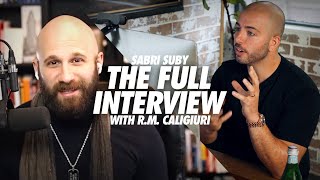
A recorded interview on the Create Your 8 show featuring Sabri Suby (founder and head of growth at King Kong). Sabri recounts his sales origin (first sales job at 16), extreme cold-calling practices (claims of making 150 cold calls/day and over a million cold calls in his life), early scarcity when launching King Kong (started with $50 in the bank), waking routines (waking at 4am, runs, sauna), and the mindset/discipline strategies he uses to build resilience. The conversation emphasizes clarity of goals (dream-day exercise), willingness to do what unsuccessful people won't, steady incremental progress (1% improvement), and practical discipline rituals. The interview closes with Sabri sharing a social handle and mention of a book being shipped free worldwide.
Questions this video answers
February 12, 2021
Over a million cold calls
About 150 cold calls per day
50 bucks in his bank account
Waking up at 4am (runs, early difficult wins)
Chapters
All right, man, let's kick this thing off. What's going on, everybody? Welcome back to this week's episode of The Create youe 8 Show. Very excited to bring you our guest. My guest. Love this guy, Sabri Surbi. He is the CEO, or actually he's the founder and head of growth at King Kong. How you doing, man?
I am doing well, thank you.
My man. My man. Good to hear from you. So you came across my desk because you've gotten a lot of accolades, man. You're a bit of a hustler, right? I got a little bit of a story of you making an absurd amount of phone calls. And as a guy who makes a whole heck of a lot of phone calls himself, I mean, you blow me out of the water. So for people who don't know who you are yet, maybe just give us a quick introduction to who you are, what you do, and maybe a couple stories about how you got here.
Yeah, sure. So, like, I run Australia's fastest growing digital marketing agency. Predominantly, I guess if you had to categorize me into one thing, it would be a business builder or a builder of teams of companies. That's the kind of thing that excites me. You know, from an early age, I've been involved in sales. That's how I fell down the rabbit hole. That was business. You know, I've made over a million cold calls in my life. And realistically, I've run businesses. I've run a few into the ground. I've sold some. And at all of those businesses, I've always been tasked with solving the number one problem that all businesses face, which is how do I get more customers. Right? And that's been really the central point. And that's what's really led me to kind of be in the position where I am right now at King Kong, where that's all we do all day long is help businesses to get more customers.
Love it, man. Love it. So again, this 150 cold calls a day kind of thing, man. We got to talk about this at some point in the interview, but let's kick into again, we focus here on not putting all the attention on the setback. Because you have two choices in life. You could focus on the setback or you could focus on the setup. It's your choice. If you want to focus on all the bad that's gone on in your life, then you're probably going to bring about more bad circumstances. You're probably going to make yourself feel down and you're not going to make Yourself want to get up in the morning and pick up the phone and dial 150 phone calls every single day. So let's first off hear about your professional setback and then what was the setup that came from it? Love to hear that story.
Sure. Well, I would say that like, you know, where that whole adversity began was probably when I first got my first job in sales when I was 16 years old. And that was like a cold, hard slap to the face being on the front lines of capitalism, calling people and asking strangers for money. Right. And then really in terms of actual like professional setback, you know. You know, I, as I mentioned before, like, I've run businesses, I've run some into the ground and you know, when it came about to me starting King Kong, I had had some successful exits, sold some businesses, poured a lot of money into other businesses. Some of them work, some of them didn't. I had recently just got married and paid for all my wedding and did all of that kind of stuff and was at that point where it was like, okay, now it's time to pony up. You know, you've made this commitment, you know, you can't just be like flying by the se of your pants, so to speak. You need to build a business, get some money in the door and build security. And so that's why when I started King Kong, I went back to ground zero and started from scratch. I got 50 bucks in my bank account. I was stressed out about how I was going to pay rent, all of those things, and really just started to get into the state of, okay, this is as Sun Tzu call it, on death ground. Like I have to actually, like I've got no other option right now. And it's just managing your state, getting into the zone, you know, to be able to make 150 cold calls a day. Waking up at 4am Going running and really doing things very early in the day that were extremely challenging. Like waking up at 4am in the morning and going running when it's freezing cold and pitch black outside. Right. And getting those wins early on in the day and have a whole routine. So when it comes to 8:39am to get on the telephone, you've already done things that are extremely difficult and you're ready to go. You've already gotten some those wins. And that's really kind of the way that I used to just throw logs in the fire and keep that momentum going. And because you mentioned one setback, but I would have 150 setbacks in a day. When I was making 150 cold calls, like, you're lucky to get one. Yes. Out of 150 calls. So there's a lot of adversity.
So, you know, it's funny, people look at you and they hear you talking and they hear your story. You sound ultra confident, baby. You sound really, really confident. And the thing I really want people to realize is that you weren't always this way. I'm sure you were at a point, perhaps when again, you got married and you had to say, oh my God, like, what am I doing here? A little bit of insecurity, stress, you know, worried about paying the bills, maybe a little bit insecure about money. Who knows where you were at that point in time. But paint me a picture and paint a picture for people out there in terms of like, how are you feeling at that point in time when you were waking up at 4am and saying, Man, I got to step up, I got to change what I'm doing in order to change my result. How are you feeling at that point in time? Because there's some people right now who are listening, who are right there right now who maybe got laid off and they're saying, like, this guy is going to give me a little bit of inspiration, a little jolt of energy, but he doesn't understand me, man. I'm insecure right now. I'm not feeling great about myself. Tell us how you felt at that point in time. And be honest though, man, if you were ultra confident back then too, let me know.
Like, I've always been confident in my belief, but that doesn't mean that you know that every day that you wake up and you feel like getting after it, right? And you put on your Superman cape and you get it, get it done. Like there is always, no matter what, there's that, that doubt in the back of your mind. And I call that thing the little bitch, right? And it's like always whispering at you and it's trying to basically put its claws inside you and pull you back, right? And there's always that internal dialogue that goes on in anyone's mind, regardless of how successful that they are. So the thing that really, you know, like, you know, going through that stress, going through everything is really just always telling myself that like, successful people do all the things that unsuccessful people aren't willing to do, right? And everybody is self made, but only the successful people are willing to admit it and understanding that like where you are right now is as a result of the decisions that you've made throughout your life. And so for me, it wasn't like my belief in whether or not I could get it done, but it was having a conversation with myself and getting real about how committed I was to getting that thing done right. You know, there is nothing that you can't achieve if you are committed enough. And the thing that most people aren't willing to do is they're not willing to. Once that they have eyed the target and they know what it is, they're not willing to do everything that it takes to actually get there. They like the idea of the target. But you are going to need to cross rivers, cross mountains, slay dragons, walk through fire in order to get to where it is that you want to go. And you have to, to pay the price, right? You need to become somebody that's worthy of being successful and not wishing that success would come to you and that the universe owes you something. The universe doesn't owe you shit, right? You get what it is that you push, shove, scratch and claw for. And by being disciplined. So if you're at a point right now where you're thinking, like, I'm not confident, I like, you know, I'm having a really hard time, do not feel sorry for yourself, right? That's the very first step, right? Just let that pain sting you to your core and use that as fuel to go out there and get everything that it is that you want.
It's hard, though. It's very hard. First off, two things. First thing, brother, you got to know what you want. And that's where most people kind of fall apart. They don't truly know what they want. If you kind of got a hazy idea in terms of what you want, I kind of want to go here, so I'm gonna kind of step in that direction a little bit. You lack conviction. So big piece to this is first, having clarity in terms of what you want. And secondly, the piece that you've talked about, man, it's the gritty, up and down, hustle, grind game, whatever you want to call it, of execution, a follow through. And it is so hard. Whether you're making phone calls, whether you're putting out social media content, whether you're creating a podcast. It's hard, man. It's hard. And you know what? It's okay to start and stop. Whether you're trying to get fit in the gym, whether you're trying to get back in the dating game, whether you're trying to get out of debt, whether you're trying to build a business, it doesn't matter. You're going to fall off once in a while and when you fall off that horse, you got to get back on. And I know that all this sounds so cliche, but man, like, it's the truth. And Sabri, like, you're a good example of this in terms of the business that you built, where you've come from. And that's why I love your story, man. I love the professional story because you just, you didn't have, as we talked about earlier, you didn't have any massive setbacks that were dramatic stories, but you just continued to face small setback, medium setbacks, small setback and multiple setbacks. And I think that's reality here. We don't all face a massive traumatic event in our lives. Some of us just face constant setbacks that can break us. But instead of just letting that setback break you, you decide to continue pushing through. And as a result, that's how you got to where you are today, man. So a great story from the professional standpoint, from the personal standpoint, I would love to hear a setback. And I know that you kind of have a very similar philosophy where again, you don't have one big story. But I would love to know a little bit more about like the man who is Sabri Subie and some of the setbacks that you face growing up.
Yeah, sure. And to come back around to some of the points you've raised right, about like, you've got to know what it is that you want and then how do you, even when you do know what it is that you want and you have those setbacks, how do you keep pushing? Well, when you ask somebody what it is that they want, you're right. It's very difficult to get clarity around that. And it's such a large, open ended and loaded question. And that's what leaves most people just completely overwhelmed. So the exercise that I do is called like the dream day exercise. Forget about what it is that you want out of life. That's way too big. Think about what the perfect day looks like for you. What time do you go to bed? When do you wake up? What are you having for breakfast? Who are you having breakfast with? When do you exercise? What are you doing for exercise? What are you doing for your leisure time? Start with that, right? Start with what would the perfect day look like. And then think about what are you going to need to do and earn in order to fund that lifestyle. And the next part that you raised about, well, how do you keep going when you don't feel like going right so it's not enough just to think about what that dream day looks like, right? You need to think about who is the type of person that you would need to become in order to be that person. And then you need to think about what would your life look like if you did not become that person, if you did not get to live that life. Fast forward to the kind of person that you would be that is not capable of hitting any of your goals and living the life that you want to live and let that hurt, let it think about, like, it should fill you with almost disgust of becoming that person. Because it's not enough to just think about the goals, write down the affirmations. You know, I have a kind of a philosophy of, like, you want to have all of those things that you're striving for, then you want to think about all of the pain and all of the things that would happen if you weren't able to do those things. And it's where those two intersect. It's that point that really sets your soul on fire, where you will run through walls, you will get up and do the work. Because sometimes it's not just enough to chase the things that you want. You have to look at the things that you don't want to happen and also use them as fuel.
Which leads me great tips. Great, great tips. Love that. Thank you for sharing those, by the way.
No problems. And that leads me into, like, the next thing, like, you know, there is that. I've been, you know, faced with a lot of adversity, you know, in my life from a very early age, Right. You know, I was raised by a single parent mother, me and my sister. You know, I watched her hold down three jobs. I used to help her in the morning at the cafes. I used to busk at the markets on the weekend to make money. And there isn't one clear pivotal moment that was just like, you know, the thunderclouds rolled in and I was at rock bottom. Like, you know, I chase difficulty, I chase adversity all throughout my life. And you might be watching this and thinking, like, oh, it's easy for this dude to say all this stuff because he's got the business, he's got those things, right? Those problems and those adversities, they keep coming. They do not stop coming. You just become better at dealing with those things, right? So, you know, my personal and my business, you know, setback roll into one where it was like, well, I had just gotten married. I had just made a commitment, you know, to be a Provider to be a husband, to be a partner. Right. And getting on the same page with my wife of like, okay, what are our roles going to be? What is the life that we're trying to build together? And realizing that we weren't there. Like, we weren't there, right. Because we were in a place of scarcity. And not where. Not the kind of person, the life that I was trying to build, or certainly not the kind of life to build a family. And again, it was just getting very, very clear on what it is that I wanted and imagining the person that I would become that wasn't able to do those things and just using that as logs to throw on the fire and go out there and to make it happen. And it's not like then once I got through that and I got a few clients, that everything was all hunky dory and all good. Then you have multiple things that happen along the way. Staff members leaving you, trying to steal your clients, all that kind of stuff. Like, it doesn't stop. Right. Those problems keep coming. And you need to understand that you're not trying to optimize to get to a place where there are no problems. Cause that's a utopian view on the world and it doesn't exist.
That's right. That's exactly right. Where do you get your discipline from, man? Like, that doesn't just show up all of a sudden. Yes, some people. Well, not some people. A lot of people are born more resilient than others. However, if that resilience isn't fostered, if it's not nurtured, if it's not supported, you do end up losing it. Yeah, it seems that you have this discipline built inside you. Did you always have this or did this develop as a result of what happened in your life?
Yeah, I got it from my mother. I call it single parent mother work ethic. And it's like there's something that happens when you watch your mother work three jobs and work tirelessly to, you know, put food on the table and then to come home from working those three jobs and still cook, you know, a healthy meal for you and your siblings and to shower you in love. Right? And when you watch those things that, that happen, that shows you, like, the importance of work ethic. And seeing that firsthand and being raised by a single parent mother, like, you really realize that, like everything else that you come up with is just excuses, right? And so like, that, that was forged in me from an early age and, you know, the values and the disciplines that, that she Taught me, you know, if you're going to do anything, you do it right. You do it 100% to your ability. And I really took me for, you know, it's starting in my first sales job and it's like, okay, well, you know, how many sales calls is the top salesperson making? Well, I'm going to make 50% more phone calls than them. Right. And just basically outworking everybody in the room because, you know, I saw firsthand what work ethic can do.
It's so important. It's highly underrated. Right? Everyone wants to be, you know, the person that has everything they want in life. And we dream, we fantasize, and we talk about it, but to get that, you got to put in the work. And again, it's so cliche. And it doesn't happen all of a sudden. It's just every single day. And there's this one philosophy that I absolutely love. It's the 1% philosophy. And that if you get better, 1% better every single day for 365 days, it's a 37 times improvement at the end of the year. So you're not expected to all of a sudden do as Sabri does and like in the morning, wake up at 4am and then make 150 phone calls, then, you know, do a hundred burpees, whatever it is, that's a massive improvement. And chances are most of you are going to fail in the process. So right now, if you're making zero phone calls maybe today, why don't you try making one phone call and then tomorrow make two and the next day make three and then four and continue on and on and on, continue growing. It's this slow progression. I don't want people to get confused and they hear your story say, like, wow, like, it's just wake up one morning and go and kill it. That works for some people. It doesn't work for a lot of other people. 1% improvement is sometimes more realistic for a lot of individuals. So, you know, I want people to not be overly intimidated because you come with this DNA inside you, man. It's just this fire you can feel. And I know that not a lot of people have that and a lot of people wish they had that. Don't wish for the kind of like, fire that Sabri's bringing to the table. You know, you got your own fire and you got to stoke it yourself. And sometimes it's going to take you a little while, right? Like, I myself, people look at me like, wow, you have so much energy. I don't always have this kind of energy. Right. I had to develop it, I had to grow it over time. Everything just takes some time. You got to be patient. And, you know, with your stories, man, like, you didn't get anywhere without patience. So kudos to you and all your success, my friend. It's fantastic. I want to finish this up by asking you a question that I ask all of our guests. It's about how you stay resilient. Because if I were to put you through an assessment, I would almost guarantee you have a high level of self discipline. But I really want to understand a little bit more about what you do on a regular basis that keeps you resilient.
Sure. Well, as I mentioned, you know, at the start of our chat is like, about that voice that's in your head, right? That's always telling you to hit the snooze button, to, you know, just have another mouth of chocolate cake and to just do the stuff, like just to indulge in those guilty things. Kind of like pulling you back to the things that aren't the best for you. Right? And there's always that internal dialogue. And, you know, my whole thing is to get that thing and that sucker under control. So, for instance, if, for instance, you know, you do hit the snooze button, then you must the next day say, okay, well, I have to go to bed half an hour earlier today, or I have to wake up half an hour earlier, because I did that today. And it's all about like building your day and your structure where you're having those little wins, right? Having a time that you go to bed and a time that you wake up, then going for an arduous run. Like, I ran this hill. That makes a man out of me every morning. This morning that, you know, a 5k run up this hill, and then it's like, I'll torture myself in a sauna for 30 minutes where it's like, that's another very difficult things. So it's about having things that you overcome every day that builds the muscle that is resilience. It's not something that dawns on you. It's like a muscle that you need to exercise and you need to get it under control. Right. There are a lot of sacrifices that have to happen in order to be successful, and you have to be aware of that and you have to understand that. And it's, it's like, it's something that you do build over time, like you mentioned, and it's. You forge and it gets more defined and more Succinct, where it's like you refuse to do certain things because you've raised your standards.
That's exactly right. You know, man, it really comes down to your daily discipline of doing the hard things. And we live in a society where we love the comforts. We love the comforts. We love the food, we love the tv, we love the phones. You know, it's easy to fucking burn two minutes on TikTok. It's so easy. But. But doing the hard stuff, that's what's really going to develop an element of your resilience, especially when it comes to grits, when it comes to self discipline, it's doing the hard stuff. And again, yes, you're going to fall off. You might fall off for a week, two weeks. Nobody cares. The only person that should care is you. And get back on that horse and do what's hard. Go to the gym, find the thing that works. If it's not the gym for you, maybe you're running a hill. Maybe you're running with your dog. Whatever it is, get up early to make it happen. Maybe you got to read a book, maybe you got to do a course. Maybe you got to put your phone down. Maybe you're looking at your phone and using it five hours. Well, if you're using it five hours and most of it's on social media and you're not in that industry, you're just perusing, maybe you got to cut that down to an hour. Quit going towards the pleasures, quit going towards the comforts. And it's one of the takeaways that I hope a lot of you will walk away from this interview with, which is sometimes to be successful. Well, not sometimes, almost all the time. You got to make sacrifices. And these sacrifices are going to be painful, they're going to be hard, but damn it, are they going to be worth it in the end. So, my man Sabri, it is an absolute pleasure having you on the show today, talking about your setbacks, the setups that come from it, what keeps you resilient. If people want to get in touch with you, they want to look you up online, how can they go about doing that?
They can check out my Instagram abrisubi. And if you want to learn more about getting into my world or if you own a business and you're looking to get customers, you can check out my book. We're shipping this out for free anywhere in the world. That's the best place to kind of follow me and keep up to date with what I'm doing excellent.
Again, that's Sabri Suby. He is the founder and head of Growth King Kong. Thanks again, man. Absolute pleasure.
No problems. Thank you so much for having me on. If you enjoyed this video, please like and subscribe. We're dropping a video like this almost every single day on YouTube. And if you've got any questions, leave them in the comments box below with hashtag heysubri and I'll do my best to get in there and get that answered.










