Sabri Suby on The Foundr Podcast: The Infamous "Tell All" Interview
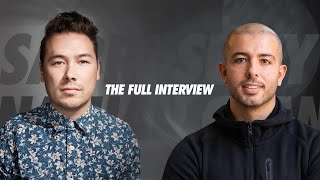
Sabri Suby breaks down his direct-response selling system, from his early sales days to the "magic lantern" technique in his book Sell Like Crazy. He argues psychology matters more than channels, and that founders have to own the sales process themselves.
Chapters
This is episode number 235 with Sabri.
Subhi of the Founder Podcast.
What you need is thirst.
You need to be a thirsty human who is intent on learning.
It's a really fascinating exploration of human potential.
Now.
The Founder Podcast. Even the greatest entrepreneurs had help. If you want to learn from the most successful founders on the planet, you are in the right place. Branson, Mark Cuban, Tony Robbins, Tim Ferriss, Steve Case, Gary Vee, Sophia Amorosa, Corcoran, Damon John. Learn from the greatest minds in business today with interviews hosted by Nathan Chan. This is not your average entrepreneur podcast, the Founder Podcast.
What's going on, guys? Hope you're having a great day wherever you are around the world. My name is Nathan Chan. I'm the CEO and publisher of Founder magazine and also the host of the this podcast.
So I just want to say thank.
You so much for taking the time to share your earbuds with me. Today we have an incredible guest. He's actually making a second appearance. He was on episode number 201 and his name's Sabri Subi. I've got to know Sabri pretty much over the last year as I convinced him to teach our consulting empire course. So if you have a set of skills that you want to turn into a freelance or consulting or service based business or you have an agency and you want to grow it, like, Sabri is the man. Like, he is incredible marketer first of all. Like I've learned so much from him on everything selling online. And you know, he's, he runs one of the, the actually the fastest growing agency in Australia. He's taking it from 0 to 10 million in annual revenue in the past four years. And yeah, I have no doubt that he is going to conquer the, in the agency space, especially in the direct response digital agency space. But today I got Sabri to come back on because he's just launched his latest book, Sell like Crazy. And he really tackles a question that I think a lot of people are facing right now, which is you've got this awesome service, you've got this awesome product, but how the hell do you sell this thing? You know, do you use Facebook ads, Do you use messenger bots, do you use Instagram, do you use Pinterest? Like there's all these different ways there's blogging.
This is, there's so many different channels.
And tactics and strategies. And what I really like about Sabri is he's a master of his craft when it comes to selling online and he goes really deep into the psychology behind it. So you're going to learn a lot on this episode about his latest book and the principles behind what he's learned. Basically to just really, really kill it with selling products and scaling businesses online.
He's not only done this for his.
Own agency, but he's done it for tons of different clients as well. So you guys are in for an absolute treat. If you do want to know more about Sabri and the course that we got him to teach around starting and growing and scaling your own agency consulting or freelance business, you can go to founder.com forward/consulting. That's f o u n d r.com forward slash consulting. And if you do like the sound of his latest book, make sure you go to sell like crazy. All right, guys, that's it from me. Now let's jump into the show.
I guess the first question I ask everyone that comes on is, how did you get your job?
Yeah. So I guess if we talk about where I got my start. I got my start when I was 17 years old in sales. It was my first full time job and it was a very cold, hard slap to the face. I was selling ink cartridges over the telephone and I sucked incredibly badly at doing that in the beginning. And then I just kind of just devoted myself to really mastering the art of sales and persuasion and became the top producer at that role. Went on to kind of travel the world, lived in London and sold everything that you can imagine over the phone face to face, one to one, one to many. And kind of that is what, like when I fell down the kind of rabbit hole of sales and direct response. And I've done, you know, I've run a few different businesses, I've run a few into the ground, I've sold a few and have really kind of been tasked in every single one of those businesses, like, with the fundamental question of like, how do we get more customers? And that's always been my role at any of the companies that I've started or been a co founder in. And that's kind of led me to the stage where I am right now with King Kong.
Yeah. So I think the question that everybody wants to know is if you want to sell online, like, what are the things that people need to be thinking about? There's so many different channels out there, there's so different gurus out there saying you've got to be using messenger bots, you've got to be using webinars, you've got to be using Facebook ads. So like, what would you say to people that are like, not happy with the sales that they're getting online for their business or the sales they're getting for their business in general?
Yeah, sure. And I think that's a really great place to start because, you know, one thing that I've really looked at becoming a master in is really the psychology and not the technology because, like the traffic channel is kind of irrelevant. You know, I mean, whatever the flavor of the month traffic channel is, where it's Facebook ads or Instagram ads or Facebook messenger bots or whatever it might be, that's just like a delivery vehicle. Right. To get your message out there at the end of the day, like, you know, marketing and selling is, it's very simple and it's when you break it down to its core principles, which is like, you know, you need to be able to craft a message that resonates with people and is compelling and gets them to act. And then you just simply need to get that sales message out and in front of as many eyeballs as physically possible, regardless of what the kind of channel is. And one of the core things that I really see, and the biggest fundamental mistake that I see businesses really making online is that they're like doing the equivalent of walking into a bar and asking a complete stranger to marry them or asking someone to have sex with them. At first sight, it's kind of ridiculous. And what I mean by that is they're going out to cold traffic and making offers to these people and trying to get them to buy straight out the gate. So really the process that I take and what kind of like one of the core principles that I run through in this book is like, you know, how to take your prospects from Tinder to Netflix and chill. Do you know what I mean? Like really how to go out there and put a message in front of complete strangers and what are all the single steps that you need to take them through along the way to get them to become a high paying client. And usually people are asking for far too much of a commitment on the front end when it just, it's not logical to be walking up to a stranger and asking them to marry you.
Yeah. So when it comes to all the different clients that you've worked with and you've helped grow many different clients, businesses that are really, really fast paced and incredible numbers and all sorts of things that I read in this book, like, where is the first place for people to start besides, you know, grabbing your book, reading a copy and studying it like crazy?
Yeah. In terms of like the first place to start when Marketing their business online.
Yeah. What do they need to be thinking about?
Yeah, well, I think the very first thing to really think about is, you know, what most people do is they think about like, what do they want to sell and what's convenient for them to sell or where do their interest lies and that's really the wrong place to start. Where you do want to start is you want to find out, like, where is the starving crowd for what it is that you're selling. And you don't need to sit down and like have a magic ball and think of these incredibly esoteric thoughts about where they're going to be. You just follow the money so you have a look first of all, like, okay, like what is the biggest problems that like people are facing in this niche that I want to operate in or in this industry? Like what is that hair on fire burning problem that everyone wants to solve or everyone wants a solution to and then crafting what you're going to sell around what people actually want. And that sounds like extremely elementary and basic, but literally nobody does this. Like nobody thinks about, you know, okay, what does everybody really want? What's the biggest problem that they've got? And then how do I just craft an offer that delivers exactly that solution that they want? And you know, the places that you want to start is whatever niche that you're in, whatever market that you're in is first of all, have a look at like what is selling the most in that? Do you know? It's a service. It's the home builder who's selling the most homes and then going and having a look. Okay, why are they selling the most homes? Having a look at like what the 5 star reviews people are saying about that service and what people really love about it and why that is dominating and what are the negative things that people don't like about that and really kind of look for like a gap that you can go out there and do what they're doing even better. Or there's an area of the market that isn't being serviced that's even better. And just craft a product or a service around exactly what everybody is just starving for.
Yeah, love it. And talk to me about the magic lantern technique which you talk about in this book and you've got some crazy techniques and strategies. I know we can't talk about all of them, but. Yeah, like what are some things that people can expect to learn like the magic lantern. Talk me through some of your concepts. High level concepts.
Yeah, sure. So like the magic lantern technique is really Kind of about, you know, having a look at like where your prospect is right now. As we just spoke about, like someone that's experiencing all these problems, whatever niche it is, they're just like, they're overwhelmed. They've got all these problems and they know where they want to get to. They've got like a desired end state that they're trying to get to, but they don't know how to get there. And really what the magic lantern technique is about is about taking someone that's experiencing all those problems and giving them value in advance and showing them how to get to that desired end result that they want to get to without ever asking for anything in return. And it's naturally like how you would engage, like with a friendship. Do you know what I mean? Or someone that you would meet out. Like, you know, imagine if you went over to your friend's house, like, if you came over to my house and I just tried to just start selling you digital marketing service, you'd be like, dude, like, go screw yourself. What are you doing? Do you know what I mean? It just doesn't make any sense. But that's the way that, like, everybody treats their customers. Like, they just get it like a prospect. They get a, a cold prospect and they just try to sell them straight out the gate instead. Right? The polar opposite approach is what is infinitely more powerful. And that's what the magic lantern technique is. So instead of trying to sell someone straight off the bat, you might be, for instance, like a PR consultant, right? And your ideal customer might be a startup founder that's turning over a million dollars plus that's not getting much press. They're just really on that start of that trajectory and they want to start getting mentioned in all the blogs and online and in news publications. So you have to think about where they are. They're not getting any cut, they're not getting any press right now. They want to be on Forbes and Inc. And founder and have all this stuff on there. Then how do they do that? Do you know what I mean? And you would first begin by giving them some of those results in advance and say, okay, cool. Well, the first thing that you need to do is you need to get all of your social media profiles in check. So with any journalist suss you out and does any intel on you, which they all do, they can see that you're legit and there's not like a stage skeleton online and no one's talking about you. And then give them a checklist of the things to watch and Then give them a template of this is how you reach out to influencers. This is how you start to get featured and just start to provide coolness to them before ever asking for anything in return. And the reality of it is, in that example, if you're a startup founder and you're running a million dollar business a year, you don't have time to be doing this stuff. Do you know what I mean? You're just going to basically see it and go, yeah, this person's legit. They look legit. Because you know, the number one thing that we're all so worried about and that why skepticism is so rampant online, it's like, who can I trust? Do you know? I mean, who's going to deliver the results? So like, you know, you and I both as founders, we know this all too well. You know, when we're researching stuff, it's usually late at night, early in the morning, very quick. And it's like you can just prove that you're legitimate by actually just providing that value in advance. They're going to like consume that content and that value whenever they can and then they're gonna be like, this dude is for real. And I can see it's legit. I don't have the time to be doing this. I can't reach out to them. Let me just hire this dude and see how it goes.
Yeah, I love that in the book you talk about the high value content offer. Now it's easy because, you know, everybody says start a podcast or you know, start a video based series or you know, create an ebook. And like there's all these kinds of things like you said, like using the magic lantern technique, like talk to me around, like what should people be creating as a high value content offer or what should they think about? Because we want to keep it simple. We don't want to. You don't like, yeah, yeah, let's strip.
It down to its kind of core principles. Yeah. So essentially like you think about most people, right? Like when most people are looking for a product or service, like 85% of those guys are going to Google, right? That's what they're doing. They're the guys that I call have a bleeding neck. They've got a bleeding neck. They need an immediate solution to that problem. But even if you have a look at like, you know, how people buy and what's happening with consumer behavior right now, like Even though that 85% of people are searching online for a product or service, 7% of retail is done online. Do you know I mean, 93% is done offline. So what do people really want? Online? Information. That's where they're beginning their information search. So like what you need to think about, okay, if people are starving for information, then why am I trying to sell stuff straight away? Why don't I just lead with information? Because that's what they want. They're coming to the restaurant hungry for this. Let me just give it to them. Do you know what I mean? So a high value content offer, the quickest, easiest, down and dirty way to create one is to create a free report. And what you basically want to be doing is be doing the research for whatever market that you operate in. You want to be thinking about. You know, we've got this strategy in here called the halo strategy. And it's about how you really kind of just camp out inside of the mind of your dream buyer and just gather the best marketing intel that you possibly can to create offers that just go out and slaughter the competition. And the way that you do that is just by going online and, and read about like you pick the number one keyword that people are searching for in your market. So it might be a home builder, they're searching for home builders Melbourne or New York or whatever it might be. Then you want to start doing research online, going into forums, going onto Amazon, typing in like building a home, having a look at what people are saying online, like what are their questions? What are the fundamental questions that they have? A great website is answerthepublic.com and what that does is it aggregates all of like the search traffic questions people are asking Bing and Google. And it basically tells you, like, what are all the questions that people are researching for and is an absolute goldmine for data. And then you can say, okay, these are all the questions that everybody has. Like, these are the things that people are starving for. So let me just create like a high value content offer, like a free report that literally addresses all of those things, the seven fatal mistakes that you absolutely must know if you're building a home in Melbourne. What are they? I need to know them, do you know what I mean? And leading with that instead of here are all of our beautiful home designs. Speak with one of our sales reps who's gonna hound you every day. Do you know what I mean?
Yeah.
So you're just leading with that information. They're like, oh, cool, this is awesome. And then that's obviously getting them to raise their hand in like a sea of people saying, yeah, like I'm interested, like you're not gonna be downloading a free report about like the seven fatal traps of building a home in Melbourne on a Friday night just to see what builders are up to. Do you know what I mean? You're in the market, you're actually out there researching and then that allows them to identify themselves as being in the market. And then you can further go on just to provide value and educate them through a funnel and get them to reach out when they're ready, willing and able to do business with you. And instead of having like an offer where you're going straight for the sale and you're like, here are all of our homes designs, get in contact with us that convert at 3, 5%, if you're lucky, you start getting conversion rates of like 5, 40%, do you know what I mean? And just allows you to get a lot more people on your list and a lot more prospective buyers.
Yeah. So we talked about, you know, going deep, doing the research, understanding the psychology of where that person's at. We talked about the, you know, I guess putting out some bait or, you know, kind of not leading with asking that person to go home with you on the first date.
Yeah.
And what's next? Like, talk to us around, how do you actually make that person want to be, convert that person to becoming a customer.
Yeah, sure. And so we think about like, so at this stage, they've kind of downloaded our high value content offer. Right. They've hopefully consumed the information and people get busy as they do in their everyday life. And that's when you really want to start using automation to follow up on that person. And that's where like, okay, they've identified themselves, they've raised their hand in a sea of people saying, yep, I'm in the market for a home builder. And now what we want to do is we want to take some further of those questions that they had, some of those problems that they had along the way. And we want to provide solutions to those problems before we ever ask for anything. And that's the magic lantern technique. It's about illuminating the path to where they were. So where they are right now is they're confused. They don't have enough information to make a purchase at hand. That's why they're online looking for information.
Yep.
And when someone's in that state, when they're not informed, that's not in like, that's not a state of empowerment where you make purchasing decisions on the biggest purchase you'll ever make in your life, which is a house. Right. So what our job is, is to educate them so they feel empowered and they know that they know the information that they need to so that they can make that purchasing decision. And the magic lantern technique is about illuminating that pathway of taking them from being confused, overwhelmed, not knowing, to living in their dream home and having it built. Do you know what I mean? What are the like four to five steps that it takes to take someone from knowing nothing about building a house or how much ratio of their deposit is going to be to the money that they can lend and all that kind of stuff to getting them to the point where they're picking out tiles in their bathroom? Do you know what I mean? What are the steps you need to take? And that's where you know, you need to understand that like in any market, like because of the Internet, the barriers to entry are so low and everyone's a guru and everyone's got a blog and is doing content marketing and Instagram lives and Facebook lives that everyone's kind of like filtering like, who should I listen to? Like who is legit and who's not legit. And that's why skepticism, I believe is at an all time high. It's never ever been so high as it is right now online with how skeptical people are. And the way that you get over that skepticism, instead of just trying to like swim against this raging river and trying to swim upstream, you need to channel that and you need to basically overcome that. And the way that you do that is just by providing value and by not telling people that you're different and that you know, your homes are so great. Just like literally showing them how you're so knowledgeable at this field and how you can help them along the way on this incredibly big purchase that they need to make and illuminate that. And that's where most people go wrong. Like they might like, yeah, I've tried a free report and that shit doesn't work. Yeah, it's because they get an opt in and then just hammer that guy to death with sales messages. You know what I mean? It's like that wasn't an enjoyable experience unsubscribe. So it's really about being out to kind of have a value driven selling system that just provides more value than any of your competitors are willing to provide.
Yeah, one thing I've heard as well when it comes to selling is if you can even during the sales process, make somebody better off than their interaction with you beforehand before they knew you, then it's a win win. So at what point Though, do you ask for the sale or try and make a sale and this. And just, just so you guys have some reference like this, this process that you use to sell like crazy, like you've used. This works for all sorts of different niches, markets. Can you give us some examples? Because some people might be thinking, okay, well will this work for me?
Yeah, sure. So, yeah, like we've like at this stage deployed this in, in more than 167 different niches and markets and it works in every single one. Do you know what I mean? It's like we've taken like home building startups from 3 million to $50 million in the first 18 months. We've taken property development companies from zero to $50 million in eight weeks. We've grown, you know, aged care business from like, you know, 200, 400K to 3 million in 12 months. We've taken, you know, mattress companies from zero to $12 million in 12 months. So it's just a selling system that just works. Do you know what I mean? If you're selling a product or service, you know, online or even offline, like, this is a selling system that you can literally just apply to just absolutely sell like crazy. So yeah, it is a system that is transferable from whatever niche that you're kind of operating in.
Yeah. So talk to me, like, how do you know when the right time is to. Like, how do you know when you've built up enough value, enough trust, enough goodwill? Because I think that's a fine line. And even at founder, I think in some cases we have waited too long to perhaps ask for the sale. We're only getting better with sales funnels in this past 12 to 18 months.
Yeah, and I think that that's good that you're doing it that way because that's the polar opposite of what everybody does. I would rather be on that end of the spectrum than the other one. And yeah, like picking up like, you know, one of my sayings, which I think that you got from the book, is it's like you want to leave your prospects better than when you found them. Do you know what I mean? And you understand that in any selling environment, like if you look at conversion rates, like just across the board from lead to sale or direct E commerce, on average it's 1 to 3%. Right. That's just what it is. So 97% to 99% of the time, you ain't getting the sale. Right. So instead of like leaving a bad taste in people's mouth and going straight for the sale. If you know that the large amount of people aren't going to buy off you, why not just build goodwill with them and let people spread that good word about you and provide value to these people whether or not they bought from you? Because it's not. It's not costing you anymore to provide value. You're just doing a better service to everybody. Do you know what I mean? And your brand and your reputation and your goodwill grows in direct proportion to that. So coming to the point where, like, when do you ask for the sale? My whole rule is like, you know, 80% value, 20% pitch. And like, I'm not saying, like, hey, you just offer all your services for free and you go broke. Do you know what I mean? That's the. I understand well and truly that, like, cash flow is the oxygen to businesses and without it, you will die. Like, I know that. So, like, we're just talking about if we know that the mass market is not going to buy, let's provide value to those guys, you know, 80% value, 20% pitch. So you can still straight out the gate, get those, what I call the hyperactive buyers. They're the guys that are the 1 to 3% that are going to buy anyway. Right. They're super keen. So we're going to be presenting them with opportunities to raise their hand of wanting to engage in a sales conversation.
Awesome. So. So let's switch gears and talk about one thing you talk about in the book, which might be a little bit controversial, is it's just around, I guess, being afraid to sell. And this concept of sales cures all. Me and you have talked about this and I'm a big proponent of it. Like, if you are struggling your business, like, the only thing that's going to fix the problem is really sales. Right?
Yep.
So talk to me around how people can get over that fear, because that is very, very common, that they're afraid to sell. People are afraid to sell the product. They don't want to be too pushy. They don't want to come off as spammy. Yeah, talk to me about that.
Yeah, sure. And I think, like, an important area to look at is, like, you know, if you're in a business, you're going to need to be providing, you know, going to be needing to ring the cash register and bring in profits to that business in order to sustain it. And like, if you look at, like, the statistics are grim, you know, 96% of all businesses fail and 80% of those fail in the first two years. And even out of the, you know, the 4% or so that, that don't, like, you know, very, very few ever get to a million and a million plus. And the number one reason, you know, that businesses fail is because they're under capitalized. And why they under capitalized because they can't ring the cash register in high enough volumes with high enough margins to sustain the business. You know what I mean? So really like, you know, cash is the oxygen that businesses live off and it's, you know, cash is king and you know, like, sales is the godfather. I mean, that's how you get the cash. So it really is like as the founder, like your number one goal and your number one purpose really is to sell. You know, that doesn't mean that you need to be on sales calls all day long or writing every single word of sales copy, but it means that like, you know, 80% of your time needs to be really focused on driving revenue and moving what I call the money needle. Do you know what I mean? Like, what are those activities that you do that move the money needle? And that doesn't mean like, yeah, you have a shitty product and you don't focus on the product or service and you just fully build out the front end and only sell. That's like the opposite of what you do. Do you know what I mean? Like, you go and find out what everybody else is doing in your market and you create a superior product and a superior service to what everybody is doing and then you sell it 10 times better. Do you know what I mean? Like, people often think like it's one or the other. It's not one or the other, it's both. Do you know what I mean? And really, like, as the founder of a business, that's what you need to be thinking on. Like, you don't need to be doing, you know, the mundane management tasks and like all of these things that don't move the business forward, you know, I mean, they're all essential functions to run a business, don't get me wrong. But you know, they all exist to support the sales function. Like, if you don't have the sales function, there ain't no hr, there ain't no people to hire, there ain't no management. You're not managing anything if there's no revenue coming in. So like, if that's the main thing, you need to keep the main thing the main thing. And you need to be ruthless in looking at, okay, what are the activities that I'm doing every day in my business? Which ones are literally vital to moving this business forward and really driving it. What are those 4% of things that move the money needle and ruthlessly cutting out everything else, do you know what I mean? And you need to create a product and service that you believe in so deeply and so strongly that you would sell it to all of your friends and family, do you know what I mean? Like, that's how confident you need to be on it. So it's like, it feels like it's like your moral. Moral obligation to really go out there and get this into the hands as many people as possible, knowing also what the counter to do of that is like, you know what I mean? I am so sold what I do every day and the service that I provide in my business that I believe it's a disservice for anyone to go to any other agency because, you know, they'll just be taken for a ride. Do you know what I mean? So it's like. And I'm so set on it. That's like, you know, I've got friends and family that are clients and all that kind of stuff, Because I literally know what we're doing is the best that there is out there. And, you know, you need to forge that. You need to create that in your business, and then you need to ruthlessly focus on, okay, now I know that this thing is legit. How do I get this into as many people's hands as possible?
Yeah, I love that. So it's basically like you're doing the world a disservice if you don't let them know.
Correct. Like, there's a lot of businesses out there that are struggling with how do I get new clients, do you know what I mean? And they might be folding up their business and giving up on their dreams or not being able to send their children through college or retire their moms or, you know, even just provide, you know, to a charity or whatever it is that what their purpose is, whatever drives them. And they're having to kind of close up shop and just, you know, 96% of business closing up shop because they don't know how to get new customers. When it's like, I have a roadmap how to do that. Do you know what I mean? And I've done it in multiple different markets. So, like, the more people that don't have it in their hands, it's like, I'm doing the world a disservice, as you said, by not aggressively pushing that as hard as I can and getting that into as many hands as I.
Can and you have. You're still doing the 8020 with providing so much value anyway. So it's like a win win, correct?
Yeah. And it's. No. So it's like, you know, we're not again talking about just selling really hard and not providing value. I'm providing value to the people that I will never get any money from that will never ever become a customer of mine. Right. I'm just putting out that goodwill into the universe and knowing that that will come back around. Like it's impossible to put out so much goodness and so much goodwill for that not to have a spill on effect and to come back and for you to benefit in some way.
Yeah, I love it. So one thing you talk about in the book, which I thought was quite interesting, I mean you have discussed this before offline, which is the whole thing around kind of ppc, Facebook ads, that direct response advertising stuff. And I've said to you personally, like, I don't think you can, like, I don't like the idea of having to rely on, on that channel, that, that is a channel, all those channels. And you've said to me like, you know, you, you believe that the market will tell you and the person that can spend the most to acquire a customer win.
Yeah.
And you say in the book that there's an incredible opportunity right now because platforms like Facebook or YouTube ads or you know, AdWords, like, like you have this unlimited pool of people that you can tap into and actually put your message or offer or say hello to any kind of potential prospect.
Yeah. And like, and that's true. And like I believe that having the ability to turn like paid advertising into profit is the single greatest skill that you can acquire as a business owner. Do you know, I mean, there's nothing that is more certain than that. And you know, like while like, you know, growth hacking and all these things there are great. They're essentially about like, you know, hacking the growth curve and using like arbitrage to kind of exploit a loophole. In my opinion, those loopholes close. They're not, they're not that, they're not a value, they're incredibly valuable. But I look for more long term things that won't change over time. And the sad thing that I see is most business owners like wear it as a badge of honor that they don't advertise. They're like, I don't need to advertise. I got referrals, you know, everything's going great kind of thing. And when somebody tells me that like it's just a telltale sign that they're thinking too small and they usually broke or their business isn't huge. Do you know what I mean? It's just a lifestyle business. Because really what you need to think about and master is like having the ability to put a sales message out in front of somebody and getting them to convert and make the unit. Economics stack up where enough people do that so the advertising becomes free. So it's not a cost anymore, it's an asset that you're investing in that's generating you a return over a period of time. And you know, do you look at most people when they think about getting wealthy? Like you think about what are the options that are available to you as a business owner for you to get a return on your money? High interest savings accounts, if you're lucky, 2 to 3%. Right? If you are lucky. So you're putting a dollar in and getting a dollar and 3 cents back. Not that exciting, right? And then like real estate, like yeah, everyone's making a ton of money in real estate, right? Like I could just see it all, people in property investment making so much money from it. The annual returns on real estate are around 12%. If you look over across the board, across the whole industry, stock and bonds, 7 and 8%. So with advertising, as you would know as well, it's like it's not uncommon to get an 800% return on investment. What other investment vehicle on planet earth can you do that with? And net money back in a 30 day period where you're putting $1 in and $8 coming back. It's a seen, do you know what I mean? And it's such an incredible opportunity. And I see so many people not being able to take advantage of that opportunity because they look at the advertising on their P and L slip as like basically as a loss, do you know? I mean that's a, that's an expense for me to run my business. Where I look at it is like if I'm not spending money, like I'm freaking out, do you know what I mean? Like if my ad account goes down, like I'm running around my office like a madman because I know that I'm losing money. I'm not like I get to save a bit of money on ad spend today. Like I'm sending money soldiers out and they're coming back with more prisoners of more money soldiers, do you know what I mean? And if I stop that, then I lose that.
So yeah, I agree with you 100% that having, having these Selling systems or sales funnels. Like everyone's talking about sales funnels. If you can create a great sales funnel that converts really well, which your book will teach you how to do, that you've done in so many different clients, industries and niches and all sorts of things. But you know, I guess where I was going with this when I asked you that question was I was one of those people that didn't advertise for a long, long time with founder. And I guess when we had that conversation is, is while I agree with you, like nothing like is an incredible growth engine using PPC or you know, paid advertising. All the SaaS companies do it. They even have earned back periods of like 24 to 32 months, which is insane. But you know, I still think you need other channels as well. Like I just don't. You know, I love risk mitigation. I'm all about risk mitigation. And you know, do you believe people, you know, after reading your book or after, you know, going through your principles of how to sell and build like a sales machine, should they be plugging that into like, you know, doing other channels like put like blogging, SEO, content marketing or social media, organic. Like what's your thoughts take?
100% definitely. Like, you know, it's not either or, right. But I just think about like what is the most constant thing that I don't think that will ever change? Like Google's algorithm would change. Like, you know, I started as an SEO guy, do you know what I mean? That's where I sharpen my teeth in that industry. So I certainly know about it. And it's a service that we provide. There's an incredible amount of value in it and it's great for people that have smaller budgets straight out the gate. But if you have the ability to turn paid traffic into profit, it's a very hard skill to acquire and it's very difficult to do. But if you can do it, you can write your own ticket. So I'm not saying that you don't want to be doing like blogging and all those kind of things, but it's a long term strategy, do you know what I mean? And if you're starting with no money, they're great places to start, do you know what I mean? It's like you have to do what you have to do, but as soon as you've got enough capital in the bank earning 1 to 2% interest and you've just got that sucker sitting in there, put it to work, man. Make that money, work hard like, make it a workhorse for your business and invest it in your business so you can fuel the growth of it. You know what I mean? And really think about, you know, not about the technology, think about the psychology of it. You know, the traffic channels are going to change. They always change. Do you know, mean things always change on those traffic channels. But the thing that doesn't change is the human psychology and what makes people buy and how do you provide value and, you know, how do you really start a conversation with a cold prospect and take them all the way through to becoming a paying client?
Love it. So we have to work towards wrapping up any kind of final words of wisdom, thoughts you want to share. If people want to get better at selling their products or their services, obviously they've got to read your incredible book, sell like crazy. But, you know, where's a good place for people to start? And what do you want to final off, Joe? Kind of. What do you want to finish off with?
Yeah, sure. I think that, you know, the biggest thing that, like, I would urge people to do is to think about if you're going to be devoting your life to an enterprise, to a business, and you're going to be building this business for, you know, supporting your family or, like, you know, achieving some financial goals or being able to raise enough money to give back to a community or charity or cause, whatever it might be, is that, like, you know, you've only got one life to do it in and you've only got one shot. And like, don't compromise of how much the output could be of that business with the same amount of inputs you're currently putting in. And the thing that is going to change that, the single thing is going to be having the ability to sell and to ring that cash register. And really what I've tried to do with this book is create a book that I wish I had when I started in business, when I was 21 and I started on this thing blindfolded in a blizzard, not knowing which way was up or down, left or right. And there's so much good resources out there, so much bad resources out there, you don't know where to begin in. I just create, like a manual of, like, a playbook of exactly what you need to do, regardless of what phase that you're at in your business, to really just uplevel and take it to that next level. And I hope that's what people get from the book.
Awesome, man. Well, look, thank you so much for taking the time to speak with me. If people want to go and grab a copy of your book, where should they go? Selllikecrazy co selllikecrazy co Go and get a copy guys. Thanks so much Sabri. Absolute pleasure man.
No problem. Thanks for having me.
Founders, Entrepreneurs, Influencers, Disruptors. We feature hundreds of in depth case studies with the greatest business minds of our current generation. Building a business is hard. The founder mission is to help you create an ass kicking business and help you learn straight from the mouths of world class founders. Get your free printed edition of Founder Magazine featuring Sir Richard Branson. Just cover shipping and handling at founder.com forward/branson that's F-O-U-N-R.com forward slash Branson.










