Sales Was Hard Until I Understood These 9 Concepts
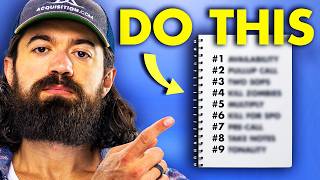
Alex Hormozi breaks down nine practices top salespeople use: maximizing opportunities through availability and referrals, converting more through prep and listening, and sustaining performance with consistency and metrics. He gives tactical examples and SOPs for scaling sales teams.
Chapters
There are nine things that brilliant salespeople do differently. And in this video I'm going to show the stuff that I've Learned. Building multiple 9 figure sales teams, scaling teams from 0 to 40 guys, 0 to 60 guys, and personally closing over 4000 sales myself. And so if you boil it down, a salesperson has three jobs to do. They have to maximize the number of opportunities they have. They have to convert the highest percentage of those opportunities. And this is the important part, they have to do it consistently for a very long period of time. And so the nine things they do differently will fall elegantly into each of these three buckets. Let's start with the first one, which is maximizing leads or maximize the number of opportunities that a salesman has. So right off the top, I've never seen a salesperson who does the most in a company have the lowest amount of hours worked. I've yet to have it. You know what, maybe there's a special snowflake out there. But every company that I've owned and every company that I've looked at, the guy who works the most hours is the one who sells the most deals. And so maximizing opportunities comes in a number of different forms. So number one is that they have the total most hours available per day because you should be available when the prospect is available. And that means sometimes working long hours, it sometimes mean working weekends. And yes, businesses also pay rent on Sundays and so you can make sales on Sundays. So my software company, Allen, scheduled 4,000 plus appointments per day across a number of different industries. And so we got to see all the way from click to close which companies were selling the most people. And we looked at all the different data. So times of day, number of days per week, you know, speed between text responses, number of characters in text response, all of these different variables. Because I had two data analysts that looked at this to figure out how could he maximize throughput for any business. And obviously sales, a big component of that. And the single greatest lever on throughput across all companies was the number of total available time slots, which means availability was the strongest predictor of total sales. And let me give you a tactical example of this. When Layla and I were traveling the other day, we went to a different city and she wanted to get her nails done or something. And so she just pulled up Yelp and looked at the one that had the top reviews, called them up and they said, oh, I'm sorry, we don't do same day appointments. And they're like, we can book you in for two days. From now. And she was like, yep, don't care. Called the next one, same thing, called the third one. And then they were like, yeah, we can take you right now. And boom, she went in. And the thing is that both those other business owners, the first two business owners that said no, lost money. And the next time she comes to that place, she'll probably go back to the one that she went to as long as they did a good job. And so trying to be egotistical about it rather than accommodate customers, it's like, well, we're so great. You just lose money. Now, if we maximize the total number of time that's available for the salesperson to sell, then the next part of maximizing your opportunities is getting as much of their day as humanly possible filled with the best opportunities. And so the second subunit of this is, is they will pull up calls. And so the first thing is, if you see a call that gets booked or you book a call that's on Thursday and today's Monday. If you have a time slot that's open, you grab your Thursday appointment, you drag it into today. Because today appointments always have higher show up rates. And if you pull it up, then they're even more interested and you can close even higher and you can have two or three calls by that same Thursday time. So you increase your sales velocity. Now, a corollary to that is if you look at your calendar and you've reached out to a prospect and, and that person has not responded back and now it's the same day and they're coming up in a few hours. Well, what do you do? Well, the best salespeople pull that time slot and say, hey, sorry, I didn't see that you confirmed. Why don't we do the same thing for tomorrow? You can push it out one and then try and fill that time slot with somebody who is responsive, even if they're later in the week, and that increases your total number of calls per day. And so fundamentally, the perfect day for a salesperson is that they have call back to back to back to back to back with the best possible leads that are the hottest that day. I learned that little tactic about pulling up because we had one of our companies was in solar sales and they had one rep that massively outperformed everyone else. And I was like, what is this guy doing? And so what he was doing was he would, whenever a new appointment would book, he would immediately call the appointment to qualify the lead. Cause that checks two boxes. One is, he says, okay, is this person qualified to buy. If the person was, he had two decision paths. If they had the time right, then he would just go straight into closing because he was in an off the call sop. And then by getting in contact with the lead became on the call in terms of his sop. And if they said they had time right now, he just went for the sale. That maximizes his time on call. If they said no, then the reason for his call was that he had an opening later that day that he was trying to fill up. And so he either takes the moment now that he's working the lead and turns it into a sales call, or he fills another slot later in the day and turns that into a sales call. Both of those things maximize the number of sales that guy was having. And this guy was selling like five, four times more units than the second best guy on the team. And then they obviously saw this and then adopted it company wide. And then of course I saw it and adopted it across all my entire portfolio. And let me double down on why that's so powerful, because not only does the salesman have two opportunities to sell now or later that day, he also opens up the slot later in the week for availability for another customer that can't make it today to book that time then. Because what I have found, and we saw this with the software, was if you have fewer time slots, people may still book with you, but they are not booking at the most convenient time for them. You'll see schedule rates, but then show rates will drop because it's not the time that works for them ideally. And so you want to make it the most accommodating. So it's not just art. Is it convenient or inconvenient? It's how convenient is it if I have a tight deadline and a hard stop and I've got something that I'm stressed about afterwards, I might be able to schedule a call then, but I might not be in the mood to buy. But if I say, you know what, Sunday afternoon I'm free, I'll have all the time in my world, I'm going to have zero urgency to get off the call. I'll listen to you and I'll be in a completely different zone. And that might be when I'm in receiving hands in terms of prospect brain mode for buying. And so one of the things that the best salespeople have, and this is something that companies should provide but often don't, is that you have two sops, meaning standard operating procedures. You have an on the call sop, which is what you say when you're talking to prospects and, and they have an off the call sop, which is what you do in between. The vast majority of companies don't have an off the call sop, and they're losing tons and tons of money because they just say, yeah, just work the leads in the meantime, when the total amount of output that a salesman has is so correlated with the amount of opportunities they have, and they get those opportunities by the time they have when they're not on the call. And so they should have two separate checklists if they don't have them in front of them. And this is what the best salespeople do is this is what I'm doing when I'm on and, and this is what I'm doing when I'm off. And you can just switch hats as soon as you're off and you start at the top and you're like, I'm following with this person, I'm following with this person, I'm dragging this person forward. I'm canceling this appointment. And they have high activity. One of the things that we do across all our companies, and I learned this acronym from my friend Charon Bamfam, which is book a meeting from a meeting, which is that the best salespeople never finish a call with a prospect, not knowing when the next time they're going to talk to the prospect. So that prospect should never fall into no man's land. They should never fall between the cracks where they're like, I don't know. And so if you get to the end of the call and they're like, yeah, let's connect offline and we'll circle back up and we'll find another time. No, you have to address it at that time. Because if for whatever reason, like a time obstacle is still an obstacle and you can resolve it, right? Then you both have your calendars up, you can both make the decision. If someone's like, well, I'm not sure, then you actually address the concern like, isn't this a problem for you? How much are you losing every day not implementing the solution in your business? How much of a problem is this in your life and why isn't this something that we'd be doing sooner? Right? And so you want to address those things because these are obstacles. And so if you just get off the call jollily, then you actually lose more sales. So you always book a meeting from the meeting. Here's three more things that the best salespeople will do. Number one is that they don't take rejection personally because they're going to reach out in more volume than the mediocre salespeople. And so you can see on a CRM how many outreach attempts and how many follow up attempts that a salesperson is having between calls. And it correlates with the number of calls that they take. And so they work their leads harder. And that's because if someone, before they've scheduled a call, says something mean, they're not like, oh my gosh, I can't believe this. Or if someone no shows, they're not like, well, I'm not gonna work the rest of my leads. No one really cares about me. Like, woe is me. It's no, they know it's a numbers game and they just keep plowing. Something that I've noticed the best salespeople do is they have something called a kill list. And so those are those prospects that you're like, this is a whale or this is a really good prospect. And sure they have them, the CRM. Sure they have them in the place that they're supposed to have them, but they also have it somewhere else that's visible so they can always think about it. And that's like an everyday list. It's like, I got to get back to these two guys. I gotta make sure that these ones I'm gonna put extra attention to because they're high value deals. Now the last element of what the best salespeople do for, for increasing the number of leads is that they create their own opportunities. So sure, they're gonna get the inbound leads from marketing, they're gonna get the people, you know, the leads that are handed to them. But the best salespeople know the value of referrals. And so the way they do that is at the end of the call or at the time that it makes sense, they say, hey, do you know anybody else? Or my favorite way of asking is who do you know? Because it forces the prospect to answer the question with a not yes, no, but with a name. You say, well, who do you know who is as awesome as you? Now it's a compliment. Who would also benefit from this? So now I'm giving them a compliment by asking them for the referral. So I kind of like have a nice guy sandwiched there. So you're amazing. Who else do you know who's like you, who would love to do this with you or with us who could benefit from XYZ right now? Sometimes if they say no one, then sometimes this is where rapport is important. But you could say something like, why do you hate me so much? And they're like, what do you mean? It's like, well, I only can assume that you hate us because you don't want anybody else to know about this amazing thing. And you probably hate your friends because you want them to suffer as well, right? And if it's because you don't believe me, then let's talk about that. But otherwise, like, why are we not getting your friends in here? Because I can promise you you'll be far more successful if you have more people you know who are in it. So in the spirit of Bamfam, book a meeting from a meeting. If we consider this to be a meeting, if you would like us to help you more with your sales process. Acquisition.com just started a workshop division where my sales director, my team will talk to you specifically about your sales, your process, your scripting, so we can implement some of the things that we know work in our portfolio into your business asap. We do other stuff at the workshop, but we also talk about sales, if that's at all interesting. You can book your next meeting by going to acquisition.com, clicking the scale button and following the steps. And if you're qualified, my guys will reach out. When I had a team in a different portfolio company, we had one guy who was outperforming everyone else by a huge margin. This one wasn't as big as the pull up thing. That was massive. This was about 50% higher than the number two guy. And we were like, what is this guy doing? He was brand new. And that was what was interesting is like brand new. Going to the top leaderboard is not very common because that means that they're doing a different process. Right? And so he was following the script and we listened to the calls. We're like, this is the same call. And so when we called him up, we said, what are you doing differently? And the thing is, he was multiplying his leads. And so what he did was at the end of the calls, he was just asking who they knew who would also benefit from this thing. And I think they were selling some sort of tickets of some sort. And so he was saying, who else wants to come with you? Who else would you like to bring? And it's just a simple little thing that he was doing. But by doing that, he was increasing his sales by 50% because the referrals, even though only 1 out of 3 or 1 out of 4 people would refer the referral close rates like 80 or 90% and so if you think, okay, I take, you know, four calls and I close one, I ask for referrals in all four and only one of them gives me a referral. But then that referral then closes. Then I take my one sale out of four and turn it to two out of five. If you're a business owner thinking about how valuable just implementing that is consistently is that your cost to acquire a customer, you just, you cut in half by taking one customer and getting a referral from that customer. And if one out of three customers refer someone, then you cut your cost to acquire a customer by third. And this is the type of stuff, as advertising becomes more expensive, because it always will become more expensive, that the businesses that do this, the salesmen that do this, will be the ones that win in the future. So now we have a salesman who has the maximum number of hours, the maximum number of days. They're pulling up appointments so that their time on call, closing with the best people is maximized. They're following up before, they're following up after. They're doing personalized reach outs and saying like, hey, voice memo. Hey, video, hey, I've got this thing for you that I've got set up for the client call. What size shirt do you want? I've set aside thing here. This is one of the things we did at the gym. Hey, what color shirt do you want? Hey, what boxing gloves? Hey, what you do a tiny little thing. Hey, I've got three gift cards here. I got one for Amazon, one for Starbucks and one for whatever. Which one would you prefer? Right? You ask a preference question prior to the call and more people show. Because the thing is, you're like, well, shoot, this guy's doing this thing, the least I can do is show up. And so they're maximizing the number of scheduled appointments, they're maximizing the number of shows, they're maximizing the number of opportunities they're getting from those opportunities. And now we get to the call. So now we gotta close. Understand the value of preparation. You would be amazed at how much of a genius you sound like if you just do five minutes of research before a call. And so my rule of thumb for research is that if it's something that you do all the time, it's about 10% of the time that you're gonna be on a call or meeting that, that you can do in prep. So if you have a two hour call, then you've got 12 minutes of prep. If you've got a 60 minute call, then you do six minutes of prep. Now, this is something that. If you do it all the time, if this is like, I'm doing a quarterly meeting, then it reverses. It's like six hours of prep for one hour of presentation. If it's something that you don't do often. And so salespeople do the same call over and over again. But the thing that's different, the tiny bit of difference, is the prospect they're speaking with. And so, like, this applies to everything. Like, if you're picking a girl up at her house, if you do five seconds of research in the car before you go in, and you look at what her dad does and look at the company of the father and say, hey, so, Mr. So and so, really nice to meet you. So I see you work at, you know, whatever, engineering. Like, do you like that stuff? I see that they just had a press release coming out. Do you have any involvement in that? This guy would immediately see you, no matter how you're dressed, what you look like, as it's a check. They're like, whoa. Like, I will respect this person because he did me the honor of actually taking some time to look me up and figure out more about my business. He didn't show up like everybody else does, not knowing which way is Sunday, trying to figure things out as they go. I'm telling you, the best salespeople take those five minutes. They do that tiny bit of research and the amount of rapport that you build in that first one minute from having those secrets, the person is then, like, oh, wow, they know about me. Think about what it takes to close someone. Know, like, and trust. Well, all of a sudden, you feel known because they did it. You like people who know more about you. And what else do you do? You trust people who know more about you because you approximate friendship, you approximate a relationship, and you do. And you get to do a ton of that at the first second of the call, rather than taking the five first minutes of the call to show that you don't know what you're doing right. As I started selling gym owners rather than weight loss, when I was selling my turnaround business, I started getting leads, but I didn't have any methodology. So I had a webinar. It didn't work. And so I just started finding people on Google using their emails. And so I'd find their social profiles, and I'd literally have to piece together, like, a profile of who this person was, because the only thing I was collecting was an email for this webinar. And so I'D find like, three or four social profiles. And then I would connect with them and I would do some research so that I could make my reach out not look sketchy as hell. And so when I would do my reach out, that I would have all this data that I put as almost like a little profile together about them. And so when I hopped on the phone, they were like, whoa, like, you know a lot about my gym. And I was like, well, yeah. And I saw that because I look at the images and be like, so I saw your square footage layout. I think if you move this here, this might actually be able to allow you to double the amount of usable square footage that you have for the sessions. And that would help me sell more people into your gym. So I don't know if you're open to something like that. But now I'm coming in with, like, I see the problem. I also have the solution because I thought about it before we got on the phone. Because I don't want to waste your time trying to figure things out now. I want to figure them out beforehand. Come with you with solutions. And this is when I was starting out, so I didn't have a reputation yet, so I had to build the reputation by showing up and providing more value than other people were ahead of time. And this is where, like, if you're new and you're coming into a space, you win through prep. Like, the big guys had the reputation. The small guys went through preparation. The best salespeople take notes. This is one of those things that is just like prep, but it preps you for the next call. And so you do your public preparation with what you can find and observe. You do your second call preparation with what you find out on the phone. And I'm telling you, if you hop on the phone and say, oh, yeah, so you've got your daughter, Sarah and Jessica, and they're at Colorado and they're finishing up, and you've got X, Y and Z happening in the business. Is that correct? Okay, cool. Just making sure. Cause I'm just reading over some of the past notes I forgot out on the call. They're like, oh, wow. I don't have to re say my whole life story again. This guy. Now, when this guy makes recommendations, I assume he does it within the context of my business. Because one of the big things when you are selling something is that people want to make sure that it. Not only that it works, but it's going to work for them. And so you can address that concern before it ever comes up by proving that your recommendations are contextual. This is also what switches you from being a salesman to. To a consultant. This is what switches you from somebody who's just trying to close to somebody who's trying to help. The most brilliant salespeople listen more than they talk. And this is one that people get wrong all the time, is that they see super talkative people. I mean, moms in high school are like, you should get into sales because you don't shut up. No, that's not always the case. That's what bad salespeople look like. And unfortunately, the thing is, the best salespeople don't come off as salespeople. They just close. And so people don't feel sold. They feel like they bought. And so everybody buys stuff every day, all the time, and they're buying from companies that have salespeople and they don't know it. So when you go to a restaurant and they ask you if you want dessert, that's a sale. They get commissions on those things. And if they do it in a weird way, you're like, ugh, I don't want to be sold. But if they do it in a great way, you're like, oh, I'm so glad that person made that recommendation. And so you never felt like you got sold. You felt like you bought. And so the problem is that the reputation of salespeople is terrible because you only remember the bad ones. We actually did this big study because we have a huge amount of sales calls that we can look at across the whole portfolio. And we use software that analyzes the calls. With AI and all that stuff, we can see what's talk time versus listen time. And the best salespeople listen twice as much as they talk. And so the little isms that I have for this is that the person who's answering the questions is the one getting interrogated. You don't want to be the one getting interrogated. And whenever you answer questions, you give the other person something to attack. And so you want them to be answering so that you have things that you can pick apart and move around. If you're the one answering questions, then you're the one who's getting picked apart and has things that they can disagree with. I want to be like, smoke, right? They can't catch anything that I say. And so if someone says, you know, hey, well, tell me what makes you better than your competition? I'd be like, well, what things are you looking for? Right back to them, right? It's like. It's like hot Potatoes, like, right back to you. Well, I would want this, this, and this and this. I'm like, why are those things important to you? Right back to you, right? Like, I can do this all day, right? Like, I cannot answer because the thing is that they believe nothing that you say. They believe everything that they say. And so I need them to say that it's a good idea, not me. When I started selling weight loss, I realized really quickly that I had an agenda of what I wanted to tell people they needed to do. And I realized that I didn't have time in 15 minutes to re educate someone. Their last 10 years of life, of all the experiences, good and bad, that they had prior to me, what I needed to do in that moment was get them to buy, and then I could spend the rest of my time trying to do the real education stuff. And so I wanted to simply align with where they were coming from to get them to make the sale. And so that was why I started asking, what have you done before? What did you like? What did you not like? Rather than picking apart the things they did. And then they'd be like, I actually really like that about that other thing. Lost the sale. Only takes a few times of doing that to be like, I'm gonna shut the fuck up and just let them tell me what they liked. And then I'll say, we're like that and not like that. And so the whole concept here is you want to educate the prospect so that they can come to their own conclusion. And so the only gaps that you're filling is hard information. And I only give that information after I already know it's the right answer. And so just like, lawyers don't ask questions when they're on the stand that they don't already know the answers to. Should never ask for the sale unless you already know they're gonna buy. And so there are times, and this is where pattern recognition is helpful for salespeople. This is what the brilliant salespeople do, is that if they're like, I don't think he's ready there. I don't think he's ready yet. And it's like, you don't go for the kill. You just ask more questions. Like, I feel some hesitation, like, what are your main concerns right now? Like, I'm feeling some hesitation around price. Talk to me about that. There's two ways, by the way, if you're weirded out about asking questions is that you can both give commands or ask questions. And so you can change the cadence up in the script by saying. So instead of saying, for example, hey, how's it going? It's an easy first thing a lot of people say on the first thing of the call. But if I say, tell me about your day, it's a very different thing because people have automatic responses to questions they hear all the time. And so if you want to break a pattern with somebody and then get them more present, you. You say, tell me about your day. And then like, oh, I mean, it was good. I had a couple calls before this, and you're like, oh, that's fantastic. Is that related to this thing? Because I looked you up online. Totally different perspective on that Salesperson the first 30 seconds, right? So they listen more than they talk. They are like smoke. You only answer questions with questions unless you already know that the statement that you're gonna say is in alignment with what you know the person wants. And so if they're like, tell me why you're different, then I'd be like, well, what have you done in the past? Because then it'll give me more context so I can help explain it now. They're gonna say all these things. I'll be like, what did you like about that? What did you not like about that? And so when I get to the point where I actually have to say, what are things about? I'm gonna highlight all the things they liked about the other stuff, and I'm gonna not highlight the things they didn't like about the other stuff. And all of a sudden they'd be like, this is perfect. I'd be like, what do you know? I just asked you the questions the things you wanted. And as long as they are the things that we can actually provide, I highlighted the those features about our thing because I already knew which piano keys to play because you told me they breathe the script. And so the reason I use that is because that is the best description I can give is that they can say it without thinking. Just like you breathe without thinking. They can say the script without thinking. Because you can't listen to a prospect if you're waiting to talk because you're trying to remember what you're going to say next. You need to know all of the script, like the Bible or like something that you've memorized in the past so that you can be 100% present with the prospect and listening. And so my favorite ism around this is again. And the first time I learned this was I saw an exceptional sales trainer training a rep, and he was just drilling them on the opening 30 seconds of the script. And so they did the script, and I was watching him lead listen to them while giving them visual cues. And so this was a huge advancement in terms of my understanding of selling happened, because before this, I knew how to sell, but I couldn't transfer the skill. But this guy was sitting there, and he was like, yup, yup, yup. Pause harder on this word. Do it again. Nice. Do it again. Nice. One more time. Nice. Keep going. And so he would get them to drill it three times in a row the right way after making the correction, and then he would keep going in the script. And so the point was, is that if you're a salesperson, you need to be able to do it again and again and again, because the word concision matters a lot. You don't want to be one of these SalesPeople that takes 100 words to say something you could say in five. It'll also make your sales way longer. So, again, the best salesperson can take more calls because they shorten the call required. A mediocre salesperson will do the script in the beginning, and it'll close, and they will have coughed right before they ask for the close. And then the person closes, and so they get reinforcement for coughing. And so the next sales call they take, they add a cough in. And whether that person closes or not, they're like, well, it worked on that other one. And so all of a sudden, they add coughing in right before they close. Now, the next time on the time that they close, let's say on their fourth call after this, they also added a second question in before the close. So they add the second question in. And then you see, where this happens is now they cough and add a second question to every single call that they do. And by doing this over time, the length of the script and the length of the things that salespeople do continues to expand because they get positive reinforcement. But the reality is that that person might have just been willing to buy no matter what. And so the script gets longer and longer, even though it might not have nothing to do with what was required to close. And so you want to be as concise as humanly possible. And this is what the best salespeople do in order to close the most sales per day per unit of time. Because the less time you're on the phone after you make the sale, the more time you have to fill your calendar, back up and close more deals. And so the three tactics, this is the sales managers, is that you rehearse the script every morning. They do role plays, meaning, let's pretend like I'm a prospect. Like, you got to get over whatever your weirdness is with role playing. Like, I don't know what it is, but so many managers, like, don't want to role play. Like, get over yourself. You have to role play in order for them to get good. And when you do the role playing, you work on one specific part of the script. Because if you're doing it every morning, you're able to work things pretty quickly. But you're like, today we're just going to focus on the intro. Today we're just going to focus on the clothes. Today I just want you to focus on how we're overcoming spouse overcomes. I want you to overcome. I have to think about it issues. I want you to give me two or three bangs in a row to overcome that obstacle because you seem to be struggling with it, right? And you just keep hitting it again and again and again so that when it comes up, they just breathe it out rather than thinking about it. Also, because no one can improve multiple things at the same time. So when you say, hey, there's nine things you did wrong, One, it's incredibly discouraging. Second, they can't improve any of them. And so if you look at any good skills coach, whether it's a basketball coach or it's a painting coach or a sales coach, they work. They might see you have 100 things wrong with your game. They're just going to focus on one at a time until they clean them all up and. And then all of a sudden, you become an exceptional salesperson. So I said I had nine, but I have way more than nine, so enjoy. So here's number 10. They kill zombies up front. Now, that's the term that we use internally. You can say defuse the bomb, which is one that I did earlier in my career, is what I used to say. But I'm Middle Eastern, so, you know, we had to change that. The formal definition that I use is you've got obstacles and you've got objections. An obstacle occurs before you've mentioned the price. And so if someone says, for example, you know, I have a special snowflake thyroid issue, right? And you're trying to say, like, you need to do this thing to lose weight. You know that that's going to blow up on you in the sale. See, we're doing bomb references, so you have to address it up front. And it's much easier to address things before you ask for money than after. If you do it after it's called an objection. Alright, So I say obstacles are up front, you want to avoid them, you want to move around them, right? I mean you have to crush through them realistically, but you get through those. And then objections you have to handle. But now that the time is ticking on the bomb, like now you have a short period of time but before it blows up on you, right? Or the zombie is about to bite you, whatever analogy you want, spouse for example, or decision maker, or I'm not going to have time to do this thing, or there's elements of this program or implementation that aren't a fit for me. You want to address all that stuff up front so that you've handled everything before. The stakes get lifted when you mention price. And then you go for the close. And the obstacles and objections that you handle are always the same. And so they're going to bubble up to three main things. One is going to be circumstances. So circumstances can be time, it's going to be money, it's going to be things about this specific program or implementation. Those are all circumstances, those are outside. The next is going to be other people. It's going to be my wife, my employees, my kid, my business partner, somebody else has decision making authority. And the third is going to be myself. Somebody who themselves doubts that they can do it or that they will be successful or that it's the way they want it to be done. The good news is that most of the time when you are diffusing these bombs, they start with the outside. Because time, money fit is what I like to call it are things that are really easy to cast blame to. And it's, it's almost a, it's a, it's a response, right? It's like they don't have to think about like, I don't have time, I don't have the money, I don't have, I don't have the card I want. Like I don't have the, you know, whatever. If they talk about an authority figure, then it means that like I would do it, but this person's in the way. And so now you're one step closer to the decision maker once you handle that. If you have somebody who says I need to think about it, that's actually great because it means you're already two layers of the onion deeper to just like you're talking to somebody who's in power who can make the decision. Great. Now you just have to help them make the decision. And so you should know all of the key fundamentals of how to overcome these. Now you can memorize each of them, which I highly recommend. But, but I think it's also good to understand the fundamentals. And so this is what the best salespeople do, is that they have key stories or metaphors to break the belief that the person has around that obstacle. So for example, if someone says, hey, I can't decide today. Cause you know, my husband and I make all of our decisions together. Right now this depends on the nature of your sale. If you're in a transactional sale, and I would say like a consumer based sale, that's under 1,000 bucks, maybe 2,000 bucks, usually you have to do that right there. If you have like a B2B sale that's going to be a multi call sale, then you might have to bring in stakeholders. And so this is one of the nuances that depends on the thing you're selling and the price point. But the way that the best salespeople do this is that you play out something in the past and you play it out in the future. Okay, so with the decision maker, you'd say, hey, so let me tell you about this girl, Susan. She was just like you. And she actually had the same issue come up where she was like, I don't do anything without the consent of my husband. And you know what happened? She walked out. Her husband said, I don't want you to spend the money. I actually saw her a few years later and when I talked to her, I said, hey, so how's things going with the, you know, the fitness stuff? She was like, oh, they're not. And I was like, oh, why? She was like, well, my husband never lets me do anything. And I was like, oh, geez, that's gotta be kind of rough. And she's like, yeah, it sucks. And so the thing is that if you play it out into the future, you're gonna end up resenting that person because they're not letting you do what you want. And so I think what you're asking for is permission when you really need support. That's how you like you go from past to future, right? And so then you can play it out with this person. So let's play it out. Five years. So over the last five years, you've gained five pounds a year. So you're 25 pounds heavier. So five years from now, if you're 25 pounds heavier than you are right now, they're like, oh my God, if I'm 25 pounds heavier than I am right now. But that's just the track you're on. And so let's play it out. Like, what if they say no? And so sometimes they're like, well, then I would do it anyways. Then you're like, awesome, let's sign you up. Now, one out of three times, that's actually what happened. Which is crazy. I still am blown away by that. But then the two out of three times, then I go, you want permission, not support. Now, if you're looking at time or money, for example, then you say, hey, we need resourcefulness, not resources. So it's like you have your little isms that you can remember. If it's time, then it's, well, is it a seasonal thing? Because if it's a seasonal thing means you're busy right now and you might be less busy later. That assumes that you'll never be busy again. And so do you want this thing to be long lasting, this implementation, or do you want it to be just like, only for the time that you're not busy and then you'll fall off again when you get busy? Well, shoot, I want it to last forever. It's like, okay, well then you should probably start when you're busy, because that's what I'm going to be giving you the most support is now. So that when you get to the free time, it'll be easy coasting. And when you get busy again, you know how to stick with it because you have the support, right? And so again, it's like you have to be able to dismantle these things as you understand all of these. There's a fundamental underlying fallacy of giving away power to something else. Because people don't want to make mistakes, they don't want to fail. And so they come up with all of these excuses. They come up with time. They say, like, that's the seasonal thing. You can have time in terms of the micro, which is, I don't have time in my day. I'm like, well, you're here. So when were you imagining. This is why you do this up front. When were you imagining how much time can you dedicate to this implementation, to this SEO agency, to this weight loss program, whatever it is, right? If you ask that up front, then if they say, oh, I don't have time with it, then you say, well, what changed between then and now? Just so I have understanding, Did I ask the question in a weird way that made you not understand it? And again, this is where tone matters a lot. Because now you're in the red zone right now. It's like, the bomb's way more sensitive because the time ticker's going to. And so we want to be extra. This is where rapport is so important in the beginning, because I'll add this in. This is a bonus one. I call it the ghetto tone, okay? And I learned this from Sam Baktiar. So he had a personal training business, and that's why I shadowed underneath. When I got into fitness, he let me just work for him for minimum wage. And so I learned how the gym business worked. But anyways, I saw him have this rich white lady doesn't put her weights back, right? And he was still training at the time. Like, he was training sessions a little bit. And so he was like, girl, he's like, I know you ain't about to leave my gym without putting your weights back. And he's a Persian dude, right? But he would get into this kind of, like, ghetto, like, whatever you want to call it. Way of talking. And she'd be like, fine, I'll go put him back. And I thought about that, and I was like, man, if I had just been like, hey, Susan, can you put your weights back? Like, she's like, I pay for personal training. You can put my weights back. Like, that could get really bad, really fast. But when you say it like that, all of a sudden, it's like, I'm communicating the same thing, and I get the desired result. And they think it's fun and lighthearted. And so in the same sense, when you're in the clothes, I use a ton of humor and that tonality to diffuse hard conversations. So I say, like, girl, I was like, five minutes ago. It's like, you had four hours a week. I was like, what happened to my four hours? If I say that, no one's gonna be upset with me. They'll be like, well, I mean, I didn't know that it was gonna be X, y, and Z. And then I'd be like, fine. I know. Then tone switch. And you're like, what's really going on? And then you get the real stuff. Because guess what? Closers ask hard questions, right? And they're the questions. It's the place where you don't want to go versus where you need to go, which is you want them to diffuse the bomb in front of you, not when they get home, right? And so you don't want them to sit with the decision. You want them to confront. It's like, you might be wondering, this is a lot of money. Let's talk about it, right? You might be wondering if your husband's going to be against it, well, let's talk about some reasons that he might not be against it. Let's talk about what your business partner will say if you buy this without their permission. Let's talk about that. Right? And so you want to confront those ugly things. You don't want to because, like, you're not. Like, if I. If you take anything from this, the best salespeople want to confront it because they're better at selling them than they are at selling themselves. So you want them to confront the obstacle in front of you so that you can help them through it. So don't wait for, like, you're not going to avoid it, I promise you. You think you're avoiding the landmine by, like. Because sometimes you hear that thing in the beginning of the call, and you're like, that's a bit. I don't know if I want to blow the. Dude, it's going to blow up in the close. If you can't even. You can't even confront it before you've mentioned price, it's definitely coming up after you mention price. So, like, confront it now. So one of my favorite ways to get to the hard question is asking, what are you afraid of happening? And then I follow that with, let's just play it out. A lot of times it's like, people don't even want to look at what's gonna happen. It's like, no, let's play it out, right? Like, I remember I had this sale that happened where I had a lady who was like, I follow Dave Ramsey, and I have envelopes of cash, and if I give you this envelope, that's my grocery money for the week if I do this program. And I was like, okay, well, what are you afraid of? And she, like, paused. And I was like, is it that you won't be able to afford food? I was like, would you be afraid of that? And she was like, well, yeah, because she thought she was going to win the sale there, but it was a trap. And I was like, but you're trying to lose weight. I was like, worst case scenario, don't afford food, you lose some weight. I was like, win, win. Now, I did that with a good tone. So she got a laugh out of it, right? And I was like, but let's be real. I was like, have you ever bought anything in the past that you weren't sure you could afford? I was like, and where are you now? You still survived. You're not on the couch, right? I was like, we Always make it work in the end, right? And you have to cut somewhere else. I was like, this is something that's going to last with forever. Like, you have all these clothes. I was like, you want to make all of them look better in six weeks? I was like, just lose 20 pounds. What are you afraid of? Let's play it out. Best case, worst case, when you do that, you can basically take away the emotion from the decision and say, okay, worst case scenario, you're on your friend's couch and you know what, you were poor before this and you were happy then too. So worst case scenario is in the same position you've been in before, and it was fine. Best case scenario, you changed your life forever. So does that feel like a bet you're willing to take? Right? And so if you just. You want to confront it and then walk into what they're afraid of and just say, let's it out. So this happens here. This happens here. Best case, worst case. And I can tell you, like, I probably close more sales on Best Case Worst case than any other close I have. Ask for the sale again. And so this is a big one. If you do not ask for the sale, you will not get it. That is a promise. Once you ask, if you ask again, you'll increase the likelihood that they buy. Now, there's a right way to do this and a wrong way to do this. If you just ask again. When someone says no, bad luck. If someone says no, and you ask why, and then you resolve the why, then you ask again. And that makes sense. It says, hey, I can't make Tuesdays. And you say, no worries. If we were able to do it on Thursday, would that work for you? And they say, yes. They say, awesome. So you want to move forward, you ask again, right? So all you're doing is resolving the concern. There's terms in the industry called looping or, you know, obstacle overcomes. Whatever. Whatever wording you want to use is that you resolve the concern and you ask again. And you can do this literally unlimited times, as long as you resolve the concern and then you ask again. I mean, Layla will tell you that, like, if it was either a Sunday sale, cause I usually had way less calls on Sundays, or it was the last appointment of the day for me. She just knew that I would always close that sale because I would just have unlimited time. Because I was like, I will just keep going. And so I will ask again and again and again. And I had a partner back in the day. I don't know if I Like, the visual. But he's like, you're like a pit bull on someone's ankle. He's like, you just will not fucking let them leave. And I was like, it's because I think they need it. They came in because they're trying to lose weight. We sell weight loss. What's the problem? Like, we just have to figure it out. And usually it's just like, it's mounds of stuff. You have to unpile of all these excuses, of all the times that they've been unsuccessful in their lives. It's like they came in because they want to solve the problem. And. And when they get confronted with the decision, they get freaked out again. Cause they relive these past traumas of the things they've tried and then feeling like a failure. And then they associate that failure with you in the moment. And you're like, hey, Susan, calm down. We're just gonna have you eat some fucking chicken and walk a little bit. It's gonna be okay. And so the best closers come from the frame of helping the prospect. And so I will tell you this right now, the best salespeople care more about the prospect than they do. So whoever cares the most about the prospect wins the sale. And so if they care more about themselves, they. Then they will win. Now you're like, well, of course they're going to care more about themselves. If you have more context than they do, which you should, because you know more about the product than they do, you should be able to have the best perspective, to say, no, I'm not going to let this guy's limiting beliefs get in the way because I really want to help him or really want to help her. And I can see that today it feels safe to retreat back to not taking action on this huge pain that they have. But I can see how this is going to play out, because I've seen 100 other people just like them walk out the door. And I see them, you know, a year later, and they're in the exact same position or worse, and I don't want that for them. And so if you keep the human at the forefront of your mind when you're making the sale, you'll never come across pushy because they could hear the intention. They can hear the tonality in your voice about you actually just trying to help them. So when you ask for the sale again, having key stories and metaphors that you can use to break beliefs is what allows you to then ask again. And you can do that literally unlimited times, as long as they have time and you have time and you address the problem. Now, if you don't address the problem and ask them, they get annoyed. So you just want to make sure that you have an answer. And you should have an answer because you've had this conversation before. There's nothing they should be able to tell you that should surprise you. If we zoom out, we have a salesperson who has maximum hours, maximum days. They have as many time slots per day filled up with the best prospects because they work them well. They. They have a plan before and after, come prepared to call and take notes and follow up with them. Bam, fam, the whole thing. And when they're on the call, they're completely present. They breathe the script. They know how to handle obstacles. They have analogies and stories and metaphors memorized so they can help people overcome their issues. They stick to the script. They don't add to the script. They keep their word concision as tight as humanly possible. So they can maximize the number of sales they have per day and maximize the conversion rate of those sales. Fundamentally, sales, by the way I should have defined this earlier, is increasing the likelihood that the prospect buys. That's all it is. So everything that has to do with sales, like if you had the perfect sales process, it means you would account for every single variable that could ever happen to any human, and you would get 100% of people who go through this process to buy. That's what a perfect sales process would be. And so it's a percentage conversion. That's all it is. And so with that, we have maximum opportunities, maximum percentage conversion. We have an amazing sales rep. But what if they can only do it for a day? That gets into the third bucket, which is what I would consider meta skills, which is traits of the best salespeople. The things that most salespeople struggle with are trait issues, meaning they are on and then they're off again. They're on and they're off. They get. They get motivated. They get demotivated. Motivated, Demotivated. If you feel like this, then it's a skill deficiency. You just don't know how to sustain performance for a long period of time. And I promise you, the difference between champions and everyone else is they can sustain performance. It's not like, I don't know if sales is for me, I don't know if I'm growing enough in my. Dude, here's the clear deficiencies. You can't stay consistent. There's some growth that you can tackle right now. Being consistent. Another kind of meta skill around this is enthusiasm. Like, they're enthusiastic one week, they're not enthusiastic next week. Being able to sustain and maintain a high level of enthusiasm for the role and when you're on the call is a skill. It's a skill. You whistle while you work. You gotta learn how to do it. You gotta learn to like the stuff you don't love to so you can do the thing you really love, which is sales. The best salespeople kill for sport. So let me tell you this little analogy, huh? Notice a little analogies. So I heard this from Mike Arcey, and I just love this. He said, there's three types of salespeople. There's dogs, horses, and tigers. He's like, dogs, you gotta feed them. And if you don't feed them, they starve to death. And you gotta give them all this attention. You gotta rub their belly every day. And the moment you stop, they die. Horses, they will gallop as long as you keep whipping them. But the moment you stop galloping, they just go down to a trot. He's like, but tigers. He said, a tiger can eat a full meal, but then if a bunny walks across his line of vision, we'll kill the bunny for sport. He's like, you want tigers? And I love that little analogy because the best salespeople that I've ever met in my life, they love sales. They love the thrill of the clothes, of the hunt. When I was selling weight loss, I would sometimes have homeless people and things like that that would come in who would respond to my ads. It would happen, right? I had two ways to take it. I could try and not take it seriously. Try and just, like, basically just get through the sale. So I could move on with my life, or I could see it as free practice. And what's crazy is the amount of times where I judged someone as poor and turned out that they just dress different. I don't know anything about that was more times than I can count. And a lot of them were like, hey, I appreciate you. Just, like, you know, treat me well. I was like, of course. I was like, this is a business. Your money spends the same. And so you either practice the skill or you close. Either way, you win. It's a lot like lifting weights, where if you have your warmup reps and they look different than your heavy reps, you're actually not practicing at all. So you're wasting all these opportunities that you could be practicing your skill. Sharpening the sword, which is what we call it in the sales world, you could be sharpening your sword, but you're actually making it duller because you're practicing the wrong way. You're learning bad habits by not taking the sale seriously. So the best salespeople kill for sport. And so I had, I'll tell you Jacob story, which is my young, you know, started with me at like 15. Now he's been with me however many years. 7. He started as a low man on the totem pole. And so when we would have lesser qualified leads, they handed all of them to Jacob. He's like, I'll be the garbage man. He's like, I'll take anybody's leads. He's like, I just want to get good. I just want to practice. And so he's trying to take as many reps as he possibly could. And guess what happened? He started taking more reps than everyone else did. And guess what happened after that? He got better than other people did because he took more reps. And he took every one of these as a fucking gift. Which is what it is, is that someone's going to give you the time to learn the skill of sales. The business paid for that lead. Maybe it's less qualified. They paid for it just the same. And you have the benefit of learning. The amount of people who want to learn how to sell better and are unwilling to take, quote, unqualified leads is ridiculous to me. It's free practice with stakes, and you still have the possibility of winning and closing a deal. Track data. The best salespeople track data. And so they're meticulous about the data they track. And so let me explain this so you can judge. And I've just seen this across my portfolio. The skill of any person in any endeavor that they practice by the quantity and quality of the metrics they track. And so if someone says, oh, I'm good at sales, I'd be like, cool, tell me about the metrics you track. Now. If they're like, oh, just close rate, it's like, like, well, there's so many other metrics that you could track to understand how good you are at sales. Because the close rate is really just an outcome. It gives you no leading indicators. It tells you nothing else, right? I want to know what percentage of leads you're booking. I want to know what percentage of scheduled things are showing. I want to know of show rate. What percentage are you offering of offer? How many of you are closing? What's your average call to close? Are you doing one call, two call? 1.2? Like, what's your average Number, what's your average number of cash collected? Like, there's so many other metrics that you can track to know how well you're doing as a salesperson. And yes, for everybody, like shout this from the rooftops. If you can get their schedule rate up by 20%, it's just as good as getting their close rate up by 20%. And so there's so many other things in the funnel that the best salespeople know about closing, about how to increase the total number of sales they get by controlling all of the other variables that are under their control. Now, the bad guys, the dogs are like, I only want these times and I want them to be spoon fed to me. And if I don't get them fed there and you don't pat me on the head, I'm gonna starve to death and die. Right? That's what the dogs do. And if you've got salespeople like that, they're dogs. I don't care how much experience they have, they're dogs, right? Tigers are like, I wanna be available to kill whenever, because I just love the hunt. I would do this for free. I'm just happy I get paid to do it. Pro tip, if you are somebody who's running a sales team, if you wanna increase the close rates across the entire team, give the best closers the best leads. And the way you do that is that you have to start by scoring your leads first, which means you actually have to track data. So you can see these people have the highest likelihood of closing. When they have these three characteristics, they close at a way higher percentage. And then you give those leads to the best guys. So fundamentally, you'd want the worst leads to go to the worst guy, the best leads to go to the best guy and everyone in between. And so by doing that, you actually match the org. And so I actually had a salesman that I knew who was the top sales rep for a timeshare business. And it's exactly what you think it is. So it's a billion dollar plus company. This guy was making 3 million a year in commission selling timeshares. And I had dinner with him and I was like, what do you do differently? And he said, well, I won the sales competition. And so I got one hour with the CEO. And on that one hour with the CEO, which is the prize for winning the sales competition, it was 3,000 salespeople was number one. He said, I just said, if you give me the best leads, instead of wasting them on these guys who are new, he's Like, I will make you so much money. And so the guy experimented with his little division and he 5xed his income as the sales guy. And then they took it and they rolled it out nationwide and they 5x the business. And so there's a huge opportunity in every business to give the best closers the best leads because you make more money. And what happens is that the best guys will actually make more and more and more money, which then creates a survivorship bias which for new guys coming in. And so if you know that best guy used to make 200,000 a year as the top closer, but now can make 800,000 a year, the amount of salespeople that you will attract, your opportunity will 10x. Now, even though the entry level guys now make less than they did before the opportunity, just like the lottery, the same reason people buy tickets is they assume that they're going to get there. And so by having it this way, you have people come in willing to make less because they know that if they, if they perform well, they'll go to the big leagues. Now, the other benefit of this is that you train your new guys on the worst leads so you lose the least money as a business. But they also develop their skills because they've got to learn how to beg, borrowed, steal, and squeeze blood from the stones from the least qualified customers. And so when they get to somebody who's got a 700 credit score and actually has intent to buy, they're like, oh my God, this is amazing. Because they practiced on somebody who's like missing an arm and, and missing seven credit cards. And they are in bankruptcy and they're actually in the middle of a divorce. And their real name isn't Al, it's actually Larry. And you know, it's complicated. I'm a little liquid right now. I'm between thing, you know, whatever, right. And they're closing those people for lunch money. And so when you learn how to do that, when you get to like qualified prospects, you're like, oh my God, this is amazing. But at that point, the business doesn't bear the cost the salesperson does so that they can develop their skills. Because just being real, you're still paying them to learn. And I'd rather pay as little as I can so I can allocate the resources the best way possible in the business. My biggest pet peeve, and the reverse of that is my favorite thing about the best salespeople is that they never blame circumstances. So whenever I have a salesperson who's like, the leads are Bad or, you know, these people aren't a good fit. Or just like, whatever BS that they can come up with. Or like, I don't like the commission structure. We should change. Like, just focus on the things you can control, right? And the guys that I love the most never complain. They pick up the extra shifts, they call the leads the most, they work them the most. They're like, these leads are amazing. I'm so grateful to have these and be able to practice and get paid to do it. And there's a time and a place for giving feedback on stuff. Group calls, not one of them. If you are one of these salespeople, you give it one on one with the manager, say, hey, by the way, I've noticed, like, some people get on the phone just objectively, like, their credit scores are just consistently lower than they were a couple months ago. I don't know if we've changed anything on the marketing side. I'm gonna approach the leads the same. I love the practice. Just thought it might be useful data for marketing, right? That's very different than like, dude, these leads are shit. I'm not taking these calls, right? That's just a prima donna, and I hate that. And so again, the worst the leads, the better you get to flex your skill. And the best salespeople take 100% of the control, and the best marketers take 100% of the control too. And so if everybody is taking absolute blame for every outcome, guess what you win. If you want a tactical breakdown of scaling a sales team from 0 to 40, we actually did that in one of our portfolio companies. In just over a quarter, we added $21 million in profit to the business, our largest portfolio company. And so if you want every one of those steps outlined in black and white on the whiteboard, I break it down. Enjoy the case study.










