The Next Summit - Sabri Suby and Mike Dillard (Full Podcast)
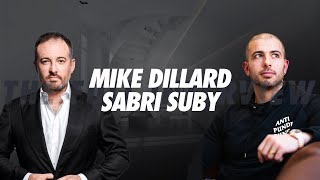
Sabri Suby built King Kong from his bedroom into an Australian digital agency by cold-calling and SEO work, then scaling with direct-response ads and funnel systems. He hires for attitude, targets clients with $3,000+ customer lifetime value, and has transformed businesses like a pilates instructor to seven figures and an aged-care company from $4M to $25M annually.
Chapters
Sabri Subhi, welcome to the Mike Dillard Podcast. I've been a big fan of your work and have been following King Kong for a couple of years now. So it's a pleasure to finally get to connect.
No problems. Thanks for having me on.
Absolutely. So for folks who are not familiar with you or your marketing agency, King Kong, you guys are, I think, one of the most successful marketing agencies that I've ever seen out there. You know, kind of start to finish. Give folks some background about your story and how you built the company.
Yeah, sure. So I started the business six years ago now from. From my bedroom, loaded up, you know, $50 into a VoIP account with an old headset and a computer that my girlfriend had bought me and just started making 150 cold calls per day. It wasn't my first entrepreneurial journey, so it's not my first rodeo. You know, I'd run a few businesses, I'd sold some, I'd run some into the ground, but I was like, you know, a lot of entrepreneurs, it's kind of like the. That path to success is very up and down. And I was in a position where I just got married and I had no money and I didn't like anything that I did have from the years and all the ventures, I'd kind of poured them into other businesses and other stuff that I was doing with my lifestyle. And there I was at ground zero and had to kind of roll up my sleeves and use sweat equity to start the business. So I did that until I had enough money to start actually multiplying my sales message and putting it in the form of ads and all that kind of stuff. And yeah, fast forward six years, there's a team of 70 of us now. We've been ranked as the number one fastest growing digital agency in Australia for the last three years in a row, the 17th fastest growing company. So it's been a wild ride with a lot of ups and downs, a lot of time and energy and effort that's gone into it to get us into the position where we are right now.
I want to ask you, back when you were first getting started, what was the primary skill set that you acquired that you were offering over the phone at that point?
Just SEO. Right. So we had just one core service. Obviously there was clients asking for us for all types of kind of things, but basically I was cold calling by day and then doing the work by night. So I was trying to figure out coding and all that kind of stuff. So if I was to throw Facebook ads and Landing pages and all types of funnel creation on the back of that, I just wouldn't have got it done. And that's a big pitfall that I see with a lot of people starting out, is that they're trying to do everything right. So I just started with one service, one offer, five page PDF that I would send out to a prospect over the telephone and just get the deal done.
Was that PDF customized towards their site? Did you do some initial research first and put it into the PDF?
It was very down and dirty in the beginning. Now it's all customized. Back then it was like it was 150 cold calls. The majority of the time. People are just telling me to fuck off all day. Right? That's what I did for a living. So. So I see a lot of people like, how did you make 150 cold calls? And it's like those people have never done sales before. I've been on auto dialers where I've done 500 dials a day. So it's not like you're pitching. You've done it.
Yeah, 300 calls a day, recruiting doctors.
There you go. So it's definitely the hard yards. But I think that for me what happened is I got my start in sales and I was always the best performing salesperson at every company that I ever worked. And everyone was telling me like, oh, you should get into marketing, you should get into marketing. And I was like, then I started to explore marketing and really that's how I fell down the rabbit hole of like direct response. I started with my. I tried everything that, you know, the gurus put out and the courses and the blogs and all of that kind of stuff and really none of it worked for me. And then I got to a position where it's like, well, I can sell really well over the telephone. Let me just take this presentation that I'm doing 150 times per day and actually put it into an ad and see how that. And then I did it and things just blew up for me. And then I found out about the Eugene Schwartz and the Claude Hopkins and Gary Halberts and I realized, well, I'm not the only one that's kind of figured this out. These guys were all door to door salespeople and then they kind of fell into marketing and direct response and it was only really for me where I took that sales message and I was able to automate it. So instead of cold calling on like 150 businesses a day, I was writing ads that would call on 150,000 people a day.
Exactly. Scale same pretty much. Same story. Called Colin figuring out sales. Found the old school direct response guys realized, holy smokes, I can put this whole thing in an email or a letter or on a website and get it in front of, you know, thousands of people a day with Google AdWords, and then went from waiting tables to, you know, making seven figures within 18 months doing the same deal. So it's interesting how that that core skill has been the key to success for so many online entrepreneurs over the years.
Yeah, I think it's like, you know, it almost has to be a birthright, I think, for people. Like, I know I've got two girls, right? They're both under the age of three, and both of my girls will be on the telephones asking strangers for money as soon as they're old enough. And I don't get done for like child labor.
Nice, nice. So one of the, the big questions that I have for you is the key to doing your own sales is one thing, the key to transitioning to essentially a business owner where you're then a CEO, training, working on systems and processes and culture. It's a completely different set of skills. You've obviously been very successful at that. Where did you learn how to actually build a company instead of just sell?
Yeah, that's a great question. And that's a huge, very important distinction to make. It's like I don't look at myself as a marketer and even though that like, you know, people, they talk about like that I'm a marketer, right. I look at myself as a business builder and I think that, you know, that emotional intelligence and that EQ is really what it takes to build a company. And you know, honestly I think that it was probably to do with my upbringing and the way maybe that my mother raised me in terms of like that EQ and just being in touch with myself and being very sensitive to my surroundings and other people's emotions and all of that kind of stuff. You know, I look at like with everyone that comes and work in my company, I tell them, like, I'm not looking for like a warm body with a heartbeat. Like, I'm looking for hungry people that want to get ahead and want to be a part of something a lot bigger. Right. So this needs to be a two way street. Like I need to be able to help you get to something that you want to get to in order for me to get to something that I want to get to. Like, this isn't just a job where you come in and like punch in and punch out. It's like, what is it that you want to be doing? Where do you want to be going? Can I help you get there? And only that's a fit. Then is it gonna be right for that person to join our company? Because, you know, the people that work with me, it's like they would be doing that. They're all doing this stuff on the weekend or as their passion project as well. Right. So if they're, you know, building websites or shooting videos or running ads, like they are still when they finish working, you know, in our offices on the weekends, this is the stuff that they're reading about and doing. Right. And I'm just basically paying them to do that. So that's really what I look at. And then it's. It's definitely like, it's a continual journey and a learning curve as you ascend to each level. Right. Like, for me, I often say it was very difficult to first build my team of about 10 to 13 people, because as soon as someone would come in and then they would leave, I was back in the trenches running Facebook ads again. Right. Or optimizing landing pages. And there was no replacement. So for me, that was probably the most difficult hurdle is to getting to that small team of 13. And then we went from like 13 to 30, then to 50 and now to 70 plus. So they all have their different essentials points throughout the way that you have to go through. But I really look at that management and that business building function as a leadership function, not as a management function. Right. I don't ask anybody to do anything in my company that I haven't done myself. I have literally every single role in this business I have done. So I think that when you're coming from a place where you have the ability to see the 10,000 foot level and then zoom into the forensic details and actually help people in the weeds. That's what allows you to have your words have a lot of weight. Right. And people can see that you're not speaking for some ivory tower. They know that, okay? This person knows exactly what they're talking about. And they have done everything that they've asked me to do. And that just, you know, it reciprocates and brings, I think, a level of respect that you don't get if you don't come from that position.
Yeah, absolutely. Agreed. Did you have any mentors or did you join any organizations that really essentially taught you how to be a CEO at that point? Like, let's say EO Entrepreneurs, Organization or Something along those lines or did you just kind of figure it out?
Yeah, look, I just figured it out. I've had like, you know, and a lot of like, you know, friends of mine that are entrepreneurs and stuff. They are like all a part of eo. I've spoken at a few EO events. But like I think for me I've always looked to, you know, my mentorships and my education from books really. I tend to study people that are not alive. I like to see, I like to see the full spectrum. I don't like to see just one chapter of somebody's life. So like, you know, I study people like Marcus Aurelius and read like his meditations and like someone that's like the greatest Roman emperor of all time arguably. And they're their thoughts in leading like that empire or Benjamin Franklin or whoever it might be. But I look at like people that have lived a rich life and it's not just like one, one trick pony, some person that knows how to build a funnel. I really dig into the weeds of who that person is before I open up my mind to any of their ideas.
Yeah, great. Awesome. When it comes to your clients, do you specialize in any kind of particular company or business model or do you take people from every shape factor form an industry?
Yeah, we, this is an interesting one. So we do have an ideal dream buyer, right? And that's somebody that has a lifetime value of $3,000 or greater and they've got a sales team, they've got some ads running and they're in the car and it's moving and they just want to go a lot faster and they really want to scale things up. But you know, in, in an area when we're talking about marketing and there's like all these gurus talking about you must niche down, like you must only work with like left handed dentists, right? You do anything other than that, like you're marketing's not gonna strike. And for me really I look at, I always wanna look at what are the facts, what's the reality, right? And you know, for me I'm in a position where we've worked with clients in 416 different niches and we've generated over $1.33 billion in sales. And for me it's also like you have to be a much more skilled marketer in order to be able to apply your principles across different industries. And I was just to work with like auto dealers or just info product businesses or den surgeons like that would bore me out of my mind and it also doesn't keep you very sharp. Right. If you look at the David Ogilvies, you look at the Gary Halberts, you look at any of the greats, like people that have really had something where they've left a legacy. These people have worked in multiple different disciplines across a big wide variety of clients. Because the thing that really fascinates me is the human psychology, right. It's very easy to get one funnel working for like a coach or a consultant or for a dentist and then just like just keep on re skinning that thing and selling it onto people. But like for me this is about more than just money, right. I'm here to have impact and I don't want to just have one impact in one vertical or one industry.
Yeah, makes a ton of sense. What has been your most successful client story so far? Cause I know you've had a bunch.
Yeah, like I probably couldn't point to just one. I can give you a few. You know, we started with a Pilates instructor business. He was like working out of a back of a friend's yoga studio, really struggling to make payroll and just stressed out of his brain and he came on board, he was doing like 20k per month, which might sound like a lot, but when you've got mouths to feed, it's nothing. So like he was in the red, we blew him up, you know, to multiple seven figures. We worked with another aged care company. We took them from doing 4 million a year to 25 million in 12 months. We took a home builder from doing 0 to 18 million in 12 months. We've got, yeah, we've like, I've got like a book full of people really. But the big thing for me is that like, you know, we work with the small like little yoga studios like that all the way up to the multi billion dollar brands like the biggest home builders in Australia for instance. But for me I get the most purpose of dealing with those small to medium sized businesses and coming in and being able to like really change somebody's life and be able to see it like really tangibly, like have a conversation with somebody that said this is where I'm at, right? This is what's going on, this is where I want to get to and they're really struggling and literally you being able to come in there and move a few dials and levers and write a headline and change up their offer a little bit and then just be able to like just blow their business up geometrically in like 6 to 12 months and then Speak to them and hear firsthand what an impact that's made on their life. That's the thing that really lights me up.
Yeah, that's awesome. That's awesome. I have to ask you, how do you sell a home builder? Like, what does that process look like? Because I'm thinking about that in my head and I'm thinking that you're selling the lifestyle, you're selling potentially the quality or the unique features of the home, the emotional side of it. But from your perspective, how do you, how did you help that home builder blow up that fast?
Yeah. Well, if you think about it, how most home builders market, right, they're like, okay, I've got a display suite. These are all the different homes that I've got. And these are the price tags. Which one would you like? Mike? Right, which one is it? And that's about as much as goes into it where it's like they're, it's so much like this. They're doing businesses like in the dark ages, they're like, these are all my wares and would you like to buy some? Right? That's pretty much how it's done. But there's a lot of information that goes into buying a home. Like it's the biggest purchase that someone's ever gonna make in their life. So like, there's a huge opportunity to add a lot of value to that decision process and to educate that buyer. So we typ come out with like free reports and we create free reports for whatever it is that, that that person specializes in. Right. If you're going after like the first home buyer's market, you know, the 13 things, 13 fatal traps, you absolutely must know before buying your first home. Like check these out before dare speaking with a building company or you might be building a home on like a sloped block. The seven things that you got to know before you knew you purchased a sloped block or whatever it might be. So you want to really provide a lot of value to them and get them to raise their hand in a of people of like, yeah, I'm in the market as a first home buyer, right? And then once you know that they're in the market, that's when you hit them with a full blown red hot sales pitch with like a long form sales letter that talks about getting, you know, a beautiful home that makes their envies like their neighbors green with envy and stop and stare every time that they're on the street. Right? And we use all of those triggers that come into it and even more education about like, you know why having a home is so important, Right. Why it's the central point to building a family and all of the different things that come into it. So, you know, we typically want to use a very low entry to get that person to raise their hand as being an ideal candidate and they're in the market. And then once they kind of download that, then we're going to hit them with a red hot pitch and basically invite them for some kind of free consultations to jump on the telephone.
Yeah. I mean, as you are doing, you would just crush the competition because other home builders don't know what sales copy is, they don't know what a capture page is, they don't know what an email autoresponder is, they don't know what a retargeting pixel is, they don't know any of that. So it's just like, yeah.
And a lot of the times like you would think, okay, to go from zero to $18 million, like surely you've got the most complex funnel with crazy remarketing campaigns and like contingency campaigns off the back and text messages. Most of the time these things are done with two step funnels and one traffic source and absolutely redlining the shit out of that traffic source and squeezing every last bit of profit before you stack on that next traffic channel before you do other things on the back end of that. So like, you know, simplicity gives you speed and speed gives you power and we really look at, okay, well what are the things that are actually the core of what you need in a day and age where there's so many shiny objects out there and chatbots and all this other stuff, what do you actually need? Right. In order to crush it? So most of the time it's just applying those timeless principles to it and then go out there and just executing better than anyone in that space.
Yeah, 100% agreed. Awesome. Now, when it comes to your team members and your employees, I wanted to ask you, do they come to you with a great attitude, they're teachable, they're coachable, but lacking the primary skill sets of marketing? And do you teach those skill sets to them or do they come to you with an understanding or an expertise already and you just kind of help take them to the next level?
It's a bit of both. But I value, I hire for attitude and for passion and then I teach them the skills. So we've got like a King Kong academy, which is like an internal learning management system which is like we can take any rookie off the street and turn them into a world class marketer in like six months. And typically, you know, when, like, obviously there's lots of people reaching out for me and people that are seeing Facebook ads and being like, hey man, I can. I would love to come and work for you. I do Facebook ads. Typically when we get these people, it's like we need to do the whole men in black and flash it and indoctrinate them because they come with all these bad habits anyway, right? So I really look for the passion and the hunger and someone that's going to be with me kind of for the long term and wants to be a part of this journey and then invest in them to just turn them into an absolute savage when it comes to marketing.
So I got to ask you, you know, usually in my experience, once. Once somebody gets really good at marketing, they have the ability to basically generate cash on demand for themselves or somebody else. How do you keep people who have that skill set?
Yeah, I think that like, well, one thing I always like to also look for is people that have run their own business and have kind of seen the pitfalls of like, you know, the difficulties in running a business. And it's like you need a lot more than marketing, right? And even. But like, there are people that come in here, they learn these valuable skills and then they go out and they try their own thing. Some of them succeed, most of them fail because they only see one side of it, right? They only become like a one trick pony. They think all you need to do is be able to write sales copy and run some Facebook ads and you can build a business when there's a lot more that goes into it than that, right? So I think that really what I look to do is foster an environment where there is a lot of growth and where people can get a lot of those same gratifications that they would in going out and doing their own thing, but also be internal with our team. So I tell all my managers, look, just run this team like it's your own business, right? Don't come and ask for a raise, don't do all that stuff. Just go out there and bring me more money and we can share in the upside, right? And trying to really create an entrepreneurial environment where the best ideas win. But there is always going to be those people that do want to come out and run their own gig. And that really comes into when you're interviewing people and when you're screening them in the beginning is finding out where it is that they want to go and what it is that they want to do, right? If they ultimately want to come into King Kong, learn everything in 12 months, and then go live on a beach in Vietnam, then they're probably just not a great fit for us because we put so much time and resources to getting that person, you know, up to par for them to just do that. But there's a lot of people that have gone and done that freelancing thing, right? They've gone on Facebook groups and gotten those few gigs or they're a copyright or whatever my. And, and depending on what you want, that lifestyle gets very isolated very quickly and it's very fun and novel for the first 12 months. And then you're like, what am I doing? Like, I want to just get out of my pajamas now and I want to integrate with society and I want to be part of the team and do something bigger. And I think that when you provide an environment where there's a lot of like minded, hungry people around that are all trying to be their best and be world class, that's just, that's a huge draw card in itself and it's a huge retention point that people, they know that they can't go somewhere else and get that community. And the community is so important. And as you know, during COVID 19, where everyone's isolated and stuff, you know, I think that that's becoming even more apparent of just like how important that community component of a business is.
Yep, 100% agreed. Awesome. As far as the services that y' all provide for clients, is it a la carte where it's just based on, hey, we want to do Facebook ads or maybe we just want to do Google and YouTube or we want to just do SEO or do you do everything comprehensively?
We like to do everything comprehensively. And that's because we look over like the portfolio of the hundreds of clients that we've got and we look at like, what are those key drivers that make somebody successful? Every single client that we've, like every single millionaire that we've created has typically had more than just one service with us. Right? So that might be one traffic source, but they might have like a funnel built with us or a landing page or some crow element. So typically, you know, whenever you're doing marketing, the thing that people like marketers won't tell you is that it is a risk and it is a gamble until you find something that is a winning campaign. Right. And naturally, if you have more traffic channels, that just increases your chances of finding something that's going to Work a lot quicker. And so with your, like, if you build a funnel or a landing page or whatever it might be and you're just running Facebook ads and it doesn't work, that's it, it's over, right? We close the show down. Okay? This is not working. The numbers aren't stacking up. Uninoc unit economics aren't profitable. And then it's done. You close the show and you move on to the next thing where it's like if you have both, you know, Google and Facebook running, you know, you can hedge your bets and you can file. Facebook's really not working. Right. We're getting a really good cost per lead, but the ROAS is just not there. But look at Google like this is things crushing it. Okay, let's pivot the budget over to that. So, you know, we typically like to look at an environment where we do have multiple traffic channels and marketing is very difficult. And what we do as a business is solving the number one problem that all businesses face, which is how do I get more customers? And regardless of what you read online or you see in a YouTube video, it is a very difficult thing to do to be able to turn paid advertising into profit in a scalable and profitable fashion. And that's what we're doing day in, day out, rinse and repeat in 416 different industries and niches. But it doesn't happen on the first campaign. Right. There's a lot of testing and trying to go into it because when you find that golden thread and you call this campaign's winning and then you can put your foot on the gas, congratulations, you're now financially free. Right. You've just done the hardest thing ever. And it was super, super easy where you could set up an ad campaign and hit it out the park first time. Every sing person would be doing it and everybody would be rich. Right? Everyone would be billionaires with six pack abs. But that's not the reality.
Yeah, 100% agreed. You mentioned earlier that your ideal client has a lifetime customer value of at least $3,000. How important is it for your clients to have a proper, let's just say ascension model in place for their products and offers.
Yeah. That's the reason that we also typically go for a higher LTV is because if you just look at most businesses and most business operators, they're not, they're not very sharp and very savvy. Right. So if you're running off like the typical ascension model where you have like an entry offer and then you have an upsell and two upsells and then you have a back end and stuff like that. Like nine out of 10 or even more, 99% of people, they don't have any of that, right? They don't have any back end. They don't even have a business. They have a promotion, they have an offer, and they're trying to turn that into a business. And they're trying to make the unit economics stack up in a rate where they can run some ads. They make enough profit from one offer that they're still got enough money left over at the end of the month to really provide a lifestyle for themselves. And that's just very difficult. So, you know, that's a whole different game. Like a lot of the times when we're working with clients, it turns into a business consultant relationship where we're actually telling them like, no, this is what you need to do. You need to have a back end, you need to have these things in place. But if we were to build a business model around expecting people to have those things in place, then we simply wouldn't be as successful as we are. That's why we look at those kind of higher LTVs where they don't have to be the sharpest operator and there's still enough meat in the deal in order for the unit economics to stack up in a fashion that is profitable for that person. And then when you start to coach them and consult them about offering other offers and having more of an ascension, then it just explodes.
So I'm curious on the. And obviously the three time $3,000 lifetime customer value is a nice to have but not a need to have on the Pilates business. I'm so curious about that. So were they selling online courses for Pilates or what were they selling?
So they basically were doing. They were training Pilates instructors to start their own Pilates business or to be an instructor in someone else's. So they weren't actually like a yoga studio providing yoga class, for instance. So that was selling courses and doing certificates and workshops and all that kind of stuff. And now they've obviously transitioned into online courses. But yeah, they definitely fit that mold of that $3,000.
Okay, that makes sense with the certifications. Yeah. I was like, man, if they're just selling Pilates ebooks or classes, I would be very curious to learn more about that and see how you'll pay that off.
Yeah. And look, and even like, we do have clients that are doing that. Like, you know, we have F45 and a whole bunch of people that are doing those smaller things. But, but again, if you take on a personal trainer that's charging 100 bucks, 150 bucks a session, they're all hungry to grow until you get them 15 clients and then they're like, man, I gotta turn everything off. There's no more time in the day. Right. So that's why we look to partner with people that are hungry for growth and typically have a kind of team in place. Otherwise you hit it out the park and then you need to pump the brakes immediately. And our business model is that we're rewarded in the upside of getting that client to be able to scale. Right. So there's, there's not any money in running like a $2,000 ad spend per month for us, right?
Yeah, absolutely. Awesome. From a, from a marketing or business perspective, what has been the biggest landmine that you've stepped on? Have you had any lawsuits you've had to deal with? Have you had any.
Oh, multiple. Yeah, there's always somebody coming out the woodworks trying to fuck you, right? And like, the problems just get bigger and bigger at every single step of the way, right? Pretty much the way that I look at it as like the founder and the CEO of a business, it's like an upside down triangle where the hardest problems that everyone else in the organization can't solve end up on your plate. Right. I have a fantastic team. I've got a very good general manager who's loyal as ever, and that takes over a lot of that stuff for me now. But there's always problems, right? The problems only get bigger the higher you climb. So there's, there's always going to be those challenges along the way and things don't get easier. You have to get better. And that's just like the thing that I always look at is, okay, what is my company? What's the company growth rate? Right? And just say that you're growing at 100% every year. And if you're not growing as a hundred percent as a leader, then you don't qualify to be in that position anymore because the company is outgrowing you and it's outgrowing your leadership ability. So like, you know, you always need to be feeding the mind, sharpening the sword, and, you know, making sure that you're able to breathe that air at a higher altitude as you climb. And so like, you, you can't be expecting, like, you can't think. Okay. You know, whenever you're like, you're starting out a million dollars, is that the kind of key Milestone. I've just got to hit a million bucks. Got to hit a million bucks. And then you hit it. And it's like, it's not a very great moment. It's not like, oh, my God, like, pop the champagnes. We're millionaires, baby. We did it. And it's like, you look for that next summit. Right? The next big to summit. And so all I can say is that throughout all those different trajectories in me building the business, there's always been different challenges along the way. And you need to constantly be up leveling to rise to those challenges that come at you.
Yeah, 100% agreed. The bigger you get, your problems just change and get bigger as well. Yeah, for sure. As far as. Let's just say this whole health crisis that's been going on. Right. How has that affected you all? I see that you've updated your headline on the homepage. What other changes have you made yourselves when it comes to your marketing and what kind of response have you seen from that?
Yeah, so I think that, like, as a bare minimum, if you're in a business that is. And every business is aff. Some more so than others, is you have to make sure. Like, for instance, you mentioned that we updated our headline. Right. So say, for instance, if you have, like, you know, how to get 5 to 20 customers every single month. Right. And the first thing that a prospect's gonna think about when they read that. Yeah, that probably worked eight weeks ago, when it wasn't in COVID 19, when we weren't in this pandemic, when the economy hadn't grinded to a halt. So the first thing that you need to do is address that objection immediately. Even in a pandemic, even during turmoil, in times, Even during the coming recession, whatever it might be. Oh, okay, awesome. This is relevant. It still is going to work because everybody is always looking for that one excuse. Like, the way that I think about it when people read my sales copy is that they have their mouse on the back button and they're looking for just one excuse to click that back button and to not have to read the rest of my sales message. So I need to be selling consumption all the way through my sales message in order to even get that thing read. Because that's the number one objective, is just to get it read. So, like, people are so busy. Right. We spoke about the marketing greats, right. You know, God bless their souls. But I think that we've got it much harder than they do in terms of, like, if you just look at the noise factor and like, how erratic and how much chaos is currently taking place in every single market. Even before COVID 19, right? There's this. People are getting bombarded with like, notifications, notifications from 16 different apps. They've got 23 different tabs, open their phone, Slack, Google Chat. Everything is going off Facebook Live. Everything's got its notification hell, right? And the dopamine is flooding their brain like crazy, is that you have to be so talented to be able to capture somebody's attention and then flip it and leverage it and actually turn it into money. And that's a challenge that those guys didn't have, right? The most of those guys were writing direct mail letters and newspaper ads where it's like just the way that people consumed content was so much simpler than it is today. So if you're not addressing all of those things in all of your sales message, then the consumption is never going to be there. So I always imagine that, like, my prospect is in a car with a group of friends. The window is down, all the windows are down. They are blaring some Little Wayne. They're all screaming, they're Facebook living, they're vaping. And my sales message needs to grab them by the jugular and make all that outside noise and distraction of what's going on much more intriguing and interesting than all that chaos. So if you don't address that, you're gone.
And what I want to acknowledge that I really respect with you guys in your marketing, whether it's the ads that you produce, the videos that you have, the website that you have, none of it's over the top. None of it's sensational. It's just very authentic, to the point, rational. It's not using gimmicks of any kind. It's just really solid copy.
Yeah. Thank you. So, yeah, and then to come back to your question is like, the thing that you want to typically change is like, you know, the headline of your homepage immediately. And don't just do the we're trading during COVID 19 shit. Like, no, no, no, no. You need to wrap your offer up and present it in a way that is relevant during this time. And then the other, the core thing that you want as an absolute minimum is change whatever the conversion page is on your website, whether it's a call funnel and you're trying to get someone on the telephone or it's E commerce, or even if it's your Contact Us page, right? And you need to specifically address how you're dealing with this time. And make your offer relevant.
Yep. Yep. 100%. Agreed. Awesome. Let's see here. From a marketing perspective, what would you say is the single biggest point of leverage for the average business?
I would say it is research and then basically, like spending time with the person that's on the front lines, speaking with your customers every single day and recording those phone calls, logging those questions, sitting down next to your best salesperson, listening to their calls. I still listen to my team sales calls. Right. I am on that. I know when the wind direction changes in my market because I am literally exposed to thousands of phone calls every single month and getting that frontline research of what's happening in the market and then really getting in tune with what is that kind of bullseye in your marketplace. And then that is the raw materials that you use to create leverage. Right. You don't earn the right to have leverage unless you've been down in the dirt on the front lines, finding out exactly what your market wants and then taking all of those pains, fears, hopes, and dreams that are already existing in your marketplace and putting that into an asset, whether it's a Facebook ad, it's a vsl, it's a webinar, it's a funnel, it's a sales page. And then leveraging all of those insights so you can scale up the customer acquisition of your business.
Got it. And are there any. You know, one of the biggest challenges that I could imagine y' all deal with is the fact that, you know, many of your clients are going to be using different tech. Different tech platforms. Right. And how do y' all deal with that? And do you. Do you prefer one tech platform over another that you recommend people have or use or switch over to? If you. If that's practical and possible, how do you handle that?
So we don't take on a client for traffic unless we do some funnel for them. Right. Because the traffic isn't the thing. Right. Everyone thinks, like, it's the latest retargeting strategy and how you can remove this segment in your retargeting audience and your roas. I don't care about any of that stuff. Right. I can target America and that's it in my ads, and I'll crush it. Right. So it's not about the traffic. Right. The traffic is definitely a huge component to it, but it's the psychology of what makes that traffic work because the traffic is abundant. Like, you've got a pulse, you've got a credit card. You can go out there and start running Facebook ads immediately. That's not the challenge. The challenge is how do I actually make this traffic profitable? And it's not in the technology, it's in the psychology. So what we look to do is like, we don't want to take on, you know, we see clients all the time. Hey, like, we've got a funnel. Can we just hire you guys for the traffic? Well, it's like, well, show us your metrics. Like, show us what you're doing. Like, I don't want to see you retargeting. Show me your cold traffic. Show me that you've got some scale and then we can talk. Right? Because, you know, typically what will happen is that you'll take that person on, you'll run the traffic, and then it won't work and they'll blame the traffic. No, no, no, no. It's not the traffic, it's the offer, guys. Like, the conversion rates are low, Mike, below KPI, you're not going to be hitting these things. So we really want to have some function of controlling what that message is, because we have the experience of spending tens of millions of dollars on paid traffic and running thousands of scientific split tests to know what works and what doesn't work. Typically from a tech stack, we want to use something that's just like open source, like WordPress, in terms of the funnel back end, we're typically more often than not using Infusionsoft or ActiveCampaign, you know, and that's just because, like, a lot of the functionalities, why there's no tech platform out there that's perfect. They've all got their pitfalls in terms of power and the ability to really scale up and use a lot of advanced automation, you won't really need to move away from those platforms until you're doing some insane volume. And because where we do custom funnels, right, you know, where we're custom writing, we're doing all the research, we're doing all the copy, all the design, and then doing the build from scratch. So building it on WordPress just makes a lot more sense where you don't have that monthly fee attached. So something like a click funnels or whatnot.
Awesome, awesome stuff, brother. So who should reach out to you? Who would you like to talk to right now that would be an ideal client for you guys?
Sure. Well, look, I think the very first step is that before somebody even reaches out to become a client, the best place to start is probably to check out my book and you know, where we're giving that away for free. You just have to pay for the shipping@selllikecrazybook.com free. And that's just everybody that is in any type of business will get a lot of value out of that. And that isn't some kind of crappy little lead generation book. That thing is 340 pages thick. It's got my 8Face secret selling system in there. And that is not like some thinly veiled sales pitch. You could take that thing away and you're gonna get value out of that thing just in itself. So anyone listening can go ahead and take advantage of that offer. Now, if you're already going and you just want somebody to go ahead and do it for you, basically the thing that you need to really be looking at is that you have a lifetime value of your client being $3,000. You've got a couple of employees, so you've got a team, you've got a salesperson and you're ready to scale, you're ready to get to that. And you just want somebody to come in here and to be able to manage all of that stuff for you so you can focus on building the business. Then anyone can get in contact with us. @KingKong.com AU we're very straight shooters, so we don't take on anybody. There is an interview process to we look at people that are going to be a right fit. If you're not a right fit, we'll just shoot you straight and say, hey, we don't think that we can help you get to where it is that you want to go. And it would be a disservice to you in order just to say yes, to bring you on board, for you to be unhappy in three months, that rubs some people up the wrong way. Some people like, well, aren't we good enough for you and all that? No, no, no, it's not about that. Right. If you want to find somebody that's just going to take your money and run, there are plenty of marketing cowboys out there. Go on any Facebook group. You have 100 people begging for your work. Right. But we look for people that we can partner with long term and really add value to their business long term.
Yeah, 100%. Agreed. I've had a great experience talking to your team and the phone calls that I've had over the last week. So it's been, it's been a, you know, very educational and they know their stuff and it's just been great. You've built a fantastic company with a great, a great set of people behind it.
Thank you. That means a lot. Thanks for saying that.
You bet. Absolutely. And one last question for you out of my personal curiosity. Have you ever gotten a cease and desist from any movie companies around the name King Kong?
No, I haven't. I own the copyright for advertising and marketing for Around King Kong, so that's a registered trademark that I own. So, yeah, no, I have. Not today. No. And I hope that never comes.
That surprises me, to be honest, just because you would think that they've just got their attorneys in my experience, who need something to do and getting paid to send out cease and desist for any reason they can find fine to justify their employment. So that's good news. I'm glad it hasn't happened. But yeah, very cool. Awesome. Sabri, thank you so much once again. If you could give out that URL for the book, that'd be awesome.
Yep. It's selllikecrazybook.com free and my pleasure. Thanks for having me on. Mike. It's a pleasure chatting with you.
Absolutely. Great to meet you. Thank you for your time today, ladies and gentlemen. As always, thank you for watching. Thank you for listening. We'll see you next time week. Take care.
Hey guys, if you enjoyed this video, make sure that you click the like button and subscribe. We're dropping a video on YouTube every other day and if you've got any questions about any of the content that I covered in this video, just basically leave a comment with heysubri in the comment section. And every week we're also trying to go through all those questions and get them answered. So go ahead, click subscribe and we'll see you in the next video.










