The Real Story Of Sabri Suby [FULL INTERVIEW] Former NFL Athlete Anthony Truck's Aww Shift Podcast
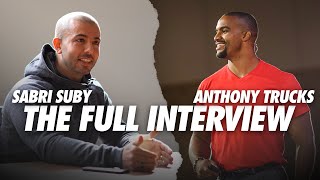
YouTube interview (All Shift Podcast) featuring Sabri Suby in conversation with host Anthony Trucks. Suby describes his rise from early sales jobs to founding King Kong, outlines practical sales and scaling lessons (lead follow-up, systems, hiring, mental models), and emphasizes business as a vehicle for impact. The conversation mixes biographical narrative, tactical advice for entrepreneurs, and personal reflections on purpose and leadership.
Chapters
Yeah, man, yeah, you digging in, letting them know it's the good, good man. This is awesome. Hey, welcome back to the All Shift podcast. I'm your Host as always, Mr. Anthony Trucks. And yeah, I don't know why I say that nowadays because I am the host. We're somebody else who's the host of my podcast. But today I got a treat for you. This individual is connected through an individual that I just kind of met would had a really great idea of introducing this person. But here's the thing this person doesn't know. About a year ish ago, I came across one of their ads on social media about this book. And I bought the book. I'm not gonna lie. Haven't read the book but like I was thoroughly engaged by this individual's like the flow, the heart, like the human. I could tell behind the scenes. In fact, I think actually I'm not gonna lie, I think I copied and like saved the copy in like one of my swipe file areas. Cause like the dude's just a genius at marketing, at business. But what I can see, and I'm gonna find out more, hopefully the heart of the human seems to be genuine. And so as we unpack this today, I want to have you be able to hopefully peek behind the scenes of an individual that's had incredible success in business but seems to also be successful in areas of life and wants to give back. Because I know sometimes those people don't pull the curtains back. But I'm hoping he does. He's already said he will. So without further ado, I'm going to bring to the show individuals had great business success. He'll talk about it. I'm assuming life success as well. But. Sabri Subhi, how you doing, man?
I am doing well, man. That was one hell of an intro. Thank you for having me on.
Oh, I appreciate it. I have a weird way of just talking. I try not to prepare. I just like I'm gonna talk to people and my heart will come out and it works. Here's the first question I always ask people though. And you can go wherever you want with it. If I'm walking around in Melbourne, I think I said it. Melbourne. I don't have that accent anyways, Australia. And you're sitting at a coffee shop and I sit down next to you, no idea who you are, and you turn and start talking to me. Why should I listen to you?
For me, I think it's probably if I was to look it through the lens and ask myself that question. I've Always been fascinated. People that have been able to make something from nothing. You know, I was, I was raised by a single parent mother. She kind of worked three jobs to raise me and my sister. And you know, I have started my business from pulling up my bootstraps and really hustling, being out there in the trenches, on the front lines, getting my teeth kicked in day in, day out. And I've really just parlayed all of that work into the position where I currently am with my business right now. So there was no silver spoon, there was no ball and buddies or, you know, venture capitalists that wrote me checks. I went out there with 50 bucks and made it happen.
I love it, man. You're the kind of guy I like because, man, you got the arrows in the back. You had the kicks in the face and the bruises like your bones are stronger, right? How did you get started in it? Well, first off, let's do this. Tell the people what it is that you actually do, right? So people can go like, oh cool, business success. Do you sell shoes? You know, women's underwear? Like what do you do?
Yeah, women's underwear. So I run a company called King Kong. We're Australia's number one fastest growing digital marketing agency. We've got clients in 86 different countries and we've generated them over $1.33 billion in sales. And we're all about basically helping businesses solve the number one problems that they have, which is how do I get more customers, Right? And that's really what our whole business is focused around. And we, we do that by helping them grow their traffic, leads and sales.
I like it, man. And that's what we need in the world nowadays. Everybody needs that damn thing. Look at you getting something people need. I like it. How did you get into it now, right? Cause that's the big question. This is, it's fairly new, right? But it's not something people jump into. Like I woke up, I want to do this for a living.
Yeah. So my, it all started when I got my first gig in sales. When I was 16 years old. I was selling ink cartridges over the telephone. It was my first kind of full time job. We were all packed in, into this old shipping container that was converted into an office. It was a real life boiler room, right? When I say that figuratively and really because it was this shipping container used to get really, really hot because there was no AC in the thing. And that was how I got my start in sales. Just hammering the telephones, making 300 to 400 cold calls a day. And I sucked really, really bad at that. Like, I was the runt of the litter. And then what happened was there was a moment where, like, the founder of that business was like, yo, if you don't pick up your game, like, we're gonna have to cut you. Right? I see something in you. So I'm gonna give you another week to turn this thing around. And I don't know if it was, like, desperation or motivation or a combination of them both, but I went home that night. I was like, look, I'm gonna. I'm. Something's gonna change. And it was like a flick of a switch. I came back the next day. I started to approach the game of sales. And as a game, and literally within three weeks, I became their top producing salesperson. I then went on and traveled the world, lived in London, the States, selling everything that you can imagine door to door over the phone, one to one and one to many. And that was really the kind of gateway drug into business for me, is just being on the front lines, actually doing that customer conversion from a stranger into a client. And I didn't know what I wanted to do with my life at all. Like, I had no idea what I wanted to do. So I thought I'd take two years off, go travel abroad, get some worldly experience. And that was when I was traveling. I was always selling. And then I thought, look, I'm pretty good at this. And I ended up returning back to Australia, and everyone was like, oh, you're so good at sales, Maybe you should, like, you know, do a degree in marketing. And I did that, and it was useless. And then I dropped out, and I ended up completing that thing. And I started my first business when I was 22, and I sold that business, and then I started other businesses. I ran a few of those into the ground. I've sold a few. And that has all led me to the position that I am in right now at King Kong. Because in all of those roles, I was always tasked with, how do we get more customers, right? And it was just. I was able to do that, and it was such a big problem. And then really, that led me to being where I was at King Kong was like, this is a huge, huge problem that I can solve for a lot of other businesses other than just my own business. And I saw a real gap in the market. And that's when kind of I started King Kong, and the rest is history.
Yeah, dude, that's a long journey. So the podcast called the OSHA Podcast, was off shift Good osha, bad moments. And you just traversed, like, the entire Everest twice. There's a whole lot of. Whole lot. Because there's parts of. It's like the front line that freaks people out. To be the thought of, like, going door to door, put myself out there, taking that next step. Right. So in the area of what you do, what is the most, like, difficult thing for you to get your clients to do? Because obviously you can't go out and sell for them. Right. So when you find this thing that you've probably mastered now, obviously mastered it, it's damn near second nature to you. What's the most difficult, frustrating part for you to just get people to get is the key to their success?
Great question. And the biggest thing I would say is that in a world where you can generate leads, online Facebook ads, and there's all these different mechanisms, Right. We can make the marketing work, but you need to make the leads work. Right. And unfortunately, even when you tell somebody, okay, like, look, you're gonna need to follow up on every inbound lead a minimum of 12 times to really make sure that you're making the most of it. You know, even when you can tell people this is what's required, it. It takes a different level of hunger to actually do what is required. Right. Because, you know, everyone wants to be successful, but successful people are willing to do all the things that unsuccessful people simply aren't willing to do. So unfortunately, sometimes even when you tell people, like, okay, we're going to be getting you leads. This is what you need to do, it's just having that willingness and that hunger to do whatever it takes to make it happen.
Yeah. Do you guys feel like at that moment in time, because it's beyond that happens probably far more often than. Should I call it the. We're in the epidemic of shelf esteem. I buy things, I get the coaching I buy. I get the guides in the background. But, like, it sits on the shelf or it sits on the shelf never gets done. Do you ever take on, like, damn, like, this person didn't make the money with those leads. That's on us to take that. Or, like, is there something people need to be able to do on their own outside of that?
Yeah. Like, I think that, you know, I always look at solving very complex problems where people would be like, oh, well, you just blame that client that they didn't follow up on that lead. Right. Because that's not your job to do that. However, I look at casting some of that blame on myself and being like, well, maybe my Systems aren't good enough to educate them on the importance of these things. But we have set up those systems in our business. We do provide them with training and everything. But it's that old analogy of you can bring a horse to water but you can't force it to drink. So I feel that like if you're teaching people and you're giving them like the scripts of what to say to these leads and you're telling them how many times them or their sales team would need to follow up on those leads in order to really make this thing work, at the end of the day, you know, you can't roll up your sleeves and call their leads for them, right. They're just. There has to be a level of hunger. It's like if you're a personal trainer, you can show someone how to get fit, but you can't do the sit ups for them, you can't do the squats.
Exactly, man. And I love that because that's honestly how I think of it. I have clients world of what I do as well, right. It's like, man, I gave you all of it. Why don't you just do this thing? Do you think that there's some people that just genuinely aren't cut out to be in business? This is one of the things like that age old question because I'm always contemplating like, dude, you got this. Some people had the skill sets, like one of my best friends in the world, he could be a phenomenal entrepreneur, but he doesn't have that muscle that will let him risk like certain levels. Do you think that people can get that or they just, it's just you got it or you don't.
Yeah, I think that it's a product of your environment. I don't think that like entrepreneurs are born or anything. I think that human beings are typically made up by their environment. And that doesn't mean that like you could be in a rough environment and then, you know, you play the victim your whole life. But it's like that hunger in the belly. Like you either have it or something happens to you in your environment that gives that to you, whether it's from inspiration, inspiration or motivation. Right. And if you don't have that, then the only way that you can give that to somebody is by those experiences. And you're not, you're not like as coaches, as consultants, we're not in, in that position to put people through those things to make them have that hunger.
I agree. I love this because I'm obviously I'm leading these Things because I'm like, I want people to hear these words from someone that's not me. Because it's necessary, because it is genuinely the truth. I want to go back to the time when you popped overseas. You're like, I'm going to go from my home country. I'm going to go to a foreign place, America. I'm assuming you came to the States, and I'm going to go and talk to people I don't know by myself. That's a damn scary thought for most people. Like, how in the hell did you distrust yourself to do that? I'm asking the question, why did you trust yourself to go over there and be successful? Was it just because of the success in the past? Was there a certain part of you that's like, I got to figure out, no matter what, what gave you the ability internally to say, I'm gonna go foreign and just do this?
Yeah, I think for me, it was more of a thing, like, I finished high school, and I didn't know what it is that I wanted to do, but I know I knew that I didn't want to go to university. And I grew up in a place called Byron Bay, which is like a small beach town. It's like the equivalent to, like, Del Mar in California. Right? It's a small little beach town, and, like, there aren't opportunities in there.
And.
And if you want to have opportunities, you typically move to Sydney or to Melbourne. And I didn't want to do either of those things. So that was when I decided to kind of pack my bags and go over to London. And I lived in London, and I did the most random jobs you can ever think of. And I ended up finding myself back in sales. Right? And it was something that I didn't want to get back into because it's like, you know, sales is a very challenging thing. It's not the easiest road to go down.
And.
And it was really the reason that I found myself back in there. I was like, look, I don't want to come in and just punch the clock. Like, I want to be, like, the steerer of my ship. Like, you know, I want to be in charge of my own destiny. And the way that I'm going to be able to do that is to be compensated by the value that I bring to an organization. And the way that I can do that is in sales. And then I was working in, like, you know, sales floors with 200 people on them. And we were on auto dialers. Like, it was just like, there was 12 seconds wrap time between calls and then bang, straight in. And, you know, it was a wild experience because we were calling the whole of the UK and here I was like, you know, an 18 year old from Byron Bay, Australia, auto dialing people into Scotland. And like, I couldn't even understand what these people were saying, but I was still making sales.
They have a bunch of weird little words down the Scotland.
They were like, oh, I'll be back in a wee minute. And I was like, what are all these people saying? And then they were saying, like, instead of saying yes, they say I. And they were like, I, I, I. And I was tripping out. Like I had no idea what these people were saying. But it's like anything, man, with enough volume and repetition, you figure it out, you find a way. And you know, within four weeks, I became their top sales rep out of 200 people. And I held that spot for the whole time that I worked there. And it just comes down to that thing. It's like, if you're hungry, if you're committed, you will find a way. There was so many excuses that one could make. Oh, you have an Australian accent, you don't know the market, you're only 18 years old, but ultimately, like, you know, if you're hungry and you're focused enough, you can make everything happen, damn it.
I fully agree with that. That's generally, I think you just end up doing a whole lot. And I think what the beauty of taking the actions you have is, like you end up navigating so many situations that later on they become way easier to just get past. Right? Do you find me now? I'm assuming you have far more problems you had, let's say, five years ago, right? But you just had the strength to manage them. Like, what's your process when something hits your desk, your inbox that legit, like your heart rate spikes, you get like moments of frustration. What's like your next go to like two or three steps to mitigate or navigate that situation that most people would never even think of.
So the way that I look at it is like, you know, I've got a team of 70 plus now. And you know in the beginning where you're like, it's just started, right? You're like, only I can get to a million dollars. All of my problems are going to go away and everything. There's going to be this utopian place that I go to and there's no problems there and everything's gravy, all right, and the sun's always shining on my back. But that place doesn't exist and the problems don't get go away. They only get bigger and more complex and you simply need to get stronger and have the mental, mental fortitude to go through those fires, right? So the way that I do it is, you know, by applying mental models to solve problems. That is when a problem lands on my desk, right? It's typically the most complex and hardest problem to solve because I have everyone else in my organization to solve all the other questions, right? So it's like, it's like an upside down pyramid where all of the other problems that aren't so hard to get solved and the ones that arrive on your desk are the very most difficult ones to solve. And so I don't try and solve those problems from scratch every time I apply mental models. So critical thinking and have a look at, okay, this information that's coming in, let me question it. How is it coming in? You know, who is the person that's presenting it to me? What is the motives to whom would benefit if I don't solve this problem or if I do solve it, what's the, the 8020 rule on it? What are the 20% of components? It's going to give me 80% of the upside. And then also applying like inversion thinking, right? And thinking about like what would be the inverse of this happening, right? Like, like a way to do that is like, okay, instead of thinking about how do I generate happy customers, think about how do I generate unhappy customers and then just do the opposite of what that is, right? So I have a bunch of different mental models and frameworks that I use, like lattice work that I apply to any problem that I come against. And this is just like, because problem solving is a muscle that you need to grow over time and you need to flex. And if you're looking at every single problem that comes into your business or into your life with fresh eyes and you're not applying framework, it just takes too much mental ram and you just, you'll never get through it. So that's kind of my process. I never ever like stress out and freak out about those things because I know that I can get through anything. I've been through enough adversity to know that I can get through this if I'm determined enough and I'm creative enough with my thinking. And I just take a moment to reflect on those things using mental models.
I like it, man. And that's a phenomenal way to look at it because I think most people, they do, they jump in like it's new every time. It's like, it should be a process that you can refine and get better at over time. I always look at like, when I start scaling up, you know, I have to delegate stuff, that there is a difficult barrier. Right now we're working on some new programs and we're launching stuff. The sales team is not phenomenal at what they're doing. So I'm like, oh, I want to jump in and do stuff. Right. How do you get to the point of like just pulling back and let them just. Just pretty much take craps on the phone a couple times before you, you know how. What's your method, your process for you train people past the headaches that you wish you could jump in and do?
Yeah. And look, unfortunately that is always going to be the case more often than not. I won't say always, but typically like the rule of like, if you can find someone that does something 80% as good as you, that is good enough. Right. And especially when you hire new salespeople and you just hear them like saying all the wrong things on a call or you know, steering things down the wrong way and you're like, dude, like. But it's one of those things where you have to get okay with that. And you have to understand that in order to scale an organization, you have to become a leader and you have to look at ways that you can build in systems and procedures that tries to eliminate as much of that as physically possible. For me, in my business, you know, we've got sales scripts for the first call, for the second call, for follow ups, for voicemails, for emails, for everything. And looking at removing all human error as much as possible. And even if it's not a sales environment, if you're running Facebook ads or building out a funnel is having checklists in place where in order to push that thing live or to set that client live, there are just, there are things that must get ticked off in order to get them done. Because when you're scaling a business, you're really only as good as your systems.
Yeah, that's true, man. I learned that. I used to own a gym years ago. It was a crap show for like years. And someone's like, dunbar, you need to have some SOPs. Like if you don't have that, then nobody has a job. They're just in there hanging out until you tell them what to do. And they don't care about the business. Like you do still just do stuff till they get fired. I was like, oh, okay, I gotta do thinking now, different monster. This is like business growth, right? You've grown, I'm assuming like multiple seven figures. If it's the biggest, you know, you're growing. I don't even have to ask for the number. Right, but do you find that at certain, let's call it, you know, points in time, financially, do all of a sudden you say like maybe like around a million dollars, like 1.5. Is there a certain level that people should look at and say when I grow to this, I should anticipate having to expand or grow or like certain types of problems that they may not see?
Yeah, sure. So like, yeah, so we're, we're well into the eight figures as a business. And the way that I've tried to done it, I don't have like, okay, when we had a million dollars in revenue, this is what we had to do. The way that I look at it is constantly trying to make myself redundant in my business. So I've got this exercise called the King's Audit. And that's basically where you audit your time and you have a look at where it is going. And your goal as the business owner is constantly to make sure that you are working on the highest value tasks that you possibly can. So I'm of the belief as like you should be spending 80% of your time on revenue generating activities and the growth of your business. Right. When you're doing that, it's like you need to look at all of the things that you're doing in your business and make sure that you're focusing a disparate, disproportionate amount of time on things that are going to ring the cash register and bring the money in so that you can afford to hire more people. And it's a constant evolution, right? Because in the beginning you might be like, okay, I'm doing a lot of client fulfillment work. I'm doing a lot of coaching calls. Right. Okay. The first thing that I need to do is find someone to do that and then I need to spend more of my time on the telephones and then I need to hire another salesperson and I need to buy time and then I need to hire another salesperson. And it just, that doesn't stop. It goes all the way up until you can get into the position where you can hire a general manager who runs the day to day of the business and you are no longer working in the business. You are only working on the business because that's the highest leverage tasks.
I agree. And I like this. I like how your brain Works. I knew I would. I mean, there's no. I didn't, I didn't expect anything less than what you're talking about. And I think it's beautiful for people to get that. What do you say to the person? Because this is a common personal. I work in like the coaching, personal development, consulting, Right. I speak and travel the people that I work with and I work on more like, more like prolific execution to do the stuff we talk about. But there are certain people who I get in conversation with, they're always like, I just, I don't care about the money. I just, I want to serve people. I want to love them. And it's hard to get them to get like, dude, you got to care about the money a little bit. Like, what do you say to the person that's like, I just, it's all heart, I just want to serve? Like, where do you get them to hopefully, in your words, grasp that revenue is a major piece of that?
Yeah. Well, in order to make an impact and to provide transformation to people, there, you know, in this environment, in the business environment, like cash is the oxygen, right? That keeps the beast alive. And if you want to have more impact, you need to have more oxygen in your lungs to be able to create a vehicle that's going to help impact more people. Right? Because that's something that you need in order to impact large amounts of people. And so, like, I'm not saying about, like, you know, it's not impacted, you go down to the local food shelter and help those people. I'm talking about large scale, right? So you're going to need capital and resources to get that message far and wide so that you can help even more people solve the problem. That's one piece of it. Then the other piece of it is, is that people pay attention to the, the things that they pay money for. And a lot of the times what I have acknowledged in business is that there's ever been a friend or, you know, a family member that I've tried to help out for free is they don't value that. Right. They don't value the thing that they don't pay for. So if you really do care, if you really do love and you really do want to provide that transformation, then they need to have skills in the game because they will use that as a way to keep them motivated as well. So not only does there need to be a transfer of value, but there needs to be a transfer of currency in order to keep people accountable and get them to go out and execute what it is that you're asking them to execute.
I love it, man. Yeah, man. Yeah. You digging in, letting them know it's the good, good man. This is awesome. I've had a blast chat with you. There's few podcasts that I go on, and this is no disrespect to my guests, but there are a few podcasts that I'm like, oh, I wish you went past 30 minutes. You know, I try to keep it nominal, and I may open it up for certain people, like an hour. But the content you're sharing, the information from the. From real life, is honestly, it's priceless. So if you guys are listening right now, you better rewind, take notes, and actually apply this stuff that Sebi's saying. I usually have one final question. I'm curious because we didn't go into, like, the super deep, but I can feel your heart through what it is. But I'd love for you to share, like, the heart of you in this answer. And it's a question. Ask everybody. Answer however you choose. Here's a question. What promise did God make to the world when he created you?
That's a very deep question. What promise did he make to the world?
Yeah.
I think, like, the way that I would look at that question is really looking at, you know, what would be the potential of what it is that I would be able to add to the world. Right. And the difference that I would be able to make. And I think that for me, it's now gotten to a point where I am not. I'm not in this for the money anymore. I'm in it for the impact. That's the reason that I give away books and I do all of these other things, is to impact as many people as I possibly can. And I believe that business is a huge, huge vehicle for making a change in the world in two different ways. One, it's like if you're in business and you're able to generate resources and revenue that gives you the tools that you need to have more impact and to help people and to give back to charities or churches or groups or whatever it happens to be that, you know, is a calling for you and that strikes you inside, you're going to need resources to do that. And there's no better vehicle for wealth than business. And then on the other side of that, it also allows you to show the people in your life what is possible, the change that you can have. You can have impact on your immediate family, on their friends. And if you have a higher calling and you can have even more potential. It allows you to impact a lot of people, people that you've never even met before. Right. And be used as a beacon to like, what is possible. So business gets a bad rap, or it's about greedy people that are looking to get money. Business is the most incredible vehicle that exists as a platform for change.
Yeah. Powerful. I love it. It's crazy to think that that guy, a little Australian guy sitting in that boiler room would be where he's at now. Right? Think about. I'm sure you think back. You got to think back every once in a while. Like, damn, look how far I've come. Because you've come a damn far away. It's awesome what you do, what you've done. I love what you're like about now. You know, it's about kind of finding a way to press it forward. Because you're right. Business we all take part in. We want to do business. People love to buy but hate to be sold. But if you can give them something great to buy because you've done it right, man, that's beauty. So I appreciate you for coming on hanging out. I know we had to figure out a weird time, so I appreciate the flexibility. Those of you guys who are tuned in still hanging out with us, thank you so very much for being here. Here, listen, if you are a person listening, odds are you have some aspirations to do something in the realm of creating a business. Right? That's why I do what I do. But here's the truth of it. It's not going to be easy. And you know that. And it's a person who like, quite literally has came from the bottom of the top, right. They had a moment of like, I got to just figure it out. And he did. And he built something and we're no different. Like, I'm sure he poops and farts the same as all of us do. Right. The idea is, can you find a way to be able to follow those footsteps and take insight from this man? So when you get a chance, reach out to them. And I'm asking right now, how can people find you, get more information about what you do or possibly work with you?
Yeah, sure. So they can follow me on Instagram, Ubrisubi, or they can check me out on my YouTube. I put tons of free content out on YouTube or they can go to sell like crazy book free. I put that together for your listeners where they can pick up my book for free. And there is no ulterior motives. That's not. Not some big master plan to get you on as like a client or anything like that that books of standalone value by itself. So whether it's free content on YouTube or you want to check out my book, feel free to do that and I hope it serves you wherever you're at on your journey.
Awesome. Awesome. Thank you guys so very much. Thank you Ms. Savior. I appreciate you. Here's another thing. If this podcast was of value to you, there's someone in your life that you know needs to hear these words, share the episode with it, click the share button, put in their inbox, or at least put on your feed. Because you never know whose life you can change by simply making a share. Because sometimes we are not the people to plant the seed. But Sabre can be. So thanks again. Make sure to share the episode and as always, make the most of your off shift moments so you can make shift happen to Anthony Trux Sabra Subie signing off.
Thanks for having me on. If you enjoyed this video, please like and subscribe. We're dropping a video like this all almost every single day on YouTube and if you've got any questions, leave them in the comments box below with heysubrey and I'll do my best to get in there and get that answered.










