The Secret To Getting Any Job (The More Difficult The Better)
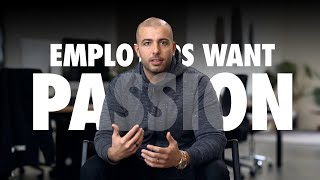
This YouTube monologue (by Nate Tilley) explains the speaker's hiring philosophy: prioritize "hunger" and passion and demonstrated evidence of doing the work in personal time over nominal hard skills or polished applications. The speaker argues hard skills can be taught but intrinsic motivation cannot, and that cultural fit and meritocratic value delivery drive team performance. He frames the company (King Kong) as a value-creating organization rewarded by client results and cites delivering $1.33 billion in client sales as evidence of this approach. The video closes with a standard YouTube CTA.
Questions this video answers
$1.33 billion
Chapters
I'll probably start this one in a bit of a different way. So a question that I get asked all the time. I'm fortunate enough to be in a position where there are a lot of people that want to work for my company. And I get hit up every single day from somebody that's either hit me with a DM, sent me an email, sent me a message on LinkedIn or whatnot about what is it that I look for in a candidate, or they want to come and work here. It usually goes somewhere along the lines of, hey, like, I'm really hungry. This is all the experience that I've got. I really want to learn. And they're just basically talking about everything that is that they want to achieve, right? And they don't stop and think about, in a way, well, what is it that that business wants, right? They always. It's always worded in a way where it's like, I'm really hungry. I'm really driven. I really want to learn a lot. So I really would like to get a job at your company, right? Where the thing that I look for beyond everything is really hunger and passion to what you're gonna. What year it is you want to be doing. Whether it's Facebook ads or it's SEO or it's sales or it's account management, it's overall strategy, whatever it might be, is really like, what is the passion of this person? And then more so, like, what is it that they've actually done to show you that there's a lot more than just talking taking place? And the reason that I say that, like, a lot of people, they are looking at, okay, I have a need for this person to do a job, right? So I need somebody to come and run Facebook ads. This individual said that they run Facebook ads. Excellent. I will just stick them into my organization and then that problem is solved. That is a terrible, terrible way to go about this. So really, the way that I look at it is I look at it in the inverse relationship. I have a look at it as goes, okay, let me find somebody that loves to do the thing that I need, right? So I E, someone that loves Facebook ads, that they've bought lots of Facebook ads. Course, they've done a lot of those things. They've run their own Facebook ads before they've spent money. They spend time researching Facebook ads. They're in Facebook groups around Facebook ads. They have some actual data and some learnings. Okay, excellent. So this is what this person loves to do, regardless of whether or not they're getting paid. They are spending their own money to do this thing in their life and their own energy. How about I pay that individual to come and work at King Kong and then we will get a good output, right? And that's. It's a different way to think about it. And it's so easy to talk. And everybody just talks shit all the time, right? I've done this. I want to do this. I'm a really hungry learner, right? Where I just like to look at, well, if you're so hungry, then what is it that you've done, right? Like, what books have you read? What courses have you done? Like, have you gone out there and offered to do Facebook ads for free for businesses to get experience? Like, what is it that you have done to prove to me that you are hungry? Right? Because somebody that is hungry will go out there and get food against somebody that would just sit there and talk about being hungry. So there's countless examples that I can think about with people that, you know, I've hired within the organization. You know, take my wonderful videographer here. You know, he's somebody that obviously, like, you know, we got in contact in an unconventional way for him to come and join the team. But the question of, like, is there hunger there? Is he passionate about doing what he's doing? It's already evident in the activity that he was already doing, right? He was already doing the thing that he was coming to work at King Kong and do and continues to do in his own personal time, which just shows. Okay, well, this is somebody that obviously has a passion to do this thing, right? And is. We're both passionate about this thing, and we get together and we can work on projects together. We're probably going to create some magic because we're both really passionate about this thing, right? And when I was looking for a videographer, like, there was hundreds of applications. There was people that came into the office and dropped me USB sticks and sent me awkward CD ROMs and video messages and created videos and. And did all of these things, right? Which it's like, when you're looking at all of that information, it's like, well, how do you make the decision? Well, typically, someone that's really hungry and really passionate about something is going to have a good body of work and having the excuse of like, oh, I find it really hard to get my foot the door. That's no longer an excuse, right? Because you have the computer and you have the Internet, and there is nothing that you can't do without those things, right? You can shoot videos on an iPhone. You can run Facebook ads for people on the other side of the world that you connect with through a Facebook group for free. So there is no excuse of like, oh, I don't have the experience. I just need someone to take a shot on me. If you're really hungry and there is no food, you go out and hunt. That is the reality of it, right? So the thing that I really look for is one that hunger. What is that passion that person have? Does their eyes light up when they talk about it? When I speak to them, do I really feel like this is something that they would be doing in their free time if they weren't getting paid? Or does my company just look like a shiny object to come and work out? And everyone's kind of like, young. We've got music playing and we've got a cool office, and we. We fly over to Thailand and Bali and do all this cool shit. I would really like to be in that environment where all this cool shit is happening. Well, that's not what happens, right? We get to do all this cool shit because everyone that works at this company is really passionate about what they do. And the output that we produce is a byproduct of that passion and of that hunger, right? So, realistically, with us and with our company, you know, when we put our name on something and we put it out in the public domain, we really want to be producing work that we would be so proud that we would be showing our grandchildren for. So it's not about just going through the motions. It's not just about pumping out another video, just doing another landing page, or just working with one other client. Right? It's about how do we actually do the best work that we're actually proud of. And that all stems from passion, Right? You know, I really look for that passion, and I always talk about it with people. Like, I can connect with anybody that is passionate about what they do, even if I have absolutely no interest in what it is that they are passionate about. Right. That passion is infectious. I don't care if it's ballet or it's cooking or it's screenwriting or it's videography or it's coding or it's Facebook ads, whatever it might be. If that person is really passionate about it and it lights them up, and that's going to basically move them to being at the top of their game. And people that are at the top of the game, they all go through typically the same struggles of trying to become a master. And Being rewarded in public for what we practice excruciatingly hard on in private and really think about and pour a piece of ourself into that craft, in whatever it is that that chosen field is. And that's really the thing that I look for. I look for that passion. And it's something that you cannot fake. It's something that you feel. It's something that you see in somebody when you speak to them, right? And it's something that even if that passion is there, and it is so intoxicating inside somebody that if they write a cover letter, it spills onto the page and it grabs out, it grabs you. Do you know what I mean? Because you can feel that. And then when you're on the phone screen with that person, that energy is a transfer through the telephone and you can feel that person is passionate. And then when they come in you, you can feel them vibrating on a different frequency because they're just lit up by what it is that they do. They fucking love it, right? And that's the real differentiating factor is that passion and is that hunger. And it's not about how many jobs you work. We run a meritocracy here, both an idea of meritocracy and a pure meritocracy. That is the best ideas win. I don't care if you're a male or a female, if you're black or white, if you're old or young, what your creed is, what language you speak, what your background, your upbringing was, what school that you went to, or even if you had a degree, right? The best ideas win. And on the same back of that, you know, just how we are compensated in the marketplace for the value that we deliver to our clients, right? The way that a free economy really works is that, you know, you have this line, which is the value that you create out in your marketplace and really what your company is, it is an extract, it's an extraction of the value. You get to basically chop off a piece of the value that you create in the marketplace. And that is how you are compensated, through that abstraction of basically taking and capturing a percentage of the value that you create. So it's no different within a meritocracy. Within a company. People are rewarded by the merit that they bring to the company because we are rewarded by the value that we deliver to our clients. We're not rewarded by having a nice office, nor are we rewarded for having a big team. We're all working off imax. Our clients couldn't give a shit about all of that. Right. All that they care about is the results and the result that we delivered, and then we're allowed to charge for a percentage of that result and the value that we have created. So when people look at my business and they think, like, oh, like, King Kong has grown so fast because they have this killer funnel or they're really good at writing copy, or their Facebook ads are on the money, right? Like, realistically, that is not the case. The real case is that we have been able to grow so incredibly fast and really beat the pants off our competitors because we produce more value than all of them. Right? So we have produced our clients over $1.33 billion in sales. And you don't grow a company without helping people and without solving problems and then being compensated for helping them solve those problems. So realistically, the reason that we've had this kind of meteoric rise is because we are delivering the most exceptional results and we are creating value and producing really successful clients. And as a result of that, we are sharing in that success, and we are also getting a percentage of that upside with those clients. Right? And that's the way that it works within an organization, Right. You know, you basically are compensated by the merit that you bring. So you need to really help that company solve problems and being rewarded to do that. So that's kind of give you a little bit of insight around my thought process and what it is that I look for and how I look at, you know, a company as an abstraction of the value creation that happens out there in the marketplace and then having a look at the teams that really make up that all possible and how do we make that all happen. And I've really found that you hire for hunger and for, like, you know, the raw passion that somebody has behind something because, you know, and for cultural fit. Because those hard skills, whether running Facebook ads or doing SEO, typically speaking, anyway, is somebody comes to us and they're used to running Facebook ads. Like, we need to wipe the slate clean, and we need to indoctrinate them into our way. And our philosophy of running ads that we know works. Right? So therefore, the hard skills are no way near as beneficial. Those that. That talent, that hunger. You can't give somebody hunger, right? That is something that needs to come from within, from whatever their environment has been or their social upbringing or their beliefs and their worldview is the thing that is going to make the hunger inherent in them. But you can teach somebody how to run some ads and how to write copy, right? So realistically, when I'm looking for people, then the really the things that I'm looking for. If I could boil it down to one thing, it would be hunger. Because from that will stem the passion and all the second and third order consequences that will spill off from having that key component of hunger in an individual. Hey guys, if you enjoyed this video, make sure that you click the like button and subscribe. We're dropping a video on YouTube every other day, and if you've got any questions about any of the content that I covered in this video, just basically leave a comment with heysubrin in the comments section. And every week we're also trying to go through all those questions and get them answered. So go ahead, click subscribe, and we'll see you in the next video.










