TikTok, YouTube and Linkedin Advertising - Sabri Suby on Morning Express
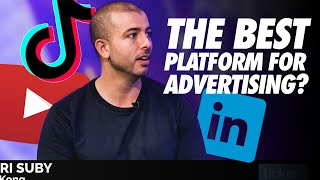
Interview with Sabri Suby, founder of Australian digital agency King Kong. He recounts starting the agency in 2014 from his bedroom, growing to a team of ~61 specialists and achieving over $20M in year-to-date revenue, and discusses platform-specific digital advertising dynamics: Facebook’s declining organic reach and 'pay-to-play' reality, TikTok as an emerging paid-ad platform to watch, YouTube as a high-traffic/low-cost video inventory (CPV under $0.05), and LinkedIn favoring native short videos (under 10 minutes) over externally hosted vids. He describes King Kong as ROI-focused (reported client revenue $1.33B) and explains their approach of optimizing unit economics so clients get multiple dollars back per $1 spent.
Questions this video answers
2014
61 specialists
Over $20 million (year to date)
$1.33 billion in reported client revenue
Over north of 2 billion users
Chapters
You know, the pioneers are generally the ones that are like face down with arrows in their back.
Sabri Subi is the founder of Australia's largest growing digital marketing agency. It's called King Kong. An author of international bestseller Sell Like Crazy. Having originally founded King Kong back in 2014 from a bedroom, Sabri bootstrapped the company since day one and in less than five years successfully built a team of 61 specialists, now achieving over $20 million in total revenue. That's year to date. He joins us here at the desk. How you doing?
Good. Yourself?
Congratulations for one.
Thank you.
What's the journey been like?
It's been a wild one. So yeah, I started the bedroom. I started in my bedroom five years ago. Cold calling businesses.
Wow. What was the aim, what was it that you were trying to achieve back then?
At that time I was just trying to pay rent, to be honest. And then about after a year of it, I kind of had a serious conversation with myself with like, what are you trying to do here? And that was when I made the conscious decision to kind of build something that was just like a lot bigger than myself and go out there and forge this agency.
So tell us what Kicked Kong does.
Yeah, we're an end to end digital marketing agency in a nutshell. We help our clients get more clients by helping them grow their traffic, leads and sales.
And it's a really fast changing, fast moving world. At the moment we have a look at Facebook for our own business here at Ticker and find that organic growth is pretty much non existent these days. You need to know what you're doing. It's really changed a lot.
Yeah, it's completely dead. Organic Reach, like basically, you know, Facebook is in a position now where they've reached what's called max ad load, where there's physically no more inventory in the newsfeed for advertisers to put ads. So the prices are just going up. And what that means for Organic Reach is that they're a company, they're looking to drive their revenue. They have Organic Reach and then they have paid reach and what we're seeing is that Organic Reach has gone lower than 1% now of your total people that would like your page.
So talk to us about how you guys assist in that situation where companies are trying to get through all the difficulties. What do you guys actually do?
Yeah, well look, it is a pay to play model, right? So we're not like helping our clients like build and foster like an audience on Facebook and try to reach those people for free. We understand that it is a pay to play model. So we're all about how do we craft compelling messages and ads that is stimulus and put that in front of that audience and get them to actually pull out their credit card and buy.
And what's it been like for you, kind of riding this wave. You talk about four or five years ago starting off and four or five years ago you, it was a lot easier for people to essentially try and manage their own pages compared to where it is now. For businesses where as you say you got to whip out the credit card. Where would you say it changed and what was that experience like for a company like yours?
Like, I think that it's constantly evolving and it's constantly changing and a lot of people complain when these models, they turn into a very heavily driven, monetized and pay to play model. But if you look at pretty much every platform that there is online, like it all pretty much starts off as a free. They get all the users that come in and then once a have got those eyeballs they look at monetizing those things. So right now it's Facebook, people are complaining and they're up in arms about that. Next it will be Instagram, then it will be TikTok and all the things that are to come. You know, we don't really get bogged down in this situation where like we're trying to reach this audience for free. We're about focusing how do we make the unit economics stack up in a paid environment? Because that's something that's never going to change.
You mentioned TikTok. What do you think of TikTok?
Yeah, look, it's an interesting one. Like I don't see like I'm big on, on seeing that. Like you know, the pioneers are generally the ones that are like face down with arrows in their back. They're the people that basically move to these platforms very, very quickly and essentially use their money for these advertising platforms to kind of test on. I'm big on seeing a where is that market going, what's happening? And then once it gets a big enough audience that it's worth your attention is kind of moving in there using the same principles and just dominating YouTube.
Your thoughts on YouTube these days? And obviously that's got Google, AdWords, etc is all part of that because every platform is completely different to everything else in terms of what works in terms of the payment system. How do you find YouTube these days?
YouTube is really a force to be reckoned with. They're the second largest search engine in the world. You can get cost per views on a YouTube pre roll ad at like sub 5 cents. And really it's the best place for.
A good deal at the moment.
You reckon? It definitely is in terms of traffic as a commodity. It is the cheapest inventory that you can get right now. And the barriers to are high because you have to create video ads.
Yeah, well, Facebook is a funny situation because people are coming off, you probably know your mates, my mates, they're all talking about how they've moved probably to Instagram or TikTok and they don't want to, they don't really want their parents to know who found their way into their friendship group, what they're getting up to on the weekends, et cetera. Do you think Facebook's kind of in this really tough situation now where the world's watching really closely when it comes to privacy? Users are migrating away from because it was the big player. You've got investigations from governments around the world when it comes to anti competitive behavior in the advertising industry, like the CCC here in Australia looking into it at the moment. Where do you see Facebook going from here?
Well, if you look at just like you kind of turn off, I guess all the noise that's in the media around it and you just look at hard numbers on it and what are they saying? They're showing growth, do you know what I mean? Like revenue growth, user growth across the board. They're at over north of 2 billion users right now. So while we might be seeing a lot of saturation in west and developed worlds, you look at what's happening in the undeveloped world and how many users are going on there.
But really like can you sell to those people? Like we talk about 2 billion people, but if half of them are coming from countries where they don't have the money to spend like they do in Australia or the US for example. Is that a number that is translated?
Well, look at it. In Australia there's 17 active million Facebook users. That's ridiculous. That platform that it gives you compared.
To Twitter, which is nothing.
Yeah. And even LinkedIn. Right. So if you look at like where that platform is going, like they have been, you know, heavy on the newsfeed, now they're going more into private messaging, they're looking at what's happening on Instagram, what's happening on WhatsApp. And they're saying that people are congregating in private, in private groups and now they've come out and they're really going to start pushing Facebook messenger and there's ad inventory there so you can still reach those people.
The one thing we've been talking about this week for business is that LinkedIn has actually really been hiding videos and they've gone back to photographs. Have you noticed that in terms of the number of views you can get from a video on LinkedIn is completely different to the photographs that people are putting there? And some are attributing it to those car videos where people, you know, talking to their car just had a thought kind of stuff. What do you think of all that?
What we're seeing if we look at the algorithm, basically if you're going to be sharing a video on LinkedIn that's for instance hosted on YouTube, you're going to get really bad reach. Right. So the limitation with LinkedIn is the video has to be under 10 minutes, but if you post a native video on that platform, the reach is just so much more of what you're saying. So the thing that we're seeing is that you look at LinkedIn, it's much more of a professional platform. But what people are doing is he's doing like long form personal messages now. And that's scenes to what's really getting rewarded in terms of the algorithm.
So for companies that go to an organization like you, what's the return? What's the reward for them? Because you've had something like a billion dollars in revenue, sales and things like that.
Yeah, so we've basically got $1.33 billion in reported client revenue. Essentially we're an ROI focused agency. So when a client comes to us, the first thing that we're going to do is see if we're the right fit for them. And seeing is whatever they've got to offer is we're going to be able to help them get that message out. And then we're just looking at where is the lowest lying fruit in that market. Is it Google, is it Facebook, is it Instagram? What does that look like? And how can we basically help that client go out into their marketplace and have the unit economics of advertising st where they can create a machine where they put $1 in and 3, 4, 5 dollars comes back out.
Where did the name King Kong come from?
Look, I looked at the market and thought, look, no one's really building a brand in this space. It's all like, you know, Internet market, top rankings and search engine, all this kind of stuff. No one remembers that. You don't forget the company. King Kong looks after your digital market.
How was it for you building a brand? Just talking of that, you know, Starting off in your bedroom, it takes time to get out there. You're probably making calls. People are like, who on earth is this? And why should we trust you with our money?
Yeah.
What was the experience like in terms of building your brand and growing your business?
Yeah, look, when you start off with no rich uncles, no balling buddies or venture capitalists to kind of just payroll the business and fund it, you have to get out there with sweat equity. And I was making up to 150 cold calls a day, and it was rough.
And out of those 150 cold calls a day, how many would come through to start with?
Yeah. Like, I was getting like two to three clients a week.
Wow.
So it's a very, very small mass.
Paying the phone bill.
Yeah.
Yeah. And what were you offering them at the beginning?
In the very beginning, we just was offering search engine optimization, SEO. You know, it was just me from my bedroom, so I didn't have a huge elaborate team behind me, and I needed just to dial in my focus.
That's the thing, though, with businesses these days, it's so easy to start up from anywhere. It really doesn't matter. Right?
Yeah. That is there. And then there's also that you have a look at what an environment that has created. Like, skepticism is rampant. Right. There's never been a time in history where it's harder to convince somebody to do business with you, but it's never been a time that's easier to reach them. So we're in this funny kind of paradigm, and it's all about, you know.
How easy to start a business. It's hard to get anyone to notice what you're basically saying. Yeah, really appreciate your time.
No problem. Thanks for having me on. Hey, guys, if you enjoyed this video, make sure that you click the like button and subscribe. We're dropping a video on YouTube every other day, and if you've got any questions about any of the comments content that I covered in this video, just basically leave a comment with heysubrey in the comment section. And every week we're also trying to go through all those questions and get them answered. So go ahead, click subscribe, and we'll see you in the next video.










