i delusionmaxxed to 10k/days with natives (custom brand)
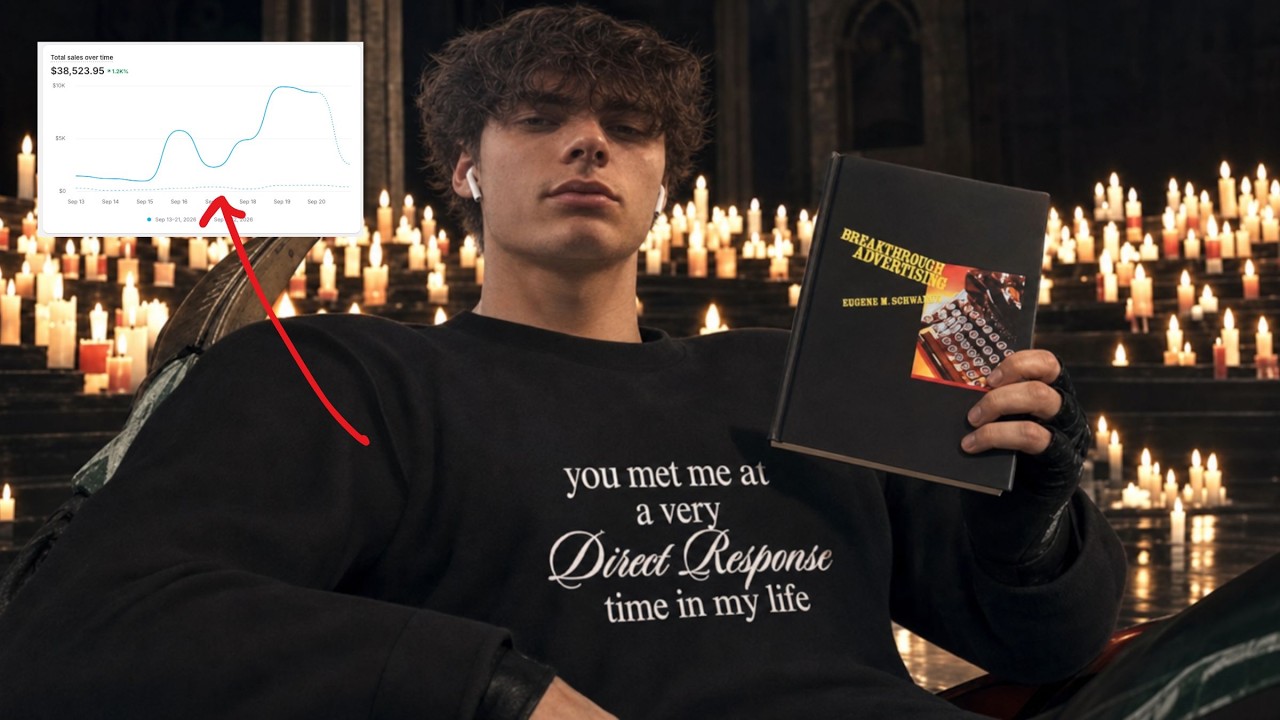
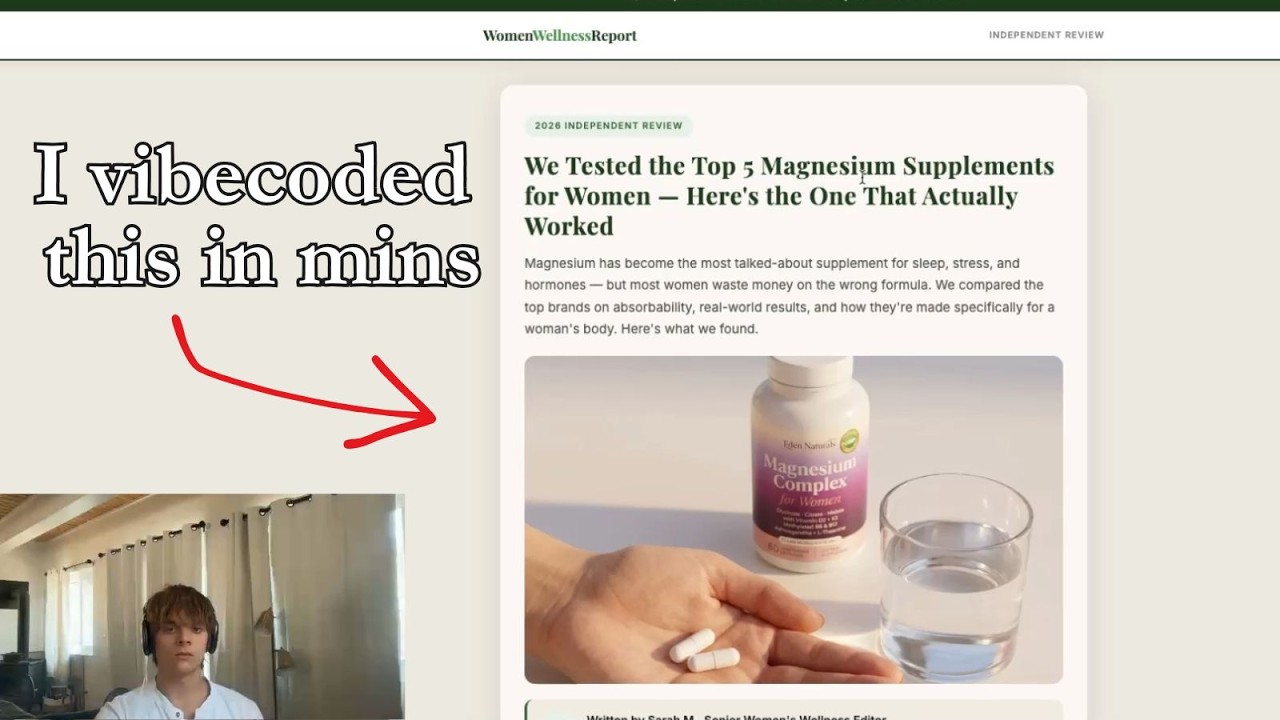
Nathan Miller grew a custom e-commerce brand to $10K daily revenue using three mindset pillars: relentless action, belief without proof, and unshakable confidence in untested ideas. He breaks down native ads into five components, tests hundreds of variants at $100-$200 budgets, and optimized checkout completion from 1% to 3.4% through listicles and product pages.
Chapters
How can you tell if someone's been trenching? Well, you just have to look at their hair. Well guys, today I'm gonna be telling you guys how I basically just took an idea in my head to $5K a day, to then $10K a day, $19K in, uh, 2 days, as you can see here. Um, how I did it, the process is what I've learned, um, kind of in a brief video. I'm not gonna go over everything cuz I can't unless this is like 15 hours long, but I can tell you guys a good bit of information about how I got to this point. And a really important part of this to know is that these 3 things are very important. They are broken down into this, right? You have retard maxing, you have faith maxing, you have delusion maxing, right? And I'm gonna break these down each very simply for you and understand, help you understand why they're all very important. Retard maxing is relentless action, right? So think of a shark. A shark smells blood and then it goes and it eats, right? Faith maxing is belief in which you cannot prove. Faith, we actually all have faith in a lot of things cuz you can't prove much. To prove is to mean that it can't be any other way. The only thing you can do that with in this life is basically math. You can't really prove anything. We can't prove we're having this conversation, or you can't prove that this isn't like a simulation or something. Like you just can't prove it. And so we actually live our life based off evidence and faith in the evidence. Delusion maxing, which is the ultimate belief, right, in what you cannot prove and what you or no one has done. This is basically the all— this is like the glory right here, right? This is what you want to be getting to, is the delusion maxing. And the reason why it's so important to have this is because this just frames the way in how you think. It frames and it influences how you act. If you're not delusional and you don't believe that you could do something you can't, you haven't done before, then you're not going to have much faith. If you don't have much faith, you're not going to put in this relentless action and you're just going to be constantly thinking about it. That's why a lot of people who do e-com, 99% of people quit because they don't understand this and they don't know how to actually influence this for their lives and how to actually build belief in what you haven't done. You know, I've never done, for example, $100K day yet. I believe I could definitely do it with this new brand, and I believe I could definitely do it very soon. And it can be seen as delusional to some people, but some people it's not. And to me, I don't think it's delusional. It's only delusional until it doesn't happen, right? And I have faith, and I had faith for 2 months building this product, this, this brand into this thing that's doing now $10K days. It's going to be doing a lot more. Because I believed it could happen before it even happened, right? I believed that it was going to work out, and I had this belief in something that I couldn't prove at the point. Like, I had no evidence behind it really. I just had my gut feeling and my instincts. And then that led— this belief, this illusion led into me being able to just not think and act, right? And take relentless action like a shark. But how do you even get to this point where you're delusional? How do you even get to a point where you can faith max, right? And that ties into your inputs, right? Your inputs are the most important thing in life. Your life is a mirror of your inputs. It's a mirror of your thoughts. People say your thoughts are influenced by your inputs. So things like reading, learning, ads, watching videos, writing notes, all of these things are inputs. And I've been doing all of these things very intensively over this past month. I've been reading books about marketing, specifically about how to even have better thoughts. I've been reading books about that. I've been reading ads. I've been breaking down other people's ads, competitors' ads, learning what's working, what's not working, and breaking down the specific points of an ad that what actually makes the ad work. And then I've also been learning just in general, all these things are learning, but learning is really, really important as a general concept. for you. You should be learning every single day. I believe the days you don't learn are the days where you lose momentum. In my opinion, you need to learn. Learning opens up pathways in your head and it makes you believe things that you didn't once believe. It's so interesting. Once you learn, like, I want you guys to try this. If you go read a book, go read Breakthrough Advertising, The Boring Letters, or something just for like 30 minutes, maybe even less than that. You're going to have so many ideas in your head. You're going to have so much new knowledge in your head. You're going to have all these new inputs floating around in your head. And you're going to be able to like, okay, I think I could actually improve this. I think it, instead of having like feeling like what is a wall in front of you, you will have a river and that river is flowing. And learning is the most important thing. And if you guys want to be good at learning, like you have to take it seriously. Like think of a college student. What do they do to learn and like retain all this information? Right? They're taking notes. They're taking very good notes and they're reviewing those notes. You guys should be doing the same thing for for e-com, even this video right now, you should pull out a pen and paper, pause it right now and go take notes. Because if you take notes, you will actually be able to have something to look back on and you will retain the information better just simply from writing it down. I've been a victim of this. I have done the whole thing where I just watched videos and I tried to remember everything in my head. It doesn't work like that. Take notes. That is what I've been doing. So these are the inputs that I've been changing: learning, reading, Um, studying ads, studying what works, and, you know, learning from the people who are where I want to be, like Sean Aang, like Spencer. I mean, they're not brand owners, but with creative strategy, they're very good. Um, watching like the Operators Podcast, all this stuff is really starting to build my belief system back into this delusional mindset that I used to have, right? So I used to have this back when I hit like a $1 mil month, uh, a couple years ago, but now I kind of lost it just because I've been just not in a good headspace, to be honest. And this is really how I built Into this headspace back again. And one thing that's also important to notice is that you're always on a spiral, right? You're always on a slope. So you're either sliding down the spiral or you're climbing up. And that's why it's important to read every day, because every day that you don't read, or I guess learn, you don't have to read, right? You are sliding down. Your belief in yourself and belief what you can accomplish is also gonna be sliding down. And that's really important to know. And this is where momentum comes from, right? Momentum just comes from doing simple things over a long period of time. And now I'm at a point where I made this momentum and actually delivered it into an amazing place, into a format, a brand, a product that's completely custom, no one's done before, right? And I was able to make it work just from this, right? And we're already scaling, which is awesome. So now I'm gonna break down to you guys Right? Native ads, because that's basically how I did this with native ads. Um, the plan right now is to scale with natives, then to get into, you know, obviously like VSLs and stuff, but then UGC, Tribe, all that stuff, and scale from there. Um, and kind of just get like a flywheel going, which is really important. But right now I'm going to break down native ads and try to make them simple for you guys and how I find them, how I find these ads that I even look over, how I, how do I understand what's even working in the market, right? Because that's very important. And yeah, let's just get straight into it. So one thing I want you guys to do is that understand that native ads are not that complicated. It's just parts of copy. Think of it like puzzle pieces, right? You have your hook, you have your lead, you have UMP, UMS, and you have your close. That's basically an entire native ad right there. In some stories, the lead's longer, right? So the lead, maybe it's an unaware ad, the lead's gonna be a lot longer. And this, this spot is just gonna take up like the last 25%. And some it's a lot shorter. The lead is kind of where you go and you bridge these awareness stages. Obviously the hook is important in that as well. But basically for any native ad, these 3 parts stay the same. So what I did basically to build a foundation is I tested these heavily. I tested UMP, UMS, and close. So UMP, it's basically the problem, why they, why they're having this problem, right? Let's say if it's Goodness gracious, I gotta think of something. Let's say they're having acne, right? And they're breaking out with acne. Why, why do they have acne? Why have all the things they've tried for acne failed? Right? And so then you bring in this unique root cause that is causing everything, that everything that they've ever tried has avoided or hasn't worked, or is completely just like not even like touched. And then you're like, okay, this is the root cause. This is how we— this product solves it. So this is how we're supposed to solve it. And then you introduce the product, right? And then from there, you get into the close where you add urgency and all this stuff. But this is like the foundation, the UMP, UMS, and the close is the foundation of native ads. And once you figure these out, basically scaling is just switching these and finding new ways to hook people into your story, new ways to lead them in, to, you know, gradualize them to getting to UMP, UMS, and close. That is what I have learned this month. And it's really simple. So The way you can get good at native ads really fast is you just need to study what works. You need to study what works, not copy necessarily what works. I think you should iterate, which is different than copying. Um, but you need to study what works. You need to understand and go into and understand where you can actually find these, right? So you need to understand what's working. The way you do this is by using spy tools. And the best one that I know, the one that I use the most Let me adjust it here for you guys. Is going to be TrendTrack. TrendTrack is amazing. Um, and I'm going to tell you how I use it, but I'm also going to just give you guys a quick breakdown of it. So TrendTrack is really cool because obviously you can track brands, you can search for ads, you can search specifically for natives, which I'll probably show you guys how to do. But I really like it because once you have like a, like a specific store like Brasilia or Lair or one of these big stores, right? This one is PPA. PPT, which is really cool because it's like a— it's also like a very unique product. Um, you can actually find all their different pages because everyone has tons of pages now, right? And so it looks like they're trying to do Parasite Angle. Um, you find all these different pages and all the active ads are running under there, and then you can go into there and sort by ad rank, or if you want to sort by all these different times. If you want to find a native ad specifically, you just go to ad copy Oh, you can also sort by ad copy, which is really interesting. So you can see the copy that they're using the most. So they have 6 ads with the exact hook and ad copy. So in this 6 ads, they're using, right, the same, this whole same structure. So you can break down the structure, see what the UMP is, what the UMS is, what the close is, if you have a similar product, right? And then you can learn from that and you could try to use that parts and pieces of it for your product. That's basically what I've been doing. Um, and so that is a really amazing— I didn't even know that they had this. I just figured that out. You can also search by ad copy length. This is how you find like native ads. So I would do like minimum 1,000, um, if you're looking for a native ad usually. And then you're gonna see like their top native ads here, um, which is really interesting. I actually need to do more research on this. It's not necessarily the same niche I'm in, but it's always good to learn from the brands that are printing. Um, well, I guess we'll go through some other stuff too. Like, you can also find headlines. So the top headlines they're using, I know from my research that they always use this natural relief in weeks, basically. And then you could find that the top ad copies, which is kind of what we just talked about. So like, they've used this one for literally 30 days. Um, and so you can go through here, break down their UMP, UMS, and try to figure out how you can use it for your product. And that's basically what I did. I found a bunch of different ones. Obviously it's different niche, but, um, broke them down. I was like, okay, what would work? And actually like, what is scientifically backed for my product and used it and implemented it. And then I built from there, right? Ad copy length, right? We're going to do a minimum of 1,000. And then if you want, you could do media type image. I don't always do that because I like to look at different types of formats. Um, but you start to get a lot of different concepts. Like even this, for example, um, this is a concept in itself, right? It looks like an organic native post. Like if you look on Facebook groups and you look on Facebook, you'll see people posting like this. It's like their Facebook emoji or something. I don't even know how it works, but I've seen like stuff like this working and you begin to build a catalog of formats that are working, UMP, UMSs that are working, hooks that are working, stories that are working, and like winning skeletons basically. And then you just start to iterate. You start to come up with ideas on your own. And the way you get these ideas is going back to the drawing board, right? You're going back to these inputs, reading, learning, looking at ads, all this stuff. You guys gotta be doing this like basically all the time, and you guys are gonna start to come up with really good ideas. It's, it's simply the inputs affect your output. The better inputs you have, the better output you have. It's literally how it is. And so if you guys have this problem, which most people do, where your outputs aren't very good, you need to have better inputs and This is just an amazing way tracking the best brands. So this one's Aravita. Aravita is also a really good brand, and it's cool, even has Trustpilot and stuff. That's sick. Visitors, everything. You get so much data with TrendTrack. It's actually so cracked. But in here as well, to find some really, really solid native ads, all we got to do, right, is go to Meta Ads. And then this is like their name, but you want to find like their more unaware stuff. So it looks like Harry Miller is the one that they're scaling really hard right now, has the most ads. And then you just simply scroll down here. They have a lot of top of funnel stuff or bottom of funnel stuff, it looks like here, but this looks like their printer native ad, right? So from this information, you're able to figure out one, what's working. You're able to find out two, kind of what the UMP, UMS close, what are they using? How do you break it down? And then you're able to actually create new concepts with this. So basically, What I've been doing for the past month, right? I've been going into the Spy tool, trying to figure out and bridge together different reasons why it's working. And the way you use Meta in this process is you guys are very lucky that there's a thing called a CBO, right? So it automatically optimizes where you get your spend. Only use CBO even when you're testing. I don't even care. ABOs are so stupid. So what I would do and what I did is I had a $100 budget. Maybe I raised it to like $150, $200. But $100 is fine. And I would just test tons of ads. I probably tested 200 ads, um, at a certain point in this $100 budget. And whatever gets spent, I iterate on. So if something's spent, right, even if it doesn't get any like super profitable or any super profitable sales, usually you'll get some sales. But the thing is, at this point, and this is me the past month, I didn't even know it worked. Like, I didn't know. So what do you do? You just test. You test, you iterate, you test, you test different stuff. So what I did is I literally went through and tested through every single part of this. I tested new UMPs, I tested new UMSs, I tested new closes, I tested the hooks and the leads, right? I tested all of these different things, and eventually that led to my $10K days in 2 days, right? So that is how I did it. That's— and a little golden nugget for you guys who stayed till the end, right? You got natives here. You got PDP and you got regular offer. This was my conversion rate, like a month in. This was my conversion rate, 1%. What I changed and what I noticed from this is that it's not just about the ads. And you guys need to understand this. It's about the entire funnel. An ad is just a part of a funnel. So the natives, obviously I kept making natives, right? I kept iterating. I kept improving that. I started iterating on a listicle. Right? I started making a listicle, tweaking it, trying to make it better. And then also I added a new offer that it just allows me to afford a higher CAC, which a CAC— and I did all this stuff and I was able to take inspiration from what was working in the market, what I saw other brands doing, and use it, iterate on it, make it into my own thing. And eventually I have a winning funnel that is converting at a 3.4 Um, percent completed checkout, right? So pretty decent conversion rate with a pretty high AOV. Pretty crazy to think about. Um, and like I said, guys, custom product, no Kayla Rips. I just had faith in it. That's all I had was just faith. I just faith maxed and I was able to do this. So I talked a lot, I yapped a lot in this video. Hopefully you guys got some sauce from it, but, um, that is basically how I was able to scale.