$500K to $10M per Year: Coaching Call with Paula Pant
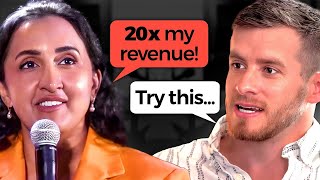
Nathan Barry, Paula Pant, and Rachel Rodgers discuss scaling creator businesses from six figures to $10M+. Paula shares her current metrics: 78k newsletter subscribers, 450k monthly podcast downloads, and a $1,297 course generating $500k-$1M yearly. They outline three laws for billion-dollar creator companies: separate the business from personal brand, sell tangible products not just attention, and focus on recurring revenue.
Chapters
We have this hypothesis that creators are actually terrible at monetization. Where's your business at for the last few years?
All right, so we have the course that we sell. It's called Your First Rental Property.
For a thought exercise, if in 3 years you have to be at $10 million a year in revenue, what changes would you make?
I would do so by building more courses.
I see that path. I know. But if we said like you have to build a business to $50 million a year in revenue, I think you have to throw that out. There's basically 3 laws of building a billion-dollar creator business. And so the first one— First of all, it's great to have you back out here. I'm hoping that wasn't you that crashed backstage.
It was not me. Everybody is fine, by the way. No, no, no humans were harmed in the making of this. Production.
Excellent.
It's good to have the report from stage left. Everything's good. So in this concept of a billion-dollar creator, we want, we want to riff on it and share some examples of what we're talking about. What does it mean to take an audience and monetize it in a way that could be worth not $100,000 or $1 million a year, but hundreds of millions potentially, or even billions of dollars? And then try to bring that back to this community. And so I'm curious, just as we go through some examples, who comes to mind as, you know, even a content creator that has gone down this path?
Yeah. So one of my least favorite people, and he might be some of your favorites, so that's okay. We can just agree to disagree. That has done this is actually Dave Ramsey. That is a content creator, right? He had a podcast. I'm sure he's created content in many other formats, but he's taken his curriculum. So if you think about it, right, like we, we all, every single one of us here on the stage has online courses, right? And so he's taken a curriculum out of, let's say it could be an online course, and maybe it is, I don't know. But it's also a curriculum that is now installed in churches around the world, right? Where that same curriculum is going far beyond just selling it online individually, but selling it now through organizations. So like, that is what we're talking about, about having scale. So you could take the exact same thing that you have, but how could you make it have an impact in a much bigger way and have way more people? He has done something bigger, right, than even just write a book or just have an online course, but saying, how can I take this same curriculum and distribute it in the world in a bigger way where I can reach a lot more people.
You know, another, and I just thought of this, another person in the personal finance space who has done this is Robert Kiyosaki.
Yes.
So Robert Kiyosaki first became quite well known through the publication of his book Rich Dad Poor Dad, but after, or really alongside publishing that book, he also created a board game The Cashflow Quadrant board game. And so, and that game, I bought it many years ago. It cost at the time $150, and that was in like, you know, 2010 dollars. Yeah, you know, so, so I think that's another example of really using that springboard. Yes, of the audience that he built through Rich Dad Poor Dad to sell a board game that then, that also taught people more about money, you know.
Yeah, it introduces the concept, and now it's a physical product that's getting distributed. Exactly, yes.
Yeah, there's all kinds of examples that we've seen from across the creator industry, from everything from maybe creators that we've met at conferences. I'll give you a quick example. There's a blog called Mark's Daily Apple run by Mark Sisson, and he ended up— he was making probably $1 to $2 million a year off of his blog, wildly successful back in 2014, 2015, and he ended up taking the content that people really wanted, you know, of health and wellness content. And he was talking about paleo recipes, and he ended up building that into a company called Primal Kitchen, selling paleo-friendly condiments, condiments, salad dressings, all that. And he sold that business in 2 years using the audience that he had. He sold that business for $200 million to Kraft Foods. And so we're really obsessed with this question of if you have this attention, you know, 10,000 people, 100,000 people, what is the highest ROI place that you can direct it? And looking at his business, I knew him back in 2013, 2014, I thought he was doing a really good job of monetizing his audience, right, of making, you know, selling courses, advertising, any of these things. But it turns out there was an opportunity that was 100 times bigger. And there's a bunch of finance nerds in here, and so some of you probably obsess over taxes like I do. And so if you think about this, he was making $1 to $2 million a year, which is amazing, but he was paying ordinary income on that. Then he goes and makes this other business off of that same attention, sells it 2 years later. So he literally creates 100 years worth of value in 2 years, and of course he pays long-term capital gains on that. So not only did he make a way bigger business, But he also kept far, far more money in that.
Yes. And then also, if you think about it, right, it's adding value to his client's life on a daily basis. Because one of the things about paleo is that condiments have a lot of sugar in them. They don't work well, right, if you eat that kind of diet. And so you're at, like, beyond just educating them on how to— you could put a, publish a recipe on how to make your own condiments. But what's the next level of that? The next level of that is to take that same recipe, make it yourself, and make, make it available to your audience at their local grocery store, right? So it's not only 200x his value that he's receiving, but the value that he's adding to his clients' lives as well.
Yeah. What are a couple other examples that come to mind that we want to share?
Well, I love the one of Hala.
Oh, yep. Also in the podcasting space.
Yes. So she has a podcast. Anybody here heard of Hala? She has a podcast called Young and Profiting. Yes. Okay.
Some folks.
So Hala is amazing because she has this very popular podcast, right? As do you, Paula. You have a very popular podcast and she's taken this podcast and the way that she's scaling it is she's created a podcast network. And I don't know all of the details of exactly how this works, but I do know very big podcasters are moving over to her network from HubSpot. HubSpot has a podcast network and all I know is recently I've seen announcements where Amy Porterfield's podcast that used to be on the HubSpot network is now on Hala's network. Jenna Kutcher's podcast that used to be on the HubSpot network is now on Hala's network. So she is competing with a much larger company and she must be providing more value to these podcasters as to why they're moving over to her network. And it's very scalable through selling advertising, right, that you then place on all of these different podcasts within the network. So that's the business model there.
Yeah, so that's an interesting example of thinking much bigger. Like, who here in the room runs a podcast? We've got a good number of people, right? And I would not— my natural instinct is not to say, okay, from a podcast, let me scale that, let me do a podcast network. And you know what, let me go compete with some of the biggest companies in the world. I don't know HubSpot's market cap, but it's many, many billions of dollars. And so she's able, being closer to the problem, to find, I don't have inside information, but something that gets people to wanna switch and be served better on her network. And so she's thinking on this much bigger scale, and that's the thing where she's building something, taking the attention that she has in the relationships, and building something that she has a huge amount of equity in, and can scale in a really, really big way.
Yes, I agree. And it's like taking the creator economy and growing it up, right? We've all come up with ideas for selling courses, selling coaching, creating YouTube channels, selling advertising, getting sponsorships. How else do we make money, Paula?
I mean, so many ways. There's affiliate marketing, there's, there's all of it.
Yes. And so we're taking all of these things that we've created and now we're very comfortable building businesses with a couple hundred thousand dollars, which which, you know, 13 years ago when I started was a lot, or were comfortable creating businesses that get to maybe 7 figures or low 7 figures. But now, what is the opportunity there to take that audience and that attention and create a physical product or create a different style of product that can be valued much higher, that can reach a lot more people? And the thing that I think a lot of people don't understand is I have a couple of friends that have television shows, and one of the things that both of them have repeated to me is that content creators like all of you are better at creating content than TV executives, than the people that they are working with at these major television production companies. Because, right, we have that experience of having to figure out what does our audience respond to, what is causing them to be engaged, right? We get better at it. And so I think we actually, everybody in this room, us included, right, we're all undervaluing what we're actually contributing. And how we can actually contribute so much more value to the world and extract value for ourselves as well. You're producing, if you're posting, like Steve was saying, somebody posts 21 times a day, oh my God, kill me now. I struggle with one time a day. But, you know, producing that much content, that much value, why shouldn't you be paid at that level of value as well that you are providing in the world? So it's about us sort of growing up as a business world, as a creator economy, and saying, how can I contribute at an even higher level with the audience that I've built.
And in the context of the attention economy, as it's called, one thing, if you think about celebrities, big, big A-list celebrities, right? A lot of celebrities, they have attention and they will parlay that attention into some type of product or some type of service. So you've got Gwyneth Paltrow with Goop. You've got George Clooney with Casamigos. You've got Ryan Reynolds with Mint Mobile. And what we do as creators is we are niche celebrities. You know, I'll be walking down the hallways at FinCon and be like, that's the Social Security guy, right? We are niche celebrities inside of our own spaces, and we have that same level of attention. It's not at the George Clooney level, but it's at that, that, you know, it's within the communities that we serve. And so the opportunity to take a page from that same playbook and build some type of product that serves that community is, you know, is just as there for us as it is for Gwyneth Paltrow with Goop.
I love that, and it's so true.
Yes, so you said something there of the playbook, right? And so as part of doing this podcast, we've been studying who is actually doing this, who is taking attention and building it into something that has this long-lasting value. And in that, like, study and research, we really found that there's basically 3 rules, or 3 laws, of building a business, like a billion-dollar creator business. And so the first one is that we found you have to build more than a personal brand. Mm-hmm. Everyone who has done this has created something, even if they have a personal brand to start, or it's really built around them, 9 times out of 10, the business that they start, that they're building equity and enterprise value in, is something separate from that. It is something sellable. Even an example like Kylie Cosmetics, right, that uses her name, but it's separate. It's something that she can take investment into. And so what are some other examples of more than a personal brand?
Well, so, so Meghan Markle, before Before she met Prince Harry, because there was an era in her life in which she hadn't met him yet, at that time in her life, she was famous for being an actress on Suits. She was best known for being an actress.
Suits is such a good show.
I've never seen it. I've heard it.
Okay, you have to watch it.
It's so good.
We all need more Harvey Specter in our life.
So before she met Prince Harry, when she was known for being on Suits, she started a blog and a brand of her own. It was called The Tig. And the whole idea behind The Tig, she named it after her favorite wine. The wine is called Tijanello. And she wrote on her blog that every time that she had drank wine, it tasted like red or it tasted like white. You know, and people were like, don't you feel the top notes of licorice and apple, and orange zest, and she's like, "No, it tastes like red." And so one day, she took a sip of this particular wine called Tijanello, and at that moment, boom, everything made sense. All of those things that wine people write about wine suddenly made sense. And so for her, it was an aha moment, an inflection point. She called it her TIG moment, and then she built an entire brand called The Tig around how to create more of those moments in your life, right? And so that was what— that was a business that she was building, and that was what she was working on, kind of the business that she thought was going to be her Goop, right? Her sustainable business. She ended up cutting it when she met Prince Harry, but that's a perfect example of someone who was really in the beginning stages of using her platform, her audience relationships from being on Suits to build this brand that wasn't the Meghan Markle brand, it was the Tig.
Yes, I love that. And that was true for me when I started Hello7. I didn't call it intentionally Rachel Rodgers. First of all, I couldn't get the domain name for Rachel Rodgers because it's a very common name.
How many business names actually come about by what dot com has failed?
I know, literally. So let's start there. I did finally just get it recently, but I had been trying, let me tell you, for the better part of a decade. So, but the reason why I wanted to give my company a brand name is as a former IP lawyer, I understand that like a personal name does not have value outside of you personally, right? But a brand name is something that you can sell. And so for all of you who are, you know, thinking about changing the name of your company or if you haven't started yet, definitely go with a brand name. Build a brand that people can connect with. And not only will you— because if I had my company was named Rachel Rodgers, right, like then I have 25 team members that are, you know, it's harder to connect with Rachel Rodgers as a brand, but it's easier to say the Hello7 brand is all of us, right? And so my audience connects with it more, my team connects with it more, and it is more scalable, and it is also more sellable. So that is my advice to you, is build a brand name, right, that people can connect with that is outside of you. Because even if you are doing all the things, which I used to do every single job in my business— now I don't, now I have a team— but even if you're doing it in the beginning, you won't want to do it forever, and it won't make sense for you to do it forever. And to address something that Steve was saying earlier, is, you know, Nathan and I both have 8-figure businesses, we have teams, and, you know, our goal is to scale to $100 million in annual revenue, which is a business that can be valued at $1 billion. So that's where the billion comes from, right? It's the valuation of the business. Do you see your children ever, Nathan Barry?
I spend a lot of time with my children.
Just curious. I have 4 kids and I spend a lot of time with my children too, because as when you are a CEO of a larger business, you actually work less. Less, not more, right? You actually are in the way often of your team getting the work done with your new ideas and all of that, right? And so your job is to be thinking about the future of the company and not be in the day-to-day. So there are definitely moments, right, where you might be working more and you might be having a busier time because you're building a system or you're hiring the right team member or you're just at an inflection point in the business where it needs your attention. But those are usually short seasons and the goal is to build a process in place, hire a team member in place that can continue to run that. And then you go back to zoomed out so you can be the visionary for the company.
Yeah, I mean, there's so many things. I was talking to another CEO earlier this week at an event and he talked about how at every stage of the business as CEO, you actually have to do less. Mm-hmm. And that's what makes the business operate. And so, But one thing I think we as individuals often self-sabotage, because we realize, oh, or we think, if I were to push for this bigger goal, then it would mean that if my stress levels are here at this revenue, I don't want my stress levels at 50% more than that for 50% more revenue.
You think to grow your revenue, you have to 10x your stress level and your work efforts as well. It's actually the opposite.
Yeah, which is counterintuitive. But in this idea of building more than a personal brand, just like that's what you did with Hello7, that's what I've done with ConvertKit, where my audience, my site that I started with is NathanBarry.com. I built a personal brand because NathanBarry.com was available when I wanted it. But on that, that's where I started and I still have that, that blog and that newsletter and I still write it on a weekly basis. But I realized the thing that I was building long-term needed to be separate from that. It needed to be able to have a team it needed to be the type of business that could take investors. Now we've never raised capital, but that's the thing that it is sellable, it can take on investors. And the reason that's important is 'cause it speaks to the quality of the business, right? And so that's the sort of thing that's building up this enterprise value. So now the second rule or law is that you need to sell products and not attention. And that's a bit of a weird thing when you think about an audience of creators, right? We're really good at attention. We're really good at selling attention, right? Sponsorships. If you get a sponsor for your YouTube channel, right, or a sponsor for your newsletter, you are selling attention. And so I'm here to tell you that anyone building a business at this different scale is not selling attention. They are selling their own products.
Mm-hmm. Yeah. You were saying earlier, Paula, that You sell like advertising on your podcast, right? You have some affiliate things that you've done or maybe some sponsorship things that you've done. Is that the larger part of your business or is it the product that you sell?
It's the product that I sell, absolutely. So the overwhelming source of revenue, probably between 70 to 80% of the revenue at Afford Anything comes from the course that we sell, Your First Rental Property.
Mm-hmm. You have some fans here for the course. I like it. So as you're thinking about— another example would be Ryan Reynolds, right? He was getting paid to do commercials for other, uh, for other products. And who knows, maybe make up some numbers. If he's getting paid $1 million per commercial, as he does that, he's thinking somewhere in the back of his mind, well, hold on, if you're paying me $1 million for this, which amazing deal, that sounds great, but it has to be worth more than that to you as the as the brand. And it invites the question, how much more is that worth? How much more is his endorsement worth? Is it worth $1.1 million, or $10 million, or $100 million, or like, how much? And so something that he did is he just said, okay, I'm going to buy companies, or buy substantial shares of companies, and use my own— this attention that I have to grow something that I have equity in. And as we know from Aviation Gin exiting for, I think, $700 700 million, and Mint Mobile exiting for 1.3 billion, like, turns out that attention that he had was worth way more money than he was getting in sponsorship and endorsement deals. And so when we think about the types of businesses that we're building, it has to be something where the equity value can truly compound. Now, another thing with creators is that they think about, it's usually pretty common to ask, say, okay, this value that I'm providing is way more worth more than cash, so give me equity, right? Has anyone tried to negotiate an equity sponsorship deal before? Nobody has? Couple? It almost never works. Almost never. And the reason is because you correctly identify that your endorsement is worth really a lot, and the brand says our equity is also worth a lot, and so we're not gonna pay you, we're not gonna give that to you. And they're gonna go find some other creator who doesn't understand the value of the attention that they have. And so what you have to do— the answer is not like, my attention is worth more, my audience's attention is worth more, so pay me in equity. The answer is, my audience's attention is worth so much that I'm gonna pay myself in equity by starting my business. And so we want to think a lot about the types of businesses that you can build for sure.
And that's, you know, you can think about if you approach somebody like that, if you're supplying a lot of the attention and customers that they are getting and they don't want to do a deal with you, okay, we can either be partners or we can be competitors, right? And that's what we want you to recognize. You are in a position to be a competitor to some of these larger companies, right? You have the customers already. They don't. They may have the product, but they don't have the customers, and you do, right? So you could pre-launch a product like a company recently did called Switchpod, And then you can be a competitor for a much larger company.
Right. I, I have a Switchpod in my purse right over there.
Yes. Do you wanna tell us a little bit about the story of Switchpod?
Sure. So it was started by, uh, Pat Flynn. Um, he is, uh, many of you know him. He's a, a blogger and a podcaster as well. Smart Passive Income. And a lot of people were using, uh, tripods that were just not that The GorillaPod, where you can like bend it and stuff like that.
Yeah, exactly.
It was cool and not actually practical.
Yeah, exactly, exactly. And so he realized that there was a need for a tripod that was— actually, you know what, can somebody hand it? Can somebody bring it up? All right, you're gonna see it in a second.
Yes, but it's like you can handle it with one hand too.
Yeah, exactly. So he realized— thank you— that there was a need for a tripod that was here easily, easy to open. Look at this. I'm doing this with one hand. Easy to open. This is not a paid endorsement, by the way.
Now we need Switchpod to pay us.
But, you know, just very, very easy, lightweight. You can, you can throw it in your bag. You know, and he realized there was, there was demand, and because he had an audience of content creators, there was demand from his audience, from other content creators. Plus, he wanted to use it himself for his own, you know, personal use.
Yeah, I think what's so interesting about this, because I had a front row seat to this developing and being built out, the SwitchPod is a fantastic product. It was a need that the creators Caleb and Pat had. Themselves, and then it competes with a big market in a big industry where people are spending a good amount of money. But I think on one hand it was wildly successful, and I still see them around in the wild, and I see lots of some of my favorite YouTubers and bloggers using them. On the other hand, it frustrates me because I see a trap that I think so many creators fall into where they say I have this problem, I have a really elegant solution, I'm going to design and manufacture it, and here we go. And that went really well. We had our launch, we hit our Kickstarter, whatever else. What's next?
Drives me nuts.
Because the thing is, most people say, what's next? And they're going to the next product. Okay, we made the SwitchPod, what else should we make? And they move on to other things, and both Pat and Caleb have done some incredible things that are very, very successful after that. But when I see this, I'm like, I'll tell you what's next, the SwitchPod. Right, like Joby with the GorillaPod is tens of millions a year in revenue, if not hundreds of millions. Like the opportunity for this product is absolutely huge. And so when you make that switch and say, okay, I'm going to sell products rather than attention, you have to stick with it for a long time and build, like that could be a juggernaut of a company. And I think it's not because they moved on to other things that were more exciting at the time. And so you have to stick with this for much longer than you think you need to.
Exactly. I agree. And, you know, they launched it with a Kickstarter, and I think they delivered it to everybody who contributed to the Kickstarter, and then that was all she wrote. And I'm like, wait, what happened? You did all the hard work.
We need distribution. We need all of these other things.
Yes.
So there's plenty of examples that went really well or didn't go well, but one of the other things, one of the The last rule that we see for billion-dollar creator companies is that almost all of them sell a product that is either recurring or it sparks repeat purchases. Mm-hmm. So when you think about this going to Primal Kitchen with the salad dressing, right? Something that if you enjoy it, you're going to be buying it every single month. Um, ConvertKit software, it's a recurring purchase.
Yes.
And the reason is you don't want to be continually finding new customers. You don't want to have to have a customer buy from you once. You want it where they can buy from you, and if they like it, they buy it again and again and again, right? This is why I think you see a lot of celebrities promoting alcohol products, whether it's The Rock with his tequila, or Casamigos, or some of these other ones, is because it's something that can be purchased multiple times, and so the customer lifetime value can be much higher.
Yes, it's also true with like makeup, Glossier. Yep. What is it, Skims, the undergarments, right? Those are like all things that you don't buy just once. Yes, you're a repeat purchaser.
Right, right. And if you think about something like a yearly planner, for example.
Yes.
Right? Yearly planners, if somebody really likes your planner, they're going to buy it every year. And in fact, there's one company, Silk and Sonder, they took that to the next level They sell planners on a monthly basis. So once a month you get January's planner. Yes. Right? And you sit down and you fill out, here are my goals for January, here, you know, and it's like many— here are some recipes that are really like perfect for cozy January weather. It's got a whole thing. And then February you get the next one in the mail, and March you get the next one in the mail. I have a stack of them at home, you know, some of which I filled out and some of which I'm like, oh, I'm— I never got around to March 2021.
Right. But you didn't cancel your subscription.
Right. Exactly. Exactly. And, and you can subscribe on either a monthly or quarterly or annual basis. They've got 3 different price points. Yes.
It's another great option. So thinking through like, how can you come up with an offer in your company that is not a personal brand, right? Has its own company brand that is selling products and not attention, and that is subscription-based because we all know recurring revenue is where it's at. So that's the criteria for being a billion-dollar creator. You don't actually have to make a billion dollars. No one's going to come get you if you don't. But if you want to build a company that could be valued at a billion with that criteria, you can make $100,000. You make a million, and then eventually you can make a billion, right? And have it be a billion-dollar business if that's what you choose.
I think in that there's actually a lot more examples when you start to look for it of businesses at this million, 10 million, billion scale using these principles that came from the blogging and content creator world.
Yes.
If you look at BiggerPockets, right? We all know BiggerPockets in this world, and it came from, right, starting out a podcast at the simplest levels and then scales much, much bigger than that. On that note, Paula, one thing I'm curious about is as we look at your business, okay, right, you've, you have built a really, really successful business using a lot of the traditional creator playbooks. And I'm curious if you'd be up for us riffing on your business and what it would look like if we were to try to build something that had significantly more revenue. Absolutely.
Absolutely.
Maybe give us the quick rundown of where's your business at for the last few years.
All right. So we have 78,000, 79,000 newsletter subscribers on ConvertKit. Thank you. With over a 50% open rate. We have 28 million total lifetime total podcast downloads.
Amazing.
We're averaging somewhere around 450,000 downloads a month. That's amazing. We have the newsletter and the podcast are our two strongest channels. Social media is, I've got around 60,000 on Instagram, 28,000 on Twitter. So social media, we've always, we're not super strong on social. And part of that is by design. Like Steve Chu was saying, you know, if I create a blog post or a podcast episode, it lives forever, right? I can create something 10 years ago and people will still be finding it.
Yes.
If I create an Instagram post, it's ephemeral. It's gone in one week maximum.
Maybe it's an hour. Yeah, exactly.
Exactly.
Gets attention for an hour and then it's forgotten.
Exactly. It's gone in a few days. And so building things that really live in your library of content— that's YouTube, that's podcasting, that's blog posts, And then it's the newsletter, because the newsletter is how you nurture. A, you can have an autoresponder sequence, but then B, even for more kind of timely posts, non-evergreen posts, you nurture that relationship and that's what really pays dividends.
So how have you monetized that audience that you have today?
So as I mentioned, the single biggest source of revenue is the course that we sell. It's called Your First Rental Property. It sells for just shy of $1,300, $1,297. We have had, so typically, typically we will do 2 launches per year. And generally we will get around 300 to 400 people, new students who enroll in every launch. So we will enroll in a normal year between 600 to 800 students at now $1,300 a pop. It used to be $1,000.
Okay.
For the last 2 years, I took— well, for the last academic year, I took a sabbatical from the company for 1 academic year so I could go do a fellowship in business and economics journalism. And so by design, that meant that we had to go down to releasing the course only once a year rather than twice a year. Yeah. So for the last— for 2022 and 2023, We've done only one launch instead of two. And by the way, I was curious to see if going down to only one launch rather than two might boost the enrollment numbers. It doesn't. All it does is it cut our revenue in half.
So in that, we were talking backstage, and depending on the year and how you focus on it, you're between $500,000 and $1 million a year in revenue from that. For a thought exercise, if you had to, you know, in 3 years, for whatever reason, you have to be at $10 million a year in revenue, what changes would you make? And a little spoiler, I'm gonna ask the question again at 50, and I wanna see what some of the differences are.
So if I had to reach $10 million a year in revenue, I would do so by building more courses. I would do so, the way I think of FIRE, spin on the FIRE acronym is, to me, it stands for financial psychology, investing, real estate, and entrepreneurship. And so right now we have a course for the letter R, but we have nothing for F, I, and E. That's like 3/4 of the alphabet we're missing. So I would be building courses for, for financial psychology, for investing, and for entrepreneurship, because we talk about all of those topics, and I think And we should be serving our audience better, right? This is not just a cash grab, this is something that benefits people's lives. So, you know, we're harming their lives by not doing it.
Correct.
You know?
So, okay, I have a tweak for you though. Okay. Because I think that if you created more courses, which is an obvious next move, I'm sure there's folks here who have thought of doing the same thing. You would create more courses and let's say you're making about $1 million a year right now with your courses. So if you release 3 more courses, then maybe you'd be doing $4 million, but still not $10 million. So here's my tweak for you. I think you should make those other courses, right? Fill out the F, I, and E in FIRE. I like creating an Afford Anything Academy and make it a membership model. Now you have recurring revenue. So rather than getting paid once for $1,200, get paid, you know, maybe it's $1,200 annually or $3,600 annually, right? And then with a similar amount of customers, because you're serving them consistently, not only are they getting the education, but you can also give them accountability and help them actually take the action that they're learning in the course on a consistent basis. And therefore, I think you could get to $10 million. With a membership that you have fully filled out.
Right. Yeah, I agree with you there. Yes.
Awesome. Exactly.
Okay, so going to the second half, like, I see a path for your audience to $10 million a year, and I've seen plenty of creators. By the way, that's the advantage of running an email marketing company used by all the creators, is I get to see, like, what's actually working and talking.
He knows who's lying about their list size.
I do know that. It's less, fewer people than you would think. But sometimes surprising who actually— anyway, it's a whole thing. But I see that path. I know that there's definitely a path to $4 or $5 million a year, maybe even $10. It's definitely been done. But if we said like you have to build a business to $50 million a year in revenue, I think you have to throw that out. You have to do something different.
I don't know if you have to throw it out, but I'm interested to hear what you think.
So I think, you know, if I had to reach $50 million a year in revenue, I would still build out the courses to reach, and the membership.
'Cause one quick thing, that funds and gives you time for everything else. It's not that cash flow businesses are bad or anything else, it's that, like, that's actually what gives you the freedom to shoot for something way bigger.
Yes.
So I love that model.
Exactly. So yeah, I think that would still be the path to get to the first $10 million in revenue, but I think from that point forward, To, to bridge that gap, to, to get that next $40 million in revenue, um, I, I honestly, I don't think that would come from something digital. I think it would have to be something physical, uh, because people put a higher premium on physical experience. We are all here because being here physically is so much more fun than being on Zoom.
Yes.
No offense to Zoom, but this is way better. And so I think that something physical, whether it's physical events, whether it's physical products, you know, we were talking about planners earlier, you know, some— a physical planner. There's a woman named Hillary Rushford Collier who sells this Elegant Excellence Journal, right? It's the thick, beautifully designed, really well-bound. It's $100, and I buy it every year, and it's amazing. And so having a suite of products like that, it's scalable. It's— because it's tangible and visceral, people can hold it. It's higher value. I think that's how you really bridge that next 40.
I don't disagree with you. I think one— I have two ideas for you. Okay, that could maybe hit $50 million or more. So one idea that I have is Mint for FIRE, right? Because Mint, Mint.com, you know, like the finance software where you like all your credit cards and all your bank accounts are connected and then you can see everything in one place. What if there was a version for that specifically for people who are trying to achieve FIRE? And so it could have like maybe it's your, your FIRE number is front and center when you log in and it even calculates every day how much closer you are, how much time you have left before you hit FIRE, right? With every move that your investments or your, your, your money makes. So that could be something you could build. So maybe you build the membership, the membership gets you to $10 million. Now you have extra capital. You take that capital, hire a developer team, use your genius and everything that you have learned about FIRE to create the version of this that maybe helps them manage their rental properties and helps them look at their business revenue and like all those different pieces. Of their FIRE journey. So that's one idea that I think, you know, it's a software company, you get, you know, first, you know, you sell it to your audience and then you go beyond that, right, to scale it to 50 million. The other idea that I had was let's take like the Afford Anything Academy, right, that's your new membership that you'll be launching soon. Let's take, could we take that curriculum and sell it at colleges? Colleges, for example, and have colleges installing this Afford Anything teaching personal finance to young people, right? Or in high schools, or, you know, similar to the Dave Ramsey model, how can you take this curriculum and install it at corporations, you know? So those are my two, my two $50 million ideas.
Do you want to react to those, or do you want to hear mine?
Oh, I'd like to hear yours.
Okay, so there's— I have two more. One, I think I think that attention is really interesting for fundraising.
Mm-hmm.
And the finance industry lends itself well, either through wealth management or real estate investing, for raising funds. So I think about someone like Nick Huber, who invests a lot in self-storage, and he's been able to use his Twitter account and his email list to get a lot of new limited partners in for each fund that he's raising, and that's made that much, much easier. He's also been able to spin off some really interesting businesses from there. So I think that with your audience, you have a lot of people who want to invest alongside you, and that could give you the opportunity to have the, you know, the Afford Anything investment fund, and that could scale really well. But the second thing is, I like to think, why not me? And so when I see these other businesses, especially ones that, you know, maybe have someone's name closely tied to it, like, okay, everyone's doing that, but why couldn't I do that? Like, why is it that I'm logging into Schwab and making a certain trade? Like, who's this Charles Schwab guy? Why am I not logging into like—
Why is he making all the money?
Yeah, why am I not logging into Paula Pants to like, to make that trade? Like, why don't you have that next fund? You know, or in this next platform? So I think some of these things, some of these huge businesses that have become this years, years later, They, these all have a cold start problem. They're all really, really hard to grow initially. And so as a creator, it's not solved for you, but you have, what was it, 78,000 people that can help you get past that cold start problem.
Millions and millions of people listening to the podcast.
Exactly. And so there are these problems that seem absolutely huge, like to build a firm to compete with Schwab, that sounds absolutely incredible. But like what if something was run by people of like the current generation and wasn't a, you know, 100-year-old company? Like what would it look like to create the next version of that? And so to know that you can build something on that scale and you could get a new angle and you could get past some of that, it's an insanely hard problem. But the hardest thing is the, attention and the demand. And as a creator, you have that.
Yes.
So which one are you launching?
Well, I, you know, I like the idea, Rachel, your idea of taking Afford Anything Academy and bringing it to colleges, to high schools, and specifically to corporations, right? When you're addressing individuals, it's one-on-one times 1,000. It's one-on-one times 10,000. But when you are going to a company and saying, hey, yes, you offer a 401(k), but how many of your employees actually know what that stands for?
Yes.
You know, how many, how many of your employees know what that is? Here, we've got this curriculum that you can offer to your employees as, as just a standard part of their onboarding and benefits package, right?
I'm already sold. I'm going to buy it right now.
I mean, corporate training is a huge business.
Yes, right, exactly. So I think I see a lot of potential there. I'm intrigued as I'm thinking about what does it take to start a competitor to Schwab. I mean, John Bogle did it, right? John Bogle's a founder of Vanguard. Yes. And so what did he do? That would be my next question. How did he do it?
Exactly. I mean, he found an angle for disruption, which in this case was price and fees, and said that's the angle that we're going to have. I don't believe that that's the only angle for disruption in this space. And so, if we want to tackle a problem that big, there's a lot of things in it.
Yes.
Now, okay, so as we wrap up, the thing that I want all of you to think about is the attention that you've been able to capture in your business. It might just be 100 people, it might be 1,000, it might be 500,000 on social media or any of these things. But think about that attention and just ask the question, what is the highest return on investment place I could direct that attention? Both today and 3 years from now, 5 years from now, and on from there. Because it might be that today the highest return on investment place for you is to direct it at something like a book, like coaching, like courses, some of those things that are going to have a big impact in your cash flow right now. And that's gonna give you the time to think longer term. And so then what I encourage you to do, if any of this of like building a much bigger business or spreading your ideas to far more people sounds compelling to you, then I would really think about the asset that you have and the value that you have in that attention. Brands are literally spending hundreds of thousands, millions of dollars to reach the people that just subscribe and follow you that you don't even have to pay anything for. You have one of the most valuable assets in the world that all of the These giant businesses, Schwab and Fidelity and everyone else, they're paying to get in front of your people. They're paying for the thing that you already have. So I just encourage you to think about, okay, I have this incredibly valuable resource. It's going to keep growing over time. Where is it going to be 3 years from now? Where's it going to be 5 years from now? And what could I do with that? What's my idea as a billion-dollar creator? So thank you so much for having us. That's the podcast. We'd love it if you liked and subscribed and all that. Yes, thank you.








