How I Actually Grew To 1M+ Subscribers On YouTube (Noah Kagan)
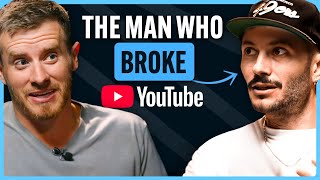
Noah Kagan grew his YouTube channel to over 1 million subscribers by cutting his posting schedule from high-frequency to just two videos a month, focusing on quality over quantity. He landed guests like Matthew McConaughey and Tom Brady by making specific, clear asks, and shifted from chasing growth to building sustainable energy around a single platform instead of spreading himself across multiple apps.
Chapters
You grew to over a million followers on YouTube.
I'm trying to do a video about our dream to get—
And now you haven't published on YouTube in over a year. Yeah. Today I'm talking to Noah Kagan, who founded AppSumo and wrote Million Dollar Weekend.
How can we create content that, depending on who our audience is, and they spend months, years literally thinking, what's the title of the show? What's going to be the plot of the show? What's the writing of the show? We did that level of detail before we ever really even went to go actually shoot the video.
So I'm going to break down exactly what worked to get to a million subscribers, what he struggled with internally, the personal development that went through that?
I committed to basically just making 3 videos a week. We kind of said, okay, we have to do something crazier.
Do you think you got there substantially faster at 3 videos versus 1?
What was interesting is that—
That's really interesting.
When you're trying to be a content creator in any aspect, just pick the platform you use the most. And I think the 180 in content now that no one's doing is—
He set out to grow his YouTube channel to 1 million subscribers. He did it and then didn't publish for a year and a half.
I think what people don't realize is that when you're actually a professional content creator, it's a job. I can't tell you the amount of anxiety, though, the night before. Maybe I don't want to be knocking on doors or finding out about other people. Just want to find out about myself.
Yeah, that makes sense. If you were to reverse engineer the channel again, is there anything that worked really well that you would do again?
This is not something I normally would say, but I—
That's really interesting. It's good to see you.
It's good to see you too.
So I was realizing there was a time period where I think we hung out like 3 or 4 times Like back to back, you had SumoCon.
Yes.
And I came out and spoke. Then I wanna say it was 212 in Denver, and then we were hanging out in Thailand.
Oh wow.
Oh, like DC. Yeah. DC, BKK.
And we don't hang out anymore. We hang out.
We, I mean, it was like 6 months ago that we had dinner at, uh, Andrew's.
Oh, which Andrew's?
Uh, Andrew Warner.
Oh, at Andrew's house. Yes, yes, yes. Dude, I have a, I have a baby and then I have another baby coming and I'm sleeping on a floor in my baby's room. And then it's like, I go to Spanish class, we have Spanish music class, and then I work all day. And then it's, uh, I don't know how parents do anything. Yeah. It's hard. If you're a parent and you have a business or you've run a business or you're starting a business, I have like so much more respect.
Oh yeah. Well, I mean, there's so much to that that, I mean, people talk about like how they grind it out to build the business and then yeah, doing it with kids is definitely on hard mode.
Yeah. When people are single and they're like, yeah, man, I'm tired. Or I'm like, dude, you haven't done anything. Like, like if you're single or you don't have a family yet, like that is your time to do as much as possible. And if you do have a family, get a good spouse or get a rich spouse or whatever it takes so that you can make time to make it happen. But it's a lot, man.
Yeah, for sure. That actually ties into a lot of what I want to talk about because you've obviously built AppSumo, got into a very large scale there, and then you went all in on content and it was fun. I was watching that from a distance. And so you grew to over a million followers on YouTube and like achieved all of that, had the book come out, everything you're trying to do. And now you haven't published on YouTube in over a year.
Yeah.
And so there's a whole story arc there.
Yeah.
That we should dive into.
Happy to. It's been— it was interesting. I think it was tied to the book launch. And so when I had Million Dollar Weekend come out, I was supposed to plug the book. You're supposed to plug your books. And I basically wanted to have an audience that I could say, hey, here's a thing I'm working on. I'd like for you to go find out about it. And so that was probably over 2 or 3 years, maybe 4 years to get to the million number. And then at the book, after the book came out, I think I just kind of questioned like, why am I doing it? I actually know the exact moment I did this video where I went and stayed outside an airport, a private airport, and I asked people driving in like, hey, can I come with you on your jet and find out what you do for a living?
And I think I've seen that video.
That video went insanely viral. I think it's like, I don't know how many views now, 6, 7 million. And I got on this guy James's private jet, flew to Boston. Getting home was tough. Um, and interviewed him on the jet. And then I remember when that video came out, I was like, oh, this is gonna bang hard. And I remember when the video came out, I was like, I've got nothing better than this.
Hmm.
I have nothing better that I'm gonna create content-wise, like in probably for a very long time. And I think that kind of led me to start thinking like, okay, well, what am I doing it for? Like, do I enjoy doing it? Do I wanna stand outside airports? Um, Do I want to interview some people? Is this really where the path I want to go on for the next period of time? And I think I just kind of stopped it and I kind of— I stopped completely on that. And I think I also got more fearful.
Okay.
As the book came out and then as my publicity or my public became more known, I kind of got scared to be home. Yeah, scared a little bit of like, oh, people know I have some money. People know where I live or they can find where I live. And I guess I question the benefit of being so public and what I get for that.
Well, let's go back to the original goal around it, right? Because you were setting— at some point you decided, I'm going to take this seriously.
Yeah.
Because you and I have been around the content game for a long time and like you've been super close friends with Tim Ferriss for a long time. And so, yeah, as you've done stuff with him, you know, you've obviously had an online persona and yeah, and everything from there. But there was a moment where you, like, took it seriously, hired a team, and, like, did YouTube.
Yeah, I went hardcore to grow it. And I can't— I did really enjoy it. I think what I've accepted about myself is that I'm excellent in spurts.
Okay.
And I think some people, um— and it probably varies, but I was very excellent. Like, I want to get to this million goal, and, like, let me see how hard and fast I can do to get there. And that was a few years, or I don't know how long it actually took. Maybe 2 years from when we took it seriously.
How many subscribers did you have when you took it seriously?
47,000.
Okay.
But that was after— that was after 15 years.
Right, right.
So I started YouTube in 2006.
Yeah, right.
When it launched. And then it was like kind of messing around with it. And I will say what I do think success is, and I do regret stopping and we can get more into the details of it, is that like, how do you find something that works and sustain with it? And that was probably where I think I went so hard and so fast, like it was like sprinting.
Yeah.
That when I got there, I was like, oh, there's no awards anymore. There's no more stickers, there's no more badges. And so do I want to be interviewing people I don't maybe care for? Do I want to be standing outside streets asking people how they got rich, or do I want to be home with my family now or doing other things? And that, that stuff started outweighing the, the work and benefit of doing the work.
So when you went all in, what were those steps? That you actually did and who did you talk to?
Yeah. Yeah, it was very— I would say it was very strategic and it was very specific. And I remember the first person I hired was this guy, Jeremy Marie. He actually has a company that does thumbnails now.
Okay.
So if you need YouTube thumbnail, shout out. I think it's called Clickables. And I remember I felt so anxious because my first YouTube videos were me shirtless. I was in— it was during COVID It was 2020. I was just with my iPhone.
Yeah.
Like, no, none of this fancy gear or even microphones. And I was just talking about what I was doing with my business. And then I started doing variety shows on YouTube. So I had like Harry Mack, you guys know this freestyle rapper?
He's awesome.
He's so good. He's one of the best freestyle rappers out there. So I was just doing variety shows and I was enjoying the engagement. I was really enjoying just being creative and putting it out there. And then as I kept doing it, eventually Jeremy, he reached out to me to work for me for free. He's like, hey, I'll do your Instagram. So he did my Instagram and I was like, well, you want to just do YouTube with me? And that was where he— I remember the day I was so nervous because I paid him, I think, $50,000.
Okay.
And I was like, do you want to just be serious with me on YouTube and let's see what we can do to make these videos more popular and get more engagement from doing this content.
And so was it just you and him?
Yeah, it was me and him for a long period of time. And then I think we kind of built like a dream team. Where what I didn't realize— my favorite YouTuber today is probably Brad Owens. He's like, he's a local—
I don't know, check him out.
He's not someone you're gonna watch. It's a, it's a poker vlog.
Okay.
And so Brad Owens is just like, he literally goes to poker casinos and plays poker, and you just watch him play his hands and he explains his hands. And, um, I don't— I think what I appreciate about his approach is like, him, you know, he's doing his editing, he's doing the video, it's just very natural. And I think with me and Jeremy, we ended up building this team and took it very probably more professionally, probably like how you run kit.com. It's like, so we have a strategist, we have Patty Galloway, who's a strategist. We had a professional thumbnail guy, Sasha. We had a video person that would fly with me everywhere, uh, Isaac. And then we had, um, I think Cam was our video editor out in England, but, and it wasn't all at once. I think that's where people get messed up. It was like me and Jeremy at first, and then it was like slowly adding the pieces to what we think we need to, to keep improving our channel and improving our content.
Yeah. Okay. So what did you think that, like, you went all in on YouTube. Yeah. What was that gonna do for you? What was the story that you told yourself? It's going to enable—
Yeah. I think the real story was that I didn't feel good enough or I didn't feel, I felt like if I could get popular, like, oh, I'm worthy. Or if I get more popular, uh, my success is, is seen by others.
Mine would be, uh, I wanna be included.
Ooh.
Right? And so there's that thing of like, oh, maybe that person will ask me to be on their podcast if I have a New York Times bestselling book or whatever.
Yeah.
But yeah, so those internal stories are interesting.
Yeah, I think the story for me was, oh, if I can interview billionaires, then people think I'm special as well. And then now I just don't care. And now I'm just like, why do I care? You know, I think, I don't know who, if it was my wife or who it was, like, why do you care so much about all these random strangers who don't know you? And I think that's where YouTube to me was like a competition against other people doing YouTube. Can I beat them? And then, which I like competing, but I think really it was like, can people see me for being special? Where I think I've gotten to a point coming back to running appsuma.com, putting out my book, which I'm proud of. I'm just, I'm fine being special myself alone without necessarily needing, uh, the commentary and stuff. Uh, but, and then we can talk about the future where I do think I'll eventually go back to it. But there was probably, like, two phases in the YouTube growth strategy, which was, like, probably the first half phase was just me and Jeremy. And it was kind of, like, probably playing around more with the videos. It's like, "OK, this is what other people are doing. Let's do a video on my income." Like, the videos that kind of, like, I think they go through waves of whatever the popular title is that you can insert.
Right. And those were more of the videos of you at your desk.
Yeah.
That sort of thing.
Yeah, it was me at the office.
And it was awesome because you don't have to do anything. You'd be like, hey, the level of effort is so low.
I mean, what was interesting is I committed, I committed basically just making 3 videos a week.
Okay.
And so it was either 2 or 3 years of a video a week.
Do you think that, like, that consistency and cadence, like, you got— do you think you got there substantially faster at 3 videos versus 1?
Well, no. What was interesting is that the 3 videos a week, none of them really were getting watched.
Okay.
And so you just kind of keep churning out. And I think it's good to build a habit. But what happened was at the end of the first year, We tried a lot of videos. Like, I interviewed Jordan Belfort, you know, the Wolf of Wall Street. That— no one watched that. I rented a house in Malibu during COVID We got a good deal on it. No one watched that one. Some of my content was watched. It was, you know, it was thousands of people, which is still cool. Um, but finally at the end of the year, we're kind of desperate. We're like, hey, we're doing a lot of stuff, but it's not necessarily moving us forward in terms of the audience growth, which is what we were focused on. We're focused on subscribers. And so that's when we kind of said, okay, we have to do something crazier. And that's when we did the knocking on doors video. We saw people on TikTok doing it and it was very fake.
Okay.
So we saw it and I think this is a really good thing for content and creativity is like looking like, like my wife watches momfluencers a lot. Like these. Does your wife do this?
No, my wife hates Instagram, but.
Okay. My wife loves Instagram. My wife, she loves, you know, for her it's an outlet. And so I, I, you can look at momfluencers to see what they're doing. Like they're doing unboxing or they're doing clothes and then like learn that for your own niche. And I think people don't do enough of that. They kind of just stick in their own niche.
And yeah, they're copying from who's immediately adjacent to them.
Exactly.
Instead of, you know, like really all you're trying to do is hooks and retention and storytelling. And so if you copy that from somewhere totally different than people—
Totally. Well, and I wanna talk on this, but so we did this, so we basically saw on TikTok some random kid, like he goes up to some mansion and they're like, come on in, welcome to my house. And I'm like, that just doesn't happen.
Right.
And so Jeremy and I were basically like, Let's go in Austin to the richest houses, knock on their doors and see what happens. Actually, because everyone's always curious about that.
Yeah. And so you did it without the preplanning of like, I know whose house this is, or I've like actually texted and figured out like, yeah, they're going to invite me in the first video, which is live.
You can see rejections, which is great. You can see the commentary in the car. There was only one person that I knew that I was like, hey, I'm going to come by your house and like, do you mind if I like ask you what you do? He's like, sure. But everyone else was like, there's a lot. One other guy I knew partially, but not very well. So I was like, and I just kind of came to his door and I was like, hey, I'm going to film you. Is that okay? He's like, sure. But everybody else was complete strangers.
Yeah.
And so you can see the reaction. Some actually saw one of them yesterday that I didn't know. She, she ran mobile park homes. Okay. But she's in Westlake and it's a house nearby here. It's sick. And I go by on my bike, one of my bicycle yesterday. And actually doing it for real was like insanely nerve-wracking.
Oh yeah, I'd be terrified.
It was terrifying. And then, you know, mostly it was rejections. And then now, you know, like it was cool to be like, oh, that house, I know who's there. And this house, I know who's there. Like there's a neighbor in my— where I live now, I'm friends with her. She owns veterinarian clinics.
Okay. And you just went and knocked on her door? Yeah.
I was like, hey, your house is amazing. Like, what did you do to afford it? And so it, it's a good— it was a good skill to actually build to be able to do that. But I think one of the bigger concepts that I noticed later, especially during the book launch, because part of my thought was like, all right, I do want to grow the audience tied to around when the book comes out, was that I don't think the audience ever cared about me.
Okay.
And this is an important point. They cared about the entertainment. They cared about the content. And so I think there's other creators like Brad Owens and other people where the content is more about them, not about the entertainment aspect. And so when you're doing something, hey, I have a book, hey, I have a course, hey, I have a product, they're like, whatever.
I'm like, get that out of my way. Yeah, I'm here for this.
Yeah, I'm here for the show. And so I think that's an important thing to be mindful. Like, I have this egotistical vanity number of 1 million subscribers, which some like me, some probably don't know who I am even. They're just like, oh yeah, I like this. This version of content of the entertainment part. And so I do think there's something appealing about maybe not as fast of growth, but the quality of growth, right? Where instead of 1 million subscribers, you have 10,000 or 100,000 or 5,000 and they're like, when's your next video coming out, Noah? And I want to like, how's your wife doing? Or they have an intimate, more connection with who you actually are.
I think some of the original vloggers, like I think of, was it Shaytards? I think, I think is what it's called. And it's— but you're like invested in this family. Yes. Right? Because it is their life. And you see that a lot in, you know, like the farm homestead space.
Which is interesting.
A lot of those content creators are very invested in like the story of their life.
Totally. Well, I mean, I think what people don't realize is that when you're actually a professional content creator, it's a job. And it's, you think that, and what you're watching on camera is just like, hey, what's up? Here's me here. Here's me here. But you don't see all the cuts, all the takes. Like, I was doing an intro for an AppSumo ad yesterday, and I'm not joking, it was probably 30 cuts at least. You know what I'm talking about. It was 30, like, "Hey, what's up? This is AppSumo. We have Black Friday coming out, da da da da." And it was 30, probably 30 cuts, 30 minutes for a 30-second intro.
And your team was like, "Okay, but do it again, but with some energy this time." We're like—
That was Jeremy. I always called Jeremy, Jeremy the channel, he was kind of the director. It was Jeremy One More Marie. Like, it was always like, no, no, one more. So even this, this, this video that, you know, we, we finally— the videos we were doing weren't working in terms of the growth we wanted, and then in terms of growing the subscriber count. But, um, we did that whole day of shooting. So we basically looked up the richest houses on Zillow. That's kind of how we figured it out, which ones to go to. And we knock, and Jeremy's like— I come back, I'm like, oh man, I'm so stressed. I'm so nervous. Like, I can't believe I did all that. And Jeremy's like, "You need to go out tomorrow and do more. We don't have enough content." I was like, "Oh man, oh man." But when we put out the video, we kind of knew it was gonna do exceptional. We knew it was something different.
Did it take off right away?
Immediately. And it was an immediate thing where a lot of people reached out. We celebrated 'cause our goal that year, I believe, was to get to 250,000 subscribers. We were at like 150 or, no, no, we were at, We weren't even close. Maybe we were at like 70 by that point of the year, but it's like, we wanted to get to 250 and it was like, no way we were gonna get there. And then with this launch, it was like, we can get to that. We can get to that number. But, and I, I think that's, it's a hard, it's hard to give people the formula of, of, on one sense, it's like, if you're doing something and it's not working, try something different. But I do think there's also something there about like going slower potentially. Yeah. If I had to do it all over so that I would wanna continue today, or I've thought about, How do you do maybe content as a series? So more of like a Netflix show where it's like, I'm gonna do 6 months of shows and people know it's gonna come, and then I'm gonna take a break for 6 months and I'll do 6 months again.
And maybe there's some update videos that come out in between to be like, here's what I'm up to or something like that. But it's not the same level of lift of you're not sprinting for 2 or 3 years straight.
I was sprinting hardcore and, and now I don't have the capacity where to fly to Maine to interview the, the boat guy or do a private jet flight. 'Cause then my wife, who's gonna watch the baby at night?
Yeah.
So it's also not in the current life phase I'm in. And I will say, you know, so we did that video and all these other ones we should talk about, but now I'm almost intimidated. I'm scared.
Like it's too big of an act to follow?
It's too big to follow in my, for me, right? I have this weight of it. Do I really wanna do it? And if I put out anything not as good, it's gonna like disappoint people or disappoint myself. And do I really even wanna be spending like how much time is required to put out that level of content.
Right, 'cause you know both, yeah, you know what it costs. I think about that with like whenever James Clear publishes his next book, you're like, I mean, I would have so much of like, is it going to be on that level? Or like Mark Manson following up on "The Subtle Art" with his next book, right? And you know you can make as great of a book as possible and it's not gonna like capture the magic just perfectly like the first one did. Yeah, it's hard to follow.
It really isn't. And I think part of it with our team, the downfall— we can talk about the other videos and how we ended up doing more of those. But I do recall that, like, I think Cam, our video editor out in London, quit to go work for a different YouTuber. And I think that kind of, like, deterred me. And part of my joy was the team, right? It was like Isaac, who he came over yesterday, but like Jeremy, the video editor, the thumbnail guy, Sasha, Cam, the guy George, who's like our random Chinese intern, like out of Hawaii. And it was, it was part of like just the team aspect almost I enjoyed as much as creating the content. And I think when they, when Cam left, it kind of, I was like, do I like the videos or I like the team?
Right.
And it's not, it's not a clear answer, right? Like I did like the content at the time, but now doing it, it's very hard to get like, okay, do I want to go interview more people I don't care about?
No, not particularly.
Not that I, oh, do I wanna go knock on doors or do these things? Not, not particularly.
Yeah. So let's dive into the other videos. So what were some of the other ones that, that took off?
I mean, so once we found the format that worked, which was find what's the question that people are like, oh, I, I gotta click to know what the answer is.
Right.
And everyone wants to know like, what does that person do for a living? And so where are those rich people at that you could find out? And so we basically, and I think this is what we've done in, in my company as well, which is, if you could find anything in business that has product market fit, just go, go as hard as possible on that. So we basically did knocking on doors. I think we put out 3 or 4 more of those videos. We did Newport Beach, we did LA knocking on doors. We did, I think, 1 or 2 more in Austin. So basically it was working.
So I was like, keep doing it, keep doing more of those videos. 'Cause also you're not gonna run out of cities.
There's a lot of houses, there's a lot of door. I mean, I can't tell you the amount of anxiety though, the night before. And I would just question, why am I doing it? Is there a point to this?
Um, views.
It was for the— I did it for the subs. And you know, I will say, you know, I think we're going back and forth and I'm going back and forth in this. I'm proud of what I look at, at the channel. And I've looked at some of the videos. I was like, wow, I can't believe you did that. I'm really proud of you. I'm really proud of myself for, for going through some of the harder work to, to make the content. We did like, uh, the private jet terminal one I mentioned earlier.
So on that one, you were just hanging out outside the FBO.
Yeah, outside of private terminal. And then I just, as cars drove in, the hack I used, which was effective, is I had a clipboard. So it looked like I had papers, so I looked like I worked there. So they would stop for the car, stop me, stop for me.
Right, 'cause they're also showing up to an airport, they're expecting, you know, some level of security. There's gonna be a gate, there's gonna be a code, there's gonna be a guy with a clipboard.
So I think if I had papers there, they would stop and say, "Hey," you know, and this is something I think is a good skill, which is like, how do you get people to talk to you? How do you get people to maybe to listen to you, how do you maybe get them to maybe do something with you?
I mean, it's copywriting, right? Where you have to say the first sentence to get them to listen to the next sentence so that you can have enough time to explain, I'm not completely crazy. And like, you're not gonna regret continuing this conversation.
It's funny 'cause it has been a little bit of time since we've made a video, but I think people didn't realize like how much effort we put into a video, right? It was like hundreds, if not thousands of ideas to pick one video, right? People just think it's like, "Oh, yeah, you know, they were at it. Oh, yeah, go to the airport, just stand outside and see if it happens." And it was like, I don't know if that was a month of planning, but it was definitely maybe longer to be making the video to actually having it happen.
So what goes into all of that planning? Like, someone has an idea, and then are you brainstorming a bunch of different—
When you're making content, look at it like Seinfeld, Or look at it like any Netflix show you really like. They don't just go and be like, all right, you're going to stand here and act, and then you're going to act here. What they do is that they bring in amazing writers and they think, how can we create content that depending on what our audience is, and they spend months, years, literally thinking what's the title of the show? What's going to be the plot of the show? What's the writing of the show? And that we did that level of detail, like pages of details before we under ever really even went to go actually shoot the video. And so we were very confident. Think of it like any show, like Seinfeld. If you read some of their books, they fired their writers every season. I don't know if you know that.
I did not know that.
Yeah. So it was basically Larry and, and David, not Larry David, it was Larry and Seinfeld. It should have two first names, but it was Larry and Seinfeld who basically just replaced their writers every year because they're like, give me your best stuff. Okay, you're fired. Give me your best stuff. Now you're fired. And so. It was similar to that where we would bring in a lot of people. We hired Patty Galloway. We brought in a lot of different, um, people to suggest content and then we'd just pick one, maybe sometimes two videos a month. And then it was like really trying to fight and think through like, okay, what's creating the content that our target audience— and I think that's an important point. We never made videos, uh, that were like, if you can hold your— like MrBeast, like stupid gimmicky videos. That was our, our videos were, Can we inspire young entrepreneurs to go get started? Like the underdogs is what we would call them.
Yeah, because you went straight for what people want, which is money, right? And they want to have a successful business. And so looking at your top videos, it's just like, here's how this person who sold his business for $3.2 billion did it, right? Or that sort of thing. And so revealing those secrets. Was there an element where you're, you were like playing around with the different video types before you realize like, oh, we just need to address money very, very directly?
No, I liked making that content. I think that was what I enjoy. That's what I like reading on. I read the Wall Street Journal every Saturday morning and it's like, that's the stuff I like reading and I liked talking about. I think when you're— this is pretty common knowledge— when you're making content, it's just really trying to find what's the content I can do over and over and over and over that my audience will respond well to. It's like you watch so many shows, like what's it called? Crying River on Netflix? What's the women's shows that they love? It's like Angel River. And you know what's going to happen. The guy's going to die. New guy comes into town. The hunk is there. The old good-looking people are there. And I'm like, I asked my wife, I'm like, you like it? She's like, I love it. And it's the same show over and over. And so we found, I knew my audience was these underdogs, these people that want to be inspired, that want to take action and do business. But I don't know what the content that I can do repeatedly that they're going to engage well with. And so we found that knocking on doors was one of the verticals, which is that person with the nice thing. So whether it's a car or a jet or a house, how do we find out what they did to get it? And so I think that was one vertical. And then the second vertical content-wise was we wanted to know if we had this idea for a video. And basically the way your content is, is like you should find your one thing and do it over and then experiment. What most people do is they experiment too much. They make that their primary thing instead of the content that works. So our experimental video was asking old rich people if they regret it. Okay. So it was a compilation video. So I went and found— I asked all my friends, I'm like, do you have an old rich grandparent? And it was like, I literally went to the senior—
Questions from Noah are always the same.
Yeah, it's a strange tax. You'll get them sometimes. So we went to like a senior citizens home and there was this like World War II veteran and It was like, how's your life? He's like, yeah, pretty good. I was in Normandy. I was like, oh, okay.
That's crazy.
Um, he's like, I love my wife and now I'm alone in this room. Um, you know, just kind of living out my life. And I was like, oh, okay. And so we put together this compilation video and it did okay, like asking rich people what they regret. And then we realized like, oh wow, there's something there about interviewing people at like the end of their life or at very high stratospheres of wealth. And then, and then that became its own pillar content where we're basically asking old, older people how they got rich and if they have regrets.
And so what, like, what were some of those videos that did well?
The video that I still get texts today, like 2 years later, was interviewing the founder of FedEx.
Okay.
So, uh, not FedEx, Kinko's.
Kinko's.
The founder of FedEx, I think he passed away, but, uh, the founder of Kinko's, which was, was, it was personal for me because my father was a copier salesman. Okay. And so Kinko's was— I don't know, I was a kid.
Yeah.
Like, we love copiers in my family. And the thing that was challenging, it was never easy to get to the people we wanted to interview. So it was never like I wanted to interview like Dave Portnoy and like he's like an impossible one. Or now Joe Lamont, I think from ESL Investments. He's one of the richest people that no one knows. You know, Joe Lamont?
I don't.
He's insanely one of the richest people, I think, on earth that no one knows. But he's been doing interviews lately. But anyways, these people were all random. So the, the Kinko's guy, I went on a date with a girl and she's like, oh yeah, I took a college class with this guy who's a rich old guy. Maybe you'd want to talk to him.
And that was the connection.
That was the Kinko's founder. And so I went to his Montecito ranch. He had like this mansion out there and he was, it was Paul O'Freely and he was just such a gentleman. And, um, we just asked, I asked like, what do you regret in life? Like, how was your relationship with your kids? What's it like to have private jets? And, um, still to this day, that interview resonates where he would tell—
he—
I said, well, what is wealth to you? He's like, wealth to me is that my kids still want to hang out with me. Wealth to me is that my kids, no matter how things have gone, they still want to come and spend time with their father. And that still resonates. And I— and that was— it was such a special interview to be able to chat with him.
Yeah, I love that. Okay. So if you were to like reverse engineer the channel again, it seems like access to people is a very important thing. Is there anything that worked really well that you would do again of like, okay, this is how I'm gonna deliberately pursue getting to these people? It sounds like the Kinko's one is a little, I mean, it's chance on one hand that you didn't know that the date was gonna turn into that. But then on the other hand, most people wouldn't be like, take that little spark and be like, let me pursue it and I will get on a plane and I will meet this person and we'll figure out all this stuff.
Yeah, I mean, that trip as well, there's a lot of momentum in life. And I think, I think that's what's been hard not doing content for a year. It's like I promised myself I would do one podcast a month and then tweet freely. And so I've stuck with that, which has been good. But if you're, if you're looking to go after, once you find your, I would just go back to those two topics. I would go knock on doors or we used to, we go into like the Formula One meetups where people bring out their McLarens and all these crazy cars. And those guys like talking about their cars and, and what they did for a living. So I basically—
And that's in a setting outside their home. It's—
Yeah, they feel comfortable being on camera with a stranger.
Right.
And then for the interviewing the older, wealthier people, basically I just had, I had a list ongoing and this is not something I normally would say, but I manifested some of them. And I think there's something there where people will start knowing you for doing these like billionaire interviews. People will start coming to you. Like, so I interviewed this billionaire construction guy that I met from a guy named Rob on Twitter because I put out like, hey, does anyone know anybody who's done well that's blue collar?
Right.
And Rob's like, oh, you got to meet Larry. And so I would have a list and then also just be putting it out there. But it was, it was very random as those things would happen. But I would, I was pretty intentional to see if there's any connections. Like I wanted to meet the BET Network founder, you know, BET, the channel. She's, she's a billionaire, but, and she has a book coming out. So it's also trying to find a reason why they want to talk to you.
Right, 'cause there's these windows where it's like, for 5 years straight, no one wants to talk to anyone, and then they're in promotion mode and all of a sudden—
So getting it in that window, I think it's also finding something that you enjoy doing where I did notice after I interviewed a lot of these billionaire founders, it was like, so how did it happen? Well, I found an idea and I worked hard.
And then 25 years later, it like kind of worked.
And I kind of think now to myself, like, I'd rather just be on AppSumo specifically, I'm like just doing the work. I'm not interviewing other people. I'm not really. It's because you're in town. I'm coming on your show. But like, normally I wouldn't be coming on anyone else's show. I'm just heads down working. It's either that or with my family. And so interviewing those people, for me, I guess I didn't admire as much as I admired the people doing the work.
Oh, that's interesting. Of the content creator versus the creator. Yeah. The, the one who's building the business. I want to come back to that in just a second. But thinking about pillars of content. You said something that a lot of people find one thing that works really well and say, that's amazing, let me go find other things that work really well. And what I hear you saying is like, no, no, no, that works, do it again and again, do these variations of it. I really like the Instagram creators who I think have a good version of this where they find the same category of content they can do over and over. So like Tim Grahl, who's a good friend of mine, He's a very good book editor and he especially likes fiction. And so he has a series on Instagram now called Fix the First Page where he grabs a random book off the shelf, opens it up, and he's like, and he rates like, how good is this intro?
Love that.
And all that. But it's a format that you can do over and over again. And you're never gonna run out of books to fix the first page. Right. But so you had a couple formats there. What would you say on like trying to find these formats that you can repeat?
It was hard. There's a lot of failure. Well, you know, you have kids, I have kids, and my daughter fell a few days ago, but just walking. And you know, then she got up and walked again, and then she fell, and then she got up again and walked and fell. And then now eventually she's going to be a walkable human, you know, like all of us. And I think what people— you have to want to do it. You have to. And then I think if you find some results from it, you'll keep going, but you have to realize you're going to fall. For instance, a few of the ones that totally flopped. Let me give you ones that I even deleted from the channel. I like fishing. I'm really into fishing. And I found this guy who makes $1 million a year doing fishing.
Okay.
And so I was like, oh, I could do a video about him, meet him, and you get to go fishing and expense it. So his name is Stan's Fam on YouTube. The guy's awesome. Went fishing, crushed it. We had a lot of good fish and, you know, flew the team out there, got the hotel rooms, all this, all this investment. And I think it got like 5,000 views. Okay. And so it was just like such a flop. And it's challenging because you're like, well, this is the content I want to make, right? This is— or like the interviews, like the Fed, like the Kinko's guy, I would have paid him to interview him. And so it's a, it's a hard balance of like, well, those are the ones I want to do, but the audience doesn't want it. Um, or we did another one where, you know, this, this thing called like Sell Me a Pencil, like it's a famous sales thing. So you see TikTokers do it and it works. And I don't know, but I went onto the Venice Beach boardwalk and I had, sell me a pen, I'll give you $1,000. And I had like a sign and all this stuff. And I mean, I stood out there for hours, which is really shit. You know, I'm already rich, to be clear, right? Like I don't need to get YouTube famous, right? Right. It's just, it's just for my ego. And I liked creating. I really do like the creating aspect. I liked, I did like engaging with some of the community, but I'm sitting out there all day. So they're the weirdest people in the world, you know, like it's the Venice Beach, you know, like people are nuts. And so then eventually, like, some girl— I wasn't this— I think this video got taken down, but some girl was like, I'll kiss you for the pencil. I was single at the time. I was like, okay. And then she got the pencil and she got $1,000. Um, but then my friend was like, that was embarrassing. And I took the video down. And so, um, that, that format did not work. And so, you know, there was a lot of different ones. Like I would, you know, well, here's my marketing plan for the year. Here's my income statement. I think one aspect of it, um, is finding something that you have a unique edge on.
Okay.
Right. Like you have kit.com, no one else has kit.com. So what is, what is something within your sphere, sphere of, uh, availability that, that other people can't replicate, uh, that you can do over and over and over again?
Yeah. What comes to mind for me would be like a behind the scenes and what's working in the newsletter space, right? Something like where the, from the seat that I have, I get to talk to everybody who's running all of the, you know, 100,000 or million subscriber, multi-million subscriber newsletters. And so figuring out a format that would work for that because it's like they all use the platform, so I can, you know, depending on what they're okay with me talking about.
Well, it's been interesting where I was just thinking of different examples. So I watch a lot of fantasy football. I love fantasy football. So probably my— that, that and poker vlogs Um, I watch fantasy football analysts and they all copy each other's formats and the format crushes. It's like, here's your, I don't know if you know fantasy football, but it's like, here's your waiver wire. Here's the running backs to start this week. Here's your quarterbacks to start this week. And here's players you need to drop or that are gonna go nuclear. And they all do those 4 videos every single week.
Okay.
And every video works. And so it does take time to find which content piece is gonna be working for your audience. So for apps, let's take an opposite example on AppSumo World. Mitchell, who's been running our channel, does interviews like this, and it's kind of trying to replicate my interviews. Like, oh, I'm going to interview someone. And so we're interviewing our target customer, like agencies and SaaS owners, uh, how they grew their businesses. And it's just such a mix if it works or not. We have not found a formula that works, but we're— but a different format, which is product walkthroughs, like, hey, here's kit.com, uh, or here's Yapper. Yapper.so is a product on AppSumo. Here's Yapper. We're just going to walk 10 minutes how this product— if it sucks, is it cool? What's the deal? And now we can, that video though, we can see people are now resonating with it.
Right.
And so it's like, I, I think the, the answer is you don't know what's gonna work. You can try to understand like what's working in other categories or what's working in your category. You have to try a bunch of 'em and then eventually you will find 1, 2, 3 that you can do on a weekly or monthly basis.
Yep. That makes sense. It makes me think of the, like, uh, you get these recipe videos on Instagram where someone is watching a viral recipe and then they go and make it and then they tell you like, does this suck or not? And I've seen like probably a dozen creators follow basically the exact same format doing that.
Are you watching a lot of recipes?
Apparently.
What are you baking at home? Are you a baker or something? I've been baking. I'm a baker. I just baked a cheesecake.
I love cheesecake.
Dude, they're the best. I should buy you a slice.
Yeah, what kind of? I come to town and you don't even get me a cheesecake?
I didn't make a cheesecake. It's a mango cheesecake. It's pretty good. I didn't see a viral TikTok, but they were copying a lot of the same kind of—
Yeah, well, and what's interesting about that is that they get to use the hook from the video that already went viral, right? Because they're commenting on that. And so it's like—
As the opener.
As the opener, which you're just like, feels kind of like a cheat code.
I think that that's great. I mean, what you got me inspired thinking about is that if I ever go back to doing more YouTube content and having more public stuff, I think I would try to do 180s, like what I did with my initial content. And I think the 180 in content now that no one's doing is just like, insanely raw, right? Like now in the world of AI perfection and like overproduction and your studios are beautiful, everybody's studio is so big because you and I can throw money at this. Exactly.
So that's easy.
Exactly. And so maybe the answer is just like go back to as gritty as possible. Like, you know, the workout guy Sam something, Sam Shankman, you know, this guy, it's like, I think a few million subscribers and it's just him on his phone and he doesn't do a lot of production. There's no edits. There's not a lot of cuts. There are some edits, but there's not a lot of edits. And it's just like, hey, I'm going to the gym. Here's what I'm eating today. Here's what's happening today. And it's just a guy talking a lot. And I think there's something there where it builds a better relationship with your audience.
Right.
And it's just so different that I think people are going to pay more attention to that than kind of the same standard production that a lot of have. Like, I liked your angle, which is like, is there a way to make it work where you have like Tim Ferriss or Ryan Holiday who use your product? Like you're doing like, like a workshop with them and filming that? Like, is that, is that the angle?
Right. Yeah, and I gotta figure out that thing that's repeatable. 'Cause something that you talked about is really what sounds to me like an element of burnout from the channel where you're like, oh, I don't wanna spend, I mean, how much time were you spending on it? Is it like 20 hours a week, 40 hours?
A lot. I mean, I was also running AppSumo and I wasn't married with a kid. But yeah, somewhere 20 to 30 hours a week. Plus, you know, a lot of the days I'd fly for filming. So if there's someone like Kinko's, Or I interviewed the founder of Qualcomm, or we went to Maine, or we went to Florida, or I did the streets of, I did the streets of Switzerland, or I did the streets of Monaco. Um, that it's just a, it's, it's a job, right? It's a job at some point. I, I get what I was thinking about though, is that you've been doing content and creating for a long time. Like how do you stick with it?
I mean, it's trying to find a format that, that is enjoyable, relatively easy. Like something that I found is I enjoy the podcast way more if it's in person. And so I just made a rule that I only do in-person interviews for the podcast. And that made it really easy. I mean, it makes it harder logistically, but it makes it easier from decision making.
Yeah.
You know, and then it's just like, cool, what city am I going to be in? Who do I want to spend time with and interview? The other thing that makes a big difference is batch recording. So, Now that we have a studio in Boise, I will fly people out once a month instead of recording weekly. I'll fly people out and once a month we'll do a dinner and record with usually 4 people. And then I spend a day and a half instead of half a day every week. It's a day and a half a month.
You enjoy it?
Yeah, I like that a lot. But I think in your case, I mean, you went to the point you achieved all the goals that you set out to do. Yeah. And then you didn't upload for, what are we at, 18 months now?
Yeah, it's been a while. I'm scared. I'm scared to upload. Like, is it gonna be good enough? Like, will people respond? Will people remember me? Do I wanna even upload?
Right.
Right, so there's a lot of psychology things to work through. Do I care to upload? Like, I'm feeling so good about myself. I just feel so good. Like, I'm a good husband. I like being back at AppSumo. Moderately healthy, you know? And I'm like, what do I, do I wanna do it?
Right.
Where I think before it was like a, maybe an insecurity that, that was driving it. Not, not entirely, but definitely one part of the motivation.
So a lot of the timing, you stopped uploading about the time that your daughter was born, right?
Yeah, exactly.
Okay. And so that was just a big life change then. Obviously you don't have the same level of time to commit to it.
No, not what's needed to be at the level of, of success that I was experiencing. I think what's been interesting is, so I do, I remember, you know, Sam Parr, and so Sam Parr, I was doing a weekly newsletter for 5 years, uh, via NoahKagan.com. I was just sending my newsletter every week. And then Sam Parr sent a newsletter once every few months and I was, and I, I was like, you can do that? That's allowed? I was like, I thought there's rules that you have to be consistent. He's like, no, no, when I have something to tell them, I tell them. And then, so I think it just made me reflect the whole part of, um, what do I really want to be doing? And so I like tweeting, so I tweet whenever. When I have something to email out, like we have a Black Friday thing for AppSumo, I'm going to email out. And then I do the podcast once a month. And I thought, like, I could do this for— I literally could do this forever, and I want to. And this is what's been interesting. So on my podcast, I don't do interviews anymore. I just talk about myself. That sounds weird, but I talk about myself. And then lately, the past maybe 2 to 3 months, all I've done is given, like, the most raw— it's not vulnerable, but the most raw insights into like how fucked up AppSumo is and like how challenging some of these different problems we've had are. It's not, AppSumo's not totally fucked up, but like we've had a lot of problems. Uh, I just came back being involved in September after paternity leave and just sharing what's going on. Like I've been calling it like AppSumo at war. And this is the first podcast in, I don't know, a few years people have been like messaging me a lot. Like, oh, like Grant Baldwin, who I know you're friends with.
And it's like, "Hey man, that was good." And so I was like, "Oh, this is interesting." It is like, it's easy to get caught up in the view counts or subscribers or something else, but the, "Did your friends text you about this?" is a really interesting, like you can't really quantify it. But there are some of those where you get like 3 or 4 texts where someone's like, "Hey man," some version of like, "That was really good. That spoke to me.
I'm dealing with the same thing." And you're like, "Oh, I think we're onto something here." And so I think there is something if I, wanted to be more public and I needed more YouTube stuff, I would just record that, right? So I just put a camera— a camera— I put a camera and I'd have my mic. But I kind of just like that it's, it's almost private in a sense. And it's like, this is what I want to share publicly and I feel good about, versus it's a slippery slope. You start putting it out there and then you get some feedback and then you want to make it better. And then you— right, I think you have to be awake. Like, one of my favorite books is from Tim— Tim recommended— is Awareness. Okay, I don't know, uh, by Anthony de Mello. And it's one of my favorite books in the past decade, specifically because it just tells everyone to wake up. And the whole idea is like, are you just awake to the life you want to live?
That's it.
And I think going down the YouTube path and having to build the team, and I think that is for some people, um, whether you're going to be like at the MrBeast level or like a Brad Owens, uh, level where you're just like vlogging your poker hands and that works. And I think for me, I'm really enjoying this, this series in this phase of like podcast a month, email whenever and then tweet as I see fit.
So is there a version of YouTube that you see, like, fitting in with your life going forward?
Possibly, yeah. I can see myself coming back to it.
And it—
I think I'm trying to— sounds weird— I'm trying to accept myself. I'm trying to accept— I'm accepting in a good way that I don't have to feel guilty I'm not making videos. I mean, that's a very easy thing to— I'm not making videos and there's— I just don't care right now. And I'm looking at it as more, there'll be a period when I wanna do another series. And I think the fact if I could have it more time-blocked, like, hey, I'm gonna come out and do 6 episodes next year, and then have that, I think that would be, I think, more directional what I'll do in the future.
Yeah, that makes sense. It makes me think of Tim's show from forever ago. We did the TV show.
Oh, wow, wow, yeah.
Like, the Tim Ferriss Experiment, is that? Yeah. You know, but it was only like 6 episodes or 8 episodes or something. But highly produced, you know, all of that. He dove in and did it. And, you know, it didn't come with his obligation. And maybe he would've done more if it got picked up by a network.
Like, the content machine is just an unlimited treadmill.
But he was able to do this thing.
One time, yeah.
And anyone who, you know, was either friends with him or in my case, a fan of his work from back then is like, "Oh, we know that exactly." Yeah. Right? Now people are not gonna know what that is, but—
Maybe not, but I think— You first thought it was a thing. Yeah, my thought was comedians in cars getting coffee where it's like, "Hey, I'm gonna put out," season. It's 10 episodes and that's all I'm going to do. And that's okay.
And when the time is right, I might do it again.
Yeah. Like I tried another content avenue, which was like live workshops.
Okay.
So a few months ago I was in Barcelona for the summer and I spoke at a kid's high school that I really— I was like, man, I'm having so much energy. I'll do this all the time. So then I found a bookshop that had my book and I was like, hey, can I speak? and I was like, oh no, I don't like this. And then it was maybe the format that I did. And so it's just re— retrying it. And so it's finding a content medium. So maybe it is in person, which I think is almost more unique these days, um, that works for you and you can do it potentially for, for a long period of time or in a, in a, in a boxed period of time.
Right. Yeah, that makes sense. Okay. I wanna go back to the idea of making content about the thing. Versus actually doing the thing, right? 'Cause a lot, 'cause I think about this a lot of like, I enjoy making content. I enjoy running a software company. And there's an element where I think that building a brand and the content is definitely going to elevate Kit. But there's a core part of it where it's like, should I just be heads down and just, you know, be doing sales and marketing and, and product development for Kit. And so I'm curious how you think about that, of the time spent on AppSumo versus the time spent building the audience. And it, like, did they help each other out in the way that you expected? Or how do you think about that now?
Well, me and you both came from that though. So I think before we had software business companies, we had personal brands.
Yep. Oh yeah. Right?
I don't know if you ever thought, I don't think of it as a personal brand. I just was public.
Right. Right?
It's never been like, I need to build a NoKingin brand. Like, I don't know, it's just me living and sharing.
And so, but you're right, we both did that before like a company with a team and all that was successful.
Yeah. I mean, just to share on the other side of this. So at AppSumo, we're promoting software deals and so we go to these companies and all the companies today, I was like, what's your marketing channels? Like besides AppSumo, what are you gonna use to grow? And it's shockingly, shockingly, the majority of 'em are all really focused on influencer marketing.
Mm-hmm.
And so the problem with influencer marketing is that you have to kiss, you know, a 21-year-old's butt from, you know, that's like, you know, oh no, I'm too busy and I can't, won't do it. And so it's nice if either you can do it or someone else in your company can do it. And so that's why I would say at AppSumo, our feature product instead of myself is, can we make videos about products and have that be a content pillar that we can use to grow our audience. Uh, because right, right now it's, it's not going to be me. I don't want to. Mitchell is transitioning out. And so we think this is, I think this is going to be the way that, that builds up our brand. I would say historically though, having a public persona or having a public presence, not persona, I think is invaluable.
Yeah.
It's just been so cool. Um, the people, the experiences, the, the accessibility to things like, like today I'll DM someone like I was DMing this guy, Daniel Nguyen. He made a company called Bolt AI. And he's like, oh dude, I like, I read your book. And I don't know if he read my book, but like him or another guy read the book.
Yeah.
And I was like, what do you mean?
How do you know?
You've read the book? It's like, I think that part was surprising and it's only from just being public. So I think there's, there's a lot of benefit in your business as well as non just direct business that's been beneficial from that. Okay.
So let's talk about building that content, like building that content engine as a business.
Yeah.
Or really to drive revenue to your business. 'Cause I think of attention as a currency. It's a very, very valuable currency, but you get to decide what you direct that towards. And it could be to any range of things. It could be to e-commerce products, it could be to advertising, affiliate marketing, whatever else. And so you're saying, hey, I have this very valuable business, and if I get attention, it's worth more to me than other people. And so if I direct that to AppSumo, or in my case, right, directing it to Kit. But building, internal influencers is really, really hard.
It's really tough. It's really tough. Have you—
is there anything that you found that works for that? There are companies that have done it well. I think Ahrefs did it really well with their YouTube channel. Um, I, I'm trying— there's not that many other people that have done it.
The company I was thinking about that I, I— they're, they're, you know, Huckberry? Anybody with them?
I don't know them personally, but I'm a fan of their product.
They're here in town. It may be interesting to chat with them. But I like what they've done with their content where there are two verticals. One of them is all their content is they do deals on guys, guys clothing and guys gear. And so one of their content pillars is basically like go to a random country and like have an adventure.
Okay.
Which is all their branding. It's like go out and have an adventure. And so they have like a lot of Japan videos. They have like random, all these random countries and those videos are getting hundreds of thousands of views and it's like Huckberry branded.
Right.
And they're all wearing Huckberry gear. So I think that has been really interesting. Then they do their, uh, Everyday carry, EDC stuff in your backpack. So you go to their studio and then you just bring your stuff and that's, they just on repeat have different people come through to, to do that content.
That's what's interesting about both of those formats. The, the adventure one, you're like, could I see myself doing this for the next 10 years? Hell yes.
Yeah.
You know, 'cause you're like, that sounds like a great time. And then, you know, on the everyday carry, it's a format where like they say, if you want to, grow on YouTube as a podcaster, the best way to do it is to interview famous YouTubers. Right. And you would see this with, um, uh, Colin and Samir. Yeah. Right. As they have all these popular YouTubers on, or, um, uh, I'm spacing on other names, but right. The same, same idea. But this everyday carry video, you could bring in people who have their fans who would want to talk about it into your format. You can make the same thing over and over again.
Yeah.
But it's unique. So I love both of those formats.
Well, it's been fascinating to— the initial question, you're like, if you have a company already, how do you build up? You know, we have maybe a two-pronged approach where we have a dedicated— I'm guessing some of you, you have a dedicated like ambassador program. I know the guys from Beardbrand do that too, where like you go out, you find people. I think the untapped thing in brands is international. I think that's kind of been an angle that's been really good. Like my, you know, my wife and I, we speak Spanish, but like Germany's huge, right? Go get Italian people. Like there's less competition, right? So if you get ambassadors there, but that's one way of doing it, which is like, how do you find less busy, less, you know, gone after people and international countries has been easier. Um, so that's one part of it, but then the internal stuff, we just, I don't think we've ever really figured that out in inside. Cause we, we, we've been making product videos for years and they all, no one watches them besides just a very limited amount of audience. And so we're really trying to experiment now. Can we craft that in a way that, that gets a larger reach? Because what ends up happening is if someone could do it themselves, like, why wouldn't they just go make their own channel? And so I think what we're, what I do want to experiment with is like, can I find someone I like, like Mitchell, who was inside the company? Like, go outside the company. I'm going to sponsor you, but just do whatever you want. I have no idea how well that'll work, but I think he'll go create something special. Like, you know, Nat Eliason used to work with us and Justin Meyers used to work with us. And so it's like, is there a way to build a better relationship with them where ongoing they're doing whatever they want, but they're like, oh yeah, like I used to work at AppSumo and I liked AppSumo.
Yeah. As they've gone on to do other things.
So like help them achieve their success. And then it's like, they're still like, Eamon Alvedo is a great example of it. So Eamon was our former CEO. Um, he left 2021, so give or take 5 years. And that guy talks about AppSumo every day. I mean, he's like, you know, and so it's like, oh, how do I create more people like him where he has a good experience in the company, but he wants his own show. He wants his own company.
But it still ties back in some way.
Yeah.
It's your AppSumo mafia. And so the PayPal mafia.
Yeah, there's a little— we have a little one. We've also been around a long time. So I wonder with Kit as well, where there are things like, you know, Darryl or some of the people that have been with you that can go out, build their own brands or something, and then kind of still have the association.
Yeah, that makes sense. If we were— this is putting you on the spot, but if you were to like try to come up with content formats for Kit, that would work?
Yeah.
Does anything come to mind?
Um, is the goal is like views and subscribers kind of thing?
Eventually from the right target audience, right? From, from creators.
Okay. What, what's worked so far with your— what's like your most popular on your channel or on kids channel?
Uh, there's certain interviews that have done really well on my channel, like Jay Klaus. Uh, that one did 100,000 views. Um, which is— the channel is only 15,000 subscribers, right? So that's outsized. Um, On Kit's channel, it's the conference talks, but I feel like those are more the, you know, that's James Clear and Seth Godin when they happen to be on our stage giving a great talk. I don't think some of the product breakdowns, how to do things, but that's like pretty niche for us. I don't think we found something that—
How big was the Seth Godin, James Clear one?
I think those are each a million views.
How much did you pay those guys this week? Just ballpark.
Yeah, under $100,000 each time.
Is it worth 1 million views for $100,000?
I don't know.
So that's one content format. I would say, "Hey, I'll pay you $100,000," and then you put them on a stage.
Yeah. I mean, James, it helped that we've been friends for a long time. And I think that was the first— I think maybe Atomic Habits had just come out.
Yeah, yeah.
Right?
I guess my— But what I look— What we— The team, like, what we brainstorm around is, like, what's already working? And so, who else out there is at that level? Like who else is, you say James, like Ryan Holiday?
Yep.
Maybe Tim, um, who's like, who's maybe the younger generation, maybe Colin and Samir. I mean, they're kind of older, but who else is like a younger generation?
Yeah, I think we'd have to figure that out. But I like the, the idea, you know, if you're gonna pay someone a salary to go do all this and create, brainstorm these concepts, like how could you maybe even just pay the individual person?
Yeah, I would just go find the list of— I'm sure like Rose Han is like more in personal finance space. I think I'd probably categorically look at like who is the audience you want, but are they watching finance videos? And then find those speakers, give them $100K, either put like have a conference again and then you have 10 speakers or do 12. So you have one a month.
Yeah.
So 12 speakers, you spend $1.2 million, $100,000 each, and then maybe the audience even pays for it or it's— they apply or it's free or it's just for kit members. And then you have a banger video for 12 months and you just do 12 a year.
That's interesting. And then it serves the purpose of filling your conference speakers and you have a great conference for your, for your audience.
I think that would be one angle I would consider. Um, and so Kit, the, the customer for Kit, again, it all comes back to like who's the buyer and the, and the viewer. So the customer for Kit is like a creator, like who, who are you guys listening today?
A content creator. So let's say a podcaster, someone running a newsletter or YouTuber, right? And they want to bring their audience to email.
I'll just— I'm just brainstorming.
Yeah.
I think one thing that's really interesting is like behind the scenes of like, uh, the setups.
It's a little more technical, but it's a format you could do over and over again.
Yeah. I think it'd be cool. Like, you know, like I'm looking, I'm copying another one. Do you know Cosmo? You know Cosmopolitan?
Yeah.
Um, Kara, you know Cosmo, like the 73 questions. So they go to like, I think it's mostly women. They go to their door and be like, I have so many questions for you. And they follow them around. So you could do that with creators in their studios.
Mm-hmm.
So you kind of knock on their door, they open their door and you're like, hey, like walk me through your studio. How'd you think about the setup? Right. How'd you like, how'd you get just kind of like your own, your own twist, right?
Like that's a version. That's interesting cuz like Ryan Holiday, for example, I've been out to his bookstore, his studio that's right next door to it and all of that. And he gave the full tour and we had a great time.
Did you film it?
No, because I wasn't thinking this through. Right. But that's the version that Yeah, you could absolutely film that and ask a bunch of questions.
Yeah, and you kind of make your own, there's like, oh, it's Kit's like thing. Like, you know, like AD, you know, Architectural Digest? They have their open house where you come to celebrities' houses. I love those. Those are so good. And so is there something, some similar parallel for you guys?
Well, what's interesting is you could do that with Ryan Holiday, with Huberman, with a bunch of these other people. Like, show me your studio, show me where you work. And people would love that content. And implicit in it, you didn't have to say it explicitly, of like, these are our customers. And so there's this big trust transfer that happens with it. Yeah. That's really interesting.
That'd be fun to watch.
Yeah, I mean, that's the content that I would watch, so yeah.
Yeah, I think that was a little bit of the disconnect as we were doing the content I was creating. It's like, it has zero relevance to AppSumo. Like, hey, I knocked on a door, we found out this person, What did somebody do? It's like architects or one person sold strawberries. That's how she became a multimillionaire. Strawberry fields.
And you're over here in software.
So I have software deals at AppSumo. You know, if you're an agency or a small business owner and you're looking for software deals. And so I do think you have to consider like, it's great that people are aware of it, but is it really the audience that's going to come in and like take action related to the business that you're running? Right. So I'm trying to think what other—
I don't know.
I think it's like coming up with a lot of them. Um, Paddy, Paddy really is good. If I don't know how expensive he is these days, we got him pretty early. Um, but he's running the Philadelphia Eagles channel.
That's a big channel.
It's a big channel, but it, and it's also just really interesting content. They do like, what do they eat in a day? Like, how do they travel? Um, behind the scenes of stuff. I mean, the content is just so interesting. So I wonder. I wonder who else is on your creator, like just look through your customer base. Like who's, who are some of the interesting creators you have? Not maybe in the younger or female or what are some of the other?
Yeah, I mean there's, I'm trying to think of people that aren't like super famous 'cause you have to be able to get in their time. Like we have Dua Lipa on the platform, but she's not gonna create content with us, right?
You sure?
I guess I haven't asked.
Yeah, I would ask her. That's cool. I mean, are you allowed to say that she's on your platform?
Yeah.
Oh yeah. Yeah, do a Dua Lipa song. You know, like, "I'm with Kit." I don't even know her music. All I know is the Beatles. That's the last band that was good. No, I mean, Dua Lipa would be super— like, why do you even have Kit? Why does she have Kit?
She has a newsletter. She has a book club. She has— like, she's doing the whole content creator thing.
That sounds like a pretty interesting one to do a video.
I guess the thing is, it's also— thinking through these, there's some things where you just have to have a specific ask to make. Yeah. Because like Matthew McConaughey's on Kit, but I don't know what to ask, you know? Like, and I've been on calls with him or all of that, but I don't know what to ask him.
No, I think you can figure that out.
And so, but if you had this format—
He's a kind of interesting guy. Yeah, yeah, so I think you can figure it out.
But if you had this format where it's, here's what we do, it's the way we do the tour, you know, the 73 questions or some format like that, like Matthew would do.
People will watch Matthew on a toilet, you know, like I would. And so I think you can figure out different, like, different variations of your format, but like, could be the studio. Honestly, I'd be curious like why they're doing it. Like, hey, what's beneficial for you? Like, how do you do your content? Um, maybe it's even, maybe it is tangential stuff. Like, why does this like matter?
I like it.
I think, hold on, who else is there?
Uh, that's public. That's, I mean, everybody's pretty public. That's the nice thing about it is like it says powered by Kit somewhere in there.
Oh, sweet.
Um, Tom Brady has a newsletter that he's very into. So we're trying to do a, uh, behind the scenes with him. 'cause he's like actively writing his newsletter. So yeah, that would be—
Yeah, I see him doing his YouTube channel.
Yeah, the YouTube, he's very into the YouTube channel. There's a bunch of YouTubers like Veritasium and a whole bunch of 'em. So there's really a lot, but I think you're right. It's diving deep in who our customers are and finding a format that we can do over and over again where we're making a specific ask and saying, hey, can we, you know, using Andrew Huberman as an example, "Can we come to your studio?" Yeah, there's something there. I think a lot of the energy that you brought, that I've known you to have for years, and that you really brought into the content creation of, like, this full-on sprint and, like, going all in, with the energy that you have now, when we hung out at Andrew Warner's, like, 6 months ago, you showed up with just, like— I was like, "Did Noah go zen?" Like, Noah as a dad is— is very different, but it also feels like you're— feels like the fuel that you use to drive yourself is different than it was a couple, couple of years ago.
Yeah, it's been evolving. I mean, I'm Mike. I was talking with Mike Posner. It was like the music is awesome, dude. And he was telling me, he's like, you know, if you talk to someone 5 years later, it's like, how's it going? It's like, I'm still the same, you know, maybe something needs to change. And I think who I was 5 years ago was not the same as I am today. Like, I wanted to prove myself. I wanted more views. I wanted the subscribers and I think if I ask myself what I really want, you know, I want to, I want to have a nice day with my family. I want to feel like I created something at work. I want to feel a little healthy. Um, and I think related to like making content and stuff, it's, can I do it in a way that, that, that just serves me, which is Twitter, which is a podcast and a newsletter whenever I get around to it.
Yeah, that makes sense. Um, on the, you mentioned Twitter. Yeah. What's been working there to drive like the tweets that you're doing? Are you firing off random things? Do you have things that have gone like crazy viral? Like what's some central threads there?
When you're trying to be a content creator in any aspect, just pick the platform you use the most. And I think what people do is they try to do all the platforms. I only did YouTube. So when I grew big on YouTube, I didn't do anything else. You wouldn't see me on TikTok. You would not. And it's like eventually we did start testing TikTok, but it was like all in one platform. And so with Twitter, I basically just use it all day long. I do love Twitter. And so the content that I've noticed works is counterintuitive long stories. So I did a— and I used AI, so I used ChatGPT to basically be my like My guy quit to go work for Hormozy. And so I was like, okay, you're now my new intern. And so, and then you can't quit, you know, I've got you locked in a box, buddy. And so I basically was like, here's stuff that's gone viral. What are counterintuitive stories? So like real estate losing money and it's not a good investment. Generally people talk about that a lot. So I was like, okay, I lost money in this Airbnb, help me write it out. And here's, here's my numbers. And so I think if you can show a picture, I can show numbers. Um, is there a way to create like more of a narrative versus, you know, like quippy things? And that one, I think it was like a million views.
And so this counterintuitive long stories. Yeah.
And so, so how do you use AI to basically be like, what, again, it comes back exactly. If you're trying to professionalize it, which I'm not on Twitter, it basically, what are all the stories out there that are, that I can think of, uh, that are, that like everything possible in my life that I can then talk about on Twitter. And then basically picking one and then really spending a lot of time to make it, make it great.
So are you brainstorming all of these stories? You're like, this happened, that happened.
If I was trying to—
if you're trying to grow my Twitter following and make money on that, yes. Okay.
That's exactly what I would do. I basically then try to make sure there's a— I don't think you have to do one a day. I think that was what was shocking on YouTube. I thought YouTube, I have to do 2 videos a week. And I did that and it ended up being 2 videos a month is what really grew the channel.
Yeah. You went quality over quantity.
Exactly.
Yeah, that makes sense.
And so I think for everyone it's just finding the medium. It's finding your format, finding your cadence. Like, hey, can I sustain this? I don't know if I— I don't know if I want to still go to— I do regret a little bit that I burnt out kind of hard on that, or I got— I woke up. I woke up and was like, maybe I don't want to be knocking on doors or finding out about other people. Just want to find out about myself.
So my hope is that you come back to that content and in the format that's like, that is super authentic and true to who you are now. Yeah. Because I think there's a lot of people who have followed you along the way, and as you've shifted from like pure entertainment and people are following it for the entertainment, I think there's a version of it where people wanna come with you in that journey.
Yeah.
And I hope that you'll—
Thank you.
Give them that gift of showing up back to YouTube. It might be in the once a month or once a quarter.
Something there. I might, you know, I, I, I've been posting a little bit more about being a dad and people are like, yeah, I'm a dad too. I'm like, you guys are dads now? Like the audience that I've been doing it 20 years. And so I guess a lot of 'em or dads. And so there'll be some variation, um, after I, I settle in. I have a 1-year-old and I'm having another one coming, so it'll be a little bit of time.
Yeah, that makes sense. Okay. And for right now you're all in on AppSumo? Yeah. That's what you're focused on? Yeah. So you talk about that on the podcast where you're giving behind the scenes of what, what war at AppSumo looks like?
Yeah. I mean, I think that's really good content if maybe we packaged it, but right now I think just doing the podcast is enough. Yeah, not enough, but I think I'll do a podcast. Maybe I'll make it into emails and Twitter, but for now it's just like, it's like my creative outlet that I don't have to professionalize or scale or get more audience on.
Yeah, that makes sense. Awesome. Well, thanks for hanging out.
Thanks for having me.
Uh, what would you like to plug? Where should people follow you? All of that?
Uh, just go, go call your mom, you know, call your mom, buy an ice cream, get pistachio.
Uh, always pistachio.
What's your favorite flavor?
Uh, I would say salted caramel.
Ooh, that's a good choice.
Yeah, it's good. Dude, always good to see you.
Good to see you too.
If you like this episode, go check out episode 103 with Nicole Burke. She shares the simple short-form systems that helped her go from $0 to $6 million in annual revenue with Gardenary. Be sure to like the video and subscribe, and I'll see you next week.








