How I Built a $375,000 Business Working 15 Hours per Week (Full Guide)
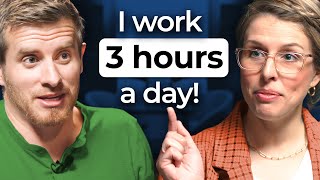
Karina Holden built Front Fighters, a wardrobe-streamlining business, to $375K in 2023 revenue while working 15 hours a week. She uses Meta ads with a 1.3-1.6 return on ad spend, a funnel that starts with a free guide and moves through $21 and $70 upsells, and a SaaS app priced at $7.97 a month or $77 a year. Her goal is $200-250K take-home profit on a lean team of five virtual assistants.
Chapters
What are the financial goals for the business?
I would love to pay myself like $200K.
I feel like we should set a bigger goal than that.
Bigger goal? Okay.
My guest today is Karina Holden, who's a mom of 5 who runs an amazing business helping women take the guesswork out of getting dressed. How much revenue total have you made?
We, we hit $2 million.
Okay.
Yeah.
If someone was just starting out, what advice would you give them?
Don't spend a lot of money on specific ads. Just go wide with lots of angles and see what resonates with your audience. Funny enough, the creatives that have done the best is really like, it's like the easy easiest thing to do. That's how you stand out.
And with all the advertising now, we have a bunch to dive into in your business. So let's hop up at the board and diagram it all. What do you most want to scale up?
I would love to increase the recurring revenue. I, I don't mind hustling for a short period of time, but I want to be like really present for my kids.
What I want to do is a flywheel based on ideas from our audience, metrics and testing, total number of subscribers, and then revenue attributed. And you can just keep refining that system which will keep your time involved very low.
Okay.
Welcome to the show.
Thank you. So excited to be here. It's a little bit surreal. Yeah.
You were saying that you regularly listen to the show.
Yeah, every single one.
So I wanted to come on to dive into your business. Give the listeners a little bit of an intro to your business.
So I basically help women to optimize their wardrobes and get more out of it. Get confident with how they dress. So it's very much about, you know, helping you feel confident in your clothes. But it just costs them money to get my resources and they do save money in the long run. But I have to, it's a little bit harder to convince them to invest in what I have to offer. So it's done well though. I think that we've kind of nailed the pain point. And because I'm my ideal client, customer. Like I understand exactly the struggles they have. So that's what I do.
Yeah. Something that I've said many times in the past is to teach a skill that makes money to people who have money. And that is the most direct path to like a, you know, earning a full-time living as a creator. And there's all kinds of amazing communities and creators that have come out separate from that. Like on Kit, we have creators doing a huge range of things. Like one of my favorites is a creator who has an entire website dedicated to birdwatching and he earns a great living from that site. Uh, but it's just harder, right? In, because you tend to not earn as much from each customer. Your price points tend to be lower. I'm curious, what are some of those things that you've run into as you've, uh, you know, built your business that other people who are you know, not in the skill that makes money to people who have money category might run into as well.
Yeah. I mean, I think it, it's a little bit like, um, I remember one of your episodes, I think you were like in a panel with maybe your mastermind friends. Mm-hmm. And they were talking about like a smart way to start a business. Yeah. Is like swim, you know, just downstream, like just go with the flow. And yeah, I'm very much upstream. I'm, I'm a lot of women don't realize just how frustrated they are by clothes. And so I have to sort of make them aware and then also show them how what I offer can help them. So it's taken a little bit of time to figure that angle out, but I think the business really started with that set of people that were very aware of their problem already. And as we've grown, we've expanded by making people aware of the problem.
What was the gap between very first thinking, you know, you love this topic, you know, you can help people, to then like stepping into the world of content creation?
Okay, well, actually, it was always a struggle for me. I never felt like an expert in it.
Okay.
Yeah, no. So I started basically as a blog, you know, I was like, let me try to make money from home. I thought, oh, maybe I can just do surveys on Swagbucks or whatever, make some money. And then I came across, oh, you can make money with blogging. So I started as a blog.
And like, what, what year was this?
This was 2016. So I was pregnant with my second, you know, dealing with morning sickness and everything. But I'm like, I need a challenge. I need, you know, I was done with my full-time work. And so I was like, I want to be a stay-at-home parent, but I need a challenge now. And I always liked clothes and shopping and stuff, but I felt like if I put on a good outfit, it was by chance. And I didn't like that feeling. I was like, that's really frustrating. There's gotta be a way to systematize this. I have always been driven by efficiency and systems and I just, that's just the way I think. So I figured I can niche down to that and come up with a system that will help me and then ends up it's helping lots of people. But so from the blog, I think a year in, I didn't even think of it as a business. I just thought I'd make money with ads on the blog. It wasn't until I did Todd Herman's 90 Day Year.
Yeah.
Yeah. And then I was like, oh, I need to think of this as a business and I need to call it work time, not like project time or whatever. So I created a guidebook and it was just sold it as an ebook and that was our first product. So gone from there.
I always think that the first dollars that you make selling products, you know, where you're like, wait a second, this is disconnected from my time. Usually disconnected from your time not in a good way where you're like, I spent 100 hours on this and it made me $10. But wait a second, there's something about, you know, it made me $500.
I just need more people.
Yeah. And you're like, wait a second, I can sell this again and again. There's a creator that I really admire. His name's Jack Butcher. And he has this phrase of build once, sell twice, which I feel like just sums up that leverage so well when you're like, wait a second, you know, the VA services, you're, has a direct correlation, but the digital product. You're like, wait a second, I can run this through more and more people.
Yeah, exactly.
So if we fast forward a little bit, we want to get into all the details of the business, but at a high level, maybe how much revenue total have you made over the last like 4 or 5 years?
We hit $2 million.
Okay.
Yeah. So that's pretty exciting. I actually didn't realize that until recently.
I was like, that's a lot.
You're pulling the numbers together and you're like— I was like, oh, let me actually look at QuickBooks all time. Yeah. You know?
Oh, that's amazing.
Yeah.
I mean, to, to hit $1 million and is a huge, like very, very few creators, you know, if you think of everyone who sets out on this journey, very few get to that point. But then, you know, to, to double that is pretty amazing.
Yeah.
And so now from the numbers we were talking about, like what are you at the last few years?
So 2023 we made $375K revenue and then so far this year we're at $255K.
That's awesome.
So yeah.
Yeah, and one thing that you've really mastered that I think is really interesting is paid ads. And you've been able to do a lot through that. So in a second, I want to get into like what you'd say to someone who's been purely in the world of organic and thinking about getting into ads. But before that, what did it look like scaling from the $300 that first few months to your first $10,000 or first $50,000 in sales?
Yeah, I think it was basically selling to continue to grow my list. You know, those first couple years I was really good at staying focused on Pinterest, brought really good traffic, continued to write blog posts before Google let AI take over, you know, giving answers for people. And I've definitely seen that dip, but I just stayed focused on creating great content, like really good blog posts. You know, every time that I wrote a topic, I made sure it was the best out there, you know, on like, ways to wear your burgundy pants or whatever. And so that brought in, yeah, our traffic increase. And I made sure to always have an opt-in that was either general or related. And I was on Kit, I think since probably 2017 or so. That's when I joined, yeah.
This is the early days.
Yeah, well, I knew, I think what really convinced me to switch, I think I started with MailerLite. But what made me switch is it was like you were talking directly to me and you're like this, I think you talked a lot about how if you have lots of opt-ins for lots of different blog posts, you need something like Kit. And I was like, yeah, that's me. Because I think I even played around with Mailchimp at one point and it was horrible for that. It was so complicated. So I tried out Kit and I just loved how you could have so many forms and it was all still really organized. It wasn't complicated.
You track conversion rates and all of those things.
Mm-hmm.
Okay. So then scaling it up. So search traffic, Pinterest. Yeah. Those are the main things.
Yes. And then I think it was 2018 or so that I took a course on ads. Mm-hmm. And it was, um, from Brilliant Business Moms. Shout out. I love them. Um, they, she, she has a course, um, on ads and I took that and I mean, it was super successful back then. It's a little harder now, but still. Mm-hmm. A great way to bring in new leads profitably. So around then that really skyrocketed our growth, list growth.
Let's dive into that. What are you getting, you know, like what are you seeing on it for a return on ad spend?
Yeah, so like upfront we can get 1.3 up to 1.6 and sometimes better because we do, if we offer a lead magnet like a freebie, we have a tripwire. And the funnel afterwards. And then we do a lot of direct-to-sales as well. And those also do well. I mean, it's kind of like half and half. They both do well.
What's the price point on either the tripwire or the direct-to-sales that you're—
It's $21 for like option one. And then, 'cause I know you like tier pricing. Yeah. No, we really saw a huge increase when we did two options.
Oh, that's great.
And most people take the higher option, which is only $27, but it adds a few more things. So like the discount is huge when you look at the option too. So most people take the $27 and then we have a bump and an upsell. And so all in all, I think if someone takes all of it, it might be like $70 or $80. And a lot of people do take all of those options.
[Speaker:NATHAN_BARRY] Yeah, so there's a good, you can spend a good amount to make, like you have enough margin. It's not like you're selling a $10 or, you know, a $10 or $20 product by itself. —starting in the mid-20s and then going up from there.
Yeah, yeah, and so, like, it's worked pretty well for us to actually have sort of, you talk about, like, the strip mall versus a skyscraper, and that's something where I'm trying to decide how much to focus on the one, you know, now we have a SaaS product, but it's been neat to have several products that really work well together because it allows us to have all these different levels of bumps and upsells.
Well, yeah, you can pay quite a bit more for a lead than someone who just has that one product. Yeah. I want to get into the full business model in a second, but if someone was just starting out, or let's say they have an established business, they're making $100,000 to $200,000 a year on their content business, everything's organic, they're selling digital products and thinking like, okay, I want to get into ads. I'm thinking about that. Where would you, what advice would you give them?
Well, definitely take a course. You'll learn so much faster that way. And then, you know, just focus on that for a while. I mean that plus maybe the other essentials in your business, but just focus on that for a few months because the payoff is incredible. Like it's totally worth it. And if you master it, as you know your business the best, don't like, don't hand it off to an agency too quick.
Okay. Yeah. So most people would probably start with an agency and say, I don't know what I'm doing here. And you're saying—
Oh yeah, I know. Oh, you know, time and time again I hear from even people who now it's full-time agency, they first mastered it and they got really good at it and then they told the agency, this is what works, do more of that. Yeah, putting fuel on the fire at that point.
What's an example of something that, you know, or maybe a few things that you tried and then didn't work and then, you know, what actually ended up working?
So I think figuring out the actually the creative on the ads can be interesting. And I just came across some, another course that teaches you how to rapidly test things. And so it's been a little more obvious to see like, oh, this is why these ads don't seem to do as well, because you can rapidly test like 20 types of creatives that are all drastically different and see the different like reactions to that without spending a ton. Um, and then just nail in on the ones that work well. But funny enough, um, the, the creatives that have done the best is really like a selfie unedited of me holding my product or even the freebie version of it. Okay. I mean, it's like the easiest thing to do and it's kind of embarrassing because often it's just like me doing this like, whoa thing on a selfie. But that's like, I can just get my customers, I can pay them to send me a selfie of them holding the product. So it makes it really easy. But I think it looks really authentic in the feed. Like it doesn't jump out as an ad. So that's done well. Another thing that's surprising is also really easy is just basically a bold statement. It's like my brand color pink and then in black, a bold statement like, there are tons of outfits waiting to be discovered in your closet. Use this to find them. So video has also done well, but I think it's more for like retargeting when people have seen it and then the video shows them like, this is what it is.
And then it really pulls them in. There might be some more curiosity. You know, downstream from that.
And maybe they didn't click the first time because they're like, I doubt that would work. But then the video kind of breaks down and shows them how it works with their closet. And so then it, you know, pulls them in. So that's been interesting to see. You know, you have to test lots of things. Don't spend a lot of money on specific ads just because you're sure that, well, it took me like 10 hours to make this video. It's got to work. Well, no, don't. Like don't go deep until you've gone wide. That's one of the courses I took. They talk about that. Just go wide with lots of drastic angles and see what resonates with your audience. And then spend more time on that specific type of content.
[Speaker:NATHAN_BARRY] The selfie one resonates with me. My friend Tim Grahl was talking about, he teaches workshops for writers. And he said that he's tested all the different ad creative and all of this. And the one that did the best is him holding up a sticky note It's him and a sticky note and it says free writer's workshop. I think is what the sticky note says.
Crazy. You know, and it's like. Which is good news, you know? I think we have to stand out. That's how you stand out. And with all the advertising now, so many things look like ads. And so somehow you just need to feel more like, oh, I'm not being advertised to.
Right, yeah. And that's interesting. So it pulls them in. 'Cause I would fall into that trap of trying to make super advanced creative or like, You know, we got to hire an agency to do this.
And I've done that and it's like so disappointing when it doesn't work out and you're like, I spent all this time.
I spent thousands of dollars and yeah, the 3-minute selfie outperformed it. It's crazy. Which is, I mean, it's really good news, you know, a really good sign if you just, you know, like, hey, I want to try this out. Cause it's like actually the barrier to entry is quite low. Yeah. Where you just have to be willing to dive in and try something.
Another thing I would say is really important is to make sure that you have a product that sells well, which you'll know that from your list. So don't start running ads until you have like a proven offer and also that your sales page or your opt-in page converts well. Because you don't want to start putting money into something that doesn't work on its own organically. So yeah, definitely spending time. It's like, I feel like that's the hardest part because you, You just want to jump in and start, you know, making money from your ads, but it's kind of becomes like printing money. Right. If you spent, you know, if you're willing to spend enough time on it and refine it and find what wins. But yeah, making sure that once you're paying for people, it's just a matter of getting more eyes on it, the right audience on it, the right creative, and they will convert to subscribers or customers at some point.
Okay, so how important is having the order bumps and the, you know, a tripwire product and things like that to run ads successfully?
I think it's very important. Every time that I've, and I've actually heard this from my friends that run ads as well, like similar low-price products to people who don't make money from it. And when they've increased the price of their upsells, they actually do better. They sell more. They sell more of them. And I haven't taken the time because I have to update the price in lots of different places if I do that. But that's an interesting point. But yeah, I think you'll see your return on ad spend really go up if you just make sure they're tied and relevant. Yeah, but having all those options. So I have one bump and I think it's only like $17. Yeah, the bump is, but it helps them figure out what looks good on their body shape. So it's very tightly related. And then 2 upsells. Okay.
Yeah. Well, actually, so within that context, you have one of your products right here. Yeah. And so I'd love to see it. Yeah. Yeah, if you can.
I think it's just like really visual for people. It's our What to Wear outfit calendar. And I think that the name also just draws out like, because women are like, I have a closet full of clothes and nothing to wear, so what do I wear? So it basically takes, I created a system and this product, the actual calendar, was very much based on customers telling me they wanted it. And I resisted for a long time because I had a book that was more like an encyclopedia of all the possible outfits you could create. Okay. And I liked that book and I was like, this is what you guys need. This is just like an add-on, you know? But this is what they wanted because they're like, make it easy.
It's laid out.
Yeah. It's laid out for them. So it was just funny, this like resistance sometimes to letting go of something that you started with. But yeah, so it's, that's, this is our entry point product. People understand.
How much do you sell it for?
Full price, it's like $49 for the PDF and then $65 or something like that for the hard copy. But in ads, we discount it to $21 for the PDF, $27 with a few add-ons. And we just sell the, that's the other thing with ads, if you, have like a hard copy version. Sometimes it gets a little bit complicated with the cost of goods sold and everything. And so we sell the hard copy as an add-on later. So we just do digital to keep it really simple.
That way you have the margins. Yeah. So in that, like just walk through, you know, if I were to come in and I see an ad to buy one of your products, what are the different upsells or bumps that I'm going to see in that process?
Yeah, so, well, let's talk about like the freebie that I offer. 'Cause I really think also another important thing that's worked for us with ads is our freebie is a 1-month preview of this. So instead of 12 months of outfits laid out for you, it's 1 month. And so it's like, if it's in spring or summer, we send them one from spring, and right now it's one from fall. And so it's really tight. So let's just say that you sign up for that free month. We have a tripwire right after they sign up that offers that same offer that we do when we do a direct-to-sales ad. Yeah, the $21 and $27 offer. Um, so let's say you don't buy at that point, but we were sending you a welcome sequence. Um, that walks you through our framework. So we have a Front Fighters framework where I systematized it, you know, early on, cause I wanted to figure out how to like demystify fashion and not make it by chance. Um, so we walk them through how to use that, that one month and make them aware of how you can be stylish without having personal fashion savvy. Like, this is how, these are the simple steps, and it doesn't matter where you are in your style journey. Doesn't matter what you have in your closet. We're gonna start from there and we're not gonna start by shopping. So we just really like try to empower them with those first welcome emails. And then we do offer right away, we do offer for, I think it's like 36 hours, this maybe slightly less of a good offer than the tripwire, but a discounted offer again to buy. Not a lot of people buy at that point from what I can tell. I just fixed it though. The timer wasn't working and so, you know, people didn't have the chance to buy. But I don't think a lot of people buy at that point if they didn't buy it initially from the tripwire. So they just need a lot of warming up. But we'll continue to introduce them to other value content. I mean, like my welcome sequence right now goes for 2.5 months, I think. But every email is just really— How often are you sending emails? Um, every 3 to 4 days. Okay. That's the other thing. I got a lot of feedback there. I tend to have a lot of moms that, that buy the product. Mm-hmm. Or, or join the list and they're busy. And so they usually don't catch up with the emails every single day. And so if they were getting one every day, they were just overwhelmed. So I got that feedback a lot. Yeah. And honestly, when I signed up for my own thing, I was overwhelmed trying to read my own emails. Yeah. I was like, this is too many. So it is spread out, but I've, I've found that that allows them to take in more of what we offer. To make them more of a candidate to purchase a whole product because it just prepares them. So, and we do offer, you know, tell them about some of our other products every fourth email or so with a discount. Discounts work really well for my audience. Again, they tend to be very like budget conscious. So I've done sales where I do less of a discount You know, so I should be making more per sale, but it's always the more heavily discounted sales that I make more, which is interesting. So yeah, um, and so at some point we— oh, we also do, you know, they, they just drop into our regular newsletter sequence and we do a site-wide promotion or specific promotions regularly. Um, so a lot of people will buy at that point, but often when I track customer journeys, I have a lot of people that bought and I, I look them up in Kit and they unsubscribed like last month and then they literally Googled me and bought. Huh. Later. So they might've seen an ad.
Okay. Or something in their life prompted them.
Something in their life, they're like, I need to go back to Frame Fight or something. Yeah. So that's been really interesting. There's just lots of, I have a lot of people that it's literally years before they buy anything and then they buy it all.
Yeah. And then you were saying the total audience size, you have about 60,000 people on your newsletter now? Yeah, I just trimmed it.
So I think we're at 55,000. Okay. Yeah. Yeah.
When do you, a lot of people wonder about this. So when do you think about trimming your list versus all that? Because, because you keep it very tightly.
I do. It's painful. And so I realized that I need to automate it, which I love that you guys had like an automation to keep your list clean. And so I just set that up, but I set it up also to do it basically in the first 2 years. To run and clean people out. And then that way I only, like once a year, I'm gonna manually clean out cold subscribers, but it's just such a painful thing to do. So I'd rather just have a lot of people being unsubscribed automatically, constantly.
Than having to have a big drop.
Oh, a big drop, yeah. It's also annoying because it skews everything visually. So yeah, so I just have that automation run and it's nice to have that set up. Yeah, so I think our open rates are like 60% now. And I don't, that's to usually cold subscribers taken out, which are very few now. And I don't send to the people on the welcome sequence. Yeah, that makes sense. It means good open rates and engagement, so.
I like it. Well, we have a bunch to dive into in your business that you want to talk about with the SaaS app, different directions that you can go. So let's hop up at the board and diagram at all? Let's do it. Okay, so you sent over this graph of your revenue and revenue, net income, and Meta ad spend over time. What do you say we try to recreate it on the board?
Okay, let's do it. Yeah.
Let's make a big graph. All right, so what revenue were we at for 2020? Yeah, so about $250.
So let's go. And then 2021 for revenue? So yeah, same pretty much. All right, here we go.
2022.
2022 was $650. All right, so that's actually all the way up.
Yeah. At the top of my graph. And then 2023.
We were like $375. All right. And then I think, I think probably around $320 projected for this year.
All right. Okay, and then let's switch, 'cause I think it's really interesting to get like ad spend. Ad spend and profit tell really interesting stories. Yes. I'm just gonna draw at a very high level the same graph that you have on ad spend. So like we'll go, you were somewhere.
Mm-hmm, yeah.
And then profit follows a fairly similar pattern.
Yeah, so 2020 was like half, Half the revenue. Yeah, so I don't know, I'll do similar 2021. And then jump up to like $200 in 2022. And just at a high level, we'll—
Yeah. Not bad, so pretty consistent. So more profit. It's not quite to scale or anything like that, but that gives a high-level example. I'll give that back to you. So walking through it in the business, what we've had is significant revenue all the way along, but then this big spike in 2022. That very clearly comes from you spending significantly more on ads. And then you have a good, my graph doesn't make it seem as obvious. You have a good spike in net income. You earned a good amount more in 2022, but not a huge amount more. Yeah, profit margin shot. Yeah. Just thinking about running that business, like is 2022 a year that you wanna recreate or was that? Yeah. Yeah.
I kind of assumed because ads didn't do as well in 2023, I kind of assumed like, oh, I won't be able to recreate that. But as I've taken back control of it, you know, I still have an agency running on one account, but I've gone into another account and I'm testing things out. I realize there is a potential there.
So you were running ads back here and then you realized you could scale it up later on?
I think that around here I actually didn't, I didn't run them because they just kind of stopped working for me. Give enough attention to them. It hasn't been until the really this year and a little bit last year that I realized the direct correlation. I was like, even though profit margins are lower, and when you look at the P&L and you're like, I'm spending this much on advertising, that doesn't seem healthy when kind of the general averages are given. But the reality is it's growing my list with buyers. Right. And it shows in, in like, well, immediate, immediate revenue, but also the trickle effect. Of people, they have so much more to buy after the initial product, so. Yeah, that makes sense.
So really, 'cause you're noticing a few things in the ads. There's both like what you're doing, what your market is doing, and then there's the macro environment of Meta and everything else, you know, what you're spending money on for ads. Are you running Meta ads or? It's Meta ads, yes. Yeah, yeah. And so it sounds like you've had some years that ads worked well, And you scaled up and then what was working stopped working. Yeah. And you scaled back down.
Well, and I just backed off. I was like, okay, let's, I was spending time refining the business, making our products better. And that was a good thing to spend time on. But I'm refocusing on leads because that's my one bottleneck. I convert my customers pretty well. I think that really 20% will purchase something within a couple of years. Yeah. So I just had to get more people in the door.
And then diving in to talk about your subscription software company and that product. Mm-hmm. First, just tell us about what that does.
What our outfit calendar does is it breaks down what are the basics in a wardrobe. So like we just categorize basic pieces so that everyone really regardless of what they have in their closet now, can figure that out. And then they're able to identify what are the gaps in their wardrobe, right? And then we create numbers for every single kind of outfit you can create from those basics. So that's what our outfit calendar does. Well, what people wanted was to be able to see those outfits with their clothes in it and shuffle through the different options. You probably have more than one neutral tee, you know? And so that's what our platform does. So I think we launched in 2021, but it's been profitable from the start. So I just have a developer that we have amount of budget allocated. And yeah, a lot of people joined initially because they were so excited. They had been asking for this for a long time. And I just assumed a mobile app, there's just so much that goes into that and maintenance. But then when I can consider the option of a web app, starting that way and sort of thinking of it as my prototype. So if we do build a mobile app at some point, we've got a perfectly built out, we know that people want it, how we want it to work.
So let's get into some of the numbers from it. So I'm just going to say for the software, what's the price point?
So right now to join at what we call the basic level is $39. Okay. A month? No, that is a one-time fee. So we have a one-time fee to be able to join, and that gives you like the non-customizable version of the features where you just have like the default calendar. It's not based on your weather. You can't like save customized versions of your outfit. You don't see what the community's sharing for their outfits and that kind of thing. But it's still really cool, like hands-on and digital checklist that's interactive and stuff like that. And then we have a premium level, which is our subscription, and that unlocks a lot of features of customizing, creating your custom calendar, Facebook group now. And that one we have a monthly and yearly. And monthly it's $7.97 per month. Okay. Full price. And $77 annual, I believe. Okay.
So that's the subscription, yeah. What's the breakdown, do you know? Of what people choose between monthly and annual?
I think it's pretty split, half and half. And then we, we offer like a small amount of lifetime options where it's $197 and they pay once. And that's really just to fund our development.
And then so what's the total like monthly recurring revenue from this right now?
So annually it's about $30K. Okay. And I think that that's just like 15 or 20% of our overall revenue because a lot of people, you know, since we're running profitable ads, a lot of people start with our like PDF version.
Well, yeah, that's the first thing that you're running is getting a 1.3 ROAS. Yeah. I was asking before we were recording, like over what time period? Yeah. And you're like— It's like right away. Right, immediately. And coming from the software world, I'm like, No, we have like a 6-month payback period or much longer. But because you're leading with digital products, you can do that in an incredible way. Yeah. So what's your goal for the business? What do you most want to scale up or change?
I would love to increase sales of the SaaS product. Okay. I feel like our pricing model might be a little bit confusing because there's another aspect that comes into this that we can talk about. I'd, yeah, I'd love for the recurring revenue to be a lot higher. Just for stability in the business. And it really is what offers people the very best experience.
So we want to increase recurring.
Yeah. And so that's like one of the primary goals in the overall goal of increasing how much I pay myself, which is partly with revenue, but it's largely the profit margin too.
Yeah, so what's, like, what are the financial goals for the business?
I would love to, like, for the next maybe 2, yeah, probably next 2-year goal to pay myself like $200K. Okay. And then go up from there, but I very much want to keep the business lean. I'm not super interested in having another employee. I do have several virtual assistants. I think I have like 5 right now, maybe put together. They are a full-time person, but I like it that way, and I want to be able to maintain that. So I want to keep the business really lean. Profit margins of like 25 to 30% minimum.
So the, you said take home of $200K, you're at like $120K for 2024 right now? Yeah. I feel like we should set a bigger goal than that.
Bigger goal? Okay. $250K? Yeah, sure. Would that be like really meaningful in your life? Oh, absolutely. It's already like what I take home now is hugely impactful. So it would be amazing.
Yeah. So I think getting to that $250,000 plus, it just sounds good. You're like, yeah, but you know, maybe business made half a million last year or, you know, three quarters and took home a quarter million. It's not bad. Yeah. It has a nice ring to it. It does. Yeah. Okay, so increasing recurring and then increasing the take-home. The reason I love increasing the recurring, it's actually when I made my switch or early transition from digital products, courses, all of that into software is I wanted, I really craved that recurring revenue. Yeah. Because you'd see these spikes from a launch or something else. Yeah. And then you're like, but the mortgage kind of just does this. It'd be nice if the revenue stayed consistent.
And it's like, it can be just burnout to have to every month bring in a certain amount to reach your goals and new customers, right? So to have someone, for a long time I wanted to have that recurring income, but I knew that I didn't wanna do the common like membership model where you're giving lots of content. I just knew I didn't want that.
'Cause it's like a new treadmill for you to get on.
Yes, exactly. So I want the business to be something that I really enjoy working in it. Like I love working 15 to 20 hours a week. It's fun for me. Me right now, but I would like to be able to take, you know, the whole summer off, no problem, things keep rolling. Right. Right. So that's, that's a goal. And, and who knows what the future holds. I want to be able to build a business that is— it has a lot of that recurring income built in. Okay, that, that brings something.
Often we— it's easy to put out goals. We want to increase their current revenue, increases, you know, the take-home pay. One thing I'm curious about is what non-negotiables do you have in this? You kind of hinted at a couple, Yeah. But what are those things you're like, hey, what constraints are we working within?
Yeah, for me not to like have to hustle for very long. I don't mind hustling for a short period of time, but I wanna be like really present for my kids and have time to volunteer in their school and stuff. So probably working 15 to 20 hours a week is my cap right now. I don't think I wanna hire an employee. I think I wanna keep working with assistants, and I think there's a way of doing that. They're great. I love the ones that I work with. Those are some non-negotiables. I think I also want that profit margin to stay really healthy because your revenue could go super up, but then you have all these customers to serve and take care of and customer service.
Expenses go up and stuff. What percentage profit margin feels good to you? Um, 25 to 30%.
Okay. Yeah. I think we're at about 35% so far this year, so it's been really good to increase that profit margin, just removing some of the more expensive— we've shifted from like our print materials to our digital, so we've removed some of the cost of our products and just overall Expenses, and we've increased our goal on ROAS, so that's helped our problem. What's your goal now? So a minimum of 1.3. It used to be more like, hey, even if we break even or 1.1.
You got a lead for free, but now you're thinking it's got to be higher. That makes sense. Okay, so on this, what is this, about 500 customers paying for the software?
About, yep. And then we have lots that join with the lifetime option. I think we have, I was kind of surprised, I think like 1,000 have joined with the lifetime. Okay. Yeah. So I might need to pull back on that.
Yeah.
It's given us a lot of sort of like capital to work with for development, but.
And what, well, that was $197 then?
$197. Okay. Yeah. But the reality is that usually people join with a promotion. So what we actually bring in is lower than that. So maybe like, I don't know, $150 or so. Okay. Yeah.
It's interesting to think about. You're right, you do have a bunch of different pricing things here. Is there another thing that complicates this more? Yeah. I was getting—
Oh yeah, so the other thing is that, you know, we have these different collections like this calendar is based on the Women's Essentials collection, but we've got a Women's Business collection, Athleisure. We've got a Men's collection, Kids, girls and boys. And so right now you buy the access to the software and then you have to choose which collections to add to that.
Okay. So, and you pay for each collection?
Yes. Okay. Right. I just increased the price from like $29 each to they're each $39. And again, usually people are getting a really good discount when they buy. Like we'll do around, you know, 30% discounts or whatever.
So when you think about, let's say we need to get to, you know, $250,000 in, take home, and then, you know, 30, say 1/3 profit margins. So then you're $750,000 in gross revenue. Where do you think you have more opportunity in the digital products, information products of the business, or in the software? It's probably gonna be a combination, but I'm curious what feels like it has more low-hanging fruit in the business.
I think right now it is the, I think the chunk of my income is gonna be from from the, yeah, info products or PDF book version. And I can increase how many people then take that next step and join the next level. I think I just need to increase that, but I don't think it's always gonna, it's ever gonna be like, that is the biggest thing because it's hard to explain to people. That's why I don't sell it with ads. We tried for a little bit, but it was hard to break even. The software? The software, yeah, leading with that. It was hard for people to conceptualize. We don't have a mobile app version yet. It works really great on your mobile from the browser, but I think once we get to that, maybe that'll really help with our sales up front. But I think right now it'll just be, it'll be a portion. I just want to be able to increase how many people take that additional option.
So it sounds like focusing on the info product side is more interesting or has more higher ceiling right now. Yeah. But then also on the software side, from a, with the constraint of the amount of time, then recurring, the goal of increasing recurring revenue, then getting that from $2,500 a month in recurring revenue to, you know, $5,000 would be pretty meaningful, right? Yeah. So maybe let's focus there first on the software and then dive into some of the other ones. So I've seen complicated pricing hold back software pretty often. And then it's also another tell for me, the number of people that are taking the lifetime offer. Are you seeing a lot of people renewing and like, or is there a lot of churn?
I think that the average, we keep people for like a year and a half.
Okay. My gut feeling is you want to be pushing annual much more. Yes. And your lifetime is too cheap.
And with annual, like, we keep improving the software. And so, you know, in a year, there's so many more reasons for them to stay. Right. And so we have that chance to, like, keep them when they're on plan.
And it's still a pretty, you know, one or two items of clothing potentially or less, you know.
Yeah, it's really not that bad. It's easy to spend that much in Target, you know, just getting a few things. Yeah. What do you think about dropping the monthly and even doing like quarterly or annual or semiannual, annual? You could.
My instinct would be to raise the price on the monthly. Okay. And keep it in order to make the annual look really, really cheap. Oh, okay. And so then you can, you know, so the monthly, I don't, maybe you don't want to go above, $10, you know, into double digits. Yeah. But it's one of those things where, you know, hey, you could buy it for $15 a month or $12 a month or $77 a year. Mm-hmm. And so that, we want everybody here, right? Because if you're saying you're getting 6 rebills here, that's not, that's not great. Yeah. Right, so if we're making— Yeah, it doesn't even equal the annual at that point. It doesn't, yeah. And so that means a bunch of people are probably canceling sooner.
The thing with the lifetime is like, that's almost 3 years of the annual. Right. So that's why I was like, it still made sense for me to offer that. It probably does.
It just doesn't help your recurring revenue. Yeah. Which, you know, it depends on what you're optimizing for. You know, if this was a business that you wanted to sell at some point, then we wouldn't be doing lifetime deals because they'll look at that as a liability.
Well, I think if we drop the having the lifetime offer and just, yeah, adjusted the pricing so that the annual really doesn't seem like that big of a deal. And yeah, we can position it as like, hey, like next month don't go shopping for clothes. We're going to show you how to optimize what you have. Right. And spend that amount instead on this so that moving forward you're going to avoid wasting money on clothes that you don't use.
The other thing that I would do is I would have incentives to go from the monthly to the annual. Oh, okay. So upgrade, this should be an automated thing, right? Because you're good at upsells or order bumps. And so you're saying, hey, upgrade to annual and get, and then you have some other, you know, if you upgrade this week, then I will give you this additional bonus. Okay. Yeah, interesting.
I hadn't thought of that, of like switching people over.
What is the— like, I really want this pricing to be simpler. And so what is the one-time offer doing for you?
Well, it gives them 30 days of premium so they feel that they experience the whole thing, but it just helps with those people that are really reticent about a recurring subscription and paying that. So they see the value and they're like wowed by what it can do, and then they switch over, right?
And are a lot of people doing that?
We maybe have like 3,000 people that are on basic that haven't switched over to premium. So if we have like 1,500 on premium, yeah, I think a good, I mean.
That'd be interesting. I would really look into that of how to, like what are the actual numbers of who's switching? 'Cause this might be, it might be really good and it might be costing you a decent amount. So what is that actual funnel? Who's switching? Is it worth it just for the $39? Mm-hmm. Yeah, that's a good point. So looking at this with the two goals of increasing recurring revenue and then increasing the take-home, you know, net income. Mm-hmm. On increasing recurring, I think that if you do each of these steps of increasing the monthly price and then moving people from monthly to annual and setting a funnel up for that, And then really looking at the basic to premium conversion. Then if you can simplify the pricing, it'll make it a lot more, a lot easier to sell. Yeah. And then you'll even just have less complexity behind the scenes. Now if we then look at, all right, if we increase the take-home, that's the main goal. It doesn't feel like software is the main way that we're going to do that, right? Especially because Well, let me think about that for a second. Is there a way that you could get 5 times as many people on your list to buy the software? Or do you think everything we're going to do is like maybe a 50% increase in software purchases?
Yeah, I'd say more like 50% increase. I don't think it's going to be a hugely drastic amount. I think down the road as we're able to turn it into an actual mobile app, that people recognize that more like, oh yeah, an app, that will help a lot. But yeah, I can see like the software, maybe I can see that as sort of a baseline stability. It pays a lot of the bills. It offers a higher, it's like the next level for our customers, right?
It's a much higher perceived value, right? It differentiates you from any competition that is just saying, oh.
Yeah, there's nothing out there Yeah. Like it. So I probably need to do a better job about promoting it and just showing the value of— Right. Like compared to this app or that app, this is how we do it different. This is why you need this.
And most people may not even know about those other apps. Yeah, that's true. I think it's great for stability. Let's continue to refine it, but let's not double down on it as the main focus. One thing I'm wondering is have you sold this software anywhere besides your core audience? Like any partnerships or things like that where, like you mentioned, you, you've tried direct ads to it and that didn't work, but what other things?
No, I haven't. Um, I, I have thought about like tapping into the huge world of stylists. There's so many, you know, like on Instagram you'll just find a lot that are, they do one-on-one services, but could they harness this software, they could be affiliates. So it is something I could tap into. Right now I'm advertising this as it's like a stylist without the fee, right? But I could switch that around and just so that it's not a competition with stylists, personal stylists.
Or would they wanna resell it? Right, that could be interesting.
That's another angle, like consider other sort of like markets or angles of selling.
And so it might be you don't want to have, they wouldn't position it as a replacement for themselves, but it might be a value add that then you could say, hey, you can upsell this to your audience, right? As a stylist, they could say it's now a way that they can differentiate themselves from other stylists potentially. Right. And I would just say— That's like part of their service. Mm-hmm. Yeah. That they're providing.
We'll give you these visuals and this platform you can log in and see what we talked about.
And so then maybe that's the thing where a stylist would be paying $100 a month for 10 licenses or 25 licenses, right? There might be a version there. I don't know if that would resonate in any way, but it might be worth exploring.
Okay, so do it from that angle where the stylist is paying for licenses versus them being an affiliate. Yeah, 'cause then— You could try both.
Okay. But the affiliate feels competitive, whereas the—
And it's making their clients buy one more thing. Yep.
Whereas the other one feels like a value add of like, how do you make the stylist feel even more premium? I hadn't thought of that angle, yeah. Yeah, so I think that'd be worth exploring. So then, I mean, going back to our constraints, this is why it's really helpful to write these out because you're like, oh, we could do this channel, we could do this other thing. But it's like, well, we're pretty quickly going to come up against this 15 to 20 hours a week constraint. Yeah. Yeah.
I don't know that it's really going to return enough that it's worth the effort.
Is there anything in the business that you feel like, okay, that has a ton of potential if I could just double down on that or unlock this one aspect?
I actually think that Pinterest has more potential. It's one of those things that we really focused on for the first 3, 4 years. And then we let that coast, like we just use Tailwind to keep things scheduled, but not creating new content. And at least lately with Google traffic decreasing, I've realized, well, Pinterest is not hit that way. And so I think that there's a lot of potential there because it's organic, so it's a much cheaper way to acquire new leads.
Yeah, so let's put Pinterest here and then that way we can dive into it more. Okay, so let's just map it out right now. What would those key metrics be?
It's basically click-through rates on pins. And we're just, yeah, so we're looking at winning, let's see, topics, but also designs of pins. So what makes people click? And what topics are people searching for, which is a little bit with keyword strategy. So we might need to figure that out. With Pinterest, there's not as many tools for figuring out what people are searching for on Pinterest, so we might need to figure that out more.
Is the market still plenty big enough on Pinterest?
Oh yeah. I mean, fashion's a huge topic. Lots of traffic on fashion and our ideal markets there. Okay. So.
Can you do paid advertising on Pinterest? You can.
I haven't spent time on that because what I hear, it's like a long game. It's not like the upfront profit usually that you do. Yeah, it's like pins take a while to take off and they can, but I just figured, I think since Meta ads are working, I don't think I should split my attention.
Yeah. Yeah, that makes sense.
I think the other, um, I haven't been able to figure out how to, how to do this without requiring a lot more of my time is right now we're working with the, you know, backlog of blog posts that we already have on our blog because we take people to our blog or to our freebie opt-in pages. But, um, creating new content, what, you know, new URLs, Pinterest likes that and they'll push that out to more people. Okay. But creating blog posts is, that's a hard one. Like, because I want them to be really high quality. I don't want them like, well, we use a lot of AI, you know, ChatGPT. So I, but I don't want to push out blog posts that are mostly AI. I don't want to go that route. I want it to be like really high quality. And so I don't have anyone trained to do that. So it would take time, but I feel like I need to figure that out. So maybe like once I get Meta ads again, like sustained and sort of just on a system that they're working, they're not taking as much of my time. I could dive into that and bring in some VAs to get a system of new blog content. Because I think if we were publishing even just a couple of new blog posts a month and then new pin designs, I think that would skyrocket. Okay. I think it would because initially we did see that success with Pinterest and now that we're creating new designs again for existing content, but we're seeing the increase in traffic, so.
Is there a flywheel to Pinterest that we could map out? Do you think it exists?
Well, certainly we can get topics from our existing list, you know, pain points that we can write on. Yep. Right, that would be like— I'll just list these out. What do we write about? And then it's a matter of publishing that content Creating pins and then you check the metrics to see which of those pins are sticking. 'Cause we usually create, you know, like 5 to 10 designs for each one, for each piece of content. So metrics and then that would feed into, again, which topics do well, which is one thing, write more on those topics, which designs do well, make more of those designs for future blog posts and for existing blog posts.
It's always hard to do a flywheel on the fly. But here we go. Yeah. Okay, so we are, I think what it is, it's like pain points and then we're saying create pins.
And our pins do feedback to creating a bigger source because we get— Oh, they do? Well, yeah, because we get traffic.
Okay. I was gonna go a slightly different way, but I think that might be interesting. So sourcing pain points, Creating pins and then, you know, we're testing, you know, then it's the metrics. Okay, so then more content. You're right, that does— we'd be back around. Oh, so it'd be, uh, subscribers. Okay, so one, clearly a flywheel that spins so well based on the shape. But this gets at something that I do with flywheels where I always just start sketching. Immediately when I'm like, what? I guess usually I'll write down something, like talk through it and kind of write down a list and have some basics from there. But what I want to do is just write something down, 'cause if I try to hold the whole thing in my head, it never works. And so what I was thinking about is that we're sourcing ideas for pins from our audience, and then that's going into creating the pins. And then our metrics and testing will come back into creating pins. But you're right that this drives subscribers. Yeah. But in this, you could map this out and it would give you a visual and you could have steps in each. So this is each step as you go through it and there can be tasks under each of those steps. Then you can go to your, give it to your team member and say, hey, here's what we're measuring success based on. We're measuring it based on maybe total number of pins or views, not created, not pins created, but the pins that you're getting on the platform. Yeah. Total number of subscribers and then revenue attributed to Pinterest, right? If you're using UTM parameters or something to pass through all the way to your revenue side.
Yeah, which we're just starting to incorporate.
Nice. Yeah. Yep, it's a big, big move when you get there and—
Yeah, which I hear there's a way to like use hidden fields in Kit to pull in those UTM parameters. Yep. I don't know, we just, I just heard about it. I'm like, might do that.
All of that is slowly releasing and there's more and more that you can do now. So with that, you could draw, like create a very nice visual of what you're doing, the steps, and then create a spreadsheet that you want your team member who's working on Pinterest to fill in every week. And then they're saying it, like they're staying on topic. And that way you're not having to worry about are they getting distracted, are they going and doing something different? And you can just keep refining that system, which will keep your time involved very low. And from the— have you read the book The E-Myth Revisited?
Oh yeah, funny enough that I read that when I was still an employee. Yeah. I worked as a content production manager at Logos Bible Software. Okay. And I read it there 'cause they would pay their employees to read books. And I loved it. And I never knew I'd be an entrepreneur at that point, but absolutely.
Yeah, so it's a really, really great book and it's really all about getting you to work on your business rather than in it. Yeah. And so what I love about, you know, you saying, hey, there's something here. but I'm gonna stay out of it. Yeah. And I'm gonna stay at the systems level and we're gonna map out this flywheel.
'Cause I've been at it at the beginning and I think it is important. Like I've seen that if I really master something, I see what clicks for my business. Yeah. Then I hand it off. Yeah. And you're right. Yeah, I need to like stay out of it instead of sort of being in, sort of out.
So in all of this, if we zoom out from Pinterest and then we're going to, you know, we're thinking about, where you're going in the business. We know that to scale up total revenue and take home, you know, Meta ads is probably the biggest channel to do that. Are there any problems or things that you're running into that would be helpful for us to resolve as scale managers?
Yeah, funny enough, when we started running ads is when I started to hear back from, you know, subscribers saying like, why do you keep mentioning moms? Like this, I'm not a mom, don't plan to be, you know, I'm a dog mom. But this works for me. Like, is, is this supposed to work for me? You know? And so there's just this confusion, but it only started with Meta ads. And so I think it's 'cause like ads, like Meta's just reaching people that buy. Right. And the general woman is like, this is awesome. But I, I'm just wondering if I should shift my overall messaging or am I gonna be dropping off, you know, I'm not gonna be talking specifically anymore to those moms that finally feel heard because there are so many fashion resources out there or like capsule wardrobe plans that are just not mom-friendly. They're like white button-down, everyone needs that. Like most moms don't need that unless they work in an office and we have a business plan for that, but like—
Right. So the question is really if we're trying to triple revenue and, you know, double or triple revenue and profit, Do we narrow down the niche? Because there's definitely enough moms consuming content on the internet who are interested in this. Like we don't have a total addressable market problem. No. But there's one angle, right? You narrow down and you say, this is exactly who we're for and we're just going to find way more of them. Or you say, oh, we go a little broader and then by increasing the market size, we increase the number of sales. And go from there. I think that's a tough problem that a lot of people face.
Yeah. And I don't know if I'm just hearing feedback from a small majority that are like, I'm not a mom. Maybe I should survey my audience and see at this point how many of them are moms and how many aren't.
I mean, you can run polls in Kit. Put that in an email that goes out and say—
Yeah, I'll just tag you to like serve you best.
Yep. One thing that you could do is to split the entire audience. Right? And let people self-segment. That's great for customizing emails because you could put variables in or things like that, use snippets. It's harder with products, right? Because then if you're embedding things in a sales video or wherever else, it's much harder. Do you feel like in order to reach your revenue goals, you have to go broad or would you want to stay focused on moms? Or could you do it staying focused on moms?
I think I could do it, yeah. One angle I'm thinking of taking is like, since I'm a mom myself and I like to at this point show up like personally on the newsletters. Yeah. Like I share a little bit myself. I often put a picture of myself and people really like that. So I think I will be speaking still to the moms in my audience, but I wonder if instead of labeling things like for moms, you know, even in our pins, kind of move away from that. But in the message, capture some of those. Like some of my ads could be specifically for moms. And it'll, because I can speak directly to their pain points. But then once they're in like the actual blog, the products, you know, my header, everything, it's not to moms, but it's just to women in general, the everyday woman, you know.
[Speaker:NATHAN_BARRY] So what's your feeling on splitting the audience? Or like segmenting it and— Feels complicated. It does feel complicated. And coming back to the constraints, right? Like that simplicity.
Yeah, it feels like it adds some complexity, so.
So if we scale Meta ads, if those are our two options of, we really have three, I guess I should write these out. Option one is to segment. Option two is to focus. So that would be focusing on moms. And option 3, I'll just say go broad.
Yeah. I am very much leaning towards this. I just wanted to hear if you thought like, oh, bad idea, always stay niche down. But because I feel like my messaging, just because I am, it's not KarinaHolden.com, but I am very much in it and I don't mind that at this stage. You know, I am building the business that I could step away and it's still just as valuable. But since my face is often on the ads and things like that, I think I do attract the ideal person, whether they're a mom or not. And if they're not a mom, they still absolutely love the products. And so I think I shouldn't alienate those people or make them feel like, I'm not sure if I'm in the right place.
Yeah, I think that makes sense. So first, when making any decision, I always define the options because again, like trying to pull a flywheel in my head, I can't hold a decision, all of them. And so I will write it out and then, We'll dive into pros and cons of that. As you're thinking about the lens through which to make the decision, it sounds like if Meta ads and what's working to drive revenue from that channel was the lens, then go broad is the answer, right?
Yeah, yeah, it is. And it feels like the smart answer. It's just that there's so much advice about niching down that I was like, eh, like I don't tend to hear people say, the experts say, broaden, but I feel like I'm at that juncture in the business where it just makes sense to broaden.
And that does help. The other thing in any decision to make is, is it reversible, or how reversible is this decision? And it sounds like it's a fairly reversible decision. Yeah, it is. Let's say that you make this decision any direction, or say you decide to go broad. How would you know if that was the right decision? Say 6 months or a year down the road?
Oh, I think we continue to see good engagement with our emails, conversion rates stay the same.
So somehow you don't alienate.
Yeah, and I don't get confused customers. Mm-hmm, okay. Or unsure customers.
Is that through a survey?
Is that like how would— We just hear from them from customer service. So I could have my customer service gal Look for that. Keep tabs on that, yeah.
I would want to try to find something, some sort of more official survey. So it's not just the loudest people. Okay, yeah. Yeah, I would want to survey the audience now and I want to survey it, survey them in a year.
Yeah, in a year, how much do you feel like Front Fighters speaks to your situation?
Yep, and so you're collecting some information about them and then how much, you're speaking to them, and then see what trends you find in that.
That's a good idea. I think that makes sense. Can I write down? Yes. Yeah. So basically a poll or a survey now. Yep. And then in one year, and it's really something that I should do every year.
I think so.
And just see how the audience is shifting.
And then you could run— It's not hard to do. I think that'd be really helpful. And then you can find ways that maybe you're sourcing pain points from that survey. There's a bunch of things there. I think there's a lot of good things here. And so it's fun to see it like scale and where you can go from here. Well, here, let's sit down and kind of recap it. So it's fun to dive into your business. You built a really impressive business and I love that you started out with like small aspirations and it's grown to something really substantial. Now, when I'm thinking about where to go from here. I think it's pretty clear that Meta ads are your strength. That's what you really want to focus on. We explored some other great options, but I'm curious what stands out to you and your next moves.
Yeah, no, I really appreciate you clarifying that, simplifying the pricing structure. I was just kind of curious what you thought about that. And then I hadn't thought about the liability aspect of the lifetime. So I have to think a little bit more on that, how to do that. And I think at this point, I don't need the lifetime option as much to fund the development because it's at a really good place. So that's a big one. I think help with the audience was a good one. It was just a difficult question. It's like there's pros and cons to each one. So using a survey and just seeing where they are now and where they are in a year and going from there. Is good. And yeah, I think also in the last couple months, it's become clear that I just need to get more leads because I'm able to convert subscribers to purchase and realize the value of my products. Right. Within, it might take a couple years or even longer. Some people, it's crazy looking back at their subscription date, but they do eventually realize or like, yeah, they might come to a pain point and they, go back and Google us and like, okay, it's time for me to buy this thing and try this. Just focusing in on that one thing, um, well, really, it has really simplified. Like, oh yeah, it's, it's clear. I need to do— I need to spend my time on Meta ads. The, the return on that is like, it could be $500 to my hour, you know, right? And then eventually, if I can systematize that enough to at least part of it, I can hand off to a VA. And I might still be like present in it to make sure, you know, as the business owner that understands everything, the whole funnel and everything, to make sure that we are doing like optimizing them. But, you know, loading in new ads and writing the results and things like that, I could hand that off. Right. So we can create more of a system there. And then I need to go deeper with Pinterest. Yeah, it's easy to coast on that because we do get like traffic without trying too hard, but It's like, why don't we go further with that and try to create a flywheel that then my VA can have a system and ownership to do that and take it.
And I think on that, if you co-create that flywheel with your VA, so they feel more ownership in it. That's a really good idea, yeah, I hadn't thought of that. From the early stages. And then ask questions like, okay, what metrics should we track on this on a weekly basis? And then come up with those with them. You might guide that conversation a little bit, but I think what it's really going to do is it's going to help them not get distracted and jump around to other things or stop. Like you might have a month or two where things on Pinterest aren't really working. And so they might stop doing it. Whereas the flywheel is going to keep them focused on it for a long time. And it'll, you know, let's say that this individual ends up leaving your business. Then it'll give you this really dialed-in thing that you can hire someone else in to run and operate.
Yeah, I feel like we're pretty good with, like I said, like I just love efficiency. And so we have pretty good SOPs and a system for that. So when I do hand something off, you know, it takes like hours and hours, but then it's there and I have them update it when something changes. So yeah, you're right. I think we could hand it off and she could hand it off.
That sounds good. And then looking over it, the other thing is thinking about the balance between software and the training content, the other digital products. I think most people would expect that I would be in the camp of double down on software, go all in on that. And I do, I absolutely love software and I love recurring revenue. At the same time, with the constraints that you have and the goals that you have, I don't feel like software is going to get you there the fastest. So I would want to see you really streamline that, clarify the offers, clarify the pricing, and keep promoting it. I think it positions you in some really interesting ways and you should keep, and by that, I mean, it gives you credibility that others in your niche might not have because you've, you know, you've built the platform for this. And that's a high barrier to entry. [Speaker] Yes, exactly.
Hard for someone to repeat what we've built. I mean, like, yeah, I've been very much in the design of it as a user. I use it every day. And so I'm refining it and it's pretty awesome what it can do. So I've realized like it took a while to get to that point where we found that perfect recurring revenue product and it was SaaS and we were able to build it in a way that's hard to replicate.
Yeah. So there's a lot there. And then I'm really curious where it would go. So explore some of these other options of, Even just talking to stylists and saying, hey, yeah, would this be interesting as a value-add service? You know, and I would just give out probably 20, 25 free licenses of it and say, hey, in trade for you giving me feedback, um, and see what, what comes from there. Because there might be a whole business there, or there might not at all. And so that's something that's worth exploring. Yeah. Well, thanks so much for coming on. If people want to check out your content, both to learn from what you're doing and then also to dress better and, you know, stress out less about what they're wearing, where should they go to follow you?
Yeah, so we're @frontfighters, Instagram, Facebook. You'll find us there and you can go to frontfighters.com and find us there. So sounds good. Thanks for coming on. Thanks so much for having me.
If you enjoyed this episode, go to YouTube and search The Nathan Barry Show. Then hit subscribe and make sure to like the video and drop a comment. I'd love to hear what some of your favorite parts of the video were and also just who else you think we should have on the show. Thank you so much for listening.








