How Marques Brownlee Made $1,000,000 with Brand Partnerships
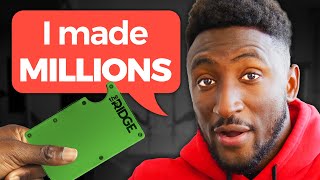
Nathan Barry and Charlie break down Marques Brownlee's $1 million deal with Ridge, a shift toward appointing creators as chief creative partners instead of one-off sponsors. They compare it to Mark Rober's CrunchLabs and explore how equity plus cash changes the negotiation, product design, and what creators can build with brands long-term.
Chapters
I'm willing to pay $1 million to a content creator to be the creative director of Ridge. $1 million cash plus equity. And he's basically directly understanding the Billion Dollar Creator Playbook.
Equity.
Marques Brownlee. It's official. I'm joining Ridge as chief creative partner.
I couldn't see MKBHD partnering on just wallets.
If I were MKBHD, and I would take 90% of that in equity. Mark Rober's company will be worth $1 billion. And he had MrBeast in the video.
James Clear. He's launching an app. You might be clairvoyant or something because you predicted this and now it's coming true. He's done it. He's done it.
So, uh, for anyone who doesn't have context, you and I have worked together for over 7 years now.
A long time.
Yeah. So I, I guess let's give the quick story. Uh, you and I were both speaking at a conference in Austin, I, you know, 7, 7 and a half years ago, something like that. And I remember watching your talk, uh, paying attention to your stuff because you were a designer. I'm a designer. I actually— that was weird, I said past tense on you. You are a designer. Past tense on me, I'm less of a designer now. You're more of a designer and I'm less. Those careers have shifted slightly. Um, but then I actually, uh, back whenever that was, 2016, I think.
Yeah, yep, yeah.
I reached out, um, because I wanted to understand YouTube better, and you had a popular YouTube channel that has since grown further, uh, in the design space and you were doing blogging. And so I invited you and, uh, uh, your friend Fem and, uh, Levi Allen all out to lunch cuz I wanted to learn about, uh, all of this. So that was kind of a fun, uh, conversation as we, we dove into it. And that's when I learned that, uh, you were actually not working for yourself, but working for like leading design at a software company. And I was like, oh, looks—
I need that.
Yeah, exactly.
And so we chatted. I remember having my interview, like, you know, let's put it in quote marks because things were very casual back then. We had breakfast at like super early, like 6:30 or something because you had an early morning flight. And yeah, that was my interview for ConvertKit.
Yeah. And I remember the rest of the team— not the rest of the team, a bunch of other attendees showed up at like 7:30 as we were wrapping up breakfast. And yeah, there are a bunch of people actually. Corey Miller, who's on our team now, He was there and I just remember a few of the things like, oh, what are you? You know, and we're like, oh, we're just talking work, you know?
Yeah. Yeah.
And then you went and bought it. Yeah, exactly. But in that time, like since then, we've, you've taken over leading all of brand for ConvertKit.
And so I've been creative director for 4 years, 3 years now, 3 years, I think. Yeah.
Wow.
Sounds right. Growing my own business on the side too, which has been cool. I think I've, I've started one new podcast since working at ConvertKit and started writing a book, um, my newsletter, the Marketing Design Dispatch, all those things have started alongside my work here too. So it's kind of cool that like both parts of my career can have been growing in tandem while being here.
Yeah, you and I are kind of the, the two people on the team that our team looks to the most, uh, for like what do creators think, how, how do you use this, because we both use the product a ton. You've got A quarter million subscribers on YouTube. So you've got a big audience there. Nearly. Just about. And we're both running, you know, active weekly newsletters. And then I think also you do a good job with the, actually talk about the, your marketing design show and how, because I think it's interesting the way that you've taken the learning that you want to do as an individual. You know, as you've taken over all that and turned it into content?
Yes. Basically, I think that I get to have that learning because of the content as well. So this is my show, Inside Marketing Design. It's a show where I get on calls with people in similar roles to me at other tech companies that I want to learn from. And I'm asking them like super detailed questions about how do you structure your team? How do you work together? Like, what projects are you working on? How did you make that decision? Who were the stakeholders? And, you know, we really dive in deep. It's less of a like, let's talk about your full career as a designer and more like, let's talk about your role at this one company right now and the work you're doing. And I have learned so much from that. I think, like, honestly, I wouldn't be where I am today and like having the success I feel like I am as creative director without learning from my peers in that way. And I think they're all more likely to get on a call with me because I've said, hey, I really respect you and the work you're doing and I want to put it out there to my audience. And so I get to have those learnings, I get to share those learnings, and it's like, it's a win-win-win all around.
Yeah. And I think it's fascinating because there's so many people, especially if you're earlier in your career, right? You and I both have access to a lot of different people and relationships from being well established in our careers. But early on, there's so many people you're like, oh, I wish I could get this person's advice.
Yeah.
And it's like, well, you can, like a lot of these things. Are, if you do it as an interview show and you give these people awareness and content and all of that, which is often what they're looking for, then you can ask them questions and it actually makes for better content for a show because so many interviewers are asking things like, so what was your story getting started? Or some lame question to get going. And what actually I think is most interesting is when it's like, look, you're a professional in the industry. I'm a professional in the industry. How do you handle this and that? Like you can put in, put out like an inside baseball type show. Do you use the phrase inside baseball in New Zealand or Spain?
I nodded along like I knew what you were talking about, but I mean, maybe they use it, but I'm just not much of a ball sports type of person.
There you go. Um, anyway, but you can have this. Uh, behind the scenes, you know, experts talking, uh, level of show because you as an individual are actively trying to learn. And so it's not like, oh, as an interviewer, what would be a good follow-up question to ask right now? It's like, no, as a curious person who's an expert in the industry, I wanna know these 3 things.
Totally. And I like, my interviews are very selfish in that the like line of questioning that I go down has changed in each season based on what I'm trying to learn or like what I'm struggling with at the time. Like, I think the last season I was heavily focused on the marketing site and design systems and that type of thing. And the coming up, the season coming up, I think is going to be heavily focused on like brand evolution, because that's something that we're tackling this year at ConvertKit. And so that's something that I'm owning and I want to learn more about from other companies. And so, you know, and that, but I think that's beneficial to the audience. And so it's like, I can be selfish, but also help people.
Well, there's an interesting idea in there of selfish content that serves other people. And you would think of like service and, uh, selfishness as being, uh, opposite ends of the spectrum. And something that I'll often do with our team or just in conversations in general is take things where people put them at opposite ends of the spectrum and then put them instead as an X and a Y axis. And it's like, no, you can have. Like you could have something that's very, uh, selfless and doesn't serve other people, you know, or you can have something that's very selfish and doesn't serve other people. Or you can also, you know, find that like, hey, this is where, you know, what you're doing of like, I want expert opinions on this thing that's very relevant to my day-to-day work and I wanna do it in a way that's wildly useful to the right audience.
Yeah, exactly. And I agree. I think it, that makes total sense. Content better when the person producing it is genuinely interested in what they're making as well. Yep.
That's true. So on that note, we've got some, some fun things that we're doing this year, uh, which we'll be able to talk about more on the show, uh, as you come back on future episodes. But our team actually, uh, said that the two of you, you know, talking about us, the two of us need to be on the podcast more regularly together cuz we did an all team presentation in, uh, the warmth of Mexico.
And that was really cold where you are. You're really holding on to that.
It's snowy everywhere. It's quite cold. And I turned off the heater to record this. That's my dedication to quality content.
That's you being selfless.
Yeah, exactly. So anyway, our team was just saying like, oh, you guys need to create more content together because that presentation went so well. And I was thinking about it. A lot of the things that we cover on the show normally, or things that you and I are talking about all the time. Like one that I wanna talk about is with MKBHD, and we'll cover that in a second. But, um, you know, that, that's something that like I'm posting in Slack, uh, texting to you or going back and forth and say, hey, what did you think about this? Um, and so it's like, great, let's just record those conversations.
Record it. Yeah.
Yeah. Sounds good. See the whole selfish, selfless. Ooh, I just combined those two words. I can't speak.
That's the, the portmanteau of the X and the Y axis that we're talking about here. Yep.
I love it. Exactly. Uh, this guy Sean, who is the CEO of, uh, Ridge Wallet, which really, they started with Ridge Wallet and then now they're just Ridge. So that was an interesting, uh, rebrand to go, go broader, right? From a narrow product to now, how do we do all these other things? But he has this tweet. He says, I'm willing to pay $1 million to a content creator to be the creative director of Ridge. Help us make content, help us shape our creative future. Come be the face of the brand. $1 million cash plus equity. Who would be a good future face? Like he put this out August 9th, 2023, and he's basically directly understanding the billion dollar creator playbook where he's like, look, these audiences and this deep integration is worth. A ton of money. And a lot of people are saying like, hey, I'll do a sponsored, you know, will you do a sponsored post for 10 grand? We, you know, could I do a full YouTube video for your entire channel for 30 grand? Right. And he's like, no, no, no. I want like a creator to be the, you know, chief marketing officer or chief brand officer or whatever for this brand. And he puts it out there. Uh, and it, the post did okay at the time. There's not a lot of replies. Um, but you know, I think really like looking at the views on the post now, it's way, way more because of the follow-up. Uh, but before we talk about the actual creator, I'm curious, have you seen any other brands do this? Or like, if you see something like this, what, what do you think when, I don't know, that intersection between like an outside creator becoming the face of a brand? Like afterwards.
Yeah, well, I think that fashion houses do this, right? Like they have musicians become like— oh, is it Pharrell who's the creative director at Louis Vuitton at the moment? Or am I saying that wrong? I don't know.
Yeah, something like that.
Something like that. Someone, you know, they've gotten in someone who is a music artist and, you know, has a lot of cachet and like personal style to be the, you know, creative director for the brand. And so it is interesting to see more of like a product company more in the tech space, I guess. Taking this approach. But I don't think it's very common at all for companies to actually want to give a creator equity like this and to give them like a title in this way. Um, I do wonder what the expectations of the role are, you know, like this is not a 40-hour-a-week job that the creator is showing up to, right?
Yeah. So are they making it, yeah, show up once a month, join the board? I don't know.
Yeah.
But the funny announcement that came Uh, when is this? February 22nd. So, you know, 5 months later or so, uh, is Marques Brownlee, so MKBHD, jump coming in and saying, it's official. I've been working on this for months. I'm joining Ridge as chief creative partner and joining the board. Okay. So I guess that is like, um, and yeah, he's talking about like diving in, uh, actually making physical products. They've got the manufacturing expertise to turn ideas into reality, but they're not too big. And so, so he is actually talking about, hey, as a creator, you know, as a, as a filmmaker, content creator, gear aficionado, like I can have ideas and then go to Ridge and say, hey, will you build this out? But then what I thought was interesting is watching his video since then, like there's Ridge Gear. In all of them, like just very natively integrated. And that feels so much more like so much better than a, hey, this video is sponsored by Ridge.
Totally. And this is really natural as well because he's been sponsored by Ridge for like years, right? So his audience is used to seeing him talk about Ridge and, you know, he's clearly a gear aficionado. So I think the brand fit makes sense from both sides here. And also for Ridge, it's like they've already tested the waters with Marques and they know how his audience responds. Like, obviously, I think we can assume that his links in sponsored videos did really well for the company and that they want to dig even deeper into that partnership. Um, I think I saw that last year he produced a wallet with a competitor to Ridge though called Trove. Um, okay, and that was like a Trove times MKBHD collab. And so yeah, curious that now, you know, he's, he's diving in deeper with Ridge and clearly has more ideas to bring to life.
Yeah, I'm looking this up. They definitely had that collaboration, I basically exactly a year ago. So that's interesting of— I'm wondering what goes back and forth in there. Like, if you're sponsoring a whole bunch of creators as a brand and you're saying, okay, here's the ones that we're getting the best, uh, like product-audience fit, uh, the best return on ad spend with, and then if a competitor sees that, they're going to try to edge in and say, hey, how do we Like maybe let's do a deeper collaboration. Yeah, right. And so they're sort of one-upping each other where it's like, you know, we don't know the story, but if, if Trove is like, okay, I can see that the Ridge sponsorships are working well, let's say, hey, don't just talk about a product, like help us co-create a product. And so then that, like, as a creator, you're like, hell yes, I want to co-create a product. But then on the other side, so then Ridge in a way comes back and is like, Please, we don't want to just co-create a product. We want you to be, you know, chief creative partner, create many products together. Yeah, exactly. And then to lock it down with equity, right? Like that's something that we've talked about. If I were MKBHD and I had cash flow settled, then I would be looking at, okay, how do I negotiate? Not the, the million dollar payment that they were talking about, but if I were in his position, I would take 90% of that in equity. Um, rather than, uh, you know, the other way around. Because then you get to capture— like, if you're truly bringing a huge amount of brand awareness and creative expertise to the table, then you get to capture, you know, the bulk of that value as the company grows in value.
Yeah. And I think from seeing all the rich products, like you said, in his videos, I think we can assume that he does have a lot of equity and that, you know, he is just motivated now to promote the the company more because it's gonna, you know, he's gonna benefit from that as well. I know I feel that about ConvertKit. You know, I'm an employee. I have, I have equity, I get profit sharing, and I'm also a creator. And I talk about ConvertKit in my content a lot because I believe in it and I love it. But also I know that it's going to help us at the end of the day as well for me to, me to share that. Yep.
I like it. I was just thinking about this, the rebrand that Ridge did, which I don't know a lot of details on it. I'm just noticing that, you know, what I always thought of as Ridge Wallet and heard in all those ads just became Ridge. What do you think about their ability to reach a creator like MKBHD by going more mainstream like that? Right? Like I bought one wallet. I've actually had the same wallet, uh, shout out to Saddleback Leather for the last like 12 years, you know, and I didn't buy another one. So I'm wondering like without going from Ridge Wallet to Ridge. If they would even be able to have a wide enough product line to be able to afford and do, um, a partnership on this level because it's just promoting wallets. It's like, well, the lifetime value of an MKBHD deal is like maximum one wallet per listener that wants a wallet.
Yeah, exactly. I think as a company, that rebrand makes sense for them to, to like widen things out, you know, uh, creator partnerships aside, but for sure. I don't, I couldn't see MKBHD partnering on just wallets because like you said, like there's a limit to A, how creative you can be in producing different wallet designs. Um, but yeah, you only really need one wallet. Um, and so yeah, there would be a limit to how much they could sell from that as well.
One thing that's interesting in this is that he didn't go create his own products, right? Like he, he didn't go through that angle, you know, like a Mark Rober or someone and say, I'm going to create my own company. 'Cause that is, as much as we talk about and say, hey, that's a great idea and we espouse the benefits of it, it's really, really hard. And so it's interesting he gets some of that or a lot of that upside and a lot of the credibility without having to learn about manufacturing and, you know, build out factories and all of this stuff.
Yeah, I wonder, I might be misremembering, but I'm pretty sure Marques was one of the YouTubers who, you know, within the past 6 months or so has made one of those videos about burnout, about like the hamster wheel that is YouTube, and all of that. And so I could see him thinking, well, starting my own company, that's adding on a ton of extra work to my already overloaded plate. And this partnership makes more sense. But that is why I wonder, like, what does this partnership actually look like for him on a day-to-day basis? You know, is he showing up at an office? Is he showing up to see meetings? You know, on any sort of schedule? I'd be really curious about that. And it'd be interesting to to dig in more there and hopefully they share more.
My speculation is that they've got a person on the team assigned to him who, um, is sort of his internal creative partner.
Yep.
And they, uh, it might be Sean, the CEO, but for practical purposes, it should probably be someone who is a little more hands-on and operational. And they're doing like a monthly call and then just like whenever Marquez has ideas, it's like, hey, text them to me. And there's like this one conduit to funnel them into the company. And then that person is also regularly bringing things back, probably to Marquez's team more so even than to him as an individual and saying, hey, here's the latest products, here's our ideas for integrations. Yeah. And so I would do more of that. Like, my guess is that the actual work is probably from Marquez's perspective is probably 2 to 3 hours a month. And it's more just like they want the integration and the, the free-flowing ideas and all that.
Yeah. And I mean, that's great for him. It's great for the company. Seems like it's a, it's a great partnership all around.
I like it. Now, you were, before we hit record, you were telling me something about this idea of partnering with your sponsor, uh, and being, that being different than what We ended up doing what we talked about with Mark Rober, where, uh, I knew that he had replaced his sponsor, uh, but I didn't know the details of it. So when, when Mark Rober launched CrunchLabs, he had a sponsor. I think maybe he had partnered with a couple, uh, at different, um, different times. Um, but do you remember more details on who he actually, uh, who sponsored him before, uh, he started CrunchLabs?
Yeah, it was KiwiCo that he— he might have been sponsored by others as well, but KiwiCo is the main one that I know of. And that I know, or at least I'm pretty sure, they had like a collab against, kind of like Marques did with Trove, where it was a collab on a product or a version of the product. I think they had like a Mark Rober KiwiCo box or KiwiCo project that happened. Um, and I think I found as well that some of his audience were pretty surprised to see that he was starting a KiwiCo competitor because he had been sponsored. By them so much. But, you know, I think, I don't, I wonder what went down there. Like, I wonder if he tried to negotiate for equity or anything like that with KiwiCo and then ended up deciding, you know what, I'm just going to go at this on my own and start CrunchLabs.
In this case, if Mark Rober is like, hey, I don't want to just be an affiliate or a brand sponsor, I want equity. And they're probably like, most brands do this when a creator asks for that. They're like, no, we'll pay you cash. Um, and you have this back and forth of like, no, I'm worth more. And it's like, no, you're not. Or, you know, maybe you reach some agreement and the creator, there's always, uh, two alternatives, right? Negotiation. It's your best alternative to the negotiated offer. And, and the brand always has the opportunity to just say, okay, I guess we're done working together. We're going to go work with other creators. And Mark can say like, look, there's no one better on the planet for this type of content than me. And they're like, well, we'll see about that. You know, who knows? Like, uh, and then the creator always has the option to go work with other brands or to say, you know, in this case I can start my own brand.
Yeah.
And so with Mark, I thought it was fascinating. Uh, in the episode where we talked about CrunchLabs, we speculated on the revenue and the success, but he actually came out and said it. And, uh, CrunchLabs is now over $30 million in annual recurring revenue. 6 months in, which, wow, you know, took us, what, 10 years to get to $40 million a year in revenue for ConvertKit. So there's a lot of power in, you know, Mark's 25 million or whatever YouTube subscribers. And I was watching a Mark Rober video yesterday with my 12-year-old. And like the integration of the product was just so good. And they're like, here's this thing, the science experiment that we did and how we learned all this stuff. Oh, and you can do it hands-on if you get the monthly CrunchLabs, uh, subscription. And he had MrBeast in the video, like pitching it and like making fun of him about how like, really Mark, you're just going to pitch CrunchLabs again. But it like, it all worked out because anyway, it's just, it's such a perfect integration.
Yeah. And it's, this is a contrast, right? To MKBHD could have taken this approach too. He could have decided to start his own. Product company, but he's chosen to do the partnership route. And yeah, Mark chose to start his own. And, uh, I think that we can safely assume that he is seeing more financial benefit from CrunchLabs than he was from sponsorships with KiwiCo. I don't know what their margins are like, but in the long term, he'll definitely get there for sure.
Yeah, I think he's making significantly more because I couldn't imagine, uh, Well, one, I think that the marketing is so much better for CrunchLabs than for KiwiCo because there's that deep integration. It's not like, hey, I'm making a video. Is there a relevant KiwiCo box that we maybe we could talk about? Instead, it's like, no, I've been dreaming of this video for 3 years and I've already built it into the box and I'm coinciding the launch of these two so they go hand in hand. And then also using the MrBeast example. Because they're friends and they're hanging out, they can record all this content together. And if Mark was like, hey Jimmy, will you create a video talking about my sponsor? Like, that would just be weird, right?
Yes.
But if it's like, hey Jimmy, will you give me a shout out for Crunch Labs that I can put in my video? He's like, yeah, of course, why not? Doesn't cost me anything. Happy to, you know, totally.
Because it's like creators wanting to support other creators. Rather than a creator wanting to support another creator sponsor, which you're right, that is a little— would be a weird dynamic. Yeah.
Yeah. So I think so long as with CrunchLabs, they can keep churn under control, right? Because it's a recurring revenue product. And you're going to have issues, you know, if your, your customer base is automatically or naturally aging out of your product, they're going to have to figure out, okay, what do we have targeted at teenagers? What— how can we keep this lifetime value going for a long time. But if they're at $30 million a year in 6 months, then I think, you know, they have a pretty clear path to getting to $100, $150 million a year, which does make it a billion-dollar company, right? That is worth a ton. Now, if they were to exit, they're going to have some problems of it being like super, super tied to Mark and his brand, right? If that's 90% of their marketing, that's going to lower the valuation some. But Mark's actually doing it. He's pulling off the Billion Dollar Creator Playbook, and that company will be worth $1 billion in the next, you know, 3 to 5 years for sure.
Super exciting. What I think the next step is that I'd like to see him do— well, maybe this has already started— is KiwiCo sponsored a bunch of other YouTubers, right? And so that could have become his, like, hit list of creators to partner with, because I think that a creator might be more likely to want to support another creator. Like, if he could match the same like payment that they're getting, sure, you'd pick a creator's company over a company that isn't started by a creator. Like, I think of Simone Giertz— oof, I'm not sure, I probably pushed her last name— but she makes the crazy robots and they're super fun. She's sponsored by KiwiCo. I was just watching one of her videos this morning, actually had a KiwiCo sponsorship in it. And so I could see that being a really natural fit for him to reach out to creators who are currently doing KiwiCo sponsorships and say, hey, When that contract ends, how about you come sponsor, like promote CrunchLabs instead?
Right. And when you come into it knowing the industry really, really well and like the pitch could be, hey, we're going to be the most creator friendly.
Yes.
Because we, we know that this is actually totally a pain. Like maybe some other brand is paying a bunch, but it's like, oh, you need to invoice and go through this whole lame procurement thing and you'll get paid in 6 months. Right. And a creator doesn't want to chase down invoices. And so like, that's just one example, but you know, as a creator, you know, hey, this is what we all care about. And so I'm going to really prioritize that in the relationship, um, and be like the best sponsor you've ever had. And then Mark can go through the process and diversify his brand. So it's not, you know, just 100%.
Yeah.
Yeah. Just him. He can actually go quite a bit wider.
Exactly. And I think that creators would trust that, hey, we're creator-friendly message more because it's coming from someone who is very clearly an established creator.
Yeah. I mean, we've done that. Like we have both you and I have done that so much with ConvertKit, right? Where it's like, this is how I use the product, right? We're in it all the time. You know, whether it's at conference talks or whatever else, we could talk about examples of we had an idea for a change in the product that came from our own use of it every week. Um, and yeah, plenty of people have said like, oh, I trust ConvertKit because it's made by creators.
Exactly.
Running with that, you've been leading a brand campaign that we run, uh, off and on for a long time, but really especially over the last year, uh, year or so, really emphasizing this angle of made for creators by creators. Like, how do you— I guess two, two parts of it. How do you plan that out? Like, what, what tells you to double down on that? Um, and then two, how do you go about actually telling those stories? And yeah, it's easy to say, but how do you make a cohesive brand around it?
Yeah. What, so what gave me the confidence to really lean into that with our brand messaging is that when I personally am speaking to another creator about ConvertKit and they're like, what's that? And I'm explaining it to them. I see something click for them when I talk about the fact that, hey, it was made, like created by Nathan to solve problems that he had as a creator. And that's still the approach we take today is like solving problems specifically for creators, not the small medium businesses, not the enterprise corporate companies, creators, and they have businesses at all different sizes and shapes. But we do things differently to traditional businesses. And that's when people are like, oh, okay. 'Now I get why I shouldn't go sign up for a free Mailchimp account and I should sign up for a free ConvertKit account instead.' And so yeah, having those conversations and seeing that moment happen for creators is what made me want to double down on it. And then we just have so many creators on the team. It's like, I think creators who still work full-time jobs are naturally drawn to us because of folks like you and I who very publicly speak about, you know, having a full-time job but also being a creator. And there's just a lot of cool different things that our team does. On our retreat when we're in Paris in August, which sounds so fancy to say, our brand video creator Henry organized to have a bunch of the creators on the team just come and do like a quickfire interview, answering questions about what they create, like why they appreciate working at ConvertKit. We put out content of that to like just highlight these other members of our team who maybe don't have audiences as large as you and I, but are still like creating and experiencing, you know, life as a creator. And I think it went down really well on our social media. It got some good engagement. People like seeing the behind the scenes of like who is making the product, especially in software where it's like, it can feel really impersonal, right? It's just code, things on the screen. And now you're seeing like the friendly faces of the creative people who are behind it.
Yeah, that was a fun, fun shoot to do. Very randomly, that was the first clip that I saw. I think it must have been the color grading where like my beard was extra red and my hair was very gray and I like it. I showed it to Hillary, my wife, and I was like, is my hair really this gray? And she's like, not that gray, but it's definitely going gray.
I was like, ah, you were like, oh no, I'm old. Finally.
Finally. Yeah, exactly. Uh, but that was a fun, uh, fun shoot to do. And it was really just as simple as, right, like Henry set up a, a basic studio outside, you know, and would rotate people through. We were actually all having like a happy hour, you know, before our fancy closing dinner. So everyone was already kind of dressed up a bit.
Yep.
Uh, and he's just like, Nathan, your turn. Isa, your turn. You know, Corey, get over here. And it worked well, but that content like really did well on social because I think for the exactly the two reasons that you said, one, people want to know behind the scenes who's making the product. What's the story of it? You know, we're all nerds who are like, okay, how did that work? Like, you know, we're watching, it's the equivalent of the Lord of the Rings extended edition, you know, like the 10 DVDs that it all came with that I definitely watched all of probably at least twice or 3 times. Um, but that for the creator world, like we want to see how things are made. And then we also want to build a relationship and get to know the people who are actually making the products. And so the more we've put that idea out there, it's always been true, but the way that we've publicized it, like the more that it's resonated.
Totally. And we see other companies coming in now and like using similar language. And we're still like, we're like, no, no, no, this is ours. We truly do own this. Here is all of the proof.
But there's something in that of As you see competitors copying what you do, which we have that happen all the time. I've had times where I've like, nope, that's ours. But it's like we planted the flag, we own it. But there's an element of you have to fully own it. You can't just say that.
Yep.
And like, yeah, because we did it in that ad campaign once. Like you have to do it so much that it's in, like, in the mindshare of the community and the ecosystem. And so something for me that I think about a lot is with flywheels, where they've been around a lot as an idea. Uh, Jim Collins popularized them in, uh, Good to Great. Uh, there's definitely like other books or articles that have, have talked about it, but related, like related to creator flywheels and making them really, really practical in your business. Like that's what I've created a ton of curriculum about. And we had a, uh, a competitor, I don't know, 3 months ago, 6 months ago, something like that, who was like, as you create the flywheel for your, uh, newsletter. And I was like, no, no, no, that's mine. Like, uh, I've developed, you know, like the 3 Laws of Flywheel. That's my content. You know, that's what I've been teaching. But it's only claimed as yours so much as you can, as the general public knows that, right? There's. A lot of examples. I can't think of them off the top of my head, but where one person invents something or coins a term and then someone else popularizes it, and the second voice is the one that gets, uh, all of that long-term attention. And so I think about things like Creator Flywheels, you know, made for creators by creators. Like, it takes a huge amount of emphasizing that messaging and positioning and all of that so that people permanently associate it. With—
Yes. A ton of repetition.
Yeah. Way more than I ever thought was necessary in like the early days of building, building a company.
Totally. And it's because we are seeing everything we put out, right? But creators are not.
They'll see like 5% of what we put out.
Yeah. Or even less sometimes because there's so many, you know, there's so much to pay attention to. And so if we're, if we haven't repeated it enough in the 5% that they saw, then yeah, I can see why. That it wouldn't stick.
That's always a good reminder for me of to have fewer messages and to say them more often.
Yes.
And to keep coming back to it. And so that's even like, as we found the flywheel messaging really resonate, you did a new, uh, homepage design or your team did, I don't know who actually designed it. Um, but that really incorporates, uh, the flywheels into that homepage, you know, talking about here's. The flywheel that we use to, you know, bring growth and revenue to creators. And so we're not trying to, you know, over here teach about how to implement flywheels and then over here teach about like something different, uh, how to buy us off, buy and use software. It's like, no, no, no, they're one in the same. And like the deep integrations that we can do help reinforce that message.
Yeah. And I think that's important for creators as well. Like something that I have struggled with for a while, um, as a creator is that the most popular type of digital design is product design, right? Is the folks who are in there designing the apps, designing the software. That's not the type of design I do. So that's not the type of design that I make content about. I make content about brand and marketing design. And so I wanted to be like known as the go-to person for that. And so that's why I've called like my podcast Inside Marketing Design, my newsletter Marketing Design Dispatch, because I'm trying to like drill into people, no, no, no, this is the type of design that you should know me for. And still I get folks putting me on like product designers to watch list and I'm like, you can keep watching, but you're not going to see it.
Yeah, you're not going to be disappointed, but you're going to get something different than you expected.
Yes, than what you thought you were getting.
Yeah, that's interesting of reinforcing it. What do you think on like being clear versus clever, like the Marketing Design Dispatch? Inside Marketing Design, those are very clear, uh, names. You know what you're getting. And especially cuz you're trying to reinforce that same message, right? Marketing Design, Charlie Marketing Design over and over again. And I think that's working really well, but neither of them are clever or brandable. Um, they're obviously brandable, but, but in the same way. And so how do you think about the balance between those two things?
I think that if you already have a large audience and a lot of attention coming your way, you've got more room to go the clever route. But for me, like, I'm still trying to establish the thing that I want people to know me for, and I want to be like the number one go-to person for anything related to marketing design on the internet is my goal. And so it's really important for me to be clear that like, this is what to expect. Plus, especially because like I said, I was seeing those issues of people putting me in a UX design box and a product design box. And I needed that clarity. But I think if you've already got a really large audience, then sometimes being clever can actually help drive more attention to the thing. But I will always usually err on the side of clarity.
Yeah, that makes sense. And when we talk about large audiences, like you, you have hundreds of thousands of followers on YouTube.
And so I mean, like, we're talking Even larger than that. Yeah.
I'm thinking back to the first books that I wrote. The very first one, The App Design Handbook.
Oh, I wonder what that's about. Pretty clear.
Yeah. Second one, Designing Web Applications. Also very clear.
Yeah. Was that about, yeah. Hmm.
Now the, the third book, Authority, I went a, you know, like a little more brandable. And I can't even remember what the tagline is, uh, on that book. I, it's been a while.
That's embarrassing.
Uh, good thing this isn't recorded. Uh, that one, you know, as I had more traction, I had a bit of an audience, I think I could start to go a bit more brandable, clever, uh, that kind of thing. You know, like in the logo it like highlights author, authority, author, authority, you know? And so you get some of that, but I think especially early on, And when you're targeting a niche, um, the clear is just the way to go.
Yeah, definitely. Like, that's what you should prioritize is building the clarity first. But like James Clear's app, for example, it's called Atoms. Something that I think that you might be clairvoyant or something because you predicted this and now it's coming true, and that is that in episode 2 you and Rachel were talking about James Clear and how he can become a billion-dollar creator, like what he should go down, what path he should go down in his business. And you mentioned him building an app. Like, an app would make sense for him. Produce a product that helps people form and keep habits, because that's what his book Atomic Habits is about. And guess what? He's launched one.
He's done it.
He's done it.
I didn't know about the app, uh, when we recorded the episode, but shortly after, he was like, hey, I actually did just start working on this.
Did he hear the episode and was like, oh my gosh, how did Nathan know that?
Well, so we've talked for years about like, should you build an app? What would actually be unique? Um, I had made, uh, uh, my app called Commit, which was I think the first streak tracking app, uh, in the App Store, maybe back in 2013. Um, and then, uh, I didn't continue developing that cause I worked on another little software project, uh, instead, but that grew. So Commit died out, but there ended up being this replacement app called Streaks that was like Commit fully developed. And so James and I talked over the years about, hey, what if you were to take the Commit app and run with it, or you should build some idea along these lines. And, and so the episode was really fueled by things that friends had commented on, but then also conversation James and I had had. Though probably not for a couple years, um, about like, okay, what's next after the book? You know, what do you do with this audience? I've always thought the Habits app— yeah, it's just absolutely massive. I always thought the Habits app was a great play, but also I'm not sure how you would do it, uh, in a very unique way. So one thing, playing with the app, like I just pulled it up, uh, it's called Adams, uh, it is free to use though it has a a 30-day trial for the, the pro version. But one thing that stood out to me is in the app when you're defining the habit. So it says like, as an example, says I will meditate for 5 minutes. And that's as far as most habits app apps go, like building a streak, say I'm going to write 1,000 words a day and that's it. But he actually makes you go further. And I'm curious what this will do in the adoption is, so I will meditate for 5 minutes. When I wake up. So you have to define the time that you're going to do it. And then it also has an identity play so that I can become a mindful person. And so the habit makes you define the habit when you're going to do it and the identity of who you want to be, which ties into the book, right? He talks about this in Atomic Habits. So I'm curious how this is going to play out.
Yeah, I think that that identity piece, especially in, in this day and age when we're all trying to, you know, become better versions of ourselves, could be the thing that makes this stickier. I went through the onboarding process of this app myself and set up a habit, and it's also just beautifully designed. I think it was designed by Meta Labs. I like immediately went and like looked up like, who made this? This is beautiful. The like experience you hold down at one point to like commit to the habit or like start setting one up. And it just does this beautiful like experience on your screen, the phone vibrates a little bit. And I'm just like, oh, I'm getting a dopamine hit from doing my habit. And so, you know, I think that that's going to help as well.
Yeah. So it's a partnership between James and then Andrew Wilkinson and Meta Lab. And so, which actually, this is interesting for anyone from a like a designer development background or a product background, right? Andrew actually came to James and pitched him and said, hey, we all know you should build this app. We all know that, um, you know, that's not your background of, of designing beautiful software. So why don't we, you know, design, build, and market it? And then it's your IP, your, your ideas, and then your audience, uh, that really runs with that. And so they came and pitched it. Um, obviously Andrew has a, you know, like a lot of credibility in the space and a really successful background. And so it wasn't like some random developer with no background saying, you know, let me bring very little expertise or an unknown quantity to one of the largest personal brands on the internet. And like that, that would be a mismatch. But, um, Andrew and James is a really good fit. And so. Yeah, they, they developed it, launched it, and we'll see how they iterate from here.
Yeah, I'm excited to see how it goes, and especially with the, the model where they've got the free version and then also the pro version. Um, yeah, curious to see how many people choose to upgrade to that pro version. I think I looked in at the site, there's a few extra features, but mostly it's that you can track more habits with the, with the pro version.
Yeah, that'd be interesting. They were at number 16 on the App Store Uh, when they launched, uh, I think there are over 250,000 downloads. Um, I'm not sure on the pricing. It's kind of interesting looking at, I, so the price they have is, uh, on the pro version, I think it's $15 a month or $100 to $120 a year. It looks like they're still running some tests, uh, which I would, if I were them, you know, try to figure out the conversions that you're getting. Um, And so I think that makes sense to go a little higher on the pro version rather than like a $5 a month or, um, $50 a year type of thing. Cause I think that, yeah, I would start with the higher end customer. They're like the committed fan. Um, cause there's so many in, in James's audience. Uh, and then, you know, you can figure out downstream if there's something else that, uh, you want to, you know, adapt from there.
Yeah, that makes sense. I do wonder, because you predicted this app, you know, coming to life in that episode too, do we think that in a couple of months we're going to see James Clear launching a tequila? Because that was the other thing that you predicted he should do.
I think that was in the terrible ideas list. One that I liked was I think that, I think that you could do, you know, like a water, like a vitamin water or something like that.
Like the name Clear is just one of those things where you're like, just lends itself.
How do you have like Clearwater? I don't know what, but, uh, tequila.
Yeah.
I don't think that James is going to go with tequila brand, but, uh, yeah, we can see. One tie-in that I think will be interesting is Atomic Habits as a book is still selling an insane number of copies.
Yeah.
And so getting the app integrated into the book, will be really, really good. Like, I think it's over a million copies a year still, uh, 2 million copies a year, uh, type of thing that Atomic Habits is selling. And so if you think about the integration of those two things, like, if I were the publisher, I, I would immediately be like, okay, how do we print more of this? And then how do we get the book tie into the app? Um, yeah, and cross-sell from—
it's a little curious that he didn't call the app Atomic Habits. I don't know. Do you have any thoughts on why he went with Atoms?
Like, yeah, yeah.
Because, you know, calling it the same name does give it that direct tie-in. You know, you've read the Atomic Habits book. Here's the Atomic Habits app that, that goes along with it.
I'd have to look on— no, you could definitely fit it well on the length of characters that shows up on the phone. I don't know that you get all of Atomic Habits. I can't remember how many characters it is.
That makes sense.
It's really close, though. Like, uh, because I have this app called Call Protect on my phone and that's fairly long. I mean, you get Google Maps, so anyway, it's really close on the character limit, uh, so that might be part of it. I do think, like, I looked at the icon and— sorry, James— but I think the icon's pretty lame. It doesn't really stand out, um, because it looks just like your Messages app. It looks too native to the phone, right?
Okay.
And, and so yeah, I think that if they wanted to really stand out, uh, I would do a different icon.
Okay. Well, there we go. We'll see if James listens to you about that. Just like he listened about making the app in the first place.
Yeah, exactly. I'm just giving you all the credit for it.
Yeah.
Thank you. Thank you.
Yeah.
Unless there's some, I'm sure there's some good reason that we don't know about, but I would've called the app Atomic Habits because it's just repeating the same idea over and over again. You read it in the book, you understand the core, you know, it's more than just the title of a book. It's, it's like his methodology. Now you're using the Atomic Habits app and you're like integrating this and getting the repetition over and over again. And it's super, super clear. Um, so we'll have to find out from James why.
Yeah, maybe that's a future episode of the show is, um, you know, a few months down the line talking to him about this.
Yeah. But I do think it's a missed opportunity to to reinforce the same brand message over and over again. I like it. Okay. We covered a lot of good things. One last topic is where we're going with the show going forward. So the big news in that, which I think if people have been listening to the last handful of episodes, they've been like, wait, where's Rachel? And she was just on the episode we did with Jackie Aina. That was a fun one, recorded it in person in front of, I don't know, like an audience of 500 people live at Rachel's event in Puerto Rico. Um, but before that, it's mostly been me interviewing other people. Uh, and that's 'cause Rachel has decided to leave the show and, uh, take a step back just in everything going on in the craziness of life and business. Uh, basically around, around the new year, she realized like, wait a second, I don't actually need to be like this stressed working all the time. Uh, she's built a business to, you know, $10 million a year in revenue and it's like, wait. I can actually take a step back. Kids are young right now and really spend time with family, enjoy life. She and I got to hang out when I was down in Puerto Rico. She lives in like the most insane, like, beach community there. And so anyway, she's decided to take a step back from the show, still come on regularly as a guest. But that leaves me with figuring out kind of what's next for the show. And then, um, really the idea that I have now is to get this recurring cast of characters where we can, you know, understand the show, riff on ideas. Charlie, you're going to be one of them.
Um, I've just been cast. Great.
Yeah, you've just been cast. Yes, exactly. Um, uh, Sahil Bloom's coming back on. I know that people loved the, uh, the episode with, uh, Grant and Brian on building teams. And so. They've been requested to come back. I wonder if I'll always bring them back as a duo. I feel like they make fun of each other a lot, and so it's good energy to have them together. But yeah, that's kind of where the show is going.
I want to say major props to Rachel for recognizing that this was a commitment she didn't want to have on her plate and to, like, you know, focus her business in this way. I've definitely been thinking about simplifying my own business recently. Maybe that's something we'll talk about in future episodes. But just like looking at where, what gives me energy, what pulls energy away from me. And so yeah, respect to Rachel for that. And I'm excited to come back on the show and talk about these things more. I love nerding out about this stuff. I also think that you're going to be doing more coaching episodes, right? That's been some of my favorite, personally, episodes of the show so far is seeing the advice you give to other creators, you know, like advising James Clear to launch a tequila company. I'm just gonna keep bringing that up.
Advice is good, some is terrible.
But no, I'm looking forward to more of that.
That episode that we did with Tiago, if you're listening, you haven't watched the episode with Tiago, um, definitely go and watch it. Uh, it's one that is worth checking out on YouTube. Um, just search Billion Dollar Creator and, uh, you'll find our channel and definitely subscribe. Uh, because you know, that's what tells the team like, hey, this is a good investment of time. Uh, but that one was really fun of just going in Tiago's studio and he, you know, uh, said, hey, will you come on my podcast? Um, and I was like, yeah, sure, let's do it. And then I think a day before he texted me and was like, actually, I have a new idea. How about instead of an interview, I just tell you all the problems in the business and you use the Billion Dollar Creator framework to coach me through exactly what I should do. And I had so many top creators. I won't name them all on the show, but a bunch of people who I've followed and respected for years, read their books. I have their books on the shelf behind me, you know, who reached out after that and said, hey, I would love the same thing. And so one idea that we're playing with right now is, okay, can I like build out a podcast space in Boise maybe and like fly creators in? And record more of these in person because I love the format. And then just the texts from other people, like, turns out they love the format too.
Yes, I also love the format, so I will be happily both a fan and also a regular recurring guest on this show.
I like it. So, uh, if you're listening now, definitely go and subscribe on YouTube, uh, leave us a review on iTunes. Uh, we like comments, we like reviews. Uh, and then if there's someone that we should coach or you want to be coached, uh, and you're at that like professional level, uh, creator. We've kind of set the bar at $500,000 or so in, uh, annual revenue to keep the, the show focused on, uh, that high end. Um, but definitely reach out and then, uh, always send us news and, and things to, to riff on.
Yes.
The MKBHD news, the, uh, James launching the app. There's a bunch of these fun things, um, that I find out about because people send me a DM on Twitter or shoot an email. Uh, and that's fun to hear about and we'll bring the right person on to riff on the topic and go from there.
Sounds good.
All right. Thanks for hanging out, Charlie.
Yeah. Thanks for having me on.








