I built a $100K Newsletter Business (Here's How)
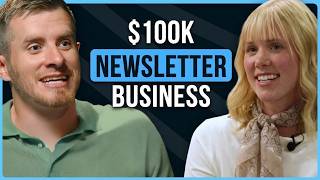
In this interview, Nathan Barry (founder of Kit) and Marissa Lovell (editor of the From Boise newsletter) discuss how the local email newsletter was conceived, built, and scaled to a six‑figure business. Nathan was inspired by a similar Canadian newsletter and recruited Marissa to run the project. They outline the newsletter’s editorial format—long‑form Tuesday stories, Thursday event round‑ups, and a quirky “Just Trust Me” link—along with the personal voice that fosters deep reader connections. The conversation covers community building in Boise, the distinction between a passive crowd and an engaged audience, and the surprising proportion of non‑local subscribers. They detail a series of monetization experiments: discount cards, a Dinner Club, merchandise, a BFFs meetup, sponsorships, and reader donations, explaining how each was tested and iterated. Growth tactics such as Facebook ads, branding upgrades (logo redesign, website with Ampersand Studios), and reaching an “escape velocity” subscriber threshold (8‑10k) are examined. Operational scaling involved outsourcing writers, using Kit’s poll feature, and organizing content in Notion. The hosts reflect on the broader shift toward newsletters as a new media model that emphasizes personal connection over traditional journalism, and they highlight Boise’s collaborative ethos that supports grassroots projects. The interview concludes with a Q&A covering story sourcing, revenue streams, and the LLC structure of the business.
Chapters
You probably know me as the founder of Kit, which is an email marketing platform that automates your growth. But there's actually another business that I started that most people don't know about. It's a local newsletter called From Boise, and I brought on the right person to run it. That person is Marissa Lovell.
We recently started From Boise Dinner Club. We said, hey, I'm thinking about this dinner club. If we're going to 100 people, let's try it. And we had 656 people say yes. And I was like, oh boy, I guess we're definitely doing this.
Our readers are some of the most engaged I've ever seen. I'd argue she has more influence with her list than most creators have with 10 10 times that number. How this thing makes money.
Discount cards, dinner club. I've sold merch, t-shirts, stickers. I also had a meetup group called BFFs and I planned different monthly meetups. It's monetizing it in a way that feels good and makes sense for everybody involved.
I love that. Today, Marissa and I get into how it all happened. The monetization experiments she ran, how she shaped the voice and personality of the emails, and what it took to go from working part-time on the newsletter to full-time. You crossed 6 figures in revenue last year, which is a huge milestone. What were some of the points along the way where you were figuring out. Well, so we're gonna have a conversation about Boise, about starting things, running small companies, the future of media, and whatever else seems interesting. Yeah, so we've got some things that we can talk through, and then we can also take some time and questions and all of that. So if there's things that you want to know But maybe we can kick it off with what made you choose Boise? How did you come to Boise?
So despite the name of my newsletter, I'm actually not from Boise. I am from a wheat farm in eastern Oregon. And I actually came to Boise in 2011 to go to school, to go to Boise State. And the reason why I chose Boise is not as cool as the reason why I chose to stay in Boise. I chose to come to Boise because nobody else from my high school had come here. I was kind of trying to get away. But then after I graduated, I, was just very, very lucky to land a job at Red Sky PR working for the amazing Jess Flynn, who like changed my life. And in that job, I— it was where I started writing about Boise. And like, I just— working downtown, I just became immersed in this whole world of Boise that I didn't know about as a student. And yeah, I cannot imagine being anywhere else. What about you? How'd you get to Boise?
Well, I was born here. So I was born, if anyone's run, has anyone run Race to Ruby Creek?
Maybe? No?
Russ has, there we go. So if you go up toward, if you do the course for Race to Ruby Creek, I was born in Rocky Canyon. So you run by the little house. I was born in a tiny house before tiny houses were cool. I think it was just 'cause it was just a very small house. But grew up in the mountains outside of Boise, up towards Idaho City. And yeah, went to Boise State. I don't know, just stayed here all along. Everyone always asks like, why Boise? And I find it's hard to explain, but I love it so much. And I've traveled so many places, but I've actually never been away from Boise for more than 6 weeks. Like that is the longest period of time I've ever been away. I've done that a couple of times, but everyone's like, oh, you went somewhere else for college? Nope, just always back to Boise. I think I've been to 38 countries or something, and Boise is home, will always be home. And so, yeah, I guess by way of a little bit of quick background, I went to Boise State for graphic design and then marketing, and then dropped out after 2 years, I think, and then started a web design business, or worked for a company called Unity out in Eagle, and just worked for a few Boise companies, And then have been doing my own thing for a long time. So I run an email marketing company called Kit. Founded here in Boise, but we're global. And we do email marketing for all kinds of things. Whether it's big content creators or authors like a James Clear or Andrew Huberman, to celebrities like Tom Brady and Dua Lipa. And then we run some other newsletters that are very special to me, like From Boise.
Yeah. Okay, so what made you want to start a local newsletter about your hometown?
Okay, so that's— everyone probably thinks that Marissa started From Boise. Actually, I started it. I'm not trying to take credit for her work. That is just how it actually came to be. But a friend of mine named Andrew Wilkinson lives in Victoria, British Columbia, which is this beautiful city, and he ran this newsletter called Capital Daily, and it was all about the news and events in Victoria. And I love the format of email newsletters and that content, and just having such a local feel to it. And so I saw what he did there, and I was like, oh, I love Boise at least as much as you love Victoria. Like, I should do something like that. And actually, we were up in McCall over Christmas. When would that have been? 2020? And just talking with family, and I had this idea, and we started brainstorming it, and it was like, okay, we should actually make this happen. And so I wrote up a format for it, made a job listing, and then it was actually Jess Flynn, who I've known for a long time, and Marissa has as well, who connected the two of us. And I don't know, a few dozen people applied for the job, as the editor to take this concept and build it into something. And Marissa was the person who completely stood out and was like, "This is a great idea you have. Here's what it should be." And kind of took charge from there. Like, "I'm doing this." Yeah, what was your experience when Jess sent you the job listing?
Yeah, so like I said, when I was working at Red Sky, it's like when I started, writing about from Boise, which was like 10, 11 years ago now. And actually, how I really started writing about Boise was we had a client at Red Sky called BVAP, Boise Valley Economic Partnership. And I loved working, I loved having them as a client because I didn't even know what economic development was when I started working there. I was like 21. But we started this blog that I was in charge of called Grow Ideas Here. Does anybody remember this? Okay, thanks, Russ. Russ knows everything. Nobody really read it, but it was called Grow Ideas Here. And I mean, looking back from where I am now, it's like an early From Boise. Like, I would interview companies who were either like relocating or bringing their companies here, you know, business owners, and I would like write these profiles, basically what I do now. And so I've been doing that, and then I started freelancing, and so I was still writing about Boise, but like for IVR and Visit Idaho. And then I had started working on reviving this music site called Go Listen Boise. Does anybody remember Go Listen Boise? Yes, of course you do, Chili. Okay, so I was like, I was working on reviving that. And then Jess sent me this tweet and she's like, do you know this guy? And I'm like, no, I don't. But that is, she was like, you're made, this is made for you. And it totally was. And at the time I was also working at Treefort Music Fest and freelancing. It was so easy for me to see the path of From Boise, more so than anything else I've ever done. And yeah, I just kind of hit the ground running. I mean, it was kind of hard for me to figure out what— I think I wrote like 4 really long stories and then was like, what am I— what is From Boise? Because it didn't have any sort of brand, and I had been freelance writing for other people and So I just wrote it from me and sent it out.
Yeah, and we pretty much had the same format from the beginning of the long-form story on Tuesday and then the Thursday of here's what's happening, what to plan for the weekend. And it was just, we grew it with a combination of social media, we ran some Facebook ads. That was actually a funny moment of the Facebook ad that we ran for a while was me walking through Freak Alley and just saying like, hey, this is Nathan, I started a local newsletter, and I did it in Freak Alley so that people would notice the location, be like, oh, this is actually a Boise thing. And so I'd be playing soccer, like indoor soccer or volleyball or something, and people that I only knew from that would be like, I saw you on Facebook. You have a newsletter. But it was fun as it grew over time, 'cause there'd be all kinds of things that were just incredible to promote in Boise. Another friend started a coffee truck that was at all the food trucks there. He was like, yeah, we're just getting going. It's busy on the weekends, but we don't have traffic on weekdays. And I was like, oh, let me tell you about my side project. I have, at the time, probably 10,000 people on a local newsletter. We can promote that. And so Marissa would be like, oh, this is a great story. And we would feature that in. And so it was really fun to have this ability, this platform to be able to bring visitors and traffic and attention to all these people doing great things.
Yeah. And I think the time that we started From Voici was interesting. It was 2021. So January of 2021, I think is when, and I sent the first one on March 30th, 2021. So coming up on 5 years. Yeah. That's wild. Yeah. 5 years.
And tell everyone how many subscribers it has now.
We have 24,072. When I looked today.
And she knows every single one of them personally.
Thank you, yeah, thank you. Something that really drew me to this, because I was kind of working on this music blog, but the newsletter format, like there was not other local newsletters at the time like there is now. There's a couple other ones in Boise and really across the country, like they're really, it's gaining a lot of momentum.
But I knew of one local newsletter. Yeah. I was gonna say nationwide, but it was actually in Canada.
Yeah.
And so at the time we started, there's just the one, and now there's probably hundreds across the country, but it was a very new thing.
Yeah. Yeah. And so that was very exciting to me because I like doing things that other people haven't done or just taking something that's new and exciting. But it just immediately clicked for me too. What a cool format that I can just— I mean, I love writing emails in general and letters. But yeah, it was just such a cool format to just get to actually talk to— if you get from Boise, it's like, it's actually from me. And it just felt like such a natural way to write the newsletter because it is from me and I'm writing to you. So yeah, that was just like— I still am excited about that. I still just love that format.
Well, and I think the cool thing about newsletters and It's something that I've spent a lot of time in, but is, you know, you had your blog, but it was how do you actually push the content out to people? And so with the newsletter, you're able to say, okay, here it will show up in everyone's inbox, and you don't have to go pull people into you, you can push out to them. So that was really good. One of my favorite things that you brought to the format though is the just trust me. Oh, yeah.
It's always the most clicked thing.
And so there's also like you brought this style and personality to everything, like it feels like With love from Boise. It's got this style to it. And so many people love following you, love your voice, and it's been really fun.
Yeah, I actually borrowed or stole that from another newsletter, Anne Helen Petersen. She writes about culture. She lives in Montana. And I've been following her newsletter for years. She was actually one of the first journalists who got laid off and started a newsletter. And she has a Just Trust Me that's kind of like— it's a lot of like other essays or something, but mine's just all over the board. You never know what it is.
What's one of your favorite things that you've put behind the Just Trust Me link?
Oh my gosh, I mean, there's so many, but usually in October— I love Halloween, so I try to like make the newsletter a little spooky, um, and so I usually try to find some like music videos that are not actual Halloween songs, but like the music video checks out. And those are always kind of weird because they're music videos.
I think something that stands out to me about it is the connection with the audience. And, you know, if we think about total view count or the number of subscribers, like on one hand, it's a lot of people, like there's 24,000 people in this city. Actually, one thing that surprised me is how many people don't live in Boise who read the newsletter on a very regular basis. Like, what are some of the examples you hear?
I mean, I hear it all the time.
It's, it's—
I don't know exactly what it is now because it's been a while since I asked that on the survey, but I mean, for a while it was like 20%, and it was either people who were thinking about moving here and were just kind of like researching, which I've talked to many people now who, um, say, you know, I I was thinking about moving here and followed your blog or your newsletter and that's why I moved. You are one of the reasons, which is awesome. And then it's people who used to live here and just wanna keep in touch or it's people like my parents who just wanna know what's going on in Boise and they don't live here. But it's also, I do have a lot of parents of college students so they're just wanting to know what's going on in the city that their kid lives in. But yeah, it's always been really cool. And even, I mean, obviously most of the people are in the Treasure Valley, but like McCall, Sun Valley, I mean, people who are going to come here on a regular basis, they totally follow it and they save things to come and visit when they come down.
Yeah, it's really fun. But the idea of the level of connection that you've built with all of these different subscribers, like something that I think about a lot is, We, in everything we do online, we hear a lot about view counts, right? There's 1,000 people or 10,000 people or all of that. And it often doesn't mean that much of a connection. It's just passive views. And so something that I've really been impressed with is I've watched from Boise, 'cause I have this weird relationship of like, started the thing, helped fund it, got everything going, and then really just left you to do your own thing.
I'm always like, yeah, he started, but he doesn't do anything. He like answers my questions every once in a while.
I try to be useful, but I don't try that hard. But it's this idea of building an audience versus a crowd. And so I think a lot of times online, we have these people we follow, but you don't really care about them. Or someone, a content creator has a ton of people, a ton of views, but there's not really a relationship there. And so what stood out to me, like I think of that as a crowd, right? It's just a bunch of people. They don't really, they may be passively interacting. Whereas what you have is like a real audience where people engage, they show up to events, they reply to all of the emails, all of this stuff. What have been some of your examples of, like, it seemed like an audience and not just a crowd of people?
Yeah, I mean, I think the biggest thing, and you know, something that I think about is like, what does it mean to have influence? And like, what does that look like? And for me, I mean, people, Not only are they going and doing the things, but then they'll report back about how it was and what it was like. And hey, next time you talk about this, you should— I mean, a great example of this is over the holidays, I talked about a bunch of different holiday markets. It was in the plan ahead newsletter. And I talked about the Bruno Cowboy Christmas, which is an amazing event. I don't know if anybody's been there, but it's so good. This market takes over all of Bruno, which is south of Boise. And this guy wrote back and he said, said, you know, we went, it was amazing. If anything, I would have gotten there earlier. You should tell everyone to get there earlier. Also, just so you know, if you are like me and you're bringing your family along, they have puppies for sale, and it will be very hard to tell your children that they cannot have a puppy from this Christmas market. I mean, stuff like that is just like, that's so cool that, you know, and then of course I write back. And so it's this conversation. It's not just like something that somebody saw and maybe sent to their friend on Instagram, like, yes, that's also great, but they went and they did it with their family and he knows that I am a real person and like reported back with real information. So yeah, I just, I think that's, I have so many people that I feel, when we meet in person, they're like, wait, yeah, I feel like I know you. I'm like, me too, because we've been emailing. I think it's so cool to have that connection with my readers. It's really, it's so special.
You hear this term thrown around of influencer, and I think a lot of people who are called an influencer don't actually have influence. And so what does it mean to have influence? Like if you say, hey, I would like 100 people on a random weeknight to all get dinner together, they go, yeah, okay, and they do it.
Yeah. Right? Yeah.
Like talk about the dinner parties that you now throw.
Yeah, so we recently started From Boise Dinner Club. We did the first the first one in January and had, so I mean backing up a little bit is that I, anytime I'm, I think of everything kind of as an experiment. So like every time I'm gonna try something I put it out there and say, hey, here's an idea, what do you think about this? And a great feature that Kit has is polls. So it's really easy for me to say, hey, here's my idea, like yes or no. What do you think? And, but you can actually put up to 5 options. It's really a great feature. But so anyways, I said, hey, I'm thinking about this dinner club, you know, this is how it would be. You fill out a questionnaire kind of about, you know, who you're hoping to meet. Like, you know, what kind of person are you at dinner? Are you more of an introvert? Are you an extrovert? Because you can't have all the introverts together, you know. It's never gonna work. Yeah, it's gonna be awkward. But they, you know, and then you would you'll go and get dinner, but it's at a, you won't find out the place until the day of. Would you go? And I told Leslie, who works with me, she's the only other person up from Boise. I said, if we're gonna get 100 people, let's try it. And we had 656 people say yes, and I was like, oh boy, I guess we're definitely doing this. And then the first one had 96 people, the second one had 105, and this one just sold out at 120. I think we're gonna start doing them twice a month, and it's so cool. People really, really are making these genuine connections. At the February dinner, so our third dinner's on Friday, but at the February dinner I had a group that reconnected at the after party. They had all met at the first dinner in January, and they're like, "Yeah, we've already been hanging out. We just had coffee on Tuesday." And then we were all kind of bummed that we weren't seated together again, but they knew it was the point of the event. But yeah.
So just if anyone didn't follow the format of what it is, is everyone's in groups of 6 or 8 people?
Yeah, 6. And we are going to experiment with 8, but yeah, 6 people to a table.
And restaurants all around. Did you do 10 to 15?
How many different restaurants? We have 12 different restaurants, 19 tables at 12 different restaurants. For Friday.
Yeah. Wow. And so you're just going out with a bunch of strangers who— the thing that you have in common is that you love Boise and you love this weird little newsletter about Boise, and you're up for trying something new. And then afterwards there's an afterparty where everyone can gather up and connect and, and all of that.
Yeah. Okay. Another story though about people just having this wild amount of trust in me is there, so in October I wanted to try, some feedback that I've always gotten is like, hey, we would love some deals with local businesses, like discounts. And so I decided I was gonna make a Boise discount card, and it's a punch card with 12 different local businesses on it, and you get 10% off at each local business. And I had been thinking about it, and I was like, I'm just gonna do it. And so I put it up for sale and emailed the 12 businesses at the same time. And so I was, I was just said, you know, hey, here's this, this is what it is. And I'll let you know what, I'll let you know who's involved. And like 36 people bought one without, like immediately without knowing even where they were going to get a discount. And they just, yeah. And they were just happy to, to support me and just, I don't know, I guess It was a surprise whenever they, they did figure out what they bought.
Hey, I hope you're enjoying this episode. I wanna just quickly jump in to tell you about Craft and Commerce. It's the annual conference that we host at Kit for creators who are serious about building a real business. We host it every June here in Boise, Idaho. As so much of our work shifts to AI, the thing you can't replicate is being in the room with other creators who get what you're building. We have incredible speakers and workshops, but honestly, the real value is the people you'll meet and the relationships you'll build. We sold out last year and this year is gonna sell out really soon. So if you wanna grab your ticket, go to kit.com/conference. There's a couple different directions we could go from here. One is around, let's go to monetization for a second.
Okay. Yeah.
Like how this thing makes money.
Mm-hmm.
Because you've talked about a few of these experiments.
Mm-hmm.
And just trying things, throwing them out there. What are a few of the different things that you've thrown out there? There are the discount cards. What else have we tried?
Yeah, discount cards, dinner club. I've sold merch, t-shirts. If you have a From Voice t-shirt, that's like a limited edition. Stickers. And I also had a meetup group called BFFs that started in 2023, and it was either $9 a month or $99 a year, and I planned different monthly meetups. Like we played Boise trivia one time. I wrote all the questions. It's really fun. And, um, we like just went— we went to the Spirit of Boise Balloon Festival together. We went to a concert. We went to, um, Barbarian and just like got beers and hung out on the patio. It's just this very informal meetup group. And it's— it, it just was hard for me to plan the events. Like, it was a, um, it was a hard— at the time I was pretty much doing everything. It was just me, and so it was just hard for me to spread my time. But that kind of has become Dinner Club, and so it was an experiment that then became the next iteration is Dinner Club.
Well, and the thing that stood out to me is from as we would talk about these ideas and you'd run some things by me and all of that, and I would have expected that Hey, let's host an event of trivia and people can be part of this membership and it'd be a bigger group thing. That that would work better than go have dinner with 5 other strangers. But it turns out the first one worked and people loved it, but it ran into some of the issues you talked about. But the dinner club is like far and away the hit, like month after month selling out. And so this idea of experimentation, like that's the thing that we've always done is just thankfully a newsletter doesn't really cost much of anything to start. We're handing out different things or different ideas from social or any of that to get people to sign up for it. But then the barrier to entry is really low and so we can just experiment with things and try things and see what sticks.
Yeah, there's this chapter in The Creative Act by Rick Rubin where he talks about how all art is a work in progress, and regardless of the outcome, you'll gain valuable information along the way. And so, and I think what he says is, we're not, we're not playing to win, we're playing to play, and ultimately playing is fun. And I've always— I read that book like very early on in this, and I really took that to heart. And that's how I feel about honestly all of it, like even from the get-go, it's just It's all an experiment and I really am just playing to play. Like it's, there's no winning in it. There's no like real level of success other than, you know, am I providing real value and doing cool, fun, new stuff? And like, am I enjoying my day-to-day doing this?
Yeah, it comes through in everything you're doing. I think if you were, if you had like this tight grip on it and you're like, oh, it has to be this certain way or it has to work or all of that, that would come through in the content that would come through in the community. And So this fun outpouring of love to the community and the writing and everything else is why people subscribe to it. And I think something that's come that we've both learned in this journey is this idea of you can just do things. There's no credibility or no one looked at both of us and was like, well, who are you to? We don't work for the city. We just love the city that we live in and wanted to start something. And I think that's something that like an ethos that I see all throughout Boise. And it's represented in the businesses that you're like, hey, will you be a part of this thing? And they're like, yeah, absolutely. And everybody just kind of supports that and rolls with it.
Yeah, I feel like that's such a huge part of what I have noticed about Boise, you know, ever since I really started writing about it like 10, 11 years ago. It's like people just have an idea and they're like, hey, I'm going to do this. And they tell people and they're like, cool, I'll support you and I'll come, you know, I'll— I mean, Treefort's a great example. People. Like, Eric was just like, hey, I'm gonna start a music festival. And people were like, okay, how can I help? You know? And like, cool, you can use this parking lot, or, you know. And look at what it's grown into. It's this like amazing community event, huge economic driver, like a huge opportunity for artists at all stages in their career. I mean, and I've seen that so many times in Boise. Like, it's of course you can just do things anywhere, but there's something in Boise, like this community, and it's regardless of how long people have lived here. In this community, people just rally around like cool new ideas and it's so special. And I think it's what draws people to Boise, whether they know that's what's happening or not. Like, I really do think that that's a huge part of it. It's just like very special.
Yeah, you've gotten to profile a lot of businesses over the years. That's something that I always, like, in the original idea for it that I wanted to see a lot of, like, I want to know the stories behind all of these businesses. And so you went and did that. Now I'm like, great, now I can just on a Tuesday morning, I can just sit and read this.
You're like, hey, what, what, what is this? Will you go find out? Yes, here is a 2,000-word article.
Thank you. But if you think about that idea of you can just do things, Treefort is a great example. Who are a few other people or businesses or projects in Boise that really embody that?
Yeah, Idaho Film Society is a great one. Like, you have this old bus station that was a pop-up tree fort venue, and then Aiden's like, I'm gonna make this into a really awesome theater and show these films that maybe you know, maybe you don't know, like every night of the week. It's like so— and be this kind of like incubator for the film industry here. Another one is Shea with Cat's Eye Creative Reuse on Broadway. And she, it's like a, it's all craft and art supplies that's like secondhand. It's like a craft thrift store. It's awesome. I don't know if you haven't been in there, it's so cool. And she like hosts these, that's such a crazy idea. Like I'm gonna gather a bunch of used craft stuff, and it's this awesome, cool store. Um, oh my gosh, there's like so many. Every story I feel like is that. It's, um, Catalyst Arts Collaborative, that was a recent story, is another one. Um, yeah, I— and like so many of the nonprofits too, that's just like you see a need in your community and then you just make the thing to help it. It's, it's amazing.
Yeah, I love that. Okay, another thing is that people often look at From Boise, or a local newsletter, and they really latch onto this, the news aspect of newsletter. And so they're like, oh, so you're telling us what's happening, what city council is doing now, what's being built, or any of those things. And they're like, oh, you're the new wave of media. Right, so maybe first let's talk about the news side, 'cause we're deliberately not doing that.
Yeah, I don't talk about the news, mostly because everybody else has that covered, and it doesn't really interest me in the way that I want to regurgitate it every week. I really saw a need for like, okay, so also this was in 2021, right? So it was like all bad news around the year.
You said to bring some joy to the world, not just be like, yep, things aren't great.
Exactly. Yes. I was like, people need to know that there is still fun to be had. And that was really a huge part of it. And but, you know, it's I really do feel like people, other outlets have that covered, and I don't also need to put that out there. Like, you can find it. And I really saw a need for a really clean live music calendar that has the genres so you know what you can go find or explore. Um, you know, this— we have more comedy shows, it feels like, than ever before. A place to find all that. And then, you know, where's like the The things to do is really what I wanted to compile and curate every week. So yeah, part of it is just because that's not what gets me as excited as talking about fun things to do. And also I just feel like other people have it covered, and I am not like a trained journalist, so it scares me a little bit to talk about the real news.
We'll leave that to Boise Dev and all the other great publications that do that.
Yeah.
What about like the shift happening in media? I feel like that's something that people ask you often and you're like, oh, you're part of the new wave of media.
It's kind of funny for me to feel like I'm part of that, but I suppose I am. And I mean, I honestly think it's kind of sad that we don't like— like, I like reading the newspaper. I like having like a physical thing. But I think that now, nowadays, I think that's a reason why newsletters are popular is because it is coming from a person. And I don't even wanna get into the media distrust. I think it's just more of a connection. Someone is writing to you. Even with Boise Dev, who does cover the news, it comes from one of their journalists who are fabulous, by the way. He's the best journalist. And if you ask them a question, they'll answer it. In a news story. Like, it's— it really is coming from a real person who lives here. Um, and it's, it's almost like what columnists were in the newspaper, right? Like, you— like, I used to have these like columns that I loved reading. Um, and I think that's why, you know, Substack is— has become like such a place for journalists who leave traditional media to go, because we really just want connection with, with humans. And that's never changed, right? Storytelling amongst humans has always been part of who we are, and I don't think that will ever go away. It's just shifting the delivery format.
Yeah, I think that's the cool thing of having all these individual writers can now build their own email list, have their own platform, and have their regular readers on a consistent basis and get pretty incredible reach. Yeah. Whether it's 10,000 or 24,000 subscribers, or in some cases these newsletters are hundreds of thousands, or there's newsletters on Kit that are a few million subscribers, just written by one person who's like, hey, here's what I'm thinking about this week, here's what I found interesting. And it goes out to millions of people.
Yeah, on Kit, on Substack too, I mean, there's some journalists on Substack that are like, they have a huge reach and people pay them. It's really a cool shift. I'm excited to be part of it, even though the people we're talking about are like legit journalists. I'm here to tell you about fun things to do and Boise history. But I do think it's an exciting shift to watch, and there's some just amazing, amazing writers out there. And it's like, I love reading people's essays and newsletters and Yeah, it's a really cool way to consume media from somebody.
Yep, the point of view is good. Something that's been interesting for me as, maybe if we go back to the arc of From Boise, there's a lot of times where we felt like it was going really well. There are times where I'm like, oh, I'm totally off doing other things. I'm sorry, Marisa, you are 100% on your own. If you need some money to help run some more Facebook ads for growth, I can help you with that, but I have no time to help. But it's been really cool from my seat to watch you step up and learn this whole creator world and how to turn a random set of attention from 1,000 or 10,000 people into a full business. You crossed 6 figures in revenue last year, which is a huge milestone. So it turns out you can make $100,000 a year or more off of a local newsletter. But what were some of the points along the way where you were figuring out like, oh, this is how this part of it works, or a few of the unlocks?
Well, so in 2022, so from all of 2021, basically you were really handling the subscriber growth and I was doing, I was mostly just focused on the content. Like I wasn't even really focusing or even thinking about monetizing it because I had another job. I worked at Treefort and I was just doing fun freelance things when it would pop up, um, which now I think was kind of like a safety net that held me back from it progressing sooner, um, because it was my part-time job until 2024. So 2025 was the first year I was really all in on it, and it was the first year across six figures. I mean, that really speaks for itself. I also had a new baby, so women are amazing. But really, in 2022, when you kind of like handed the keys over, if you will, like, hey, you got this now. And I was like, do I? I remember we were sitting on the patio at Wild Root and I was like, I don't know. Like, I don't even know what you've been doing. I feel like I've just been writing over here. And so yeah, I had to figure out how do I keep the subscribers growing? Also, how are we monetizing this? Because I think I do want this to be the only thing I'm doing eventually. And it has had a lot of ups and downs. I mean, just the split of attention for me, I think. I would have all these story ideas and I would be weeks ahead and then I'm like, oh my gosh, I don't have any sponsors. We have no money coming in. And then I would get all these sponsors and I'm like, oh my God, what am I writing about today? You know, and it was just this, this up and down. And, um, and what really changed, changed a lot for me was relying on some freelance writers, which it's really fun for me to work with other writers too. I love doing that. And so I'm not having to write every single story. Outsourcing the sales and the social media, like just getting some things off my plate so that I can focus on what I want to learn and what I'm best at. And I'm best at writing, and I want to learn other pieces of the business. So it's been really fun to, you know, try to figure out how to make money in a way that is still bringing value to our readers and our community, because that's important to me. And just get to work with like a lot of different businesses and organizations and our partnerships, and to figure out ways to reach new people, you know. And It's kind of fun because I was just recently on a podcast and he asked me, you know, what's the population? And so like, what's the ceiling? And with the fact that people are just, it seems like infinitely interested in Boise, even if they're not, if they don't live here and they're not going to move here or moving here, I don't feel like I have a ceiling on how many people can potentially read from Boise, which is really cool and kind of scary when you think about talking to that many people. But Yeah, I mean, figuring out the business. The writing part has always been easy for me. The business side has been a big learning curve.
It's been fun for me to see you go from writer to then learning all these other skills, like learning social, learning, you know, selling sponsorships, like how to grow a newsletter, all these other things, and then getting team members in place for it and like to see you now like leading the whole business and building the brand and everything else. It's been a great journey.
Yeah, I feel like there was really a turning point in 2023 when I felt like— because the brand that we originally started with is something that you just like, you made it like very quickly. It seemed like you just really— here's the logo, and that was pretty much all we had.
20 minutes in Photoshop.
Yeah. Exactly. And up until December of this last year, we only had a landing page. Like, I didn't even have a legit website. It was just like a landing page. Here's where you can subscribe. And I decided I like that logo just didn't really feel like true to what I felt like From Boise was and could be. And so through, I mean, I don't know if it was a rebrand. I felt like it was the first brand. That Isabel did, and that has just— I felt like it really helped us level up. Like, it felt so much more official. And then this, this last year we worked with Ampersand Studios to do a website, and I really— it was like the next level up. Like, just seeing that brand come to life and just, you know, be across all our things. Like, it's, it's been really fun to just It feels like it's growing up.
Yes, it is. Well, I want to open it up to questions. Is there anything that you all want to know about From Boise or the newsletter or building businesses or any of that?
Yeah. Do people pitch you that they want you to cover them, or how do you determine what you're going to cover? Yeah, it's a mix of things. Yes, people send me story ideas and I love that. Which is, it's really fun to hear from readers. People pitch me stories like they're from the organization or even just, hey, did you know about this thing? And I love those. Some of it's also things that I want to know more about. And the best ones are where I'm biking around or walking around and saying, hmm, what's that? Or for example, there's the Red Bridge You know, if you're coming down off of Garden on the Greenbelt, there's a bridge that goes over the river kind of in between Boise and Garden City. And in 2023, I was riding that and I looked up and it said 1903. And I'm like, wait, what? This bridge is like, what? And yeah, it says 1923. So it's 100 years old. And so, yeah, then I started doing this digging and it's like the bridge doesn't even have an official name. It's 100 years old. And so, yeah, I did a deep dive on that. So part of it's just like Being curious about what's going on. Some of it's also things I think people need to know, like event guides. And then the histories are just kind of fun things that I wonder about.
Some of my favorites are the, or one of my favorites is the history of the Boise Greenbelt. Like that was one that you learn so much about it and how it developed over the years and who championed it and made it all come to life. You get to see the old videos of the helicopter shot of like, okay, this is before the greenbelt and the idea of what it could be.
And that one came from a reader, actually. Somebody wrote me and said, hey, we recently moved here, but I would love for you to do a history of the Boise River because, and the greenbelt, because when we first moved here, I learned that it used to be filled with trash. Like it used to be a trash river. And yeah, so that one was really fun. People just throw things out and I love that. So if you ever have a story idea, let me know. I love that. Yeah. So I just want clarity. Is the money that you make from ads? Is it from sponsorship? How do you actually, what is your money actually made from in the newsletter? It's mostly sponsorship, sponsorships, which are ads in the newsletter or sponsored content on social media. That's where the majority comes from. And then I also make a little bit off of Dinner Club, And BFFs was another example. And then, you know, some of the products that I've sold, like the discount cards and merch. And then also we have readers that donate to us every month, which is really cool. It's like $300 a month in total. A handful of subscribers just either will, will give a kind of like a tip, or they are donating on a monthly basis, which is like so amazing.
But you had mentioned how there's like a lot of newsletters that have come and gone.
I've lived in Boise for a long time and it's like the event list and what's going on. So, um, like why do you think yours has so much longevity?
Is it the person that, you know, you've talked about, it feels real and real connected.
And so it's, there isn't that desperation, like please sign up for my newsletter. Is that what you think is keeping people hooked or? It's a really good question. Part of it is definitely because I'm very stubborn and I love what I'm doing, and so I don't really want to do anything else, and I'm going to figure out how to make it work no matter what. And I think the other piece of it is I just don't see a cap on the amount of things I have to write about. Like, there's so many things to write about here, and it just is like continuously growing. So yeah, I think it's those two things that I'm just ever curious about what's going on here, what has already happened here, and sharing it with people. And I just don't want to give up on it ever either. Yeah.
I really appreciate watching the stubbornness that you've had. Like, there's— it's such a— it's probably the most important entrepreneurial trait. It's just like a refusal to give up. 'Cause we had a conversation actually like probably 100 feet that way on the patio where it was like, ooh, I don't know if this is gonna work. And like how to push through that period of time when it was rough. Two things that come to mind for me. One is I was thinking about how do we get to a certain volume where it has escape velocity? And so that was the first probably two years is where I was trying to think, okay, how can we get enough subscribers that you can charge enough for a sponsorship that it makes sense for everybody. And so, you know, if you're going off selling $200 or $500 sponsorships because there's only 500 or 2,000 readers to this newsletter, like it's never going to get traction. And so is it investing enough time and effort to where we can get to probably 8,000 to 10,000 subscribers was that, that point where it was like, okay, there's at least enough that a sponsorship makes sense. So we did all kinds of things. We can talk about that a little more. So the escape velocity matters, and then the other one is, I think of a Seth Godin quote of profit is just permission to do it again tomorrow. And a lot of people, whether they're running a nonprofit or they're saying, oh, this is just a passion project, and so it doesn't need to make money. And it's really hard to do things again tomorrow and the next day if it doesn't make money and you're worried about those things. And so that's why, You've always had this great angle of like, okay, but this is still how I make money. So we're gonna make money. And so I think of how much you love the project and Boise and all of this. And because you love it, at least from my perception, because you love it, it's so important to make money from it so that you have the permission to do it again and again. And that's how it has staying power. And so I think a lot of the projects that have come before this either never got escape velocity or never figured out monetization. And then it is never going to continue.
And I think when you're doing something for the sake of creativity, which is probably how a lot of those projects started, it's really hard to figure out the monetization. You have to wear this business hat that's not as creative necessarily. And yeah, that has definitely been the biggest learning curve for me, for sure, is the— is monetizing it in a way that feels, you know, feels good and makes sense for everybody involved, like you said.
Yep, I like it. All right, who else has a question? Yeah, Dennis. I was just going to say that one of the things that I learned from you, Nathan, is back when you wrote your book Authority, and you had about 300 subscribers at that time, and how much money you made off of writing your books, that people who are just getting started with writing newsletters don't realize that you don't need to have a huge following all the time to make some decent income out of it. Yeah, I think that's something that we figured out, and part of the reason that why we both love newsletters is if you get, you know, a small group of people who really care about the subject, then, you know, you can make meaningful income. And it's not just like, oh, we had to get hundreds of thousands of views on YouTube to be able to pay rent. It's like, no, you can actually have thousands or tens of thousands of people paying attention and turn it into a full-time living. Yeah, on Thursdays when you put together all the concerts and places to do it, how do you get all those consistently to, uh, yeah, so the basket— the question is about the Thursday email and all of the information. How do you compile that and curate everything and go from there?
Well, honestly, for way too long it just lived in my head and I just knew all the places to check, which was not the most efficient way to go about it. And now I have a huge list in Notion, which is what I use to kind of organize everything. And I go through and look at what's going on and decide, you know, what I want to include or not. I also still spend quite a bit of time scrolling like Facebook and Eventbrite events because that's where like the kind of quirky weird ones are, and those are great. So I love those. And I mean, for example, um, a couple weeks ago, one of the most clicked links like ever was an estate sale that I found on Facebook that I was like, that looks amazing, and they're not releasing the address until Saturday. So like, you have to save this newsletter to click the link to get back to this. To find the address, and it was like so many clicks. So yeah, I really just like search around. I, you know, spend a little bit of time like kind of scrolling Facebook, Instagram, and will send myself events that I see that are, that are kind of quirky. But yeah, the music, I go through and I look at every single venue and see what they're doing. Yeah.
I think there's a level of curation that can only come from someone who lives in Boise, loves Boise, wants to go to these things. And it's just so different from, oh, I used AI to scrape all of these different sources and then I used another AI to curate it down to a list and there you go, help you find something in there you like.
Yeah. Yeah. I also, I find this interesting, I ask myself, Do I want to go to this? Would my mom want to go to this? And would my dad want to go to this? Because they're divorced, so they like different things. And so, but it really helps me. Like, my audience is so broad with age groups. Like, it's true. I mean, I have a reader who's 93, and so, and she writes me back all the time and tells me, you know, I will not be attending this event. I'm like, thank you for letting me know. But it really helps me to have these people in my mind because I'm curating for a very broad audience and I like to have something for everybody in there. I try to.
I love that. Okay, let's take one more question. I think there was a hand up right here.
I just have a brass tacks question. I'm curious, do you own it now? Is this an LLC? What is the business structure behind it? Yes, it's an LLC. It's very official. And yeah, we're 50/50 partners in it now.
Yeah, it's been a fun venture. And when I'm not like totally busy running my other company, then I get to come in and help out. And otherwise, just mostly provide moral support and occasional advice.
And the occasional like, hey, did you know this business just popped up? And those are always fun too.
Yes, exactly. Well, it's been fun to have all of you here and hear us chat about our little project. I appreciate that you love this city as much as we do and that, you know, Russ, thank you for hosting this and listening to us talk about, you know, the newsletter. If anyone has not subscribed yet, you should go subscribe fromboise.com. There's no excuses. It's free. And come check out one of the events. Maybe sign up for Dinner Club.
Yeah.
Not March because it's sold out.
But we might add another one. Come to the April one.
Yeah, sounds good. All right, thank you everybody. If you like this episode, go check out episode 103 with Nicole Burke. She shares the simple short-form systems that helped her go from zero to $6 million in annual revenue with Gardenary. Be sure to like the video and subscribe, and I'll see you next week.








