My Advice for Creator Businesses in 2025 | Q&A
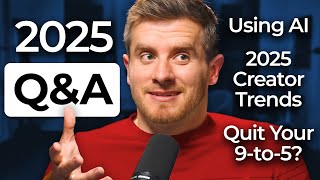
Nathan Barry and Haley Janicek answer creator questions about AI in writing, growing audiences, and building sustainable businesses. They built five studios in 27 days for Craft & Commerce and stress that in-person community and intentional relationships matter more than chasing every trend.
Chapters
So it's a new year, 2025, and you're wondering what's next for you and your business. Today we're talking about how being in community in person can be so huge for the growth of your creator business. And we're doing that as we introduce a new format on the Nathan Barry Show, and that's the Q&A episode. These Q&A episodes are something we're planning to do every other month or so where Haley from the Kit team joins me to discuss a current topic in the creator economy. The topic of the questions I answer in this episode range from audience growth to flywheels to content creation, to how to build your business on the side. And if you want me to answer your question in a future episode, all you have to do is leave a comment on this YouTube video, type your question and submit it as a comment. So if you're listening to this as a podcast, search for The Nathan Barry Show on YouTube, subscribe, and leave your comment with a question. Hailey, how long have we worked together?
7 and a half very long years.
Okay. All right. All right. So it's going to be that kind of podcast episode. I see.
Look, if you want me to be a guest on your podcast, you will get roasted.
Okay. So now I'm scared to ask this question, but, you know, 7 and a half years. What's the best part of working with me?
Oh, gosh, Nathan Barry. Right out the gate. Making fun of your outfit choices, upping your shoe game.
That's, that's true. I'm wearing Air Force Ones at the moment, thanks to you.
You're welcome. You're welcome.
There you go. So we've worked together a long time. We wanna get into a bunch of topics. You know, we're gonna talk about the creator economy. I think something for you is you're, I don't know, top 5, top 10, at least in, you know, the almost 100 people that work at Kit in understanding the creator economy. And so having you on the show, like there's so many events that you and I are at together, we see firsthand everything that's going on. Um, and so I think this is gonna be a lot of fun to dive in of like, here's what we see and, and do a few recurring episodes of, yeah, like I want your take on the creator economy as well.
Yeah. All right. All right. Well, no, I, okay. I will answer your question more specifically though. What's my favorite thing about working with you and not to like make your head bigger than it already is. No, I'm joking. He does not have a big head, but I have loved learning about the creator economy during my time at at Kit, but, um, seeing it from somebody else's perspective and just learning from you in general has probably been the actual thing.
So I guess by way of introduction, I think it'd be interesting to talk about some of the big projects that you work on, uh, at Kit. You've done so many things. Your background is originally in sales before you came to the creator economy. You've done sales and partnerships a lot, but we are sitting in one of your projects. Uh, talk about bringing Kit Studios to life.
Oh my gosh, okay, there's so many things that I could talk about this project. I both have such a love-hate relationship with this project, specifically the timeline of this project, but I remember—
How many days?
27. 27 days.
From getting the keys.
From getting the keys.
To hundreds of creatives showing up in person.
Yes. But here's the funny thing about it. We were in Mexico at our retreat and we had at this point been looking at real estate and talking to an agent. We actually, we'd been talking about this for years and years and years, but we'd been looking at real estate for what, like 5 months at this point? And I, at the time, was just like, oh, I love real estate, I love design, like I want to, you know, whatever. So I was like, just loop me into the conversation with the real estate agent.
Oh, you got looped in.
I got really looped in.
Roped in is the word.
Yeah, and we were at our retreat. I remember exactly where we were. It was right before the happy hour. And I was like, dude, are we doing this or what? And you're like, who's going to do it? You know, like, I don't know, I'm just, you know, and I was like, I'm over this, like pushing this, like punting this. And I was like, I'm going to do it, I'm going to do it. And you're like, All right, let's do it. And it was that easy. All I had to say was, I'll do it. I regret that moment.
And then it was all downhill from there.
All downhill from there. And at that point, it was like back and forth, obviously trying to get the lease landed. And by the time it was signed, dotted, keys in our hands, we had 27 days to build out this studio before—
5 studios.
5 studios before Craft and Commerce, which is our annual event that happens in June, which is why the timeline was what it was. And yeah, and I, it's the project that probably one of the projects that I'm most proud of at Kit for sure over the course of me being here almost 8 years.
Yeah, there's 2 moments that stand out the most to me from that, from the, like the early days of Kit or of Kit Studios. One was you and I in the car driving from New York City up to Yale and negotiating the lease and specifically me just, like trying to be hard-lined on like, oh, and we're going to get this and that. And realizing that commercial real estate is nothing like residential real estate. Like they just don't care, like at all. And so we're like, we need this to make a deal. And they're like, no. And we basically, we got like 2 out of the 10 things we wanted. Like they—
Okay, wait, you're remembering this differently than I'm remembering it. First of all, we have this text chain, right, with our realtor. And in the text chain, it's like they wanted 5 years for the lease. And in our text chain, you were like, absolutely not, 3 years. 4 years, not bending, no, you know?
Yeah, that was one of the 8 things that I didn't get.
And then we're on that drive and you're like, all right, 4 years, you know, like what, I guess I could bend, 4 years, 4 years is fine. Tonya continues to talk for a few minutes. You know what, 5 years, yep, got it, 5 years, all right, I guess. And then in that moment, I literally scrolled through our text chain and you were on the phone with our finance director and I just like showed you my photo. 3 years, not bending, absolutely not. 3 years only. We'll lose the spot.
Here we are. This is completely destroying my reputation as like a cutthroat business negotiator and all.
Look, I'm here for the behind the scenes.
That's good. Yeah, so that was one of them. The other one was I knew we'd ordered a lot of gear and furniture and all of that. I didn't realize like how much it was. Until your series of Instagram stories, which was also funnier cuz you didn't explain on Instagram what it was about. You're like, I'm working on this project and all of that. And then you just had like days of Instagram stories of the UPS and Amazon and FedEx drivers showing up to your house like 3 or 4 times a day.
Mm-hmm.
So we had them, uh, you know, just in this mad rush to bring the studio to life. But it ended up being not just a really magical moment at Craft and Commerce to be able to like unveil it on stage. But it turned into a big point of differentiation for people who were like, okay, how is ConvertKit different from Kit? Like what actually changed in this brand change? And like, one of my favorite moments actually was being at dinner with Tim Grahl. And he was like, hey, like the announcement was the next day or something like that. And he's like, give me the rundown, like what's coming? And we told him about Kit Studios. We told him about a few things, told him about the App Store, about Kit Studios. Um, he'd been someone that we'd gotten early feedback on the name change to Kit. So he already knew about that. And he was like, he thought everything was cool, but the studio was like, blew his mind. He was like, no, you're a software company. Like, like that was the thing that transformed it. And then getting to see, you know, more than 100 creators in here in person during the studios was pretty special. Did it, did it make it all worth it?
It did make it all worth it. I mean, I hated you for a solid month. I was like, and I, you know, mind you, I did this to myself, right? I just blamed Nathan for everything that went wrong. It was like, and it made it all worth it when you're experiencing it with our community of people for the first time ever. And it was like, okay, we did this work, put all this effort in to serve our people and to make creating content easier. It's a beautiful space and we're going to do more of it.
Mm-hmm. Yeah. We can actually talk about, uh, one additional location. Mm-hmm. We can officially announce it that, uh, Kit Studios Chicago is coming in early February.
Yes.
Which will be pretty exciting.
Yeah, it is gonna be super, super exciting.
I'm very excited. Yeah. So, uh, that'll be big. It'll be 5 studios, uh, just like this. Um, yeah. Open to all Kit customers to use totally for free, just like the Boise location. And then we have another location that we're working on, but still in negotiations.
You'll have to wait for the, for that announcement.
You know, we'll drip these out one at a time.
That sounds good.
Yeah. Uh, so the studios were a lot of fun, but one thing that's really special about the studios is being in person and community. Right. So that's the main thing I want to talk about in this episode. Then we'll get into some Q&A. So I want to talk a lot about Craft and Commerce and these other events. I was at an event, uh, just this last weekend with a bunch of creators. And I was like, oh, this gives me so much life. But before we do that, you're saying you're upset with me about something. I have something that I'm upset with you about.
Oh, oh, oh, okay. Let's hear it.
You went to the Eras Tour this weekend and you posted exactly one story. And so I have not actually heard how Vancouver was.
Okay. Here's the context for this. Um, I was going. I was having such extreme mom guilt for this. I was going completely solo. I have a good friend, Mackenzie, and Mackenzie now is the tour manager for Gracie Abrams. And so I'd been trying to get tickets for ages, couldn't get it. And she finally messaged me on like, I posted like I didn't get tickets again. And she was like, dude. And I was like, I don't want to be that friend, you know? And she was just like, be that friend. It's fine. So I ended up getting one ticket. I wasn't able to get more. And then 24 hours in advance of me leaving, she said, um, I don't want to throw a wrench, but if I could get your two older girls tickets, could you swing it? And I—
those are the kind of wrenches that are welcome to be thrown.
I started immediately crying, got tickets somehow, barely made it across the border in time, got to the hotel, put on some sparkles, walked in. And I have this video of my 10-year-old seeing, um, our seats for the first time and her face is just like she's pure shook. I'm going to start crying talking about it. It was so ridiculous. And it was just a really epic experience.
That's amazing. As anyone who pays any attention to this show knows that I am—
That Nathan's obsessed with Taylor Swift?
Yes, exactly.
So much so that every single studio in the studio is named after a Taylor Swift song.
One of my favorite things So as we're working on expansion of studios, our team is starting to standardize things more and create SOPs and all of that. And I was reading the SOP and it specifically calls out in there, and neither you or I wrote this, so I just think it's super funny that it specifically calls out that every studio will be named after a Taylor Swift song. And that makes sense. But then it says like, uh, we won't, to avoid confusion, we won't repeat location or we won't repeat song titles across locations. So they all have to be unique. And I'm like, well, yeah, obviously.
Obviously there's a large catalog. There's plenty to pull from.
But that's something that impresses me the most about Taylor Swift is how prolific she is. And I think that as creators, we think about like, oh, I can get this much done. Or maybe if I really pushed it, I could publish a book this next year or these other things. And she's just like, oh, you were all during the pandemic were feeling sorry for yourselves. I figured I'd just throw out like 2 albums or more, right? And you know, all of this thing.
She just never stopped writing.
Right. And so she's just putting out all these things at such an incredible pace. And then, you know, whatever's reasonable for, like, a tour, you know, so you're like, oh, someone performed for 2 hours straight. It was amazing for a concert. It's like, she's like, how about 3.5 hours? And like, just the level of everything. Yeah. I just feel like watching her as a creator is remarkable.
What I think is more impressive to me is actually what I would say, like, the leadership qualities Taylor has to have because lots people are prolific creators. Like they just create things, right? And that's, I wouldn't say the hard thing, but for her, that's the easy thing. But in order to take your creative like endeavors, right? All of her music, her catalog and all that sort of stuff and then build what she's built behind it in order to turn it into something that it is today, I think that is the more impressive thing to me about Taylor is the businesswoman that she is. Oh, 100%. She's the most incredible creator, but it is how she's able to rally people and create this— I think she's the first artist to have ever amassed over $1 billion purely on the music that she's made. Yeah.
Most people do it from, you know, other companies that they build or that sort of thing. Yeah. Totally on the music. And I think the ticket sales from the tour are over $2 billion.
$2.2 billion.
That's— Absolutely insane. We can talk about Taylor for the entire show. We're not going to do that, unfortunately. But talking about community, I think, you know, it's the beginning of 2025 as we release this and something that I am going to be very intentional about and I think other creators should be intentional about in 2025 is being in community in person with other creators. This event that I was at was a creator mastermind with like 18 creators, I think. And then also a fundraiser for this great charity called Village Impact, which builds schools in Kenya. They build one school every year. And one, I thought that was a cool model to, like, bring everyone together with the specific purpose of, like, then we're going to raise money to, to build the school. But it just reminded me of, like, how powerful it is to have that, like, those connections and all that in person and there were so many things that I was able to, like, people I was able to learn from, conversations I could move forward, people I got advice from, and then introductions like crazy where someone was like, oh, I see that you're stuck on this problem. Like, this is the person, whether they were in the room or let me text-introduce you to this person on the team or whatever else. And it just, the relationships moved so much faster in person. Than online. And I think that's something that we forget as creators. We're like, oh yeah, I know her from Twitter, I think. Yeah. Have you met? No, but you know, we text. It's like, go meet in person. What's your take on that? You've spent a lot of your time working on events.
Yeah, I mean, I think it's really interesting because in this industry, like when I think of how I got into events and I had been working at events in the other areas of my career as well. But you, you know, I remember very early in our journey, you're like, Well, I want you to go, you know, just close deals. Like, just, you know, like, go close, get it done. Let's go get it done. And I was realizing, okay, this is harder than I thought, you know, in this space where people are like the talent themselves, you know. And so I realized really early on is that relationships were going to help me get my job done ultimately. And so I would bring you to the events, right? And then— and I remember this actually in the very beginning, realizing how like kind of famous you were, like internet famous. The first event we were at, we were at an event called FinCon. It's a great event. And there's a lot of creators that always go. It's probably one of the first events where a lot of creators like really went to this event anyway. So I'm standing at our booth and they're swarming, people are swarming you, you know, and this is, and I am like, what is happening? Nerdy Nathan over here. No, I'm joking.
But I mean, you're joking, but there's a lot of truth.
There's a lot of truth to it. And I was like, what is happening? Like, oh my gosh, I had no idea that he was this well-known or this famous, right? And I just remember being so like awestruck by this moment. Anyways, it was one of those things where as soon as I built a relationship with somebody, I could take it from that point.
Right.
And I, that has been further and further cemented in my time here at Kit is that as creators, we live in this isolated world so much. We are behind our computers. We're often solopreneurs. So many of our customers are solopreneurs. Right? And they don't have big teams. They're doing this completely on their own. And what they are missing is human connection with real people and hugs and conversations with somebody that is experiencing the same problems. One of my favorite events I ever went to was with Jen Hatmaker, um, at Mom 2.0. And she got up on stage and she was doing this experiment sort of thing where she comes out and she says something. And if you have also experienced that same thing, she has you raise your hand and yell, same. And then someone else in the room yells out a problem like that they're experiencing, right? And now she did it a little bit more on the emotional side of things. And then we adopted that on the Billion Dollar Creator Tour, right? And I said, okay, so how many of you guys are here and you are experiencing problems with YouTube growth or with social media growth or with, you know, whatever, growing your newsletter? And people would say, same. And then someone else would say a problem that they were having. Now, the reason why we did that is because there was somebody in that room that could solve the problem that you were having. And it also made you realize that everybody in that room was having the same problems that you were having and you weren't alone. Right. And that level of human connection, I think, can be forged, sure, online, but it can be like really cemented when you're in person. And there is one thing that I know is true across the board for all creators is that you are more successful when you are in community with other creators. And relationships are so much more powerful in person. And like, I could argue this point to anybody that's like, oh, events aren't worth it, you know? And I'm just like, you're wrong. Yeah, I'm just so confident. I've seen it hundreds and hundreds of times. In fact, we were having a budget conversation about events today, and, um, I think I said something like, I bet 50% of our largest customers on the Kit platform we have met in person at an event. At dinner, spent time with in person. And I'm so confident. I'm so confident in that.
Yeah. Well, and I think that getting in person has just, like, it's been everything in my career. And so, I mean, that's part of the reason that you and I have spent so much time together is like this deep belief that in-person connection matters. And so, you know, we've spent the last 7+ years creating that for other creators.
Yeah, and it's ultimately why Craft and Commerce exists is because you had this experience and it impacted your career and you're like, I want to bring that to our customers. And as someone who runs Craft and Commerce, right, like we make no money on it.
Negative money.
Negative money. We make negative money on Craft and Commerce.
Follow us for business advice.
But we are so passionate about why we do it because we know the impact that it has on people's career. In fact, uh, John Meece, who opened Craft and Commerce this last year, he gave me this great pitch like, oh, I want you to, I want to talk about this. And it was, you know, attached to his book. And I was like, look, I love this idea for you, not for my conference. I want you to speak on that somewhere else, but this is what I want you to speak on. And the topic was actually about, he takes these strategic selfies, you know, with everybody. And he has been to every single Craft and Commerce and he can actually backtrack and document the impact that personal one-on-one relationships that he what he created at Craft and Commerce, how that's impacted his business over the years. And I wanted him to set the stage for that because it was like, every answer to your business problems, somebody in this room can answer it. And I just, God, I just believe in it so much.
It was fun. I mean, it was a great talk and having it come from someone who'd been a part of the community Since the beginning, that was all amazing. And then, you know, as he pitches this idea of strategic selfies and then watching everyone throughout the entire event, like so many of them wanted to take photos together and he like gave everyone permission. So I was like, no, actually do it. And so I think that he single-handedly increased the selfie count at Craft and Commerce by a significant amount.
In case you're wondering on the tactic, it's very specific. It is you take the selfie and then you text them the picture and you're like, John, You know, John Meece, this is me. So then they have a picture of you guys in your text chain and you just take that where it needs to go next.
When you can even use this to create relationships with people that aren't there. So for example, Sahil Bloom, who was one of our keynotes, he's got a book coming out and I've been just trying to help him, like just try to be a good advocate for the book. Like, side note, if you have any creative friends with books coming out, like, do things like that. Be the first to write reviews, preorder, be like, hey, I got 10 of my friends to preorder. Like, that is a time where, you know, any author or creator wants the most help and, like, show up for them. And so with Sahil, I was trying to think of, okay, this book is coming out in February. Who's going to be a good fit for it and all of that. And so I was just talking to to a few people about the book. And one of those conversations was with Michael Hyatt, who I've known for a long time, but I don't see him often. Every year, every couple of years or something like that. But we were at dinner and I was talking to Michael and he was asking who's good at newsletter growth right now? And I brought up Sahil. We were talking about his book and all that. And so I said, oh, here's his book. And I texted that to Michael so he had it. And Michael followed Sahil on Twitter. And then like 2 minutes later, Sahil texts me and he goes, "Hey, how do you know Michael Hyatt? I saw that he just followed me. One of his recent retweets is one of your things," and all of that. And so I was laughing like, "Oh, I just got this text." And we're at dinner and Amy Porterfield's right there. And she's like, "Take a photo right now and send it to Sahil." And I was like, "Oh yeah." And so she, I lean over and she takes this photo of Michael and I Mm-hmm. You know, we texted Sahil and then I texted it to Michael afterwards. And like, it just the way that it's created like these deeper relationships and it's a strategic selfie, you know, now, whenever, I don't know when Michael and I wanna promote something that we do together years from now, we'll be like, here's, here's how we do this. But it's just like this ability to create conversations and like build deeper relationships. Mm-hmm. That is unparalleled.
Yeah, I think we're going to see a resurgence, uh, in the years to come on in-person events. I just, I, I think so strongly that they will have such a long-standing impact on your business as a creator. And, um, just, you know, community with family, community with friends, community and business really matters.
I think that's huge. And, you know, as we're talking about stories of either creators we've connected with or relationships we've formed, not to name drop more, but like someone that I've known and become friends with, you know, for a long time is James Clear. Everyone's always like, how did you get to know him? And the thing is, like, we met at an event before either of us had done anything. You can definitely go to these events and meet people who are already famous, build those relationships. That 100% works. But I think what's even more important is meeting people who are at your level, building a deep relationship, and then spending years, a decade, like, investing in each other. And having that support, and that comes from events in a huge way.
Yeah, in fact, actually, my good friend Kirsten, um, her Instagram is Simply Grove. She's a designer. She's here based in Boise. She introduced me to Mandy Goobler, and Mandy and I proceeded to talk about houseplants, um, the entire time, uh, and that relationship that we built there is like a long-standing friendship and a Happy Happy Houseplant is doing very well. That idea, like, really came out of an event, and she pivoted her entire business, which was Vintage Revivals, into Happy Happy Houseplant. And I think she'll do $8 million this year off of an idea that we, you know, just ideated at an event.
Yeah, I love it. Okay, if someone's thinking about— and they've heard us talk a bunch about Craft and Commerce.
Oh yeah.
Or events in general, right? We go to a lot of them with Craft and Commerce. First, where is it? What are the dates? Where should people go if they want to check out tickets?
It is in Boise, Idaho. It is June 11th through the 14th. We host it at this amazing venue, Treefort Music Hall, that's like right in the center of downtown Boise. And look, I am going to say I was an advocate for moving it out of Boise because—
I won't hold that against you.
I know, but every year we have it in Boise, people— okay, now I love Boise, but I just don't want people to know I know how special it is and I didn't want more people to come here.
You tried to keep it as a hidden secret.
I was trying, yes, exactly. I wanted it to be a hidden secret. Anyways, and Nathan was an advocate, like, absolutely not. This is our home. This is, and people love it, you guys. Boise is such a special place in the summer. It's the most beautiful. You can like whitewater raft and then go to our conference, which people do. We have meetups, happens every year. But it's a great event. We're getting ready to release some speakers. I'm gonna hold those tight. I will say that a very early KITT speaker, ConvertKit customer who had probably the biggest impact on our business. You could probably guess. I don't know. His name rhymes with cat.
He's coming. This individual who will not be named is coming back to speak. Yes.
Which I'm very excited about, but we're going to be really—
Is this individual telling a story of building like maybe a brand new YouTube channel to a million subscribers insanely fast?
Something about like, I don't know, Pokémon or something, you know?
Yeah. We'll see if people can figure that out. Drop in the comments if you figured out who that speaker is.
But we have amazing speakers. It's a great community event. I objectively, honestly, objectively, I just, I go to so many events and objectively I think it's one of the best creator events, if not the best creator event of the year. It is not a ConvertKit user conference. We don't—
Because it's a Kit conference?
Exactly. It is not a Kit user conference. It is a creator event. You do not have to be a Kit customer to attend. Like it is about building community and relationships friendships, and we have world-class speakers on stage. And, uh, yeah, come hang out with us in Boise.
I'll say just unashamedly, I believe it is the best creator event. And, uh, you know, even those who are creating other events for creators should come and, you know, learn what we do so well. And all that.
They have great MCs.
We have great MCs. Great MCs. There's Haley complimenting herself again. But, uh, June 11th to 14th, 2025. BoiseIdahoConference.kit.com.
There you go.
Sounds good. Okay, so we promised our dear listeners that we would do some Q&A. We have a bunch of listener-submitted questions. You have the computer in front of you. What seems interesting? What should we dive into?
Well, I'm going to go rapid fire because we do have a lot. This is the first Q&A episode. And so there's been a few that are piling up. Okay. All right, we're going to start with Jan Carlos. You are one of the most authentic authentic creators and entrepreneurs of our time.
I feel buttered up. All right, where are we going with this?
In Jan's opinion, would love to hear your take.
Your opinion as well, or just Jan's opinion?
You know what, let's, let's, yeah, keep going.
Some questions I shouldn't ask.
Would love to hear your take on AI and preservation of authenticity in writing or other modes of creation.
Okay, I like it. First, uh, I love of AI for writing, if used correctly. Something that I think that, first I think AI for writing out of the box is straight garbage, right? If you're like using ChatGPT and you just say like, write my newsletter or write this thing, it will give you almost pure nonsense. It's like the episode of Friends where Joey has found the thesaurus and he's started to like use these big words and, you know, and Ross and Monica and everyone else is like, I'm like, what is happening here? ChatGPT talks like that where it's just like trying to use way too big of words. And so you have to really guide it. So a few things. First, if you take some of your best writing and not just feed it in, but say, hey, create a style guide, a writing guide based on this, and then it will make that and do a good job. And then you can tweak it and say like, okay, I write to this level. You know, saying things like writing to a level that a 7th grader could easily understand, you know, things like that make a big difference. And then I think if you use it to help you get unstuck or to write things that aren't necessarily that important, there's a lot of writing that you do that you just need to communicate a message. You don't need to communicate it perfectly. And so if you prompt it properly, then you can get to, you know, 90% really, really quickly. And then you can focus your time on things that really, really matter. And then my other use case that I really enjoy is using AI as a thought partner where you can say, like, we argue things all the time on the internet and sometimes it comes from like a lot of research and things well thought through. Other times people were just speculating like, this is from my life experience, this is the way I think things are. And so you can ask ChatGPT, or Claude or any of these other ones, like poke holes in this. And like, what is the best counterargument to this? And then you can kind of spar back and forth and really round out your thinking without having to pull in another person and like use up their time. And then one of the other things that I really like is using AI for referencing original research. So at Kit, we've done a ton of storytelling, right? Isa and the team have told all of these great stories. They're in our books, they're in the blog and everything else. And when I'm writing something, I wanna reference that. And so I found that Google Notebook LM is the best for it. And you can plug in the, I don't know, 100+ stories that we've written. And then I can ask things like, who's a creator that had to stick with it for multiple years before they got any level of success and then had their breakthrough? And it will source those stories and you go, oh, these 4. And I know that I'm not referencing random creators. I'm referencing Kit customers, and I can trust the integrity of the story because our team wrote it, and on from there. So I think there's a lot of ways to use AI to create really authentic content and improve your writing process rather than just what some people are doing where it's like, I don't know, just let AI do it and it's a net negative.
Yeah, I think the key thing here, the word is authenticity, which I think actually, I'm curious on your thoughts on this, but it's actually the timing of when you do it. So if you have a thought and you're like, okay, I want to write on this topic, it's like, when do you do it? You engage to where AI isn't inserting its own opinions and influencing your opinions on a topic. So it's like, when do you engage in it? So using it to make your writing better, but not necessarily changing the thoughts that are there.
Yeah, I think so. And just taking that approach of using AI to improve and, and like compound on your writing instead of using AI to do the writing Yeah. Yeah.
Okay. Moving on. Now you're going to have to apologize, or I'm going to have to apologize if I mispronounce your name. So Alex Chalekian, I would love to hear you share your thoughts on where you think the creator economy is heading and how creators can skate to where the puck is going to be instead of where it is now.
I think that's good. Uh, two things. One, you have to get really fantastic at capturing attention. All of the platforms that provide distribution, whether it's Instagram, TikTok, YouTube, they really care about can you hook attention and maintain it for, you know, the full watch time, right? They're looking out on Instagram Reels. Can you get to 100% watch time, 110% watch time? Uh, so that's going to be a huge thing. And if you were to learn only one skill as a creator, it's probably that— how to capture and maintain attention. Uh, and then the other one is you're gonna see creators get really good at the business side of it. So many creators were saying like, oh, I, I just make things. Someone else will figure out the business side. Uh, if you hire the right people, you can probably get away with that. But to achieve the level of success that the best creators are gonna get, it's the ones who are going to sit down and say, okay, I'm going to deliberately master business in the same way that I mastered these creator skills. Mm.
Love that. I am gonna add one thing. Um, I'll keep this really speedy, but I do think that we've been saying this forever, but I think the conversation will continue to be about owning your audience.
Oh, 100%.
Yeah. Okay. Pablo Barrera, can you speak to how to choose certain strategies depending on business type? I mean, services versus products, personal brand versus business brand, paid traffic versus organic traffic, evergreen versus launches, recurring versus one-time payment, channels of communication, type of funnels. How do you choose or mix those things depending on the business?
Oh, that's a giant question.
It is.
So how do you make decisions as a whole? I think first you have to get really clear on what are you optimizing for? And that's something that anytime someone watches a coaching episode that we do here in the studio and we get up on the board, you'll hear me ask that question all the time because the correct answer for like whatever problem they have depends entirely on what you're optimizing for. And so I would get very, very clear on that. Because if we're saying like organic traffic versus paid traffic, well, what are we optimizing for? If we're optimizing for instant results and money's not an issue, paid traffic, 100%, right? We can test things faster. We can learn so much faster. If we're optimizing for a high margin business that we build over time and is really durable and doesn't cost much out of pocket, then organic traffic, obviously. And so get really clear on what are you optimizing for? And then the answers to other questions will start to fall into place.
Yeah, that's a beast of a question. I feel like we could talk about it for a long time. Okay, uh, Kunal Sampat, uh, providing services impacts how much time I can spend creating content. How does one balance content creation and revenue-generating activities? I'm concerned about getting burnt out or spreading myself too thin.
Yeah, so I think the biggest thing is you have to realize what actually moves the needle in your business. And so there's a ton of activities that we do as creators or service providers, and you have to focus in on, okay, what actually mattered? And the way that I like to do that is to define the flywheel for my business as a whole. Like, okay, how do I get clients? How do I get traffic? You know, what's actually working there? And then stick to that flywheel consistently. And I have, you know, business ADD. I like to jump around to all the different things.
Really?
Oh, have you been on the receiving end I've experienced this. Mm-hmm. Uh, and so the, the flywheels are the thing that help keep me focused and saying like, I'm going to pay attention to this until it's working.
Mm-hmm.
And then as it's continuing to work and compound, I'm going to stay focused on it and, you know, and really get those results. And so I think that's the biggest thing is, uh, implement a flywheel that frees up your time. And then from there, you know, the next flywheels are going to be around like driving revenue or driving audience growth. And if you want to learn more about flywheels, go to creatorflywheels.com.
Plug.
Always.
Always. All right. David V. Kimball. How do you establish reasonable content creation goals that let you grow your YouTube channel or blog as a side gig while not infringing too much on your main job 9 to 5? I mostly break things down by time of day and weekends versus weekday, but is there any more nuance response to that tactic that you know of that might get overlooked?
Yeah, I think it's similar to the last question of you need to know what's most important. Like, if you did nothing else, what actually drives things forward? And so often it's, you know, that weekly blog post or the video or like that actual piece of content, and then getting the attention out there. So the way that I would think about it is if we have a very limited amount of time. Then I'm going to say, okay, writing, creating the weekly content is maybe that's my Sunday. And then I have these lunch breaks scattered out throughout the week. So I'm going to say all I care about is audience growth, not monetization. Because I think you have to make a trade-off between reach and revenue. And when that is the trade-off, if you're able to pay all your bills, then I would choose reach every time. Because reach enables you to switch and pivot to revenue later. So then what I'm saying is, all right, Saturday or Sunday is all about creating the content. And then during the week, these little blocks are all about promotion. And then I'm going to have one of those blocks where I focus on capturing that reach and attention into an owned audience on my email list. And then I'm gonna say, you know what? This is all I can do. I'm not gonna listen to every fancy new strategy that I hear on a podcast. I'm gonna narrow in in on this one thing. Like if Instagram is working for you, then I'm just gonna keep doing Instagram and keep growing that. And the other thing that I would add is that I would track it through a flywheel. And so that's not just defining what the steps are and making a nice visual, but also having a spreadsheet where you measure each step on a weekly basis. And I've seen people get some pretty amazing results in their creator business in 5 to 10 hours a week when they're very, very clear of like, these are the non-negotiables and this is what's going to drive the results.
Yeah, I like that. Practically, my advice would just be to time block. You have an hour every morning that you work. It's like 6 to 7 a.m. is your personal brand or other project. I think that works really well and it's like not a non-negotiable. Yep. Gregory Crony asks, how can you transition from an experienced B2B expert and full-time freelance consultant without an online following into a full-time creator with only online-generated revenue?
[Speaker] Okay, the first thing that you have to do is you need to build a minimum viable brand. And this is something that I see people caught in this world where they have a lot of expertise, but no one knows about it on the internet. And they think, oh, if I want to step into this other world, I have to become a full-time creator. And that means that I'm posting Instagram stories all the time, I'm writing a weekly newsletter 52 weeks a year, and I probably have to start a podcast. I have to do all these things that's gonna consume my entire life. And so it's like, do I want to be anonymous or do I want to be a full-time creator? And that's the false dichotomy that we set out for ourselves. When in the middle is this option of a minimum viable brand. And what that is saying, you have this expertise that people come to you for. It's how you get sales deals done, right? What you're paid $150,000 a year in your day job to do any of those things. Well, find a way to talk about it. And I think a minimum viable brand consists of, of 3 or 4 things. First, you need to be very clear on the value that you deliver, right? If you were the best at, I don't know, medical device sales, right? That is the value that you bring to the world. You can help people make the right buying decision. Make your brand about that. Have a consistent bio on each platform and a consistent headshot. Then the next thing is that you're looking for content that demonstrates your expertise. And I think the best thing to do is to a 45 to 60 minute podcast episode where it's either a friend of yours interviewing you or it's a real podcast, it doesn't really matter, but this is something that demonstrates your story, your expertise, why people should listen to you and your biggest tips and advice in your industry. And then the last thing is you need 10 pieces of content that are short form. And so this could be video. That's probably where I would default to because I think it's easier to get going if you have the right tools. Or it could be like written content. But what I would do is I would come into Kit Studios and get a friend to then ask you these questions. So you're sitting down, podcast format, and you just have someone ask you the question, hey, what's the biggest thing that's misunderstood in your industry? And then the key here is that you repeat their question. So you say, "The biggest thing misunderstood in my industry," and you fill in the blank, "is this." And then you cut out the other person asking the question and you just have this nice tight clip of you. And those become, you know, Instagram Reels that you post over time. And the reason this is really important is that now everything that you do on the internet ties back to a separate brand. Brand. And so when you're sending a cold email or you're reaching out to someone, they're like, who is this Hailey person, right? And you look it up and there's actually a profile there. People take pride in like, oh yeah, you can't find out anything on me, about me on the internet. And it's like, that's not a point of pride unless you're like a Navy SEAL. Right. Right. Yeah. But like you work in sales, maybe, you know.
You should be.
There should be something there. But you combine all of that with like a very simple website and you just make that in it, then you're at this point where people, it's so much easier to say, oh, this is what this person does. Let me make a referral to them. Every cold email that you send is more likely to get a response because there's like an authentic person behind it. I can be like, who is this person? I click in and I watch a few videos and I start to see, oh, they were on a podcast. Here's more of their story. And it helps with recruiting, sales, all of these things. And it does not have to put you into this world of forever being a content creator. You can get this minimum viable brand and not get on the content treadmill.
Well, good thing, Gregory, if you come to Kit Studios, you can record all of that content, assuming you are a ConvertKit customer, and knock all that out pretty simply in a day or two.
100%.
Yeah. Okay, Steve Wyborny Math asks, how does a creator manage an endeavor that has twin purposes? So let's say that you are trying to do two things: create something to make the world better and find a way to financially move the dial. Oh, I already love this question. How do you do both? I am not asking about prioritizing one over the other, but literally managing both purposes at the same time.
So in that example, we're talking about how to make a positive impact and make money simultaneously. I think we just described capitalism. Right, that is how it works. I think people have this misunderstanding that I can either improve the world and deliver value to people, or I can make money. And they don't understand that making money is a byproduct of delivering value. And so instead of approaching the question of like, okay, how do I make money? How do I pay my bills? And brainstorm whatever comes up from that, you ask the question, what skills do I have and what value can I create for others? And if you get specific on that, doing that, there's often a monetary value that will be a byproduct of it. And so I think those go hand in hand, but it's really important that you get the order correct. And figuring out how you can serve others and create value is the biggest goal by far, and money will be the byproduct of that. But if you get those backwards, then you'll just be stuck in the mud.
Okay, I'm going to add on to this. I think we at Kit actually try to do this. This is from my perspective as a Kit team member, but I've watched you build Kit, or, you know, for the most part from the beginning. and our mission is to help— we exist to help creators earn a living online. Now, the stories, if you go read all of our stories that our storyteller Issa Adney has written, most of them have been about, for example, let's say a stay-at-home mom that wants to stay at home and raise her kids, but she needs additional income. Or it's been about, you know, there's stories like that all of the time that, that unfold. And your mission has been to essentially help creators do those things so they can have both the life that they want, which makes, I think, the world a better place when you have happy people working on things that make them happy. But at the same time, um, I want to be paid. So your job is also to make Kit make money so that way you can pay your team members. And so like, I mean, we have a revenue goal this year that's important to us as a business so we can continue to help serving creators, uh, in the thing that makes them money.
Yep, absolutely.
And provides for their families. Okay, Nathan Barry. Nathan, last question, and I apologize if I mispronounce your name, but this is from Begley Amanov. If you could only give one sentence, what would be your answer to the question, what exactly took you from a guy who wanted to get hired as a freelancer to someone who owns a company that makes $43 million a year?
I can't do that in one sentence. But it's something along the lines of, I became fascinated with the idea that making money is a skill and that I can get better at it with deliberate practice. And then when I figured that out, I wanted to make sure that everyone else knew it. And so, yeah, I can't do it in one sentence, but it absolutely changed my life. Like, I grew up in a family where money was very scarce. I watched like the pain that that caused. People say that money doesn't buy happiness, and that's like a nice trite little one sentence. And it may be true, though I feel like you're probably not spending it very well. Some tickets to the Arrows tour cost some money and they definitely buy happiness. But, you know, the lack of money definitely causes a lot of unhappiness. And I got to the point where I realized like, wait, this is a deliberate skill that we can learn and get better at and compound. And I figured it out. I know the first time that I made over $100,000 as a creator, I was just like, this is amazing. And then when I grew it to $200,000 and more, I was like, does not— does everyone else understand what is possible here? Like this? I feel like everyone is living life as if this fact and this opportunity doesn't exist. And so then I ended up building an entire company around this idea of how do we help as many people live this, like go through this transformation of saying, hey, I am in control of my finances. I'm in control of my time. I have thousands or tens of thousands of people in my corner who are cheering for me to succeed. And I can do anything I want in life on my own terms because of that.
That.
And so we've captured a tiny little bit of that value that we've created into what Kit is today. And the money is just there so that we can pour it back into other things that we care deeply about, whether that's studios or merch or—
okay, we have a lot of nonprofits that we support.
We do have a lot of nonprofits that we support, and it's a— yeah, there's just so much good that you can do with it. And so there's all kinds of things, but it ultimately comes down to that passion around we exist to help creators earn a living, first for us as individuals, for our team, but then especially for the broader creator community.
Yeah. Well, in the spirit of being like transparent and not roasting you the entire time, I guess I can like re-answer the question from the beginning of the podcast. But actually, this is one of my favorite things about you or my favorite things about working with you working at Kit, um, I— is, is we believe in teaching everything you know, right? So much so that it was like on a poster like this in your office, you know, when you first launched. I'm sure we have t-shirts, it's, you know, all over the place. But to your point, you learned how to do it, and then you were like, everybody needs to know how to do this because it is a skill. And so you've spent the vast majority of your career— and actually, ultimately, that's what this podcast has turned into, is teaching people how to earn a living as a content creator doing work that you love, providing for your family, and contributing to the economy in the best way possible.
So that was good. Thanks for asking all those questions. It was, it was fun.
You know, I came up with them all. Every single one came up with everything.
And you made up the names of people?
I did, I did. Alex Chalekian, that's me.
One of Haley's 11 alter egos. Uh, this is fun. We should do it more often. Uh, I want to have you on the show to talk about about a bunch of things Kit related. Uh, maybe we'll have you back when we can announce the third Kit Studios location. Uh, little teaser there. Uh, if someone has more questions that they want to ask, uh, you can drop those in the comments on this episode.
No need to add your name though, cause I'll take, I'll take credit for it.
Haley Janicek asks, it's just that 12 times over. Uh, but while you're there on YouTube, uh, definitely subscribe to the show. Show. People keep leaving comments that like, this is the best undiscovered show, and I love that. That's fantastic. But let's get it discovered.
Let's get it discovered. I mean, thank you, Nathan, for having me on. Look, I, when I created this podcast studio, this one in particular, I was like, this is the one I'm going to record in. I didn't know what I was going to record. It was just going to be in this studio. I designed it for me, my vision, what I liked. And for the first time, I'm actually recording in it outside of the surprise, like when we announced it, you know, so So I guess I have you to thank for that, for me finally recording an episode in my own studio.
That's perfect. If you enjoyed this episode, go to YouTube and search The Nathan Barry Show. Then hit subscribe and make sure to like the video and drop a comment. I'd love to hear what some of your favorite parts of the video were and also just who else you think we should have on the show. Thank you so much for listening.








