My Advice for Creators & Entrepreneurs | Q&A
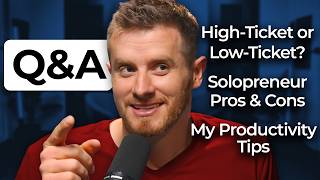
Nathan Barry and Hailey answer creator questions about building sustainable businesses. They discuss why celebrities like Matthew McConaughey and Morgan Freeman are launching newsletters, the strip-mall versus skyscraper growth model, and when to hire instead of staying solo. They also cover high-ticket versus low-ticket offers and how to balance creator work with CEO responsibilities.
Chapters
A new trend that's emerging that you're going to see a lot more of is celebrities starting email newsletters, which may seem surprising, but there's a very important reason that they're doing it. Hailey from the Kit team joins me to discuss why that is, and then we get into a bunch of your questions on things like the challenges of being a solo operator, whether new creators should start with high-ticket or low-ticket offers, and more. And if you want me to answer your question in a future episode, all you have to do is leave a comment on this YouTube video So if you're listening to this as a podcast, search for The Nathan Barry Show on YouTube, leave your comment with your question, and I'll answer it in a future episode. All right, Haley, we are back. You were a hit on the—
So I hear. Actually, I did get a lot of text messages.
Word on the street is that people loved you on—
You know what I think they liked? I think they liked that I teased you. Yeah, that's what I think they liked.
That's probably not a good thing. I feel like that is just enabling you to give me more of a hard time, which you already do.
Okay, look, sometimes here's the thing. I've talked about this before, but like when you're in a position of power like you are, and I mean that internally with Kit, right? Sometimes people might like not be willing to, you know, tease you about something. I am. You are.
But in all seriousness, uh, people love that episode. They love the Q&A, uh, and, uh, they said that we had— was it Brilliant Energy?
I believe it was Brilliant Energy.
And it was from Brian Feroldi. So shout out to Brian.
Yeah. Yeah. And then we— it did make me laugh because you were like, well, like at least one good thing came out of us working together for the last 7 and a half, almost 8 years. So, you know, one good thing, one good thing. He throws it right back at me.
So it's true. It's true. We have a good time.
Yeah.
We have a few different things we want to talk about, but Yeah, there's a lot been going on at Kit.
There's been some like really fun announcements happening, like really fun.
Okay, so I'm just, we're just going to dive in.
Okay, let's dive in.
Matthew McConaughey joined Kit and launched a newsletter just at the beginning of the year. And it has—
Okay, wait, how many text messages did you get after you made that, after that announcement came, like outside of like secondary to like people being like, wow, Hailey was so good.
You're wondering if you got more text messages Or if I got more texts related to you on the show or Matthew Barry.
Exactly.
Let's just say that they were about equal. In both cases, there's too many to count. Right?
Exactly.
But, uh, yeah, a lot of people were really excited and blown away because I think Matthew is someone that, you know, everybody respects and looks up to, like, as an artist, as they're fans of his. And I think what's, uh, especially great about the newsletter is just how embedded Matthew is in it. Some people like say, oh, I guess we should do this, or someone on their team decides This is the project we're going to do.
Yeah.
And, you know, they don't know anything about it. But like Matthew was on like so many of the calls as we planned it, got into the design, got into all of these things.
And so what did you do when he was on some of those calls, Nathan?
Okay, so this is actually the first text that I sent to you about it. We hadn't— it's one of those things where like it was on my calendar and I'm like, it says that Matthew's coming to the call. Mm-hmm. Right? And, but I was like, I don't wanna say like, I'm gonna be on a call with Matthew McConaughey and then it doesn't work out. So I just, I didn't say anything to anyone. And then during the call I'm like, how do I, you know, be super engaged in the call but then like screenshot, you know, Command+Shift+Option+4, you know, like get this, get a good screenshot of it. Okay, wait. And then I texted it to you.
Yeah, but you're also the only one smiling in the photo.
Well, I'm the only one that knows the screenshot's coming.
Yeah, I know, exactly. Like that's a telltale sign, like.
Oh yeah, who leaked it? Who took the screenshot?
The secret memo that goes out. Nathan has this, like, perfect smile on his face. And Matthew, this is funny. You tell this part.
Okay, so Matthew is the one who— he joins the call and everybody else is like in their office, right? It's the head of his investments, it's the head of his PR, like all of that, right? We're all in nice offices. And Matthew joins like on his phone, like walking around.
Yeah.
And he's got like a sweat headband on. I think he just came from Yeah, I don't know, a game of racquetball or something.
Yeah, that reminds me of another one of my favorite stories with somebody being on the phone with a celebrity, though. Helen, who's on our sales team, who's amazing, she's on this call with Burt— what's his last name? Burt Kreischer. Burt Kreischer. She posted in Slack a screenshot of this one because she's on the phone with his wife and she's actually— his wife is the one who's controlling the call. And then he pops in, jumps into the conversation, but he's like in his truck shirtless, which is like completely on brand, right?
You watch any of Burt Kreischer's comedy, he's always shirtless.
So it's like, all right, that's, that's real, you know?
Like, this clip is hilarious to me because it's this call with Leanne talking about the newsletter that she wants to launch for her business, all of that. And, uh, then like Burt just chimes in and just pans, and there's just Burt driving away without a shirt on. So we've had this run of onboarding celebrities to Kit and launching these newsletters. Like, it's not one or two. Like, in the last couple of months, we talked about Matthew, um, Hasan Minhaj, who else?
Morgan Freeman.
Morgan Freeman, Lil Jon. And then there's so many more that have been customers for a long time, but there's this wave of people not just using KIP for email, but like really launching newsletters. And I thought it'd just be interesting to talk about that, of this trend of celebrities in in newsletters?
So I think there's two things that we should talk about for this. Um, number one, on the trend side of things, it's like they're doing it because they want to do it. It's because they're like really excited about connecting with their audience, long-form content, long-form writing, long-form writing. Um, I think Matthew's newsletter is like a really good example of that. But they're also doing it because it's like a good business decision. So it's really exciting to see, um, creators and celebrities like doing the same sort of things when it comes to their newsletters and for the same reasons.
Yeah, I think it's having that, like, access to attention over a long period of time, right? If you think about someone, you know, in Matthew's position or Morgan Freeman's position, people pay attention to you. They watch your movies, they listen to you on the late night shows, but the late night shows, it's like they watch the 60-second clip or the full 7-minute segment or something. Or they're seeing things that get posted on Instagram, but it's not like consistent ideas over a long period of time. Whereas like Matthew's newsletter, you've got his thoughts in your inbox every Friday at 5 PM, just super consistently. And you imagine that over the course of a year or more and that like you understand so much more of what he's about and the ideas that he wants to share with the world. And I mean, it's the same thing with Morgan. He has these ideas, like very much wants to you know, bring his ideas and perspective and all of that in long form. And so he's the one, you know, not his team, he's the one championing.
Well, I think what's interesting is that historically in celebrity culture, right, who controls the narrative? The media controls the narrative, right? Like when you think of you and I are growing up, we're— everything we're reading about celebrities, now this is pre-social media, is coming from like People magazine or, you know, the tabloids. And so they're not actually controlling their own narrative around the stories that they want to tell. And now for the time, what I think is really interesting is that celebrities are thinking about their audience as like actual connections with their fans, and they want to own that relationship rather than having somebody else own the relationship. And so it's really interesting for them to like now have a personal connection to their audience and be able to, like you said, tell the stories and like directly to them and own that conversation a bit more.
Yeah. And I think what's fascinating is the move that we've seen Early on you saw like the biggest names in TV and movies going to YouTube.
Oh yeah.
Right, so like Will Smith was one of the first to launch a YouTube channel and really popularize it, which was kind of crazy when you're like, wait a second, it used to go the other direction. We used to be like, hey, if I get popular on YouTube, maybe then I can get this little TV thing, then a TV show, and then maybe eventually a movie. And then you've got people who are like the absolute top who are like, no, but I wanna do YouTube like you all as creators. And we're seeing that way more like Tom Brady launched a vlog maybe 4 or 5 months ago. It's really quite good. And he was just saying like, yeah, we're just, you know, seeing what Ronaldo's doing and want to create content like that. But I think we saw all of that in podcasts, right? Podcasts were easy for celebrities to get into. And you see so many of those.
And do you remember the first celebrity podcast that you were like a big fan of?
Well, I don't know if it was the first one, but I mean, one that I really enjoy, two different ones that I really enjoy. One is Hasan Minhaj. He's really, really good. And then the other is the New Heights podcast. Like, it's just—
okay, mine is way earlier than that. The Armchair Expert.
Yeah.
When Dax Shepard launched his podcast, people like were like, what are you doing? I felt like, I felt like people were just kind of like generally shocked that he was doing it and putting so much energy and effort into it. And it's been a number one podcast last on the leaderboard for a very, very long time.
I think one that stood out to me a lot was when Damian Lillard launched his. You're like, oh, right. And then you see people come in in this way. So there's been the wave into podcasting. And that's happened over the last 4 or 5 years, especially accelerated with COVID And then I think now we're seeing this wave into newsletters and it's for a couple reasons. One, everyone who's started podcasts, they realize, oh, I need another way to push content out. And so they often build newsletters to pair with the podcast. But then also I think people see the trends of like, oh, if you did Instagram in, I don't know, 2015 as a celebrity, you were probably like more on the cutting edge of it. And if you did a podcast in 2019, 2020 as a celebrity, you're probably seen that way. And so as they're saying, hey, I wanna try out a new medium, surprisingly, it's email and newsletters, right? You get people like Matthew McConaughey.
Email's not dead.
Email is not dead at all.
It is not dead. Actually, I mean—
Well, hold on, one crazy thing about it. If you think of Morgan Freeman and Matthew McConaughey, these are two of the most iconic voices in entertainment.
Yes.
Like Matthew McConaughey, you recognize his voice anywhere. And Morgan Freeman is literally the voice of God in like these shows. And so, it's fascinating that they're like, no, but I want to do a written medium. And yeah, I just think I had to hold everything back.
I was like, all right, all right, all right. Like, I—
but I was like, that I got the most is that just those three words.
Um, okay, we talk about this graph actually all the time where you're like social-first creators, right? And then email-native creators. And you can correlate the success to when social-first creators or social-first celebrities or whatever, right? They start growing their social channels first, but the moment they become the most successful, like when they, when they really start building businesses is when they become email native. And the most successful creators were the ones that focused on email native first. And I'm saying creators, not necessarily celebrities, but it's really interesting to see them go from one direction, like social first and caring so much about that. And now they're like, oh wow, okay, email is so much more personal and I own it.
Right, exactly. I think Joe Franco is a great example of a creator who built a massive audience on YouTube and social. And then around the time that she discovered email, she like, since then she's completely changed her business. And if you talk to her and consume her content, she's like, I'm in a fundamentally different place and like the sustainability and everything that I have. And she views it as two completely different chapters in her creator career of like before she understood email and newsletters and afterwards.
Yeah. Okay. Who are the celebrities that you feel like should have a newsletter?
Oh, I mean, there's a bunch in here. Let's just get the obvious out of the way first, and that's Taylor Swift.
Obviously.
We're sitting in a studio called The Alchemy. Like, it has to be Taylor.
But it's not just—
so many musicians or artists would say, oh, I'm going to do a newsletter and it will be like my tour dates or buy this or, you know, my new special is out. And I think the magic is this feeling of writing Writing your thoughts and expressing and telling the behind-the-scenes stories and all that. And you know that Taylor cares deeply about all that because she's putting out like the Long Pond recordings, you know, documentaries and all of this. And so that would be killer to give that kind of scenes.
It's really fun to see now newsletters like, you know, Little John, like that project, right? It's really fun to see musicians coming out now and starting newsletters and seeing the opportunity that email can provide them in connecting with their audience and connecting with their fans. In a totally different way than they've previously thought about it.
I think that's huge. Another one that I think would be great is Caitlin Clark.
Yes.
She has had just an insane, you know, last few years.
I should be wearing my, like, Together X, everyone watches women's sports sweatshirt right now. Damn it. Missed opportunity.
Another time. And then another one that I would thoroughly enjoy is if you took the New Heights podcast Travis and Jason.
You can't talk about Taylor Swift without talking about Travis and Jason.
100%. Got to bring it.
Okay, maybe our path to get Taylor is to get Travis. Well, you know what, Kylie. I feel like I can get Kylie. Let's go that route and then we'll get Taylor.
That's perfect. We'll just work our way up. So they can help us get to Kylie Kelce and then to Travis and then Taylor.
Exactly. Exactly. Okay.
So I think, uh, to wrap up the thoughts on, you know, celebrities, you know, coming into the newsletter space, I think the first thing is as a creator, you should feel really validated, right? If you're like, hey, am I investing in the right platform? Am I doing something that's going to be sustainable and meaningful long-term? Like, guess what? You were there first. And now the biggest names in the world are like, hey, that's actually pretty cool. A direct line to your audience. You get to tell the stories you want to tell and your voice comes through. Sign me up. I want to do one of those too. And then I think the next thing is that you're just going to see so much more of this over time. We're dropping 5, 6, 7 names of people who are getting in on this. And you're going, I think over the next few years you're going to see hundreds.
Yeah. And we can't even say the names that are in the pipeline.
You know, there was one yesterday where I had nothing to do with it, you know, and I'm just like scrolling through Slack and I'm like, Those two.
I know. I know it is. It is a really— yeah, it's a really fun time to be at KITT because you get to meet some people and you're just like, you're just— we're just trying to like keep our cool.
Yeah, we're getting on Zoom calls, just, just taking screenshots on Zoom calls of you wouldn't believe who I just talked to.
Yeah, I'm usually pretty cool. I've only screwed up like one celebrity meeting so far, and I still think about it every night because it was like my favorite artist of all time. Dermot Kennedy, look, I'm so sorry for the time that I met you, and I totally fumbled it. It was really embarrassing for me as well. So—
Thinks about it every night. Very seriously. Okay, on that note, this is a Q&A episode. Let's dive in.
This is from Scott Jancy. Thank you, Scott, for submitting. How do we balance the pace of fresh, innovative thoughts with the need for structured implementation? Do you see trends across industries?
So when you say things like structured thoughts and then fresh, innovative inspiration, ideas, they sound like opposites. Like, do you want A or B? And they're two ends of the spectrum because you can't have both. But I think that structure actually creates innovation and constraints really, really matter. So I had a very brief stint in college where I was in the art department. I wanted to go to college for graphic design. I was thinking computer graphics, you know, marketing, building websites, all of that. Turns out I had to like fully go into art school, uh, for that. I lasted all of a year, maybe even one semester. Did I switch after one? It, it did not go.
Doesn't matter. Okay.
It didn't go very long.
He's a dropout, guys.
Yeah. I made it two full years of college, dropped outta the art department and then dropped outta college after that. But one technique that we learned is this idea of thumbnailing. Mm-hmm. Because what would happen is, uh, they found that they'd say, hey, sketch a composition. Right, that you're going to paint later or something like that. And you try to do it and you're doing it on a full-size sheet of paper or something even bigger. And it's just so hard to like get it started. You know, you don't really know. And there was these stakes that were really high. And so what they would say to do is, is, all right, now you're going to do it, but you're going to do it really, really small, right? You have to do it where each one is like 2 inches by 4 inches and you need to do 10 of them. And then it was like, oh, well, I'm just doing a crappy little sketch, like, no problem, I can just get going. And so the constraint meant like it created a lot of creativity. And so I think the same thing works in systems for your business and as a creator, the more you can have these constraints and these constants, right? You show up at a certain time, you're saying, hey, I make things in this way and it's like, you know, put the box around yourself and then your mind will be like, oh, within this constraint, what can I do with it? So when I worked in design, I would do things like I would pick 3 random colors and say, I have to use these. Or I would say, okay, I have to use this font or that sort of thing. And that would like, instead of having every opportunity available to me, I'd work within the constraints and it would lead to so much more creativity. And so I would say dial in all the systems and processes in your, in your business, build flywheels so that those are working for you. And then from that place, you have so much creativity. And where the opposite is when you're like, oh, I just want complete freedom and creativity to work on whatever I want. And I have seen that crash and burn so many times.
That reminds me of something that's like totally unrelated, but it's like when songwriters go into the songwriting room and they're like, write about whatever you want. You know what I mean? Like, you're just like, this is meant to be a creative time. And they're totally stuck. I can't think of anything.
And then it's this vicious cycle. Because then you're like, I'm in the perfect studio. Why can't I think of something? I need to do it. You know, oh, maybe I'm not a good songwriter. Maybe I, you know, and you're like, you can just spiral down, down, down. And so have some constraints and use them to get that creative flow going.
Yeah, I love that. You know, I wish sometimes, honestly, when I read this question, I was like, how is he going to answer this? I was like, I have no idea what I would even say in this moment. Sometimes I know you're smart, okay? I know you're smart, but you surprise me. Surprise me. You came up with that so fast, you guys. There was no editing. He literally just like said that, and I was like, also, I feel like I know all your stories, you know? It's like I've been with you a long time.
It's been years.
I'm like, oh, here it comes. I've never heard the story. I've never heard you tell this story before. I loved that so much. Okay, so this next question is coming from someone who has seen your Creators Flywheel course. Why choose to pursue courses yourself with such a successful business? Why start and manage a personal brand. I love this question already. I am curious why a massively successful business owner, or why massively successful business owners, dive into content creation versus pour more time into their main thing, as running a brand takes multiple hours per week. All right, Nathan.
That's a good question and something that I've wrestled with a lot. I do a lot of things. I have a lot of hobbies and sometimes that serves me really well. Other times it means that in my main goals, I I don't actually make the progress that I want. The way that I think about it is how does this serve my main venture? There's a concept that I talked about of strip malls versus skyscrapers. And a lot of creators build strip malls. And what I mean by that is they make one business, gets to $200,000 a year in revenue or $50,000, right? Then they do another one and that one is similar. And then they have a third and And so now they've added up 3 different businesses and it's to a few hundred thousand dollars in revenue. And they're thinking, okay, I have this goal to get to $1 million a year in revenue. So 3 got me to $300,000. So I guess I need 10 ventures. And before you know it, you have, you know, urban sprawl, right? You have the strip mall with the Radio Shack and the Subway and all of these other things. And that is a really good way to experiment, to learn, to build up your business skills. And to go abroad. But if you're trying to build substantial wealth, then you want to build a skyscraper instead. You want to have one thing that you work on over and over again. And that's something that I've done with Kit, where it's like, that's my skyscraper. I did the strip malls of the different courses, the iPhone apps, all of those things. And then I found the thing that was, you know, the foundation. And I've just—
Okay, you're a serial entrepreneur. Airbnbs, golf.
I've done a bunch of different things. So, The skyscraper is the focus. So if we think of it like a 100 level is the strip mall, 200 level is the skyscraper, then the 300 level is the ecosystem. And if you imagine this medieval castle, there's way— this is another one where you're like, where are you going with this?
Where are we going?
If you imagine this medieval castle, there's one picture that could come to your mind, which is like, this foreboding tower out on a cliffside all by itself. That's not a thriving— like, if a king lives there, he is probably not rich. Right? Well, then there's this other version of it where you imagine the castle and there's the wall. And then out from there, there's the city. There's probably another wall around that. And there's merchants coming and going and like trade happening and ships coming into the port. And there's this thriving ecosystem. And so the way that I think about it, is when I branch out from building the skyscraper, I'm doing it in a way that's going to feed the ecosystem. So for example, I started this newsletter growth agency called Paperboy, not because I'm trying to do something completely random or a different way to make money, but because it's like this other merchant or this other business in the ecosystem that's bringing in new clients for Kit or taking clients that Kit already has. And making them remarkably more successful. And so going back to the Creator Flywheels course, it's taking this idea that I've had of, okay, how can we systematize creator businesses and, you know, bring a level of freedom and results and consistency that they've never seen before and scale it up in a huge way. And so the more customers of Kit in our, castle, skyscraper, wherever we're going with the analogy, that can implement flywheels, their businesses become wildly successful. And that carries through into Kit being wildly successful. And so it's not about how much money I can make off of the flywheels course or something else. It's about how can I get this content out there in a way that is going to help these, you know, professional creators really transform their businesses. There's some objections here that if I were listening, I would have.
Okay.
And that is, okay, then make it free, right? If it's really trying to help all these people, give it all away for free. And I have two thoughts on this. One is, I've put out so much content for free that if you want to dive into Flywheels at a high level or understand it, like There's the essay, there's podcasts.
Like, yeah, it exists.
I've taught this so much. But the thing is, if I want someone to really put in the work to transform their business, they have to have skin in the game. And so that's why, you know, I'm charging thousands of dollars for this is I want a group of people who are saying, okay, I'm already at one level of success. You know, I'm earning hundreds of thousands of dollars a year in my business. And I'm here to scale it. And, you know, sure, I could buy a $200 thing and never open it, but I'm going to spend a few thousand dollars. I'm actually going to really invest and dive in and implement it and be with a group of people who's going to do the same.
Yeah.
And then the last part of why that's important is I want to be a new growth engine for Kit. I want the Flywheels course and community to be a new growth engine for Kit. So I'm taking a bunch of the money that I'm making from those sales and reinvesting it in advertising to reach a new audience so that I can attract new people to Kit. And then, uh, the core sales can be my payback cost on the ads and the flywheel that I'm trying to build there is a way to acquire professional creators to the Kit community at very little cost. So that's a much longer answer than someone was looking for.
I have things I wanna add. Okay.
Dive in.
Okay. So here's things that I feel like you missed and things that I actually think are really important. I think the first one is really simple. You are a creator.
Yeah.
You were a creator before Kit. And it sounds maybe silly, but it's like you just, like, you want to be a creator and you're also inspired to be a creator because we serve creators. And it's like, like being a creator is the thing that inspired you to build Kit. Right. And that didn't go away when you started building Kit, right? And that's why we have so many people on our team. It's like by creators for creators, right? And, um, I don't think that's ever going to change. I can't imagine you ever not creating something.
Yeah, it's in my DNA.
Yeah, it is in your DNA. It's your creator. And it's like you're, even though your baby is Kit, obviously, and that may be the skyscraper, um, I think you would do this if it didn't make any money ever because it's just like in your DNA.
Yeah, I think that's right. That reminded me of another one is it gets me using Kit as a customer pretty much every day. Right? I write a newsletter. I'm in Kit every week. I'm sending bug reports or little things to the team. I'm going to Katie, our VP of product, and saying, hey, I wish this was a little bit better.
Yeah.
Right. And that makes a big difference. There's a huge difference between pretend using a product which I think a lot of like product teams and a lot of companies do that where they just click through the happy path of like, oh yeah, that worked, I got there. And then like saying, hey, I'm running a business off of this. And so like for KitCommerce, I sold $100,000 worth of products through KitCommerce in a couple of days. And you find, you're like, oh, I wish this was better. And I think you can tell the difference in a product that the team who makes it actually uses it. And the ones who are just like, oh, you know, we do some user interviews and all that. We rely on someone else for our knowledge about it.
Yeah, I love that. I think it's really true. And I think the other one that is really important is that, and I'll, like, this is transparently, like, giving you a little, like, insight into our team, but I think you're our biggest strength and our biggest bottleneck in a lot of ways. And that this podcast actually gives people access into your brain on a different level than we could. We can never scale you, right? You. But we can, like in having a conversation with somebody that wants to learn, we can say, oh, Nathan talked about this in this podcast episode. It's a perfect example. And so many of our creators, they want to talk to you. And so I think this podcast is a really, really good tool, um, essentially for us to like teach what we know, right? You have the backend view of how many creators, right? And how they're building businesses. And this is the best way for us to scale your knowledge. Um, because every one of the customers, like every new signup, it wants to talk to Nathan Barry. And that's impossible to happen.
Yeah, and I think it's on two different levels. One is to the broader, you know, the customer base and the community, but also to our team, right? There's a conversation that I want to have 'cause I'm like, ooh, I see what you're doing there. I think it could work well for Kit. And let's make that happen. A good example would be Jed Eglinton, who we had on the podcast. I'm watching what he's doing in ad creative and all of these things. Hey, can we just say Jed's my cousin?
I'm upset, you guys. I'm like, sorry. I'm like, I can't play it cool right now. He's my cousin. I'm so proud of him. I'm like, also, side note, when he was here filming with you, that was the first time I had seen Jed in 10 years. He lives in Australia, obviously.
You say obviously. It's not obvious that your cousin would live in Australia. But if you heard him talk, and you listen to the episode, it's a great episode. Go back and listen to it.
He's from Australia. Then you'd hear his voice and be like, oh, he's from Australia. OK, yeah, it's not obvious. Anyways, he's from Australia. We are true cousins, all the things. Anyways, I hadn't seen him since he was like 15 years old. And so this was so fun for me because the episode episode dropped today, actually. It was so fun for me. I was like so proud. And now, you know, like last time I saw him, I was a full working professional, and now we're in the same industry but see it from a totally different view. So anyways, sorry, I just, I had, I couldn't, I could not hold that one in.
Oh man. Yeah, but it was like watching, cuz you, you showed me his, uh, his work, and then we're watching what he's doing as a creator and on Instagram, you're like I'm like, okay, this is good. He knows how to write hooks, how to capture and hold attention. And so I'm like, I want to have a deep dive conversation with him that I can share with our entire team and say, hey, this is something that we can really learn from. And yeah, we could sit down, we could do a, record a Zoom call where I'm asking him all these questions, talking about it. But like, it's way better to be in this studio, plan it out, share it with our team, and then also share it with, the thousands of people listening to this show.
So why did we really make this podcast studio?
So many reasons.
Okay, next up from Microdosing Education. Hey, Nathan Barry.
Microdosing Education.
Yes. Look, I'm here for the microdosing. You know, are we talking about— depends on what angle we're going. A lot of things. I'll let you interpret that. Hey, Nathan Barry. I am so happy to hear about these Q&A sessions. Thank you. I'm curious about the importance of wellness and self-care in a creator's life and what that looks like on a daily basis. As a creator myself, I recognize that I cannot have good insights and create valuable content for my audience if I don't do things like meditation, journaling, breathwork, or nature walks. And I would love to hear more about what that looks like for you. Okay.
3 different thoughts. First, um, like the last year or so, I've built a much better gym habit. That's been huge from a health and wellness perspective. And just giving that space. I think that Tim Ferriss talked about this at one point about the importance of as you're building a business or a creative venture, like the emotional roller coaster that comes with that. You have some really great days and some really terrible days. It's like, and so you should have something else that you're pursuing. And his example was like fitness goals or something like that, because again, you're going to have some really good days and some really bad days. And probably they won't, like, they won't be exactly the same peaks and valleys. And so you might have some really bad news, you know, in your creative venture, and you can then have like a really solid workout, right? Or something else. The next thing is, I love sports. I love playing volleyball specifically.
Nathan has more hobbies than any human being I have ever met in my entire life. He has, volleyball, you have flying. I'm forcing him to get into golf and he is, you know, you were obsessed with soccer for a very long time. You're very into woodworking. You have so many hobbies.
There's a lot of them.
Yeah.
Yeah. There's a lot of them. So like, if you think of a state where you truly only focus on like what you're doing in that moment, a volleyball game, a soccer game absolutely fit that. And then the last thing that I think about is if you're out on a walk and just giving space for an idea, then that's usually when you're like, oh, this is what it should be. And so a shout out to Ali Abdaal who made a great iPhone app called VoicePal. And what it is, is it's AI, it's like AI transcription combined with writing in your voice. And so you just go out on a walk and hit record and talk your idea into it. And it's a transcript, but then it like rewrites it so it's actually much more polished and then syncs it to wherever you want. And so there's a lot of content that I've written when I've gotten away from the screen and just talked into this and it's used the tool to summarize it.
You've also always been really into journaling. And in fact, you've gotten a lot of our team into journaling.
I have.
You should, just for sake of like example, actually one of my favorite, I use this with my husband all the time, but one of my favorite, you can apply this to your life, personal life, marriage, work life, all the things, is this journaling prompt that was from Reboot.
Yeah.
Right?
Yeah, so there's an organization called Reboot that they do executive coaching, and they have a fantastic podcast and a lot of great content out there. But they have these 4 questions that I think are amazing. Anytime that I'm dealing with a conflict, either with, you know, a business or life problem, or especially with an individual, I go through these 4 questions. The first one is, what am I saying that's not being heard? And so getting clear on that, of like, a lot of frustration comes from like, I just feel like people aren't listening to me. Next one is, what's being said that I'm not hearing? And that's a harder one to sit with a little bit. They get harder as they go along. They do.
I hate the last one, but I love it so much.
The next one is, what's not being said that needs to be said? And you're like, oh no, we said Oh, oh yeah. If I wanted to have like a real conversation, like, here's what I would need to say.
Yeah.
And then the last one is, how am I complicit in creating the circumstances I say I don't want? And this is one of those things where you're like, ah, this is frustrating in my life. Like, here's all these things that are going wrong. And you're like, it's this person's fault. It's because of this. It's outside of my control here. And this is the ultimate ownership question, right? How am I complicit? How am I complicit in creating the circumstances that I say I don't want? So I'm out there being like, I don't want my life to be like this. Oh wait, let's work backwards. How am I making it that way? And those 4 questions on any problem, you would just walk away and go, going, okay, wow. It's all my fault. I have a ton of agency and responsibility to fix this, which is a really empowering place to be.
Yeah, I think just to wrap this question up, I mean, this is a beef of a question and we could talk about this forever, but I think it's consistency. And I think, I mean, you listed off it, he listed off a ton of things here, you know, meditation, breathwork, activities, journaling, nature walks. And I think it's finding the thing that works really well for you. And being consistent about it. And movement. Movement is so important in so many aspects of your life. And I feel like sometimes, honestly, I think you're superhuman because I'm like, I don't understand how you can operate as the CEO of Kit and also have all these hobbies. You also have like a 10-acre farm. But, you know, not to put you too much on a pedestal, but I do think you do have a good like work-life balance and you do really do things that like I'm into pottery. And the reason I love pottery so much is because it is one of the only activities that I can go do where my mind doesn't actually think about anything else.
Right.
I am completely and utterly in flow with what I'm doing, and that gives my brain the respite that it needs. And I imagine for you in like a lot of ways, like flying, when you were learning to fly.
Right. Absolutely. Yeah. You're entirely focused on what you're doing.
Yeah. So I think it's just consistency. All right. Like I said, I could talk about that one forever. Okay. Really excited about this next one because he includes me in it. Uh, this is from a friend, Matthew Jira. Excited for Kit Studio Chicago and Craft and Commerce. If you're a creator considering Craft and Commerce, it's 100% worth it. I did not ask him to say that. He's not at all, not a paid deal. This will be my 4th year in a row. And then he says, strong endorsement, right? Exactly. And then he says, question for both of you. Thanks, Matt. What's your perspective on high ticket versus low ticket offers? If If you were starting over today, would you launch a high-ticket or low-ticket product? Based on your experience, which approach leads to more sustainable success as a full-time creator? I have thoughts on this, but I'm excited to hear where you're going to go with it.
Do you want me to answer first or you want to answer first?
You go first.
Okay. If you have a huge amount of expertise in a very narrow niche, you should probably go with a high-ticket offer. Let's say that you are one of the world's experts in sleep. Sleep, right? And you talk at universities about this, right? You're a tenured professor, that sort of thing. Then I would probably go with a high-ticket offer where you're saying, hey, I'm going to help, you know, transform something as important as sleep, right? And you want any one of those things. If you're in a completely different perspective, you're like, hey, I'm just getting started as a creator and I'm in a niche that people are happy to spend money on, but it doesn't help them make money. It's not, you know, it's a vitamin, not a painkiller, then you want to be much more low ticket. Maybe you're early in your career and you're saying, hey, you know, I got good at writing hooks for Instagram. And so I've, you know, here's my guide on that. And that, like selling something for $19 takes a lot of the pressure off and you can start to get these reps in and have these conversations and learn. Okay, what works? I can tweak my copy and go from there. So that's kind of the first framework that I look at it as what's your niche, what's your level of expertise in it, and what's the willingness to pay? And then finally, what's the value delivered? And if you align those things in a certain way, I think it points very strongly to high ticket. And then, you know, when they align in a different way, it points very much to low ticket.
Yeah. So I'm thinking of a low ticket creator who is massive and just absolutely blew up in the last 5 years is Miss Excel. Excel, right? Because a lot of people obviously have skills in Excel, but you're, you know, her initial offerings were very low ticket, like Excel spreadsheets that she was selling, but she does it to massive scale now. And that's not expertise, right? There's a lot of people that are good at Excel spreadsheets, right? And that's not being a world-class expert in sleep, right? Or like an Andrew Huberman type, right, who's a neuroscientist.
Um, yeah, we, if we use a specific example like, um, Dr. Peter Attia.
Oh yeah, right.
He has, I don't know what amount of money you can pay him, but it's probably somewhere between $20,000 and $100,000 a year to be in like his most exclusive, like he's your doctor. Exactly. Right? That's a very high-ticket thing.
Yeah, big fan of Peter Attia. What I was going to say is I also think it depends, and now this is going to be a little bit of a different perspective, but I also think it depends on the lifestyle that you want to create. And it's funny that Matt asked this question because I book the speakers for Craft and Commerce, and one of our keynotes this year is going to be Liz Wilcox. Now, if you're familiar with Liz, uh, she's an amazing creator, but she spent 3 months, uh, on Survivor very recently. Now, the cool thing about it is, is that she built a business that is completely sustainable on very little effort around the lifestyle that she wanted to create, right? So she's doing very well in her business. So she said, hey, this is about the amount of revenue that I want to earn that provides me the lifestyle I want, provides me the business that I want, allows me to provide for family in a certain way, so on and so forth. And that ticket, it's a $9 monthly email template, digital offer. It's a low-ticket offer that provides her the life that she wants. And so I think it really— I think you can back into it a lot of different ways. And I think lifestyle is a really important one.
So yeah, another example of that is, you know, if you're choosing what you're optimizing for, would be someone like John Meece, who's also been a keynote speaker at Craft and Commerce.
And he's gonna love this shout out 'cause we shouted him out last time too. So John, I expect a text message from this space.
Yeah, exactly. He's in the Flywheels course and community as well. And we were talking in one of the coaching calls and we were breaking down his flywheel and working through it. And he said, you know, just an offhand comment. He's like, yeah, and you know, since I'm not on social media, blah, blah, blah. And it's like, this man has a business serving creators and business owners that all of us would grow through social media, but he's very deliberately not on social media he doesn't want to be. And so in his case, a low-ticket offer is not gonna work, right? 'Cause he's not reaching tens of thousands of people. He's getting word of mouth from these very strong referrals, you know, like 1, 3, 5, 10 at a time, right? So he's charging thousands of dollars for a high-ticket offer. And so when you think about the kind of life you want, how you wanna spend your time, you can see two extreme examples. Of high ticket and low ticket and how, you know, they optimize for different things.
All right, next question. This is from I'm McBurney. It would be good to hear your thoughts on what the limits of a solo operator are. Often you talk about the need to hire and build a team to get to the next level. So in your interview with Josh Kaufman, uh, you touched on this. It might be cool to hear about what the limits are and when the specific pain points arrive when it comes to operating solo without building a proper team. It feels like there probably strategies one could set up to focus more on, or to focus more from the beginning, to optimize for either scaling up and building a team or staying really small? Scaling up seems like something to either plan for or plan to avoid.
I like it. I think that you have to be very intentional about the type of business you want to create and the type of life you want to live, and that helps guide a lot of these decisions. So if we think of those pain points, I used to think that I wanted to build a solo business, right? Josh and I have been friends for a long time, and he's had this amazing business that's just him and support from freelancers for more than a decade. And I'm like, okay, that is the perfect life. But then I realized that I had these other ambitions, these things that I wanted to do that required scale, it required people experts in each of these areas to dedicate massive chunks of their life to bringing to the world. I couldn't pay for 10 hours a week of their time. I have this friend Danny Inney who talks about if you pay for half of someone's time, you get a quarter of their attention. And that's always stuck with me where it's such a difference when you get someone who is all in on bringing this to life. And so I think that there's a level of ambition that is not possible with a solo, as a solopreneur. Now, there's no judgment in that, right? Like you can go totally different directions and say, hey, I want my life to look like this, something different. And there's people like Justin Welsh who are amazing at that.
Yeah, that's what I was thinking about.
Yeah, and he and I have completely different ambitions of what we want to do. Other limitations, one that I think of from the early days of Kit is I used to bring my laptop with me everywhere because something might go wrong. And I was working on a product that like was key to people's businesses and livelihood. And that is not okay to be like, oh, sorry, I was just off for the day.
Yeah, in fact, at our retreats, early retreats, our entire team because we didn't have contractors that were answering tickets and our whole team takes, you know, 5 days off, we would have ticket sprints, you know, our entire team.
Because I remember those of everybody gathered together. So there's a lot of these bottlenecks that you hit and obstacles, and it just comes down to being really clear of what do I want. And one of my favorite things to do is analyze other creators' businesses. Processes and then start to break down, okay, what team is required here? Right? So contrast Justin Welsh and Codie Sanchez. Very, very different approaches. They both get millions of views on their content, but you can see they're building radically different businesses and they're building businesses that are optimized for what they want. Codie has a team of 15, 20 or more people, right? And she's built this absolute content powerhouse across every channel and has had this amazing book launch and all of this stuff. And it requires a team to do it on the level that, that Cody wants. Um, and then the way that Justin has designed it, he said, I have found the one point of leverage that really, really matters. I'm going to absolutely master LinkedIn. It's a, a content format that doesn't require me to have a studio and a video crew and editors and scriptwriters and someone that just goes through and finds the very best moments and figures out the hook and does all of that. He's like, I'm gonna do this one thing over and over again. To get attention. And then I'm going to calmly bring that attention into the rest of my business. And, you know, so I would pick 5, 10 creators that you really admire that have very different things. And I would just break down what's their business model? How do they make money? What team does that require? How do they get attention? What systems from here? And then say, which one do I want? And say, oh, I want to be the Cody Sanchez for this other industry. I want to be the Justin Welsh.
Yeah, but also one thing to note here, and part of this question, right, it would be good to hear your thoughts on what you think the limits of a solo operator are. Now what I hear somebody saying in that is that oftentimes as a creator, they think as a solo operator, they are literally doing everything from like designing their logos to, you know, um, you know, to writing their copy and so on and so forth. And just because you're a solo operator doesn't mean that you don't you don't contract out some of the things that you're not like, right? Because we live in this world of there's a lot of— there's generalists and specialists, right? And if you're a specialist in a specific thing, it might not be worth your time, right, to be creating logos and editing, editing. So I think that's like just a small clarification, is that just because you're a solo operator doesn't exactly mean that you're doing every little thing on your own. Maybe early in your business you are, um, but it doesn't mean that's exclusively true.
And I think that the systems matter so much more. Like every solo operator that I've seen at scale has systems and flywheels that are just absolutely dialed in. And they don't sit down and be like, I wonder what I should do today and like jump around all these things. They know these 3 things that are the true leverage points, those have to happen. And beyond that, it doesn't matter so much, right? I can explore these other things. And so they're usually someone who has found something that works and done it over and over again. For a very long time and let that compounding. So a constraint is if you are, if you want to be a solopreneur, you have to have focus, at least until you get that thing up and running off the ground. You don't have the luxury of saying, oh, I'd love to bring this project to life, let me hire someone to do that. And then now, well, that's growing, I'd like to do this other thing, let me hire someone for that.
Because you're just going to have a bunch of things Yeah, well, there's a plug for Nathan's Flywheel course.
Always.
Okay, this next one, I really like this. We kind of touched a little bit on this before. This is from Corey Willis. I am curious to whether you see— I also really want to know your answer. I'm curious as to whether you see yourself as more of a creator or coder or CEO. Like, what ratio are you at now versus the ratio you believe is ideal for you? I see you more like a young CEO of Spectrum or Delta Airlines, conduit companies that facilitate our goals, than like a Tim Ferriss, an influencer and writer.
I'm a creator through and through. It's where I started. It's where I've, like, will always be. But I've learned to be a CEO and a leader. You know, a story that I think I've told before is our first team retreat as a company. There were 21 people on the team and we were in McCall, Idaho in this cabin and everybody's sitting around, we're having a great time and all of that. And I was like, all right, well, somebody should probably kick this off. And then realizing like, oh, me, I'm the person that should kick this off. Like I'm supposed to be the leader of this. And that being a big turning point and realizing like, oh, I need to actually deliberately step up and learn these skills. I learned how to code. That was a set of skills. I learned how to design. I learned how to write. And like, learning how to lead is something that, you know, you need to sit down and deliberately practice. And so if we think of a ratio, as far as time spent, you know, I spend 85, 90% of my time building and growing Kit and 10% of my time as a creator. But a lot of, I do a lot of things to grow Kit with a creator mindset. And so that makes it harder to blend the back and forth.
Yeah. I mean, I can say, I feel like in the time that I've been here, I've watched you change, like as a CEO, you know, it was like baby Nathan CEO to like the version of the CEO that you are today.
Slightly less baby Nathan.
Slightly less. No, no.
You've watched the gray hair.
Yeah. Okay. Increased significantly, but as has mine, you know what I mean? You can probably see it.
I don't even see any of your hair.
Okay, but seriously, on this note, I feel like there's always been like moments where I've seen you grow into a CEO. I, while I see you as a CEO and I see you as a leader, obviously, of our company, I don't even know how I would answer this question because I think of you so much as a creator. I just think, I think that But again, going back to the conversation we were having before, you, like, it's in your DNA. And I feel like you just do everything for Kit through the lens of a creator because you are so intentionally focused on serving the people, like our customers. And you identify probably more as our customer as maybe necessarily a CEO.
There's a lot of overlap and there's even overlap that, you know, 12 years into running this company surprises me. And one of them is there's a candidate that I'm trying to recruit for a really important role at Kit. And we made an offer that I think is compelling. I'm still like, fingers crossed, like hopefully they accept. And we're going back and forth and we shared creator stories with this person and that were very relevant to a friend of theirs. And I'm like, okay, this one should help. And they came back and in the messages we're going back and forth like, oh, I love that story. Um, Kelsey Baldwin's story, if anyone wants to, uh, look it up.
Oh yeah, that's a good one.
It's a really good one. But then what they said is, I read your 2024 annual review and I have so much better of an understanding of what you're trying to do with the App Store, with the Creator Network and Kit Studios. And I was like, oh, I didn't write there was no part of writing the review that was like, I'm going to do this to help close candidates that are going to build the future of the company.
Right, right, right.
But people want to follow and work with people that they admire and like and understand. And so in an hour-long conversation with a candidate, I might explain one version of it and then they go and do their research and there's things to be found where they're like, oh, now I can read about this and I can truly understand and say, okay, that's a mission. That I want to sign up for. TBD if it works.
TBD. We'll see if Nathan closed her.
Yeah, exactly.
Um, I love that question. I feel like we could talk about that for hours, but we have a few more. Okay. This is from David Liao. I think that's the appropriate pronunciation. Apologies if it's not. In a position where you're trying to grow a creator company like Kit, how much do you balance focus on distribution, YouTube outreach, versus focus on product creation? This is a good one.
Yeah, that is good. I've done different things for different seasons. So if we're talking about my personal brand in 2024, it's all about building out probably the mid-funnel and bottom of the funnel. And so that is, you know, getting some good email sequences in place. There's definitely things of like the, you know, the cobbler's son has no shoes kind of thing where like the guy who owns the email company doesn't have the details email sequences dialed in, or they're from 6 years ago. So we cleaned up a lot of those things. And then I really built out the Flywheels material. Like I spent a lot of time producing that course, making it something that I'm really, really proud of and then launching and selling it. But I hang out with a lot of people and we have a lot of customers who are, you know, amazing at top of funnel growth. I think of like like Cody, Justin, who we talked about, Sahil Bloom, James Clear, right? All of these people who are amazing at, you know, capturing and retaining attention. And so for 2025, I've decided like, okay, that's the skill that I want to focus on this year. And so the new focus is, all right, we're going to grow a LinkedIn audience to as large as I can and get great at, you know, the writing hooks and the systems and all of that. To do that well. So the short version would be 2024 was all about lower down in the funnel and 2025 is all about attention and top of funnel. So that's the personal side. Now taking it to Kit as a company, right? Because we make a software product and then we have to market and promote it. Then you really have to find the balance. The product is the most important thing because if it's not good, then no amount of attention matters. And there's actually been a lot of companies that have come into either the creator space or certain software niches where they're amazing at marketing and attention and they're not good at product and they all flame out. But I've seen the reverse where someone is amazing at product and they're just like, if I build a great product, people will come and it'll grow from there. And it just won't. Like, you have to have marketing. So I think of it probably 60/40.
Yeah, I think what's interesting though about us is that, um, we are marketing to marketers.
It's very meta.
Yeah, it is very meta. And so, uh, it is, you know, we're marketing to people that market their— so they're so good at it, right? Because they are building that top of funnel, going back to, you know, you referencing Sahil or Justin, for example. Um, but for us, like, I think it's product-led growth, and then it's our marketing team's job to essentially We obviously tell that story, but I think we try to build the business because we're building the best product for our creators and then default to our marketing team after that.
Well, and you have to keep in mind that we have now made a product that gets better with every customer we add to it. If you think about the Creator Network and the App Store in particular, right? Both of those need scale to work well. The Creator Network is only as good as who's on it. On it. Now it happens to be that there's some damn good people on it and we've dominated pretty much every niche and creator network that we've moved into. And that just continues to accelerate. But you can't say, oh, we built a great product and it has all these amazing ways to connect creators and they'll eventually show up. It's like, no, you have to very deliberately recruit all of them and help them get set up on the creator network and understand it and then make those connections.
Yeah.
And that's what our sales and marketing and creator growth teams have, you know, spent thousands and thousands of hours doing.
Yeah. Okay, last question. This is from Stan Khan. In response to your 2024 year in review post, your productivity is amazing. I can't even. Your productivity is amazing, but when do you find the time to sleep?
LOL.
I mean, really though, when do you find the time to see— I wasn't kidding when I said, you guys, he has the most hobbies of any human I've ever met in my life.
I sleep a good amount. Now, I don't— I'm not someone who's like, I need 8, 9, 10 hours of sleep. I might be married to someone who falls into that camp. I can neither confirm nor deny. But yeah, you get me 7 up to 8 hours, like, I'm thrilled. So people see this ridiculously long list of things that happen. And many of them were my ideas. Like, I played a role in bringing many of them to life. And I actually did the work on almost none of them. There's some of them, like, you know, you're smiling, this studio. I spent a lot of time on the studio. And it was probably 5% of the amount of time that you spent on the studio.
Accurate. 100% accurate.
To be clear, I did show up at your house with my truck and in a trailer and we moved all kinds of stuff.
But honestly though, if you were to, if I can't think of another CEO that I've experienced or worked with ever that would be like digging in the way that you were digging in, so.
And I love it, right? That's the kind of thing. So, you know, like we built out the studio.
Yeah.
Just as one example of many, right? We spent a bunch of weekends in a row.
Yeah.
And we made it a family thing.
Like we had kids there. Our husband and our kids, yeah.
Right, and so it's not like, oh, you're doing all this work and you're ignoring your family. It's like, no, we figured out how to integrate our families And, and they were like, when can we assemble more furniture?
Still, literally still. We're going to have to fly them out to Chicago. I brought an Amazon box in from the house the other day. It was a box to like put our Christmas ornaments in. And my middle daughter, CJ, was literally like, do I have to build it? Can I build it? And I was like, yeah, you can.
Sure, you can. You can build that. But this goes back to the question about solopreneurship versus building a team.
Yeah.
Right? Like there's so many things built for, say, our app store. There's 8 amazing engineers that are just focused on building an app store that will scale.
Yeah.
And then there's currently 30 or more developers that, like out in the ecosystem, that are building apps on top of that thing.
Yeah.
I have some ideas of how to make it better. I don't do anything else beyond that. Right? And so that, like, when you build an amazing team and you put in that work, work, um, to get the right people, then they create all the scale and leverage. And 100% of it comes down to the team.
Yeah, I will say this. Look, I appreciate you giving like everybody else credit. I appreciate you. In that 2024 review, actually, when I read it, I was like, wow, Nathan gave me a lot of credit here. Like, I really appreciate that. But I will say, for everybody who's listening, you do have higher output than normal humans. It is true, you have higher output than normal humans. But I also think it's one of the reasons that helps you— like, you level up a lot of people that around you, right? What is the, the term? It's like you're, you're the average of the five. Yeah, you know, something like that. And I will admit, like, when I'm around you, I'm like, oh, I can't be lazy because Nathan, you know. But you have really high expectations also for the people around you because you have extremely high output. Do you— can you— and I'm going to like, just like, I don't know, I was, I was kind of like riffing in my brain as I was thinking about this. I was like, I want to like add like in a, in a final question from me. Um, and so I'm going to think on on that, you know, like what my final question is. But what, what actually do you think, why do you think you have higher output? Like what can you draw to, like what experience in your life has, I don't know, has led to that?
Yeah, yeah. I think growing up, being homeschooled, watching my parents do all of the things they did, like be very avid learners, try all these new things. And then I think about this idea from Derek Sivers of there is no speed limit. So I've always thought like, how can I do this as fast as possible? And that's been ingrained in me from an early age. And sometimes Sometimes it's worked out really, really well. Other times, like maybe I should have slowed down and taken my time a little bit more, but I just, I have all these things that I want to bring to life. And so, you know, it's just like, instead of building one, like Kit Studios in Boise, we're like, cool, let's do it in Chicago. Let's expand to all these other cities as it makes sense. And so we're just scaling that up. And so the question that I ask all the time is what would have to be true? And so it's what would have to be true for Kit Studios to exist in 5 cities throughout the US, right? What would have to be true for Creator Network to have the biggest and smartest and best creators out there, right? And then we reverse engineer from there. And oftentimes it's like, okay, I need to, what would have to be true? I need to cast a very clear vision. I need to figure out how to fund it. And I need to figure out how to recruit people who will dedicate huge amounts of time to bringing that vision to life. And when you break it down to that point, then it's like, okay, this is all pretty doable.
I love it. Well, good. That's going to be a recurring segment. I'm going to throw out like my final question. It'll be like Haley's question. You know, we can call it whatever segment we like. If you have any ideas, share.
We should probably wrap this up, but I thought of a Haley story that I should probably share related to this. I was talking to, you and I, were on a flight somewhere. No, we were in a Delta lounge waiting for a flight. And you said this line that I relayed to Elizabeth, another one of our coworkers. And that was that, you know, Nathan, you just don't have empathy for other people. And I was telling Elizabeth this and she's like, no, you have so much empathy for other people. I'm like, well, there's more to Haley's sentence. And it was like, you don't have, Nathan, you don't have empathy for other people who don't have the same capacity that you do. And Elizabeth goes, oh yeah, that's 100% true.
100% true. I remember that conversation. I do not shy away. This, you know what, this goes back to the like, actually seriously think that I have gotten so much better at Kit on saying things. And we're like, just, you know, we've been traveling together. So we're just like chit-chatting about all the things. I don't even remember how it started. It came up, but this does go back to the reboot questions. It's like, I am so much more comfortable saying things now because you say them to me.
And so you're like, all right, you know, that'll work forever.
But this was fun.
I think that that's something of having very, very high standards. And I try to make sure I have like higher standards for myself than I have for other people. And I just know, you know, I'm going to push myself and everyone else around me to like achieve their full potential. And sometimes it works out really well and sometimes it doesn't.
Yeah, well, I will say going back to the question that we had about you being more of a CEO, I see that that's actually one of the skill sets or I don't know what would we call it. That's one of the attributes of you as a CEO that I most appreciate is that you do the work also. You're not dictating people to do the work, right? You're not saying you go build a podcast studio. You're like, you're getting your hands dirty and doing the same thing. I very much appreciate that. And all right, I guess I'm going to end with compliments as well.
You know, happened again. So if you enjoyed the episode, uh, leave a comment below. We'd love to hear additional questions.
Make sure you text Nathan, say that.
Yeah, exactly. Text Haley, uh, and go from there. And, uh, you know, do us a favor, and we're trying to grow the show, so, you know, like, subscribe, all of those things, because the YouTube algorithm likes it. And honestly, you watched all the way to the end end. So I think you'll like it. All right, thanks for watching.
That was a very good ending, Nathan.
You know, we're gonna leave that in too. If you enjoyed this episode, go to YouTube and search The Nathan Barry Show, then hit subscribe and make sure to like the video and drop a comment. I'd love to hear what some of your favorite parts of the video were and also just who else you think we should have on the show. Thank you so much for listening.








