Our plan to scale this local newsletter from $80,000 to $500,000 per year
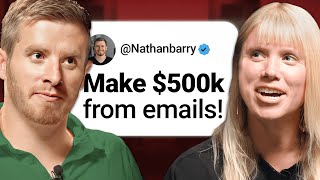
Marissa from the Boise newsletter From Boise outlines her plan to grow revenue from $87,000 to $500,000 in three to four years. She has 22,000 newsletter subscribers and makes most money from sponsorships, but wants to add digital products and systematize paid ads. The roadmap includes hiring a dedicated sales person and building lead-magnet funnels.
Chapters
You know, you see like the people who have it figured out.
I just made $1 million doing this.
And it's like, okay, how do you make like $100,000?
In this episode, we walk through what it actually looks like to build a newsletter to nearly $100,000 a year revenue.
It's like whenever I focus my energy into one part of it, and then it's like, crap, I don't have any sponsors though. 2023 revenue was $87,000.
In 3 years, $500,000.
Yeah.
Here we're operating in solopreneur numbers. This is team numbers. What makes someone decide the price that you're charging for sponsorships? The number of subscribers? Drivers they're reaching. And the biggest way we got here, great content and paid ads. One of the big mistakes I see creators make is they try to tackle too many things at once. And if I were to give you one problem to obsess over, it would be—
after this, I feel like I have an action list of where my time should be spent.
I'm really excited for that. Marissa, welcome to the show.
Thanks for having me.
So you've done something that a lot of people talk about doing in starting a local newsletter. It's this idea that entrepreneurs get to some level of success and they're like, I'm gonna start a local newsletter. And then it almost never works out. It's usually much harder than people expect. And you've done it and you've pulled it off and you've scaled it. So I wanna dive into that today. What's something that's fundamentally different from when you started to how things actually turned out? You thought like, oh, this would be hard, but it was actually this other thing.
Yeah, I thought it'd be hard to come up with story ideas. It's not. It's the easiest thing. I have a million story ideas. I have enough stories for like 10 years and it's much harder to make money. Yeah. To like keep going.
That makes sense. Well, let's start just by sharing some context of where the newsletter's at.
Mm-hmm.
And yeah, talk through subscribers, then we'll get into revenue after that.
Yeah. Do you want me to give the spiel about like what it is?
Yeah, let's do that.
Okay. So it's called From Boise. It is a weekly newsletter and podcast. About life in Boise. On Tuesdays, I send a long story. It's usually about like a person, a place, piece of history, or some sort of happening, something happening in town. And then on Thursdays, I send a huge list of things to do, like a huge list.
It's a very big list.
I have learned that there's too much. There's like, there's a limit.
Wouldn't the email find the clips in Gmail?
Yes, yes, no, exactly, is the limit.
So let's talk through some of the numbers, right? Mm-hmm. So how many subscribers does it have and, and, uh, the social following and all that?
Yeah. Um, we have 22,000 newsletter subscribers.
Mm-hmm.
Um, we have, so the podcast is new. I started the newsletter in, I sent the first one in March, March 30th, 2021.
So just over 3 years.
Yeah, just over 3 years. And then I started the podcast version May of 2023. So the podcast's like a year. And some months old. And the podcast has about 1,300 monthly listeners. And then the Instagram account has about 24,500 subscribers or followers. And I don't really have any strategy there either. I post on Tuesdays and Thursdays when the newsletter goes out and usually like whatever coffee shop I've worked at or something I went to over the weekend, I just make a reel about it.
But maybe let's start by setting some context of I guess how it started, right? Yeah. So I think it was—
Well, it started with your idea. Yeah, it started with my idea.
Let's bring me into the story.
Yeah.
I think it was December 2020.
Yep.
I'd been thinking about this for a while, inspired by Andrew Wilkinson who runs Capital Daily, I believe, in Victoria, Canada. It actually kind of came together from there and I was like, well, I can't run it, so I need to hire someone to run it. And I posted a job ad. We had never met before.
Yeah.
But we had a few mutual friends in common.
Jess Flynn, and she sent it to me.
Yeah. And so it was one of those things that I thought I was hiring someone, you know, like the editor-in-chief to run it. Right. And that was— and it's just this experiment. There were zero subscribers. But then really what happened, I mean, as it's transformed over time, I was decently involved in the early days of figuring out the format, the growth. A random funny thing is the, like, the first newsletter ads to promote it. Like I played a lot of indoor soccer and one day I came into soccer and two different people were like, oh, I saw you on Instagram. And I was like—
The ad.
Yeah, it's so funny. What was that about? But it's because I had made this ad walking through Freak Alley, which is one of the iconic places in Boise. And the goal was to have an ad where if someone knew Boise, they would immediately stop scrolling and realize, oh, I know where that is without having to say it. You don't wanna be over the top of like, I am in Boise, Idaho in freak out. It's like, no, if you're in the know, you know where that is. And it was just me walking through it, through this very visual place with all the murals and everything saying like, hey, I started this newsletter, here's what it's about, you should subscribe. And that's how we got our first bunch of subscribers. But then it really turned into, like, I mean, I'm honestly an absentee partner in this business. You run it so much. Let's talk about the money side of things. I think people are curious about, okay, if you get to that level of subscribers, that, that reach, yeah, um, how much money did From Boise earn, top-line revenue, last year?
Last year was, um, $87,000.
$87,000, that's awesome.
And I did that while I had another job too, which was pretty crazy. I was very tired, but it's, it's possible. Um, and $77,000 of that was sponsorships.
Okay.
The rest was reader donations and I did some like merch that I wouldn't do again.
Yeah, we'll talk about that. And then what's revenue year to date? We're recording this late July.
Yeah, we're at about, these are like rough, you know, rounded out. Like we're at about $33,500. $29,000 of that is sponsors. It's like pretty much all sponsorship. And then I have not done any merch this year. The rest is reader donations. And reader donations is, people donating on a monthly basis from like anywhere from like $5 to $10 a month. And then there's a couple like people— someone gave me a $365 tip the other day.
Nice.
And yeah, a dollar a day. I loved it. So yeah, there'll be like those random like $25 to like $100, sometimes $365.
Yeah.
But I will say that like, well, I wouldn't say I have not been good about it, but I could probably ask for reader donations more often. Like every time I have asked, people do it, but it feels weird to ask for it.
Like to what extent, you know, if you put it in a newsletter, does that mean there's an initial $100 in donations or it comes in at like $500 or $800?
At the 3-year anniversary mark. So I say it's March 30th. I just said, you know, like this, it's free. I wanna keep it free and like, We're a really small team. It's pretty much just me most of the time. And, you know, your support really makes a difference. And I think I got like $1,500 that day.
Oh, wow.
Yeah. By like a lot of different people. Yeah. They were like pretty all pretty small donations, but like a lot of people did it, which is the whole thing.
I mean, that's true for so many creators where they're like, no one's buying my product. It's like, well, have you told them about it? Have you directly asked them to buy it? And like, no, I know.
And it's like the free newsletter isn't like raking in money, of course. But if you don't ask I mean, a lot of times people value it and they will say like, I know you're doing it for free. Here's, you know, $20 or whatever. And if you have 100 people do that, like it, you know, it's different.
So you came to Craft and Commerce, Kits annual conference last year. I felt like all the help that I wasn't able to or didn't give you, like you had some really good breakthroughs from there. Talk about, I don't know, the before and after and like what you learned being a part of that creator community.
Yeah, it was pretty life-changing, honestly. I'm not just saying that because you're right here. Like it was really, I felt like it was up until then Front Voicy was just like this thing I was doing. Like I was like, yeah, I have like this little newsletter and it was just like my side hustle type thing. And it was when I really realized that it, I was like, oh, like this is a real business. Like I could like actually do this as a career. And not just like, it's not just like this little thing, you know?
I was just popping into the like little workshops here and there, that sort of thing. And Matt Mullen, who's this amazing content creator and really like behind the scenes genius on so many things, email marketing. I'm like, I'll pop into his workshop and see what's going on. And he's like, you had volunteered. He's like full email strategy with you.
Yeah, 'cause I was like, I mean, these, like I looked up all these people and I'm like, I can't afford to have your coaching thing. So like if you're gonna coach me for 15 minutes for free, like, Yeah. I will be the guinea pig, you know. I also volunteered for Justin Moore's sponsorship thing. I was like, pick me apart. Tell me what to do.
Yeah, so talking about the money side, you mentioned Justin Moore and he really encouraged you to do sponsorships entirely different than how you were doing it before.
Yeah, and I've kind of landed in the middle. I found that like what has been working is in the middle. So originally we had like, you know, these are the packages. Like this is how much things cost, you know. And he was like, don't do that. You're putting the sponsors in a box when you do that. Like you're like, if you wanna work with me, it's $500, but what if they had $10,000? Which I had found to be true, but also sometimes people just want you to tell them a price so that they can go tell their boss and, or they're like, we have $200, can we do something? Yeah, like it's, I think that's something with a local newsletter that's, like unique to that. Basically what I've done is I kind of like have my pricing. Do you want me to just kind of like go into it?
Yeah, let's go into it.
Okay, so I have sponsorships, which are ads in the newsletter and on the podcast. The newsletter, it's at the top or in the middle and/or in the middle. Podcast, I just record them and my guy puts them where they should go. And so, and then lately I have also added on 4 existing sponsors that are the right fit, like a real add-on, like an Instagram reel add-on. I pretty much just focus on Instagram for social media. The top spot ranges between like $500 to $1,000. The middle spots, like honestly, I've gone as low as like $50 for a nonprofit, but usually it's like between like $250 to $500. And then the podcast sponsorships are usually like $200 to $250. I will. So that's kind of just like a one-off thing. I will package those together to do like a bulk deal. Usually it's like the fourth one would be like $250 off and then kind of like bundling both of them. Like, you know, you get 4 newsletter things and 4 podcast episodes and, and a reel. And that's like a thing for kind of like going back to that beginning is I was freelance writing and I had written a lot about Boise. I'd written a lot about like the music scene in Boise, which was really struggling, you know, at the end of 2020.
Right.
And I had kind of been posting these like long things on Facebook, like my own Facebook page that was just like, this cool band's coming, like here's a little thing about them, go to these shows. And when I wouldn't post for a week, people would be like, hey, you're gonna do your post? And I was like, oh, okay. I guess this is a thing. Oh yeah. And so I have been kind of thinking about like starting a blog that was really focused about Boise music. Like, there was no place— there's just no, like, one source where you could just find all of the shows happening. Um, so I was kind of, like, thinking about that, but blogs are hard. Like, it's really hard to, like, get someone to come to your website and SEO and all that.
And so I was like, well, actually, let's talk about that for a second, because it's something that it took me a long time to realize early in my creator career, because I started blogging and you got you know, traffic from search engines, traffic from, you know, directory, you know, Reddit, other forums, things like that. But it was really missing the way to push content to subscribers.
Yeah.
So I had this post, this is probably November 2011, I think, that I wrote. It was titled How I Made $19,000 on the App Store While Learning to Code. And I love the, like, little two-part, you know.
Classic blog title.
Oh, yeah, 100%. And it ended up going to the very very top of this news site called Hacker News, which is in the tech community. And in like 2 days it got 40,000 or 50,000 views. And I thought, like I was getting hundreds of visits a month and I got this all in one go. And I thought like, oh, I've made it as a blogger. But then the next month there was nothing. If you had hid that month, November 2011, in the Google Analytics graph, you would have never guessed that anything had happened. And that was really when I, well, a few months later, like discovered newsletters. And because that's the difference of like people stick around and they want to follow and you get to build on some of that compounds instead of like this went viral and then we're back to like 10% more than nothing.
Yeah. And I think it's easier for the reader too. Like you're just, you just show up in there. You're just magically there every week in their inbox. Whereas like on a blog, you know, you kind of have to, you have to like go find them or seek it out.
That's an interesting thing. If you're going from the blog into the newsletter, had you paid much attention to newsletters?
No, I never even thought about it. But then my old boss, Jess Flynn, sent me your Twitter post or X post, whatever. And she was like, this is the perfect thing for you. And I was like, oh my God, a newsletter is such a good idea. It's totally what, like, that's That's what I want to do. And I basically wrote you a cover letter that was like, hello, you need to hire me. This is what I'm supposed to be doing.
Let's assume that we have a bunch of people listening who are living in, I don't know, Boulder, San Antonio, like all of these cities that have like a similar amount of love for them that Boise has. And there could be that market. A lot of other local newsletters are taking a very different approach. Either they're doing something like Capital Daily was and they're really doing news reporting in the form of a newsletter, or they're going the other route and they're just saying, here's what's up.
Yeah.
You know, talk about like choosing the format for From Boise and why you think that matters so much.
I mean, first of all, it's just, it comes natural to me, so I'm able to do it consistently. You know, I'm a long-form writer. Like I want to write long stories. I'm not really interested in like talking about the news all the time.
Yeah. Because that was a very deliberate decision you made.
I don't— we like, we don't ever really talk about the news.
And that keeps us out of politics. It keeps us out of so many things.
Also, like, you can find it other places. Yeah, you don't need it from me too, you know. I, I kind of like to think of From Boise as like, it's just the fun stuff. Like, when you need a break from all the other stuff, you just read From Boise. And that— and people tell me that too. And then I like to just find— like, I do some serious sleuthing to find like some random stuff.
Um, what's an example of something that you included that was very, very random or someone wouldn't have picked up from the newspaper or, you know, the radio station.
Like cornhole tournaments, dog parades, like dog meetups, like very specific breed dog meetups, things like that. Like that are just—
Let's talk a little bit about the team side of things because while this is a small business, it's a big undertaking and now reaching, you know, 20,000+ readers on a weekly basis. Like how has the team evolved over time? Like working with contractors, as you brought people in, what roles and all that?
So at the beginning, I just did literally everything.
Because I didn't give you enough budget to do more than that. I was like, I don't know, can we start this with a few thousand dollars a month?
Well, I was also just like, I don't know. I didn't really understand what needed to be done. It was kind of just like getting the rhythm of writing that much on a regular basis. And then the first person I hired was a, social media person, which was good. And then that has, then I was like, you know, it's like taking a lot. Like I was like waking up at like 4:00 AM to finish newsletters and then send them.
That were supposed to go out that day.
Which I know is like other newsletter operators can relate.
Oh yes.
But it's not fun. And it gets old really quickly. Then I started working with some other writers. So, which I still do. So I have like 3 pretty regular writers. And this year actually I've used them more than ever. So I'm pretty much writing like 1 story a month and then they each write 1. And so like there's my group of stories. It's really nice. And then on the podcast, like I just read those stories. So I say who wrote it, but like I read it.
Yeah, the team is so interesting because it's so much content that has to be produced. You know, minimum you're looking at a long-form article every Tuesday, you know, a long series of short things every Thursday. And then the social media content. And that's just to keep up. You know, now it's like, okay, well, what are you creating to grow? You've done different guides over time and all of that.
It's like whenever I focus my energy into one part of it, like I'm like, okay, I'm 2 months ahead in stories. And then it's like, I don't have any sponsors though.
Right.
Or like, you know, what are we doing for the social media part of it though? Or like, now I don't have anything running for to like get more subscribers. And there's never been a time where all, it's like all systems are going and I'm like, yes, this is good. Like it always seems like I'm like, oh my God, okay, now I need to like focus over here.
Yeah, jumping between the different things. That makes sense. So what have you noticed that's different in, like how you were selling, like before what you were doing was, didn't work very well for the large brands, like, you know, the local ski resort, right? Or the insurance company or like these giant brands. How has it worked since you've made tweaks and sort of found that middle ground?
I think that it's just allowed me to work with more businesses, which honestly has kind of been an experiment. Like, There's some that I've worked with that I'm like, this is not, like, in hindsight, I should have just said, like, this is not the best fit. I think it's just like being flexible with that, like, price point and really hearing, like, what people's goals are has been, like, more impactful.
So really, before you were leading with, this is what we can offer.
Mm-hmm.
And now you lead with, what are your goals and what are you trying to accomplish?
Yeah.
And then you're not hiding what you can offer, but you're finding the right time to bring that into the conversation.
Yeah.
Going to a local newsletter, like the ability to actually drive real humans to get on their bicycles or in their cars and to show up to an actual event, I think is just the coolest thing.
Yeah.
Because I spent all my time in the digital world and we tend to think about things in terms of subscriber counts. And then we might look at what are the email addresses behind it, but it's just like, it's so disconnected. And so to run things and say like, oh yeah, I got 50 people to show up physically to this space.
Yeah, I think it's just, it's crazy. I will say something about that that I would suggest to people. That's something that I did that I didn't realize was a good thing in hindsight was make the newsletter from me. It comes from Marissa at From Boise.
Yeah. And you're not hiding behind a brand.
No.
Yeah.
Like, but I, It was, that was the thing. Like I was like, I don't, you know this, I was like, I don't want anyone to know who I am. And I don't know why, I just think.
Yeah, 3 years later, how do you feel about that?
I still don't really want, like I just, I think that what it is is like, it's not about me. I don't want to, I don't see myself as an influencer even though it totally has become this thing. But I decided to just do it because I was like, whatever people can, like it's just a first name. Like I don't have to. I don't have to, like, do anything with that. But what's funny about that is people— I mean, people think they know me, and in a way they do, like, because it is just like I'm very myself.
I think there's something in the type of fame, which is an interesting conversation for creators, because on one hand, we're trying to become much better known, you know, trying to build an audience, and that requires people knowing you. And then there's also this fear of like, oh, what if this tips over at a certain point and you can't reel it back? You know, the child actor who becomes super famous and their life is entirely different or that sort of thing. One thing that I've noticed is the difference between like writers and YouTubers, where I've watched a lot of writers be able to attend a conference and people, they've sold tens of millions of copies of their books. And people don't actually know what they look like. And then I've seen YouTubers like @craftandcommerce.
Yeah.
You know, Casey Neistat be mobbed before he even, like, it's the Boise airport.
Yeah.
And like, he's trying to get to his car and people are like, Casey, you know.
Yeah.
And so there's something really interesting in the mediums that you have chosen allow you to reach and influence really a lot of people.
Mm-hmm.
And someone has to really know you to like stop you at the local restaurant and be like, I love the newsletter.
Yeah.
Because your face is not on the newsletter.
No.
And is your—
I've like put— I have put like picture in there before, but it's not like people do.
I mean, are there photos on the about page?
No.
Okay.
I don't even have an about page.
There used to be an about page at one point.
I should have one up, but no, I mean, There's not. I mean, and like, I've, you know, there's times where I've like made an appearance on the Instagram page or something, but I've never done the video where it's like, you know, me going into this place. Like it's never.
Yeah. It's not the traditional influencer stuff.
No.
And I think there's two sides of that that are interesting to me. One is the, like your relationship with the audience, you know, of how much you want to be front and center, stopped in the street with your kids, that sort of thing. But then the other is how it, I feel like it kind of shapes the relationship with the audience in an interesting way. It makes it more easy for like me as a community member to feel a part of it instead of like, oh, this is the Marissa show.
Yeah.
It's like, oh no, this is what we collectively do as citizens of Boise. And Marissa just happens to be the person who like is the conduit for it.
Yeah, for sure. Which is, I didn't really realize that that's what I was going for. I was more so being like, I don't want to be, I don't want anyone to know.
Just like being like, it started out of fear and ended in a great place.
Yeah, basically. Basically. Yeah.
Was there anything else going back to Craft and Commerce?
Mm-hmm.
It felt like it was such an important time for you as you learned. I think, I think what I'm noticing is not just tactics, but also it felt like you came out of it with this, like, I don't know, it's not quite renewed purpose, understanding, confidence, maybe? Like just being around creators who were not the biggest names. But it was like, I don't know, is it like seeing the entire middle class of the creator economy?
Yeah, it like really validated it that it was like something real, you know? Because, you know, you see like the people who have it figured out, right?
I just made $1 million doing this or whatever.
It's like, okay, or someone— how do you make like $100,000? Right.
I tried for so long to make this a full-time living and I couldn't. Like, we get the two extremes, you know, or like, I feel like the news wants to run stories of being like, you know, failed influencers can no longer pay rent, you know, or something.
And it's just like, totally, like, you get, like, you get fed the, like, two opposite ends of the spectrum all the time. I think like the willingness to share is also really cool with creators. Like people are like, oh yeah, this is how I did it.
Yeah, everyone's an open book.
Yeah, it's really cool.
Let's talk, go back to the money side a little bit because there's a lot of things that you've tried that either felt like the next new thing or maybe this will be the breakthrough and then they've worked moderately well or you've scaled them back. Talk through like the membership or the swag or some of the other things.
Yeah, so I did a, I tried a kind of like membership paid community. I don't even know what you'd call it, but it's called BFFs. And it was a group. I had a lot of people asking me like, how do you meet people? How do I meet people? And I was like, well, I should just get people together. There's all these people that wanna meet people. And it was really great at first. Like I had like 100 people sign up. I offered it at $9 a month or $99 a year. And we did meetups. Like we played Boise trivia one night. That was really fun. Yeah, that was great. So that was the first one. And it felt like that was like it.
It peaks there.
Yeah, and then it's kind of like, so at the beginning of the year, I was just like, you know what? We're not gonna do meetups anymore. I don't really know what this group's gonna become. And I had about 16 people cancel and everyone else was like, I just wanna support you. So I still have people paying. Every month that are like technically BFF.
Did you think about like other, other ways, other things to offer in that membership? Because I think a lot of people go to like, oh, there's going to be a members-only section of the newsletter or Tuesdays are free, Thursdays are paid. And we've talked a lot about not wanting to limit access to the content because that's such a key thing.
Yeah, I've thought about that. And I did have actually have a secret section in the newsletter, BFF-only section. But I couldn't, like, it got to the point where I was like, what do I put in here?
Right.
Like, it's, why would I only tell them something and not everyone else? Like, it just didn't seem, I don't know. It just didn't really, it felt like, again, like one more thing for me to try to like figure out and do. And that wasn't really worth it. And like, I hate to make it like a monetary thing, but it was like, yeah.
This is, we're running a business.
Yeah. And so it was like the time I'm spending on this is not like computing.
I think that the other side that we would assume would work really well is the merch sales.
Yeah.
Right?
Yeah, so I did merch. I've done two different rounds of merch. And it just is so much more complicated than you think it's gonna be. Like I was like, I'm gonna make a shirt and sell it. And it's like, you gotta figure out like a place to sell it. Where are you gonna print it, order it, get someone to design it. I think I sold 80 shirts and was like, okay, cool. It was just like a lot of time. Yeah. And then, you know, offering shipping because I have readers that don't live here.
Okay, let's talk about that because that was actually surprising to me.
Oh, yeah. We have a lot of readers that don't live here.
A substantial number.
Yeah.
What are like the top 3 or 4 reasons that someone reads regularly?
Yeah.
And they don't live here?
They used to live here and they just like want to keep they can't believe how much it's growing and, or they like know the history stories and they, yeah, but they used to live here. They have family that lives here, family or friends, and they want to come visit or they want to move here.
Yeah.
Like I had someone sign up yesterday. She was like, I'm just researching Boise and I really want to move there. So I like reading everything you've ever written right now and I want to move there.
Yeah, that's what it surprised me. I think it was a substantial portion, something like 35, 40% of readers don't actually currently reside in the greater Boise area.
But yeah, it's a lot of people, like a lot of people.
So then really, as we talk revenue going forward, and actually I want to jump up on the whiteboard in just a second and dive into like, let's talk about, you know, the future of From Boise over the next 5 years or 3 years, whatever time period we want to pick. But it sounds like sponsorships are the thing that are working the best. And as you look at it, you know, that's going to continue to be 80, 90% of the revenue.
Yeah, it still takes a lot of time, so I would like to figure out how that could just like be a little— I don't know, easy. I want to say like easier, but like, yeah, a better system for it. Yeah, a better system for it. And, um, so that maybe I could spend time doing like these bigger brand deals. And I would also like to sell something directly to my audience that's valuable to them. And I have an idea for it. Like, I think that I know, but I do think that maybe I should like talk to some of my audience to like run the idea by them.
Right.
Once it's a little more fleshed out. But I think that I could come up with a product that people want to buy too.
Yeah.
A digital product that I don't have to ship.
Well, let's jump up and grab some markers and plan this out of what the next— I don't know, pick timeframe, 3 years.
That sounds good.
Okay. So something that you said earlier is what would make this fun. It is fun. You're having like, we're having fun in this conversation.
It's fun.
You're obviously having fun building the business. Yeah. But what would make it way more fun is making substantially more money.
Yeah.
And not just for your take home, like that's really important.
Yeah.
But also to be able to invest in the team and all of those things. So Well, tell me again, what was the number of revenue in 2023?
2023 revenue was $87,000.
What sounds interesting? You know, if we're looking 3 years from now, let's just say 2026, what would be like, I can't believe that I'm running this business and it's grown to this level?
Yeah, well, I was going to say I want to hit 6 figures, but I was so close.
Yeah, that's very close.
I would love to be making like $500,000 would be—
I would be like $500,000. I mean, that's a legit business.
Yeah, yeah, totally. That's like, I could— I'd have a team. Yeah, I wouldn't do it all.
I like that. Okay, so in 3 years, uh, $500,000. Yeah, we'll say 2027.
2027, because we're like halfway through. Yeah, 2024, and I feel like I'm a little behind.
You're also building systems so that you can take parental leave and—
Yeah, I've been doing— I actually have been doing a lot systems work this year.
That's awesome.
It's, it's good.
So as we go through some numbers here, we've got 22,000 subscribers now, and so we're making— let's go easy numbers, let's say $4 per subscriber per year. That's like directionally correct. So if we're looking to hit 500,000, this is sort of the equation that we're playing with, right? We need to either, you know, 6x the number of subscribers, or we need to 6x our revenue per subscriber. In reality, it's going to be a combination of both.
Okay.
So when you think about this, so like subscriber growth versus, I'm going to use the industry term of ARPU, which is average revenue per user. So We'll just say list growth. So those ideas will go here and then our increasing average revenue per user ideas will go there. Let's brainstorm list growth right now. We've actually stayed at about 22,000 subscribers for a while because it's really been about systems and that focus.
I haven't really done much to grow the list, honestly. Until recently. Recently I started running a new ad. I kind of like wasn't really running ads or I would run one and, but it's like a classic thing of like just keep it simple. So the ad I have running now is super simple and it's great. It's like working a lot. I'm also on the Creator Network. That definitely brings in subscribers. You know, the people I'm partnered with on there are like other local, like people locally who have newsletters, not necessarily local newsletters. So that I'm just about to, I just kind of finished up our referral program. So that should help because honestly we have a lot of word of mouth. But like making it easy for people to do word of mouth. You know, there's a lot of businesses who like I want to work with or want to work with us that maybe don't have the budget to advertise but would maybe give something to do like a giveaway. And I would, I want to experiment a little bit with like giveaways in the, like, you know, subscriber, get people to subscribe giveaways in the newsletter.
So something, a broad idea that fits within these is how do we get good at translating, going from social media followers to newsletter subscribers. Because social media has a discovery algorithm.
Yeah.
Email does not.
Yeah.
And that's like both email's greatest gift and fatal flaw simultaneously.
Yeah. I think I should be using some sort of like write message or whatever it is to like, you know, comment, subscribe, and we'll send you today's newsletter, something like that. I think I should be doing that.
Okay. Yeah, so that's, yep, we'll just say comment to subscribe.
Yeah.
Yeah, so getting that dialed in. One thing, so most of these subscribers, at least we should look at the cohort data on this, most of the initial growth from subscribers came from paid ads where we actually invested quite a bit in paid ads. And then we had this pivot With like 2021, 2022, where it was like, okay, now let's run it profitably. And then we really scaled back the ads.
I also wanted to see like what happens if I do nothing? Like what does the growth look like then? Yeah.
What's the natural momentum of this?
Yeah.
What did you find?
It definitely like, you know.
Ebbs and flows.
Yeah. But I always kind of like stayed on top, but it was really small. Like it would be like, you know, net like 4 subscribers a month.
Right.
But it was interesting to see like what happens if I do nothing.
Yeah.
Like what's the baseline? But definitely the paid ads has been like—
The biggest.
Yeah.
So then why don't you write down on if we're increasing average revenue per user or the total revenue, What are some of the things that you can think about that would do that?
Can, can you like explain this a little bit more? Like, is this like charging your sponsors more when you have more subscribers? Like, what is that? What does that mean?
Yeah, so this is really in a subscription business. We'd be thinking about who's paying $10 a month versus who's paying $20 a month. How do we get more of the $10 people to become $20? It's more of that kind of thing. Here we're using it as an approximation for this math of basically we've got— this is the equation of we can find ways to make more money off of each person. Let's say, uh, what do you put on, on the list is charging sponsors more, or sponsors who pay more. Why don't you write that one down? You know, the same size list might result in even more But it's gonna result in more revenue, right?
I think selling something directly to the audience. Like, what's the— So would you write like product?
Yeah, I would just say, yeah, selling products. Also, from what you were talking about earlier, there's something to the asking for donations that, you know, like an actual process for that, not just, hey, we do it once a year. You could just say like increase donations.
Because that has worked for other newsletters.
Yeah.
Like really well. Local newsletters.
One thing that, yeah, let's continue if there are any other ideas on increasing average revenue per subscriber.
I don't know if this would go there, but I've thought about like affiliate things. I mean, my Thursday newsletter has like over 100 links in it probably.
Yeah.
Like, and I don't make money from any of them.
Is that— yeah, so on one hand, it's a great opportunity to make more money. On the other hand, does that change the feeling of it?
I know, I think about that all the time. I think about it all the time. It's also— I've been kind of like hesitant to have non-local sponsors, right? Even though like Justin kind of like pushed back on that with me and was— he was like Just be like, national businesses want to reach customers. Well, and he was like, are you— do you only exclusively use Boise products? And I was like, no. Like, he's like, you know, people in Boise, like, use things that aren't from Boise, not to inflate the brand name.
You know, we said sponsors should pay more, but there's another one in there that you're getting at, which is basically like Is it national sponsors? Is that the—
Yeah, and I think kind of like brand deals versus just like an ad. Like there's a difference between those two things.
Yeah, why don't you say national brand deals. Now something that I'm thinking about here, and we'll continue to write down things in both categories, I'm thinking about the 90/10 split that you have right now. There is gonna be a tendency that we have of like, how do we get to these? How do we get sponsorships to 40%, direct product sales to 40%? We'll use actual numbers. Say $200,000 in sponsorships, $200,000 in direct product sales, $50,000 in donations, and $50,000 in other. My gut feeling, I don't know what you think. My gut feeling is that actually the 90/10 might be the right split. Maybe it goes to 80/20. But that we're actually not gonna have like a whole suite of things that get us there. It's probably gonna be pretty dominated by sponsorships.
I think so, for sure. Especially because, I mean, Boise is like small. It's still a small city and there's only so many places to advertise. And like the way that I'm doing it is like different. It's a different offer to businesses.
It's fully, attributable. What is that word? Attributable. Attributable? Attributable. That's the way to pronounce it. It's fully attributable. You know, you can see how many people click this.
Yeah.
Which is both a blessing and a curse, right? Because on one hand, someone's like, well, did I get the exact clicks to track through to the sales?
Right.
And it's like, you spend money as a brand all the time on things where you're like, ah, it just goes into good vibes.
Yeah, totally. But that is really hard.
But this one in particular, you want to measure.
Totally.
A direct revenue.
Yeah. But there's also just like, you know, with like events, it's like you can take out a billboard, radio, newspaper.
As I'm looking at the list on increasing revenue per subscriber, there's some of these things that you should do of like figure out, okay, this is our system for donations. Here are the 4 times a year, you know, that we ask for it. Here's how we always do it. you know, it's in this dedicated, it's email 3 of the welcome sequence that you get, you know, or I'm trying to think if we could do this in Kit, but you know, if you could do a like anniversary email of when you joined as a subscriber, right? So there's probably some system things that we could do to improve that.
Yeah.
But we should put the 5 hours into doing that, automate it, and not touch it again.
Totally.
Because we're gonna get, Maybe we double the donations per subscriber, but that takes us from $4 to $4.25.
Yeah.
You know?
Yeah.
Like, it's not gonna be a lot. Selling products, I think, could be big, but I don't think it'll get beyond 100K. I mean, that'd be amazing.
That would be amazing.
Even getting to 100K.
Yeah. Because I think that the product idea I have can feed the other content things, which frees up my time. And yeah, which is like, and it would be amazing to make $100K off of that.
Yeah, yeah, I like that. But I do think that 90/10, let's say we get to an 80/20 split. And so that's sponsors.
Sponsors is the 80, products is the 20.
I'm not really sure why I'm writing regular case here and all caps here, but we're rolling with it.
This is what we're doing. It's cool.
As long as we keep the trend going. Okay, so I don't— neither of us think we're gonna have like an even split everywhere. So sponsor is going to be the big focus. One thing that I'm wondering is What makes someone decide that the price that you're charging for sponsorships is the right amount to pay? Like how big of a factor is like the suite of touchpoints they're getting versus the number of subscribers they're reaching?
I think it's both of those, but it also depends on the business. There are some that are very like, I only want, I'm not interested in the podcast. Like I just wanna be, they wanna like see it and have it. Be very like clickable, you know, something like that. Those are also usually ones that want to add on like an Instagram reel.
Right.
They're like, it's like a visual mentality.
I'm just thinking on this, there's some, I don't know which column it goes in, but it's growing other channels. So maybe let's put it, let's put it here of You know, growing podcast and social. So if we grow both a podcast and social, then we're getting more touch points with every subscriber, and that's more that we can sell to each sponsor.
Mhm.
So I'm thinking about that balance of how much we focus on growing the total subscriber base versus, you know, getting each subscriber on every touch point.
Mhm.
And then also, you know, how you think about How easy it is to sell sponsors, right? That's another thing. So there's a lot of things that we can focus on here. But let's focus on the balance, right? 22,000 subscribers, Instagram you said was about similar.
It's 24,500. But like, I want more newsletter subscribers than anything else.
So that's where we should put some time into. Yes. Like the giveaways and the comment and subscribe.
Yeah.
'Cause we actually don't know, and there's not a good way to know, what percentage of social followers actually read the newsletter.
Yeah. And I think that like, I don't ever really do social content that is like, hey, this is what Boise actually is. You know, I think that there's, I would say, oh, there's a large portion of this social following that's like, it's just an Instagram page, even though it says it everywhere.
Yeah. So make that, make that a lot more clear.
Yeah.
And then what I'm thinking about is the overlap between, and I'm gonna make this up 'cause we don't know the numbers, but let's say that the newsletter is, you know, 22,000. The podcast, or sorry, the social is about the same size. We don't know what this overlap is. And then here we've got, you know, the, say the podcast overlapping a little bit there. And so there's something to be said for making sure that like on the newsletter, let's go to social, right? That we're getting these people there and these people here.
For sure.
And we can get good at that.
Yeah.
And so, so that's giveaway, that's here. 'Cause I think primarily two things that I would implement. One is a casual mention. Did you know we have an Instagram as well? And promote, maybe there's a, the best thing from Instagram, but you should work that in more subtly. Maybe you feature your reel each week.
I've done that, like, hey, like, this coffee shop is amazing, I just went there, and I'll just link to the reel. But I don't know if that actually makes people follow, right? Because honestly, and try and see, because you can test this unscientifically.
Yeah, where you can, you can see, hey, we had 24,000 on Instagram, and then I put in a direct, hey, we have an Instagram, you should go subscribe. Did you get 50 new followers or did you get 200? And so, 'cause that's worth it. 'Cause then you just get that extra touchpoint. The number of times that, you know, if the inbox is, both the inbox and Instagram are busy. And so you might catch me in one, hook me with an Instagram about the story, and then I go find it in my inbox. Totally. Or vice versa, so having both. And then really getting good at the social to newsletter conversion.
Yeah.
I think that's—
I don't really, I mean like, I think that that's a huge one because I, like right now I'm like, you know, read it in the newsletter. Like here's, I make a reel about the story and it's like read it in the newsletter, but it's not easy for people to do that. Like the easiest way to do that is comment, like read, and I'll send you the newsletter.
Yep. Yeah, using ManyChat or one of these other tools for it. Okay, we've got some good action items there. Let's talk a little bit about sponsors and then let's go into products. I think you have a lot of energy towards selling digital.
Both of those things.
Yeah.
Because I just want like, I would just like the income, the revenue needs to be like much more consistent. It's very like all over the place.
Yeah, so Tim Ferriss has this question of what would it look like if it were easy? And so maybe let's just dive into that. If we think about sponsorships, what would it look like if that was easy?
If that was easy. They're inbound. Like right now I'm doing a lot of cold outbound outreach. I mean, not even necessarily cold, but it would be inbound. And there would be very, there's very clear spaces that are just booked out.
Like, yeah, clear.
Yeah, it's like there's 2 spaces in the newsletter, there's 2 spaces in the podcast, and they're booked out. And maybe like formatting thing for them, you know, like it's 4 sentences and it would be easy. That would be easy from a copywriting perspective.
Yeah, so they provide copy. I'm just gonna add that in the same. There's one that I think is missing from this. What if you didn't do it? And not what if you didn't collectively do sponsorships.
Yeah.
But what if you didn't do sponsorships? Would that—
That would make it a lot easier.
That would make it a lot easier. Right, and so here we're operating in solopreneur numbers.
Yep.
Right, this is you can earn a full-time living off of that, all of that. This is team numbers, right? And so Hiring someone who sponsorships is their thing.
Yes.
Now this is hard to do. You've tried to do aspects of it before. Like what's worked and what hasn't worked in bringing in people to help with sponsorships?
Yeah, it would be amazing to have a person who actually does sales. I am not a salesperson.
I think as we're looking at the level of scale that we're trying to reach, you have to get to this point.
Yeah.
And if I were to give you one problem to obsess over after this, it would be to learn from who has effectively built a sales team. How, it could be a single person, right? But, and how have they owned that? 'Cause I think that that's gonna be, like, ultimately give you the revenue and still keep you the headspace to be able to focus on the other aspects of it.
Okay, so question about that, because I would imagine somebody else watching this feels the same way. If you don't feel like you have enough money to hire a sales team, how do you get, how do you sell enough sponsorships to hire a sales team to sell enough sponsorships?
Yeah, so if someone's really early, let's say that we're at 5,000 subscribers and you're like, I'm gonna bring in a sales team. You don't have enough inventory to sell for it to be worth someone's time. Because that's where it's like someone could sell out the entire newsletter and that's just, they can only sell it at a couple hundred bucks per issue. There's not enough money for any of this to work. We're at a really interesting point with the number of subscribers here where there is enough to sell, especially as we get into this additional inventory, right? Growing podcasts and social. We've got enough to sell to keep someone busy. And so the way that you do it is you have a sales team that operates on base plus commission. Now you can do it, in some cases you can do commission only, but sometimes to get the commitment from someone, you can say, hey, I'm going to offer you this base salary.
Yeah.
Especially if it's like, hey, help, help me get the sales material over the top, like over the finish line. And so you do some very heavy commission sales. Which is going to cut into your margin a lot.
Yeah, but it's going to— it's going to work it out and make it easy. Yeah.
And so that's where you're going to look at the, the base plus commission. And so maybe it's something like, hey, I will pay you, um, $1,000 a month plus 40% of whatever you sell. You know, I don't, I don't know what the numbers are. We should ask around in the industry and find out. Um, but that's the way that that I would structure it.
Okay.
And then you're gonna have to spend your time making sure they're set up for success and then really thinking about, okay, how do we grow the inventory of things that they can sell?
Right?
How do we grow, make it so instead of selling $500 sponsorships, we're selling $2,000 sponsorships per newsletter. Okay. If we're driving this number, first let's think about audience size. Is it realistic to 5x this number to get to 110,000 subscribers on the newsletter? Do we even have the total addressable market?
I think so, especially by 2027.
Yeah, we have the population growth that I know. Will either of us be able to afford to live here in Boise will be a different question. This is actually just friends.
Yeah, no kidding. But I do think that, that, I mean, that would be crazy. Like, really, what's the population of Boise itself? Is like 300,000 or something? But the Treasure Valley is 700,000-something. Yeah, which I, like we talked about, I have readers outside of Boise, but also like, like outside of Idaho, but also just in Nampa, Payette, Sun Valley. Like, I do think that's possible.
So getting to, I guess I 6xed it, but that's relative to those numbers. So we think we can get there, especially if we keep the same ratio of say 60% local, 40%. Then in that case, you know, we're talking basically if there's a million people in the Valley and the surrounding area, I think we get to those numbers.
Yeah, I think so too.
I think that paid ads would be really work.
I also think that there's something— this is something that I started thinking about after listening to Bonnie's podcast and Amy Porterfield's podcast.
Yes, Bonnie Christine and Amy Porterfield.
They do quizzes.
Yeah.
And like I think that that would work local, like if you make it local.
So if you're going like awareness, conversion. Yeah. You know, giveaways, giveaways can be awareness, but they're, you know, all three of these tend to be conversion points, whereas these are more awareness points. That's good. So I think, I think it's time for From Boise as a business to really focus on subscriber growth. Like we sort of plateaued for a while. And I think the goal should be how do we double the readers of From Boise in the next 12 months? How do we get to 44,000 free subscribers? And the way, the biggest way we got here, great content and paid ads. Great content is now the table stakes. And so paid ads is where we're going. And so it's really, what are the ads that we're running right now?
I just have one ad that's, it's on Facebook and Instagram. It's like a video of the balloons over Boise, the hot air balloons in September. People know what it, like it's recognizable. And it just says the newsletter that sends a huge list of things to do every Thursday. And it has like the sign-up, that's all it says.
Do you know what it costs per subscriber right now?
I don't, I just started running it at the beginning of the month.
Okay, so that's the thing of building the system for producing new ads, all of that. It's gonna be, you know, like when I was more involved, we were spending time, like we had the agency running the ads and they got good results, but the, The creative was never very good.
Yeah.
Like it didn't feel authentic.
It didn't feel local. Yeah.
So if we're thinking about the ad side, like that's the system that we're really going to need to improve. And so it's probably a few— well, if we break it out into awareness and conversion, right? If we imagine a lot of this is going to be social content. And so these are our reels. We're going to be testing a bunch of different Reels here, and then we're going to have different offers down here, right, that we might be sending content to. This is the gift guide.
This is the—
one's going to be a straight subscription, right? Our offer is like, we send good stuff. You know, one might be a roundup of our 10 best stories. And then so you need a process for probably having 3 to 4 of these. And then 10 to 20 of these, right?
So like 3 to 4 kind of lead magnets. Yeah, lead magnets that are all to like the end of that funnel is to subscribe.
Yeah.
And 10 to 20 like reels that promote them.
Yeah, yeah. So we're going awareness, conversions.
And would you add in like I'm thinking about with this, like, I've been listening to a lot of Amy Porterfield's podcast and she talks about her own stuff constantly. Like, constantly. Every episode she's talking about her own stuff. I never talk about my own stuff ever. Yeah. Like, besides the fact that I'm like reading the newsletter, but that's it. So would you add that into it too? Like, am I talking about these lead magnets also on the podcast?
I think so. I would talk about it everywhere. And then I would have a series of call to actions that you rotate through in the newsletter of, you know, we're talking about a referral program, or even simpler than that, just word of mouth. Hey, could you do me a huge favor this week? Send this newsletter to 2 people who you think would enjoy it.
You know?
And that, like those little things can make a big difference. But if we're talking about, you know, this, like, how do we double it in the next year, you know, 5x in 3.5 years, then it's really like we have to get so good at paid ads.
Yeah, I think it's paid ads and this, like taking this.
Because you can, if you're running reels that say comment to subscribe, yeah, then that can be, that can work really, really well.
And even like, 'cause like I have some reels that are like a couple months old and they're still getting engagement. Like they're at, you know, the reach is like 50,000 accounts now.
And I would try on these reels, like if you have one that works, like the hook worked it.
Yeah.
And all of that, try making a different version of it that has a different call to action.
Yeah.
Right, so maybe there was one, go back to the top 5 that you did in the past that did really well. Try to reverse engineer what worked and then put in, you know, before it was like you might have said to go to fromboisey.com for whatever. And here you're like, comment this and I will send you.
Yeah, I haven't, I like can already see this. One of the most, seriously, one of the most popular reels is it was a story that I did about how downtown Boise was almost a mall and they almost built a mall like where all of 8th Street is. Can you imagine? Like so bad. Yeah. And And people were also pissed about the fact that that didn't happen, which is hilarious now. But I was just like, read the story, right? And the reel is just literally a bunch of old pictures of downtown Boise from like the, like between like the '50s and the '70s. And it just says like downtown Boise, like 1950 to '70. That's all it is. And then the captions, like that's so easy. Like you just—
Well, you could do the Greenbelt.
Yeah.
You could do that.
And then it's like, you know, for more Boise history stories. Like, this is what I talk about, right? Talk about Boise history constantly.
Yeah, I think, I think that would work really well.
Okay.
Okay. We have a lot of things on here. One of the things, one of the big mistakes I see creators make is they try to tackle too many things at once. So I'm realizing actually that we haven't gotten into selling products yet. We're going to do for the selling products, we're going to do inside the Creator Flywheels course. We're going to talk about the flywheels and all that and selling products. So that'll be just for the members of the course. We'll get into that in a second. But for this, what are the 2 or 3 things that you want to really work on, like coming out of this conversation?
Definitely having like a strategy and a process for the ads, paid ads. That I would say like includes lead magnets. Yeah. And the implementing this. Mm-hmm. Also just 'cause it's hot right now. It works. It works.
It works really well.
And making sponsorships easy.
Yeah, yeah.
Definitely that. 'Cause like this doesn't, like it's like growing your audience is great, but if you're not really making money off of it, then it's, you need to make money. It's impossible to keep doing this.
Yeah, that's part of the flywheel. Right. So we're basically saying if we were to map this out at a very high level, we're taking the revenue that we're making from sponsorships and we're reinvesting that into ads. And that gets— makes the audience bigger, which then gives us more to sell, which gives us more revenue from sponsorships. It's hard. I don't want to like downplay any of this. This is a big undertaking, but it's not harder than getting to these numbers. Yeah. You know, and getting the content backlog and all of that. Yeah, that you have so well. Probably one other thing that I would say— I said choose 3, I'm going to add a 4th. It's probably downstream from that a little bit, is just make sure that we do this, um, like this overlap between the podcast and social and, and just thinking about, okay, what's my system for doing that? How do I make sure?
Yeah, you know, something I've never really done with the podcast is like some sort of reason for a listener to give me their email address. Like, you know, like—
But these could be—
Yeah, and it's even like, you know, I have the content written like, I'm gonna tell you about these like 5, like one we just did is 5 iconic Boise foods. Like, put your email in and I'll send you like the list and the address and the photo of whatever I was just talking about. It's like so easy. Yeah, I already have it.
Yes. One other thing that I really encourage you to, but be careful not to do, is to create too many lead magnets because that's where you can get caught up into like, oh, and then I could create this and then I create that. And if you think about the effort versus impact, there can be a lot of effort into making these.
Yeah.
Um, when really you have, with a bit of effort, you could have enough. Like I would not have more than 5. Okay. And then really think about, okay, what awareness content can I do to drive more than that? Okay, so the big things are we're going to research and learn a lot of what it takes to build a sales team and learn about the compensation models, focus on paid ads, really build out the comment and subscribe, like how that conversion works, because that's going to be part of the paid ads, figure out What's worked in the past with reels and how can we recreate that in a format that's designed for an ad for a subscription and then keep coming back to a few calls to action, you know, both here and here that will like increase that conversion. Does that sound good?
Yeah, it sounds great. I mean, it sounds, it's good to have a plan.
Yeah, exactly. Okay, we've covered a lot. Let's sit down and process this. There's a lot to work on in there. The, the next things that we want to do is, uh, for everyone inside the Creator Flywheels course, we'll do a breakdown on a flywheel around digital products. And then otherwise, there's so much great stuff to dive into here. So Marissa, thanks so much for coming on.
Yeah, thanks for having me.
If you enjoyed this episode, go to the YouTube channel, just search Billion Dollar Creator, and go ahead subscribe, make sure to like the video, and drop a comment. I'd love to hear what some of your favorite parts of the video were and also who else we should have on the show.








