The Secret to an Audience That Never Leaves
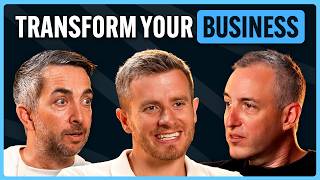
Nathan Barry talks with hospitality experts Will Guidara and Brian Canlis about turning customer delight into a self-reinforcing growth engine. They break down the 95/5 rule for spending, share how small surprises like candy packets and Loom videos turn users into advocates, and explain why memorable experiences beat traditional ROI metrics.
Chapters
People think it's a magic trick. It's not. It's a system that we've built.
Too many people think they're done with something prematurely. Unless you've looked at the same thing over and over and over again and said, can it be better? Can it be more fun? Can it be more awesome? Then eventually you get there.
Will Guidara spent over a decade running Eleven Madison Park, the restaurant voted number one in the world, and he just released the field guide on it as well. Joining him on the episode is Brian Canlis, who ran the restaurant Canlis in Seattle for nearly two decades, one of the most respected fine dining institutions in the country.
The message of hospitality, how much it connects to industries all across the board, because essentially it's about treating humans with creativity and intention.
Two things make this episode really special. First, Will and Brian have been friends since college, and you just feel it in the stories they tell and the chemistry they have and everything else. The second is they've actually never done a podcast episode together.
You will never see a newsletter or a post from us that's, "Hey, there are 5 seats left at this event.
Buy now." It's not always about selling something. It's not about, "Hey, come listen to us." It's so important to us that it gives more than it takes.
What I'm curious, just to start with, is how did you two start working together?
We met 28 years ago during freshman orientation.
Oh, wow.
Before class, before school even started.
Yeah.
Cornell University in Ithaca, New York. We kind of hit it off, maybe unevenly.
You mean that you liked me more than I liked you?
No, that I was friends with a girl that you had a crush on.
Yes.
And therefore you saw me not only as, of course, a physical threat, naturally, but an emotional threat as well.
Competition on so many levels.
And that didn't last long at all.
That girl ended up being my girlfriend.
Yeah, he—
just to be super clear.
And I was actually dating somebody else, so it wasn't— you just misread the whole thing. We really enjoyed working together all through college. It was funny, we— my social circle was there was like a Venn diagram between our two circles, and they crossed over with just us in it. So all my friends and all my community and all my activities was completely separate from Will, and vice versa. And yet we—
I feel like we need to unpack that. Brian was in chess club and was in ROTC and, uh, Bible study and all of that, and I was in a band and had the party house and, and all that stuff. And so our friends were, were very different friend groups. But we went to Cornell where there's 5 colleges, and we both went to the hotel school. We both grew up in restaurant families, and we took pretty much every single class together through all of college. And when studying with Brian it made homework not feel like work. Like, we have always, since the day we met, had this ability to enjoy work, to work and have fun at the same time.
It's always been that way, and we've loved it. Our first big project we did together was we had to open a restaurant together, like a student restaurant, for one night. Okay, we'd hire the staff and write the menu and come up with the concept And it was a home run. It was a hit. We had so much fun. It was sold out. And I remember looking at him and being like, we should do this. Like, we love working together. But then of course, after graduation, I paid for school with an ROTC scholarship. So I got shipped out to Alaska. I was in the Air Force. You went off and started your own career. We lived on opposite sides of the world. I didn't think we would know if it would ever happen. And then a season came in 2014 where I went through a divorce and needed like a break from my own city.
Because you were in Seattle?
Yeah, I was in Seattle. You were in Manhattan. And I moved to New York City for 4 or 5 months. We called it a friend-ternship where I wanted to stay professional and stay active, but I just wanted to get out of town. And have a break. And I helped you open the Nomad, the Nomad Bar.
We had a hotel in New York City called the Nomad, and we were expanding it. And Brian came on to the team to effectively be one of the top people in expanding it. So he came on for 4 months, but into a pretty senior role.
And it was so fun. And what's made it even more fun is the artist that he hired to do the art on the walls is now my wife of 10 years and the mother of 4 children. So I met my wife in that process, and once again we fell in love with working and playing together at the same time. Right around that time, the Welcome Conference began.
Wait, hold on. I think it's important to explain what Brian's career has been.
Yeah.
And I'm going to do it on your behalf so I can embellish it however you want.
Yeah, I love it.
So Brian, up until 8 months ago, was alongside his brother running the restaurant Canlis in Seattle. They were the third-generation owner-operators of this restaurant, which is, in my view— and this is not as a friend and partner to him, but as an industry expert, as an industry— someone who knows a lot about restaurants, um, one of the greatest restaurants on the planet. And that was his kind of life, which was in many ways paved out before you and not so much of a choice necessarily, although you made the choice to join it.
It did surprise me that I did enter the family business. That was not the plan. And I kind of stumbled into it after the Air Force and then fell in love with it.
And so his break to come work with me in New York was a break from the family business, which anyone who's ever been in a family business can— it's a big deal— can understand that that's actually a big deal.
Yeah. And my brother and partner was completely supportive of it. He was like, yes, just go. I got this.
Go pursue that.
And goodness, that was a fun summer. You fell in love with— we double dated. He was dating Christina while I was dating Mackenzie, and the four of us dated all that summer. And it was fun. I mean, he was the, he was the boss, but we were friends. There's one night at the Nomad where you were having some relational anxiety with your dating relationship with Christina.
You can tell the story. I'm fine with it.
Will shows up at the bar, and I'm the only manager that night on duty, and it was slammed. I mean, we were slammed the second we opened. It was awesome. And Will shows up and he's like, we need to go right now. And I was like, what do you— are you out of your mind? You're like, we need to leave right now. And I was like, I'm the manager. He's like, I'm the owner, and we're leaving. I was like, all right. He's like, just 10 minutes. And so we start walking around the block. I was like, dude, what's going on? And he was like, I told Christina I loved her. I was like, dude, that's huge. That's amazing. I love Christina. And she didn't say it back. He's like, what do I do? And you were on the edge of it. You were like, maybe do we break up? Is it over? Do I move to a different state?
I mean, that's a hard moment.
Yeah. Oh, yeah.
Anyone who's ever been in that situation knows that that's when you need the people that you love and trust. What did she say? Next to you.
Did she Han Solo you, or did she say, I know?
She said, I forget what she said. I, I, thank you, thank you. It's like, I do know that it was not I love you too. It wasn't, it wasn't what you hoped. Yeah, I've gotten that sense from her.
Ah, but so it was, it was awesome.
Anyway, to fast forward the story, we started the Welcome Conference. I was running my company, he was running his family restaurant. I sold my company just before COVID Wrote Unreasonable Hospitality, started to build a business around that. Me and my family decided to move to Nashville. He and his family were really contemplating leaving Seattle, leaving the family business, not to work with me, but just for their family. It was feeling like the right—
yeah, it was time. And when I became a restaurateur, I was single in my 20s, and the, the t-shirt fit like it looked good in the mirror. 20 years later, I had 4 young kids. I was like, it's a different level. I've done this for 20 years. I loved it. I love my family. I love the business. I was like, what if the next 20 years looks totally different? My wife and I got excited about a new fresh start, and we said, let's hop in the minivan and drive to Nashville.
And so what was the, the vision for the business that you're working on together?
The agreement was, let's work together for a year. Okay, we are friends first, and we want to make sure that if we work together, it doesn't compromise the friendship. And so we're coming up at the end of the year, but it was just, hey, let's see where we can take this. And we're coming up on the end of the year, so we'll circle back. Yeah, like, let's, let's date.
Let's not get married.
Let's—
we've both been in significant partnerships. Like, we don't have to rush into this. Let's just have fun for a year. What's it like? You're growing this brand new company out of this book that I famously told him not to write. Like, I was like, the world doesn't need another book, Will. And he's like, no, I'm gonna write a book. Then the damn thing sold 1.5 million copies. So it was exciting to see what was happening and how the world was connecting with this message of hospitality. And I have hospitality in my blood and bones and love being an evangelist for how powerful and meaningful it is, not just in the hospitality industry, but in industries everywhere. And that's what he was doing. And I thought, I want to come be a part of that thing.
So I'll tell you where the business is now, what we do, and how we decide which things we choose to do as things evolve. And I think it's important to caveat it like that. Because for both of us, our careers were very, very linear and required pretty relentless focus on single goals, right? Like, when I was growing up, I wanted to go to Cornell, then I wanted my own restaurant, then I wanted 4 stars in the New York Times, then I wanted to be number 1 in the world. And every decision that was made was in pursuit of that singular goal. Now we've earned the right to not have to be so singularly focused and rather can look at the opportunities in front of us and choose which ones to take. So what we do now, there's kind of 4 buckets. I do a lot of speaking, obviously work on new books. The Field Guide just came out a couple months ago, which is our, our second big book in the series. Produce for the Bear, things like that. Then we have our Gatherings business where we have the Welcome Conference, which we've been running together for a dozen years. Yeah, about 12 years now, which is like our TED-style single-day conference in New York City at Lincoln Center, which has become the most important conference, I think, in the world around hospitality.
It started in a basement in the East Village where we couldn't give the tickets away.
Yeah.
And now it's a couple thousand people. And it's just a magical day of people celebrating hospitality, learning, getting inspired.
The Gatherings business grew from Welcome. The first year we ever had complaints at Welcome was after, like, probably the second year after the book came out. Because there I'm the host. It's not an unreasonable hospitality conference. And people came expecting more from me about the book and were upset that it— that I was just introducing other people. And so we launched the Unreasonable Hospitality Summit here in Nashville, which is much smaller, a couple days. It's more workshop, conference, practical.
And when it's fun, there's music.
Yeah, there's—
yeah, you know, we eat and we celebrate and we have a good time.
Um, we love the gatherings we host and I think one of the things we had to decide as we started this business was, I mean, you meet with a lot of content creators, whether it's authors or whatever, and you'll get a million different pieces of feedback on the different ways to grow your company. Online courses, this, that, you know, like YouTube shows, whatever it is, there's a million different ways to, to grow your business. What we recognized early on was we needed to identify what our superpowers were and begin our growth through leaning into those superpowers. And we each come from careers spent hosting other people. And so in-person events is really where we kicked things off. And anyone out there who's trying to think through how to grow their business, that's One of the first things I would advise people to do is, what are your superpowers? Start there. That doesn't need to be the extent of what you do, but at least start with the things that you're naturally gifted in, in doing. So second bucket, gatherings. Third bucket are the workshops. So I can go and speak to a company for an hour. We have a couple people on our team, extraordinary people, who just travel the country doing day-long workshops, and they will and they're leading people through the work, leading people—
kind of putting hands and feet to all of the ideas in Irresistible Hospitality. But how do you put those to action in your company? Groups of 20 to 120 people.
And they'll be like minor league baseball or Land Rover or hospital systems and kind of companies across industries. Um, and then the final bucket is the creative studio. Which we started doing consulting, and we found consulting to be quite frustrating, actually. Um, we care too much.
Yeah.
And I, I learned you can't be a good consultant unless you convince yourself to care less.
Yeah, because you come up with these great ideas and 10% gets implemented. Yeah. And then you also can't control the execution of them. You—
and then you just become kind of the worst if you care too much, because you get frustrated with the people that are paying you, which is not a good dynamic. So we switched to the creative studio, which is— we really go into projects very, very early. We only engage with the people at the top of the hierarchy on the other side so that ideas don't get watered down and a need for different people to prove their worth in the organization by putting their stamp on something. And, um, And we create, and it's been really fun. So we're, we're leading the creative direction for the new A's baseball stadium in Las Vegas. Or the creative studio can do other random things. We did a new approach to playing cards with our friends at Theory 11, um, which are a blend of playing cards and conversation decks. And, um, we're probably going to be leading the design of a new flagship office building for one of the leading financial institutions, just to try to imagine how hospitality can redefine what going to work looks like.
And the thing that stands out to me, it reminds me of something I heard Jason Fried from Basecamp say once about like learning to play the drums. And for a long time he was playing the drums, he's holding the drumsticks really tight. And that sounds a lot like, you know, the set path where you're like, Cornell to here. And, you know, his instructor was just like, you gotta loosen up. Like the magic won't come until you hold the drumsticks really loosely. And as I see you guys like, holding them loosely and seeing what comes. And you're like, that does sound fun to go design a new baseball stadium or to 100% dive into that and just see where it takes you.
Yeah, we've been wonderfully surprised at the message of hospitality or even unreasonable hospitality, how much it connects to industries all across the board. Because essentially, it's about treating humans differently, right, with creativity and intention. And every business on earth is dealing with humans, right? It's not— hospitality doesn't have to be this word that is stuck in the shoebox of the hospitality industry, but it is all these different organizations. And they're the ones coming to us with these ideas saying, we want to create something totally new, an experience that's never been done before, looking through these eyes, be it baseball stadium or a hospital or a government agency or a library or, and what a joy that's been to experience after a career of serving a couple hundred people every night at 5:00 PM to now potentially serving thousands at a time with these ideas.
So from consuming a lot of content that you all put together and reading the book and all of that, well, I've heard a lot of your unreasonable hospitality stories, like, if we anchor people in the physical experiences that you all have created, like Brian, I'm curious, one of the unreasonable hospitality stories that, you know, or moments that you've created that's like really special for you in person. And then later I want to go to how you all do this in the digital side or, you know, in the new business.
There's 3 boys in my family. I'm the youngest. The next brother up was my, is my partner, business, was my business partner. The oldest one is the black sheep of the family. He is an Anglican priest.
Okay.
And he lived in Scotland for a dozen years, and we would go visit him all the time in his parish. Part of the job of being a minister for the Church of Scotland is you go and you bless the barrels of whiskey before they get sent out. And he got to know all these distilleries and fell in love with whiskey. And so therefore we fell in love with whiskey, and we would travel and drink, and it was just the greatest And at one point we brought home this barrel, which is not an easy thing to do, to bring an entire barrel of Scotch home. It was a Springbank 19-year-old, and it was so special. And we got it through this unconventional means where we actually didn't have to pay for it. So it was— it had no price, but it was a very valuable barrel, and it was in our basement. And we built this spot in our wine cellar to hold this gorgeous barrel. But we didn't know what to do with it. And a local billionaire came in, had dinner, and said, "I want a glass of the greatest whiskey you have in your cellar." And we're like, "Well, it has to be that one, 'cause it's so rare, it's one of a kind, and it's very valuable." And so we charged him a couple hundred dollars for an ounce, which is about the right price for what that is. And we all felt gross and dirty about it, because we were selling something that was given to us as a gift. So like, wait a minute, how do we, that doesn't feel right. So that's the only ounce of that whiskey we've ever sold, ever, was that single one. And from then on out, we looked at the mission statement of our restaurant, which was to inspire people around hospitality, just inspire people that it's worth putting others first. And we decided we would only give away this whiskey incredible scotch for free to anyone who was willing to take the risk to be vulnerable and say out loud how they hope to grow as a human. I know this sounds nuts.
Yeah.
And so we started this with our staff where on New Year's Eve, we'd give everyone together, we bring the barrel upstairs, we'd sit in a giant circle, we'd come in a couple hours early, and anyone who was willing to share out loud, hey, this is how I wanna grow as a person, we'd pour them a glass of this great whiskey, and everyone would cheers. And then we'd all hurrah. We had this saying that we would say, we'd all yell it together out loud. And this would go on for a full hour, hour and a half. That story started getting out among our guests, and guests started asking, hey, can we drink from the barrel? We're like, yes, it is free. And you have to be willing to share out loud how you hope to grow as a human. And so they would, entire tables would then come downstairs into the cellar, gather around the barrel, and share out loud. And I had guests in tears, I had people renew their vows. I had, it's amazing if you put intentionality around vulnerability, what would happen. And that grew into this gorgeous tradition of guests coming to our restaurant simply to say something out loud to people they loved, and for that to be witnessed, and to toast each other. So much so that we went through an entire barrel of whiskey. Now we're on our second one. But that's the kind of moment, and even to empower your own service team to say, hey, you guys are— this is a special moment. You want to come downstairs and drink one of the greatest scotches in the world?
The reason I think that's such a beautiful example is a lot of the stories that get celebrated about unreasonable hospitality, these over-the-top, very showy things, these gestures, and yet unreasonable hospitality at its core is about doing something to take an ordinary transaction and turn it into a memorable experience. The quote that I use all the time, because I think it's just the best about hospitality, comes from Maya Angelou. People will forget what you say, they will forget what you do, they will never forget how you made them feel. Canlis serves delicious food. And yet I can say with profound confidence that if someone goes to that restaurant and experiences that, they may not remember a single thing they ate, but they will never forget the feeling they had sitting around that barrel. One of the beautiful things about hospitality, regardless of what you do for a living, is that you can help people put the world on pause for just long enough to find appreciation in a moment. And through what they did, which is equal parts unbelievably simple and unbelievably complicated, they gave that gift to people. And I think no matter what you do for a living, yeah, you might not have a wine cellar with a barrel of whiskey in the basement. But you can look at the product you serve and ask yourself, how do we imbue more meaning into this exchange? That's why I love that story.
What's really fun is when there was only about an inch or two left in the bottom of the barrel, it's right when Will won the award for number one restaurant in the world. And we're like, well, what are we gonna do? There's— as a fun congratulations, if anyone needs the barrel right now. It's him and his team to figure out how they're— what are they gonna do next? How are they gonna grow? They just reached the apex, this goal. So we threw that barrel in the back of a truck and drove it across America and surprised him. You were genuinely— you actually did not know. They do an annual all-team meeting where they close the restaurant and they bring their entire staff together for a day. And we showed up with the barrel, my brother and I, carrying that barrel through the front door. Popped it in the middle of his meeting, and poured for their whole staff and said, "Now you all need to share out loud what's next." And it was just beautiful and so fun. And I love that that barrel is still in your heart somewhere.
Yeah.
That's incredible. I mean, anytime that you can get people to connect on that level and share something deep and meaningful, it's always worth it. Yeah. And I love that you, exactly as you said, like systematized it, turned it into something that people could participate in. 'Cause you have these stories where, it's a one-off thing, or it's like, yes, you, you had to be there, but you were able to create a you-had-to-be-there moment that people would come to over and over again for years. The— I think the hardest thing for me as I read all of your content, listen to both of you, you know, on podcasts and all of that, is how do you take this and translate it to the digital world? What you're in the middle of, of doing now is you build a different style of business. You know, like as you're building an email list and you're going on podcasts and you're doing all of these things to serve an audience. And so I'm curious, like what comes to mind as you're thinking about bringing that level of hospitality to this new business?
In the digital world, I think you always have to give more than you take. Mm-hmm. Otherwise the customer, the guest, the fan, or whoever it is, they sniff out if that ratio is, is reversed. Yeah. And so when it comes to either Instagram or a post somewhere or the newsletter or whatever we're sending out, it's so important to us that it gives more than it takes. It's not always about selling something. It's not about, hey, come listen to us. Come, like, look at me, look at me, look at me. It's how can we shine a light on you? Like, how can this benefit or bless or encourage you. And so because digital is not face-to-face, and you don't have that ability to create relationship, I think we have to be extra cautious to always make sure whatever— however we interact in the digital world, uh, it is an act of hospitality, is an act of making them feel cared for and seen. Not one that we are selfishly have this secret agenda to get them to click or buy, right? Come, or, um, only if that serves them to click and buy. Like, and that's a filter that we talk about a lot, that we're not going to put anything out there in the world unless it's giving more than it's taking.
The way we think about hospitality generally is like one size fits all, one size fits some, and one size fits one. So what is it about your approach you're taking to everything you do that is intrinsically hospitable? That's one size fits all. How can, through simple pattern recognition, you elevate the experience for people that follow certain behaviors? That's one size fits some. And then one size fits one is just learning one thing about one individual and doing something really freaking cool for that person. What Brian's talking about is one size fits all, which I mean, I forget exactly what it was, but I think we sent out 30, 35 newsletters before we ever tried to sell anything or asked for anything. And that was with intention. Even now, you will never see a newsletter from us or a post from us that's Hey, there are 5 seats left at this event. Buy now. Or prices go up tomorrow. Like, we have a really, really low tolerance for anything that feels schlocky or salesy or overly market-y. Like, if, if we're trying to sell you something, it will be in a note that tells a story, teaches a lesson. And then at the very end, we may very subtly try to push you towards something because otherwise the exchange is lopsided in our direction. And that's not true to who we want to be or what we think right looks like. And so that's one-size-fits-all hospitality. Um, one-size-fits-some hospitality. And I'll give you an example from our world and then also from another world. Um, a lot of people reach out through LinkedIn. Um, more people than I could ever respond to. Those are people taking a risk. And any creator with any reasonable following has been on the receiving end of a note that says, "I'm not sure this will ever reach you, but..." Right. Which is such a beautiful sentiment. And by the way, the notes that follow after "but" are filled with vulnerability and sharing and these long notes and people writing these long notes with the knowledge that someone might never even read them. And there's someone on our team that just responds to every single note, because if someone reaches out to you, they deserve a response. And I think that is an expression of hospitality.
I think two of the most generous, uh, writers and creators that I've ever spent time with are Seth Godin and Derek Sivers. Both of whom will respond to pretty much every single email that they receive. Now, they might not want that shared that they actively do that.
We don't—
we're not trying to generate—
and his email addresses.
Yeah, but, but having that approach where they're just like, look, if someone wants to reach out, it might be a 3, a 3-word response or something like that, or like a, a keep going, or that's inspiring, you know, whatever it is. But just that like that little way of pouring back into anyone who's willing to reach out, I think is very powerful. So we do this thing on the podcast. We always talk about how to grow creator businesses, and I've realized I don't actually talk about my business. Sometimes people will ask in the comments, so what do you actually do? Are you just a podcaster full-time? So I'm interrupting this show to tell you that I actually run a software company that is built entirely to help creators grow their online business. It's called Kit. You can check us out at kit.com, and it's just the place where all the top newsletter creators, podcasters, authors, grow their email newsletters, connect with each other to grow faster, and so much more. So if you're looking to increase revenue, automate more in your business, and just generally make this year even more successful, go check out Kit. You can sign up at kit.com. We have a full migration service where we'll bring you over to Kit totally for free. It's been a labor of love to build this business over the last 13 years. We've got a dream list of clients on there. Everyone from James Clear and Tim Ferriss to Dua Lipa and Matthew McConaughey. So it's a pretty special group of customers. And a really great team just who's really here to help you be successful in your business.
Given everything you have going on in your life, like where I am individually right now, what Seth is doing, I can't, I can't do it myself. But that doesn't mean it can't be done, right? And so like there is always a yes, you just need to be willing to invest the energy, time, creativity, resources to find it. When I talk about One size fits some, though. I— and, and by the way, this looks very different pending circumstance. But when— this is something we really walk people through in the Field Guide, this idea of pattern recognition of these recurring moments. Um, every single business has these things, whether you ever meet someone in person, whether you— whether, like, engage with them as, as a human. These things that happen over and over and over again. And if you can identify these patterns, decide in advance how you want to respond every time one of these things happens, and implement a system such that that response is easy to deploy and happens consistently, I think you can create magic for people all the time. Um, the best example of this is Chewy. And what they do. And I— we talk about this often because I think it's so deeply inspiring. But, um, if you have a dog, you go into chewy.com, you set up a subscription, dog food comes to your house at the beginning of every month. You never forget to order dog food again. Thing about dogs, they pass before you're ready for them to pass. And when that happens, the first thing you think to do is not to go online and cancel your dog food subscription, which means that a couple weeks later a new bag of food is going to arrive rip open the scab all over again, then you're going to reach out to Chewy to cancel it. This is a recurring moment for them, right? Someone in that organization had the wherewithal to say, this is a moment, how do we respond in a more magical way? And what they do is the same every single time. They obviously cancel the subscription. They can't take that last bag back for health code reasons, but they credit it to your account. They apologize for your loss. And then 2 days later, at minimum— they do even more than this, but at minimum A bouquet of flowers arrives at your house saying, "We're so sorry for your loss." They've never met you. You never will meet them. Thing about dog people, they are very likely to get another dog. And if you ever buy dog food from anyone else ever again after having received those flowers, you're a freaking serial killer, right? Brian used these words before because they are so fundamental to how we think. When you identify opportunities at the intersection of creativity and intention, you can, you can show up for people in remarkable ways all the time.
Well, so with the Chewy example, I've actually seen that firsthand because a team member at Kit had that moment happen where their dog passed away. The last thing they think about is, oh, you know what, now I need to go cancel that subscription. And when they wrote in to say, hey, I need to cancel the subscription because our dog passed away, the customer support person at Chewy said, would you mind sending us a photo of your dog?
And they did the painting.
And they did the painting.
Yes.
And so then, you know, some number of weeks later, a hand-painted painting of their dog showed up. And like, that's another level where you're just like, are you kidding me?
Well, by the way, that's also inspiring because I love when someone is already doing something well and then someone in the organization says, how do we make that even better.
Yeah.
And so they've been doing the flower thing for a long time. Sometime in the last few years, the painting doesn't happen always for everyone, but it happens sometimes.
And well, and you know, whoever that person is at Chewy who gets to do the painting or gets to be the person who makes that moment facilitated. Yeah. What a gift that they— granted, this whole thing is sad, but they're delivering joy and they're delivering healing and they're delivering redemption. And what's magical about these moments that you set up when you recognize the pattern and you come up with the system of hospitality is all boats rise with the tide. The guest or the customer feels so invested in and known and cared for. The employees enjoy it 'cause now they're just not awkwardly canceling someone's subscription, but now they get to actually do something that brings life back.
Yeah. Your job is you're just like, yeah, I canceled.
Yeah.
You know, I dealt with more people whose pets died and you're just like, wow, I kind of hate my job.
Yeah.
And then you flip it around, you're like, I got to create—
and you were probably on the receiving end of profound appreciation from the person you sent them to, which always fills your tank.
And you're creating guests for life. Like, it works for profit, it works for culture, it works for retention, it works for customer loyalty. And that's what's exciting that we're starting to discover. In the restaurant business, we've known this. And now all these other industries, and we're learning about it too. We didn't invent this. But it's so fun to see everyone else come along and say, hey, this really works.
One of my favorite questions, as we launch back in, is what would have to be true? And I love that question cuz it, you know, if you're talking to a team member about building software or running, you know, can we build this feature, uh, and have it live by, uh, May 1st? You're like, ooh, I don't know. And it gets them into this mindset of, I'm not sure, here's all the things. And if instead you ask what would have to be true to have this live, uh, May 1st, or what would have to be true for us to carry the barrel of whiskey into the restaurant and be ready to premiere a film that we finished at, you know, that was just took place over the last few days. Someone's like, it switches entirely into this brainstorming.
Not, not physically impossible, but we love working with magicians. Yes, we work with magicians on a lot of what we do and have for years. And a long time ago, we did a a course at Eleven Madison that was a magic trick. And working with the magicians to, to create it, they were like, oh, wait a minute, what if we did this? And I was like, oh my God, that would be amazing. How do we do that? And they're like, well, I don't know, but if you like it, then we're gonna figure it out. One of the things that anyone who's worked with me for any measure of time has heard me say constantly is don't ruin a story with the facts.
Okay.
Which means stop asking how something can be done. Just decide what you want to do. And then once you've decided that that's the thing you want to do, then just figure it out. Because let's be honest, my guess is nothing that anyone who is listening to this right now does is actually hard, right?
We're not trying to break the laws of physics.
It just requires being willing to try harder.
Yeah.
And too many people rely too heavily on facts or what has historically been possible in deciding what they want to try to do next.
First, before we go there, when I've heard you talk— bring up the, uh, magicians before and working with them, you talked about the coat check experience.
Yeah.
Can you share that? Because that's something What stood out to me the most is seeing all of these points in the journey.
Yes.
In the customer journey and just saying, how can we make each one magical?
Well, you know what I think? Brian at Canlis did something with valet parking.
It wasn't me.
No, Canlis Restaurant did something with valet parking. Tell that story.
We don't give people a valet check number. Okay, so we just remember your car. And it's a system where when you're done with dinner and you come to the front door, your car is warm and waiting for you. And people think it's a magic trick. It's not. It's, it's a system that we've built that actually my grandfather built it in the '50s.
Uh, so it's not even, oh, we use AI to do whatever.
No, it's just a matter of caring, and it's a matter of being very intentional. And so a dozen years, now like 15 years ago, we were doing checks for coats. And it's like, wait a minute, we can remember a car, we can't remember a coat? And there's something called the peak-end rule, which is in one of your books. And it's this idea that one of the most important moments that establishes what a guest remembers for their experience is their very last moment. Is the end. And we have this magical car that shows up. And then we started doing coats that were always warmed by the fire with no ticket when the guest comes to the front. So not only is their coat waiting for them and it's warm, then they turn around, their car's waiting for them. They could have had cold food and mean service, and they were like, this was amazing. And it's funny, we pour thousands of hours into The tiniest details in the food and the service and every little thing you touch. And the number one thing that I hear about our restaurant is the coats and the cars at the end of the night, because they can't believe.
But it is magic. You said it's not magic, but it is magic. And that's the thing, like, mad.
That's how all magic is.
I don't want to— I feel bad telling you this on a podcast. Magic is not real. Brian, emotionally process. Magic is not real. My, my favorite quote—
I love magic—
so is, is a Penn Teller. Sometimes magic is just being willing to invest more energy into an idea than anyone else would deem reasonable. Every magic trick is just someone working really, really hard, really hard to create a moment of wonder.
We, we had a large restaurant company call us and say, hey, could we hire you to consult? We want to do your valet system, and we have a large checkbook, and we're in, and let us know. And we said, oh, uh, good news, it's free, and I'll tell you in about 30 seconds. And he was like, what do you mean? And I said, well, like, this is how we do it. And I, and I told him, and it's And he's like, oh, we can't do that because it's a matter of training your memory. It's a matter of caring. It's a matter of all night long, the valets are obsessed with remembering, and that's all they do. And they go in and out of the restaurant all night long and they see who's on check and they have a system of writing down notes. And he's like, wait, there's not a computer program? It's not a camera system? It's not a— It's like, no, it's just working really hard and training. A new valet at Canlis spends about 2 months just training their memory to get ready for being a valet at Camless.
So where—
and they said no, we can't do it.
Where we did things is like, we tried to implement more systems to support this that didn't rely on the inherent, like, skills of an individual, which I do believe is where things become institutionalized, is where it's no longer requiring an individual to be unbelievably passionate, where you can actually compel them to be more passionate through just experiencing the joy of accomplishing something magical. And so the coat check thing in our restaurant, we had a host that would go around the dining room all night updating where people were at in their meal, and that would be reflected on the screen at the front. And if it got to green, it meant you were on your check. That meant that your coats would go from a coat room down the hallway to one that was right next to the front door that had space heaters inside. Then they would be more closely looking at that table, waiting for them to get up. Thankfully, there was about 40 feet between that table and the, and the front door, and they would be there the moment they saw that table get up. They'd go into that smaller coat room, take out the heated coats, and just be standing right there. It wasn't hard anymore. The system just took a little bit more effort to design such that it would be easy to deploy in the moment. I don't think anyone can do this, right?
And it's fun. And the hosts who used to just look at a number and go to a courtroom and da, da, da, da, da, are doing this transactional moment. Now they get to be magicians. And guests get to, their eyes pop open, they're like, how did you know? This is so special. And so the hosts get to, they love it because they get to pull off a magic trick. And so once again, it all boats rise with the tide there. The guests love it, the employees love it, everyone loves it, and it costs nothing to implement. It just takes creativity and intention.
So what I'm curious about is that mapping process where you map all the points in the customer journey, especially if we take this to, uh, it could be an event, your newsletter, uh, you know, software like Kit. Like listening to you all, I'm like now thinking about all the moments where we're like, here you go. And we don't have anything special for our receipts. We don't have, you know, all of these, these touchpoints. And so how do you go about doing that on the digital side and finding these moments or these transformations that any creator or software company could implement?
Well, but it's the exact same. I mean, if you actually look through every touchpoint, every moment of interaction between your— you and the people you serve, whether they're in front of you or whether you're engaging with them digitally, there are opportunities around every turn to make those moments a little bit more awesome. I mean, we just— I'll give you like a really, really small example. Um, when Brian joined the team, we engaged in a pretty comprehensive website revamp. Not even a revamp, we built a new website. Yeah, Brian did an amazing job building a beautiful website that really outlines our entire ecosystem and Once it was done, then we looked at every little piece of it and said, how do we make it more awesome? And so there's the moment— this is like so small and so silly and really irrelevant in the grand scheme of things, but it just shows you that raindrops make oceans. Like, enough small changes in culmination can be transformative. When you put your email in to sign up for our newsletter, this big confetti thing goes off on the screen, just like a moment of celebration, right? Like, you can just make things more fun, more playful, more awesome. And too many people think they're done with something prematurely. Like, unless you've looked at the same thing over and over and over again and said, can it be better? Can it be better? Can it be more fun? Can it be more connective? Can it be more awesome? Then eventually you get there.
I'm realizing an example of this is there's a VPN software called TunnelBear that I use, you know, when traveling and all that. And so their mascot, as you would expect, is this very cute bear. And when you go to log in, it— you click onto the email field, username field, and it's— the bear's eyes look towards the field. And so you're like, oh, that was kind of a cute little interaction. Put in your email, you go to the password, and the bear covers its eyes. So it's not looking at your password. And you're like, oh, that's like— it's this moment of delight that some Engineer, designer made once. It probably took them a few hours and now it has brought a little bit of delight to hundreds of thousands of people.
And does that in singularity impact anything about people's perception of the business? Maybe, maybe not, but enough little things like that over the course of the entire user experience ultimately definitively does, but it is essential to map and break down.
Right.
Each touchpoint. And we, we, we do that work with clients. We, we built a tool on our own website that you— it's free to use— where you map every tiny guest interaction that you have from the second they go online and have their first interaction, whether it's the website or a phone call or an in-person. And then in excruciating detail, what is every single way that that client interacts with your product? Whether it's the touch of the door handle as they pull it open, it's the feeling of the carpet under their feet, it's what is the— how long does it take to get hot water in the bathroom if they go to wash their hands, what does the soap smell like. So we will do everything.
There's so many, like, I would have said they enter and you're like, you're going so much further than I would even think.
They get out of the car, they walk through the thing, they pull open the door, they walk through the door, they're greeted.
Every single one's a touch point. And then we would identify which ones are negative, which ones are positive, which ones are kind of neutral, and then go through creative exercises on what does it look like to be creative and intentional to elevate maybe a dozen of these touchpoints this year. I mean, we were at one of our restaurants, our touchpoint map would be in the 150, 160, 170, like a lot of touchpoints. And a goal would be this year we're gonna elevate 5. Or we're going to elevate 10. And you empower your people to brainstorm and get excited to collaborate on latching on to watch a single touchpoint. And what does it look like to elevate it? And when you break it down into these tiny, tiny steps, then suddenly it's not so overwhelming when you look at the prospect of increasing the satisfaction of the client experience, right? Because you can just increase one tiny bit at a time.
Like, what happens if you are growing a social media account when you get a new follower? If you're willing to, like, be relentless and crazy and tracking that sort of thing, you can do something remarkable for that person when they choose to give you a follow. What happens with your newsletter list? And I'm just thinking about this now, we should, we should mess around with this. In the next week. When someone makes the choice to unsubscribe, what's that language? What's the path to unsubscribing? Like, how you say goodbye is just as important as how you say hello. What—
we should have a Boyz II Men video get sent to them. It's so hard to say goodbye.
Yeah, but seriously, like, yeah, that kind of creative process is fun.
But I'm thinking through every part of it, right? Of when someone comes to your website there's maybe there's a cookie banner they have to accept or dismiss that some lawyer told you you have to do. And they put in their email address. And then what's on your thank you page? Because that, and you know, it's usually just check your email to say, yes, you actually wanted this. What's in that email? What's in the follow-up? Like all of those things.
There was a meditation app that I signed up for at some point. And like many of these apps, annually it just resubscribes you and then you don't even realize you've been resubscribed until You get that little thing on your phone that says you've just been charged $99 or whatever. And I got an email from them a week out saying, hey, in a week you're gonna be resubscribed and it's going to cost this much. And we just don't want that to come as a surprise. If you're going to pay us that money again, we want to make sure it's because you chose to, not because you forgot to cancel. And so this is your opportunity to cancel, and if you do, thank you so much for your business. And if you don't, like, here's to another amazing year of working together. That is a beautiful example of unreasonable hospitality in this space. And some might argue that that's financially reckless because more people are going to cancel than had you duped them into re-upping. And yet I think whenever you do what is right for the person on the other side of the table, you are ultimately going to be more successful in the long term. But that clearly happened because someone in that company said, hey, how do we want to be better in this part of the experience?
Let's head into culture, because all of this comes from, you know, you can sit as a, as a founder, as an executive, and brainstorm some ideas. But what you're talking about in your restaurants and the business you're building now is how it plays through and it becomes instilled in the culture all the way through. What are the things that make the biggest difference for building a team that thinks in these ways and will spot way more opportunities than you ever could?
I think you need to empower people to challenge things, to question ideas. You need to create space, like organized time, to actually do the work. Um, back in the day, the reservations office in a restaurant is the messiest room in the entire building.
Okay.
Um, the dining room is obviously beautiful and clean. The kitchen normally is beautiful and clean. The reservations office is like the restaurant's equivalent of a junk drawer because, like, so true, you know what I mean? Like, right before service, if there's something in the dining room You need to go away exactly by 5:30.
That's where it goes.
It just gets dumped in the reservations office. And so it's like a bunch of people working in this rather confined space. Um, and when a new reservationist joined our team, there's probably 7 to 10 days of training. By the end of their training, and they were given— I forget what it was— $100, $200 budget. They had to do something to materially improve that space. And so this is someone who's had the job for 3 or 4 days, and they need to figure out something to make that space more organized, um, nicer to work in, whatever. It wasn't done so that the office would be better. It was done to very clearly, at the very beginning of someone's employment, say Your ideas matter. We want you to contribute. You have— so many people don't creatively contribute to something because they don't feel the confidence or the empowerment to do so, or their ideas will be welcome or heard. Yeah. And so when you force it, you're telling them your ideas matter so much so, in fact, that I'm requiring you to give them. And then when someone does make the junk drawer less junky they are celebrated by their peers for having done so, which then elevates their confidence and ensures they start doing more of that. I think you can systemize collaboration and empowerment, and sometimes making something mandatory is a beautiful thing. Mandatory, it almost has like a bad connotation. I think making good things mandatory is a beautiful thing for a culture.
Makes me think of— at Kit, we have a rule that when you join, like, you only have fresh eyes once.
Yeah.
And so in your first 30 days, we want you to go through the entire product as a customer would and share your feedback and experience because we have so many touch points. And when I go through the product, you know, there's lots of things where I'm very, very proud of it. And I just— there's so many more where I just cringe. I'm like, oh man, we still need to fix that, you know, all the stuff. And so time and again, you know, as we hire new team members, every, you know, every other week or so, we get one of these posts of a Google Doc or a Notion, like, here's my whole experience. Here's what I noticed, here's what I set out. And sometimes if they're an engineer working product, they're like, and I was able to fix one of these. We really celebrate that.
Yeah.
But I always make sure, you know, in Slack there's thousands of messages that go by from a big team, and I always make sure to chime in and reply like individually in the doc and all of that to every one of those first product touchpoints.
100%.
Because I want to set like, this is a I was thinking about what gets status in an organization, like giving feedback. This is how our product could be better, you know, as a new employee or as anyone, like that should be a high status thing. That should be a rewarded, celebrated thing. And so, you know, even if it, if all I can do is take 10 minutes to make sure I read it and then leave 3 or 4 comments, like that reinforces that.
Well, yeah, if you, if you implement a culture where you're asking people for their feedback and you're not there to respond when they give it, you're effectively like You're worse off than if you never asked. Well, like, they just lit a candle, you're blowing it out before it could grow into a bonfire.
I don't know if you remember this, when I came to work at The NoMad, so I started like kind of undercover boss-ish. I started at the lowest level as a busboy. Okay. And we didn't really tell people who I was or what I was doing yet because the place I was gonna open wasn't ready yet. And I needed to understand the systems and the culture. And Will gave me this little notebook. And he's like, you're gonna have, because you've run your own restaurant for 15 years, a lot of feedback that you're going to want, that's going to drive you nuts or whatever. He goes, I care about everything you're gonna say, but I want you to just write it on the, on this book for 30 days and don't speak it to anyone. Because A, you don't understand us yet, you understand your place. And some of the things that we do that's different, you might learn why we do it differently. And then you and I are gonna have a drink and we're gonna sit down and we're gonna go through your notebook in 30 days. And we did. And it was awesome. And sure enough, a third of the stuff I wrote down, I ended up crossing out because I was wrong. 'Cause their way is better and it was different. And that's something that I've done now. I don't know if I've told you this. With every new manager that came to Canlis who came with all this experience, I was like, you're fresh eyes. Are such a gift. Here's your notebook, 30 days, write everything down, and then you're going to cross out some of it because you're going to learn that we do it differently for a reason. But some of the stuff, you're gonna have great ideas. And those little notebooks have been—
I love that—
transformative in our restaurant.
I think there's something giving the physical notebook. Yeah, it's not— because what I'm doing is like, you know, put in a Google Doc or anything like that, and you put the date on the calendar, like, we're gonna have lunch like you said it then.
It's not this, sometime in the future, I'll care about your feedback. No, no, no. It matters, and you follow through.
But I don't remember that. God, I'm good. No, but you know what it is? What's so beautiful about it is you are right. Fresh eyes is a superpower. And by the way, there's perishable inventory. You only have it for so long. Once you lose it, you'll never have it again. And yet the worst thing is someone, especially when they're coming into some leadership role, right? Talking too much before they've actually given themselves the time to absorb the culture.
At my last company, we did this, so let's implement that.
And that's the worst. Like, there's— Simon was telling me, Simon Sinek, that I think Chanel or Cartier, I can't remember, but if you join the team there, As an executive, you're not allowed to talk in a meeting for 6 months.
That's kind of awesome.
A little bit. Yeah. And you, and you understand why.
Just learn it.
Just stop. Can you actually learn how we do things before you try to change it? Um, and so the notebook is a great way of honoring those two opposing ideas and not losing the value of either.
So I want to go to this idea, like building an audience that's going to be long-time loyal fans. Because I think we get so caught up in the world of content creation on just on the numbers. How many Instagram followers do you have? Oh, 50,000. How many on your newsletter? 37,000. You know, we're trying to, trying to add 1,000 or whatever. Or I hear people say like, I only have 500 people on my newsletter. And I'm like, oh, so does that make you nervous every time you hit send? I'm like, no, it's 500 people. Well, if it was 500 people in a room, would you be nervous before you got up in front of them? You're like, ooh, no, that's actually a lot. But we're so caught up in just the numbers that we, most, many creators I talk to don't think about it as the 500 or the 50,000 individuals on the other side of that. And so I'm curious if there's anything that you've done as you've gone into the, you know, the content creation and online audience world to like personalize and humanize that and then think about, okay, these are people we want to have a relationship with for many, many years.
I feel like I went through that for a while, yeah, about a year ago, where I wanted more, just bigger numbers, because I looked at other people and I was like, why do they have more followers than I do? Or why do they have more subscribers?
Brian Hardy has a million subscribers, why don't I have it?
Exactly, seriously. Um, and then I talked to people and there are different advisors who said, hey, this is how you grow your audience, and And what I found is most of the things that people were telling me we needed to do to grow our audience were things that felt inauthentic to me. And I see it all the time where— and I'm not shaming anyone who does any of these things. Maybe this feels authentic to you. And that at the end of the day is the only thing that really matters. But there's all these little games people play, like they give you 3/4 of the story. And if you want to hear more of the story, comment this below, and then I'll send it to you. And the more engagement that that all just feels inauthentic to me. And we will never do anything that feels inauthentic just to get more followers. And I, I think what we found is, in the grand scheme of things, we don't have like crazy big numbers, but our engagement is extraordinarily high because we've kept the promise to people. We will always show up for you in the way that we and we promise we're going to engage with you in these formats in the same way that I'd engage with you if you were sitting across the room from me. And like, I think there's little ways that you can engage people as individuals. But I think the most important rule is who are you? How would your friends describe you? And engage with your audience as that person. And don't try to trick people into following you or trick people into engagement, because that might yield short-term benefits, but I really do believe in the long term it never does.
An engaged audience always trumps a large audience. A friend of mine, his name is Scott Hemendinger, has a company called Seattle Ultrasonics, and he's basically turned a chef knife or a ultrasonic toothbrush, you know, zing, that thing, into a chef knife.
Okay.
And it uses the same technology, and you can just cut through anything. It's terrifying because it does the ultrasonic vibration. Anyhow, it's an amazing product. He was just on a YouTube channel show with 16 million views, and he was like, this is the one that's gonna sell all these products. And then he was on one the next day that had like 750 View. And anyway, the 751 moved 4 or 5x the product because those people are so into, um, they're so engaged and they're so— and he was just like, ah, the numbers, um, it's, it's who the people are and why they care about me and why they care about something that is so much more than a giant audience a lot of the time. And so that's We're trying to get the right people at the right time, and to care about them in an authentic way, where they feel cared for more than just numbers.
How do you feel about that? I'd love your thoughts.
Well, I think of— I've spent a lot of time trying to figure this out, like the numbers versus the attention and the intention behind that. And so I think about an audience versus a crowd. And so like on social media, you'll see, you know, hundreds of thousands or millions of followers and not really that connection because maybe you're just entertaining them. It's just a moment in time. And you'll see these small accounts with 1,000 or 5,000 followers where people will show up in person. They will take action to do this. And so I think a crowd is anyone. It's just, it's the numbers and an audience is the right people paying attention. And so I always try to be very diligent about that, of like, okay, and then community probably comes somewhere beyond audience.
There's a crowd, there's an audience, then you're actually building a proper—
the community is where they're learning from each other. And if you were, you know, your role as, as the facilitator and the connector, but if you were to step out, it would continue to—
but even like, I, I, I would even say in a community, they don't necessarily need to be learning from one another. They just feel in community amongst the others, that I'm like this one person or idea that people are following, just gives them a sense of belonging and an identity around that idea. They feel a connection to it.
So that's what we all want to belong.
It's all—
no, but that is true. Everyone wants to feel a genuine sense of belonging to something.
And that's what the, the whiskey barrel What's so powerful about that is you created, you systematized a sense of belonging, right? Where people felt like, oh, I'm here with people who they themselves want to improve. They just witnessed me stating an intention of how, of what I'm going to do. I now have accountability. You know, I probably didn't go to a very fancy restaurant with random people I don't care about. I went with people who really matter to me, and they got to witness that intention, and we belong together. And there's just— I've had many moments in my life like that, but never in a way that someone else was able to systematize magic. And I think that's what's so, so powerful about it.
Another way we found to singularly celebrate and connect with people in our audience or community, which is also a system, because I really do believe in systems, is one of the most important parts of our social media strategy is something we called Unreasonable Hospitality Out in the World. Um, I think the more stories of unreasonable hospitality you hear, the more inspired you are to create stories of your own. Um, and I think it feels really cool to see a story that you have authored shared, right? And so, I don't know, 3 years ago I just went on Instagram and I said, hey, I'm inspired by stories. Every time I hear of one, I want to create more of them myself. Send me your stories and I'm going to read them here. And it's one of the tentpoles of my entire social media strategy. People send in stories where they have been either on the serving or the receiving end, and I read them, celebrate the person. I read their— I literally take out a piece of paper, read it, and then talk about what lesson I learned from it.
And well, And now with Kit, with our welcome sequence. Yeah, we've added that in where we say like, hey, we build this newsletter based on stories that we hear from y'all. Just hit reply to this email and share your stories, which we never did that before when we welcome people into the community. And the engagement on that, people love it. Like they want their voices heard. Like people want to matter and they do. Like, that's how we get our content.
And then in the comments It's like, all right, here we are, another edition of Unreasonable Hospitality Out in the World. This one from Nathan Barry, da da da da da. And then you have people in the comments being like, go Nathan, or like da da da da da. And then I've literally been traveling and I'll— someone will be like, hey, you shared a story about my friend. And like, affirmation, celebration is a beautiful thing. And if we can use a platform to celebrate individuals who are doing great things, and when you see— this is true in any culture. Creating a culture of praise is important, not just because it's the right thing to do to praise someone when they go above and beyond expectations, but because if we all work for a team and you get celebrated for doing something well, now I want to do that thing too, because I want to be on the receiving end of that. And, um, I just think like you can come up with so many little ways in just to celebrate great people and in doing so perpetuate the, the very message that you're out there trying to—
Yeah, so I think of everything in terms of flywheels. Like, how do you have a self-reinforcing loop that feeds on itself? And, and the more that it— it— each loop that it goes through, it gets easier. Every, every rotation, it, uh, produces more results and all of that. And so what you've described is, is a flywheel where, you know, you're starting off by telling your own stories and showcasing, you know, the stories that you've come across. And then that's inspiring people to implement it. And you're like soliciting like that back, which gives you more content to create and share, which gets in front of more people, which gets more stories sent in. And, and it also gets more attention to it, right? Because if you highlight, you know, I'm inspired by you, I implement it, and then I send in my story, you highlight it. Well, I'm now going to share it to everyone else. Yeah, because me telling my story of how we applied this is one thing. You telling my story, I'm like, I'm going to shout that from the rooftops, you know?
Yeah.
And so that gets more people in there. And so I think a lot of people are doing this manual work to try to grow their audience and all these things. And then when you discover a flywheel like this, you're like, oh wow, we can do the same thing over and over again, a recurring tentpole in your content like you talked about. You know, it becomes way easier, it reaches more people, and it builds meaningful connection.
But you're doing it because it's the right thing to do. Yes, like, forget about content and newsletters and social media, forget about everything, and let's just go back to like the fundamental message of our work. One of the things that we spend the most time talking about is this adage in the world of economists, which is what gets measured gets managed. Yeah, that people invest their time into things where they can clearly see an ROI. Like, if I do this, it's going to work in this way, and it's become this thing, and I'm going to get more followers, and this is going to be the ultimate result, and I can measure it for— here's the thing, with hospitality, it is much harder to measure we made a choice at some point to stop investing in things just because you can measure the impact of that investment, but to invest in things just because they're the right thing to do. Or we believe that if we do that, it is authentic to who we are and the message we're trying to share, and we think it's going to make the world a little bit of a better place. I really do believe that. And I'm not telling you not to be strategic. I think being strategic is so unbelievably important, but you can tell the people that are making decisions based on strategy and strategy alone, and those that are blending passion and strategy at the same time. And if you do something because it's true to who you are and it's the right thing to do, generally over the long term, the return will be significant.
Ian, I've seen you be very disciplined in so many parts of your business and measure a lot of things so that you can then do these things. Talk about the 95/5 rule.
Yeah, the 95/5 rule is how we manage all of our resources— money, time— which is manage it like a maniac 95% of the time such that the other 5% of the time you can spend it foolishly. And what I mean when I say that is two things. One, you need to earn the right to spend that last 5% foolishly. If we look at the resource of money, you don't have money left over to spend foolishly if you're not disciplined in holding on to as much of it as possible. But I also say earn it because you better earn it, because if you're not spending that last 5% foolishly, I think you're being financially reckless.
What do you mean by foolishly?
Foolishly, I mean in the—
you don't mean like going to the casino?
No.
Yeah.
Oh, I mean, no, no, I don't mean it's research. I mean like doing the things that like If that barrel of whiskey wasn't free, buying an entire barrel of whiskey and putting it into the basement.
Well, no, I mean, just the cost of— yes. Yeah.
I understand there were still expenses.
Yeah.
Or the fact that we have a skee-ball machine in our office.
Yeah.
And how joyful and fun that is. Or we're going to go and do a special— the freedom to bring joy, to treat your own employees with surprises and gifts, the freedom to go on a trip with your—
like, or at our events. I mean, we dreamweave the heck out of people at our events, like, because it's in those investments, the ones where you can't necessarily measure the return on those investments, that I think the return is the greatest, where you can actually create the kind of memories that will last, where you can earn the loyalty that takes a long time to erode. Um, but what I was saying before is I don't— I think it's financially reckless not to be doing some of that foolish spending because it means that you're so focused on today dollars that you're not nearly focused enough on tomorrow dollars.
Yeah. Okay, the last thing that I want to ask about, and this is kind of a selfish question because it's about my business, but I think it could be a way that translates to so many people in the audience. Is as like Brian, you've, you dove in really heavily to set up the newsletter on Kit and we've worked super closely. I wanna know with your relatively fresh eyes to the platform, what are the things that you're like, oh, like what are the opportunities that you saw there? Like, oh, if Kit did this, like these were touchpoints that either were great, though you don't need to spend time celebrating us cuz we wanna learn. Like what are the things that you're like, oh, this is an opportunity for magic to be created, or this is a touchpoint that could really be elevated as we try to make the best platform that we can.
Be like really critical.
You know, I— so I'm not a— I mean, I'm a restaurant guy by trade. I'm not a tech guy. And I feel often like the tool is so powerful. It took me a long time to realize, like, I'm also a creative and I love design. I had no idea how powerful your design tool was until I had to watch several videos and then meet with one of your people and then like ask ChatGPT. It, it, it was hard to learn how powerful it was coming from a non-tech background. Um, yeah. So I, I want, I, I think the product is so good. But I want it to be more accessible to people who aren't super smart like myself, or, um, more intuitive on how to use the design tools or build forms. Or actually, forms is really— that's a pretty good tool. Or, um, like sequencing or building automations. Or it feels like this, uh, this very complex, very powerful machine Um, that I want like a, a cheat guide, user manual for the non-techie types.
So what it made me think of is doing more training is a very natural thing that software companies would do. And like, oh, we need to make the interface better here and we need to do more training there. But that's not like an unreasonable hospitality approach. What we could do is you signed up, you were kind of, we could say, oh, you know, you're a few days in and you don't have an email template yet. We designed one for you, which would get you to, and you'd be like, okay. And whether you like it or not, or you want tweaks to it, you'd be like, wow, an actual person made that for me. Like, that's cool. But then ultimately you want to, you know, learn how to fish yourself. And so we're like, we designed one for you and here's a video showing how we made your template.
Yeah.
That's right. That would do both.
Yes. Like, um, what's that? What are those videos that you send me that are like personalized to me that— what are those things called?
Oh, like a Loom video?
Like a Loom. Yeah, that makes sense. Yeah, so like the Looms have been an amazing service because it's one of your team members saying, here's exactly what I did and how I did it. And they're coaching and teaching me. And that's such a gift.
I'm just thinking about all of these things. Like there's little bits of polish to add everywhere. But I'm trying to think of what a few of these moments that you create where it's someone goes, like what you're saying, everyone hits this. Everybody needs the coat at the end of the night. Everybody needs to build their landing page. But how you turn it from a, like, cool, I checked that box, into a something much more remarkable.
I mean, Brian ran this whole process. And so I'm, everything I'm about to say is only based on the conversation I just heard.
Yeah.
This is almost agnostic to Kit, but Ket falls in the bucket of companies this applies to, which is there's so many tools out there for people right now where people are overwhelmed by the opportunity in those tools. Um, I mean, AI is the biggest thing right now where like people know that you can do so much and most people have no idea where to even start. And I, I think it makes people— this has nothing to do with Ket now. It can make people feel dumb when they're not able to fully realize the power of something that they have purchased. And so how do you open up people's eyes such that they're using all of the thing?
Yeah, in a way that isn't shaming or in a way that is like celebratory of—
Or fully consuming.
Or like taking this risk of, oh my gosh, so you're trying to build a sequence. Like, let's do this. Yeah, like even the video content, I think there could be, like, they're so good and there's so many more that I want that are like coaching and walking me through it.
Yeah. When this, we're getting back to the quote that you started with of like, people remember how you made them feel and you might feel, make them feel like they accomplished a task at the end of a hard day. And that's probably where most people are. But, you know, if you made them really feel like, oh, I, I made something that I'm really, really proud of, or I felt—
I had a lot of fun along the way.
Yeah.
I don't— I've never watched one of these videos.
Yeah.
So I can't opine. Are they like the most fun videos ever to watch?
I think they're the most practical videos.
So they—
so there's a big opportunity there.
And by the way, they should be practical and they should also be really fun.
Right.
I just think everyone should be investing more time into making work fun.
Or during the very beginning, the onboarding, you're answering all these questions. If there is a random question that said, what's your favorite candy bar? And it made no sense, and then you went to the next one. But then on launch day or the day that I send out my very first newsletter, put a packet of Skittles in the mail and say, hey, 'Well done, the kit team,' and it costs you a buck. Little tiny things that make the person feel celebrated or seen that says, 'Hey, you did something. You built your first newsletter.
You sent out your first.' Yeah, what do y'all do when someone hits 100,000 subscribers?
That's a big conversation that we're trying to figure out right now, actually, is like YouTube does a plaque, and so we don't do anything right now. Um, we've been debating like, do we do a plaque? Do we do— is it just a—
don't do a plaque. Yeah, no, but there's like something. I mean, I, I think, by the way, Skittles— like, what he just said, I love that idea. That's a really fun idea. Like, it's just the little things, like, because it's personalized.
Yes.
Yeah. And it's just like, hey dude, good job, or whatever, if you get a significant milestone. You should— the idea of asking— one of the coolest things about a magic trick, when you go see a magic show, is when they do something at the very beginning of the show and you completely forget about that thing and it comes back later in the show. If you're asking people questions when they're being onboarded and they're so overwhelmed by that process, they completely forget about that stuff.
It might have made them laugh at the end, like, why do you want to know?
A year and a half later, when they hit a big milestone, then you're using that information. That's when it becomes magic. Magical.
Yeah.
Or, um, and by the way, like, don't wait for the crazy big moments to celebrate because people want to feel like they're getting somewhere, and even the smallest milestones can be opportunities for celebration.
Yeah, that's powerful.
If we keep on going, we need to start charging you, so let's stop.
Well, this has been a 5 packets of Skittles.
Do you love Skittles?
No, actually.
What is your favorite candy?
I think it's a Fifth Avenue.
There you go.
It's nearly perfect. Or a what you may call it.
Oh yeah, yeah, yeah. I can't—
I, I love a Snickers bar and an Hermès wallet delivered in a Ferrari.
Yes, exactly.
Nothing tastes better than a Snickers bar, the glove compartment of a new Ferrari.
Oh, that sounds good, guys. This has been so much fun. First of all, thank you for using the platform and bringing the magic that you all do to the world, and we're proud to play a tiny part in helping you guys do that.
It's so fun to be here, man. Thanks for having us.
Thank you.
Um, people want to go sign up to the newsletter, check out everything that you're doing, where should they go?
Just go to the website, unreasonablehospitality.com.
Sounds good. And the field guide is out now.
The field guide is now out, available wherever you buy books, and, um, We're really proud of how that came out. That was— you talk about going through every detail of an idea and figuring out how to make it more awesome. We made the process of writing a workbook far more challenging than it needed to be. But we're pretty proud that we've created something that I don't think feels even a little bit like work.
Yeah. It's fun. And there's a fun Easter egg or two in there.
Yeah.
I like it. Well, I hope you two create more content together because you've got a pretty magical partnership and it's fun to share with the world. So unreasonablehospitality.com. Thanks for coming on the show.
Thanks, Ben. Thanks, Nathan.
If what Will and Brian described today got you thinking about how you can show up for your audience, check out episode 59 with Isaac French. Isaac built a $7 million hospitality business by applying this exact kind of thinking to a physical property. He does a great job of bridging the gap between how you treat people online online and the loyalty that it creates in the real world. Like the video if you enjoyed it, hit subscribe on YouTube or wherever you're listening. I'll see you next week.








