Turn Your Writing Into A $1.7 Million Business In 2025
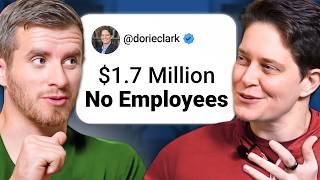
Dori Clark built a $1.7 million creator business from writing. She got bylines in HBR and Forbes, turned those into four books, then diversified into a $2,500 online course, speaking gigs, and licensing deals. She runs it lean with 65,000 email subscribers and makes $700-800k annually from course royalties alone.
Chapters
It was not easy to break in. There's so much rejection. So I realized I needed to build a platform. And this year so far, I've brought in about $1.3 million. It'll probably be $1.6 or $7 million by the end of the year. I am the only full-time employee that my company has.
Oh, wow. Today I'm joined by Dori Clark, who is a speaker, author, business consultant, and really an expert at getting noticed.
Anyone who is good at what they do, but they don't have the reach. The big breakthrough for me was to start— The average person who's watching TikTok videos assumes, oh, lots of views means lots of money. It doesn't really translate that way. That attention needs to go through a process. Entrepreneurial You is outlining different strategies by which people can make money in their creator businesses.
What are you trying to figure out next? Is there anything that I can help with or that we can brainstorm?
Is there a way for me to raise my hand and say, hey, this company I'm a fan of, I think you should consider me? So I would probably That's really interesting. I hadn't considered that.
So, Dori, we have a mutual friend in Terry Rice, and in his creator story, he talks about you and your work being like a big turning point for him. I'm curious just to dive in what, like, what book in particular, because you've written a lot of, a lot of different things. What book is he talking about there? And then what's some of the change that you helped him create?
Yeah, Jerry Rice is fantastic. And I, I think that the book that he is talking about is called Entrepreneurial You. Basically the book is, every chapter is outlining different strategies by which people can make money in their creator businesses. And I was trying to learn at the time how to be more successful in monetizing my business. And I realized that picking people's brains is, is just so ridiculous. And, and I, you know, I don't, I don't wanna be hitting people up that way. And I thought, all right, I can learn for myself and I can teach other people if I write a book about it. So I got, I got a book contract from Harvard Business Review Press and I wrote Entrepreneurial You as a way so that, so that I could learn all of these things and hopefully teach other people. So we break down everything from coaching to consulting to communities to courses to blogging to podcasting. And thankfully that was, I think, helpful to Terry. And I ended up featuring him as a case study in my next book, The Long Game.
But you're even saying, hey, I want to learn this thing. Writing a book is going to be my ticket in the door to conversations I wouldn't be able to get otherwise. You have the social proof of Harvard Business Review press, but then you have this byproduct at the end. I really think that more creators should follow this, this process of like, what can I, as I learn something, what can I create for the world and how does it feed this goal.
I mean, one of the things that I learned in my experience that I thought was interesting and part of what made me want to dive in and write Entrepreneurial You was that I realized that building social proof, building credibility, building a following, we often assume that that naturally and inexorably leads to monetization, but it actually doesn't. Those are kind of separate processes and you have to be really smart thoughtful about how you build the backend, because otherwise it's entirely possible. I mean, you hear these stories about people who are, you know, YouTube stars and they have millions of subscribers and they're literally working as a barista, right? Because the, the money is just not there in a direct way. So I think what's, what's so great about the holistic view that, that you are propounding at Kit is that if you have an email list, you actually have people you can talk to, you have people that you can hopefully sell things to. And you need to be mindful of that from the beginning because fame or, or influence or people knowing your name is great, but it's, it's a different thing than earning money from that. And I really wanted to, to study and understand that process because they are distinct.
What do you think are the biggest differences? Like, what do you see that works well for building that payment attention, but versus stepping into monetization? Like, what are the, what's the pivot that people have to make?
There's a difference between making money from something and making money because of something. Okay. And it's a, it's a subtle distinction, but we often tend to say, I'm going to make money from this. And so a person who hasn't thought about it closely, or the average person who's, you know, maybe watching TikTok videos or something like that assumes, oh, lots of views means lots of money. And we all know that it doesn't really translate that way. You can, you absolutely can make money from being a TikTok person or YouTube person or a podcaster or whatever it is. But it's the nuances that, that attention needs to actually kind of go through a, a process, uh, of being transmuted into making money. And so it's thinking, well, what, what can we do with that attention? And how do you use it to, to fuel other things? And so, I mean, you've talked about this on the show. It could be anything from, okay, Kylie Cosmetics, or it can be turning it into courses or, you know, in the sort of clearest sense, consulting engagement or speaking gig or something like that. But we have to really be thoughtful about putting those pieces into place. My personality type, I think, is because I'm really big into risk mitigation. I'm always thinking like, well, what, you know, what if X collapses or what if Y happens? I like having enough diversification so that you have a portfolio of ways that you actually can be making money from something.
Getting to this point, I think is really interesting. How did you first decide that you wanted to be a content creator and that, like, how did you first step into the world of writing?
So like a lot of people, I wasn't necessarily starting with being a content creator in mind. I launched my business doing consulting in 2006, and I knew I needed to get clients, and I really was not sure how. Right. I didn't know a lot about entrepreneurship. I had previously been running a nonprofit for a couple of years before that, and that taught me a lot about the kind of day-to-day mechanics of running a business. But biz dev and actually getting work was a very different thing. I mean, I had done— I had kind of done what I could. Like, I knew a year before I left my job that I wanted to start a business. So I started reading books from the library and I started taking classes at the local adult ed center. You know, here's how to do QuickBooks, here's how to use PowerPoint, you know, things, things like that that I thought would be helpful. But, you know, it teaches you these pieces and it doesn't teach you the most important part, which is how to get a client, how to actually get money in the bank. I came to realize that I needed visibility strategies. I needed ways to get in front of people so that they would know who I was. But in my case, I had actually started my career as a journalist and I had very quickly been laid off from my job. So I didn't last that long as a journalist, but I did have training in how to write. So I thought, okay, you know, that's a thing I can do. I will try to do a lot of that so that I can raise my profile and get in front of the right people.
Okay. And so then what were the first places that you were writing?
I was living in Boston at the time, so I was writing for lots of local things. I was writing for literally my local paper, you know, the Somerville Journal. I'd do like a letter to the editor and be very proud. I would write a piece for the Boston Business Journal or there was like a think tank called Mass Ink, and I'd write for those things. And, you know, that was, that was great. It exposed me to a certain audience. But I knew that eventually what I needed to do was to start writing for high-profile publications that had more national reach and that had more meaning in the minds of clients. You know, people have heard of, you know, a Forbes or a Fast Company or a Harvard Business Review. So it was not easy to break in. And honestly, it's, it's kind of insulting. It's, it's this very demoralizing thing, which I think a lot of people don't get past. There's so much rejection. I mean, I was, I was a former professional journalist who had done it for a living, and I was raising my hands and saying, hi people, I'd like to write for you for free. Will you accept my volunteer services? And they're like, totally dissing me.
Absolutely not.
No.
They're like, we have no interest in accepting any of that.
Yeah, it's ridiculous.
How did you actually get in the door at like any of these publications?
So I was actually very methodical about it. I made a spreadsheet of about two dozen publications that I thought would be feasible, you know, things that had a reasonable brand name, things that had some salience in the business world, and publications that I checked on their website did accept contributions from non-staffers. And so I had my list. I, you know, plugged in my best guess from their website about who was the contact person. And I just— I went through it and I was doing cold pitches to all of them. In some cases I knew people and of course I was trying those warm leads first, but it was largely a brute force effort. I was able, after trying with about half a dozen people, to break in at Huffington Post, which at the time was very sexy. So that was, that was at least a step in the right direction. But the big breakthrough for me out of those 24 publications I reached out to 21 of them completely ignored me and did not get back to me at all, even after multiple attempts. 3 of them did get back to me. Uh, 2 of them said, hey, well, will you send us some stuff? Will you send some pitch ideas or something? And then they ignored me. And, uh, the 3rd one was Forbes, which at the time was just starting its contributor network. And they were, it was, it really was a question of, of the right time. I'm partly making my luck by doing this legwork. But it was the right time for them and they said, great, can you write us your first article within 10 days? So I jumped on that and over the next 3 years I wrote 250 articles for them.
Oh wow.
Yeah.
So really building on top of that reputation that they already have and you can say, hey, I'm a writer for Forbes and then parlay that into other things.
Yeah, that's, that's exactly right. I also used it as a vehicle to interview other people, especially fellow authors.
Right.
And so it became, the best networking tool that I had at my disposal, because almost always, especially if someone had a book, they would say yes, they'd like to be interviewed for Forbes. And so it was a— it was kind of my entry card to meeting a lot of the people I wanted to.
How did it go to, to parlay the Forbes experience into not just more connections, but also, you know, more social proof?
While I was in the midst of, you know, desperately trying to break in at these places that were ignoring me, I sold my bike on Craigslist. I used to run the nonprofit that I ran was a bicycle advocacy organization. And so I had this, this quite nice bike that I had managed to get cheap because I got an industry discount for it. So I was, you know, like, okay, I'm going to, I'm going to sort of trade, trade in my bike. So I sold it on Craigslist and the woman who bought it turned out to be a copy editor at Harvard Business Review. And that was a publication that was not even on my radar. I wasn't thinking about it at all, but because she had checked me out to make sure I was like not going to cheat her about the bike, you know, I'm not going to mug her in a parking lot or who knows what when you're doing a deal. Yeah, exactly. She's handing me this wad of cash. She actually said to me, oh, hey, I see you do writing in the business world. I work for Harvard Business Review, and I at least had the presence of mind to say, Oh, do you accept contributors? Can you introduce me to someone?
Right.
And I had to follow up with her even, um, probably about 3 times, but she did eventually introduce me to an editor and he looked at my pitches and he said yes.
I think that creators, many of them really dismiss the traditional social proof aspect of things. I don't know, what are other ways that creators that you think they should pursue key points of social proof?
Yeah, I actually have a framework about this because my quick version is what I call 3x3. One time is an accident, twice is a coincidence, and three times is a pattern. And so if you can demonstrate that you have done something three times, most people will say, oh, okay, well, that's a legitimate occurrence. And not question it. And so if you can have 3 different types of social proof and 3 examples of each, then you are creating for yourself a rock-solid bio.
So diving into— I'm very curious of just what your business is now. How do you actually— like, what books have you written? How do you actually grow the business? So we will start there, like, as you've written books and the audience, how that's grown, and then we'll dive into like what the business looks like today.
So the first book that I wrote was a little bit of an accident. It was called Reinventing You, and it came out in 2013 from Harvard Business Review Press. And I had started writing for HBR. The reason I really had a lot of fire in me to do blogging and write articles was that I had wanted to write a book, but I kept getting turned down because the publisher said, Sorry, you're not famous enough. You know, the magic words, you don't have a platform. And so I realized, okay, I needed to go out and get one. I needed to build a platform. So in the process of starting to write for HBR, I was writing lots of things. I was writing basically any article that I thought that they would publish that was, you know, reasonably within my wheelhouse of expertise. And I had written one about professional reinvention. Which was kind of inspired by, by my own experience. I had had a lot of careers in my 20s, you know, lots of stuff that didn't work out. And so I wrote this article about professional reinvention and it got popular. And so they actually reached out and asked me if I would take the short blog article and turn it into a longer piece for the magazine. It was actually really validating because I had had 3 different book proposals in the previous 2 years, all turned down because this, you know, for different reasons, but mostly because I wasn't famous. The minute, literally the minute I wrote this piece for the print edition of Harvard Business Review, 3 different literary agents reached out to me and said, hey, are you thinking about a book? And it was amazing because I thought, oh, this is what it feels like when things are working. And I've had enough failure that I actually know the difference.
This feels very different. Yeah. Oh, I like that. Okay, so laddering up the books, how many books have you written now?
So I've written 4. Okay. Um, the second one, Stand Out, was my trying to answer the problem, how do you get to be known in your field? How do you get to be, uh, a thought leader? How do you get to be a recognized expert in what you're doing? And then there was Entrepreneurial You, which is, okay, great, people will respect what you're saying. Now how do you make money from it? And then finally, my most recent one is called The Long Game: How to Be a Long-Term Thinker in a Short-Term World. That's really a book about trying to answer some of the modern problems that plague us. You know, how do we, how do we actually take the steps now to create the life that we want in the long term? How do we create an interesting life? How do we be more thoughtful in our choices so that we are more likely to get the outcome we want?
You have done more of what we see in the creator world. What I've done, what many others have done of layering on like much more of the economic side beyond the books. So what does the business look like today?
Yeah, the books, as you say, are kind of a driver. They're sort of a tip of the spear of intellectual property so that people know what I can do and know what I'm about. But there's a variety of different pieces. I do keynote speaking, so oftentimes companies will invite me to, to come in and give talks. Especially about two of my books about the long game and strategy issues and about reinvention and how employees can reinvent themselves at the company. Also, I run an online course and community called Recognized Expert. In a lot of ways, it is exemplifying what I talk about in my book Stand Out. So the books really are kind of tied into the, the IP. The goal for that is for creators, for professional service providers basically anyone who is good at what they do. They're a smart person, but they don't have the reach that they want to, and they want to try to crack the code on that. And so Recognize Expert is a course and community helping them figure out how to do that and how to get their ideas more widely heard. Um, I also run, uh, since 2017 I've been running an annual mastermind that I do. I also do a lot of— Like in person or it's, um, It is twice a year we meet in person and then we have virtual sessions in between. I do a little bit of business school teaching. For 10 years I taught at Duke and I now primarily work with Columbia Business School. And, you know, there's, there's book royalties, there's other things in there. Yeah.
If you're open to talking about it, I'd be really curious, like in the, for the last few years, what's, what's annual revenue for the collective creator business?
Yeah. So I was looking this up on my accounting software before we came just so I could be prepared. So this year so far, like to date, I've brought in about $1.3 million. Okay.
As like the first 3 quarters of the year, basically.
Yeah, exactly. So it'll, it'll probably be, you know, I don't know, $1.6 or $1.7 by the end of the year. I like to keep things very lean, so I am the only full-time employee that my company has. I, you know, I'm all about margins, Nathan. Oh, yeah.
Hey, you've got to put that— all that business school experience to use.
That's right. So I have a part-time chief of staff and he has— he has a very part-time, like 5 hours a week assistant that works under him. But that's— that's the infrastructure. So we keep it very light. Last year, actually, I had a lot of— I'll call it extraordinary income. Because I had a big licensing deal. So I brought in— it's, it's so, it's so sad because it was just, just a tiny, tiny bit shy, but it was, it was like $2.968 million. Like, oh, I couldn't quite, couldn't quite crack it.
You're like, quick, somebody book me some consulting or something.
Exactly. I had to donate some blood or something.
I had that with ConvertKit, now Kit, where in a year we went from $2,000 in monthly recurring revenue to $98,800. And I was like, oh, we're so close.
Hey, Mom, Mom, do you need an accountant?
Anyone want to do like $1,200? Yeah.
Yeah.
I want to get into the licensing. Maybe looking at 2024 so far, if you have some of that breakdown, like how does it split out between royalties, speaking, and the courses?
Yeah. So For me, in terms of, in terms of this year, I have and I'm doing, I'm doing math in my head right now.
We're going broad numbers.
Yeah, exactly. In general, I, one of the goals that I've had for myself over the past, say, 5 or 6 years is that we all have things in our business that we do that are just kind of like, okay, keep, you know, admin, keeping it going, the things you have to do. But whenever there was discretionary effort, whenever there's the ability to choose where you're focusing, I always wanted to focus my attention on things that could lead to long-term passive income. That was really a goal for me because in 2015, which was the year that Stand Out came out, I gave 74 talks that year. And so it's like 1.5 a week. Yep.
And that's the exact math I was just doing of like, yeah. Yeah, that's a lot. And I'm guessing they weren't all within, you know, a few-hour drive or train ride of home.
Tragically, they were not. So I was, I was living in New York City at the time and I just like, it was, it was Christmas time and I was home and of course I was sick because I had just gotten off a plane and I was just sitting there. I'm like, how many nights have I even spent in my apartment? Like, why am I living in the most expensive city in America? Yeah. And so I, I just, I decided it was unsustainable. And as it happened, um, something that again is a combination of both strategy and luck. I predicted two possibilities that I wanted to try to mitigate against. One was, you know, I'm sitting there with some terrible cold and I thought to myself, all right, if I actually got really sick somehow, like if there was a real problem, I'm making a lot of my money from doing this. I, I have to be smarter about that.
Was it like 70% of your revenue or more from speaking?
I think it probably was at the time. Yeah. And I, I realized, okay, that, that would just evaporate. So I need to do something different. I also recognize, I mean, speaking is always the first thing when there's a recession that gets cut.
Yeah.
You know, oh, we're not gonna have the conference, we're not gonna have the speakers. And so it can go away so easily. Um, clearly I did not pre predict an international pandemic. No. But the net effect was the same. And so 2016, '17, '18, I started investing a lot of energy in, in creating online courses. And so I did all of these things as kind of a, a backstop against that economic uncertainty. Right now I am getting from, you know, all the various online courses that I'm doing, um, probably an average of about $700,000 or $800,000 a year in royalty revenue. That is not counting my own course. I'm not optimizing for high-dollar launches. I'm optimizing for easy launches and ones that will yield the right people. I'm largely marketing to my list of people who vibe with me and are good people. And so typically when I'll do a launch, it'll be in the ballpark of about $150,000 per launch, almost all of which is relatively automated.
That's awesome. How many subscribers do you have on the list now?
It is about 65,000.
If there's a business creator, or I guess in any niche, but we're primarily talking about business, that wanted to go down this path of saying, hey, I really want to take my expertise and credibility, I've worked so hard to build up the credibility and leverage things one into the next, and go to, you know, one of these platforms and get into LinkedIn Learning or something like that, how would you go about doing that?
For anything, a warm introduction is always the best, of course. So if you know somebody who has done it, asking them for a connection is great. It's important to scour the catalog and really look for where the holes are and try to come up with something and say, well, you have this and this, but what I'm not seeing is this other thing. And I am uniquely qualified to cover this other thing. And here is why it would be valuable to your audience. It's also, I think, important to make sure and, and this is true with, with any organization that you're, um, trying to penetrate to understand who their customers are. I, I have basically over the past decade run experiments with so many online learning courses, like online learning companies. And I mean, I can think there's a course that I did with one organization, uh, 10 years ago, and I do still earn royalties from it, which is great. Um, the less great part is that over the course of a decade, it's brought in about $10,000.
So, I mean, that's nice, but it's not what you're hoping for when you put the time in.
Yeah, exactly. And not every experiment is going to work. So you really need to have volume to be able to see what is going to be effective for you. Recognized Expert, the online course and community that I run, my flagship, it's, it's not inexpensive. It's a $2,500 course.
People do get one time.
It's one time. I know you're a big subscription revenue guy.
Well, I think about this a lot of like where, you know, I have Kit on the subscription revenue side, but then, you know, for training and content, they want to do like, I should be one time, should be recurring.
Yeah, yeah, it's, it's, it's a struggle because I, I see the value, of course, in recurring subscription revenue. If you have a course that is a very tightly focused course, you know, here's Here's how to, you know, write a blog post, or here's how to, you know, use this photo editing software. There's a very clear, quick outcome. But Recognized Expert is so big, it's, it's kind of an amorphous thing and it's, it's a process. You know, I warn people up front, this is one of my filtering mechanisms. If you, if you sign up for this, if you, if you work hard and you do all the work, it will take 2 to 3 years of effort before you see any results.
Right.
And it'll probably take about—
You could say we're playing the long game here.
We are so playing the long game and it'll probably take about 5 years to actually see really meaningful results. I mean, the good news is that if you make this effort for 5 years, you're gonna put an, a kind of enormous moat between yourself and the competition. So in 5 years you can actually really see results. And what's exciting is that because I've been running the course for 8 now, we actually have these amazing success stories and case studies, which I love. But, but it is, it is a process. And so, I, I think it actually might've failed if I had done it the other way because who wants to keep paying subscription revenue monthly or quarterly if you're not, if you're like, I'm doing it, I'm not seeing any progress. I want people to understand upfront, this is a journey and we are here for you. I mean, there's people who literally joined in the original pilot cohort of 40 people in 2016 that are still incredibly active members. And that's what I want is for people to say, okay, I am, I am on a pathway of getting my ideas out there. And that is, that is like, that is a work of a lifetime. That is, that is the impact you want to have in the world. And we want to be there for those people.
Yeah. What I love about that is for the people who put in the work, you have over-delivered in the value so, so much.
Yeah. It's what I also do like about it. I mean, there's, there's economic things, you know, that, that you might want to change. But what I like about it in general is that it also makes it very referable because let's say somebody joined in 2017 and if, if they've continued, if they're still involved literally now for, you know, 7 years, they've been getting value out of this community. We do live monthly webinars. We do all this stuff. They, they have forgotten the pain of ever having paid for it. And it just feels like an incredibly nurturing, giving community, you know, which is, which is what it is. But they've been getting so much value for so long, it's very easy for, for them to feel good telling other people about it. So that actually really helps the virality and helps the quality of people in the community.
Yeah, that makes a lot of sense. I'm thinking about what I'm launching next, which is a course on Creator Flywheel. So that I've talked about.
Yeah, I want to take that course.
And so I'm thinking about the pricing on it. Because I know that the group coaching aspect is really, really important. And so talking to other friends like Dan Martell and, and others who have these group coaching programs, what I'm thinking about is the course at $2,500, but then charging quite a bit more, you know, maybe $8,000 a year or something. So you're getting into the, you know, $600 a month territory for the group coaching aspect of it to make it really worth my time and filter it to people who are really And how would you do group, group coaching?
I mean, I'm assuming you wouldn't do it all yourself, or would it be a very big group?
I think it'd be a fairly big group, you know, probably twice monthly calls that people come to live.
Okay.
We have the studio in Boise set up where I can like, you know, livestream from in front of the whiteboard and like sketch out flywheels and all of that. But I'm really thinking about how to balance this of the one-time payment versus the recurring. Because, you know, I'm providing a lot of recurring value and I want to keep adding to it, but I don't want to get into the situation that I think you're talking about that you avoided so well of like maybe people dropping off out of the community because they only stayed for a year or 2 years. Like you want it to be something that really compounds. You don't want the pricing to get away in the way of the compounding.
Yeah. I don't know.
Do you have any thoughts on it as you've explored lots of different models?
I, I like where you're going with it. In fact, I haven't implemented this yet, but something that I have on my agenda to at least test test in early next year is sort of something similar to your— what you're describing. Uh, my idea is to— I would call it the, uh, the Recognized Expert, like, coaching club or something like that. So right now, when people sign up for Recognized Expert, so it's, it's $2,500 lifetime access. They get the course material, which is fairly substantial. They get our access to— lifetime access to our online community, which is very active and very vibrant. And then we have live monthly webinars, which usually have a guest expert or like a topic that's of interest to everybody. What it doesn't have is coaching. And the only other alternative that I offer is I have, you know, it's 10x more, it's a $25,000 program where it's a year-long mastermind and not everybody qualifies for it. It's for people who are already mid-six-figure entrepreneurs looking to hit seven figures. So I think there's a lot of people that would be interested in more coaching and more attention to their business, but aren't interested in that or can't quite afford it or whatever. So I've thought about and I'm planning to float the idea of having an add-on so that nobody ever feels like somehow we're taking away from what the course was and what they bought, but that they can clearly see, oh, there's an extra thing that I could buy on a monthly basis that actually would be different and added value of coaching calls.
I'm curious about one of your favorite ways to spend money, something, and I'll share one first, and that is the VIP tour guide at Disneyland. Yes, it's like $4,000 for a day. So it's, it's pretty expensive, but you like cut all the lines, have valet parking, you you know, you end up having this ridiculous experience at Disneyland. And I've done it, I guess, 3 different times now. Once with my family, twice with friends. And it is the best time. And it's one of those things I'm like, on one hand, it's a ridiculous amount of money spent. On the other, I'm like, it's only a few days worth of revenue for, you know, our cash flow from the business. So I'm curious, what's something that you have just absolutely loved, like splurging on?
Oh, I love that. That's great. Um, so I'll answer it two ways. One is, I think this is a really important question in conversation because there's often a lag in our self-perception and it, it kind of takes a while to catch up sometimes. And so I was already making over $1 million a year before I actually decided that I was allowed, I say in quotation marks, to fly business class, right? Because, you know, I had grown up never doing that and just the idea of, oh wow, well it, it's double or it's more than double, that seems so wasteful. And I really had to wrap my head around it as a thing that I was able to do and, and feel comfortable and not, not feel bad about. So now I've implemented a rule for myself that I'm always flying business class, just you know, because I do travel a lot and travel is lousy and unpredictable and whatever. So if you can make it even slightly marginally nicer, it's better. So that's, you know, a fairly common splurge. But it was something that, that took a while for me to like really assimilate as part of my identity. This is a kind of big ticket splurge that I wouldn't necessarily recommend because it's complicated, but I'm now juggling 3 properties and it's— it was going to be 2, which is much more manageable. But after COVID and all the mishugas, I decided in being in New York, shut up in my apartment, I decided that I would buy a place in Florida. And so I bought a place in Miami, which is, which is, you know, pretty cool and fun to have friends at. And I relocated there. So I'm— but I still have the place in New York. I'm kind of using it as a pied-à-terre. Yeah, because I have, you know, theater that I like to see and friends that I like to see. And then I met my fiancé who lives in Boston. And so now we are juggling 3 residences up and down the East Coast, which is a little bit unsustainable. I think we're going to have to figure something better out. But for right now, the big, the big splurge is like an excess of real estate.
Yeah. Places to live in each of your favorite cities.
Yeah. Yeah, exactly.
So what I'm curious about, like, As you're going forward in the business, you've built a lot of amazing things. Like, what are you trying to figure out next? What are— is there anything that I can help with or that we can brainstorm?
I appreciate it, Nathan. And, you know, honestly, I want to say, just as, as someone who, you know, didn't really know you well, but, you know, we just spent a few days together. So I love that. I, I've, I've been like a fan of the strategy of kit. I, you know, having, having written a book about strategy, I'm like, ooh, you know, game, game sees game here. Yep.
It's, uh, oh yeah, we could probably get on a whiteboard and like plan out, you know, competitive strategy in so many ways.
I totally love it because I think the idea about the creator network and paid referrals and especially, uh, the sponsorships and the ad network and just enabling people to be able to monetize things, um, that they, that, that would've been too hard for an individual is really, really clever. So just as an example for me, something that I've personally found useful, so thank you. I, you know, probably like a lot of people, I always wanted to spend a lot of time and care with my email list and, you know, staying in touch with, with my audience. And I did my best, but it's true that when you are not being paid for something, when it is the sort of important but not urgent kind of thing, it slips sometimes. And so I wouldn't necessarily write emails as frequently as I wanted to. And, you know, then I'd catch up and do some, but it was a struggle. And so now the fact that I am able you know, on, you know, basically a weekly basis, let's say at this point, to have a paid sponsorship in my newsletter gives me just enough incentive that it, it has now been able to move to the front of the plate because it's like, oh, I made a commitment. I have this obligation. I said I'm going to send an email on Tuesday. I better send an email on Tuesday. And it's created, I think, a positive forcing function because what we want to be doing is creating high-value content that nurtures our audience, which, you know, I argue and I think, I think you probably agree, makes them more likely to buy things from us down the line because we've really demonstrated the value. So the fact that you've created that possibility, you know, I mean, I couldn't have gone out as an individual and like, you know, cold-called a bunch of companies, hey, do you want to sponsor my newsletter? But you guys have made it easy. And that is so helpful. And it's, it's helped me prioritize the things that I want to be prioritizing anyway. So that is really great. What this leads to is that now that I am getting married imminently—
Congratulations.
Thank you so much. You know, this is for me, I consider it this, you know, like, you know, beacon of hope for the world because I— this is my first marriage. I'm 45. I had to wait a long time. So now I'm like very excited. I'm like, good. I finally, I finally found someone really good. Yeah. So I want to, I want to lean into that and I want to be able to, you know, of course still continue working with people and doing great things. But I also do want to take some of the, you know, take my foot off the accelerator a little bit and just stop being so excessive with the level of work that I do. And so it, it's a continued reminder for me that I want to be continuing to be thoughtful about more, you know, passive income, evergreen email sequences, and especially really being thoughtful about setting that up so that I can hopefully create a system so that in an automated way, people are led through a process of meeting me, seeing what I'm about, being introduced to my work, and hopefully deciding over time as they experience that value that they would like to go deeper with some of the content that the paid content that I have.
Okay. So the big thing is how to maintain similar level results that you have now, but with a lot less time.
Yeah.
Invested. Yeah, I love that.
Yeah. What have you seen in terms of best practices?
Like, well, I mean, the first thing on— you've written an incredible amount of content, you know, even as we're talking early on, it's, you know, 200+ articles contributed to Forbes and, and all of that. And I think about the newsletter. A lot of people will recycle content on social media, but they won't do it in their newsletter when a lot of new people are coming to your newsletter all the time. And so do you send a newsletter once a week?
I actually nowadays I'm up to twice a week.
Okay, twice a week. The first thing that I would do is I would have one time a week be set live. So that's a broadcast.
Yes.
And that, you know, everyone's receiving the same email at the same time. And then the other one I would have be a sequence. So say we're sending Tuesday, Thursday. Tuesday is the broadcast, Thursday is the email sequence that's timed to when someone joined.
I'm so excited 'cause that's actually what I'm doing.
Oh, perfect. Yes.
I love it.
Uh, because then it's, you get to put all of your greatest hits and, you know, build out this whole library. And for everyone else, they're like, yeah, I get the twice a week newsletter. And you get the benefit of the evergreen content, greatest hits timed to when someone's subscribed, tweaked, optimized, all of that. But you don't have to give up the real-time nature of like, hey, I'm going to be back up in New York City and I'm hosting this event, or actually everybody's like, new book coming out, you know, and those kinds of things that you'd want to emphasize.
Can I ask a point of information question? So one thing that I've struggled to wrap my head around. So we have, we have the welcome sequence and then when people are done with that, they enter the newsletter sequence. So the way I've structured it now, and I'm not sure if this is the best way, is that I've basically created a ton of what I'll call modules. And basically each module is 4 newsletters and I'll say 3 of them in the automated sequence will be pure educational value emails. And then the fourth one will be a sort of light pitch around something that I offer in a course or something like that. And so there's a number of those. We have like newsletter 1, newsletter 2, newsletter 3, and then periodically I will then have something that is a more sort of straight up sales sequence. And what I mean by that, there's still lots of storytelling and sort of engage. The pot of gold at the end of the rainbow is—
Building to a very specific—
Yeah, it's, it's like 4 emails and they're all about let's say my Writing for High-Profile Publications course. So they're educational, educational, but they're sort of pivoting to, hey, buy this thing, which is $995. So I have those. It's not a big deal if you're in the sort of regular, like a newsletter one sequence because, you know, it's not like you're building momentum on it. So it would be totally fine to be like, okay, Tuesday you get a live broadcast and Thursday, you're getting that sequence. Yeah, but if you're, if you're in the sequence where you're sort of building to the emotional climax of why you really need writing for high-profile publications. Yeah, I kind of don't want to interrupt that with the broadcast. I'm not quite sure how to, how to do that or how to structure that. Do you have advice?
Yeah, that's interesting. You could automate both emails, but you do tend to lose I find myself wanting the, the ability for the live broadcast. Yeah, I want to say like this podcast episode came out or this other thing, you know, and it's like attention right there. Yeah, for everyone. But if you automate both and that gives you a lot of flexibility, if you follow someone like Brendan Dunn, who we've been hanging out with the last few days, he's very good at building the system where you can like interject, you know, use a snippet inside of Kit and then when there's content in the snippet, it automatically takes over the beginning, you know, of the, the automated email with that announcement. You know, things I would announce like new podcast episode, you know, ConvertKit rebrands to Kit, right? Those are the things that I would put in there. But then the rest of the email is still the same.
Interesting. Yeah.
So I would probably do that. I guess those would be the 3 things. One is don't worry about interrupting and keep the broadcast sequence cadence. Second is go all in on the automation and really sort of give up the one-off things and just set a special Friday broadcast or something when that happens. 3 emails a week is fine.
Yeah.
Or the third is go all in on the sequence and really emphasize, like, build in this notification alert type system.
Yeah, that's, that's really interesting. I hadn't considered that.
I guess going back to the idea of how you spend your time or what would free up time for you, what, what takes the most time in your business right now?
The really good news actually is that there's not, there's not any individual activity that I'm doing that I feel like is sort of a, a time hog or an energy hog. I think in a lot of ways it's just, it's the accretion of a lot of small things. And so one of the things that has been helpful to me actually over the last few days of conversation that we've been having as a group is to the point we were talking about earlier where your self-identity kind of lags reality sometimes. I, I have been able successfully to dial back and do a little bit less and still have very strong results. But I have not let go of sort of the stress and guilt about not doing those things. And I, I think in some ways it's really a question of, of like right-sizing the expectations and saying, you know, no, Dory, you're not, you're actually not intending to do more than that. You're doing what you're intending. So it's, it's okay. Um, I think, I think that actually alone will be helpful. But over the past few years, I've been able to implement, I think, some useful parameters. I mean, starting in the fall of 2020, I started taking Fridays off. The only asterisk was when I launched my book, The Long Game, but that's always an exception. But I've gone back to it and that's cool. And more recently, I've stopped taking meetings on Mondays. It doesn't mean I won't work, but I won't have meetings. And that's been really enormously helpful. So I think constraints can be pretty good. I mean, how, how do you structure your work week? Are you, are you like, you know, sort of Jack Dorsey disciplined? Like, you know, Wednesdays is operations day or like how do, how do you handle it?
Not quite to that level. So Mondays and Wednesdays are when I try to take most meetings. Uh, at Kit, we have, uh, a rule that Tuesdays and Fridays are focused workdays. And so our expectation is that no one on the team schedules recurring meetings on those days. If you have to schedule a meeting on that day, it's fine. Like we can get into that, but, uh, no recurring meetings. And it's not like you can't talk to someone, you know, if we're like figuring out a strategy thing, like, great. That means that on Tuesday we actually have like hours of time that we could spend focused time on, on, uh, strategy or pair programming or whatever else that we're doing. So those two days really dominate things of Mondays and Wednesdays with the meetings. And then yeah, the focus time on Tuesdays and Fridays, that kind of defines the whole week. Everything else is a little scattershot.
Yeah.
But it works well for me. And then I get into a cadence of usually Tuesday or Friday afternoons, you can find me at my favorite coffee shop. Don't find me there. But because that's where I'm like, which is my laptop thinking about like doing writing or more of, of these like long-form tasks where I'll quit Slack, ignore the team, you know, all of that for a long period of time. Yeah. I think what you're talking about of protecting your time, putting some of these arbitrary constraints on it is really, really helpful. Then you're not making one-off decisions. You're just like, oh, I actually don't take meetings on Mondays.
Yes.
You know, and it's sort of like this rule or this identity and people are like, oh, Yeah. Well, you know, they'll, they'll respect it immediately.
Yeah. That's, that's exactly right. If you, if you basically just say like, my policy is dot, dot, dot, like, I mean, you know, who came up with your policy? You did. Yeah. But, but it, it sounds official. So other people, um, usually are not gonna push back. They'll usually say, oh, okay, great. We can, we can do this other thing.
Yeah. One of the things that was helpful for me, cuz I think you and I are very similar in that we're just always pushing for What are we capable of? I could, I could write more, I could make more, you know, grow the audience faster. And here at the Mastermind, I was talking about this podcast and how to, how to grow it faster. And I had sort of two competing things going on. One was, you know, try to grow this show as much as possible, have as much reach and influence as possible and all of that. And then the second thing is I don't want to just attract any listener, right? This is a show where I'm very much talking to professional creators and, and so I want the right people paying attention. But then I said two things, but I guess the third thing is I have a lot of constraints on it where I have a full-time job running a software company and that is where the focus needs to be. So I was talking about, okay, what should we be doing to grow faster and all this?
Yeah. So what did you come up with? Well, so I mean, I know you started with the tour, which was really interesting. Have you done paid ads for this or like—
I'm not—
Yeah. Are you considering it or—
Definitely considering it. But our mutual friend Grant Baldwin was in my little breakout group and he was like, look, if the podcast was your whole focus and everything you're doing, I would say, you know, I have a bunch of things you're doing, but within the constraints that you have and the rate that it's growing, you know, it's adding 500 to 1000 subscribers every month. Like, it's just all that. He's like, what if— crazy idea here— you're already doing all the right things that you should be doing and you should just accept it and be content with that and then focus more on how do you make it easier to record? How do you remove the friction so that you can stay consistent and make sure that 3 years from now or 5 years from now you're still doing it? And it was so interesting because it like switched from a business problem to an identity problem.
Yes.
And I was like, oh, what would that be like to tell myself, hey, you're doing enough, like this is at the right pace. And so it was just helpful because he was like, look, man, just keep doing what you're doing and keep refining little systems and processes along the way.
Yeah, I love that. I mean, out of curiosity, how do you conceptualize this show? I mean, it's— I mean, in part I'm sure it's lead gen for Kit, but what, what else? Like what are, what are the reasons behind this?
Behind doing it? Yeah, there's a few different things. First, I love the conversations. Like, this is something that I genuinely want to have these conversations for a very long time. Like the episode that we had a few weeks ago with Mark Manson, he was talking about, he's like, I could talk about creator business all day, every day. And his producer's like, yes, he could. And we recorded for like 3 hours straight and that's how it turned into episodes. 'Cause we just couldn't stop talking. And So I'm like that. Uh, I love it and we'll do it for a long time. The second thing is I think of a lot about the flywheels around creating content and with the constraints that I have on my time from Kit, I don't have as much time like I used to years ago to spend multiple hours a day writing. And so I need a forcing function to work on and iterate on ideas. And so sometimes I'll say something that comes up. In riffing off of something with a guest and it turns into something. And then a few weeks later I reference it again and it's a little more refined and then I might write about it or I might have an idea that I'm writing about that I want to turn into something. I'm like, is this going to work? I don't know. And I'm not quite ready to publish it as an essay or something, but then I'll use it in an episode and if it resonates, then we'll go from there. So actually that's a fun thing about some of these episodes that we do in front of a live audience because you can get the real-time feedback of does it resonate. So it's a lot of workshopping content because basically what we'll see is the long-form conversation then cut down into shorter clips of some of the best moments and then really looking back at those and saying, okay, what do I then want to flush out into an essay, a book chapter, a lesson in the course, That's another thing is with the coaching angle, I get to a lot of things where I get to like we map out a flywheel in real time and it's like, okay, this was good or sparks something else. I'm like, all right, I'm going to go teach this as a lesson in the Flywheels course. The last thing is it'd be really easy to build a software company for creators and they get really disconnected from creators.
Yeah.
And so I get to hear in real time like what people are struggling with, where they're stuck. They're like, hey, I grew it to $200,000 a year in revenue and it was climbing. And then the last 2 years it's actually been shrinking. You know, it's like, okay, well, let's dive into that. And it can basically have all these conversations and stay really close to the problem. It was actually the fun thing about the mastermind is the sheer number of people here using Kit was awesome. But then also being able to hear the conversations and like to be able to sit there. And I had this like in my notepad, I had this section off to the side of like just things that I overheard or like what people are struggling with in the creator economy.
Sorry, engineering team. Here's some homework for you.
Yeah, exactly. And so it just keeps me in the conversation and keeps things relevant and then really is the like the core driver of my content flywheel.
Yeah, that's, that's great. I love that.
That's the thing. Is there Any other content or things like that that you feel like— and I'll open this up to anyone listening as well who wants to jump into the comments— that you like, you know, as you listen to the show, that you would love to hear covered more?
I really love what you've done with the show. I think, I think it's, it's so interesting to go deep and really get into the nitty-gritty of people's businesses. I mean, there was a theme in the mastermind this weekend where people were saying create for the nerds. And I think for, for the right people who are very interested in the mechanics of business models, this, this is a great show. So I love that. I do have a couple of— I made a list. I brought a list, Nathan Barry, of, of my, my future wishes for Kit. These might be things that you're already doing, but if I, if I can make my little dream punch list, Okay, so one thing that I think would be cool, I have noticed that there are some companies that advertise and I think they should advertise on my newsletter because I would be a good fit. Like I use their stuff, I could give a really good testimonial, but there is not, as I know, as I understand it presently, a way for me to raise my hand and say, hey, this company I'm a fan of, I think you should consider me. And I think if there was some kind of a, a vehicle, I mean, you know, whatever, even, even a form that I could fill out so you're not like bothering them, but so that it could come to their attention. Um, I think that could be cool.
We have 12 creators on our sponsor network that would love to, you know, do a deal with you or that sort of thing.
Yeah, exactly. And then they can, they can scan through and see if it's a fit. But I think the ability to sort of hand raise and, you know, and sort of look at a comprehensive list of those people and pointed out would be awesome. I think similarly, a thing that would be cool for me, and this, this is possible in sort of a like bespoke, I email and ask for help kind of way. What I think would be really cool and would probably, you know, like blow it up is if there was a more systematized way where somehow you guys were able to provide more guidance about the ROI of SparkLoop subscribers. Obviously some people have a big enough team that they have an analytics person who can look at it and your, your team, uh, internally has been really nice when I've asked for help, but to have it be a little bit more understandable and plug and play where there could even, I'm like dreaming here, like, you know, some kind of a dashboard that explains everything. And just like makes it super clear, like, hey Dory, you know, this, this SparkLoop subscriber that you've paid for, your SparkLoop subscribers are staying on just as long as your organic ones. And they're making, they're purchasing at, you know, such and such rate. Um, that would be very helpful. And also if there's a way that somehow you guys can make the case, like I would be willing to invest to acquire more subscribers if somehow it was clear to me that like in terms of advertising or sponsorship or something, that like, oh, if you actually hit 100,000 subscribers, you're going to be able to command a significantly higher rate than, you know, then I mean, maybe there's breakpoints, like maybe it's not true. Maybe there's a steady CPM for, for all of it. But I don't know, there might be a situation where they, you know, companies like advertising with like really large things. So it's maybe there's an incentive where if I was at 90,000 subscribers, it would be so much better. If I had 10,000 more. And so therefore so much more worthwhile for me to invest. And I would be willing to do it if I really understood the case properly.
Yeah.
So if your team were able to do things like that, that would be my dream wish list for you.
I like it. Attribution is something that we think about a lot.
Yeah.
And actually in the next few weeks are releasing like the first stages of that and then we'll expand from there so you can understand You know, what activities are really working and going from there. A conversation that came up a lot at the mastermind is the, you know, like organic versus paid subscribers and how do you test the quality, you know, and, and the pros and cons of each. And something that a lot of people came to was to really ask for replies from your subscribers, you know, so ask questions and say like, what's your biggest frustration with learning this, you know? Um, like whatever topic we've narrowly scoped to, and then hit reply and let me know. And you really build up from there. And I think that's really interesting, but that's a way that you can see like, okay, do, do we have relevant people, uh, paying for this?
That's interesting. So is there a way to like sort of automate that or put that in a table, or is it literally just like, oh, it would be manual?
Yeah.
Okay, cool.
And that's where, you know, having a, an assistant, someone go through and And check that. Like we, there was someone at the mastermind who was talking about, all right, how do I really know I'm gearing up for this big book launch? How do I test if these are the right people? And it's like, well, actually starting a conversation. That's something that, uh, Justin Welsh talked about with everything that he does on LinkedIn where he's on a daily basis starting conversations and really engaging with everybody. And I just thought it was interesting like how Emmanuel he still was.
I, I thought that was amazing to hear and The part that was, that was even more mind-blowing for me. So, um, I, I always, I always love it. Like a part, a part of me thrills to this where I discover that whatever I thought was hard or long, it's like, no, no, it's not hard or long compared to what other people are doing. So Justin, since 2018, 7 days a week has spent 45 minutes posting and then commenting on LinkedIn. Like every single day. And that dedication is just so impressive to me.
Yeah, it was, it was fantastic to hear about. So from 7:45 to 8:30 every single morning, he posts his content, replies to the people who are engaging, and then goes to his friends that he wants to help amplify and replies to their content, comes back to his replies to more. And like, it was such a simple set of tasks and he's like, this is what I do 7 days a week. And someone was asking like, could you do it 5? And he is like, yeah, I can do it 5 days a week, but we're going with 7. And I just, I love the simplicity of it. I love the conversation that he has. 'Cause people are like, Justin replied to me. You know, I just think that's great. And so bringing it back to newsletters, I think that soliciting replies is really good and really worth it. Where you can get, you know, the ideas and the frustrations and like keep your pulse on what your newsletter subscribers are struggling with and get the confidence that, all right, I'm attracting the right people or, you know, I'm really not.
Yeah, I think that's, that's a really interesting point. It's, it's true. I mean, so many people in Justin's position would have outsourced this ages ago to a VA. And they would not, but they would not have taken the same level of care and attention. And so just the, the value of going deep sometimes can be very powerful.
Yeah. Well, Dori, you've built an amazing business. It's been fun to watch you from a distance the last, I guess, 8 years now. I think we first met in 2016 at Social Media Marketing World, and I became a customer of ConvertKit, now Kit, in 2017.
So yeah.
So yeah, for a long time. And then I think you're one of our top users on KitCommerce as well and have driven a lot of volume through that. So it's been really fun to dive into your business. Where should people go to, to follow all the things that you're up to?
I appreciate it, Nathan. Thank you so much. I have— speaking of social proof, I have more than 800 free articles available on my website that people can check out that I've written for places like Harvard Business Review and Fast Company at doryclark.com. And, uh, if people want to subscribe to my kit newsletter, go to doryclark.com/subscribe because it actually is true. The greatest care that I spend and take in my writing is in my newsletter. I, um, I write everything myself and I feel very particular about it as a former journalist. So that is really the, the place to, to go to, uh, to get the 411.
Sounds good. Thanks for coming on.
Thanks, Nathan.
If you enjoyed this episode, go to YouTube and search The Nathan Barry Show, then hit subscribe and make sure to like the video and drop a comment. I'd love to hear what some of your favorite parts of the video were and also just who else you think we should have on the show. Thank you so much for listening.








