We Spent $300,000 Rebranding, Here's What We Learned
Nathan Barry and Charlie spent $300,000 rebranding ConvertKit to Kit, positioning it as an operating system for creators. They acquired kit.co, shifted messaging to
Chapters
I had worries that it was going to be like, oh, this is another one of Nathan's crazy ideas.
I felt my heart pounding and like, don't fuck it up, Nathan.
ConvertKit has become a kit.
We haven't actually talked about this yet, and so we'll talk about it live. There was a moment where like you took a pause and I was like, is Nathan about to cry?
A kit is a collection of tools needed for a specific purpose, and we want to provide the kit to help as many of you build a valuable business. A lot of you were saying like, ConvertKit's a great name. Why do you keep wanting to change it? They don't understand the bigger vision that we have for the company.
People don't fully understand the difference between a name change and a rebrand. We do want to improve and make a change, and so that's why it's a rebrand, and it's not just about the logo or the colors.
We're really excited about kit.com. Before anyone asks, I know you're thinking it, how much we paid.
Do you want to say this live on the podcast?
What's this chapter called? Dreams Realized. We're rebranding Creator Studios, the App Store, the conference. Like, that is my dream.
I see the vision, and I'm excited to be a part of it and to bring it to life. We don't normally I'm believe I look great in doing it.
Charlie.
Nathan.
We did it.
We did it.
So first, we are in Boise. We just finished Crafting Commerce. We just announced that we've renamed the company.
Yep.
We laid a vision for the future of it. We talked to hundreds of creators. We've got a bunch of insights and reactions that we want to share. We have a brand new studio that we've just taken hundreds of creators through. We were there, reactions, and then just anything that comes from running an event from Craft and Commerce.
Yeah. It's been a busy few days. Not even a few days.
Few, like a few months.
Yeah. A few months.
So we've been working super closely on all of this for, for a long time now. I came to you and was like, hey, we have this opportunity with this domain. Are we joking around or are we gonna do business?
Yeah.
You know?
Yeah. What was, um, I don't know when you shared this opportunity with the team. With us to like make the decision, what did you think our reaction was going to be? Because I think what actually happened was very quickly we're all like, yes.
I think that it was going to be somewhere between what actually happened, like the yes, absolutely. And I had worries that it was going to be like, oh, this is another one of Nathan's crazy ideas. I have a lot of crazy ideas and—
We're sitting in one.
We're sitting in one. I was surprised to get enthusiastic yeses across the board.
Interesting. Interesting. Yeah.
I thought it was going to be like, oh, I'd love to do that, but like, let's be practical.
Well, I think that it came at a time where like we as a company, like we were feeling that we're entering a new era, right? Like with our team, the team structure and, you know, the projects we were taking on. It's like maybe if you had presented it to us 6 months earlier, if the opportunity had come then, maybe it wouldn't have been as well received.
I think that's probably true.
Yeah.
Because we'd executed on so many things. We'd made a lot of changes on the team and really leveled up. And so, yeah, I think we felt like, oh, this group can tackle something as big as rebranding an 11-year-old company. And actually at that point we didn't even know for sure we could get the.com.
Right.
So we started working super closely together You were doing research, talking to creators. And then we decided to do a joint presentation to the team of like, all right, we're—
Going to announce it.
We're going to announce this. So that was in Cancún at our team retreat in February. And so I normally give that presentation, the mission and vision strategy presentation. And it was interesting.
Like you got a few reactions where people were like, why is the creative director up there with Nathan talking about this?
Which we've worked together for 7 and a half years. And so, again, people weren't like totally surprised. It wasn't 100% out of place or anything.
Yeah, they were like, this is a little odd, but all right.
Yeah, we'll roll with it. And we took them through where we've been, where we're going, all of that, and then dropped the name change announcement at the end. What was your, like, what did you observe from the team in those reactions?
Oh, my favorite thing was looking out at our team and seeing people like, like literally with their mouths open. Yeah. And Colin, who leads our SEO efforts, was like, it's like, this is so cool. He's been pushing us to get like bolder as a brand for a long time. And he was like, I see the opportunity here. And I'm glad that was his reaction. Cause like SEO is going to be a challenge.
It's going to be a challenge.
And so it's really important that he is excited about it.
He had this interesting arc. Um, like I could see it on his face cause, you know, and the team who's sitting front and center. Yep. And so you could see, 'cause first we're, we in the presentation, I don't know if this is because we're like, you know, good marketers or we're just mean to our team or what, but we like took them through a bit of an emotional arc of like, maybe we're gonna change our name.
Ah, and then we were like, we said we weren't gonna do that.
But our, but ConvertKit has served us so well for this period of time, you know?
Yeah.
And like back and forth. And so we like toyed with them a little bit. Um, Which is just, you know, building good, like, storytelling.
But also that was our thought process.
Mm-hmm.
You know, like we were bringing them along the journey of like what we've thought about and why we decided to actually do this.
Yeah. And so in that I could watch, like, as we got close to it, like Colin's face of like, oh shit, I think they're gonna announce, like Corey had some great reactions too.
Yeah.
Um, I think they're gonna announce like that they're changing the name and say, oh, okay, they're not. And then when we said Kit, he was like, you know, cause he's, he's thinking about a domain migration and all this and how hard it is. And I saw him like immediately go to his laptop and start working. And what he was doing is looking on Ahrefs and all the other SEO tools to understand the domain authority of kit.com. So first it was like the name change to Kit and he's like, oh, that's great. But you see like, oh, but you can't get Kit. And so I think people were expecting an announcement to like, You know, Kit HQ or—
Yeah, yeah. Try it. Yeah.
Something like that. And then he's like, okay, oh, kit.com. That's amazing. And then he's like checking the domain authority. And then he was saying like, it's actually a really like well-respected domain, has tons of backlinks and all of that. And he really good reputation. So he is like, if you're going to pick a random domain on the internet, this is as good as it gets. Like, you know, not just from a branding position, it's 3 letters and all that. but also like it has an amazing history and reputation.
Yeah, that's great. Yeah. Cause that is, and that's what people have, we've been hearing this week after we've announced it. It's people like, oh my God, the SEO. But I'm getting ahead of ourselves.
Yeah. So the team, were there any other team reactions that?
Ooh, I think the, a really interesting one as we were like building up to it, some of our team were like, oh, I thought you were going to show us a new logo. Yeah, because we had already planned in our strategy for 2024 to do a brand evolution. We knew it was time that we needed to make some like cohesive concerted efforts at updating our brand. And we thought to start with, oh, maybe we can do this just with some visual updates, a little better systems behind it. We've kind of been like making things up as we go for a while. And so I think people thought we're going to reveal like a new color palette, new logo.
Yeah.
And that's when I had a moment of like, oh, I can do a much better job of letting people know the effort that goes into this. Because the strategy for the year had been shared with the team in January, and this retreat was happening in February. And so if they thought we'd already gone through the process of making a new logo, making a new color palette, I was like, oh dear, people don't understand what I do here.
But the reactions were overall really, really positive for the team.
Yep.
A lot of people very excited and then a lot of thought of like, okay, what does this mean? And then I think especially how do we make this really impactful for customers? Because we don't want to like be going off chasing things that are exciting for us and don't actually help, you know, further our mission of helping creators earn a living.
Yeah. And that's something that I feel like, well, you and I understood very early on, like the long-term vision and how this fits into it. Like we've been wanting to build a huge iconic brand that has a massive impact on the creator economy, the creators in it. And I think our team were like struggling to get their heads around it first, like what this means for the product and like what we're going to do there. What's the vision for that? And we really worked over the past few months to like get clear on that so that we can communicate it with the team so that we can start working on it all together.
Yep, exactly. So that was in February. We have done so much work. Between February and now, and we're recording this in June.
Yep.
And that was all—
Yeah.
Right? We were getting on—
It comes very unnaturally.
Yes. It's the opposite of how we operate.
Yes.
You know, work in public is a core value.
We were having creators sign NDAs, which just felt like, this is weird. Like— Yeah.
And then, but we wanted, you know, feedback and input all the way along.
And so we knew we had to do that. And like the creators have been fantastic. Um, And it's awesome how many of them were like willing to jump on calls and give us feedback with very little context before they signed that NDA. Yeah, it's been really useful.
I'm realizing one thing going back to that retreat, there was an idea, you know, I felt like I was in the inner circle. We're working on all this together and we're pitching the idea and sharing it all with the team and all of that. But then there was an idea that it went the other way where you and your team and others were like, Actually, we have a way that we want to do this rebrand. Yes.
Yes.
And we're, you know, it's like—
I can share some context on that. That came up. And I have a photo actually of a sticky note on a wall. We had the session that was a pre-mortem. We like to do these before a big project to like think ahead to like, okay, this project is really successful. What might we have done to make it successful? And the other way too, like what might we have done if this project was really unsuccessful? What can we avoid? So we look for the opportunities, we look for the potential challenges. And we write them on stickies, put them on the wall. When we're thinking about opportunities, someone had written a sticky that says, "Work in public, bring creators along the journey." And we talked about it a little bit, but we sort of like in that room thought, "Oh, that's, yeah, there's working in public, but then there's like, what are you doing?" Yeah.
And so we got on a call and you, I think you said you wanted to chat through some rebrand stuff.
Mm-hmm.
And then I get on and Dave, our chief revenue officer, is on the call too. You know?
And you're like, this is more official than I thought it was going to be.
Yeah, exactly. It's like, what's up? And really it's that you wanted to pitch this idea of rebranding in public.
Yeah.
I'm trying to even remember what, like, what was your experience pitching that and what was your read on my reactions?
Yeah, I think that you were very positive about it quite quickly. But what I liked, because in that conversation I was saying like, we have this idea, this is how we could go about it, but we know we're going to have to like get the team's buy-in. Because rebranding in public in a way does make more work for us because documenting your process, making content about that. And it's also like a little more risk, I guess, putting things out before they're finished. Like, is that a risk we want to take on? And you said to me, maybe it was in a conversation a little bit later on down the line, we were talking about it again and you were like, you know, you are making this decision, right? And I was like, oh, okay, now I'm going to take it even more seriously. But I feel like you had a pretty good reaction straight away.
I think of company values as a lens for making decisions.
Yes.
If you can't use your values to make decisions, then there's no point to them. And so this is a pretty clear place of like work in public is a core value of ours and has been for like 10 years.
So is teaching everything we know. Yeah. Yeah.
It makes it a pretty clear decision. I then thought about, okay, there's a bunch of risk to it, right? You are Basically what you're saying is we're rebranding, but you— we haven't yet.
Yeah.
And there's no big logo unveil, like, you know, all of those things. But then another thing that you, you pointed out, which I think is good because in past episodes, you know, as I've talked to other creators who are building teams or talking to Barrett, you know, in the episode we did a couple of weeks ago, we talked a lot about how to lead teams and how to assigned decision-making. And so that's a really good example of me actually doing that, like not just giving advice, but just saying, you know, like I am an input provider in this decision. Like Charlie, as creative director, this is your decision. Talk to us a little bit more about the, I don't know, the pressure of that decision.
Definitely the pressure of the decision felt like, well, if we screw this up, this is my career on the line. But also then I thought about, you know what, even if we did the rebrand, in private, it still like reflects on my career because I'm like leading this project from the brand side of things, you know. And I know as a creator, as someone who benefits a lot from speaking to other people about work, getting input and all of that, the best way that I can do that effectively is to be able to do this openly and to be like able to bring people in, talk to them, get advice, get feedback along the way. And I was thinking of myself as a creator and like creator friends of mine just how much they could benefit from hearing about what goes into a rebrand and like pulling little bits out that they can apply to their own businesses and that, that we could share all that.
Well, we started to think about the number of creators that we knew that had done rebrands.
Mm-hmm.
Uh, and then we're like, wait, there's actually a lot. Like, this is not a big software company thing. This is something that every creator at a certain stage deals with. And so it's like, okay, teach everything you know. There's a lot that can be learned from this.
And another element we brought in as well, like coming back to making sure this is valuable for creators, we didn't want this just to be like, look at us, we're doing a rebrand. We really wanted the point of rebranding in public, yes, so that we can speak about it openly and get research and feedback, but also so creators could learn from it. And what we try and do with our brand is make creators the heroes. And so we asked ourselves, okay, how can we make creators the heroes of our rebrand? Uh, and we thought that, okay, let's speak to them about their rebrand processes. We can learn from the creators who have gone through this. We can record that. We can include it in the like content we put out and it can be passed on to other creators too. And there's been a bunch of different creators be excited to get involved with that and share their stories. And I think, yeah, they've, they've really appreciated being interviewed about that side of their business.
We made the decision to rebrand in public. We've been working on it.
In what I call stealth mode.
Stealth mode. Yeah. Rebrand in public in stealth mode. We came out of stealth mode 2 days ago. We'll get to that. Before we go there, one thing is we decided to not do this entirely on our own. We decided to bring in outside help. And so talk a little bit about the process of reviewing agencies and then ultimately hiring Codo.
Yeah. This is the part of the process that when we first started talking about renaming the company that I was most nervous about was like capacity. Because we're a small team, there's so much work on our plates. And that was the only thing that was holding me back from being like 100% in, was like, I don't know if we are gonna commit to like actually doing this in the way it needs to be done to be a brand that lives up to what we need it to be, last for the next 10 years. The last time we rebranded, we worked with a design agency, and that was great to like be able to outsource that part of the process. But I knew that this time we would need something more than that. Yeah, I'd spoken to peers in the industry and they were naming like, you know, six-figure budgets that they'd spent on rebrands. And I was like, I don't know if Nathan's going to let that happen. Like, I don't know if we can make the budget for that sort of thing to, to work on our brand with an external partner. And so I'm really, really happy that we ended up prioritizing that in our budget for the year because already it's making our rebrand better.
I mean, my natural tendency is like the scrappiest version.
Yes.
We'll do it with the resources that we have. Like, let's rely on our core team. Like, we hired amazing people.
Yeah.
And all that. And you were pretty insistent that this is of such a big scale. And because it's not just a name change, it's like all— we were already going to rework positioning.
Yep.
And aesthetic and so many other things. And so it's like, no, this is the moment. Like, conveniently it's all coming together at the same time.
Yeah.
And so let's make sure to get it right.
Yeah.
And so in hiring Coto, I would just get off these calls and feel like, wow, we hired a team that has a real process. They did an incredible amount of research. Like they talked to so many customers, creators, um, and, and just people in the industry, you know, and, and so they had so much context. So I felt like we understood our existing brand so much better thanks to all of their work.
Yes.
And, you know, we're still, we're right in the middle of the process.
Yeah.
But I thought that, you know, hiring them as an agency and spending the hundreds of thousands of dollars that that took to bring in like the true professionals on this was absolutely worth it.
Yeah, it's— I mean, it's great. We're already saying that when we're not even at the end of the process yet. So fingers crossed it keeps going well.
It might crash and burn, but I don't think it will. I don't think it's going to.
I actually want to talk about you because you mentioned there something about rebranding and like also thinking about positioning. That's something I feel like people don't fully understand is the difference between a name change and a rebrand is that a name change is more like, okay, we're changing the name of our company, but we still want you to think all the same things about it.
Right.
And so you have to make that shift and just start calling us this new name. With a, like, a brand is the perception that creators have of us. And we do want to make tweaks to that perception that they have of us. We want to make improvements, make sure that it's in line with our product vision, where that's going. We need to communicate some new things and like, we as a team need to have a mindset shift and we need creators to have a mindset shift as well. We want to build on all the great stuff we've built up, reputation over the years, but we do want to improve and make a change. And so that's why it's a rebrand. It's like, and it's not just about the logo or the colors. It's like, we're rethinking a lot in our company and making sure it's what we want to have for the next 10 years.
And because a lot of you were saying like, ConvertKit's a great name. It served you so well. Like, it describes the product. Like, why do you keep wanting to change it? It's just they don't understand the bigger vision that we have for the company. And it's not their fault. Like, that's our fault. You know, it's our job to articulate and communicate that. But one thing that we were able to tee up and launch at the same time that we've wanted to do for many years is an entire app store and ecosystem for Kit. You know, and so Kit is a name that, you know, just embodies that of like, okay, here's what I'm trying to do. I have my core Kit and I can add things to it. And tailor-make it. And so, you know, at Craft Commerce this year, that was the big announcement. People talked about it as though, you know, I said like, we have the biggest announcement in ConvertKit's history coming at Craft Commerce, and I teased it. And I think they thought it was the rebrand. I actually mean the app store and like all of it collectively. Right? But I think that this is the, you know, the ability for any creator whether they're a designer making email templates and landing page templates coming soon, or a developer building apps and extending the product. Like, anyone can use Kit and say, I wish it did this thing. Oh, I'm going to make it do this thing.
Yeah.
And actually, why don't I release it either for free or paid for other creators to, to do the thing also to use that. And so I think of this getting back to the name and the brand side, why I love Kit so much. Is it both has this connotation of assembling your tools, you know, or to achieve a specific outcome. But I like it even in the sports sense of like, this is my kit, you know, and it's like branded and personalized to you. And it's just, it's a name that I'm, I'm just in love with.
Yeah, same. And I'm really excited to get to work with it and what it means. Like, yeah, for my, the rest of the work that I'll be doing, you know, for the next several years.
Yes, exactly.
It's gonna look very different.
It's gonna be fun.
Yeah.
Now, so we decided even working with an outside agency that we're in rebranding in public, we decided we're announcing the rebranding in public. We're announcing the name is changing, new product direction, all of this. And we don't have a new logo yet. So I guess let's get into like how we crafted the announcement.
Sure. Yeah.
How that came together.
Yep. Over many, many hours. Working together in pitch. Yeah.
Yeah. We just started talking about, you know, what messaging we wanted to use. Actually, one of the biggest pain points is that in working with Codo, we had lots of— I don't know how to phrase it— words and ideas to communicate. I don't know, sentimentally.
Where we're going with the brand strategy.
Yeah. But none of it is final.
Yes.
And they kept stressing like, don't turn this into a slogan yet.
Yes.
This is not your tagline. And there were phrases like, we serve creators who mean business. And we'd latch onto that and we're like, well, we really like it. And who knows, that might end up carrying through. But it was challenging in the presentation that we wrote to convey all of that without like saying this.
Making it sound like it's a tagline.
Yeah. Like it's the company tagline.
Yeah. So instead of like saying Kit, The operating system for the creator economy. It's not a tagline. We don't know that that's the words we want to use yet and what we want to encourage creators to say about us. So instead you were like, with Kit, we're building the operating system for the creator economy. We made it more like a part of just how you were talking about it. And it's been really interesting to see which parts of that creators have picked up on. And when I've been having conversations with them, like what they've been reflecting back. And the operating system is honestly one that has come up a lot for me.
Is it something, are people responding well to that?
Yeah, like they are using it to talk about our name change.
That, I mean, that's the ultimate test.
Yes.
Right.
And that's what we wanted to do. That's the great thing about rebranding in public also is that we can test this stuff and it's going to make our eventual like switch to Kit much stronger because we'll have more confidence in, you know, that we're talking about it in the right way. Exactly.
Yeah, that makes sense. So we've put together the presentation, rehearsed it a bunch, changed it a bunch. We were actually here in the studios, which we'll talk about a little bit later, and we just recorded the two of us working on—
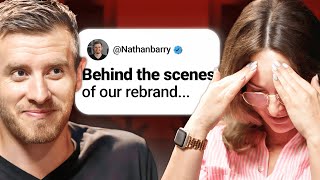
There's so many stills of us being like, ugh.
How do we do this? Like the face palms, the temple massage. There's one where I'm doing this.
And I'm doing this.
But we just wanted to capture as much of the behind the scenes as possible.
Yeah. And it's really hard to bring people along on your vision when you don't have something to show them yet. You know, like we have the App Store and we had a few examples of, of the apps being integrated that people can start to get their heads around, but they're not seeing that yet applied to our, like, our full product philosophy and what we're going to do with that. They're not seeing a visual change to, like, cue that something's different for them. And so it is, yeah, a little hard to get them to understand the vision. And so that's why we were spending so much time on the messaging of it, of how do we get creators excited about this and help them understand that this is something that will benefit them in the future.
One part of it that we talked about a decent amount before we did the presentation is how to use the domain name. Like we're really excited about kit.com, like a 3-letter domain name. Before anyone asks, I know you're thinking it, we can't say how much we paid.
And like, You know us, we would tell you if we could.
We would 100% tell you if we could. Tim Grohl mentioned this in his workshop. Did I tell you this?
Yeah, you did. But you haven't told the podcast.
I haven't told the podcast.
So you can repeat it. I'll pretend I haven't heard it.
There you go. But Tim and I have been friends for a long, long time. We work on a bunch of stuff together and he's been a customer forever. And so I gave him the heads up on the announcement, you know, the day before. We're at dinner together and I told him like, hey, this is what's coming. And, uh, you know, he had the first question, you know, he had a bunch of questions, but when, you know, he asked like how much it costs, I'm like, that I cannot tell you. And so he was joking at his workshop after the announcement. He was like, look, Nathan tells me everything I knew about this announcement and he, he wouldn't even tell me what it costs. And so there's no way he's telling any of you.
Yeah.
And it's in our NDA. And so we, yeah, unfortunately we can't say it. We're super excited about the name. But we're not kit.com.
That's not our name.
That's not our name.
Yep.
The company is Kit.
Yes.
And that lives at kit.com. And so we really struggled with, if you put up a giant slide that says kit.com and then everyone is like, oh, that's who you are. And there's some brands that really, monday.com, right? They really stress they're not Monday.
They're monday.com.
They're monday.com. Talk for a second, 'cause I think people might be listening and be like, okay, but Why not?
Well, I think that we're more than a website, right? First of all. Oh yeah. Especially like we said, we'll get into talking about the studio. It's like we want to build a— I think an iconic brand cannot be a URL as its name. Yeah, that's, that's too limiting. And one of the things that we wanted to solve for with changing our name was we wanted a name that didn't sound so techie. Right. And including a.com in your name is inherently techy.
You move away from it and come right back.
Yeah. And I just think it weakens the brand as well, right? Like you are not taking advantage of owning this great 3-letter domain if you don't think for yourself. Like I don't want a logo that says kit.com. Like I want a logo that says kit.
Yeah. Oh man. There's so many things that went into getting, we'll talk about social handles and domains and trademarks and all of this. But, Yes, we wanted to just be Kit, but we also want to say—
We wanted to do a bit of a flex.
A bit of a flex. I thought, like, you nailed it in how to do it because I was struggling with this in the presentation.
Yeah.
And you said, just make it a passing comment.
Yeah.
And so what we ended up with is, you know, we're now called Kit and we went through that. What that means, talking about, um, we already built up with the App Store and so building the operating system, you know, for the creator economy. And then talked about rebranding in public. We just said it and you can follow the journey at kit.com and then just move right along in the presentation. And I think because I was talking to creators, you know, you get their reactions because they were wondering, okay, you're going to be Kit. Did you get kit.com? I heard mixed things of like, there's no way you could get that all the way to Austin Church, who's been a long-time customer and attendee. He was like, There's no way Nathan would do this without having— He knew.
He knew.
I think because we just were like, yeah, obviously moved right along.
Obviously have kit.com. What we said about that was like, that is a big company move, right? Like a small company that was thinking small would make a big deal out of the domain in the talk. And that would be the announcement that we bought this domain. And we were like, no, we are thinking bigger. That is part of the reason why we're rebranding. And so it's just, that's our website. Of course, that's our website. Cool kit. So website is kit.com.
Right.
Yeah. Keep up.
So, so people love that. And I think also really centering on, I mean, we mentioned this earlier, but what matters for creators.
Mm-hmm.
And now the domain does matter for creators, right? Cuz you're gonna be able to use things like nathan.kit.com, which is a pretty great, you know, vanity URL.
Yeah.
Um, and it'll be the things that, you know, people type in. It won't ever be misspelled. It won't.
Yep.
you know, all of that. But it's not ultimately what drives the creator's business.
Yeah.
And so the more we make a big deal about our name change, the rebrand, and you know, the URL, the less it's about creators. And so I think just saying like, oh no, we're moving forward with the brand then.
Yeah.
And you can follow along here. And it just gave creators the opportunity to be like, oh, that's a, that's a big deal.
And that's why also going back to rebranding Public, I'm so glad that we're doing it this way because This is the value we're delivering to creators right now, this year, as we're doing this process, is we can, the value we can provide is sharing what we're learning along the way. They can learn from that for their brands. Because they're not going to feel the impact of this until we've already made the switch and they're seeing the new product philosophy in action to get to work on in their business. So it's like for now, they can learn from us.
You were sitting in the audience.
I was.
How were you feeling? There's like, 6 months of stressful work coming together. You're sitting there.
I started to feel very early in your presentation, actually way too early. I started to get very nervous and I was like, I felt my heart pounding and I opened up my heart rate on my Apple Watch and it said 120.
As you're sitting still in an air-conditioned room.
And I was like, oh, yep. Okay, well that checks out. So yes, I was starting to get more and more nervous. Nervous-cited, I'll say, as you announced it. Because one, I was like excited for the news to be out there. And then I think the nervous was like, don't fuck it up, Nathan. Like, this is the moment.
I was definitely thinking that beforehand.
You were thinking, don't fuck it up? Yeah. Is it because I said to you, don't fuck it up, just before you went on stage?
Yeah, thanks for that, Charlie.
I then did text you a little bit later and be like, you're going to do great. Because I felt bad. I was like, that can't be the last thing I said to Nathan before he went and announced this.
But I think I had so much nervous energy. One thing I love about this venue for Craft and Commerce, I'm gesturing towards the venue in case anyone was wondering what geographically it's 7 blocks that way. Um, but, uh, there's like a really great backstage because it's a, it's a full concert venue. So the green room and all, you know, and so I'm like backstage with this, like just nervous, you know, energy, like bouncing and trying to like pacing and all of that. Cause it's just, it's such a big moment. To say like, you know, we're 11 years in and here's the full vision for the next 10 years and we're laying the foundation for that. But it got great reactions. You know, we went through this animation talking to the same one we use with the team. You know, we do so much more than convert and then the letters drop off and it's earn.
Yeah, great. Launch, sell. Yeah.
And, and it was fun. And to just have that, then have Kit.
Yeah.
Sit on stage. And so I think we told a really compelling story.
So I noticed we haven't actually talked about this yet, and so we'll talk about it live. I was— there was a moment where, like, you started to, like, you took a pause and I was like, is Nathan about to cry? Is that what you were holding back?
Yeah.
Yeah. Tell me about that.
We were— we were here in the studio and Justin Moore and Bear Brooks and others were all sitting around and I was talking to them. And Justin pointed out that.
Yeah.
And he goes, did I notice like some emotion there at all of that? And Barrett said this line, he goes, might it have been that all these things that you've imagined and dreamed about for years are like coming to life right now? Yeah.
And you were realizing that on stage.
I was realizing that on stage. Terry Rice, who's another amazing customer, I was on his podcast and we, recorded it right here in this room yesterday. And he asked me what this next chapter— he was like, if this is a book of your life, what's the— ooh, I'm going to get emotional now. What's this chapter called? And it's sometimes questions that people ask you, you're like, I have no idea. Like someone asked me like, oh, what's a mistake that you would do again or something? And I like, I feel like I'm pretty good at interviews and I was like, I got nothing.
I don't know.
You know, mistakes you made. I have lots of mistakes, but you know, like that question, I didn't know how to do it. He asked this question and he is like, what would this chapter of your life be called? And immediately, like in milliseconds, I said, Dreams Realized. And that was just like, that's what I was experiencing on stage of realizing from the creator studios that I've wanted to make for a long time, the rebrand, the app store, the conference, all of those things, like the way that we serve the creator economy, like that is my dream. And just seeing like, all of these things come to life is really, really special.
What was the moment in your talk where you started realizing, because it was before you made the announcement.
Yeah.
You were gearing up for it.
It was talking about the podcast studios.
Yeah.
That was the thing. So I guess maybe pausing for a second and saying what they are. We're sitting in these studios right now. So this at the moment, is a 2,100 square foot office space in Boise, Idaho. It is a conference room, 5 podcast studios, and then a green room, as well as like a community lounge workshop space. Every studio has a different set, a different look. We brought in the amazing team from Dream Studios to come and, you know, design the studios, do all the lighting, the cameras, everything, and looks so good. Actually, one of my favorite things is the first two people I've recorded with in the studio were Ali Abdaal and Jon Youshaei, two of our speakers who are like two of the best YouTubers.
Yeah.
You know, they're at the absolute top of their game and they came in and they're like, whoa, this is legit. You know, like, okay, if you guys are impressed, we've done something right. We've done something right. But this has been a dream for a long time. And actually when Haley, who's runs Craft and Commerce and all of our events. And she MC'd the event and she brought the studio to life as well. On Monday we're here and it's still like boxes and craziness and all this stuff. We finally got the Wi-Fi set up and I was like, Haley, what's the Wi-Fi password? She's like, oh, network is Kit Studios.
Do you want to say this live on the podcast? I guess everyone who comes to the studio can use the Wi-Fi anyway.
Who knows?
We might change it at some point.
But, uh, she says the password is ConvertKit 2018.
No, it's not.
Yeah. Not now. No. But I was like, Haley, what?
Why 2018? You know we're in 2024, right? Exactly.
You're off by 6 years. And she goes, no, I remember the team retreat in San Diego, 2018, where you laid out this vision for podcast studios. you know, in these creator spaces that we would make available to customers so that they can, you know, come and create amazing content. We remove these roadblocks. And, and so just like, that's why, like we're, we're signaling back to that original date. And so something that I've always wanted to do.
Yeah.
And to bring it to life is so special.
Very special. And it's just so cool. It's been so cool to see so many creators this week in their recording. Like, I think this has fostered a lot of collaborations is what I've seen too. Like people getting in together, like, oh, let's just make something. Yeah.
Like even from like some really great podcast episodes and all that, actually, like I can look, you know, through the special acoustic glass through across the hall, the other studio. And I can see, you know, there's 3 people in there right now recording another podcast. Um, and they just sat down and said like, oh, we'd love to talk about this and, and launch into it. I guess we were at the point. You were asking when I started to get—
Yeah.
Like when I started to feel it.
Yeah.
And it was like I had just finished talking about the App Store and the vision for building the operating system for the creator economy, then launching into the studios and then saying, you know, I knew where it was going. And that was the moment where I was like, these are all things I want to do forever. And like actually bringing it to life.
Yeah. I started getting emotional after you had gone through the like names changing ending on Kit, I sort of had this like, it's out there.
One, he didn't fuck it up.
Yeah, one, he didn't fuck it up. He got the timing right on the clicker. That was great. But also I'm just like, I'm so proud of this company and how far we've come. I'm going to get emotional now. I remember in my first interview with you in 2016, you were like, I want to change the name of the company, got big goals for the brand, where we want to take it. And that's part of why I'm still here 7 and a half years later, right? Is that I see the vision and I'm excited to be a part of it.
Yeah. And to bring it to life.
Yeah.
It's— yeah.
We don't normally cry on BuzzBella Creative TV.
You know, at Craft and Commerce, you know, it's about— we've run it 6 times now.
Mm-hmm.
And we have so many amazing creators here in person. It's the opportunity to see the impact that we have and like see the brand lived out in real life.
Yeah.
And so many people come up and they're like, how is everyone here so amazing?
Yes.
And it's like, well, they're like, the brand is built around serving this group of people. And so it attracts the right people.
Yeah.
Like a couple of years ago at Craft and Commerce, someone told me like, you know, I just wish you had way more tactical talks. Like, I'm here to learn concrete things. And half of it, half of the talks were like that. But the other half were like all about people's like life stories and transformation and like all the soft stuff. And if you cut that out, the event would be way better. And we're just like, this is not for you. This is not for you. You know what? And so, you know, you think about the, the name of the conference of Craft and Commerce.
Yeah.
And it's the intersection between those two things of people who cared very deeply about the art they put out in the world, um, the skills they learned to do it. Who they serve and then also say, but to make this sustainable, but, you know, for me and my family and for the community I serve, like the commerce part is just as important. And so we live at the intersection of those. And so the people that come out to the event just embody that.
They're creators who mean business.
They're creators who mean business. Exactly. And so it's just, it's really special to see that. Brand lived out in real life.
Yeah. And I'm really glad because there was a time we didn't think we were going to announce this rebrand at Craft and Commerce. In fact, I think I remember saying to you, Nathan, we are not going to announce this rebrand at Craft and Commerce. Do not— like, I don't want to hear about it. I think Dave and I even were on a call with you. Yeah. And we were like, we're not bringing this up again. It's a flat no. Stop talking about it.
Well, there was three— like, there was an arc to that where Uh, I was just thinking about, you know, can we get the name?
You wanted to get the whole brand completed by June, I think originally.
That sounds like something I would say. Yeah, it does.
Yeah.
That's on brand.
And that's why we were telling you you couldn't announce it at Craft and Commerce because we were like, that's not going to happen. We want to build something that lasts for a long time. We cannot do that by June. I remember.
So we talked about that. You and Dave were like, absolutely not. And I was like, all right, that makes sense. And I remember having a conversation with Elizabeth. Who has been my executive assistant for a long time, and she was like, Nathan, this is a really good example of you maturing. Like, old Nathan would have been like, no, we can pull it together, and it wouldn't have been very good and it would have been botched in some way because you tried to rush it to hit like a big moment or all that. And I was like, no, of course we want to do this right. We're not going to announce it at Craft and Commerce. And then when we started, we came to the idea of rebranding in public. We started thinking about the timing.
Yep.
You know, of all of these things, where could we be at that it makes sense to announce the rebrand?
Like there was things like legalities and stuff like acquiring handles. We wanted to make sure we had before we put it out publicly. We didn't want to cause ourselves competition there.
And then also we didn't want to be rebranding in public for 6 months or so. So we wanted to push the announcement date back enough. You know, we were like, okay, May or June. And then we don't want to rebrand in public for that long. And so we don't want to, we were talking about like there's an election in the United States this fall, right? It's going to probably be, I don't know, like a media disaster. And so we don't want to be pushing into October for announcing rebrand. And so that sort of started to anchor it around these things. And then you came back and said, actually, we're not unveiling a new brand. But I think we could announce the process and that we will be changing the name at Craft Commerce. And I remember going like inside feeling like, oh, fuck yes. Externally going, you said it, not me.
You did say that. Yeah.
To be clear, Charlie's idea. I was 100% good with not doing it.
And now I'm saying we should do it. I'm so glad we did that. There was a part of me that was nervous about that because we have rebranded before and we announced it at Craft Commerce. And as has happened, as we expected, people have been like, oh, this is déjà vu. And I, but then I was like, you know, you know what? I just have so much conviction around us doing the right thing this time. And I want to celebrate this moment and like use it as a chance to speak to creators about it and where better to do that than Crafted Conference. Yeah.
And I think also just even as a team, we obviously can't have our entire team here, but we have 20, 25, we have a lot of team members. That have come in for Craft and Commerce. And for us to be able to share that as a moment, yeah, I think is, is really, really special.
Yeah. I was sitting next to Dave in the back row watching your keynote. Derek and David, the designer, were on one side, Dave on this side. And when you had announced it, I was like sitting like this. Dave just goes like a little nudge, like, good. Yeah.
Yeah, that's so sweet. That's pretty special.
Yeah.
Now you and David hosted a workshop We did. Where you're getting, you know, we like get reactions from all around the audience. People are like, hey, great rebrand. I generally assume that people who hate it are going to—
Not say anything.
Not say anything.
They've just gone on Twitter.
They've just gone on, yeah, exactly. But what were some of those, you hosted the workshop where you're actively soliciting feedback, talking messaging, positioning, all that.
Yes, that was really interesting. So we'd positioned the workshop as like rebranding Public, how ConvertKit is becoming Kit, what you can learn from it for your creative business. And at the start we like asked folks, okay, who here is thinking about rebranding and like wanting to learn about the brand for their business? No hands. Who's here because you want the behind the scenes? All hands.
It's like, great, great. We'll just set the stage right away.
Let's do it. That was really great. So we talked through like how we came to Rebrand in Public, basically a lot of the stuff we've just talked about here, the early phases of how we picked Coto to work with, the strategy. And then we at the end had some time for research to dig in on like, okay, what does a valuable business mean to you as a creator? And some of these things like this. And then we had question and answer time. And that was really fun to see like what parts of what we've announced so far that creators wanted to dig in on. Of course, someone asked about the domain. That was one of the first questions. But yeah, they had, it was a really good conversation in that workshop. Like creators just genuinely being curious about the decisions we're making. And appreciating how David and I were responding honestly to them about it.
Yeah, that's awesome. What were a few of the reactions and specific comments?
Yeah, can I pull up my phone? Because I've been saving on here some interesting things that folks have talked about in person, but also online since this. So the first one is that folks have been like, oh, some brand consultant got paid a lot of money to convince Nathan to change the name to Kit.
No, Nathan is very convincing.
Nathan didn't know convincing. Nathan was the brand consultant doing the convincing for the rest of us.
Does that mean that I can Like, is there a check coming my way?
It's your company. You can take a check if you want.
Yeah, yeah, exactly. I think it's the reverse. I've spent some money on domains and social handles and more and all that.
Yeah. Okay. So that was one thing just to clear up. No brand consultants involved, just us. Um, another one that I've thought was really interesting is people being concerned that the name is too generic. Yeah, like, but ConvertKit means something. It means I'm converting. And that honestly was part of the reason we wanted to change it too, is we've had feedback from creators that I don't want to put built with ConvertKit on my forms. I don't want my audience to feel like I'm converting them. That feels too impersonal. Like I'm building a connection. I want to, like, deliver them value.
Yeah, because I saw someone say, you know, ConvertKit as a made-up, you know, or a combined term. They're like, if you're going to drop one half of it, you should have dropped Kit and stuck with Convert because that actually means something.
Right.
And, you know, that convert is a like if you named a company that, you would actually be like, we are convert.com.
Yeah.
You know, that's, that's like a monday.com or situation, one of those situations. You're not going to build— it's not a word that you build an iconic brand around. And so I, I think that that was just such a good example of what people perceive our brand and our value proposition to be versus what it actually is, which is why we're doing a rebrand, right?
We need to change people's perceptions of us and like show them All of the ways.
And I mean, that's even in our opening line when we were revealed at the conferences. We do so much more than help people convert.
Yeah. You know, and so we're changing the name to Kit. Yeah.
And so, yeah, that was interesting. What other reactions?
Well, on the generic thing, I was like, that is a very interesting thing for you to be concerned about. And I'm not at all concerned about it because I mean, I don't think any of those people are concerned that Apple is too generic. It's a name, right? And that is truly how big we are thinking, right? We want to be that iconic brand for the creator economy specifically. And we're also, you know, we realize it'll take time. We gotta earn that. We gotta build that. Yep. But Kit actually gives us that opportunity.
You mentioned Apple and something that I realized, uh, actually just a couple days before the announcement is that Apple changed their name in the 2007. IPhone keynote, and I had no idea about that.
Me neither, until you—
Yeah, it was Mike Pacchione, who's our speaking coach. He and I were talking about potential ways to end the talk, and he referenced how Steve Jobs in that keynote used a quote, and the Wayne Gretzky quote, and he just said, "I always try to skate to where the puck is going, not where it's been." And Steve says, "That's what we have always tried to do at Apple." ends on this like forward-looking moment. And so after Mike had mentioned that, I was like, oh, I'll watch that ending. And I kind of skipped around a little bit. And then I came across this moment right at the end of the, near the end of the talk where Steve says, if you look at our product lineup, we have the iPod, Apple TV, and now the iPhone. And these are the 4 products that we offer. And if you look at this, there's really only one of them, the Mac, that you would think of as a computer. And so we're announcing that we're changing our name from Apple Computer Incorporated to Apple Incorporated. And, you know, it's like our name no longer represents everything that we do. We're shortening it, you know. Relatable. Yeah.
Yeah.
It's like going to something more, you know, generic, but, you know, relatable. But like they built the brand, they earned that. Yeah. I knew at some point that they had made that change. Um, I just didn't realize that it was so recently as like, yeah, I think it was much, much earlier.
Yeah. Yeah.
And so it was just interesting cuz it, it felt like, I guess it's a cliché as a brand to compare yourself to Apple, but it felt like a similar sort of thing of just like not making a huge deal about the name change, but just saying like, hey, our vision is bigger and we're dropping one part of our name. So that our vision is, you know, much more clear and it fits.
Yeah. The— a really good question I feel like someone asked was, why, why is this going to take you so long if you've hired an agency to help you with it? Oh, like, oh, you're telling us in June and you're telling us you're not going to actually have it already until September? Yeah. And I'm like, oh no, no, no, that is like a very short timeline. Yes. But that's another reason I'm excited we're rebranding in public. We can like educate people a bit on what this process it takes if you're trying to, you know, build something that's going to last a long time, right? Um, and it just, you know, there's a lot of work to be done. We're, we're going back to square one with our strategy, like thinking, what do we want to take with us from our current brand? What, what new things do we want to introduce? There's a whole lot of like creative development work that needs to be done. And then we need to do the work of applying the brand everywhere, right? Like, we can't just like flip a switch and suddenly our product has all new colors and styling applied to it and domains.
And yeah, we send billions of emails. We, you know, all of these things.
Yes. And we want to do it right.
That goes into it.
Yeah.
You know, like thinking about where we're at in the process, we have not— we've just barely started the visual brand identity.
Yes. Have you had anyone come to you and be like, give me a hint as to what the logo is going to look like? I haven't. I mean, it makes sense they're talking to me about that. They're like, ooh, like, what can you tell me? And I'm like, I genuinely don't know because we haven't had that first, like, share with Coto yet of some of their options that they're thinking of. Right.
Yeah. So we actually had a moment that you wrote into the talk of—
Yes.
Like—
Very proud of this joke and all the laughs that it got. I feel like I'm going to go write comedy now. Goodbye. Yeah. Yeah.
And so that was like basically talking about the rebrand and we're saying, all right, are you ready for the, you know, the big reveal? You want to see the new logo? And then I just flip to a blank slide. And then it was like, there it is. Oh, there it is. It's not there. We don't have a logo for you. You know, all that.
And then you went in to explain rebranding in public.
It was just a fun moment because you like build some tension. People are like, oh, okay. Like, all right, here we go. The big reveal. And you're like, no, no, no.
That was actually something that, um, through your going back to your talk and working on it together, as well as not wanting anything to look like a tagline, I didn't want anything to look like it might be a new logo, right? Or a brand. Like, I was very conscious of like, what font are we writing KITT on screen in? You know?
Well, because we— there was a slide that we had put in where it was like KITT, all caps, like big, bold, and it could have been a logo.
Yeah, it could have felt like a logo.
Yeah.
And I was like, no, we need to have it— the headline the same size as everything, all the other headings on the slides, same font.
It's like the title. Yeah. In the dropdown in Pixie. Exactly.
And that's what we've done. Yeah. Even though I like I have a, not even a love-hate relationship with our current brand font. I just straight up hate it now. And so I'm very excited to get a new one, but I'm like, I want to be intentional about, I want people to know when it's a new logo and I don't want to cause any confusion in the meantime.
Yeah. Have you thought about at all how you want to reveal the new logo once we have it?
Ooh, no, not yet. Because it's also like, okay, we want to share the process along the way, but then we also want it to feel special when we show you what the final logo is. So basically by rebranding in public, we've caused ourselves some problems. But yeah, that's been another question I've had, or people coming up to me like, oh, this must be really fun for you to like get to be involved with this rebrand. And I'm like, getting it, like the brand side of the rebrand, like definitely can't take credit for the product vision and that side of things, working closely with our product management team on that. But even our team came to me at the retreat, we're like, I really want you to like make sure you 'Have your say on what agency we pick.' And I'm like, 'Who else do you think out there is like making the shortlist?' Like, it's me.
Oh yeah. Yeah. You've led it.
Yeah.
Like all the way through. And yeah, it wouldn't be the same without like your, well, I was gonna say your voice and that's absolutely part of it, but also just your huge depth of experience in 3 categories as a brand leader, as a design leader, and then really as a creator. Who's worked in this company and for this community for so long that like there's no way you could bring in someone else from the outside and say, hey, lead this thing and run like a generic process or all of that.
Yeah. And that was part of wanting to work with an agency that was going to be super collaborative as well. Like some of the ones we spoke to were like, this is our process. We will show you two options, you will pick one, and then we'll make small iterations from there. And I was like, that's just not going to work for us. We have way too many opinions and way too much like depth of knowledge and care for our brand. And we're like, we're so intentional about every little thing, like every little word so far on the strategy where we're like picking on and digging into. And we needed an agency who would roll with that. And Coto have absolutely done that. It's been super awesome to work with them.
I had another entertaining conversation with a creator and I saw this play out a bunch online as well, where they said, I don't know how to tell you this, but there's another company called Kit that serves creators.
Like, how did you miss this?
And they rank number one in Google for the term Kit.
Yeah.
And I just had to be like, oh yeah, that's Kit.co, right? And they're like, yeah, yeah. I said, cool. Go to Kit.co and see what it says. So they pulled it up. There's the banner across the top that says ConvertKit has acquired. Kit.co. Yeah. You know, and so in all of this, we also bought a company and that was part of this, this whole process to, you know, it's one thing to buy the.com, but you actually have to get to, you know, all of these other assets, all the social handles, trademarks, like to do it at the scale. Yep. It's huge. And so, you know, at a high level over the last, 6 months, we've acquired kit.com, kit.co, trademark for Kit.
Yep.
We picked up the Twitter handle, Instagram, Facebook, and TikTok.
Yep.
And the Kit subreddit. That's pretty good.
That's pretty good. Yeah.
The only ones we don't have right now, which we're still working on, are LinkedIn and YouTube.
YouTube. Yeah.
Which are less like username focused.
Exactly. Yeah. That's less important there. So I'm like, I'm fine with that. There was a time where we thought we were gonna have to settle for something different, like, oh, might have to be like at Kidd HQ on a social media channel or something like that. Um, so I like, again, like with working with the agency and investing in that, I'm glad we're making these investments because to me it shows this is a long-term investment. And like, yeah, this is a lot for us right now, but when you spread that out over the, like, you know, how however long we're going as a company, it's like a drop in the bucket.
Yep. I think the other thing that was really cool about the brand that currently lives on kit.co is that it's for creators. And so for anyone who doesn't know, it's a product that allows you to assemble your kit and say it like, you know, if I'm a YouTuber or something else, I say this is the gear list, you know, that I film with. And then it has affiliate links off to Amazon and other retailers. It gets a lot of traffic. Um, though the site, you know, has sort of been in maintenance mode for a long time. And, uh, so in acquiring that, you know, like it's a really interesting feature set to be a part of the, you know, our new umbrella of the Kit family. I have no idea how we'll position it or whatever else, but you know, it was really cool that, um, people already think of Kit as something in the creator space.
Yes. Um, and I, I see it fitting, like, you know, we've got recommendations where you could recommend creators right now and it's like expanding that on the future. Maybe this is a possibility. Yeah.
I don't know, but Another announcement that we made at the conference is that, um, you know, our creator profiles have really expanded where you can, it can power your full site, you know, with custom pages, you can list out all your products, recommendations of the other creators. And so it's interesting, like, who knows, but maybe it'll have, you know, the, uh, kit.co style recommendations in there as well.
Yeah.
The product team's listening to this, like, oh yeah, you're just making up things on the fly. And this is why we can't let them just like loose on, on the mic, you know? Who knows what they'll dream up with. Was there anything else, any other reactions that, or comments that you heard or things like that that have been interesting?
There's been some interesting talk around the term creator.
Yeah.
And it's been really interesting to see that come up now.
We've heard it some of the, in the past couple of years.
Okay. I feel like it's been a large topic of like conversation when I've asked for like, you know, feedback on the rebrand and how people are thinking about it.
Yeah.
They're talking about creators specifically. But we've been using that term with our current brand for a long time. So that's not a new thing for us. But yeah, that creator still, even for a group of who we identify as creators, is a term that is misunderstood. And they're thinking a bit more as influencers or that side of things. So that was really interesting.
Yeah, there's basically people who are saying like, oh, I don't think of myself as a creator. And we're like, okay, what are you? And you're like, I'm an entrepreneur. But you're a very specific type of entrepreneur. You're an entrepreneur who runs an audience-based online business.
Yes.
You know, and you focus on creating content and all that.
To drive your business. Yeah.
Like entrepreneur is such a broad generic term. It's used from everything from someone who started, you know, the local landscape company all the way up to the founder of the Fortune 500 company. And so it doesn't communicate anything It's not specific enough. Yeah.
That's too generic. Yes, exactly. Yeah.
And so it's interesting just how people think about it, but I think they're looking at the way that creator as a term is used at times and they're thinking of someone like, oh, I just throw reels up on Instagram. I got my dance videos on TikTok.
Yep.
And they're like, I'm not that. I run a business. And so we were talking about how to best represent that. That's why we like the phrase creators who make decisions.
We've said it so many times on this episode, it's becoming a tagline. I'm a little concerned.
Yeah, exactly.
Don't get too attached to it.
We'll get a Slack DM from Code09. We gave clear instructions.
Yeah, we were very specific.
Yeah. But it's, uh, we're really trying to get at that nuance of nuance in a bunch of different ways. So on this, it's who we serve. We're not for the hobbyist creator. They're welcome to use the platform, but that's not who we're building for. We're building for the creator who is taking this seriously, who is looking to build a valuable business. And then on the other side, what we're getting at with the term operating system, we're either saying we're building the operating system for the creator economy or We operate a business. Yeah. Or for creators who mean business. What we're getting at is that we're doing more than email marketing. You know, like that's a subset of it. But, you know, we help creators do so much more than convert, you know, to get back to that same line. You can sell products, you can earn through advertising, you know, creator network is a huge thing in itself. And so it's just these interesting lines to walk of like what, what wording you use to communicate these ideas.
And not to bring up Creators Who Mean Business again, but as we were having this conversation in the workshop about creator versus entrepreneur versus saying, I'm a YouTuber, blogger, writer, like having to name all the things. Jay Klaus was actually like, you know what? I really like Creators Who Mean Business. That resonates with me. And I'm like, okay, we're onto something then.
Yeah.
Keep exploring it.
That's good. Is there anything else that we want to talk about You know, at this moment in time, it's, it's sort of, this episode is just like a, a time capsule of—
It is. Yep.
We're a little exhausted. We're like so, so excited about the future and, you know, we literally walked away from the final meetup at Craft Commerce, like 2 minutes before we started recording this.
Yep.
You know, and so we haven't had any space from this yet. Yeah. There, there's no time to like decompress and process.
Yep.
Yeah. But is there anything else that comes to mind that's worth sharing for where we're at in this moment?
I think my favorite part of working with Kojo on this has been them taking us through the strategic phase and like getting their outside opinion to like reflect back to us what they see. Yeah. And like it's helped us form our thinking a little better. And that I'm really excited to share more about that and how we got there because I think that's something creators can learn a lot from. And maybe I want to give a shout out to go to our YouTube channel and watch episode 1 of our Rebranding in Public series, um, because I think it's a fantastic piece of content and I'm excited to make more of it.
Yep, I like it. Kit.com, you can go there.
Yeah, go to kit.com.
Yeah, follow along on the channel.
Go to kit.com.
That's good. Well, this has been a ton of fun. I'm excited to see where this goes.
Yep.
Obviously it's the future of our careers, the future of— yep— the impact that we plan to have on the creator community and Yeah, it's pretty special.
It is pretty special. Maybe we'll record some more updates along the way.
Sounds good. Cool. If you enjoyed this episode, go to the YouTube channel, just search Billion Dollar Creator, and go ahead and subscribe. Make sure to like the video and drop a comment. I'd love to hear what some of your favorite parts of the video were and also who else we should have on the show.








