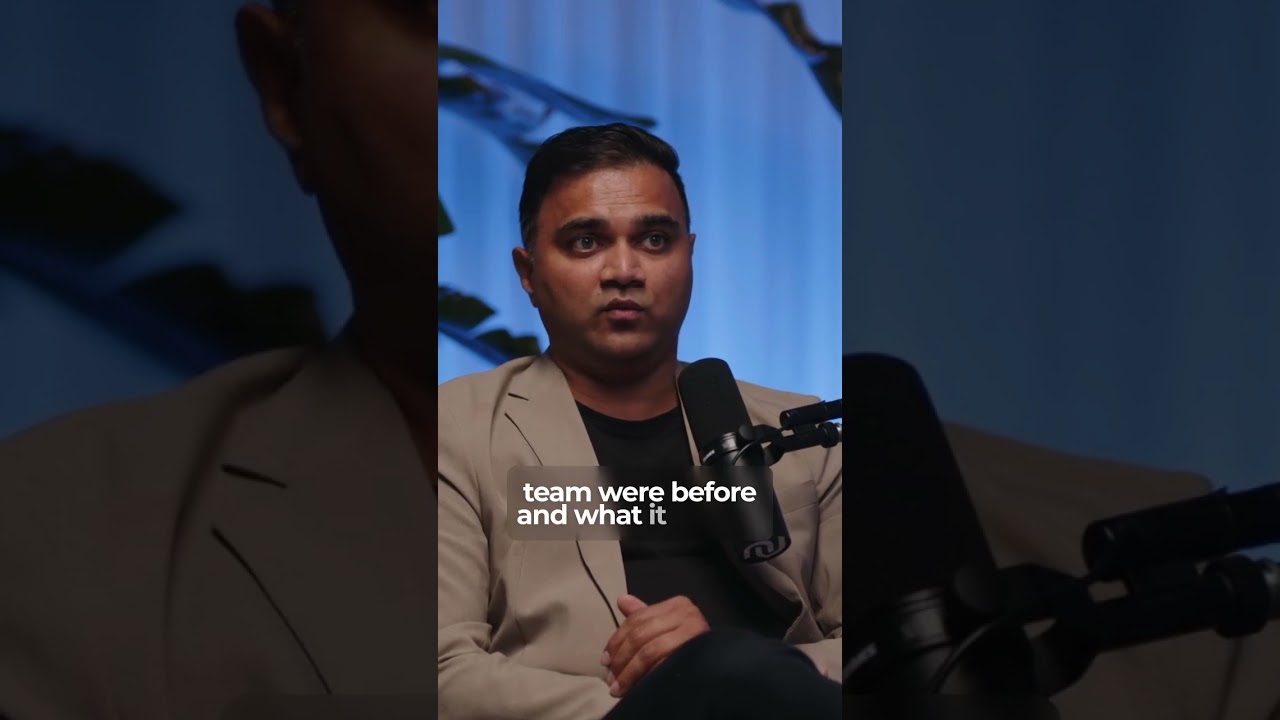
Candid Q&A with Gareth about Marten Runow's special workshops November 2026

In this candid interview, Gareth explains the philosophy behind Martin Runow’s ‘Everyone Sells’ training, arguing that every workplace interaction is fundamentally a sales conversation where the goal is mutual understanding. He emphasizes that misunderstandings are costly—both financially and emotionally—and that effective communication can be measured by sales outcomes. Gareth outlines who should attend the three‑day Executive Performance Masterclass, from reception staff to engineers and site managers, noting that even non‑customer‑facing roles benefit from learning to create agreement. He praises Martin’s teaching style for digging through multiple layers to deliver practical, usable tools rather than surface‑level theory. The discussion moves to managing emotions and assessing personality traits, describing a diagnostic test that categorises ten traits into high, low, or compulsive expressions, yielding about 30 concrete handling strategies. Gareth stresses the importance of delivering criticism without pain, turning feedback into productivity gains, and shares a construction‑industry example where blame‑shifting is replaced by problem‑solving through the training. Throughout, he stresses purpose‑driven conversations, maintaining awareness of why a dialogue started, and using structured agendas to avoid losing sight of intent. The interview concludes with Gareth’s endorsement of the program’s ability to improve empathy, reduce ‘mis‑emotion’, and make teams more effective across any sector.
Chapters
So everything that happens in the workplace is all about actually 2 people being able to communicate and understand each other. And generally it's like one person is trying to get another person to agree to something. And that's what sales is, isn't it? It's getting a person to agree to do something or agree to not do something for the right reason. And it's like in most sales training, it's all about like, you know, sort of, you know, it's 3 or 4 layers up from the real issue that happens with sales is how to sort of manipulate someone into buying, whereas This is all about understand— basically understanding how to get people to understand, and then really identifying when people aren't understanding to make sure they do understand before they make a decision. And that's why, you know, the title Everyone Sells is really appropriate, because, you know, everybody in every conversation, including this one we're having now, is basically transference of understanding.
And like, why should they come? Why should they bring their team?
Because, you know, every time there's a misunderstanding, it's really expensive, either financially or emotionally. And each time someone basically ends a conversation without full understanding, then again, it's expensive because then you've got a person that was thinking, was seeing, was taking in the words from their boss or their supplier or their customer and, and not getting the understanding of it because they didn't realize they didn't have a real objection or you know, a, uh, um, or just basically someone trying to fob them off and end the conversation. And so it's, you know, those are the things that actually create— like, really, they're the only things that create a problem in any organization or in any relationship. It's like, so when you have a breakdown of— you only have breakdowns of understanding and nothing else.
And this is obviously the fundamentals that The very basics of sales that can make or break them.
Yeah, because so if you really want to measure how well someone can communicate, it's like in a person's ability to close sales. If you had 10 salespeople on a team and one could close sales the most and spoke the least, they would be the best communicator by definition. Yeah, unless they're unethical, you know, or they're discounting or doing something. But if they're all equal on margin and, you know, then you have a person that's just able to go into someone, you know, quickly understand their prospect, know the things, the questions to ask, you know, knowing when to stop and knowing when to keep going.
What results do you think people will get from coming?
The, well, I mean, the most fundamental one is that they're going to have a better understanding of communication and understanding. So when in the workplace, the result of that is there's going to be, um, there'll be less misunderstandings, there'll be less mis— emotion and more productivity because you're going to have, you know, conversations that get to an understanding. And when you get to an understanding, it's either you end the cycle or, you know, to continue the cycle.
Does everyone who comes to this— so they have to be performers, or like if someone's, you know, lower on that productivity scale, like how much will they extract out of this?
Well, look, as long as they're doers, I mean, if you have anyone that's like a Obviously, it's just per the scale, it will multiply out. For some of the performers, it won't be such miraculous information. It might just be, yeah, reinforces what they already do, but they'll get some benefit. But for some people that are actually like, you know, good doers or above, it might be the first time they identify this and then becomes a tool they recognize and can take more advantage of.
And this has never been done before, this sales training in the way Martin's doing it. What makes Martin special?
From my perspective, it's like Martin knows where to start coming in on a topic. So, you know, generally you get surface-level information, whereas Martin may, to get to the point of actually receiving information out of a useful tool, he might go through 10 other layers and bits of information so that by the time you get to it, it really, it's something that becomes a really understandable tool to use, not just something to basically have some remember to use.
And what if, like, you know, with the team, if they're If they're not customer-facing,
they're facing something. So they're facing someone or something. So yeah,
it's
like, so, and they're the people sometimes that need the most help. Like if you look at, say, your sales team, they're generally like, um, they're, you know, their only tool is communication and they're generally quite good with it. Then they come in the office and they've got to face the ops team or the accounts person or someone like that, and then it becomes a fight because those, those The other people, you know, don't have that have to basically get agreement. So you sort of have in a lot of companies, half the company is agreeable and half is disagreeable, and that creates these— this infighting.
That's right. So it's actually all about with each other as well. It's not just customer to the customer, it's with each other. That's half the value.
And so here's the thing with a salesperson, they really have a purpose to their communication. So you go in and let's say you start a meeting, you go, I've got to close this person. But generally, 99% of conversations are just like, I need to have a conversation, with forgetting what the purpose of the conversation is. And so, and so some— a lot of the time when you go into a conversation, it's like the actual purpose gets forgotten, and then it can become a discussion about like, you know, the do rather than the have.
Mm-hmm.
Whereas like a sales guy or a good salesperson, they're going to have— all they've got is attention on the have. It's like, I've got to get this person to understand and either— and then either convince me that they're not right for this product or that they need to buy the product.
That's a really good point. And also, like, people, when they're prepared, they have a structure, they have an agenda. When you're dealing with each other, you don't have that. So if you know how to start the conversation, what your purpose should be at the end of it, you'll pull off.
That's really the only difference between it. As I'm talking about it, it's really the only difference between a good and a bad communicator is a good communicator doesn't lose sight of why they started the communication. And so if an argument starts out, a good communicator, or if it's becoming disagreeable or getting a bit clunky, a good communicator will basically bring the conversation, placate the receiver of the idea, and placate them to the point where they can get them back onto receiving the idea. And they're not asking for them to agree. It's like you're asking basically for an endpoint where the person legitimately disagrees, as in that they're not right for the sale or they're not right for the idea. Or like, you know, it could even be a person asking for a pay rise and their boss basically, you know, generally convinces them they shouldn't have a pay rise. But you're just looking for a genuine outcome that ends it, puts a full stop on it going, okay, I've got it. I shouldn't, like, makes sense. I shouldn't have that pay rise. And yes, you're right. Oh, 6 months later, I'm going to come back with my production stats and show you why I do qualify for the pay rise. That ends the conversation. It's not just a fob-off like, oh no, we'll talk later. And it's like, you know, I'm, you know, this is it. So even from a boss's perspective, as we ask for a pay rise, they need to come to a conclusion. The very first thing of being able to understand what's a genuine objection and what's a non-genuine objection, it comes up all the time in every conversation.
It's communication, communication training to bring about understanding, which is sales.
Exactly.
But it's not sales, it's actually— we should have called it everyone communicates and needs to sell their idea and understand.
It's like, you know, you know, you're sitting with your husband or wife, honey, do you love me? Yeah, of course I do. You know, it's like, it doesn't— it's like, it's again, you know, it's like, why is that person asking the question, do they really mean it, you know? So it's, it's like, it's every aspect of it. Like, you know, it's— if someone— if your partner goes, yeah, do you love me? Of course I do. It's like, you know, is there something you want me— would like me to do better, or, you know, to ensure that you know that I love you? That's what— that's the real question. Like, you know, if a person's got to ask that,
it's something you're not communicating.
Yeah, there's something missing in the relationship, or you've just got a needy partner, you know, or they're just bored and they want to start a conversation. But it's always, you know, there's a responsibility from always from both parties, and but one party will generally be more responsible in a conversation because they have, they've got, they started something or they identified something that they need to bring to a close.
Okay, so that's, that's really, they've got to bring their game. Reception, admin. Sounds obvious, but reception, admin, operations, your nurses, any
site managers,
especially engineers and site people.
Yeah, I mean, this is the biggest problem you have in construction is you've got— yes, you know, if you don't— I mean, the good thing about construction, you have major arguments and you can really get vicious with your customers and people, and it's like everyone recovers. It's like it's a really thick-skinned industry. But on the downside is like you really get into this like, like, um, blame assignment, you know, and rather than just get the problem solved. And it's like I find that that's the thing I do mostly in construction is getting my customers or my contractors or they're off worried about who caused the problem onto how do we solve the problem, you know, and how do we move forward as, you know, as cheaply as possible. And then go back. If there's a cost to that mistake or problem, then go back to that later, because it's like the first thing is to keep the project moving. Second thing is to go, okay, well, how do we work out the cost of that error or mistake, or who should pay for that? And it's no different to selling. I mean, you know, it's— and even then, it's like both sides are trying to solve who should pay for it anyway. But there's also on the other side is, you know, getting an agreement on how to move forward. Hmm. Yeah. And it's like I use that sales training that I did with Martin because it was the first— it's probably the first and only sales training I've ever done, to be honest. I've never done sales training other than Martin's sales training. And that, that just, you know, it just gave me the basic tools for all— for every conversation.
Everyone needs to communicate. Everyone needs to create agreement if they want to be successful.
Yeah, everyone. Sales is the industry where communication is measured. by closing and margin and sales.
Love that. And so then we've got this 3-day masterclass, Executive Performance Masterclass with Martin.
This training is all about managing, being able to manage and improve emotions in the workplace. And then obviously there's the correct emotion to apply to get an outcome, and then there's the incorrect emotion to apply that create— that basically, you know, creates a wrong outcome, or, you know, makes the situation worse. And so the first step is obviously understanding why and where those emotions come from and why there's— every person has strengths and weaknesses, and then how to manage those weaknesses to a person's betterment and how to manage their strength to take full advantage of them. And then, and then to be able to, you know, that word manage is what it's all about, and that's what this training is about, is You know, once you—
Coach and manage and lead.
Yeah, once you get this understanding of the source of emotions, and every person has a different mixed bag of leaders and emotions, it's like— and having a quick understanding and where to go in and be able to really help a person manage their emotions so the whole team wins is what this training is about. And you're going into areas, you know, then you're— this will give you the ability to go into areas you would never firstly understand where to go in on them or that they even exist until you do the training. And secondly, how to go into very sensitive areas, make a person feel good about their strengths and weaknesses, um, to be able to, you know, so they understand their strengths and weaknesses even better, and then, you know, become more productive and more fun to work with team members.
You can criticize. Yeah, without—
that's the main thing is like, for— I mean, firstly, here's the thing, right? The very first fundamental of improving yourself or anybody else is the ability to accept and give criticism. And of course, when you go to good people, don't really like to criticize another person because it's like there's some pain comes with it. But if you have, if you basically from this training, when you get the ability to basically deliver a criticism without the pain, it's like then it becomes very easy to help people. Yeah, that's one thing. I mean, Martin just exudes that. It's like you always feel great around Martin and you don't even realize he's actually criticizing you. Like, it's like he sort of sees—
Now you're making me think about everything that he's ever said to me.
Yeah, but here's the thing, right? It's like he— without him going, you know, Negar, you, you have a real problem with this, or, Negar, that looks really bad, he'll just give you some— in the conversation, give you some tool He'll open you up a little bit so you can get this pull to go in and you don't even realize it. And then you're going, that's a great idea, I should use that, you know.
But that's what I'm thinking. I'm like, I feel like he's given me lots of great ideas, but I've never once felt criticized.
Yeah. And it's like, you know, I just, I would watch him and then you, you, I'd sit with him and he's doing evals, you know, and he's doing an eval with someone and they feel good about what they're achieving, not what they're not achieving.
Obviously, we have the evaluation tools that we use for hiring and knowing more about people. Can this still be used, the information from it? How does it still get used if the person hasn't done the test?
Well, you'll still see. I mean, you can still see, like, you know, the most obvious trait you'll see in someone without a test is when a person takes— when you criticize someone and they sort of break down. So you can see they've got a low G. Um, you know, you can see a person that doesn't listen or talks too much, or they've got low B, they try and stop things. So it's like you don't—
That's right. Most of this you see, most of this you see, and now you get the tools on how to handle it.
Yeah. And the test within the training is just so that you can categorize all these things. So when you see them, it's like, you know what that is. You can label it. Yeah, he's having trouble with happiness trait. It's like he's having trouble with responsibility. So just It gives you a visual, it gives you sort of— you can see it, pin something onto it.
Especially because they're using this for their existing team, so they know their team, they're going to see it come up. But half the clients coming to this is because they don't know how to handle that situation with that person.
Correct. So they're going to have— like, if you look at every trait, there's 10 traits, and we pretty much have about 3, you know, we have high, low, compulsive. So there's going to be 3 different ways of identify something and you go on each trait. So you end up with at least 30 sort of drilled ways of handling situations that you see come up with the person, making them feel better and improving themselves. And because all you're— all we're doing with an eval is getting a person to firstly realize that they're important and powerful, and secondly, that it's like, you know, here's a tip that you, you know, you can improve. And if you're working with someone all the time and over a 1-year period, if you could give them 5 tips that might double their productivity and make them much more fun to work with, all you're doing is getting them to see. Yeah, I mean, low Gs are most obvious if a person starts crying every time you try and help them, because criticism is mostly help. And if a person cries every time and no one can give them any help because every time they, you know, they feel like they're being personally attacked, it's like then, you know, that they're never going to improve. You know, the number one step of HR management and management is to, you know, push production and push stats up. But the number two— the number one tool for achieving that is this, because there's only emotion and misemotion. And in the workplace, you're just trying to remove misemotion. I mean, you want lots of emotion in the workplace. You want people pissed off when things are going bad, and you want people, you know, high-fiving when things are going great. You know, it's like, it's, it's all those things are okay, but they're just at the right time.
The thing I love the most about being able to do this, have this skill, is that it doesn't matter what the quality of that person is, they never will introvert afterwards. They will always leave that conversation more able to handle themselves and improve their situation because of the way you delivered the feedback and communicated.
No, absolutely. And look, as an evaluator, it's like, I don't know about you, but it's like Whenever I do it, by the time I get to the end of an evaluation, I really see the person in front of me. I have so much empathy for them. And even if they're a really low-producing person, it's like, you know, you really, you know, sort of cut them open with the production check and giving them some positive feedback on that. And then, you know, they get to the point where they ask for, is there anything I can improve? I love that when they ask, you know, because you've gone through all their positives.
I love that myself.
It's like you really, it's like you just see, it's this process just allows you to see the person. You get around all the misemotion, you get around all the blocks of concrete, and you see that here's a person just trying to survive and live and do the best they can. And, you know, yeah, they, they make a mess of it to a greater or lesser degree, but they're all trying to survive.
And when you understand people, you can help them more.
Absolutely. Yeah. And it's like, And you know, the more the more we can understand the mind, the less the less we need to go into superstitions and you know hatreds and generalities and races and all this sort of stuff. They focused on I have a human, I have a person that's really trying to survive the best way they can. And some people struggle just to you know. I mean, we know we have destructive people out there, but even those people, this is just a false way they've learnt to survive. It's like they honestly feel like that you know. everyone who's like them and trying to destroy them. So they're, they're stuck in this loop where that if I help someone become better, they're going to become better at destroying me. Even if you can just educate a person, you know, some people will just be educated at that point and change. Some people, it's a little bit tougher, you know. It's like they've got this sort of subconscious, literally, you know, a demon in their mind that tells them they've got to do stuff. So it's a little bit tougher to sort that.
Yeah. Hey, Gareth. Yeah, if you don't mind, but because you were just talking, you know, so well explaining it, um, I just kept— I recorded it and I'm going to share it with clients and people who want to know more.
With my head half into the picture?
Didn't want to interrupt the flow, you know. If anything, it's more natural.
More from Negar




Episode 2: Building a Games Culture: How to Turn Your Business Into a High-Performance Team

How One Dental Practice Owner Stopped Managing Staff And Built A Team That Just Produces

Performia Intro Seminar - Get the tools to create productive, fun, safe teams