Can Books Make You $7 Million a Year: Hidden Revenue Behind Books (with Chandler Bolt)
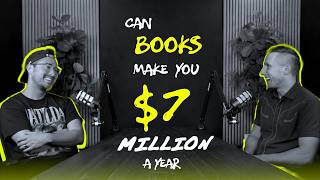
In this hour‑long interview, Nick Fisher talks with Chandler Bolt, founder of Self‑Publishing School and selfpublishing.com, about his unconventional entrepreneurial journey. They recount how Chandler dropped out of college, lived in a mentor’s house in Iowa, then built his own entrepreneur house in San Diego, recruiting a Dream‑100 of high‑performers and creating a co‑living incubator that produced alumni like Jack Kaldrop of Dr. Squatch. Chandler explains how he turned his own books into a $7 million revenue engine, rebranding from the Bestselling Book System to Self‑Publishing School, acquiring selfpublishing.com, and using SEO as digital real‑estate to dominate intent‑based keywords. They discuss the tactics of using physical books as premium business cards, free‑plus‑shipping funnels, event giveaways, and referral QR codes. The conversation shifts to live‑event strategies, including an ambitious RV tour that eventually broke even and drove significant sales, and the logistical challenges of staffing such tours. Chandler shares the pain of hitting an 8‑figure plateau, the emotional toll, and the need for reinvention to push toward 9 figures. Both hosts critique traditional higher education, proposing performance‑based payment models, and stress the importance of in‑person, high‑performance communities over remote setups. Finally, Chandler outlines his long‑term vision of building a billion‑dollar company that reshapes publishing and community building, while also discussing personal life milestones.
Chapters
Hey guys, got a good one today. I got Chandler Bolt at selfpublishing.com. Dude, thank you for coming in. Um, this man, we've known each other a long time, over 10 years, and not only has he done millions in info sales, um, but also provides a really cool high-end service for outside of our industry and a bunch of other stuff too. Dude, welcome to the show.
Let's go! Good to be here.
Good to be here too. Um, dude, first off, I'm curious, I, I was trying to refer to that photo that we took 10 years ago But around that time you were in San Diego in an entrepreneurial house at the time, which I didn't know. How did that even come about? Or what was that initial journey for you? You don't even know that side of the story.
Everyone said I was crazy when I started it. I dropped out of school, moved across the country to Des Moines, Iowa, into an entrepreneur house-ish. It was with a mentor of mine. Funny full circle in the picture, Dane Maxwell.
Yeah.
So I moved to Dane's house in Iowa. I dropped out and I convinced him.
Shout out to Dane.
Yeah, shout out to Dane. I dropped out and I convinced him to let me move into his home. Whoa. So that'd be like someone here convincing you or Pace, that's just one of your students, to move into your house. And so that's what I did. I was a student at the foundation and then I said, hey man, you need to let me move into your home.
That's what it was. 'Cause then I moved out to Boulder, that's where Andy Drish was at at the time. And I imagine that you and Sam Ovens then knew each other from those days.
Super loosely. Super loosely. But then when I moved to San Diego, I said, I want to create a, a better version of Dane's house, essentially. Um, which—
not the one that you moved into?
Not that there was anything bad to that, it was, it was great. But I just said, hey, I want to go create my own in San Diego in a new environment. And so that's what I did. And it was really hard to recruit, but you paint the vision and said, hey, we're going to have a chef, we're going to have weekly masterminds in the house, we got a whiteboard with goals on the wall, we're going to have people cleaning the house. It's going to be good value, but you're going to get in this environment and grow. And then I kind of handpicked 5 people that were better than me at certain aspects of life that I wanted to learn from in that aspect of life. And then we combined them into the house.
And then Dream 100, uh, Dream 100, the house.
Yeah, I mean, it was, it was your Jim Rohn. You're the average of the 5 people you spend your time with, but in a house and living with them. And, and everyone's businesses grew like crazy. I think that house still exists today. We're talking over a decade later. I was thinking about this the other day. I think my name is still on the lease, which I'm like, I need to get that removed. But they just kept adding names to the lease and it kept getting better and better and better. And then it spawned off into a bunch of Entrepreneur House in San Diego and then LA. And then we did the 2.0 version. It's been a wild, wild—
Okay, so it's become like a semi-franchise now.
Kind of, yeah. Except one that doesn't make money. I mean, I don't—
Except it doesn't make money. And you still might be on the lease. And I still might be on the lease. Yeah, it's the worst.
The worst version of a franchise that you could imagine.
Yeah, that's rough.
But what's interesting is, I think we were talking about this before the show, if there, there's probably an opportunity there for people who are smart and strategic real estate investors, not like I was, to do this co-living concept that's really popular right now combined with an entrepreneur house and actually make money from it while growing your business. I didn't do that. It was just more of a fun thing.
But do any Owners Club people that follow me— that's super interesting. Yeah, we were talking about how it's almost like, um, not a halfway home but a rehab home. Or a detox home or something of that sort. It's just you have to deal with entrepreneurs, which— what are, what are the worst things for any real estate investors who do follow me in here? The very few. What are like the worst things that happen in an entrepreneurial house?
You got people with a lot of weird quirks. So now I'll never forget me and one of my good buddies were— I mean, you would have 6 AM, or you're working at 6 AM just getting after your morning routine, and one of my other buddies, Austin Nesley, walks down the house, walks down the stairs, and me Me and my friend Chandler, ironically enough, are just in there dancing. We're going, guys, this is insane. Yeah, what are you doing? But I mean, I think there were— we would call each other to the mat every Monday night at the mastermind of, hey, you said you were going to do this thing last week, you didn't do it.
You guys would have cadence and ritual? Oh yeah. Oh, that's so interesting.
So I mean, that was— some people would get, you know, you get after it and they were forced to grow, but then there were also kind of I don't know, just random weird entrepreneurial quirks that, uh, you know, you, you live with and, uh, you have fun with. And but we would do these 30-day challenges, so it was kind of this crazy incubator where, you know, one time we did the Whole30, the whole house.
30-day challenges, you just running your own models out of yourself?
Oh, I mean, it was— one time we did it, you can't work after 6 PM, which was really hard for that crew.
Oh, I bet.
And so then people would come into your office At 6, step away from the laptop. No way. Get away.
Power it off.
Close the laptop.
Unplug the router from the house.
So it's just crazy stuff like that.
That's cool, dude. Yeah, that is not normal for most people, but I'm guessing you wouldn't trade that experience.
No way.
Yeah.
It was incredible.
Who are some of the alumni that came out of that house, if you can mention them?
Oh my gosh. Well, the most successful one is Jack Kaldrop of Dr. Squatch. Yeah. And I mean—
That's pretty successful.
A billion-dollar exit with that company that he built. And I'll never forget him. He'd already had started it, and we were at similar trajectories, but obviously he executed a lot better than I did.
I think he did pretty well. I think he did pretty well.
So him, I mean, myself, Austin Netsley, we did a 2.0 version in LA.
Yeah.
And that was kind of like the, now we got money, let's live on the beach in Venice. And that was kind of like the baller house edition. But then a bunch of other people, I mean, it's just too, too many to count. And a bunch of people that have been very successful, you probably wouldn't know their name. But then we hosted a bunch of people like our buddy Dave Rogan Moser, who started Jasper. I mean, people would come to San Diego for conferences and they would just crash on our couch. We got extra couches. I'll never forget Dave crashed on— we had a big beanbag and he slept on that beanbag. And you know, Dave sucks. 7-foot-tall.
Yeah, he's a massive human being.
Just crazy stuff like that, It was a wild era and I learned and was challenged to grow so much. I wouldn't trade it for anything.
Dude, well, if you had to do that again, some people that are watching me are probably interested in doing something like that. I get a lot of people who are like, they even like, shout out if you guys are looking for a job and want a community, come work at New Reach too, or Self Publishing School. Like I know you guys are hiring as well. It's cool to learn under someone who has done it before and is in the entrepreneurial environment. I know that's kind of what you create for your companies, but like when you were creating it for the first time, what would've made it more successful or what would you have done differently?
Hmm. Well, the hardest part is starting. And so that was, you know, it was this weird thing.
Like qualifying for the lease or just starting the idea of it?
Well, there's this chicken or the egg where you got to get people to commit, but people don't want to commit until you have a place. Yeah. And you can't figure out the size of place that you need until you know how many people have committed. So then you're just— so then I just started spinning and painting this grander and grander vision.
Did you have like a pitch deck for this?
I didn't. I should have. Nowadays with NotebookLM, I could whip up a pitch deck in no time. But I started pitching the vision and I learned that you have to do deposits because if you don't have deposits, people will tell you that they're in, but they're not really.
Yeah, it's not a sale.
And so there's a bunch of things that I would do differently. But I think you paint the vision, you preferably secure a spot, and then you set up the terms and just be a little bit more organized. For me, it was just kind of by the seat of my pants, but then I just willed it into existence. And you just figure out, you know, you can price based on the room. So very similar to co-living, the nicest room, that they pay the most. And, you know, you can kind of splice it out, but then you can set it up in a way where it's actually a big benefit, almost like a co-working space. And so you got to think about your ICP. This is a somewhat established entrepreneur or startup entrepreneur that can afford a little bit more rent and has had some success, but they're not old enough that they're married and have kids yet, right? And so that's kind of your pocket or your sweet spot. And then you, you have them go through an application process. They do an interview, like it's a selection process because you're not just trying to get anyone off the street because the, the, the community of the house has to, has to jive. And so if you've just got some jabroni that's, yeah, you know, just not, not with it, well then that kind of wrecks the house. Yeah. So that's how I would think about it, but I would maybe more intentionally structure it up front.
And where, where would you market it or advertise it?
Yeah, that's a great question. I think What's that old school forum that starts with the D? It starts with the D. It's like the internet marketing dragon, whatever, you know what I'm talking about?
Well, Black Hat Forums came to mind.
Yeah, yeah. Back in the day.
I don't know if those exist anymore.
There's some sort of old school internet marketing. People in the comments can help us here. Warrior Forum? Maybe. I think that's— it's a degree off of that.
Okay.
And so that's that type of— you just think, where are those people? And so Facebook groups, groups. They're in those forums, they're in meetups, they're in that sort of thing. And so that's where it's an interesting thing when you're starting, because you have to— I don't know, you, you have to find people in the exact right moment. And so that's the hardest part, is people's leases aren't up or whatever else. So what I would do is I would find a 5 or 6 bedroom house. I would have one bedroom that's open for a shared office or something like that, or maybe one bedroom that is you can, you can actually rent it nightly for entrepreneurs. And so you can, you can have like an interesting setup there where you've got some flexibility where if someone needs an on-ramp into the house, yeah, then so it just gives you some flexibility to recruit the best people and then they have an on-ramp to replace somebody in the house or fill a spot or whatever else.
That's so interesting. Yeah. And well, last question on that, did you choose the city first?
Yes. Okay. Yes. So I went to San Diego because, uh, people I respected were there. And I was in Des Moines, Iowa, and it was awesome. But then a buddy of mine went to San Diego and he said, you're not gonna believe it, there's internet marketers here and they think like us and they're everywhere. What, you gotta—
there weren't any in Des Moines?
Yeah, right. Yeah, it was Dane. It was Dane and like 5 others.
Yeah.
But he said, you gotta get here because there's a bunch of people in our industry and they're gonna help us grow way faster. And so I said, all right, I'm, I'm there. And I had a guy that I really respect moving there. And so that was— for me, it's all about the people you're getting in the room with. So when he said he's, he's moving there, I said, perfect, I'll put together a house, let's live together. I'm like, I just want proximity to this guy that I'm going to learn a lot from. And so I knew it started with San Diego, but then we settled. And this is a big thing that I would recommend for folks is don't settle. We just got an apartment, some people fell through, and it was me and a buddy. And 6 months in because I moved there with nothing. So I'm like, we gotta find an apartment tomorrow. I'm sleeping on a friend's leather couch and I'm just, just peeling off of that sucker. And, you know, I convinced him to stay for a night and then cornered him and convinced him to stay for another week on his couch. But then we, we got in an apartment and we said, okay, this is— this ain't it. And I'm like, I'm creating this house. And he was kind of like, hey, I don't know, man, this is, this is okay. I'm like, yeah, it's okay, but it's not great. So I just had to put my foot in the sand and say, "We're creating this house," and we did it. And it was really hard to do. So, my advice would be don't settle. Start with the city. We were in San Diego already. I knew there was a bunch of successful entrepreneurs. So, then we pulled the house together and recruited our butt off and then made it happen.
Dude, that's so funny. That seems to be like environment and proximity seems to be like a hack that you've used across your career now because now, like fast forward to Austin, you have self-publishing school. It's scaled to 8 figures plus. You guys are doing extremely well. Do you think that would have happened in a different city?
No way. Well, would it have happened in a different city?
Yeah.
Yes. But only because I would have found the people in that city that I could learn from. And so to your point, that is my cheat code. I dropped out of college. I'm a C-level English student. I have ADHD. I've not— I've never been the smartest, the most technically gifted, and definitely not the best educated. I come from a middle-class Family, my parents met working night shift at a factory, you know. So they— it's not like I had the silver spoon. It was, you're going to work your butt off and you're going to go get it and you're going to figure it out. And we're not the smartest in the, in the room, so let's just go find rooms where we can be the dumbest and learn from them. And so that, that's— that is my cheat code, always being the dumbest in the room. And if not the dumbest, at least the most curious. So I'm just finding what that person is better than me at and asking them a bunch of questions, dude. And so just repeating that, and then the house was a literal manifestation of that, but a bunch of stuff along the way. I mean, even to last night, just doing a little entrepreneur dinner, and I mean, looking around that dinner or that table and saying, this is— these are the people that I have looked up to for so long. I mean, it's, uh, Jeremy Miner, it's Dean Graziosi, it's Pace, it's Cole Gordon, it's Brandon Poolin. It's this crazy lineup of, um, John Madsen, uh, crazy lineup of people that are a bunch of steps ahead of me in many ways. And then my job is just to shut up and ask questions. Yeah. And if we got a couple things that are working well, cool, I'll share that and try to be helpful, of course. But I want to learn from these guys. You got two ears and one mouth for a reason. Yeah, shut the hell up and start asking, start getting curious, ask some questions.
Do 100%. Guys, that's why I started this podcast. I've already told people, like, secretly, I was like, all right, a podcast is a really good Trojan horse for just Dream 100 activity. Yeah, you just find, like, people smarter you, like, you're in there on that list that I originally made. I just listed, I listed about 150 people about this time last year of just people, people, either friends in the industry that I respected, peers, or people that I want to learn from. And I was like, cool, if, if they trickle in my world, I'll reach out. I'll say yes to those people, no to everyone else.
Nice.
And that'll be a good way to just like, in the last year has been so beneficial as far as opportunities, like talent of people that like want to come into my world. It's just been so great. And then most of all, I get to sit and learn from people like yourself. So So it's been super cool.
That's cool. I got a lot I can learn from you too.
Dude, well, I know. And when that happens, it's fun. It's like, well, shoot, we should do this again. But dude, now that you're in Austin, and I want to point out to last year what no one has ever done to me, or at least in a very long time, and relates to Self-Publishing School is like instead of a business card or whatnot, you handed me your book like when you came. And I wasn't sure if you brought like 20 books. I think it was at Dean Graziosi's mastermind. And you're like, hey, here, like, my contact information's in here, like, here's the book. And I was like, that's such a nice touch, and it promotes like your offer too, right? I'm guessing that was intentional, or do you do that often?
I do it all the time. The only reason I don't have a book today is because I spoke at an event yesterday. I already have it too, but I always bring them because if nothing else, it's, it's, it's in the shot, right, for content or whatever else. But yeah, literally, I spoke at an event yesterday and we signed every single book that we had, including my personal copy. And I look up and I realized I was about to do this interview on TV, and I'm like, oh my gosh, I don't have a book. And then I got 4 podcast interviews today. I'm like, I don't have a book. That is so stupid. So I think the stupidest thing you can do as an author is not go everywhere with your book. It's, uh, and it's, it's better than a business card, to your point, because people give out business cards at events and they're thrown away within 24 hours. Yeah, most likely. Uh, but I— we just give away books, and, and it makes a bigger impact. It has inherent value. If you're curious about it, you read it, or Or if not, you take it home and it's on your shelf and then it's a memory jogger for our interaction. So it's a $5 business card and the best business card that exists, I think.
Dang. Well, dude, yeah, I'm already sold on books. I'm such a big reader. Then I'm just sitting here, I'm like, man, I should do Self-Publishing School too. I just need to get my book done, which is what you do. Like, talk to me about the evolutionary of like your services, what you were selling and why you thought it was important to go the direction you did.
Yeah, it started scratching my own itch. Where I published a couple of books. They did decently well. And then people started saying, hey, you should teach this.
Which was the first you did?
It's called The Productive Person.
Productive Person.
Productivity for Entrepreneurs. That was about kind of my first couple of businesses and what I learned. And it's funny, full circle in Des Moines, Iowa, Dane said, you should teach this. You know what I did with the foundation? You should do this with the book stuff. Everybody's asking you about it.
No way.
Make an info course around it. And it just was this lightbulb moment. So we started. With— it was originally called Bestselling Book System, which the acronym was BSBS. That's perfect. Dang it, we did not think this through. Uh, BS, you guys want to join BSBS? Yeah, there's so much BS.
That's hilarious.
So we said it twice, and then we had kind of a, a, a partnership dispute and a business partner that just wasn't really carrying his weight. So we said, all right, perfect, time to rebrand and, you know, uh, it's part ways. So then we started Self-Publishing School, and then over the years it's just continued to grow and evolve. And then we bought selfpublishing.com, and then selfpublishing.com, that became a massive channel for us, uh, just content channel. We took over the site that looked like it was designed in Microsoft Paint.
Yeah, it probably was horrible.
And we rebranded everything, and we— and it started just spitting off $75,000, $100,000 a month in, in revenue, pointing back to Self-Publishing School. It was just a kind of a— it was just an SEO play. And then that kept going so well, and then we realized— I was kind of telling you this beforehand— but that a lot of our folks, they said, hey, Self-Publishing School, like, I don't want to join a school, I don't want to be a student, so can you guys just help me do some of this stuff? And so we started rolling out services to do it, do the stuff at a high level but still put the power in the hands of the authors, and they keep the upside. So that's when we rebranded this, the whole site and the whole company, as selfpublishing.com. And then now we're just growing it because we said, hey, if you want to own the space, yeah, we own the domain, why not just rebrand the whole company? Dude, that's super interesting.
Interesting. I have a lot of like tactical marketers on here and we talk about— we never talk about acquisition-based like SEO. Was that the intent getting there, or was it just the brand?
We did a lot of that, and I don't think that's a great model these days. I think— but the way I looked at it, it's kind of interesting connection with what you and Pace do, is it's still digital real estate. Yeah, it's a rental property. And if I can buy a property or have it that is in the 1 to 3 or 1 to 5 spot for the keywords that I want, well then that pays me rent every single month and I just got to do some basic maintenance and updating just like a rental property to keep that in the top 3. And if I do that well, well then that rent will keep coming and I can actually maybe increase that rent. So then the thesis that we had was let's go buy up all the digital real estate in this space because when people search for anything about writing and publishing a book, I want to buy— I want to be 3 out of the top 5 positions. And so then we said, all right, let's buy selfpublishing.com, let's buy this other conglomerate of sites, let's kind of start doing a roll-up. And I think it was smart for a while, and selfpublishing.com was a major success within that. But then, and we started buying— we've got thebookdesigner.com, we've got a bunch of other random URLs, and we've sold— since sold off some of them.
But so your branded keywords were basically intent-based keywords at first?
Very intent-based. How to write a book, how to publish a book, how to self-publish a book, best book writing companies, best book publishing. I mean, it's all that stuff, and we want to rank for all that. Now that landscape has changed, and now it's AEO and GEO and all that stuff. And so we're even considering combining some of these sites together because I think now it's splintered.
So what's the difference between AEO and GEO? Is AI-based optimization SEO optimization? You know, I don't even know.
I don't even know either. Answer engine optimization. And then, and then I think GEO is maybe be, uh, more AI-based. But I mean, I think their, their whole thing is like, oh, you're optimizing for answers. Yeah, so they're going to spit out one answer, not 5 blue links.
Correct.
You want to be that one answer. I'm thinking about self-publishing a book, who should I work with? You want to be in that answer.
Do you guys point your community? Because immediately now with like with Pace, now I'm thinking with a strong community I can point— and I used to point people back at BiggerPockets, which is a real estate forum, for that answer-based I could just make that part of our community workflow where it's like every Wednesday, hey guys, there's these questions that people want to know on Reddit. Link, link, link out in a strong community. That's smart. Well, thank you. I'm thinking about it because you brought it up.
Especially on Reddit, because dude, Reddit is an absolute disaster.
It is.
It's miserable human beings complaining about everything. It's the only thing worse than the YouTube comments. Yeah. And there's never people like, I really love my life. And you know who else I love? Nick and Pace. Change it. It's like, they're great, I'm a victim, my life sucks, and I'm blaming Nick Fisher.
In fact, I can't wait. If you guys— if anyone sees this, instead of commenting on YouTube, please just go comment on a Reddit thread, and then you guys are going to get accused of shilling for someone because there is no positivity. I've done that on Reddit, people are like, shill, shill, he got paid. So it's just— it's pretty much hopeless.
I'm convinced that no normal people And certainly no successful people have Reddit accounts. Yeah, yeah. Because we, we go to our community and we're like, hey, you guys, everyone here loves us, can you guys just comment on this Reddit thread? And they're like, yeah, we don't have a Reddit account, dude.
Reddit— the last time I posted on Reddit, I was so infuriated that I wasted an hour venting to everyone about how I was posting in the ASU subreddit for like talent or intern opportunities. Intern opportunities are not allowed to be posted in the Reddit. And then I read through the rules in the subreddit, the ASU subreddit. You're not allowed to sell anything. You're not allowed to post opportunities for your students. They're not allowed to act like talk about academics or classes or rate their professors. They're basically not allowed to do anything useful in that subreddit other than like, I guess, praise the university. Like, I don't know what the purpose of that is other than it's just It's just, I don't know. And then I spun off on it. I'm like, man, imagine not being able to optimize for like job placement for your students or like that being an anti-initiative or an anti-value of your community. Just crazy. So I don't get too heated about like education. I don't talk about like, I want to like crash the higher education system. I don't know if you do.
I do.
You do? Okay, cool.
Sweet.
Let's talk about it.
I don't get heated about it, but I just don't agree with it. I think it's a total scam and a waste of money. It's, I mean, Dropped out of college because I was tired of learning how to run a business from professors who have never run businesses. Makes no sense to me. And you were in business school? I was in business school. An entrepreneurship degree is an oxymoron. Yeah, it's like, what, what, you're getting a degree to be an entrepreneur? You don't get a degree to be an entrepreneur. You do, you do the business. That's how you learn how to be an entrepreneur.
So did you ever have, uh, this is the worst one. I knew something was backwards when I had a professor of entrepreneurship who told me he failed in his last business, so he came back, he was teaching us. And he was teaching us like where he failed, but I was like, it's kind of different.
That's tough. I like that better than someone who's never done it. Yeah, because you know, at least if you failed, you've got some scars. Yeah, and you've got some— you, you've learned some things not to do, which is more helpful than just teaching theory that you've never implemented. Cool.
I, I, I tend to agree with you too. I've had some friends I told you that— I've told that story to, and they're like, that's the— that's a scam. They're like, that's the worst thing I've ever heard. And I was like, well, it is hard to be an entrepreneur. And I appreciated his honesty. So yeah, there's that.
But it's the social construct of education that blinds people into robots and zombies. I mean, they'll pay $50 grand a year, a lot of times more, but they won't pay $10 grand a year to be in a Sub2 community or whatever your guys' prices are that are less than a degree.
$10,800 at the time of this publication.
So $10,800, right? Find a college where— and I'm sure they're probably selling real estate degrees. Find a college that you could get into for less than that.
You can't get anything.
And yet people will say that of these two things, what's the scam? Sub2, right? You guys are the scam.
Yeah.
Charging people for this.
It's like, right, you'll find a way.
Go to Reddit. You'll find the miserable losers who can't take accountability and responsibility for their own actions. 100%.
No, like, cool. I, I agree with you there. It's just like the value perception is whack and then the incentives aren't aligned too. It's just like, that's the part that bugged me the most. It's like, all right, like my school, have they ever called me and checked in to see how I'm doing? If I got like placed at a job that I wanted or like maybe if there's a donation attached to it, if the second question is great, yeah, would you like to donate money to the school? Sure. But other than that, they don't care at all.
Here's how you fix higher education. You say, I'll pay you a percentage of my first 5 years of wages.
Yeah, that would be sick.
I'll pay you 25% or whatever. I mean, recruiters do that. Yeah, and it was contingent. And so it's a contingency, and sure, maybe I have to have some upfront amount to just have skin in the game. So maybe it's a $10,000 flat fee or something, but then on the back end they pay based on performance, and now incentives are aligned versus— yeah, you know, just taking the upfront cost. And they, they have, to your point, they have no incentive to make you successful or to increase your earnings.
Yeah, yeah, do 100%. And you'll have to talk to about Pace about this later. But that was like, that was our secret motive all along. If we could put people in this community, and then he could just collaborate and do deals with them. Now we have this deal network that's kind of crazy. Like at our last conference, we were talking about, I think we own 7% of all nationwide RV parks, you're saying, our community. So like, I'm imagining a scenario in the future, or a channel, or like you're out camping, and you're just rolling to any RV park. And it's just like Sub2Flag is up there. So then you can stay for free, obviously, because we'll have a monopoly across the country. But certain asset classes are like starting to become super interesting to our community. And I don't know what that means if we own like 80% of the RV market. I guess it means we can price fix or something. I don't know what they're going to do. It's in general— that's a joke, by the way.
SEC, don't come at us.
If there is price fixing on RV park looking, do not cite this. But in general, like that to me is super cool. It's like our community came together and that's like the product of they're going to do deals with each other. And because we understand RV class, they can at least transact with each other or go into deals or like Pace has both taken ones down solo and just funded money and like helped with the operations. Just depends. So that to me is like the universities would be better off if they aligned incentives long term instead of just like relied on maxing endowment, endowment maxing. Um, or whatever they're doing. But I digress. Uh, so like, dude, tell me, where, where's the vision then? If that's like the common enemy that you have, like, where is Self Publishing School headed from here? Um, or Self Publishing—
selfpublishing.com.
Yeah, selfpublishing.com.
See, that's— so that's an interesting topic, honestly, is talking about rebranding. I don't know if you guys have ever done that, but that's actually been really difficult because everybody keeps calling it Self Publishing School because because I quite frankly, I think the brand is maybe better, uh, and we haven't really figured out how to overcome, overcome that brand equity that we had from all those years with a rebrand. But I mean, the vision is I think we can get the company to $100 million, try and follow in your guys' footsteps. I think there's some interesting things to talk about maybe of what it takes to scale to 8 figures, what it takes to scale to 9 figures, because I think a lot of things— a lot of people watching or listening that at 6 and 7 figures, and 8 figures just feels either so far away or so easy, like they can just do it very easily. And but there's some real hard truths. But I think we can scale to 100. And, uh, it took us a long time to scale to 8 figures, um, and then now we're kind of plateauing. And, um, I was talking about this at dinner last night with Pace and them, of just like, how do you break through plateaus? I think that's a really interesting thing that we're trying to figure out because we've kind of plateaued at 8.
What did he say? Because we went through that about a year and a half ago. Yeah, we just, you know, from my perspective, did more, but I'm curious what his perspective was.
Yeah, I actually don't know that he shared on that. Uh, Dean shared some really good stuff. Cole shared some really good stuff. I think the frame of my question was, what do you do when you— because we hit 8 figures and then it was every year was not will we grow, it's how much are we going to grow by this year. And then we didn't grow one year and we receded a little bit, and then the next year we receded a little bit, and we're kind like last year we were right below 8 figures. So I think kind of like what you were talking about on 9 figures, and I just find myself being pissed.
Yeah.
All the time. Yeah. And just kind of losing my joy a little bit in it. And so that was my prompt to them. And I think Cole had a really good thought, which was— I think this is what Hermosi was talking about with him— is you're not— it's not going to get back to what it was, and that's what you're obsessed with, is getting back to what it was.
At least think about that.
It's going to be something new. New. Yeah. And so it's a new— so you chasing what it was is making you miserable. So just stop doing it.
So trying to like revert and reset the play is not the move.
Yes. Don't try to repeat what you did because you're trying to refine the magic. It's going to be new. So I think that's a really good takeaway. And Dean shared some things that were— the low moments allow reinvention and allow for you to kind of reboot on a bunch of things that you would not have the opportunity to do that if you didn't have that. And it's just part of business. It's the success tax. Like, you've got to constantly reinvent yourself. And if you don't reinvent yourself, you're gonna die— both your business and, I mean, I think in some ways physically as a human. If you're not growing, you're dying.
Yeah.
But then also, if you don't have the down moments, you don't get the chance to reinvent yourself.
True.
So then you sell— instead celebrating those and pushing— so that was kind a bunch of thoughts and reflections.
They're all good perspectives. My thought would be at least anger— like, anger, you feeling anger about it is a productive negative emotion sometimes. Yeah, like, it can be. It's better than being sad if we had to compare negative emotions about it. Yeah, because I feel like sad, you just end up with apathy, or you end up quitting, or you just end up like hopelessness, right? Where anger usually inspires at least change. Yeah, sometimes you have to channel it to the right change. Yeah, but I think that's like like at least the first emotion, then you channel into something more positive and productive. But like, you're right, like looking back when we plateaued, we added live events to the mix. And that's something I'm super bullish on going forward too, is we did 25 live events last year. Um, a good chunk of them, most of them were for Pace. I'd say probably over half, um, were Pace-led, uh, live events. But that really got us out of a huge revenue rut that we were experiencing. Um, it didn't help margins at first because events are actually— yeah, like, build it— like, building this out and still the ongoing, like, the upfront cost. But you could probably do it on a budget. Like, now looking back at it is we didn't have to do it here. We could have, like, rented space. We could have saved costs in a bunch of ways. We didn't have to necessarily do an RV tour where we went to 100 cities in 108 days like Pace did.
But yeah, that was crazy.
Yeah, I think so too. I think it's single-handedly the craziest thing that might have been done in this industry, which is maybe was smart. Yeah.
Or why it was dumb. Who knows?
Yeah, well, it's, it's pretty bad. Like, when I heard it, I thought it was crazy because normally me and Pace are pretty much on the same page, and it took me a second. I was like, wait, this RV bus is going to cost a million dollars to wrap and like fit it out? I'm like, we're not like Jay-Z and Kanye West. And then it turns out Pace is kind of like Jay-Z and Kanye West. So he's just going on a world tour, and then it led to our best year ever here now. So like, the compounding effect of doing those, and once you see that like hundreds of people start to show up for them, you're like like, okay, cool. Like, the worst thing you do is you do the tour and no one comes out. That's like demoralizing. Um, it would be terrible. But the fact that it slowly built and snowballed as we continue to do it, and I think that's, that's the part of it that's like, he won't have to do that next year at that pace. No pun intended. Yeah, I do that on accident.
So what, what were the business impacts of that tour? I'm curious. Yeah, how did that actually show up on the scoreboard to lead to what you said was best year ever.
I want to say it didn't ROI until like date 40 or 50 as far as like the actual direct revenue. To me, like being from direct response, I'm just like, how many sales via referral happened at the event with like— because it didn't have to be students. My like dream scenario was 50% students and they all bring a plus one who's interested in real estate and we sell them at the event. That's not what really happened or like materialized from, from the event. It was a bunch of soft pitches. And if anything, we were trying to get them to go to Squad Up from it. So we were trying to ascend to like a $1K or $2K ticket for our annual event, which Pace probably talked about yesterday. Went really well. And then there was roughly 3,000 investors there, 2,600 paying and I think 400 or something free, um, they came to that event. And then we ascended to Owners Club from there. So to, to us, like, probably this month is really when it actually ROI'd as far as like the tour broke even some somewhere, maybe through half of it, just like with direct sales. But would those sales have happened without the tour? Probably, like, but it was like, in theory, I was like, okay, we're gonna divide Close CRM into 50 different pools and we're just gonna push SMS blast them all into the cities, you know, that like that happened. So that did happen.
Is that how you filled up the events? Is just texting?
Yeah, I don't think that was the only tactic the team used. Like, we have a whole playbook. It'd be interesting, dude, after this, if you want to see it, just of like, it's like a 16-page manifesto for how we're gonna make this tour profitable. So at first we didn't know, so Yeah, I would love to see that. Yeah, yeah, yeah, remind me, I'll grab it for you. Uh, but it's super cool. And then, yeah, like, to what extent? Um, but I, I think like logically it makes sense. It's like you're going to local, you're pushing people in follow-up pipeline. It's people like, I, I know anecdotally there was people there like, I was a substitute student 4 years ago and I haven't like touched base in a long time. I saw you guys were doing this event, I just came, and it reactivates them, right? So I think there's like the full analysis I'll have to do later, um, but it's, yeah, ROI positive. I just don't know how positive, to be honest. Yeah, you should do it. You should do a book tour, dude. It'd be, it'd be so cool to do a book tour in RV. You can, in fact, you can rent it from us. We're not using it.
Change the wrapping. Yeah, change the wrapping. Just put my face over Face's head.
Yeah, that'll be—
I I mean, my brother's a rock and roll musician, or he just retired. I mean, I've watched behind the scenes of a jillion shows.
But he was in like a famous emo punk band too, wasn't he?
Not emo punk.
Was it?
It was like alternative rock. It was alternative rock.
That's right.
Southern alternative rock. Some people would call it a Christian band. It's kind of a hybrid. But I mean, he did 81 shows with Taylor Swift back in the day. Dang. They were the direct opener. I mean, they've done— nominated for a Grammy, done a bajillion tours.
You should put him in charge of it.
Yeah, yeah. He's like, I just retired. He's got a business that he's scaling. He's like, I don't want to go back on tour.
Oh, that's funny, man. Yeah, he would be the perfect candidate because we had no staffing for this. Like, he probably knows how it all goes.
Get yourself a tour manager. Well, I mean, this is obviously like, you know, Monday morning quarterbacking. Yeah, those are the people— the tour manager. And just being behind the scenes on a bunch of my brother's tours, those are the logistical geniuses. You need a promoter and a tour manager. That's pretty— I don't want to say that's it, but that's kind of it. You've got your promoter who knows how to sell out.
We should have talked to you a year ago.
Hey, maybe, maybe, maybe you guys go on another tour, who knows.
You got— okay, so the promoter sits— did the pro— does the promoter tour with them?
I don't think so. They're typically with the management company.
Okay.
But the promoter knows how to sell local events, so they know, okay, we're running local Facebook ads, we're working with the local radio stations, we're giving away some tickets. Like, what is our local playbook to sell out this show? And then the tour manager is, you know, think ops manager or assistant, is okay, we got this event, here's our run of show, here's our sound check, okay, we've got the will-call tickets for your friends that you're hooking up, here's our meet and greet we're doing before, here's the, you know, just kind of the whole, uh, you know, tour bus, blah blah blah, lining up all the stuff. And we're kind of your, your person that's running.
So good to know because I think a lot of people probably would love to do a live event, but yeah, the staffing is so much different. Shout out to Rachel who became our quote-unquote tour manager, but she had never done it before. Like, a bunch of people here too, I don't know who's in the room— Angel, Adler, Canyon— who are all running in. We were just sending video production with Pace. They were doing like tours, like it was like a tour to Iraq, you know, for a couple weeks. It's just coming back. So we had to figure out a lot on the fly, but it was super fun.
We're sending the video team to the Middle East.
Yeah, what?
No, I'm talking Iowa.
Yeah, no, like, I forget— someone came back to— where did you grow up exactly in that region? Oh, in South Carolina. Okay, which is kind of like the middle of the country of the East Coast.
Yeah, uh, I'd say it's— I'd call it the South, but some people would call it the East Coast.
Yeah. Oh, interesting. So you're right, it's like right on that border. So to you, North Carolina is where you hit the— North Carolina is not the South, is it?
I guess it can't be because it's north.
I guess it could.
I mean, I think— I think North Carolina is the South, so then it kind of starts to blend. Yeah, exactly. Okay.
Yeah, like, for where certain people sent— someone came back and they're like, I really like Fargo, North Dakota, actually. And I was like, yeah, I bet. I've never been there, but I bet it's nice.
Yeah, it's probably beautiful in the, in the summer.
Uh-huh, exactly. In the summer, not so much in the winter. Yeah, but it— do a tour. A tour was like, I think, definitely in some sort of way, or live events in general, that's for us just like really big right now. And I think post-COVID and with AI, both of those as being market timing drivers of like pushing more people in person. Drove a lot of just like people want to connect in person. It's really cool. Um, and they're craving that community in a world where I was saying like people don't know by the time this is out, like AI is already good enough. It's like me and Chandler could have mailed this in and probably done AI avatar versions of talking head video and had someone stitch it together. So, and imagine like 2 years from now, people really aren't gonna know. So in a world where like that becomes the default is skeptical, like they're all have, they all have Reddit brain now. Now where they just come into it just thinking that it's not real. Uh, I think live events will be that equalizer until like obviously robotics gets there, but I think we're a long way from that.
Reddit brain. Yeah, I love it.
Yeah, that's— I've never said that before now, but you're right. Those skeptics, those skeptics on Reddit, dude. So, well, I interrupted you a little bit, but where, where the vision for self-publishing, where is that headed? Either the industry or you guys yourself?
Yeah, I mean, the vision is, uh, we're kind of going upmarket and we're going higher end because we can deliver better outcomes. And so more business-focused authors. And so, you know, we're doing Dean and Tony's next book. We're doing—
oh shoot, congratulations, that's huge.
That's a fun one. Uh, we're doing Carlton Dennis's book, if you've ever heard him.
Is he a real estate— real estate?
He's a tax guy.
Tax guy.
We actually do a ton in the real estate investing space. And so it's just, I don't know, it's more interesting. And that doesn't mean we don't have the mass market books. We will. And we have our, our lower end, which is still high ticket, but more mass market. I mean, we've published about 7,000 books. We publish about 2 to 5 books a day. So we publish a ton of books all day, every day. And so the goal is to do more of that and to do it better and to build out the backend, which has always been a huge weakness of ours, uh, is more of the business-based backend. So we're, we're building that out and we just got, we're building out a media team. And media company within the company. So that's something I'm interested to learn a lot about from you guys. Yeah, is, uh, building out Bolt Media, and that, that'll be, you know, on the Chandler Bolt personal brand side of things, which is all scaling to 8 figures and just teaching that, which that's more of a passion project than a business at this point. It's just I've been doing that for a long time and it's a lot of fun, but just kind of behind the scenes. And then there's selfpublishing.com media stuff, which is so YouTube YouTube on both sides, so long form every week, and then social. I just created my first Instagram account, which is, uh, whoa, really? What? Yeah, 6 months ago or so. Uh, and so publishing a lot of content there too. But I think the example for that, maybe for people who are watching, is we scaled to 8 figures with way different than how we did. No socials, no, no brand, no any of that stuff. Just we were really good in a handful of things. And you don't— so you don't have to take the playbook that everybody else has. Yeah.
Yeah, and I've talked to Pedro a little bit about like the scale up on the affiliate and JV side, which you guys did so brilliantly. Especially if you guys are watching this and looking for like JV partners, I always talk about like Chandler, you guys, your offer is so complimentary to almost every info space offer. It's like it doesn't come in as competitive. It's like cool whether you're teaching like business creators or whether you're teaching real estate, like it's so easy to be like, you know, your life would be a lot easier or better if you had a book as a business card, right? And that just messaging is pretty be like actually true, um, in every industry. They'd just be better off if they had a book.
Yeah.
Um, and the one way that I, I remember talking with Pedro and Pace about it before, I'm just like, yeah, Pace, imagine like you're going on Good Morning America. They're not going to let me take on the Sub2 box system and set it up there and be like, hey, what's that? Oh, this is our $10,800 product. But they would let you take a book pretty easily, and they would even ask you questions about that book. So it's like, it's a cool way to just promote when like it doesn't look like you're promoting, or people are just used to it in traditional media.
I agree with that. And, and, and what's interesting is that old media is becoming new. And so I just went and spoke at an event the other day called New Media Summit, and I just made the joke that, hey guys, I'm here to talk about books, the oldest media that exists. But if you look around the industry, all of the biggest people are using books to dramatically accelerate their revenue growth. Cody Sanchez, Alex Hormozi, Dan Martell, Amy Porterfield. I mean, you just keep naming names. It's 8— they're building 8-figure, in some cases 9-figure businesses on the back of these books. And because it's a— not especially when you have a media arm, it's the natural extension of that. People watch your content all the time, and maybe they're not ready to take a massive leap to a multi-thousand-dollar thing. Maybe they're not even ready to show up to a live in-person event yet, but they'll purchase the book and they'll read the book, and now they're a raven fan. And those are the cream of the, your cream of the crop of your buyers, and then they easily ascend into everything else. But then not only that, you use the book as kind of hub and spoke to get on all the podcasts, get on Good Morning America, whatever else, and it's a massive rainmaking moment for the business.
How do you think about our industry, which is like, uh, and by our industry, just like marketers in general who are obsessed with lead magnets and usually default to ebooks versus going the full distance and doing something like what you guys do and publishing it.
If you spend all the time and energy to make an ebook, why not take the extra few steps and make it a real book?
Dang, that hurts, bro, because we got like 7 or 8. Maybe that's— so maybe I need to take some action after this.
We're about to do a little live coaching session with Pace on his show about his next book, and I was doing some research ahead of time and I'm looking at them like, wait, what?
We got a lot of half—
how many books we got here that aren't even on Amazon? A lot. So I'm sure he's probably going to want to talk about the next book, which is great, but my immediate thought is you're sitting on gold right here. What if we just did an intentional launch and you could do a series of, you know, you did—
sounds good to me—
108, uh, or 100 Cities in 108 Days or whatever. What if we launched multiple books but the first few were just the books that you already have? Yeah. And so I— don't get me started on that, I could go on the feeling.
No, like, I kind of want—
I mean, that is if I had my book right here, I signed them all yesterday, so we're out. But I would say that that book is a $7 million business card. Over the last 12 months, it's brought in roughly $7 million in sales for the business. And that's, you know, that's just because we purposefully integrate it into everything that we do.
Do you integrate it as a front-end offer or a secondary, like, attachment funnel?
Yes. Yeah, everywhere. Everywhere. It's everywhere. It's— you register for a webinar you're getting the book for free if you watch the webinar to the end. You get a free plus shipping funnel, you get the book for free. Now that leads into calls to the sales team. We go speak at events, uh, we'll do $6 to $8 million from events this year. Um, just like yesterday, signed and gave away all the books. We've got a bajillion leads, a ton of appointments. Every event for us will do— we're speaking at someone else's event, typically somewhere between $30 to $100 grand on the spot, and that's because we're giving away books and And that, I mean, we get— you should see the booth. It is nuts. And it's not a— we're not coming in, run to the booth with your credit card, first 5 people. It's just super low-key. Yesterday, hey, 500, 600 of you, we brought 100 books. We'd love to give a bunch of you a copy, first come, first serve.
Well, that's good. You still got urgency and scarcity in there. Yeah, yeah.
And yesterday, part of that was they screwed up our shipping. So we're like, hey guys, super sorry, we've only got 100 books.
It was legitimate.
You know, typically we'll get 60% of of the room will bring in books. And then, so we still have the urgency and scarcity, but we blanket that conference with our books. And it's, it's real value. I mean, we're paying thousands of dollars to bring those books, and where people read the book on the plane ride home, they book a call with a team, with the team, they sign up to work with us. So especially as community-oriented as you guys are and live event-oriented, yeah, I mean, showing up to your event, you should have 2 copies of the Sub2 book or whatever is the main— the Gator Method or whatever the book is that would get people into your community and you should give 2 copies to every person that shows up. Why 2? And you say, here's one for you and one for someone you know who needs to learn this.
Dang, that's smart.
So now your referrals go nuts.
We have referral codes or QR codes in the book too.
Yeah, and maybe that book comes with a free ticket to a virtual event. So then now you're filling up your virtual events, right? So maybe this will be some of what we get into in the coaching stuff with Pace, but I mean—
Yeah, you should bring this up.
It's a no-brainer.
Bring this up with them too, 'cause then I'll hear about it in about an hour.
And then we'll be off to the races.
Sometimes it just takes, yeah, few people in a third party because I agree, man. We're just sitting on— you can, we could bring this up to them if you want. I'm pretty sure we have like 6 or 7 ebooks right now that are ROAS positive on the front end, like us media buying.
Are you serious? Yeah. What's the funnel?
Um, all of them usually add to LP ebook lander, free download, set our calls, set to close, and at some point they might loop back into the VSL and have them watch post- book. Yeah, crank it.
And then, I mean, you should see what free plus shipping will do. Yeah, I mean, that's— you've got buyers instead of subscribers. Yeah, because they've, they put up $8 or whatever it is for the shipping.
Oh, you're right, we could do that as the OTO. Is that what you're saying? Or just—
yeah, you totally could. Or that's the funnel. Like, we— that's one of our most profitable funnels right now from paid ads is just free plus shipping. Hey, I want to see— I want to ship you this book for free.
Free.
All you got to do is cover shipping and handling, send it to your doorstep.
It's your red one, published or what?
Yep.
Dang.
And, and it's on the— and then on the thank you page, it's very easy. This is probably similar to what you do with your ebooks. It's, you're going to love this book, thanks for getting it. I'll tell you what this book can't do— talk to you and customize the strategy, right? It's going to teach you the blueprint. That's where we come in. If you're serious about this, book a call with our team. We'll customize this strategy to you.
Yes, only if you're serious though. Yeah, so we already have that part of the funnel, so we could just add it. That'd be easy. And then I imagine you're gonna give Pace, uh, coaching through the shipping and logistics of it all too these days. I'm guessing that's easy. Okay, we just don't know what we don't know.
Yeah.
Well, dude, this is fascinating, dude. Thank you for coming on. I don't know what time it is here. Let's see, am I doing good? We got 5 minutes still. We're good, dude. Um, ultra vision, 5, 10 years now from where you want self-publishing to go. Like, you're already telling people the book's the way, and I agree, like, books are going to be around here for a long, long time. Time, but like, what do you want to do personally? Or what do you want your legacy in the space to be known for?
I mean, ultimately, I feel like I was put on this earth to build a billion-dollar company that changes the world, and that long after I'm off the earth, it's still here making a massive difference. And I think this is a— what I'm building now is a stepping stone towards that. I'm, uh, still pretty young, not the youngest person in the room anymore, uh, I know, at a lot of places. Used to always be.
I feel like we both used to be.
Yeah, but, but, but I think it's, it's, it's a, it's building towards that. And what I'm really interested in, which I think is aligned with what, with your guys' kind of ethos, it's just the community building. You know, I'm in Austin, I'm setting roots in Austin. We, we started an office. So that's why we were doing the office tour earlier. I'm like, oh, let me ask about this. Let me ask about this. Let me take a picture of that because I'm really interested in just how do you build a high performance space? Place where people are challenged and grow in all aspects of life. And so we're building that out. We went from 0 to 20 people over the last year and a half in person, and we were all remote before then, uh, and so we're learning how to do in person. But I'm just really excited about all that stuff because as I move into the next phase of life, uh, bought my dream home, got married, uh, and all that stuff, and, you know, start having kids and just building community.
Yeah.
And I think that's just something that's lacking for so many people, and I'm really excited about being able to make an impact in people's lives in a way that I don't think I was able— well, you know, we did some great things, but in a way that I just think you can't make virtually.
I mean, people love remote.
Okay, it's awesome. But if you're trying to build real community and real meaningful relationships, you can't do it remotely.
No, it's a 10x to do it in person.
I think I truly believe that. And I think there's a lot of haters and a lot of people that would disagree with that. But I mean, I would just ask professional sports teams, they operate on Zoom?
Yeah.
Your family, you just say, hey, I'll Zoom you 3 times a year, right?
No, I'll Zoom you for Christmas.
So if you think about the ultimate expression of high performance and the ultimate expression of community, both of those exist in an in-person container and cannot be replicated virtually. So I know there's plenty of people that watch this say, well, I don't need that. I just want to show up to my job and clock in and clock out, and I'll just, you know, I want to work remotely and work 3 jobs because, uh, you know, yeah, uh, those are not my people. Arbitrage. Well then, yeah, yeah, do not follow me. Do not apply to work for me. Don't apply to work here. You can go to other places who, who don't care, and yeah, you can do that. It's great. Great. That's not what I'm looking for. Right.
Same. Like, we want people that are all in, dude. And I would love to come out to your office of what you're building too. And feel free to stay as long as you want and ask anyone here questions. Like, we're an open book. Like, we just— I do love high-performance environments. And I have to assume that you, like, having those roots and building an entrepreneurial event and the fact that you were already creating high-performance environments, it's like, dang, it's a shame that you're just now, like, getting to the point where you're going in office because I think you're going to truly excel at this. Days.
I agree. I appreciate it, man. Yeah, it's, uh, it's, it's been challenging and fun to start figuring some things out.
Cool. And last question, family's good? You mentioned family too.
Yeah, it's great, dude. My brother just retired from the band and it's— they're building Bolt Farm Treehouses, which is blowing up in Tennessee. Uh, parents are good, wife's good. Uh, yeah, it's, it's been fun. It's a fun, fun new Heck yeah.
Well, dude, thank you for coming on. I appreciate you so much. Cheers. Hope Pace is fun too here next.
Thanks for having me.
It's gonna be fun tearing into the business. Don't, don't hit us too hard.










