Employee #1 at Consulting.com on growing from $0 to $26M in 2 Years
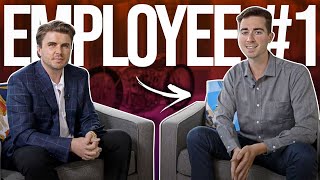
This is a YouTube video titled "Employee #1 at Consulting.com on growing from $0 to $26M in 2 Years" containing an extensive English interview conducted on March 22, 2021. The conversation features Nick Fisher and Eremy Johnmary discussing Nick's career journey from accounting to entrepreneurship, his marketing and agency experience, his role and growth at Clever Investor and Consulting.com, leadership lessons, and insights into building successful businesses and teams. The content provides detailed personal and professional reflections on scaling companies, marketing strategies, and entrepreneurial mindset.
What I did at the time was I uploaded his email because I had it in that group. And I took some other guesses as to maybe other alternative emails he might have. And then I put a bunch of dummy emails in a file, a CSV file, and uploaded it to Facebook ads as a custom audience. And I basically just retargeted him until he told me that I could interview.
No way.
They were like, who is this dude? No one's ever done this before.
I want to start with. You actually started in accounting, right? Like, you studied accounting in college and then you went to PwC, right. And then you went on to Caterpillar. So I want to hear a little bit about that and whether you liked accounting at all and like, what that was like those first couple years of your career.
Yeah. So it started when I originally wanted to go to college for marketing, but my dad told me no one hires people with marketing majors. And he's like, you should only do accounting or finance. That's the only people we hire at our company. And I was like, okay, cool, I'll just do accounting then. So I always wanted to. And I did enjoy some components of accounting. However, it just wasn't for me in the first place. But now I'm happy because the financial discipline and the skill of auditing financials is very helpful in what I'm doing now. So it all worked out. But on the second day of my. On like the third day of Caterpillar, when I was doing cost accounting there and I did audit at PwC, and I was like, okay, those are two of the three main sides of accounting. I hate both of them. I'm going to do my own thing. So I quit Caterpillar at the time and then moved across the country actually to here, Boulder, Colorado, and. And I got a job at a cell phone recycling company here, helping building out their pricing model for. And their online e commerce operations. So we would acquire phones that AT&T people trade in at like Verizon, AT&T, we would bid on those. So I built a pricing model for that for acquisition and then we would resell them on our E comm site. So it was kind of like, wasn't drop shipping, but it was sort of middlemanning, the, you know, the recycled phones industry. So that's how I kind of stumbled into this whole space in general.
Interesting. But you were. You were doing marketing for them, the cell phone company?
Yeah, I was. Was really. Because it was a small company, I was really doing accounting, marketing operations. Yeah, basically they're like hey, there's this weekly bid every week at&T puts thousands of phones up for hundreds of thousands, sometimes of phones up for bid. And all of these companies like theirs bid on these lots of phones. And it's kind of like a hodgepodge of you don't know what you're going to get, they're just going to ship them to you and you have to usually repair them, put on new components and whatnot, and then you can resell them. So I built out the pricing model using knowledge I had from cost accounting of like, hey, built in depreciation, here's the return that we're looking for, here's the risk values and that sort of thing. And then from there, once we bought them. I had experience with like ebay before, but that was about it. So ebay and various other e commerce kind of sites. Rakuten, I think at the time was my first foray into selling stuff online.
Interesting. So it's almost like kind of like the flipping stuff, how people flip on ebay nowadays, except like a larger scale.
Yep, exactly. Did that for about a year. And that's when I started. I was listening to podcasts, probably like yours, Entrepreneur on Fire, a bunch of other ones too. And I'm like, hey, like I could probably, you know, do this myself and go off and I have the ambition for it. So that's what I did for about three months to. Three to four months after I left that company. I was like, hey, I'm just going to do my own thing. And I. That was my first agency. I was chasing so many business plays at once, just trying to make anything work and had clients I hated. Terrible, terrible clients that I would do anything for. And eventually I was, I wasn't making that much like three, four thousand dollars a month.
What kind of, what kind of services were you offering? Because like, so you left to, to flip stuff on your own. And how, like, how did that spin into like a, like an agency? Was it just like you're trying to make money at the time? And like, that was kind of like.
So agency is always good for short term cash flow because you get containers up front. So I had, I remember because I had told my wife, hey, if I don't make $4,000 a month consistently, I will quit and go back and get another job. And she gave me like three months or something.
Pressure is on.
Yeah, I was selling because I knew how to advertise on Facebook a little bit. Not very well yet. So I was trying to sell that as an agency service. I was also sourcing cell phone cases because I realized that when I was there, our margin was really good on things that when. When AT and T included it, they would sometimes include just the case on it, like an Otterbox or a Lifeproof. And I saw how much that could go for, so started sourcing cases. And I was just trying to get to $4,000 a month in any way means possible. And I would sit down there, and it was on my whiteboard behind me. And anytime I made any sort of sale, I would go up on the chalkboard and just kind of bubble it a little bit further. So those were the days. But it was super stressful, and I hated everything about it, and I was just barely making any money. And that's when Clever Investor posted the job title for director of marketing. And me and Cody were in the same, like, mastermind Facebook group thing on. In some capacity. I forget what group it was, but he posted it and I tried to hustle my way in and it worked. So that story's funny actually too, if you want to know. I don't know how long this is. Long of a story.
I definitely want to hear that. Who's Cody Spurberg? Just for people that don't know, Woody.
Sperber is the clever investor on Instagram, which is probably his biggest social. And he teaches real estate and is a very successful house flipper himself. Had flipped over a thousand houses. I hadn't heard of him at the time when he posted the job.
Really?
Yeah, just through the Facebook group, looking for director of marketing. And I remember checking his site out and be like, huh, this is crazy. Like, he's doing this well, selling education. It was my first kind of aha moment there. So, yeah, he. What I did is applied for the job. He reached out to me directly and he said, hey, man, I really appreciate your hustle or whatever, but honestly, we're looking. Did you even read the role description? We're looking for someone with like 10 years of experience with like 50 applicants. You know, thank you, but no.
So kudos for him for answering, like, just a nobody at the time.
Right, right, right. So I think it helps we're in the same Facebook group because otherwise he probably wouldn't have said that. So he appreciated the hustle. And I was like, you know what? I'm just going to keep pushing. So what I did at the time was I uploaded his email because I had it in that group, and I took some other guesses as to maybe other alternative emails he might have. And then I put a Bunch of dummy emails in a file, a CSV file, and uploaded it to Facebook ads as a custom audience. And I basically just retargeted him until he told me that I could interview.
No way.
Yeah, so that's usually my style is like, I just, you know, I want. And whenever you get a first. No, I usually just try to keep pushing so long as it's done. And it was humorous. I made my own landing page that, like, that described me and how I was going to bring value to clever investor. And Cody was on the creative, and it just followed around the Internet for probably a few days.
What were the ads like?
Yeah, they were like, who is this dude? No one's ever done this before.
It's like sensationalist, but almost like mock. Like. Like mock you. Like mockumentary style. Like ad, you know?
Yeah, yeah. And then I was also messaging him on top of the ads running, and I was like, hey, have you seen the ads yet? And he's like, yeah, how are you doing that? Then I was like, cool, I'll be down in Arizona next week. Could I interview? And I hadn't booked a flight or anything. And he was like, oh, okay, yeah, I guess you could come in then. So then I booked a flight, went down there, got the job, and, yeah, the rest is history.
Wow. And so the ads were enough to be like, damn, this guy can hustle. I mean, he knows stuff I don't know. And he's hungry. Let's bring him on.
That was enough to get me in the door. They were still skeptical, though, because at the time, I mean, it was no joke. I was 23 at the time. Barely any Facebook ads. Experience of relevance. I knew how to do things like that. But yeah, so I. And they gave me another test, which I still do have and can send to you right now called the test of wits. Where they really wanted to see, does this guy actually know anything about marketing? Because I was gonna have to be writing head copywriter, writing daily emails, setting up funnels, email drips, Facebook ads, various other things. Right. So I still have it. So here is the original clever investor test.
Test of wits.
Best of wits. Yeah, that's what they called it. Provide feedback on a sales page. Let's see how this is probably pretty terrible. Definitely a thing I would prove on the sales page. Segment your email you're interested in buying. Do you think?
Huh?
That's good advice. Copyright made me write two emails for clever. They will be in the voice of Cody and they will promote this product deal Automator. Here's his Persona. So I wrote this and then that and then lastly. Oh, they had me do a lot. Create three Facebook ad concepts. It's the link to our replay page.
But this was all remote. Right. So you had the time to like, kind of like do the research and kind of like really put something solid together, right?
Yeah, I did. I took a lot of time on this, probably about eight hours total to. Yep. And then made this ad myself and was just doing them on my own business manager to mock them up so they could see that's. Yeah, I've improved a lot over the years. This is a pretty generic headline that I would. I would probably crush people here if they wrote something like that just for.
People that are listening and not watching. What was the headline? Free training how to Generate Real Estate.
Leads and Sales on autopilot. Yeah, sounds. It's just overdone and saturated and generic. It's fine. It just doesn't cut through the noise. So. Yeah, so they gave me that.
They got you the job?
Yep. Man. This. They asked me a lot. And then problem solving. How would you fix this problem? Google Analytics isn't tracking in funnels. How do you. Blah, blah, blah. So, yeah, that was it. And then from there I think that they were like, yeah, we'll take a risk on this guy.
So did they give you like a trial period when you joined?
Yeah, it was three months, so. And that's something that I've maintained too, which I always think is a good idea is they're like, hey, you're on. I was a contractor for three months because I was remote. And they're like, if it goes really well these three months, then we want you come on full time, move down to Phoenix. So they were a client, I suppose at first, but they were pretty much my full focus because I was like, I have to get in and do this, otherwise I'm going to be going back to all these other people that I don't want to deal with. Yep. So I gave up on entrepreneurship and went and worked for. Yeah. Two people, Clever and Sam and consulting. And I'm honestly so happy I did. I feel like a lot of people with entrepreneurial ambition don't do that sort of thing. And it really accelerated my success and my learnings put me in position of where I am now.
That's really interesting you say that. So why, like, what's the value of going to work with someone like that? Because that's a big, big thing of the show that I want to convey is like the value of like going to work for like someone that's been there, done that, started a business, you know, and it seems like a lot of people that have like entrepreneurial tendencies, like end up in these jobs, like thriving and like really building like a solid skill set. So I really want to hear your take on that.
Why it's good for you in general is because my clients that I had on my first agency were spending roughly 100 to $200 a day type ad budgets.
Like peanuts.
Yeah, it's good. And when I walked into Clever Cody, the first thing Cody told me is like, hey, we're spending like $800 a day on Facebook. We should be spending like 2,000. I think he's like, so how fast can you get us there? And we have the budget to do it, so just push and scale. I was like, cool. So the learnings come faster. So spending $2,000 a day on ads versus $200 a day is really a 10x in how it speeds up your learning. Like you will learn with bigger budgets so much quicker than you will. Yeah, low ones. So when I left Clever, we were spending, I don't know, five to six thousand dollars a day. Nothing crazy now by today's standards perhaps, but that alone put years of years of experience gap between me and maybe similar people my age who are spending lower. So. And that's normally what you do if you come out of college and want to be an entrepreneur or run an agency, you're just going to get maybe bottom of the barrel clients.
Yeah, yeah, definitely. And where were you guys at when you joined the team? Like how big was the team when you joined? Like revenue wise? And then when you left and. And what was, I mean, what was that whole growth period like?
Yeah, so it was fun. I was employee number 16 at Clever and was the director of marketing and didn't have any employees though, so I had to build my own team from that point. And yeah, so 16 people, 5.4 million was the rev that they had done the prior year of. When I came in that next year we did it's on Ink because we made the ink list. I want to say like 9 or 10, and then the prior year after that, 16. So we went from 5.4 to 16 in two years. Made the Inc 5000 lists. I think Inc 1000 or something for clever those two years, which was cool. And I failed at building mainly, mainly failed a lot at building my own marketing team and managing for the first time. And I'm still learning a lot of management lessons, but yeah, what kind of.
Failures are we talking?
So hiring people and then doing their jobs for them because I wanted had some insecurity about like wanting people to know how good I was at everything. So I would hire them, not train them at all, like, and just basically let them fail, which is, which is toxic. So. But yeah, I. Because Cody too at the time, he can be a tough and demanding boss to work for. He's very a type, drives hard, and I respond well to that. And perhaps I didn't want to appear weak or something like that. I just would always say yes to anything that he told me. Anything. He's like, hey, can you get this done by tomorrow? I'm like, yes. And then I would do my employees jobs, not train them. I wasn't doing any one on ones, any reviews. A lot of stuff that looking back now would be funny to me, but that's the way it went. And one of the biggest learning lessons that I learned was when I left Clever, when I went and left to go work with Sam, that really screwed me over. And I ended up basically with no one to replace me. Feeling really bad drove a wedge between me and Cody and the team for multiple months. And I had to. Basically I felt bad enough that I was like, hey, we'll try to find my replacement. I'll help train them too. So I was actually when I first started consulting, flying back to Arizona on occasionally to help train their team. But yeah, so thanks for sharing that.
When, like, why did. Did you leave? Because of like some of those kind of like failures and the hardships or like, why did you leave the team? I mean, obviously it was to join another opportunity as well, but it was.
Really, it was a really hard decision because I had made the connection with Sam while at Clever because of the many things I was doing. Cody usually wanted to line up an affiliate promo per week or promo or some sort of besides cold traffic, you know, affiliate traffic. So Sam I met doing that. I remember the first headline and copy I saw from it was a Facebook ad. And I was like, huh, that's really good. People usually aren't that good at writing copy, you know, a lot of times. And I reached out to him, found out his product was great by most people's standards, and we promoted Clever Consulting. So he was a JV partner and he, he. We kind of developed a relationship over the course of the year. And then at some point he told me, hey, I just bought consulting.com the domain because he was just Sam Ovens at the time. Would you be Interested in coming out to New York and starting this operation. Just had just at least an office. Spent about 300k on the fit out. I was like, dang dude, this is great. So he was finally wanting to build a team for the first time because he was just solo. And one of the big factors was I looked at what we had done at Clevver and we got to 16 million with 50, 60 headcount. And he had done it by himself and was just working so much. He was almost. I remember talking to him at like 4am, 3am some nights when I was at Clevver because it's the only time he could talk. He was doing all of his work then handling all of the support tickets. Holy shit. And a bunch of other stuff. Yeah, he's. Sam is one of the hardest workers I've ever been around in general. Very consistently hard working. So that. That inspired me. So did various other things and the opportunity. But it was a really hard decision. I sat on it for a couple of weeks really thinking about should I leave. Talked to a few people I really trusted and then made the jump. It was tough.
So what did he have like when, like before you joined before consulting.com, like he had the product already. He was doing consulting as well. Like what was he doing exactly? Like what was his business?
He was. So Sam had been through a few iterations and what he was selling was consulting accelerator, what we now call 1.0, the first version of it. And when we launched consulting.com, we launched with the 2.0 version and the website that's currently there today. So it was a huge, huge overhaul because the 1.0 course was good. But if I remember right, it was something like 20 to 40 hours. 2.0 became 120 plus hours of content. And we did some really cool things. Like we launched with 3,000 video reviews, which was something else that I don't think anyone. I don't think anyone's. I've seen anyone come close. That might be one of the most impressive things of like if you know how hard it is to get video testimonials, you know that 3,000 is a ton of happy people and those are all still up today. So we. We're all about transparency of customers. And he taught me a lot on the product side like at Clever. I learned so much about marketing from Sam. I learned the importance of product and actually how to create education that drives success as opposed to a lot of people want to drive community and they'll make a course not caring about the student's results, but the student's feelings as a retention tactic. Sam as consulting, we did both. So I kind of started when I first got there. I didn't do any marketing for three months. Sam like we were consulting, hadn't launched yet. Sam's like, I'm shutting down samovans.com so we can both just focus on product. And then every day he would record the course videos as I was collecting reviews and writing the copy for all the reviews on there for the most part. So yeah. So for the first three months I was like, man, when are we going to like start making money again?
So that was the main thing you were doing like first three months, like collecting like customer reviews.
We weren't even selling the product anymore. So it was funny. I got there and he shut it down. We were building the office, hiring team. Sam was shooting the course videos. We were talking about the outline for what we wanted the webinar to be when we relaunched. We spent 30 days on that consulting webinar alone.
Wow.
What goes into that if it's me and Sam? A lot of research normally, um, most people do em faster and they can be successful faster. But.
But like, like let's go into nitty gritty. Like. Cause like that's what, that's. That's part of the reason it was so successful. Right. Cause you guys put so much time into the research and stuff.
So I think so. It's. It's hard to know in hindsight cause there's so, so many factors. But I think for me, I can't speak for Sam. I was really, really excited because I usually get forced to write forced rush to write VSLs and webinars. And I'm never, I'm never happy. I'm usually perfectionist. I want to hold on to him for a long time.
Yeah. With Cody it seems like it was like, like momentum, momentum, momentum. Like let's keep moving here. It's like take your time. Like make it perfect.
Exactly. And that's Sam style too. So we paired really well together on that. And yeah, we were spending 10 hours a day for a month on that webinar. And we would, we would outline different concepts and ideas. I had surveyed all of our students, so we were, we were reading through individual feedback from the last one where the course was weak, the 1.0 version. Like what they actually wanted, what their pain points were. A bunch of. Dan Kennedy's market research doc was one of the things among others that we used. And I have a bunch of resources various Others things of how we plan that. But once we had started, once we got the big idea, the hook, the hook that we knew most people wanted, took us a long time to flesh out what we were going to teach. And then the hero story too took a long time. And it's, it's a really long webinar. Have you ever seen it before? Yeah, it's about 500 slides and three hours long. And I remember telling Sam at the time I was like, I don't think this is actually going to work. I think we over researched this and overthought it and just tried to put everything in this. And I think Sam told me this is going to be the stairway of heaven of webinars, AKA like a seven to nine minute song that still gets radio play. And he was right. And it turned out it was great even right off of launch. And by three months later it was even better because of all the split tests and kind of AB stuff we were running.
Interesting. What else did you learn from Sam?
A lot. He taught me a lot about work consistency. I was always willing to match someone until I burnt out and crashed on the couch like 24 hours up straight working on something. But I saw Sam do six days a day, 9am to 9pm always be sharp for work. And yeah, that taught me to be a bit more structured with my life because I tend to be, if I let myself out of that mindset, more chaotic in how I attack work. And he's probably one of the best book recommender I have ever had in my life. As far as he's like, hey, I think you really like this, you'll get a lot of value. And that's how he learned a lot. So a lot of the lessons that I learned through Sam often were through books or books we both were reading at the same time. Principles by Ray Dalio both influenced us a lot as far as transparency goes and compensation. And then another thing, yeah, so much. But one thing he taught me is on Q and A calls, like either this or an interview, is that it's better to be concise and definitive with people on what they should do as opposed to give them optionality. So what I was really good at doing when I would occasionally do some Q and A calls and consulting was someone would be like, hey, should I do YouTube ads? And I'd be like, well it depends, are you running Facebook? And have a million follow up questions for them. Because I understand there's nuance in the situation where Sam taught me. He'd be like, no you shouldn't. He's like, facebook ads get really good at that. And you'll know when it's time to open up a new channel. If you're asking us this question, it's too early. And I was like, man. So that. That works really well occasionally can backfire in situations, I guess, where more nuance is needed. But he is so good at telling people what they actually need to hear. And I tried to do that now, too. So we're sometimes. I watched him. Often when people ask him questions, he said, that's a bad question. What you should really be asking is this. So he'd reframe the question and teach them how to think as opposed to answering their question. And a lot of people are guilty of just answering questions.
It makes me think of Tom a lot. I think he. He. He does that as well, where it's like. I mean, it's kind of like what you would expect from a leader as well. Right? Where it's like to. To actually make the decision and kind of, like, help you, like, help you choose, like, what path to take, you know?
Mm.
Yeah.
Yep.
You mentioned Ray Dalio principles. I was curious. And you also mentioned that Sam and you had, like, a very, very symbiotic relationship as far as, like, being introverted. And so I'm curious. And I know Ray is really big on personality tests. Yeah, same here. Are you guys, like, both the same personality profile?
Yep. So Myers Brigg, Sam is intj. I'm intp. And yeah, the intp, intj relationship in general is, I think, really fun. A lot of my good. My closest good friends, one of them is an intj. And yeah, the only thing that's troubling is that both. Neither me or Sam, when those are two of the people in leadership and then also our general manager is an intj, is that we had no one really wanted to run the office. So what they generally say is that your golden pairing for, like, an INTP is an ENTJ. So you still get the NTJ of NTJs tend to be more structured, disciplined, regimented in how they approach work. They often appear to be icy cold on surface level, which a lot of people say about Sam as he looks like an emotionless robot, was funny. Never took offense by that. In fact, we were often joking. We were trying to think about some PR stunt where we would actually tell people Sam was a robot and, like, rebuild a cloned robotic version of him or something. So that's the intj. Intp myself tends to be more, like I said, More chaotic, more possibilities. Normally my head is just usually full of ideas too. And on the downside, a lot of INTPs have problems with procrastination followed by short bursts of like, intense output and stuff like that. So I try to be aware of it. But yeah, the intj ENTP mix is the kind of the gold standard there. But it was still fun. We were probably missing an office leader because when Sam would often. Sometimes he wouldn't leave his apartment for like two weeks because he was just creating course videos every single day. And if he was doing that, I had to kind of lead and play coo ish role, which I'm not naturally suited for too. And there's a bunch of other funny things about that office culture too, which we loved. We like burned incense every day. We listened to binaural beats and generally had random old like, Michelangelo bus with lasers coming out of his eyes. Yeah, I have some pictures if you want to see that too. It was a really cool office concept that Sam had designed in his head. And yeah, it was a fun, fun time right on Madison Avenue. And we were just writing copy, making good products, and trying to change the world, I suppose.
How big was the team around the time you left?
30 ish headcount between contractors and employees. And that was one of the things that when I got to consulting, I told Sam is, hey, I saw clever grow from this to this. I don't really know how to do everything, but I've at least seen where we screwed up in that growth trajectory, so I got to help. That's maybe one of. I don't know what Sam would say about. About me, but maybe one of the main ways I drove value was like, hey, these are the mistakes that we ran into. Let's not avoid them. And we made the organization lean because of it. So with about 30 headcount, we were doing 30 million annual pays by the time I left and just come off a year where we did 26. So that's crazy.
Employee was off the charts as far as consulting. I think. You stayed there for two years, right?
Two years.
What led to you leaving? Because it seems like you're having, like, a really great time, so.
So I'm super passionate about what we were doing in consulting. And the roadmap kind of shifted. What me and Sam originally wanted to do was build the company up to 50 million just with three course products like our. Yeah, three products doing 50 million, which is feasible. That would have happened. We were getting there like we were already running at 30 million. But then what we wanted to do was build tech, do kind of the Brunson model, and we were trying to determine what play that was going to be. And I was fighting for an LMS like a Kajabi or a Teachable or something like that because I wanted to be able to sell to our students immediately. And the consulting, when I say our, sometimes I just still think I'm at consulting. So just ignore that until I can relate. Right. So our LMS that we built in house is really, really cool and good and has a lot of features that Kajabi teachable other solutions don't have. So I was like, well, the code base needed reworked a bunch of other things, but that is a product I knew we already had product market fit for. And that's what I wanted to pursue. And that was going to be the idea for a while until Sam got The idea for School.com, which I linked you to, which is basically how he puts it on that splash page is it's like Facebook groups, but better. And that's where the consulting communities are now. So all of them migrated off Facebook groups into Skool, which is Facebook groups, but with some of the functionality of like Quora, Reddit and some other really cool features that haven't launched yet to my knowledge, with school, but are going to be really cool.
So is this kind of like a circle so type thing?
Yes, it is. It's like, you know, I'm not sure if the features are the same, but it's the same concept is that the problem would be Facebook groups suck for putting your people in there. We have something and a core concept that we talked about early on for school that became the idea for school was that what's the best way to learn from someone and how do you know people in your community? How do you differentiate good advice from bad advice? When someone says in the Facebook group and that that is a bigger problem. The problem that Sam's going after is a bigger problem than the one I wanted to go after. Like, Sam's seeing a billion dollar exit for school if he does it right. Potentially it's a social media network. It could be, if done right, some acora Facebook groups kind of killer. Right. And but if it doesn't, it's going to be hard. It's going to be hard to monetize it because a lot of people monetize social networks with ads. So I was, yeah, the philosopher. And it was a hard call. I was like, I don't trust my ability as head of marketing to be Honest. To compete with those, those people. I've always done well in my career trying to be really, really good in industries where not that the people aren't as smart, but that it's, it's really hard to compete with venture backed companies like that that have funding. We were bootstrapped. We were using consulting's money to build school and without investors or anything like that, I'm like, I don't know, like the team that Facebook hires is talented and we just didn't have the money to hire that talented team. Seems like Sam's doing it though because he was like, hey, he'll pretty much go bankrupt or broke trying to make school work. I know for a fact. I do too. I really respect it. That's the main reason I left and that's the main reason why I'm doing what I'm doing now. Because I am just publishing brands still because my passion is in finding experts. It doesn't matter what area they're in. But I'm not a subject matter expert myself so I usually attach myself to those people and I'm like, hey, I'll help you with the marketing, operations, everything else. I just love business and you do what you love. So the brands that I have co ownership in or the brands that we do as a company are in the real estate space. We're launching a music production course, Sleep consulting. A bunch of different variety of things that just are all, they're all business plays, but they're all passion plays at the same time too.
Of yours when you say passion plays.
Yeah. Like I try to find if, if it's not a market, an area I'm not passionate about, I'll get passionate about it. If the person is world class or has a desire to be world class, it'll come with time and that's sort of how it is with me. With. Yeah, with like Sleep for instance, which we launched it once and it's going to relaunch again this year. It's teaching people how to sleep better. It's. The website's not up right now. Yeah, it's going to actually be rebranded under a different name when it launches. But I'll send you, I'll send it to you when it's launched. But it teaches, it's going to teach babies how to sleep better, which is not something I'm particularly passionate about but I became passionate about especially when I had my first kid and went through the same problem. So. But whenever I see someone else, so, so mission driven, I get behind the mission too. So that's, that's sort of how I feel is that's our mission here at Agexa, is we just want to. In 40 years, if I look back and I've acquired a. An amazing collection of expert business partners that do all these really cool things, that's kind of my definition of success more so than anything else.
That's very cool. It's super exciting, man, just hearing you.
Yeah, no, I appreciate it.
So like you build like you're building an agency, but it's almost seems like you're building like a, like a business conglomerate at the same time. Right, like in parallel.
Yeah, it sounds, it sounds way cooler than what, what we actually are to call it a business conglomerate. But yeah, we can call it a conglomerate. Yes, but a collection of brands, all decentralized for sure. And the agency, actually Dakota, my business partner, Dakota, is very passionate about client services because I originally saw the agency as just a way to cash flow the brands we were building. So like when I started gexa, I didn't pay myself for the first three months of the company. We were not making much money at all. And I wanted to hire the people that I wanted to hire because I wanted a good team first and a good basis. So I was on a burn. And we just took clients by necessity. And once, once we were positive, like once the brand started yielding money for us that we were starting, I was like, hey, do we want to sunset the agency? Because I never wanted to have a marketing agency. In fact, if anyone who's watching this has been through consulting course videos, me and Sam were both so anti agency usually. And how we talked, we just felt like no one should ever do client services. And I've now, a year and a half later, learned that that was just my own bias too because certain people are passionate about it and plays their strengths. And I also used to have the belief that why wouldn't everyone just want to build their own internal team instead of hiring an agency? And that's also just not everyone's desire and the subject matter, expertise, variety of other reasons. Needless to say, I've gotten over it. But yeah, I used to look down on people that had agencies. Really dumb.
If you had advice for the Nick that was just like graduating out of his accounting degree right now, what would it be like knowing everything you know.
Hopefully this isn't too difficult an answer. I wouldn't have talked to him because I, I would have wanted life to go exactly how it did. Even the mistakes I made, I'm happy for. And like Things that I could have regrets about. I needed to learn anyway. So I'm glad it all shook out the way it did. But yeah, that's probably too idealistic of an answer. Maybe I would have told myself something certainly the biggest like non reason like that would be. It would be really hard. I think I would have kept my mouth shut ultimately because I think that I would have misinterpreted whatever I would have said to my younger self. Even if said something like stay true to your heart. I probably wouldn't have ended up here either because there did things that I wasn't passionate about or I wasn't, you know, my heart wasn't in it. And I also think that I'm better for it for that. So it's really hard. Sorry for. Sorry for giving you a non answer.
That's great. That's great. What if you had to give advice to like someone else?
So now we go back to the same conundrum that I talked about with me and Sam too, that normally what I would do is can I ask more questions? Because the advice part of what especially my personality type plays well too is I will. I'm really, I really care about nuance and I really care about and I understand that everyone's different. So giving blanket advice is generally not good. There is a few blanket advice that I will give though, which is the biggest thing that everyone could do is don't always go. Not only for shiny objects, but short term gratification is enticing. But the one common trait I've noticed among not just successful entrepreneurs, but anyone who is successful in a craft is that they delay short term gratification for long term rewards. So like if you're looking for like me, like going back to work for someone seems like a step back. It doesn't have to be. In fact it usually isn't if you're, if you know what you're doing. So I even thought about that at clever. I'm like man, do I just jump. And when you're working for someone, you know that they have to get a return on, you know, their investment on their employees. So usually you could go make more yourself in a perfect world as an entrepreneur potentially. But I always try to remind myself I have a lot to learn, I'm not ready yet. And maybe even now I waited too early. Maybe I should have kept working for someone else. You never know. But the longer you delay gratification in order to invest in yourself or put you in a position to succeed, build your network, I think that Plays out for you 100% of the time as.
Far as building a team. You're saying that when you were at Clever, you made a lot of mistakes. You probably learned a bunch consulting as well, like building the team up to where it was when you left. What lessons have you implemented now, now that you're building a team from scratch? Your own team this time at.
Yeah. So the lessons I'm learning right now that I had missed, I guess I'll give a quick rundown. Clever. I learned what I told you. In consulting, Both me and Sam learned the importance of what we called poaching was part of our hiring strategy, because both me and him had failed miserably. Me at clever, him somewhere like his own business, hiring. Like, I think Sam at one point before me hired like 10 people to help him, and they all quit or were fired or something. He has. He has a low tolerance for incompetence, too, which doesn't help. So when we got together, we're like, we're just going to poach successful people because neither of us seem to know how to hire very well. And that worked. Like, my best. My best employees were approached. And also the other thing that we learned about team is getting them to move for the role. Told us a lot. And everyone who did that was a top performer. So me and Sam would almost intentionally go out of our way to try to. We were in New York. We're like, hey, you know, would you just move out to New York to prove yourself? Like, come out here? And if they did, I was like, man, yeah, they're gonna. They're committed, they're hungry. And I'm trying to think of the consulting team. The top performers like Rhett Coutts, who lived with Sam, was his personal coach and started in our support team and ended up living with him and then running sales for a bit. Came from Australia. Sid, our data scientist, took a red eye train from upstate New York in order to interview with Sam. When Sam put him in a crunch like, hey, I have tomorrow free. Can you come? I came from Arizona. One of the media buyers. Jordan, who has his own successful agency, now came from California to New York cross country. Left all of his family behind. Tommy, who is now fortunate enough to call business partner, was also a great media buyer for Essec Consulting. He came from Pennsylvania. And I'm sure I could think of a few other examples, but it was learn those. Those two lessons. And it's somewhat anecdotal, but, like, it's pretty. It's pretty clear to me. Now and I haven't really seen anyone that's done that that's failed under me. And then the lessons I'm learning here now with the GEXA is the importance of setting expectations and checking in with people. I'd never done one on one meetings before starting this company. I'd never done performance reviews. I had never done a lot of checking in with people. I had always given my teams the same autonomy that I desired, which I know it doesn't actually help everyone. Some people want autonomy, some people want to be micromanaged, some people want to be somewhere in between. But everyone wants usually clear expectations of where they stand and how they can get better.
So.
And various other things, but that's a key one, is the importance of setting expectations, client services the same way. That's the biggest lesson that got beaten into me in the early days when we did agency is you really got to be clear with people and write it down and remind people what the expectations are. Because both sides will lose sight of the times that we. Early on they're like, hey, didn't you say that we would be up to like $10,000 a day in two days or whatever example? I'm like, no, like we didn't say that. But neither of us had it down in writing. There wasn't contracts in the early days. I did everything on handshake agreements until it screwed me over enough times and our accounts receivable was over 100k. And I was like, okay, yeah, I guess I can't do this anymore.
That's when you learn to get really good with contracts then.
Yeah, we're still not really good with contracts, but at least we have them. So. Yeah, and it just, they're good. Like now I don't see them as a sign of mistrust, which I used to is like, hey, like you trust, trust me, right? Like we don't need a contract. Like write an email and say what, you know, what the agreement is, but we don't need a contract. And now I realize that even people that have good relationships, even people I trust deeply, you still need contracts. Because humans are all subject to just remembering things wrong.
Yeah, what about, I saw on your website, you guys like all have like your personal, like, like all your personality types listed. Not just Meyer Briggs, but like disc and like, and enneagram. Yeah, like what, what is that? Is that from, from principals Ray Dalio or. Cause I know we did that at Impact Theory as well. Hey, you're the first person who's ever.
Noticed that they are Two of the three are from Ray Dalio. So Dalio does Team dimensions, which we do. Myers Briggs, which we do. And then he does something called sst, which is something I would love to do, but it takes about, I think it's like 25k to have it implemented. And they come in and they assess your whole team at once. It's a very in depth more than a test. So the one we do in, not in lieu of SST but in addition I guess would be Enneagram. Enneagram is probably the most important one for personal relationships, whether it's client services or internal with the team. So I use Enneagram for breaking down and making people more empathetic usually. And I use Team Dimensions for trying to build a well rounded organization that has people that excel in different functional areas. And Myers Brigg is. Well, how most people use Myers Brigg is wrong. But I don't want to want to talk about too much because I'll go down a loophole. Basically, if anyone's interested in how Myers Briggs should be used. Look up cognitive functions and understand your cognitive functions and it'll help you play to your strengths in business or life in general.
Do you have everyone read each other's personality tests? Is it mostly for the leaders or what's the. Like how do you guys actually use this stuff?
Yep. So let me share my screen here. This is Team Dimensions. This is a. Ray Dalio put us onto this test. This is, it's missing one or two people here to GEXA now, but this is all us graphed on Team Dimensions and it's a matrix. And the theory behind it is that there's four types. It almost mirrors disk because the same, the same research and scientists and companies behind both tests. So instead of like dominant, what is it? Influence or impact, conscientiousness and advancing. You're either a creator or an advancer, an executor or refiner. And the theory behind it is that in the first four hires of a company, you usually get one of these four. You have usually the entrepreneur or the idea person is the creator. They have this idea, the vision and they're cool with working with unclear goals. Non traditional ideas, very entrepreneurial up here. Right. And then normally they might hire an advancer, someone who in the tech world would pitch the new idea to investors, they would network, they would hire the team, the stuff that's kind of done on this side. And then the third hire is usually a refiner. So now that they have an idea, they have investment. Okay, is this actually, like, let's actually get clear on what we're doing. And that's where I am, honestly, is I score right here. This is me and most like pure entrepreneurs, which I always tell people I'm not like the pure visionary at all. Like, I've been second banana and been very happy with it. So I'm sort of a mix. I prefer though, to refine ideas. And you can see kind of where my thing is here. This is my wheelhouse. If you have things in this area, I'm usually a good person to talk to and very passionate about that stuff. But yeah, doing research alone, analyzing work alone, that's what refiners do well, and then finally now you have a refined plan with investment funding. You need just people to execute. So at that point you hire usually maybe a coo, right? Or whatever that looks like. Salespeople are sometimes high execution.
Very interesting.
This is our organization and I look at this maybe once a week and we have it printed out in our office on a corkboard because over time you can see where our blind spots are. As a company and advancer, I kid you not, these are our work. Like, these are the areas that agaxa that we are very, very weak at. And we know we need to improve. Like we are training others, we're getting better, but none of us gravitate towards it. We just do it because we know it's very important. Planning events. Yes, we have. Really terrible at doing that. Or I'm really good at planning events and canceling them and this sort of stuff. And we just. We actually just offered someone today or yesterday, someone who is in this kind of area. So if they come in, they feel a huge need where we're also really bad. In this box right here. Checking facts for accuracy, maintaining quality control.
Interesting. So that's between refiner and executor. There's like a. There's like a spectrum, kind of.
Yeah, there's a spectrum. Yeah. Right. I'm on the spectrum in between refiner and creator. I'm a refiner with a tendency towards creation is what they would call it on this test.
Do you know, it's super weird is we have exactly the same personality spectrum, like for all the tests. I'm like enneagram5intp. And I'm a refiner, slash creator. It's so weird.
So what I was going to say is you struck me as an intp. I wasn't going to ask, in case you didn't know, but most all a good chunk of INTPs are also enneagram5 and it makes sense that you would sit there.
Are you guys hiring at a jaxa just in case anyone's listening is interested?
Yeah, right now we're hired. Yeah. Especially two marketing positions. We're hiring a director level marketing position and that person will be on the agency side of the business and should have. You can see it all the requirements on ajaxa.com but experience media buying, ideally experience managing budgets and has spent over a million dollars in their career buying. Because you'll be training the juniors. What we have right now is kind of a gap between our very experienced people and our junior level and we need someone to sit in between. And then we're also hiring one junior which we're calling a marketing manager position on the website ahead of business development. And there is a head of ops position. That one might be gone because we are in the final stages of candidates there. But there will always be more. Hopefully we keep growing. That's my goal. Until it becomes not fun anymore. Then we'll stop. But yeah, for right now that's on the careers page.
And you're expecting everyone to retarget you via Facebook ads, right?
No, I don't expect that. But I would definitely respect it because that means they would have heard about it on this podcast. First time I've ever talked about it publicly. So that would be cool. That would show me a level of commitment and depth, I suppose. And I would at least give them a chance even if they're inexperienced. And I tend to me personally and not everyone, not all those positions report to me, only one of them will. But I still at this stage interview everyone who are thinking about hiring here. And I always look for. I don't really care about experience too much. I feel like other people really, really value experience. I really value resilience, grit and passion of learning. Which is like if I see someone who's like man, I stayed up till like 3am just reading everything I could about like funnels or whatever, I'm like, okay, this person's gonna win if we put them in that role by sheer just passion, they'll get there like it's just a matter of time. So that's what I would say. But of course if you're not like that too also apply. That's just my opinion. And now with a team and group hiring process, it's cool to see. And oftentimes I'm letting people make not their own mistakes. That'd be a bad way of saying it. Just their own decisions because I've been like, hey, I prefer that candidate, that one. They're on the flip side. And us, our group environment dynamic is like, hey, you're managing them. You make the final call. It's not me, it's not the CEO. Like you have to live with that hire. Otherwise it's just going to be my person that you think that I made you hire and you're going to make an excuse if they don't work out. So that's kind of my. A little bit of the leadership philosophy here. Our core values are on our site too. You guys should all check those out because they're all named after Drake songs, which probably are the first company to do that. But they all mean a lot to us and they govern the way we work and operate here.
Very cool. That's awesome, man. I really appreciate your time, man. This was awesome. There's so much knowledge.
I appreciate you too much.
There you have it. I hope you got something out of this interview. I'm really trying to make this as valuable as possible to you. So if you have any feedback on how I can make this better. If you have any questions for me personally, I'll get back to you. Reach out to me on Instagram. My handle is eremyjohnmary. You can also comment if you're watching on YouTube. You can just comment below. Alright, thanks for listening and have an epic week.










