How to Make AI YouTube Ads That Actually Convert (The Full Playbook)
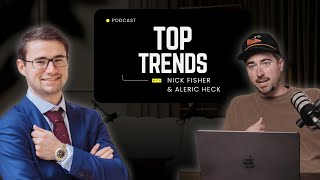
This YouTube interview (Dec 18, 2025) between Nick Fisher and Alaric Heck reviews practical playbooks for using AI to create high-performing YouTube ads. Alaric traces his origin (started a YouTube channel at age 12; 16 years on YouTube) and transition into YouTube ads (began running ads ~2015). The core creative framework is Hook → Educate → Call to Action; recent tests show the strongest performers are short AI-generated visual hooks (about 5–8 seconds) produced with Google VO3 paired with the real expert's recorded voice, then cutting into a human-shot ad. Leaning into stylized/cartoon AI visuals (Studio Ghibli/anime, LEGO, cartoon/pirate metaphors) often outperforms photorealistic AI because it avoids uncanny-valley distrust. On targeting, Alaric favors granular audiences: custom intent (search-based) and URL-affinity audiences (competitor/complementary sites) over very broad prebuilt audiences; he recommends starting niche and scaling by duplicating/expanding winners. He also demos and promotes tools: keywordsearch.com (AI ad-targeting / keyword & audience discovery), thumbnailcreator.com (automated thumbnail generation and split-testing with face training), and announces his book Video Authority (videoauthoritybook.com) plus a free 19-page YouTube ad PDF at adoutreach.com/gift. Practical production notes: fast renders for iteration, quality renders to scale, record the expert’s short audio hook to connect AI visuals to the human presenter, and split-test thumbnails (3–10 variants) and creatives across campaigns.
Questions this video answers
16 years (started at age 12; he says he is 28).
About 2015 (roughly 10 years prior to the conversation).
Hook → Educate → Call to Action.
AI-generated visual hooks of ~5–8 seconds (Google VO3) followed by a normal human-shot ad; using the real expert's recorded voice on the hook improves performance.
keywordsearch.com, thumbnailcreator.com, videotemplates.com, videoauthoritybook.com, adoutreach.com/gift.
Chapters
What's up, guys? This is Nick Fisher. Got Alaric Heck on the line today. It's a day before Thanksgiving. You guys will probably be seeing this in early December. But he is the absolute man. He's trained my team on YouTube ads. And you guys know me. I'm really good at paid. We have a growth operator crew here who is trying to scale things normally from organic to paid. Or if you're like me, sometimes you get into paid first and then back into organic. But in general. Welcome to the show, Alaric. Dude, I've been wanting to have you on for so long. Thank you.
Oh, thank you so much. Yeah, this is. This is great. I'm excited to be on dude.
And I see the view behind you. I thought you traded the office view. Are you still in downtown Austin?
So I'm still in downtown Austin, So this is now my home office view. So I've got. Yeah. And some people have told me they like it even better than my office views. You know, I moved out of the. I was in a bigger office downtown. We just went more remote with the team. I know we talked a little bit about that. But, yeah, I set up my home office, got this all set up here, and I've had some people tell me they like this view even better. So, you know, there you go.
Well, I do, too. It's different, so I just thought I'd ask. But in general, for the people who don't know, we'll whip through. Because you've done podcasts before, but how'd you kind of get to where you're at right now? To where? Like, when people say YouTube ads, at least in our space, I think Alaric. Right? So, like, it takes a while to get to that association. How did that happen in your career?
Well, thank you. Yeah. So, I mean, I started out on YouTube 16 years ago, so I started when I was pretty young.
Dude, I didn't know it was that long.
Yeah, yeah. So, I mean, I'm 28 now. I started when I was 12 with a YouTube channel, so before I got into the ad side. So YouTube with a YouTube channel. Sixteen years ago, I was doing app reviews, tech tutorials, like, teaching people how to use their iPhone. I actually ranked as, like, the top three videos for a long period of time. For the term iPhone tutorial, people could search iPhone tutorial, a very popular search term. And I'd be one of the top three videos for many years there. So I had these video, like, the iPhone 7 Complete Beginner's Guide was my most popular video. 8 million views. Teaching people like how to use their iPhone. Yeah, funny, you can still look up those videos. You can see younger Alaric talk about, you know, it's more. It was more of a faceless channel even before that was even a thing where you could see my hand. So, you know, it's basically. I wasn't a personality, per se. I was just explaining tech and I was showing. You could see my hands in the phone and, you know, doing tutorials, things like that. And so I grew that channel, over 600,000 subscribers. I did that in high school. Yeah, yeah, that was my original. Yeah, I didn't know. You didn't know some of that background.
But that part of it.
Yeah, yeah, yeah. So that was my original background. Then I got into the ad side. It's actually a really seamless transition. I got to the ad side 10 years ago. So I started doing YouTube ads, actually, basically exactly 10 years ago, 2015. And I started. Originally, I had all these mobile apps for my YouTube channel. I had my YouTube channel. I started doing app reviews. So when a new iPhone didn't come out, I would do reviews of mobile apps. And so I had literally a couple hundred apps sponsor my channel, do independent sponsorships. I brokered my own deals. So just I had all these emails coming in. I would just work with the app developers. I'd feature their app on my channel. They'd get a bunch of downloads, and it was a really good exchange. Well, one day, one of the app developers came to me and they said, hey, how can we get more people to see the video you made? We've got a few thousand people that already downloaded our app from your video, but it's starting to die out, like organic. Like, how can we get more people to see it? And I said, well, what if we run a YouTube ad? And I hadn't really done YouTube ads before, but I was aware of it, and they're like, okay. And so first they were unsure, but then I said, okay, you know, so I took that, you know, $500, and they ended up getting thousands more Downloads for like, $500. Now, obviously, it's different now. This is 10 years ago. So. But. And so they were blown away and they came back and we kept running that app ad, but they had another app, and actually they had a different developer that. That they were connected with through a performance marketer. So the next app that I was doing was this bigger app that I ran ads for. And the budget was like $1,000 a day was like, the second ad campaign I did for this bigger mobile app. And we didn't start there, but we ramped up to there pretty quickly. And so I just kind of was thrown into deep end. I realized I was good at it and got great results. And then I originally was doing YouTube ads for mobile apps for a couple dozen app developers. I tapped my network because I had had a couple hundred people sponsor me. So I just basically reached out to all of them as like, hey, here's a case study. I can promote your app like this. So that's how I got to my first clients on that side, did YouTube ads for them, drove millions of downloads across a variety of different apps. And then I found our world of, of, you know, high ticket coaching, consulting, info products. And the way that I discovered that was I joined my first mastermind, you know, basically back, you know, in the day like you remember, you remember like traffic and funnels and stuff like that. So I jumped in there with Taylor and basically I was doing YouTube ads to a webinar. And originally it was to sell app developers. So I learned how to do webinars from them and how to do high ticket sales because I was kind of all over the place on that side. But when it came to running the ads, they were talking about, okay, here's how you do Facebook ads to webinar. I said, well, I'll just do YouTube ads to the webinar. So I was doing YouTube ads to webinar funnel and I was getting far better show up rates, far better, you know, sign ups, like more clients. And so all of a sudden people in the mastermind started to take notice. And this was back in like 2016, 2017, they were all starting to take notice. And so they started asking me how I was doing YouTube ads. And because this was a group where they were learning how to do Facebook ads, naturally they didn't want me to just do it for them. They also wanted to learn. And so I started teaching them YouTube ads. And that's where my business kind of evolved to mostly actually being training businesses on how to use YouTube ads with our strategies. And then we have select done for you clients that are higher tier, that's more of an invite only side of things on the agency side. And that's a misconception some people have about us is like we actually work with more clients to train them on YouTube ads. We also now have software I know we were just talking about that helps empower that as well. And we've also grown. So now we help people with YouTube channel growth as well. And you know, we can also support with some, you know, meta video ads. Although, you know, YouTube is our big, big expertise. So as we've grown as a business, I'm sure you understand, like, we've expanded certain things, but the big focus is on video. Video ads, YouTube ads. That's. That's what we specialize in. So that's kind of taking us to. To today. We've grown up, grown the team and work with thousands of clients. Inc. 5000, you know, multiple years in a row there. And yeah, just continuing to empower businesses with YouTube.
Yep. Dude, sweet. Thank you for that. And there's. There's two types of people that follow me, typically, like creators, which is a minority. And I want to get into where they should start. But let's start with the growth operators or people that are trying to scale the businesses right now. You have two things, actually, three things. The thing, the thing you talked about, Webinarcon, I asked my team, actually, afterwards, I'm like, who did you take the most notes from that we're gonna implement? And specifically that phrase. And they said you. And second most was, I think, onych or Fiveline, which is, if you guys know, you know, that's a compliment.
Wow. Yeah. Thank you.
Right. And they were saying specifically how you were talking about crafting hooks, whether it's AI generated or just the hook formula is what they were taking away from your preso. Talk to me about what you've been doing innovatively in that first 10 seconds or even first three on YouTube as far as hooks go.
Yeah. And first of all, I really appreciate that. That means a lot. And it's also, you know, I remember. Well, it's true.
I'm not just lying. So thank you.
Thank you so much. And also, like, working, you know, I remember a couple of years ago here, also working closely with your team and supporting them on all of that. And you've got a fantastic team as well. And it was cool seeing Giancarlo in person as well, which was great. So looping back. So the question around the hooks. So first I'm just gonna explain overall, just for. So everybody's at the context, and then I'll talk about what we're doing that's new and unique with AI. So overall, our framework on YouTube is hook, educate, call to action. You want to pull people in. There's a few different types of hooks, pattern interrupts, question hooks, excitement hooks, problem solution, hooks. You know, there's a variety of different ones that you can do. So you're pulling people in in some way you're capturing attention, you're then educating them and providing value inside of the ad. That's really important. A lot of people leave that out and I'll talk about that in a second. And then you have a clear call to action. The call to action to get people off the ad. I'll talk about what we're doing in AI in a second. But it's important to know the hook. Educate. Call to action. And the educate is where you're providing real genuine value in the ad. Because people are going on YouTube, they're looking to learn. If you have an expert based business, what you want to do is you want to build trust by actually giving them aha moments, giving them a piece of value inside of the ad itself so that they're far more likely to actually take action when they, you know, get to that call to action and go from there. Now with the hooks, historically it's been us filming different types of or having clients film different types of hooks, usually them kind of facing the camera. We recommend doing different styles so you can do more professional hooks, but you can also have an iPhone and a gimbal and sometimes those outperform gimbal just kind of stabilizes the phone there, you hold it, you know, and record videos. But what we're finding now is with Google VO3 and AI, we are finding that AI ad hooks are starting to outperform even our best traditional hooks. And so we tested a few different Things. Using Google v03, we created full AI ads. We tested it against our control of our previous best performing ads. Then we also tested ads that have an AI hook. Just the first five to eight seconds in VO3 is AI hook, then the rest of it is our normal ad. And what we found through a variety of different tests ourselves and clients is that the worst performer is just AI. It's kind of interesting. It's like there's no human, it's just AI. But if you think about it, especially with where we're at right now with marketplace trust, especially in the expert industry, you can kind of get why maybe just the AI doesn't build enough trust to get people to take that action. The next best was our previous top performing ads with no AI, just human style ads. The best performers now for ourselves and many of our clients are AI ad hooks followed by a normal human ad. You know, kind of your normal direct to camera ad. And it's essentially the first five to eight seconds is some kind of AI style hook. And I'm actually going to Give you some advanced strategies that I haven't shared anywhere else publicly. So you're going to get up. I'm serious. I'm going to share.
Thank you. Like, actually, yes, absolutely.
Because I know especially I know you and your team, you're operating at like a super, you know, super high level. And also for the people who are watching this are as well. So I'll give you the overview and then, then I'll tell you the, the, the two things that are really big unlocks that we found that I've literally just told our clients.
Thank you. I was going to have. The only question I had following your presentation, didn't get to ask is, can you do non sequitur hooks? Basically, can you non sequitur right into the control of the ad.
So, and I, I'll, I'll, I'll give you, I'll give you the answer to that too. Because, because there's something that we do that that makes the difference and nobody else. Like, people aren't realizing what it is. And when I tell you, yeah, you're gonna love it anyways. I'm also, I just, sometimes I write so many, like, you know, I think about so many ads and marketing stuff. I'm talking as a marketer, but I'll just tell you, you know, but before I get to that, in terms of how it works, you do want to have, you do wanna test a variety of these different hooks. You want to do them in Google. VO3. Sora is good for the face side of things. I've just found that VO3 gets a better kind of composition for what's going to work on YouTube. But you could test both VO3. The benefits of Sora is Sora is better at faces, but when it comes to the actual, like, composition of the ad, it's not as good as essentially. Yeah, yeah. And so VO3 is not as good at faces, but it is better at getting kind of exactly what you want in the video and the kind of the quality of the video. That's what I found between the two of those. But what I'm about to tell you, one of the strategies is one of the other reasons why I would recommend using veo. You want to test a variety of different hooks, a couple of the different types of things that you can do is you could do, for instance, you could do you as a cartoon, you as a Lego man, you as an astronaut or a medieval king. So, like, one of the ads that we have is me walking down a street and it kind of looks like me it's not perfectly like me walking down the street and I say, if you're not using AI in your video ads, you're practically living in medieval times. I'm walking down a medieval street as a king, as the king of YouTube, with a YouTube, like, logo on my shirt. And I'm walking down the street that way. And, you know, and that basically, you know, captures people's attention. Then it cuts to me.
Metaphor there.
Yes, exactly. It cuts to me in my office at that time I moved to my home office here. But, like kind of walking through there and, you know, telling people about how they can grow and scale with YouTube ads and the benefits of that. And so what we recommend is testing a variety of different hooks. The other thing that I shared already, and then I'll tell you a couple of secret things that we found is one of the best ways to get these hooks is to actually have AI help you with it and then come up with your own as well. But basically what you can do is you can take your best performing ad and instead of reinventing the wheel and creating an entirely new ad, just take your best performing ad and put that into Gemini or GPT and then say, okay, this is my ad. I am looking to create a dozen viral. Viral ad hook tests that I can build with Google VO3 that capture the attention of my ideal client. My ideal client is this. My, you know, business is is this. And the script for the rest of the ad is above. Give me 12 different unique ways to capture the attention of my ideal audience using a Google VO3 ad that is creative, some could be funny, et cetera. Right. So you kind of do a prompt along those lines.
Wide variety.
Yeah. And yeah, ask it to give you a variety. And so once you do that, it will come up with some ideas, but it's designed for whatever the rest of your ad is. So then you can have the hook go into the ad and now you have a bunch of these ideas. Then you take these ideas and, and the beauty of this is neither one of us has to be involved in this creation process. Our team can do that. They can go and use our likenesses or the expert's likeness in the ad. They can create a dozen of these. They can do it in horizontal. You'd also do vertical too, for like YouTube shorts or on the meta. And so you can get the horizontal and vertical versions of this. You would go in and render it. You do fast render first. Fast render. If you have Ultra, which I would recommend for the type of. For especially yourselves. And People who are like operating a higher level. You get ultra fast renders are free. And then you get all the other renders, like 100 credits. You get like 25,000 credits a month with Ultra, so you get like 250 videos. The other tier, it costs some credits for fast, but you would just quickly test on fast a bunch of different prompting ideas. And there's not really a problem with testing a bunch of these. And you do four renders at a time. You see which ones work the best, then you render it in a quality, which takes a little bit longer cost credits, which is the quality mode. And then I would recommend just split test those. You don't necessarily want to have a dozen ads in one campaign, but you can kind of test them across different campaigns and basically split test, you know, like four or five, six of these ads at a time and see which, which one performs the best. You know, kill the bottom performers. And here's the thing, your team can keep swapping it in. This is the key and this is one of the reasons it works so well is because especially on YouTube, the creatives is not just about the rest of the ad. Most people just see the intro. So this allows you to test an infinite number of intros without the, the the expert's involvement.
Yes, dude. I have a follow up question to that because I've been teaching my team to use AI to the point where people have asked me yeah. In the podcast, even comments. I've gotten seven comments in the last two weeks of like, is this Nick or an AI? And if you guys are seeing this, it is actually. However, in the future, hopefully it's so disguised well that you can't tell. Where do you get involved in the review process with an AI hook, Especially using your likeness or a client likeness. Like do you like to be reviewed before it gets pushed out or do you like send it a b test it and then I'll review and cut things as your guys because I don't want to cut the creative velocity. I've been kind of stuck in between both depending on, let's call it our tolerance to AI creative.
So it was kind of funny is that originally I was there looking at all of it. Right. And then, you know, and then I went traveling on this trip and. And next thing you know, the team is launching ads and I watch them. I love one of our top performing ads. Looks nothing like me. And it's one of the top and it's literally the ad. It's like a mix between my face and Mark Zuckerberg's face as a cartoon. And I have no idea why it's working so well. And we're scaling up this ad.
Yeah, because you're much more handsome than Mark Zuckerberg. You don't need to blend your face with him. Right.
I know, I know. And it doesn't even have glass. Glasses are kind of part of my brand. It doesn't even have glasses. I don't know why, like, but it's kind of interesting. Cause you test a bunch of these. So I come back from these trips and they're like, yeah, we just scaled this. This add up to $600 a day. And I'm like, wait, this is funny. But. But basically, here's what we found, though. This is. All right. Now we're getting into the. The secret sauce. And like I said, I haven't shared this elsewhere, but basically, there's a few key things. We have actually found that cartoon style outperforms. Trying to make it realistic because the problem. And we were doing a bunch of this too. So even some of the examples I gave at Webinarcon were more the realistic examples, which were some of our early ones. But I mentioned on stage, we're actually finding things that are working better. And I think that part of it is there's this uncanny valley with the ads that are realistic. Even though they're kind of out there, they actually are still working better than our average. But what we're finding is that actually leaning into it being more cartoon style. So. Cartoon. There's like a Studio Ghibli, you know, Japanese anime version. Yeah, exactly. Like, you know, you could do like the anime version. And then also, you know, LEGO man. Like that's. You turn. Turn your turn the expert into a LEGO expert. You know, there's. And then. But then also the whole scene behind you is Lego too. So that's. That's really good. And. And then also just random stuff like. Or. Or not random stuff, but like random things. With AI, you can test so many different things. Like with me, for some reason, this blend of my face with Mark Zuckerberg's face is working.
I don't know.
Like, there's a. There's a branding.
Is it a two face situation?
No, it's not a two face. It looks. It looks a little bit more like him, but it's got some resemblance to me. But then it cut. But it's also like wearing the clothes that I was wearing. And then it cuts into me in. In the office. It's kind of. It's an Interesting. And but here's the other unlock. The other unlock is to use your audio. The other problem, the AI audio creates more of an issue than then the video is like that's what you're doing as the hook. That's the visual grabber. But what we started doing this is something that. This is actually another really big thing because this is one thing that not a lot of people know about. But now we're tripling down on this because basically we can come up with the script is and then just have a ton of different variations. So I just need to record also way easier to record on microphone. Record the audio hook, the 5, 8 second hook. So yourself the expert would just record.
The hook instead of the AI voiceover.
Instead of the AI voiceover. Then that makes it less of that non sequitur. Right where it kind of cuts into. So it's basically like you can hearing the voice connects the two. Oh, that's the same person. And we're just finding that that's actually outperforming than having the AI voice and is human voice. It's still AI video but human voice. So that's another big big thing as well.
Dude, that makes so much sense from a psychological perspective too because they don't feel fooled because AI B roll is much more common these days. Even bad AIB roll. So the fact that it's good AIB roll they can disconnect from makes sense.
Exactly, exactly. And then to your point too, it depends like in terms of it being something completely different cutting there it I think it should be the same themed message so there should be a reason. So like for instance I have one of my ad hooks is what if you could ethically hijack competitors traffic and send it directly into your own funnel. And I'm talking about URL affinity audiences. So you can use URL affinity audiences to target people based on websites, competitor sites, just for everybody else who's watching. I know you know about some of that stuff, but what if you could.
Black hat your way into stealing your competitors traffic so much.
Well also the ethically hijacked that hook like worked really well for me.
Ethically hijacks a great, great combination of words.
Yes. Anyways, there's a version of that hook with me as a LEGO pirate. What if you get that? And so it's like not the same backdrop as that ad cuts into an ad where I was walking through my old offices and talking about the power and actually in that I'm like using something called our URL affinity or using something Called URL affinity audience. And our targeting strategy, we. Where you can target people going to your, your competitors websites or similar sites. It's almost like sneaking into their offices and installing a pixel. Yet it's completely legal and ethical to do.
Oh, dude, that's a great word track. That's a great word track.
Yeah, so that's a good. And so, but the, the, the fact that it's me as like a LEGO pirate, it makes sense because it's like ethically hijacked pirate, you know, and the.
Light heartedness to it, it's not like Captain Jack Sparrow, you know, commandeering another ship.
Yep. And then we have tested like the one where it's my face and it kind of looks more realistic as a pirate. Those types of things right now are not performing as well as like leaning into it being more of a cartoon and then also using my voice versus the AI's voice.
Yes. It almost makes it look like instead of trying too hard and it's still being perceived as fake. Like, oh, you guys are trying too hard and I can still tell it's fake. This is like clearly a post production endeavor that you guys did really well and it's cheeky and you guys understand you're not taking yourself too seriously. It makes sense. Yes. Cool, dude. From a transition and then from hook. Thank you for that. That's like so many people can take away from that because even we have been experimenting with the AI hooks both good, bad and ugly. When Sora came out, I was doing a bunch because you could tag Sam Altman of just me and Sam Altman on podcast together with my office, which was fun. I had like, I was like flood the office and have me and, you know, Sam paddleboarding through the office talking about doing a podcast. Bunch of fun stuff. It ended up being more fun than actually useful. So there is, there is like a line to cross between like, okay, this is funny and cheeky the audience and this is funny cheeky. And it converts well to the audience. I didn't realize that you've been doing YouTube for so long. I probably missed that part of your presentation. I came in for the meet and just walked in on that. So like, clearly at this point though, you've run ads and you've seen, let's call it the CPV bidding era of YouTube where you could only like pre TCPA. Then you saw TCPA and now like, let's call it the PMAX era of where you're optimizing. Where do you think Google is headed? Because I noticed that Their algorithm and the way that they are like approaching algorithmic changes is very much different than Andromeda. So you hear a lot of Andromeda hype and I don't know how much you've been following along with them, but basically I equate it to like making the black box larger that you're there where YouTube seems to be taking an opposite approach. Like where do you see things evolving?
Yeah, and it's really interesting because it's also the platforms kind of, you know, getting to their, their like ultimate form of their thesis that they have. Right. And so and I think it's. They have different thesis, you know, you may know more on the, on the meta, you know, meta side of course, you know, as you dive into that Andromeda, like the YouTube ad side is my main area of expertise. That said, the understanding on Metta is they're looking to, you know, basically have an opportunity for people to target people based on not really having to know much about their ideal audience. They want the creative and more broad targeting. Different things, different creatives appealing to different people, different pockets of people. It's very algorithm focused. Google has more of an intent based focus which goes all the way back to their search ads and this applies to YouTube. So there is opportunities like using performance max to do more of a broad targeting on Google but not necessarily just on YouTube. And those types of things work better if you like for indiscriminate lead quality and also like you know, maybe low priced products versus the problem with doing that on Google is it's not really designed to get the quality leads because Google has a different strategy. Their strategy is custom audiences, URL affinity audiences, custom intent, leveraging the ability to actually target who your ideal audience client is and giving you a lot of options to do that. So we're finding that actually getting more granular with the targeting and creating a variety of different audiences and then scaling those and scaling like a tree, which means creating a family tree of different campaigns that's performing the best on YouTube. So it's very different than Facebook's approach of all right, let's create one super master campaign and, and let's go in and put as many creatives in it as possible. You know, kind of have less targeting and more targeting is based on the creatives versus on Google. You have an opportunity to create more audiences and split test those audiences and get a little bit more granular with that. But you also need to be able to create audiences quickly. And the way that you can do that is I'VE got my ad targeting software, the keyword search.com, which we could talk a little bit more about as well. But basically you want to create as many audiences as possible to be able to target effectively and then turn and then Google will optimize automatically. But I also like turning off the ones that don't work to kind of.
Put my finger on negative placements and affinity. And let's talk about both right now because let's talk about maybe off page first because you mentioned it too in the keyword detection and then on page because when I hear intent, the reason why like Facebook, you guys don't worry about. Right. No one really worries about keyword targeting and they don't worry about thumbnails on Facebook because both have some semblance of intent. Both off page like let's call it SEO or intent and then on page SEO and intent. You've had, you have software solutions around both. So starting with let's call it off page, just so to speak. I know that's probably not the proper term, but why is that so important relative to like Facebook, where you can just go broad?
Yeah, well, the thing with Google and the reason that it's so important and valuable is if you reach people when they have intent, then you have an opportunity to capture a higher quality lead that's more likely to actually take action right away. So they're different games. Facebook is designed to be a pattern interrupt, get the leads quickly. And where you have benefits on the Facebook side is you can see a lower initial lead cost. But the problem is where it comes in from there is sometimes they're not in that intent mode and to actually consume what it is that you're looking to do. So where on Google, you know, again, it used to be. So when I was, you know, banging the drum years and years ago, I could say it was, it had the benefit on both sides because there was a time when it had lower lead costs and it also, you know, has higher intent. Now the lead cost on the front end is a little bit higher. That said, when it comes to actually like book calls, things we care about with these types of funnels or your overall roas, that's where, you know, again, clients come to us to see either on par or better results with the YouTube ads. And that's what we strive to get, you know, to help them achieve and what we've seen with our process. All that being said, we got to look at how the, how the platform actually works. It's going to benefit from a higher intent Lead we want to focus on quality more because we know that there might be on the front end maybe a slightly higher initial lead cost to get the opt in. But if it's higher quality and higher intent, that means that we can get more of those people to book calls at a lower cost than otherwise. And so that's what we want to focus on. And that's why actually targeting people based on what they're searching for on YouTube, searching for on Google, those are custom intent and that's more on platform then you have the off platform which is, you know, your URL affinity audiences based on them going to certain sites, competitor sites, complementary sites. And one of the reasons that's so powerful is Google's like the only people that can do something like that now. Now earlier on Facebook had more integrations with all kinds of different sites, but then they had, you know, the whole some of the like, you know, kind of issue, the Cambridge Analytica stuff and you know, kind of took a, that kind of took a backseat. Google has silently been building up. So now they're on 52 point, 52.6% of all websites have Google Analytics. Google Chrome is one of the most popular browsers. Google search obviously most popular search engine, YouTube, largest video platform, second largest search engine. So people are using YouTube in all these ways, not to mention Gmail as well. They're collecting all this data and so they're seeing the sites that people go to. And so you could build a URL affinity audience based on them going to these sites and similar sites and target them with your ads on, on YouTube and that's going to be really powerful. That said for direct response marketers and what we're doing, we need to leverage that because YouTube's got two people that they're catering to, two types of businesses, direct response marketers like us that want to get direct, high quality leads or you know, or direct sales if it's E commerce and branding, you know, people who are interested in branding and bigger businesses and like, you know, the types of people that used to advertise on TV but realized, oh wait a second, TV's not where it's at anymore and they're coming over to YouTube. And if you don't get your targeting and options dialed in and also optimized based on, you know, the ability to get conversions, then you know, YouTube might default to putting you in that branding bucket, which you don't want. And that's also why some people don't get the best results when they try, don't have the right strategy or follow the right methodology or framework. By the way, I'm going to give like a PDF and you know, for everybody listening, kind of breaks down our strategy and a free training. But does that make sense on that side?
It does. And for someone who's coming in and they've only advertised on, let's just say organic or meta and they're just coming over for the first time. How does the keyword tool actually work? Like how can I identify something when I haven't advertised before?
Yeah, so that's a great, that's a great question. So the way that the keyword tool works is it can actually and I've been building this out over the last, you know, four years and I've got a CTO on the project and he used to be over at, I don't know if you remember, like Jasper, you know, AI and all that stuff. So he's been in the AI, you know, space for early on.
Jasper.
Yeah, exactly. Yeah, me too. It was great. Like the early days before people, before you even realized how crazy. Yeah, exactly.
Yeah.
And then, and then Jarvis and then the Disney, you know, stuff anyways. But yeah, so basically. So anyways, my CTO used to be on that team and so, but he's been with me the last few years. And so essentially what we built out with keyword search is it's an AI ad targeting software for YouTube and Google Ads. And what it does is you can just put in the URL of your website and it will scan, scan your entire site, understand who you are, who your ideal client is and you actually feed it more data if you want. So there's kind of an option to add as much additional data as you want. So to understand all those details. Then it will go and find, based on our connections that we have or API connections, what people are searching for on Google, what people are searching for on YouTube, which we can do with autocompletes and also potential interest audiences that we could potentially target. Based on that, it'll find URL affinity audiences which basically a variety, like hundreds of URLs of complementary or competitor websites. It'll also find YouTube channels, which is less of a thing. Now placement targeting is not like they basically that's not where it gets optimized. I know you know this, but for everybody else, like more audience based targeting. But you can actually build audiences with a YouTube channel name as in interest and then it. YouTube will be able to find the people that watch that type of channel. So it's actually potentially even Even better, because they don't have to be watching that exact video. They could just be a fan of this creator, you know, and then you could get in front of them.
I actually didn't know that last part because I do miss the placement era. And I had asked reps, I'm like, could you, could you turn back on the placement era targeting circa like 2016 to 2019 that I used to have? And yeah, I missed that. But it was very limited in reach. So what you're saying is basically you get that same effect, but they're bigger audiences because it can extrapolate beyond just the channel placement itself.
Yeah. So like for instance, if you wanted to do, you know, people that had an interest in Alex Hormozi, you would get people not just so in the past, it would be you target on his videos. Yep. Now with this, it's you get people that have the interest Alex Hormozi. So they have like, they have at some point expressed interest in Alex Mosey by searching, potentially watching his videos, you know, something that they've done have shown that they're interested in that. You could also put in acquisition.com as like a, you know, as a website. Right. URL affinity, you know, and people that go to that site or similar sites, it's going to target those, those people. So there's different ways to do it. But with, with the name, you could, you could use that name. You could also do custom intent. Custom intent is that they've actually searched it. That's going to be way smaller of an audience, although somebody like Alex might be a little bit bigger, but that's, that's also going to be even closer to kind of what you're saying because, you know, you've got somebody who recently searched it, but you're not bidding on that. It's not like Google search, where you're going to pop up, you know, right away. You know, it's like they've recently searched for it. So you're going to pop up on YouTube at a, you know, a certain point within a window of time.
Sweet. So the summarize, like now in 2025, how would you rank the targeting options from like most narrow but effective to the broad and least. And don't, don't use this at all. What is that list or ranking?
This is a great question. So basically the two ones that I like the best are. And so if you go like, okay, so the more narrow is going to be more of your custom intent audiences based on actual searches. Especially if you get really granular with that. But you can actually build bigger custom intent audiences with keyword search because you could get all the different types of keyword combinations, long tail keywords. Also the other thing with keyword search is you just, you can, it'll build a bucket, you get to click expand, you get more keywords, select all and it's a one click sync to Google Ads. So you can actually hook up your Google Ads account as a one click sync to your Google Ads account. You can build audience. There's also agency feature too where you can have sub accounts. So you can do a one click sync and you can just choose the right. So that's two clicks.
Oh, that's so nice.
Yeah, yeah, we built the tool that like we wish existed and then you know other people so and, but anyways, so basically custom intent to answer questions of custom intent. That's going to be really powerful and valuable but it's also going to be more narrow and targeted. So that's going to be kind of some of the most targeted. Then you get up to the URL affinity audience and these two are my favorites by the way. The URL affinity audience is going to be a little bit broader. In the past they changed the language. In the past it was like target people that go to these websites and then they change it to say these sites and similar sites. When they did that they did slightly and I think part of it is yeah they diluted a little bit. Basically what it is now is it's those sites and almost like a lookalike of those sites. But the way I talk about it is like imagine if you get out a lookalike of your competitors, like you could take their lookalike, you know, that's.
Better than what I assume they did which is slightly offer excess inventory on like third party sites, right?
Well yeah, that's where you would have your, you know, Google. So, so, so the display network which at one point they weren't letting you remove, they go back and forth. It depends on the account. Right. I'm sure you know this all too well but if you have a good you know rep or, or you have an account that's like whitelisted on it, you can, you can still remove the display network and so then you could do the URL affinity audience targeting and remove the display network and that's going to be pretty powerful for you.
So which if you do, if you don't have a white label connection, hit up someone like me or Alarc, usually we can get you in, in contact with someone who can remove it. And I'm guessing you still recommend testing that but removing it and then testing it elsewhere, right?
Yeah, exactly. And that's, it's the same thing with, with when you get into some of the like optimized like targeting and stuff like that too is you want to start without those things and then then you can as you scale potentially even duplicate the campaign, you know with some of these options on and test like Google like you know, the display network or optimized targeting to expand. But why do that initially when you're like you want to get best results early on so you only want to expand the inventory. When you're actually looking to scale the inventory you want to start more niche earlier on. And so then, then you have overall interest like kind of basically like more interest based targeting. So basically people who are interested in something, you know, so like marketing, marketing like YouTube ads as an example or you know, weight loss or fitness coaching, whatever it is that those are kind of broader terms. So it's not like how do you lose weight? Or you know, how can I grow my business to six or to seven figures or whatever six figures a month like or, or going to a specific website, you know, things like that. Those are the different ways that you could target. Sorry, I flipped that. I think the website and then down to the search terms. Understood the way that the interest targeting is, is a little bit more broad. It's like they're interested in losing weight, they're interested in growing their business, they're interested in advertising. It's more of a broad topic. Those are better for scaling. So I like to start with these like the URL affinity and then the custom intent search terms. And then as we find things that work then we can potentially expand broader into more broad interests. Then there's also Google's prebuilt audiences. Those are the broadest and I liken it to buying the S&P 500 because you know it's going to work right as long as the right strategies but it's not going to get you outsized results. The way to get better results what we found and again this is different than meta so it's a different strategy is to actually get more granular with your targeting but do it in a way that you can scale using. You know of course obviously I'm biased But like keyword search.com, we built it for that through the manual research.
Yeah guys go to keyword research.com especially if you don't have any other tool that you're using for this. Like it's dumb to just go to ads and just randomly guess as to the targets. I see a lot of people for the first time, they just go into the keyboard and just start typing things that they like instinctively think it's not a great idea. You can get lucky and do that, but it's not smart, dude. Sweet. Do that. Now let's talk thumbnail. Because thumbnail actually like I believe that the keyword research tool is arguably more the reason why you maybe succeed long term. Especially if you have a very, very well put and well thought together targeting strategy. Because people over expand too quick or just don't know what they're targeting and then they have good CTR thumbnail rates. But then like that's not working. So if you have that base and you're targeting the right things now all of a sudden it is an on page like example, what does your thumbnail creation tool, which I haven't used by the way. I would love to just know more. Oh yeah, because I've been told even my thumbnails for this. Actually team, if you're watching this, we're going to use the thumbnail creation tool for this video because we have been hated on actually for some of our thumbnails and we haven't been using a thumbnail tool. So tell us how it works, why it's important. I would love to know.
So thumbnails are really valuable because that's, that's where people are going to click your video organically. But also on the ad side too, the thumbnail can pop up as the ad is loading. If it pops up. Not a normal, normal ad. I mean as an in feed ad. If it pops up as an in feed ad. Let me clarify that. It can pop up as the ad is loading or if you scroll away from it, if it pops up in feed. Now in stream is different. That's not, it's not. It's not gonna pop up that way. So let me just clarify. In feed though, it can pop up with that image before it starts to autoplay. And those are the ones that appear in search results suggested videos different than the normal YouTube ads that in stream that run in front of videos. That's where the video just auto plays. I know you know that but just for everybody.
I do. And maybe we'll. Maybe we'll chop this up and run it in stream too. But yes, for anything. I was calling that in display. I think maybe that's the.
Yeah, it used to be in display.
They.
And then It. Well, it was like in display, then it was discovery, then discovery became something else. So they called it in. And it's still. I think technically, it's now called technically in feed. But, you know, they could change the name. All right, so basically what this does is it allows you to. It's thumbnailcreator.com and by the way, the other one's keyword search.com, so keyword.
I love how we are just owning these clear, very clear.com names too, for people to remember.
Yeah. Oh, yeah. Oh, yeah. Excited. There's some. There's some. Let's just say we're working on some VO stuff and I also own videotemplates dot com. But we'll. We'll get to that later. But anyways. Okay, but so you heard here first. Another first on here. Although you literally can't go there. I don't have a wait list. Maybe I need to before we start.
No, I just. I just have a way about me that makes people want to share. I feel like exclusive. So. Thank you. This is like people. That's what they come to this channel for. So.
Well, that's the other thing too is you're just. You. You're so in the know at such a high level. You're doing this, like, day to day. Like, that's the type of podcast I love to, like, be on. And, you know, I'm not just like, just saying that, like, this is great. It's like we actually get to jam back and forth. And I also know that your listeners. And like you said, even coming into this when we talked about it when we were at Webinarcon, you know, it's like your listeners want the more advanced, like, tactics. So I love it. And so anyways, thumbnailcreator.com, you go in, you put the URL of your unlisted video so your editors can have this video uploaded to YouTube unlisted. Take that URL. This is all you need. No prompts. URL goes in. It will watch your video and get the transcript and like, understand your video. And then you can train it on your face. So you add 20 pictures of your face. You do this once. It has your face model for every thumbnail. In the future, you can also train on your brand colors. Up to you if you want to use that. I would say, though, just only choose the brand color if you want the thumbnail to be in those colors, because otherwise it will make it those colors. Colors you can decide. And so, but definitely put your face in. You train on your face one time again, takes five minutes. Just upload 20 photos. You don't even need to do this. Your team can do it with all the photos they, you know. Any photos they have. Yes. Then. So thumbnail URL goes in the face is set up once. So once it's set up, you literally just choose the face. Any other instructions you want. So like, I'm thinking of a thumbnail that kind of has this idea. Or you just let it run. Let it run is actually really good too. You can do three to ten thumbnails at a time. You click go. And I'll give you an example. I made a YouTube video on how to turn on a zoom waiting room so that when people join your zoom, they see a sizzle reel of you before. Before you join the room. I've had people ask me that all the time, how can I do that? And so I put in the video. No additional prompts, no additional editing. And this is one of the thumbnails that came up with. Look at this. Hidden setting. Literally has the zoom waiting room. I kid you not. No editing. This was 100% on thumbnailcreator.com AI whoa.
I'm very impressed. And did the text overlay too?
Yes. This is another one. Add video to zoom.
So is it changing settings or to give it more options? Do I need to like, fly around the emotion wheel for you today?
Like, no, no, it'll just do that from any photos. Photos that you already have to do different ones. So you can see setting. And you see this actually is pulling up zoom. Like, even if you look at it, it literally says waiting room video, you know, on the little.
Yeah. And you didn't screen share or anything during that at all?
No. Here's another one. Look, I'm holding it.
Hidden zoom. And it did. And it did the actual object detection. Right. Like in the layering, which is hard for AI sometimes to do. Like this. Yeah, yeah.
And then here's another one. Add video to zoom. The face is not 100% perfect yet, but it'll work on a thumbnail. It doesn't need.
I noticed that I wasn't going to call it out.
I know.
I can tell that it's doing something to your face. And I've seen that. The same thing happens to me too on just like any AI generated video. So. So to me, yeah, yeah, I'll take it.
Yeah. But the face will get better over time. The face modeling. And the other thing is also, you know, what we've done is we've taken the Latest AI image generation tech, face tech. There's actually different softwares that work better for different things. We've combined it together and trained it on what makes a great YouTube thumbnail. So you could go in and like with individual things and also gave it all the features that you want because it'll give you 10 thumbnails and it'll just do it in one shot. So instead of having to go back and forth with an AI and have it do and it's trained on what works the best with thumbnails. So based on our data, then you can just take it as is and download them. Which by the way, you can if, you know, I'm trying to remember, if it's just the channels that have monetization settings and are in the partner program that allow this, at some point they're going to roll this out. But like right now you can split test different thumbnails. You should be split, testing thumbnails on every video because you can literally just go into thumbnail creator.com. we won't even let you do less than three thumbnails. You know, it's like, it'll be like, do you want, you know, here, here's three thumbnails. Just go and test this. And I think we do technically let them in a different area, but in the main, like one, it's just like, what are you, three to 10? And then, then with that, you can actually edit the thumbnail. So you can click edit. And then there's actually a. You don't have to know any technical skills to be able to do this. You just type the edits you want, change this wording to this, click go and like 15 to 30 seconds later it'll have a new variation. Like 15 seconds later I'll have a new variation.
Dude, sick.
Yeah.
All right, I'm going to be using this too. And in, in. Because I'm going to be posting like we're YouTube primary with this podcast. I'm going to post on YouTube and if it gets syndicated elsewhere, so be it. But primarily I'm trying to just game, not game, optimize for. Let's call it average watch time. Not subscribers, not views, but average watch time first and then subs, then views. And I want the right types of people to see this. So for targeting choices, I might use both for this. Because now with this, I'm like, I'd be stupid not to take what you just told me here and run some amount of YouTube ad budget towards this video. What should I be doing? Should I chop this to reels or do you find it more effective in general? If I was maxing for average watch time just to go straight to the video without cutting a reel and vertical.
So definitely cut to reels organically. The way I see it is I see that the reels and shorts are like your organic ads. So you could do daily shorts from the video. If you're doing a weekly podcast, you do daily shorts and then those link back in the related video and then when it comes to the ads, don't run it from YouTube's Promote tab. Instead go into and I know, I'm pretty sure you know this on this, on this side but for everybody else, like a lot of people want to click promote instead go into Google Ads. Build out the ad inside of the Google Ads dashboard as an in feed ad and you can actually just do an individual CPV cost per view in feed ads. You don't have to do an optimized campaign, but that will allow you to actually target people based on what they're searching for, their interests. You could do all the same audience targeting as an in feed cost per view ad and then just monitor the watch time.
All right, sweet. I'm going to take that advice. This one better be my best performing video here. And if it's not guys, we're going to spend more money. So it is. So I don't feel so bad about myself because alright is the absolute man with this stuff. Dude. Last thing I know it's not out yet, but can we tell people about the book that you told me about or is that.
Yeah, yeah, oh yeah, we can, we can tell people about it. I also have another resource, don't let me forget to share. But yeah, we'll talk about the book. So it's Video Authority, the art and science of converting viewers into clients. I've been working on this for three years. It's a full book. It breaks down all my strategies step by step through ads and everything. I've got the, you know, all the different methodologies all in one book. It also talks about organic strategies on YouTube. It talks about some of the funnels, the video funnels. That's why it's really about video authorities, expert businesses, how to convert viewers into clients, all things YouTube. So video authoritybook.com depending on when you're watching this, either go to a wait list to sign up to be one of the first to get early access and at cost book as soon as it comes out on Amazon and be the first to know. Otherwise if you're watching this later. It might just go straight to the Amazon page.
You can get it all right. Sweet. Amazing. I think early December. But if it serves you to push it out sooner, let me know. We'll get on it too. Boo. I appreciate you coming out and doing this. No, it's getting late in Austin. Thank you for staying late. We're about to go.
I got one more gift. One more gift. So my 19 page YouTube ad strategy PDF and a full training that walks step by step through how this works. The same type of training that I, you know, fly out to speak at, you know, different events. It's adoutreach.com gift. That's a D O u T R e a c h.com g I f t adoutreach.com gift. That's a great place to go. You can follow me Alrakech on all the channels. And again, thumbnail creator.com and keywordsearch.com both of those have free trials to test them out. And then videoauthoritybook.com is where the book will be, dude.
Heck yeah. Thank you, man. You really brought it today. I really, really appreciate it. Thank you for giving me some exclusives. And let me know if you ever need anything.
Yeah. Thank you so much. Same to you as well. I appreciate you having me on.










