Nick & Joel Talk About Webinars for 74 Minutes
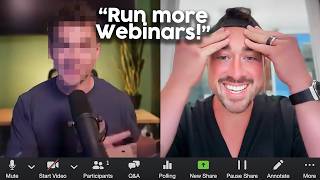
Nick Fisher and Joel Erway discuss Joel's shift from engineering sales into webinar-focused entrepreneurship. They cover his agency pivot, productized mini-webinars, and his new AI tool Inspired for swipe files and creative work.
Chapters
How are you doing?
Doing good, man. It's good to see him.
It's good to see you too. It's been, I feel like I don't even know how long before, before like we get into it too. I'm just curious, is there anything that I should know or you want to talk about during specifically that's good for you right now? Sweet. Well, there is, but yeah, I just prefer free flowing conversation.
That's cool. Yeah, I mean. So I'll give you kind of update as to what we're focused on now. So we've got a software app that we launched. It's called Inspired. I don't know if you had a chance. I think you messed around with it.
So marketing. Yeah. Asked me if he could buy it. So he was on the 30 day trial. If you see us in there, we've rebuilt. If not, we're still, we're. We'd love to give you some money though for it.
So that's the big focus of what we're doing right now. And my focus for my target audience obviously is inspired, but I'm working with like marketing practitioners now, so showing them how to learn all the copywriting skills, learn all the marketing funnel building skills. So just trying to take that step next level up and working with the marketers and you know, so we teach. I mean you run a publishing company, right? So we teach a partnership model where they can learn how to get paid on performance, the whole nine yards. So that's kind of our big focus right now of, of what we're doing.
Yeah, that's, that's where both of those areas are like my two huge like curiosity points. Because internal, making the internal team and like invincible is always my goal. That's more so than any external vision I have is that I used to. I just had the realization too because when I vision pitch to our team, I'd be like, we're trying to build the next agora in half the time. That's just easy to remember. And I'm like, well why does that matter to me? And I was like, it doesn't matter to me the number of like top line revenue at all. So like why? Because people are like how many brands are we launching? Blah, blah. And to me I was like, oh, it's actually about when I went there the first time. I just loved how they operated and the team and there were so many a players in one room kind of sparring. So yeah, yeah, maybe, maybe we could discuss that in addition to a bunch of other stuff. If you Have. How many offers do you have right now as it stands?
Yeah, so I'm, I'm partnered with probably 12 to 13 now. I run it a little bit differently than I think what you do. So probably we, we run. Yeah. So I keep it lean and mean. So a lot of that is on consulting. We also have some like full blown management. And so really what I teach people is like we call it the digital product partner. We help them launch low ticket, you know, highly scalable offers. Like we're not trying to get them to scale to the moon.
Right.
It's more so like. Okay, cool. So we teach them to partner with clients, you know, partner with experts and maintain ownership equity. So they're building a list, they share the list like they share all of the assets so they can remarket to them, they can email them. So I teach them like it's really important to build a list obviously and it's like you can build your own list if you don't. But a lot of these people don't wanna fulfill on the products. So I show them how to do that. Where you co own the list you made. Like you're the driver, you're. Yeah. So I mean you get all this.
Stuff so I wish I would've learned that lesson too. Dude, I actually wish I ran it like you do. Um, maybe with some like some exceptions. But I think your model would make me happier personally. Um, we definitely got into a temptation of like building big and now it's like it can be hard to cut and lean down really hard. So the chaos and entropy of the whole org makes it more difficult every day that you continue to expand.
Dude, I was, I was always so impressed by the operation that you ran because that's like, that's not easy.
That's.
That is like that takes a special person with very special skill sets and a very, very big vision. Full transparency. I tried to do that on my own and I hated it. Like just like we called our, our umbrella brand was called Experts Unleashed. Maybe we can chat about this. Like I like yeah, we can, we.
Can actually just use this. Honestly my, my is mainly growth operators type so this is great. Yeah, yeah, right. And you guys will get to see that. We were meaning to like sometimes people do this but then they for forget to cut or whatever. So I always, I always love to see as much transparency into an org as I can just so I know what people are actually thinking.
Sure.
Easy for people in our industry. The peacock. And like I think that's why I liked you. Right away is you didn't have that tendency. I could tell that you actually cared to have competence in an area and. And flatline, like, spoke highly of you too. So, like, it was three things in one for me that I would have hired you off just any of those singles.
Yeah. Yeah.
Huh. So, dude, I. I don't know how it all ended up actually. And I don't know if there's anyone from that era of the team from a few years ago, but it was royalty hero, right?
Yeah.
Yeah, yeah, right? Tough offer, kdp. Like you, you knew that niche like the back of your hand. So it's tough. It's a tough game to be in. And maybe I'll start off with this is. You start. Where did you. Where did you actually start? Did you start as a copywriter or did you kind of stumble into it from a different craft?
Yeah, my origin story, everyone's origin story is unique. I got into the entrepreneurship space not even knowing I wanted to do digital products, right? So 2013, I'm trying to. I'm trying to remember. So I was employed as a, as a sales engineer. So my background is in mechanical engineering. So I went to school for tech or went to school for engineering, Rochester Institute of Technology. Anyone who's watching right now, you know, Rochester lover, love, upstate New York. And I went to school for engineering and I lasted six months. And I'm like, this is awful. Like, I got my first job as a design engineer designing commercial heating and cooling systems. Like, this is absolutely not what I want to do for the rest of my life. I was looking for other opportunities. I had an itch to like, just be more personal, you know, I was 22 at the time, maybe 21, and I didn't really know what I really wanted to do. So I just knew that I couldn't sit behind a desk all day and draw CAD and do what I was doing. I needed to be out. I need to be talking to people. I saw that while we were working as an engineer, we would get these sales vendors come in and they give presentations. We call them lunch and learns. So they'd buy us lunch. They'd talk about something for an hour and like pitch their products. And while I had no authority at the time, they would talk to my senior level engineers and say, hey, we should work on this project together, use my products, whatever. And so there was an, there was an opportunity, a job offer came or a job posting came out. I was, I was looking and one of these, one of these vendors had posted like, hey, we're looking for a sales engineer and I'm like, sure, why not?
Did you misunderstand the context or you just thought it was intriguing?
No, I knew the context.
Okay.
Sales. And so like well I'll apply. I think I can talk to people like whatever. And they really, they weren't really looking for sales people. Like they want someone who knows the technical background and they were going to teach them the sales.
Well, we call maybe sales process ops or something they had. That's a good name for it. I might actually. That's a huge tip actually. Maybe I'll start posting for sales engineers.
Yeah, yeah. And like they're, they're tech. Like they understand the tech and they'll kind of learn sales on the back end. So I interviewed, got the job offered.
Yeah. What type of engineering between like civil, mechanical, electrical, mechanical, mechanical for you is that you think the most, what would I say? Not optimal, but the most likely to transition that skill set into something like sales engineering.
I would say that sales engineers are probably needed in every field. Everyone needs to sell and they, there are people who need to be technical and, and it's, it's, it's not like sales like we, like you get trained in high ticket sales. Like it's, it's totally different. Like you just need to sound.
I was trying to think if like hey guys, you're, you're a young civil engineer out there. Like the skill set might not translate, but it would for mechanical is kind of going with that. Was it a natural transition or you're like, no, there was, it's, it's just the only basically similarity was the idea of engineering.
I wouldn't say it was supernatural.
Okay.
I wouldn't say it was, it was an easy transition, but it was something that I was young and hungry and willing to learn, you know. But they, the idea was the offer was 100% commission only sales. So you ate what you killed. You know, I got paid a base. It was like $40,000 a year based. So I was collecting a weekly paycheck or a biweekly paycheck and then I had to basically out earn my draw. So theoretically if I didn't make $40,000 worth of commissions, I would technically have to pay that difference back. It never happened. I doubt they would ever really let that happen. That's just kind of cruel, especially with all the hours that salespeople put in. But anyway, you know, I was pretty close to break even the first couple of years and I was learning a ton and I was exposed to their sales Process which was super old and outdated. You know, we're talking, this is 2009 when I first started. Their whole method of landing projects was just go knock on doors like you have this list of potential customers.
The engineering was, hey, engineer your way through this door and then get a sale pretty much.
And so I had to go knock on all of my customers doors and say, hey, what projects are you working on? Can I help? And it was just constant, constant resistance. Like there's no, that's not a great way to like, I understand there are some niches where you need to do that, but you know, I didn't have an endless supply of customers. You know, it's like I had a finite list. My territory was Buffalo, New York. So I had a finite list of customers. I had to just bother the crap out of them until they just finally fed me some scraps just to keep me away. And that was my sales process for the first like three years. Now how we would really, what they thought was the best way to generate like higher ticket sales, higher ticket products and projects. We would have our manufacturers that we represented. They'd come around, you know, they were all over the world, all over the country. So we'd represent these manufacturers and so they'd come in once or twice a year and say, hey, we want to give some product demonstrations, you know, set up some lunch and learns with, you know, with your customers so I can give some demos. So we would, I'd call them up like, hey, I got a vendor coming in, Would you. I've got a manufacturer coming in. Can we buy you lunch? And, and, and set up a, set up a presentation that was like pulling teeth. Like that's not an easy sell. Especially because like in between that, I'm still knocking on their doors every freaking day, you know, just bothering the crap out of them. So we'd set up these presentations and they'd come in and a lot of these guys who were giving the presentations, you know, they're engineers and they're selling to engineers. So it's like dry meets dry.
And, and the meta ness of this sales engineer now engineering. It sounds like cold. Was it cold or warm traffic at this point?
Kind of like I had to make it warm, you know, they didn't know me at first, so I had to introduce myself and build the relationship. And that took time. Not only that, but the sales cycle was incredibly long. We're talking years, like years for a project to come to fruition. So anyway, I'd give, I'd do the dog and pony show. I'd get a manufacturer to come in, and we'd rush around, get them to the presentation. And these guys didn't want us there. You know, my. My engineers rarely wanted us to be there. So they're, you know, showing face and whatnot, trying to be respectful, you know, Respectful. And it very rarely turned into any projects. Right. Because also I wasn't viewed as the expert. I was just the vendor. You know, that's like. I was just that guy, that annoying guy.
Sales engineer internally, that's like. It's a bait and switch now for you, but I imagine it made. That's why you're so good. I feel like that's a common pattern among top performers. And this variant of like, of it I've never heard of before. Like, that's a lot to throw someone.
Especially when you're 22, 23 years old, they already don't respect you because most of those people are older. It's like this young buck knows nothing, which truthfully, I didn't. Like, I was still learning it, you know, so.
Only. So it had nothing to do with, like, putting zaps together. Zapier. Like improving the sales process.
We had no tech. We had no tech at all.
Yeah, there was. There was close to little to close to no actual engineering in any defensible way, I would say, other than.
Right. Well, the engineer would come in, like, designing the heating and cooling projects. Like, so if they're building a hospital, they're building an office building. Like, that's where the engineering comes in.
Got it. So you studied under that type of person or they came in and.
Correct. So that's where the engineering would come in, which is just designing the system, because those were all mostly custom systems. Then we would sell the equipment that would fulfill on those systems.
Oh, man, I'm gonna. I'm gonna remember that the rest of my life.
Yeah.
Sales engineer. More like engineering sales for two engineers. That's crazy. Okay, so.
Yeah, so as we keep progressing, right, so this lunch and learn methodology after three years of doing this and really not seeing, like, a clear path to making six figures, which is what I wanted. Like, it was. It was a very, very slow burn. And I was working 60, 70 hours a week. Like, I was super stressed out. You know, I was in the field of construction. Like, that was our. Our. Our field that we were in. And construction is also a brutal industry. I wouldn't recommend anybody get into construction. I don't care how big the ticket prices are. Everyone just wants to sue you. Everyone wants to just cut your throat and sue you. So anyway, after three years, I realized how inefficient this system was. I said, you know what, if they really want to view me as an expert, I need to start giving these presentations on my behalf. I need to stop waiting for these manufacturers to come in and I need to start teaching this stuff on my own. Now, mind you, this was not anything that my employer was advocating for, but this is me just trying to survive, knowing that I got to get more projects. So I started to buy these books on how to give effective sales presentations. Like, I think I can do an infinitely better job than most of these people that were coming in that were from our manufacturing facility. So I started studying.
Go ahead. I was going to say, do you remember the first sales book you bought, what the title was?
I wish I did. You know, it was when I was. So I'd have to travel all over the country. And so it was a typical book that you'd buy in an airport terminal. Right. So it was whoever was talking about sales presentation, I wish I could remember who it was, but I was just trying to learn the basics. Like, okay, you know, what are the basics? And it wasn't even like, how do I get them to buy? You know, I'm not dropping bonuses or any of that stuff, but like, how do I give an effective sales presentation? So I don't really think there were a lot of things that I learned from the books. It was more. So I watched these guys give these presentations all day. Like how the main thing for me was just I needed to raise my authority and learn how to give them on my own and answer questions. And so the first presentation that I did was for a contractor that was a huge contractor, but we weren't getting any business from them. And so I identified them as a huge opportunity. And they were also nice. They were nice to deal with. And we had this, we had this, you know, piece of equipment that we were really trying to push hard. It was a big new opportunity. So I said, okay, you know what, hey, I'm just going to come in and give a, give a presentation. And we did and ended up like over the. Like that customer became our number one customer almost overnight. So the amount of respect that I got for giving that presentation, doing a decent job, being able to, you know, talk intelligently about what the products were, just instantly elevated my authority. And we were landing, I ended up landing probably north of 1 to 2 million dollars worth of projects. And to put that into perspective from a top line revenue Standpoint, I was probably like my best year up to that point was probably like 6 or $700,000 in gross revenue, you know, plus my commission share. I was probably making, I don't know, 50 grand, 60 grand in total. So we landed a couple of really big projects with them because of those presentations. And I was landing project sizes that were 100 grand, 200 grand, even more. Just one off with one customer. So that just instantly gave me huge income boost. And the amount of profit that I made on those was, you know, so much more than what I was making. All these other scrappy projects and not that I was, I wasn't hosing them, it was just bigger ticket, you just make more money. Like that was. That was it.
There was no one catalyst or turning point for that. It was like gradual iterations basically. And then you got there as far as what makes you want to do that, like get better or like master that area of something that you previously had no interest in.
Let's say it was a matter of survival. The amount of time that I was putting in and you know, the, the stress that came from it and the lack of revenue. Like I. I just wanted to be as best as I possibly could in this, in this field. Like, I wasn't even thinking about leaving at this point. Like I just really wanted to be the best salesperson in the company. That was why I kept studying and that was why a lot of things started to shift. So I started giving these presentations and then I started to implement some other things. I came across another book which I distinctly remember, which had nothing to do with sales or presentations. It was the Four Hour Workweek. Tim Ferriss. So I was an avid reader and I didn't even get the idea. Like I didn't read that book because I wanted to go off and do my own thing. I read it because I knew that my company was so inefficient with everything. Like I needed to find more ways of leverage. And this book just kind of spoke to me.
And so the one that's really mature way of looking at that book and that's the actual lesson and why it's still relevant.
It is. So I was blown away that we'd like. I think it was elance at the time, like I had no idea about these virtual contractors. I. And one of the things that Tim talked about in the book, and I can't remember exactly, but I was introduced the idea of an email list, like just an email newsletter. And I'm like too right. You know, like my mind was blown. Like, oh, this makes so much sense. I'm like, instead of me knocking on doors all day, every day and calling my customers and just annoying them, what I was going to do is I was just going to write a newsletter and send it to them, like, once a week, right? And it was just meant to just elevate my authority even more. And so I pitched this to my boss, like, hey, I want to do this. What do you think? And he shot it down, like, immediately, because in his mind, I'm trying to do less work. And in my mind, I. I know how inefficient this is. And so I ignored him, and I decided to do it on my own. So I literally signed up for a free mailchimp account. And, you know, we only had, like. I only had, like, 150 people maybe on my list of, like, all my contractors, all my customers. I said, you know what? I'm just going to, you know, send them a weekly newsletter. I'm going to write that so much.
Yeah.
So I'm just going to write some case studies. I'm going to share some insights of things that I've learned. And, Nick, after that first, like, I don't know, maybe two or three weeks of doing it, we're talking just a handful of, like, newsletters that I sent out. I was getting inquiries saying, hey, come in. Let's. I got this project that I'm working on. I really liked this idea that you talked about in your case study. Like, let's talk about it. I landed a $450,000 project with one engineer, one customer, just because of that email newsletter. And so I got that meeting booked. We had these huge, like, these. These huge pieces of equipment that were very, very, you know, intent. Focus of my customer, of my company to try and promote. I said, I got this, you know, custom air handler that we're going to include in here, and we're going to design all this other stuff. So I brought it back to my boss. He said, look, this is what this newsletter did, and this is the project that we got, you know, so, like, it almost gives 50% of my. Of my business in a year. I did one project in addition to all the other stuff that I was doing. So, like, my income was now taking huge leaps. Huge leaps. So I show. I was so excited. I ran into my boss's office, and look, look, here it is. Here it is. And he was, like, just handed off to Casey, who was his assistant at the time. I'm like, you are totally missing.
That would make Me so mad. Yeah.
Oh I was pissed. And that was when I knew I was going to leave. And so I read the four hour workweek and it wasn't really about starting a business. It was just being efficient right. And leveraging stuff. So that was when I got the itch that was the moment of like I'm going to leave corporate America. Still didn't know what I was going to do but that was really the last domino. And when I did leave I left over $100,000 in owed commissions to me. Right. That's what we call in sales the golden handcuffs. Like they yourself company has you locked in just until your next commission was owed. And you know I just knew that my health and my sanity and my opportunity is worth way more than all of those commissions that were owed. So I left it and started my own, my own ventures. So that's the like the very early stages.
Thank you for telling me that. I just wrote a few notes to myself. Every episode I get I like to throw a little ad spend at since that's like one of my used to be my best skill probably isn't now and Tim Ferriss might send it his way because he unlocked me too. And it's like I think people ish like around in our generation that's this this era is like version of Dale Carnegie or rich dad, poor dad and yeah Saki like the generation before us. It's like every generation has these like certain books that a majority that I found a majority quote or cite is like the actual point or the aha moment or the conversion point we were gonna we get sucked over here so dude. But the, the key difference and that's why I love talking to you is because it makes me angry how much smarter you are at interpreting the lessons right away because I was at the time with just looking for like I thought I was just like looking for a lazy way to you know make money. So like high leverage, low effort. It's my whole thing. And then I learned the hard way that that's never like that's almost never the way that it works out. Like you have to have a lot of luck and low probability odds to luck into it. So. And I just did verbatim though what I'm really good at is reverse engineering exactly what worked for someone. So I started if you remember the hundred dollar French shirts or like whatever drop not even drop ship but alibaba like to them. Oh yeah I had those at my house. I tried like exactly what Tim tried and learned the hard Google Search. I was like, cool, I can do this. Google Ads, $100 T shirts, frame them as premium and lost money. So that was my first experience. Yeah, if you guys are watching this, it's a good reminder to just look for the levers. How do you do that, like, in your head? A lot of people can't assess leverage very well.
Yeah, well, so I guess really where I look for levers is I try and look internally about what I've done. Well, so this kind of transitions into the, like, the next phase of my entrepreneurship career, how I got into digital digital products. So as an engineer, there is a handful of licensing exams that we can pass. Like, there's the Fundamentals of Engineering exam, then there's the professional engineering exam. And it's like the holy grail. Like, everybody wants to be a licensed, certified professional engineer. You need, like, I don't know, probably six, seven, eight years of experience before you can even apply to take that professional engineering exam. But for the first test, Fundamentals of Engineering exam, you can take it right out of college. So I did. So I took the FE exam. And when I took that, I signed up for some sort of study program. I think I invested like 800 bucks. And this. This exam is essentially like a final exam of your entire college career. So it's every piece of engineering. It's not just mechanical. Like, it's mechanical, electrical, chemical, civil. There's math, there's all sorts of stuff. Like, it's literally a final exam for college. It's an extremely difficult, difficult test. I signed up with my buddy. We were both taking at the same time. We took the exact same study course. And after the study course was set up on weekends, so I think it was all day for like six weekends, Saturday and Sunday. Like, it's just a. It's a. It's a crash course. And I remember going, like, into the second weekend. So it'll been like, you know, session number three or four. I remember talking to my buddy Matt. I'm like, matt, this is not working for me. So I'm gonna show up, but I'm gonna do my own thing. Like, if you wanna do it with me, go for it. But, like, I have this plan that I've kind of mapped out in my head. So they. They tell you roughly, like, how many questions are gonna be on each topic. So what I did was I created this. This study plan. I'm like, okay, well, I know I'm not gonna get any electrical questions correct. I know I'm not gonna get any chemical questions. Correct. And it's all multiple choice. So I literally created a math formula that said, yeah, yeah. And so I created this study guide of like, well, here's where I'm going to put my time and attention because these are my strongest areas. And for electrical and chemical, like, I'm not even going to try and learn it because I didn't learn it in five years in engineering school. I'm just going to write a for all. Like, literally I'm just going to, you know, circle an A for every single one of these questions that I don't know or, you know, I'm just gonna choose one of the multiple choice questions.
That's like, that's what everyone should do.
Yeah. And so what ended up happening was, you know, it's literally the tale of two paths. Matt continued with the study course. I continued on my own path. I passed and he didn't. And so I'm like, you know what, I'm an entrepreneur. I'll write a book on this. I'll write a little study guide, and this will be like my ticket to freedom. So I actually wrote it, like, while I was still employed. And I launched it. It did I say, like, moderately well. Ended up being number one bestseller. Like, I didn't take any marketing courses, by the way. Like, I didn't know how to promote this. I didn't know how to launch it. I had one guy that I connected with who taught fe study material and I reached out to him, I said, hey, here's my plan. Like, would you be interested in promoting it? We built up a small relationship, but like, we were, you know, jamming on, you know, he built this business teaching people, you know, study materials. He's, yeah, man, that's an awesome guide. Like I'll, I'll promote it. So he sent like one or two emails to his list and that's what spiked me to number one. When I launched it on Kindle, like, it wasn't even a hard copy. It was like 30 pages. Sold it for 10 bucks and it became a number one bestseller in Amazon, which doesn't mean a whole lot in like this really, really niche category. But I'm like, sweet, this is going to be amazing. And then come to realize, like, that market is incredibly small. Like, I can't make enough money selling $10 ebooks. And so I needed to start to figure out what that next step was.
Trial and error. You learned kind of. And the, the math just made sense to you from a, like an engineering background? Yeah, like this.
Well, the math of a $10 ebook did not make sense to me. I thought it made sense. I'm like, oh, there's thousands of people that can buy this all the time.
Yeah. Someone's like, why? Like, Facebook ads are getting, like, too expensive. And I was like, okay, did you change any other variable? You're already too thin. The math equation was thin to begin with. Like, yeah. But now I know that in hindsight, it's hard when you're thinking about the mechanics of it. And that's coming from someone like yourself who's good at math. So I can't imagine that it's easy for everyone else. What other I don't like? Again, you're actually the first person who agrees with the. In that area. I always talk about just like, cutting, cutting the. Cutting your weaknesses. Like, I hate. I don't hate working on your weaknesses. I get, like, trying to curb them so that there's no, like, catastrophic, like, risk. There's no, like, black swan scenarios. Like, yeah, like, you know, it's not important to take care of your body and then let you balloon to like, £600. I get that. So, like, have some self control and work on some areas of discipline. But doubling down on my strengths, I'm just like, life's too short. I can't. I can't improve everything. So you gotta let go of the idea that, like, you can. Well, you can, but you know what I mean, you gotta focus. So it's just like, what areas do you want to improve? And I never wanted to be, like, average across every discipline in life. So, yep, that was my thought. Yep, yep. So where I was going with that is people that resonate with that type of thing of like, oh, yeah, for me, I had to hear it, like, from someone like yourself before. It was a huge unlock. And I was like, oh, I don't. I don't have to be like David Goggins or be like Bill Gates. And a lot of times in business school, I went to business school, and you're already better at it than me at the same age. Probably I was learning the lesson, like, hey, case study. Case study applies to everyone. And if it doesn't work for you, it's either because of. And then you start blaming external factors, internal factors. And it's at that point in my career, I didn't know to even separate those two and try to isolate. So what would you say? Or, like, what are some of the quick things that, that you probably breeze through that? I don't like to dwell on too many, but someone who's like, you. What. What did you screw up? What was your, like, biggest career mistake? Up to that point that you had to learn or aha.
Up to that point. So, like, just.
Just, like, getting into this industry for the first time, like, could you have done it faster? What. What was the shortcut? If. If you looked back and yours is pretty dang good as far as, like, making it there quick.
Yeah. I wouldn't really change anything of my. My origin story in terms of mistakes that I made. You know, I would probably never advise anyone to take the path that I took because I literally, I was at a breaking point with my career where I didn't care about the. Like, it's not that I had endless supplies in. In reserve. Like, my wife was making $38,000 a year. Um, you know, thankfully, we had very, very low expenses, but I still had debt from school, so I wouldn't really advise anyone to do that. But, I mean, I definitely jumped out of the plane and just had faith in myself to build the parachute on the way down. And so I had to take two weeks to decompress from all the stress that was in that sales career before I really focused on myself and did anything. Anything else, I would say the biggest, really, the biggest mistake that I made was probably not pivoting fast enough. So if we fast forward, you know, the next two to three years. So where that took me was I realized I needed some higher ticket products. Right. I can't just sell a book. I realized I needed to learn marketing because I didn't know anything about marketing. So Russell Brunson was launching Clickfunnels at the time, and he was bringing on his next round of, like, coaching students. And I'll never forget. Like, you want to talk about ad recall, right? You know what ad recall is? But, you know, for those of you who are listening, you don't know, ad recall is this. You know, how long you can remember, how long you remember a certain ad that came across your feed? Like, how much of an impression does it make to you? And it's. It's. Not everyone needs ad recall. But this is 1112 years ago. Now. I'll never forget coming across my Facebook feed that there's a. There's a. An image of Russell standing in front of a Plexiglas, you know, whiteboard, and he's drawing on it. And I remember the sales page. You know, I clicked on. I don't remember what the ad said, but I remember the image. And I clicked on the sales page and it said, I'm looking for my next. I'm looking for a handful of my dream, you know, clients.
Yeah, dream 100 hook, basically.
Yeah, I'm looking for the, you know, a handful of my next dream clients. If that's you, I'll double your traffic and conversions over the next 12 months. And in my mind, I'm like, sweet. I have zero. So doubling that would be infinite.
Russell, the math doesn't work.
Yeah. So went through the sales process, joined one of his coaching programs, and started to learn about funnels. And I got really hooked on it. Like, I love the idea of funnels and the whole nine yards. And so that is what got me into the world of funnels.
What year was that, roughly?
That was end of 2013. 2014. Like, December 2013, somewhere around there.
That era of Russell Brunson, like, is so, like, definitively, like, he was on top of the world. The best marketer in the world, almost. I feel like, like, him and Frank, I remember from that specific era pretty, like, vividly crushing it. So, yeah, the ad recall for me too, which is a hard thing to measure. Call it qualitative attribution. And marketing normally is just. That is like, made such a lasting effect. So, dude, so you got in there doubled. Doubled zero. So probably gave a testimonial. The. The return was infinite.
The return was infinite. And I'll never forget it. We hopped on our intake call, and he's like, your niche sucks. Like, he. He wrote. He wrote about this in Expert Secrets. So he writes about this conversation. Yeah, so he wrote about this in his book. And, you know, because I was still trying to go after engineers at the time, and I'd launched. I created a engineering career development course. So that was my, like, niche expansion, was trying to teach people career development for engineers. And I was having a hard time. But he was. He still tells everyone to do webinar funnels. Like, to this day. Like, that's his. That's his thing, which is fine. So he's like, hey, you gotta do a webinar. Here's my training. Go do it. So I did. And this is probably. Okay, you're talking about mistakes. This is probably one of the biggest mistakes that. That I made. Early on, I was running a webinar funnel, and I was doing a live webinar, you know, at night, and I was selling this course. It was probably, I don't know, 500 bucks or something at the time. And people loved it. And I'd get a couple sales here and there. I was very close to break even. But when you don't know what you don't know. I thought that was a total failure, you know, because you see all these people who are crushing it with webinars. They're making forex, you know, return on their ad spend. They're making billions of dollars. So, like, that's the comparison that I was making. And I did it a handful of times. Like, I'm, I'm, you know, losing money on ads, and, you know, it's just low show up rate, whole nine yards, everything that you hear about with webinars, right? And, and so I'll never forget, you know, Russell gave me that input on like, day one of the coaching program. I ignored it to start. And then after I was struggling here and there, I was like, you know what? I just gotta pivot my market. And I didn't really have anything to pivot to. Like, I didn't have any. Like, what am I gonna pivot to? Well, the, the one thing that I was really great at was watching other webinars and showing people how they can improve it, right? There's, there's two completely different skill sets is being able to do it for yourself and then being able to see and help other people do it. So I remember calling Russell because I had run out of cash, run out of money, and I was asking to sell for him on the phone, which, by the way, didn't have any experience doing that either. But I was totally hustling at this point. So I call him up like, hey, man, sorry. Like, I'm like, I need some help. I. I'm just looking for a job at this point. You know, can I, Like, I love your coaching program. It was fantastic. Can I, I know you're still driving ads. Can I be a salesperson and just sell this stuff for you? And he said, no. But he goes, what you can do is there's another member of our coaching program who's looking for a salesperson. He's running webinars. He wants someone to follow up with all these leads. I'm like, sweet, make that intro. So we talk. And his name was Jason. He was running a webinar for an Amazon dropshipping offer, which was hot at the time. And he was close to break even. He's like, I just want you to call all my leads who didn't buy and try and sell them. Like, sweet, give me the list, I'll call them. I did it for like an hour, and I'm like, screw this. So I said, so I.
Later today, and I'm not looking forward to it too.
Yeah. So I said, jason, let me watch your webinar. Which I did watch it, but I said, hey, you know, I watched your webinar, but I think there's ways that we can improve this. So I said, would you mind if I just ran the webinar for you? Meaning I will show up live, I'll pitch the entire thing. I'll give the training. And he's like, absolutely. Because I hate doing it. But I'm only doing it because Russell is telling me to do it every single week. Let me do it.
Yeah. No. And that's. Dude, that resonates so much. But the degree of difficulty actually making that pivot, a lot of people, like, I only know you flatline and maybe five other people in the world that can co. Basically deck it out and be co host. That's such a unique skill set. And people don't realize I wasn't a co host.
It was me flying solo, doing it.
Doing someone else's pitch.
Yes, doing someone else's pitch.
That can make it easier, I guess, to like disconnect from the fact that you have nothing to lose. But still, like, the actual degree of difficulty in pulling that off is even higher if you don't have a co host. Yeah. So.
So two weeks later we. I took over his webinar and I made the pitch. So he was. It was a thousand dollar program, typical 997 offer. Right. Internet marketing speak. And he was making about one sale a week from his ad spending, you know, about $1,000 on ads, making about $1,000 back. So he's close to break even. That first time I ran his webinar, we pulled in 14 sales, same ad spend. We 14 xed his performance on that first campaign and he. Jason called me up afterwards. You know, his stripe was just going off the. Off the chain, right? Like, sale here, sale here, sale here. He's like, holy crap, dude. You know, I don't know what you're doing, but keep doing it. And so I just negotiated. I mean, it was. I didn't negotiate at the time, but like I said, listen, just pay me a percentage of the sales. And it was like 10% of the sales. So I made 1500 bucks or whatever that was. Yeah, about 1500 bucks running that. I'm like, let's just keep doing it. And so I did that for him for about six months. We took that to, you know, some pretty big heights. All cold traffic. And that's when I realized that's my opportunity is to do webinars for other people. Not just, like, I didn't want to run. I can't run them, you know, for a million people. But I can consult. I can write webinars. And so that was the. That was the birth of the webinar agency, and that was the big pivot that I made. So that was probably, like, the biggest jumping off point for me was to launch a marketing agency to do, because I already had experience giving sales presentations. Like, I understood what. What needed to happen. Like, that's my sales engineer and all of me teaching myself how to do that back in corporate. Like, okay, well, I know how to do this. And so I did. And that was the launch of my. My agency back in 2014, 2015, somewhere around there.
So I'm 10 years behind. Like, I had that realization again recently. And, dude, it's so weird how these worlds collide. Like, Expert Secrets is. I've never said this, but, like, that's what I'm doing. I'm just. I rooted down to, like, what. What am I doing? I've focused on all these brands and building these brands the last six years, and that does make me happy. I want to go back to doing that. And I don't love being in the spotlight, but I was like, what way would I love being in the spotlight? And the only thing that came to mind was Russell's advice and Expert Secrets, which is dream 100. Interview the people that you admire and respect. And then that was, like, the thing for him. It's not everyone's path, but that really resonated to me at the time. And, dude, to say, like, the fact that you had something to do with that, that approach has been fulfilling for me so far. So I. I keep telling people on the team, like, I'm only committing to doing, like, a hundred of these because at the end of my life, that would be my definition of success. Is guru'd enough to where I got to talk and learn from the hundred people that are most influential in my. In my life and career. So thank you for. For doing that and being a part of it twice now. That's cool.
Yeah, it's.
It makes this all possible.
It's quite a journey, man. It's quite a journey. You know, the industry that we live in is a weird one. Nobody really gets it. Nobody really understands this. This industry is funny. I. I have an office here, and I live in a very, very small village in upstate New York. And so in this office building, it's an old converted schoolhouse. Like, the mayor is down on the first floor we have like the treasurer. Like, so, like the village, you know, the village board members are working right below me. And so we've got a handful of people that have office space here. And I, I had one of my neighbors approach me today. He's like, hey, you know, I hear you do social media. I'm like, I don't do social media. Like, I, I don't, I do not do. No, it's not. I mean they don't, but they don't get it. Like, so I laugh because I'm like, just want to be clear.
Like, don't get it.
I'm like the antithesis of social, social media. I said it respectfully and I'm like, I'm not offended. But like, I've had a lot of people say, like, oh, you know, you work online, right? Do you do websites? I'm like, no, no, no, no, I do not do websites.
Does your family get it now or.
Yeah, no, no, it's like I, I published, you know, my book High Ticket Courses, which was like one of my, my first. Like, I had it professionally edited, professionally written. I wanted, yeah. So I wanted to explain. I want to be able to hand something to people. Like, this is really what I do. And so if they read it, they have a little bit of a better understanding. But like, people don't understand that like there's coaching and like, like there's, there are people who make their living selling courses and doing coaching and it's still very foreign to a lot of people because so many people don't invest in themselves. So many people don't buy, you know, courses. Like they go to school and they think that like that's it, you know, okay, they might go back to school or do some, you know, certifications or whatever. But you know, you and I are course junkies. Like we buy stuff all the time. All the time.
It's like, yeah, it's like, it's actually a problem when people cite too many. Like, I'm going to not maybe ask you this question because yesterday as someone, as a copywriter, I'm like, what are some of your favorite basically swipes of like what writers inspired you? I'm like, oh, I haven't heard that one. It was olive oil letters were mentioned and I was like, oh, I feel like I shouldn't have read those. Any self respecting copywriter would have read that. But yeah, that's like me at my worst is I'm just like creating a library of Alexandria in my head or something. But I forget actually where I was going with that. I had a really. I was wanting to ask you a question. What were we just talking about right before you said that?
We were talking about just how a lot of people in our inner circle, like our family and friends, don't.
Yeah, they might. My. My dad's side, my grandpa is an engineer, so I wonder. I'm gonna send this maybe to. To him because he'll. He'll appreciate this. And I think, like, just the conversation from that standpoint, certain explanations, like my grandma, my mom's side, she actually, she actually clarified my marketing message because I was like, hey, we're a startup studio that, you know, builds brands from scratch. You know, like something not clear to most general people. And she was like, so what? What does he do? And she eventually got to he, he helps people teach. And I was like, wow, grandma, that was really good. Like, I wouldn't have thought to distill it down that far. So that's. That's usually what I say when it's like the general, general public. I'm like, I just help people teach. Or I say I'm an accountant, which I am. Went to school for that. So, yeah, ends the kind of.
Imagine like when I was only doing webinars, like, I would tell people, like, oh, I run the webinar agency, and their mind goes in a totally different direction than what I actually do. So it took a lot of refining. And I just basically tell people, like, I just work with consultants and help them sell their crap online.
Yeah, I'm. I'm very aware of, like, anyone watches the irony or the irony of me helping other people with it but not being able to help myself. So to me, I'm just like, yeah, whatever, I'll. I'll figure it out later. But yeah, truly, dude, I'm going through it right now. And the journey of going from like, let's call it behind the scenes guy to behind the scenes and camera, like, is tough. And having like a team behind me, even though you can't see them too, just a few good people supporting me in this project was key. What was it for you? If you had any, if you had any hiccups during that transition or advice for me, what would you say?
Well, yeah, there's tons of hiccups of everyone's going to go through. Through their challenges. You know, I, I think prefer to.
Avoid some of them. I. And hit. Hit the ones. Hit the inevitable ones faster, I suppose. Yeah.
For me, once I built a brand as being one of the webinar guys or the webinar guy, whoever you were talking. Whoever I'm talking to. Right. I built a pretty solid reputation. Russell's referring clients to me. You know, I'm getting, you know, a list, you know, marketers I've worked with tons of them. Tons of them. So I built this Persona that I never really wanted. Meaning when I launched the webinar agency, it was just a cash flow system for me. It's like, okay, cool. Like, I know I can make money with this. Like, I needed to just stack cash at that point. I didn't have any aspirations of being the webinar guy. I know Flatland. Like, that's him. Like, like, he wants to be. Like, he's, he's still going all in on that. And that's.
He's having a run this year. Like, I love watching it.
Yeah. And so, like, I'm, I'm, I was never, that was never what I wanted to do. But the, the, the struggle that I was running into was, you know, I did webinars. Then I pioneered the mini webinar, which I also didn't really want to pioneer that. But it was just like the next evolution of, like, what I was trying, I was trying to break free from being a webinar guy, the webinar guy. But even to this day, people still come to me like, hey, I want to do a webinar. I'm like, man, you know, I would work with a couple just like you guys. I would pick like two to three high level people that I might work on a webinar with per year. And that's max. Sometimes it's not even any. Right. Others it's like one or two. Like, I didn't want to be. Like, I had a really hard time separating from that and just publicly acknowledging, like, I'm not the webinar guy anymore. Like, that was old. And it's like, that was really hard because there's the internal fear of this is what my entire brand's built on and how do I get to that next level without cannibalizing everything that I've already done? And I'll be honest with you, it took like six years. So I wanted to pivot away from being the webinar guy in 2016. But I, I mentally, I couldn't. I had, I had a really hard time doing it because, like, leads were coming in. Like, I just had so many referrals come in. So, like, oh, I'll just do this one more. This one more. You know, I launched a podcast Called sold with webinars, like I had created.
Yeah, you're really linked to your branded keywords.
Right, right. And so I had really created that niche and I was, I had a really hard time getting away from that. So a mini webinar was, you know, it's really a video sales letter. But the only reason why I called it a mini webinar was because, like, it was associated with my brand and it's not a webinar at all. And so I didn't even intentionally try to create. That's funny story. Like, I didn't intentionally design the word mini webinar just because I wanted to latch onto webinars. It was more. So I was talking to a client and, you know, what we were doing was we were doing long form webinars, getting people to, you know, book a call. And I'm like, dude, your offer is so great. We need to put this at the front and just shorten it. Right. And Hormozi was actually my first client, which we, my first, my first. The first client that I did this with because Russell referred him to me. We're both in, you know, the inner circle and Russell's coaching program. And you know, he's like, hey, Russell said to talk to you. You're the webinar guy. Here's what I've got. And he was launching gym launch. And I'll never forget this, you know, he's like, Russell said, I got to do a webinar. Like, and I told him right away, like, I had done a mini webinar for my own brand. It was working really, really well. Cut my acquisition cost cost by 90%. I said, listen, you're targeting gym owners. I really don't think they're going to sit through an hour long webinar and book a call. And I was like, well, I know, but Russ, you know, I paid Russell. I'm going to pay you. So I just want to do a webinar and if it doesn't work, no big deal. And that's one thing Alex is fantastic about. Like, he will, he will detach and he will move. He will pivot very, very quickly. So I'm like, all right, we'll do a webinar and let's see what the data is. And so we, we did it. Data wasn't good. And he was like, all right, what next? And I'm like, let's do this. I love that mini webinar, which is just basically your pitch. We'll use this funnel. And it just, like, it just Took off. Like, it was. It was an instant success. He's obviously very, very good at sales. So he's doing these sales calls. He's closing. Don't. Don't quote me on any of these numbers. But, like, he was getting applications for like, between 10 and 15 bucks. So we had a text message going back and forth. He's like, just got another one. Just like. So he was excited because he's getting these leads. He's calling them right away. Right. And he's closing these people. Like, he's doing 5k deals here. 10k. He's. He's doing what Alex does, right?
Yeah. He just monetized him.
Yeah. So he. He took off. And so that's when I went all in on mini webinars. But, like, the word mini webinar was not by design. Not like I had this grand master plan.
Like, it was a plan B shift, or was it a refinement or iteration?
No, it was like I was having a conversation with someone and they were trying to. I was trying to explain to them what I was doing. And I'm like, oh, it's. It's. It's like just a reverse webinar, but, like, it's just a mini webinar. And I just kind of said it like that. And like, oh, I get it. I'm like, all right, well, that's what it's going to be, you know? But I had internal shifts. Like, I didn't want to, like, publicly advertise mini webinar. Cause, like, there's no scheduling. Like, it's not an actual webinar. But I'm like, whatever. The market loved it, so I'm just going to roll with it, dude.
So funny. I struggle with this same sort of thing, just a different version of that. But I wanted to check because, dude, have you read Money Models yet? You might be the one. I was trying to figure out if it was you or Russell that is named as in either way. Speaking of identity, I was like, oh, or mosey. You had to do it to him. He was like, I paid someone a lot of money. I had it marked in a famous Internet marketer. I paid that blah, blah, blah, too. And I was like, oh, that's. That's it. I'm sure he didn't mean to it, but I was like, if that's Russell or Joel. I was like, there's so much more than Internet marketer. So, yeah, it's an identity shift, like, for me too. And there's certain labels that like, just mean respect to Some people and then others not. But I get the branding. Thing is, I've had to shed that a few times myself, but I've never boxed myself in as well as you did, which is good and strategic. And that's why probably Russell thought of, like, hey, it's the. You. If you want to make a lot of money, usually you want to be known as, like, he's the guy for X. Yeah.
So just to clarify something, you know, me boxing myself in, I really do believe that was my biggest mistake. Um, meaning really? Yeah. So I had. It took me, Nick. It took me probably six years to fully detach. And it really wasn't until about two years ago when I was. I would start to publicly talk about, like, I'm not. I'm not doing webinar. Like, don't come to me for webinars, because I'm not going to. I'm not going to take it. Right. I'm not going to take the project. So because I teach, I teach all.
Sorts of marketing, you refer it down to someone else now, these days, yeah, I'll refer them.
I'll refer them out to people. And, you know, so I latched onto it for way too long. And that holds you back. Like, if you want to go do something else, you do have to disassociate. You don't have to cannibalize your brand, but you need to make it public. Like, this is the direction that I'm heading. This is who I am, this is what I do, and this is the direction that I'm heading. And as you get more successful, every time you reinvent yourself, it becomes more and more and more difficult. Some people are very good at doing it, and that wasn't me. It's still challenging for me. Still challenging for me. This idea, we talked about this before. You know, my digital product partner model. I have wanted to do this. I have wanted to teach this for probably five years. Probably five years. And I just haven't. Because I'm changing my market. And so it's a brand repositioning, it's a reinvention. And I just kept telling myself, oh, you know, my current audience, their product owners, their experts, you know, I don't want to just totally abandon them, but it's, It's. It's hard. It's really, really hard. Some people are, Are excellent at doing that. And that's. Those are the people that you see consistently level up and they change their messaging and they just, they just keep going. They keep going. Like, it takes a lot of resilience to do that because you're. You're not starting from scratch because you do have brand equity built in. But, you know, most of the customers and clients that I work with right now on the DPP side, they're, you know, they're totally cold. You know, some of them are. Have been carryover, but it's a totally new audience that. That I'm. That I'm working with, and it's. It's hard. You know, it is a challenge to. To. To separate.
Dude. Yeah. And that resonates so much. So glad this conversation's happening because I feel subconsciously guilty and. And I'm sure it's just all in my head because I've done it for so long. Like, I'll apologize to Pace and just assure him, hey, I'm even with our podcast studio. I. I started doing my own, like, here on this wall. That'll eventually be done. Because I never want to be in a situation where he needs it, and I'm in there, and it's. Well, look at me. Like, I.
You.
You got obviously way, way more impact and leverage and blah, blah, blah. So I don't want to be a distraction. And it took me a while to figure out what is my master plan, because it might appear like I'm not focused on the right things, like, in the moment. And that's probably true. I'm sacrificing maybe some current gains if, like, maximizing profit this month for maximizing profit in three to six months is kind of my plan. Right. With this. Because I do do think it will be in benefit. But even, like, yeah, it would be like, just even pay seeing this. Or even like Russell, who we work with on just the prime mover offer, like, seeing this. I gave him flowers in this episode. But in general, it's like, it's never good optics when it's like, hey, we're supposed to be working on your brand, but you're podcasting, right?
Yep.
And so thank you. Yeah. Like, again, someone's probably watching this and be like, yeah, it's. Yeah, like, I wouldn't struggle with that. So everyone struggles with something different. And thankfully, I got Sam Ovens in my life at some point who, like, helped me destroy his own character. So I got really good at doing it for others and myself of just like, in maybe after this, if you. Have you seen the Alchemy of self journal before that? I did with Sam. That might. That might help you. It's just like, it's. It's an insane level of character. Planning. And I forget who he learned it from, but Psycho Cybernetics is the book inspo that both of us like cite for doing that exercise and taking it way too far. We designed his shoe color, what he would wear, his weight, his body weight, his hair who like get it cut by. It was just like it was, it was sociopathic level of that I've never had anyone do except for him.
Yeah, it's like it's creating your future self and. But making it as tangible as possible.
Yes. Yeah, right. You get it. That's exactly what it is. It's aspirational future pace. Right. So thank you. Yeah, I feel, feel hurt on that because. But the people it clicks for, which is some people like would get to that, that I would show it to and they'd be like this is the most insane. You work for this man. I'm like, yeah, isn't this, this is pretty nuts, huh? Yeah, I don't know. So anyways going, let's, let's transition because I could talk to you about this stuff all day. We talked, we, we said at the forefront of the convo, you got the new AI tool. That's originally why I reached out. I saw it. My VP of marketing said he got into 30 day trial. He's a big fan of yours. I think saw maybe a presentation at Webinarcon. Did you present a Webinarcon last year? The year before?
I did, two years ago I presented but the software wasn't in existence at that, at that point.
That's right. It wasn't existence because he told me about the trial. So we're on the trial and you guys should all get into the trial. But why, like if you had to convince me and to rebill essentially or hit at the end of the day trial, what would you encourage me to do like in the next X amount of days while we still have it that we could see the value and make like in like a defense, not a defensible case. Just like it's a no brainer for us to.
Well, you talked about it earlier. One of the biggest things, your biggest, your greatest skill set that you told me that you had was being able to reverse engineer things like down to a T. And as marketers we all learn from studying what worked in the past. Like that is, that's the art of marketing. Building upon what has been proven, modeling what works and adapting it for yourself. That was the whole reason why we created Inspired is to build inspiration. So the first part of Inspired is a swipe file, like an Organized, curated swipe file that doesn't live on your desktop and all these screenshots that you compile, it's housed in a central repository in our web app interface, and it integrates with a Chrome extension. So if you see an ad out there, like, wow, that's a really, really good ad. In one click, it saves to your. To your file.
That's the indexing central repository. Instantly with no latency is the problem I'm trying to solve for sure.
Exactly. And so that's the. That's the first iteration of it, right? So you can save ads, but we are designing it for marketers. We're designing it for agency owners, people who do this for a living. The practitioner, right. They're. They're constantly creating copy. They're launching new ads, they're building funnels. And so we wanted to build. Be able to not only collect the swipe file, but be able to use it. Because it's one thing to study it, it's another thing to adapt it to your use. And so that's what we're building with Inspired. We've already built. So we can save landing pages in your repository. We can save, like, individual screenshots, but not only that, it's taking that and adapting it to your products. So, Nick, if you're working on a project with a client or a partner, and, man, we need to get, like, 10 new ads created instead of going through the entire copywriting process of just like, hey, copywriter, go give me five new ad creatives. Like, you have a swipe file now of a bunch of different ads that you can test, and at the push of a button, it will rewrite them using that framework. It'll use your stories, it'll use your target demographics, aspirations, the pains. It knows everything about your product and who you're trying to serve, and it will recreate an ad using that framework that you've saved across however many ads that you saved, and you can spin up new ads at the push of a button.
That's exactly what I. Yeah, that. That perfect. Solved. Like, I'm. I'm in. And I would be like, I'll probably be an affiliate for it, too. If you have an affiliate program, I would.
Yeah, of course we do. Yeah. I'd be ashamed not to. I'd be a big mistake not to have an there.
Dude. There's a lot of people. I think it's. It's definitely a thing within our industry, but I've offered to start them for, like, certain tools that I really love. I'm like you guys don't have a referral, like even like get a gift card or anything, so no worries. I would, I would post this naked just for, for you anyway out of respect. But in general, like a tool like that, I'll tell you how bad mine is, but you got to try not to like make fun of me too much because I'm in. Evernote was my first central repository. Then I think it was the first cloud based one I used was Adversuite when Simon Harry's and Luke, I think launched that offer. And that has a certain era of my like best ads and other people's best ads. So it goes like Evernote Eversuite used foreplay for a little bit, if you're familiar with these tools and competitors. And none of them quite solved the unified swipe file problem either to Swipe Co. Swipe Co had some good momentum as open source, let's call it version of it. But yeah, solving that problem. I don't know if you're like TAM is any more than 10 billion people, right? But that's a super cool problem and I think one that especially copywriters have always wanted solved. I've just seen so many disorganized swipe files, myself included.
Yeah, that was why we built it. You know, it's, you know, phase one was getting the swipe file in there. Phase two was using AI to spin up new version, spin up new versions for yourself. And you know, so we have the ability. So if you, if you use the Chrome extension and you save an ad, it will automatically detect if there's a destination associated with it. So not only does it save the ad, it goes to the landing page and instantly saves the entire landing page in your account at the push of a button. So now what we're trying to do is take it to the next stage of like, okay, cool. How do we get, you know, landing page copy written from these, these, these full page screenshots that we're, that we're saving. And so that's from a high level standpoint of like where we're at right now and like where we're going. The next phase of really where I want to build this feature out is now integrating directly with Facebook. So integrating directly with Facebook ads. So at the push of a button, it will upload it to Ads Manager. It's like, okay, cool, we've got images, we've got copy. Like we can just start to, you know, rock and roll. And like, we don't want to be a full blown ads Manager. But it's like, cool. Launch this into my campaign. Launch this and launch this test.
Right?
There's a lot of other great softwares out there that are full blown, like ads management platforms and whatnot. It's like, that's not where we're going. Like, we want to help get you guys live and testing quickly to find your new, your new controls.
Yeah, you're doing what I actually want. Unified across all the tool sets and like with some native integrations and the ability to, if their integration doesn't exist, kind of like suck it in in some sort of way format. That would be like enough for me to, in order to YouTube ads.
That's another one. So we can save and compile YouTube ads and at the push of a button, we've already got the transcript. Now you've got a new script for your own, your own YouTube ads. All you got to do is push, record and get it and get it live.
So that version right now or is it all individual plans for the moment?
What was the question?
They're a team, like unified version. Because for us, we, I mean this probably isn't your ideal customer. So no, if you haven't done a team, but like swiping into a central inbox, teams are available.
Yeah, absolutely.
Amazing.
You already got it. So it's built into.
I was like, I'm gonna love this, but will the rest of the team be able to like understand and use it? That's been my biggest. That's been my biggest thing is like, I'm actually, I'm good at the transposition, good at the swiping, not so good at teaching the team how to transpose the swipe. That historically been really hard for me. Even breaking into the models.
I would love to hear your input on this too. I mean, AI is obviously disrupt. Disrupting everything. And where I'm trying to teach people inside of my realm is like, you should really become an AI supermarketer. Right. And a supermarketer is someone who is good enough at all of the core things to get customer acquisition, make it profitable and grow it through a number of different channels. And so advertising is not difficult, right. Because copywriting can. Is replaced by AI. Especially with inspired. You have good frameworks. Boom. With the push of a button, you've got something to start with that's really, really good. You make a couple small tweaks, you're good to go. Right. And so that is, you know, AI is, is truly disrupting everything. And I really believe it's going to combine so many different disciplines all into one. So these people who only used to charge, you know, $3,000 a month for ads management, like they're going to go away. They're probably already gone. And these super marketers will now have the ability like, hey, I can run ads, I can write copy, I can build high compelling, you know, high converting sales pages. I know how to write emails with AI and as long as I know the direction that I need to go, like all of that stuff now allows, you know, you know, even a C level marketer, you can really do a lot of damage because there's still so many people out there that are never going to learn how to launch their own digital product, that are never going to learn how to build a business online. And these super marketers, if you understand just the basics of how to get live and you use AI to support you, like, you are going to be infinitely more valuable to those people who want to get online but just don't want to learn the basic tech skills of making it happen. You can easily own 50% of their business easily, probably up to 80% if you know how to, to do all this stuff. And so that was the whole premise of what I call the digital product partner is you understand how to create this stuff and get them live and you will reap an unlimited upside.
Cool. No, it's, it's good. Like, I feel like we're not disagreeing enough on a few things. I'm used to being, having a different take here, but I'm on your side as far as AI and we can all make predictions about what's going to happen, but there is a few things that I'm sure of is that in an era that everyone gravitates towards efficiency, I can just think if I had to flip a coin and guess, will humans gravitate towards using AI for pure efficiency and won't be able to stop because it's exhilarating and it's just like you go so fast. Used to be my advantage in this era, let's call it, from 2016 till now, of just rapid iteration. So when I, when I saw AI before and I was like first mover, as you probably were too, it's like, whoa, this accelerates my skill set and I'm first mover. I gave a presentation of like how me and Pace Pace wins by what I call creative velocity. So do I. And I'm like, guys, like, this is crazy. Now we're really outpacing everyone who's lagging behind. But in a world where that gap is Going to close. And it will like pretty soon, if not already, where as soon as agents get as, like as good at iterating as, as we do and can chain across tools, that advantage becomes to me the same thing as being like a low cost leader. Like everyone's trying to compete to the bottom. The bottom of like iteration usually is recursive for me. Like it starts just like plateaus and then kind of falls off and everyone starts making the same ads. And I'm hoping that that happens and it'll be really funny to like all of us who can kind of see the signs of just like everything looks exactly the same and no one can pull themselves out of this like, loop that they've got themselves caught in, so to speak, and the skill erosion that would happen with it. So then all of a sudden they'd be looking at whatever, whatever's going to occur, whatever kind of strategic gap maybe opens up. I'm just like, whoa. But Joel's over there using like VO10, it looks like, and that's not even out yet. So like what's, what did he learn? So to me that's a predict. That's my prediction. Could be wrong. But I, I think me and Joel are right if you're watching them. So where I was going with that though is for marketing teams. I'm curious to show you something and see if it triggers anything because this is how I have found best effective to teach my teams is like, let's just say I'm coming in. They're like, hey, like, do you have anything for. And I'm like, yes, usually like already, like, what do you need? Like an abandoned sequence, like survey, lead, magnet, close out anything. So, and I have it saved here as just like a templated version, right, of my best performer. And if I. There's some stuff that I didn't write, like Darren Hardy's decline sequence, like converted when I consulted there better than anything I've ever seen. I was like, dang. Like, I'm gonna try to codify that for myself and so on and so forth. So what I'm really looking for is like a collection of masters usually. And I'm. It doesn't have to be my own framework. I'm just, I just want the best. Like whoever can write the best sequence wins. But again, like this type of stuff is a good base, but then teaching it or transposing, it's different. So then like, let's just go up to like Jim Edwards or something. So I defined a use case so people are like What VSL framework do I use for? And I'm like, oh, that's not apparent. And I had to think of like why do I gravitate towards a Jim Edwards VSL framework? And I was like, usually it's a market shift that causes new problem unaware market that I'm using it with. So then I do framework, which a lot of people do, break it out into component parts and then like the use case or prompt. But then I had the problem of people had no idea why they were using these use cases and prompts, even though I was helping them go one layer deeper. So then finally I had, I just gave this as an example. I guess your idea applied and really what I think is probably what I'll try next is this order is this Understand like what their level of competence and understanding. Just that statement is be like their idea applied, then give the use case and prompt and then give maybe another their idea applied output. So like you didn't do them. But I don't know, like it's. It's one of the trickiest problems I think to solve. And it's just, it always changes a little bit too is teaching people copywriting. I never was blessed with the 90 like sales letters a day until like your hands bleed and fall off like write them by hand era. But I did get like type an email a day from Cody Sperber and a bunch of other people who pushed me really hard. So they're like, there's something to be said and I don't think we'll ever be lost about putting pen to paper or fingers to keys.
That was how I started. That was how I started. I didn't even tell that part of the story, but I did put pen to paper. That was how I got introduced to direct response marketing.
Dude, tell. Tell me your journey. I love hearing these so much because they seem crazy to normal people. I'm just doing that.
Yeah. So I'll tell this quick story and then I gotta, I gotta bounce. I've got another. I got it too. But my first entrepreneurship program that I joined, it was do you know Dane Maxwell, Andy Drish, the foundation, those guys?
Yeah, I moved up there because of Andy.
Did you really? Yeah. So 2013, I joined the foundation and that was the first lesson. You know, I was super. It was. It's funny, right? It's coming full circle. 2013, my actual first idea before I even wrote my ebook was to launch a software company. And so I joined the foundation and I think it was like six grand for six months in Month one, they dripped out the first lesson. I'm like, I'm anxious, I'm. I'm waiting for it to drop. And I look at the first lesson. It's all about copywriting. And I'm like, what is this garbage? Like, I was pissed. You know, it's like, you know, well, I mean, you think you buy a software startup and the first thing they teach you is you got to learn how to sell it. And Dane's first one of the lessons was like, here's a swipe file of whatever, 200, 300 of the world's best, you know, direct response sales letters. I didn't know what direct response was, but it's like, print these out, rewrite them by hand an hour each night, and that's your first lesson. And I'm like, are you kidding me? And so I did, you know, I did the work and I remember going through it. I'm like, wow, this is really powerful. Like, I'm starting. It's. If you want to get to. I've never written copy. And you want to get to like a B level copywriter in like a week. That's what you do. Like, you will learn so much so quickly if you rewrite the letters by hand. And then you, you highlight, like, what is this sentence doing? Like, what's the purpose of this sentence? And then you do it and you do it again. So you do it for every single sentence. You rewrite the entire thing by hand, reread it, highlight it. What is this sentence doing? What's the purpose of this sentence? And you will start to create your own vernacular of everything that's actually happening. Like, you can get the copywriting speak of like, oh, this is future pacing. This is whatever. But don't go into that rabbit hole just yet. Explain to yourself why the sentence is here. Why did they spend so much time putting this in here? Because it's all they had to shrink all that stuff into, you know, a newspaper article or, you know, print media. Every letter, every word had valuable real estate. So, you know, they edited the crap out of that. And so ask yourself, why is this here? Why is this here? And you will literally go from never, you know, go from an entry level copywriter to being a B level copywriter in probably a week by just doing that. And that was my first real exposure to direct response marketing.
That's so funny. Like, I just, I have Dane Max. Dane Max. Seven step process. This is. I don't know if that's exactly what you had learned, but it was so I have this. The foundation like sales letter that you might have bought all that stuff. Basically you're saying that I could just pull in that talk that's like not even an evernote. That's just like in my swipe file on my hard drive somewhere. So like those quotes would work too, I'm guessing. Put it into your software.
For sure. For sure. You know, I. I tried to look for that swipe file recently. I thought I saved it to one of my Google Drives, but I couldn't find it.
The foundation era. Like I personally love that style of copy. I need to have Andy on. It's a note to self here. So. But I'll leave you with. That is. I'll do that. I'm gonna go actually before I forget, tell our VP of marketing to give me the login and at least try to get my first one in. And that's. That's. I guess we're all here with guys is like Joel's giving you guys a 30 day trial and if you watch this far and don't do anything with the knowledge to me it is just like then you might as well call it an edutainment channel. It is what it is. And if that's why you're watching me, there's funnier and better looking people. So I would say thank you for being on yeah know how to end these but you're the best. I hope we get the jam together more often and yeah likewise.
So the. The link to get the trial is GetInspired app so you can go check it out. But yeah. This is an awesome call man. Really appreciate this. Anytime you want to hang out. Then let's. Let's do it again.
Cool. Let's do it, man. Cheers.










