The Best Media Buyers All Do THIS
Nick Fisher breaks down how to hire and train top media buyers for info-products. Look for people who obsess over a single growth lever, write copy first, and run tight feedback loops. His screening process includes a Brick test and ad-account review, followed by a 30-day onboarding that starts with product immersion and ends with cold-traffic practice.
Chapters
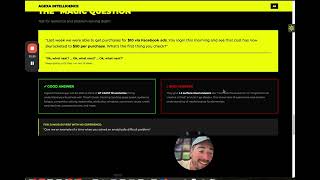
Guys, here is the content here for today. Here's what the team's telling me they want. Let's get into it. In fact, I'm just going to choose one of these. Here is what all the best media buyers and copywriters, they all do. This I identified, I spent some time thinking about this. Nine core trades, seven hiring steps. If you are in the process of trying to find someone, because if you don't know, you probably don't have them. So I'm going to teach you how to hire them and then ramping them is a whole nother different use case, which I could go a whole nother video on this. So nine core traits to look for. Seven ways, seven steps to hire them. 30 days to train them up so that they are at this level. Top 1%. Let's go. All right, so the five, nine core traits. The first five. Thanks A.I. i did actually have. No, there is nine. There is nine. I'm just going to start with five. But I did talk about nine core traits here. The first five, one variable at a time. You want media buyers that are going to be able to identify that a certain lever, specifically one lever, let's call it creative for info marketing, is like the main angle. They might be like, yeah, the way I win. Usually how you would structure this is like, how do you win? And they would be able to identify, hey, the way that I win, they're not going to be like, I'm going to do all these targeting tweaks and then I'm going to do this creative. And it's like this chain of process that might occur, but there's going to be one variable at a time that they typically are going to focus on in order to affect change. Right? So if creative is the growth lever, they isolate it. Fixed audience, fixed bid, fixed lp. They are just going to focus on one thing. So when you hear in an interview and what they actually do is going to be completely different. So the best way to actually check for this is to have them share their ad account and their change history. Change history tells everything that you need to know. So if you tell me like, how are you going to optimize this and be the best campaign? I'm going to start telling you a bunch of different variables. I'm going to be like, cool, we're going to do audience testing, then we're going to do creative testing. We're going to do optimization bidding, we're going to do target cost bidding, then we're going to blah, blah, blah, blah, blah, blah, ABO cbo, whatever else, buzzwords, jargon. So change history tells all what you would want to do is go to like I like to use magics for this and like for instance you see this save work for three different people. You can see change history and I can drill into the changes made on campaigns specific to the ad account. Right. That's just one way to see exactly what is this media buyer tend to tend to optimize towards what do they gravitate towards as far as making changes and affecting change in their ad account. Right. Second principle, copy first especially in info. I'm talking to you guys in info. If you're an E comm and everything else stay around some of this will apply. But I'm primarily talking to people who have information to sell or an idea to sell something that is a digital good. So visceral contact rich contrast rich rather direct emotional action driving copy. So what I'm known for typically in my copy style is painting a picture with the first line or first two lines. Normally I'm thinking of I'll do another video of this. Somewhere on the emotion wheel you should be feeling something in the copy in the first line. No corporate mush unless that gets you to feel something. If I said like I'm chained to my drab gray chair and a grab a drab gray hellscape then that paints an emotional picture. Right? But if I can't feel in the first line it is a dud. You're going to keep scrolling. Good copy makes clicks cheap and intent. High bad copy inflates CPMs because lower CTR, lower you know, thumbstop rates, those things make you pay a premium to the algorithm. And I don't know about hiding weak offers. Thank you I for coming up with that. But that's not exactly it. No, it just hides bad attention grabbing copy. So not necessarily weak offers. There's a lot of good offers there. So offer truth number three. Good media buyers don't try to optimize a weak offer. Oftentimes you'll find them trying to cheat the system by making the offer appear better than it actually is or tweaking the offer and then be like cool product side, can we make this happen right? If CAC won't even clear with a clear winner and you can't just do the typical optimization, you have to go back to a yes price, promise mechanism proof. Those are the four big things. But oftentimes like price in an info offer especially high ticket is taken out of the consideration entirely. So all you have is your promise Your mechanism and your proof. You can call it story. If you want to get creative, the story should kind of interweave these three. So that is the elements that you have to deal with. And if it doesn't cut through the noise, you could say target market, you could change the target market. But oftentimes that's not going to make up for a bad promise, a bad mechanism, unique mechanism and lack of proof. Right. So they're going to know that and they're going to experiment. They're going to try to push you in directions that maybe you aren't comfortable with. But that's good. That's media buying informing or marketing informing product in my opinion. Type feedback loops. This maybe should be number one. Almost every great media buyer I talk to talks about rapid iteration cycles in some sort of way and the ability to get data at scale back quickly. If you are a great media buyer and you're okay with like 90 day feedback loops, that's crazy. I've yet to meet you. Usually means that maybe you're running the airtight Google search campaign or something. But even then iterative feedback loops are just like take effect. Like take the number one law of the universe compounding seriously. And if you can iterate and compound and make better decisions at a better increase tighter rate, you will win. So daily read on. Not just these metrics. CPA, CTR, CVR Mr. Mer to ROAS which is marketing efficiency ratio and return on ad spend. CVR conversion rate, CTR conversion rate like click through rates CPA cost per acquisition or cost per product. If you want to cut this all down to what I would say is maybe the gold standard, it's like ROAS within a time bound or a CACT LTV within a time bound. So what most what I usually like to say is like cool, how fast can you get to roas? One is that one day, two days, three days. Because everything else is gravy, right? Never let a single ad carry the P and L I have. Although that's not great. Thank you AI for that one too. Source. Source. Empathy. Yes, I agree. Some of the best media buyers I know have tapped into that copywriting side where they can write or a minimum. They think like copywriters and they just swipe and deploy things like a copywriter would like a great artist would they translate customer language into hooks and headlines that land. And if you're great at the toggles normally I call this the dials. It's funny that this articulated it quite a little bit different, but pretty much the Same if you're good at the dials but weak at the message you're stealing as well, you're at best going to be a great optimizer and you're going to get beat by machines and AI at some point. So that is that. Are you ready to hire a media buyer? I talked about this in the 2.0 guide of how to Hire a Media buyer. How to Hire a Great Media Buyer 2.0 have you done it first yourself and were ROI positive? Has someone like Nick Fisher or a channel expert vet any of the final candidates that you've hired? If neither of those have happened, go back to the drawing board. I would hire a senior media buyer with experience in that channel directly. If you're like cool, I need to do this now, still have someone vet them, do the final offer. Or if you are this person and have done it yourself and are positive, you can hire a junior buyer and then just cross train them up or like train them up. So most people are going to fall into this bucket. I have found. Have you worked with an agency that has data in your niche? That's the best way to get started. Some buyers that have worked for me and have gone off to great do great things like AdClass.com Dakota and Caleb over there, especially in the info space. They all know my stuff and they've trained and probably honestly learned way more. Now at this point have way a breadth of experience and have niche experience or industry experience in both the info space and I know EE comm and D2C too. So if you fall into be like hey, I want to scale like so and so scaled and there's another agency who has proprietary data and insights and learnings on how that happened. You'd be unwise, I think to work with them at least for a little bit, if not for a long bit. So if you want to, what I recommend is pair a junior media buyer with that expert agency and have them ideally pay them a little more so they don't black box the information from your internal team because at some point you want to open up a new channel or have them take over or whatever that looks like long term. Right? So where do you find top media buyers? GeekHub. Now I heard maybe a rumor. Let's see if GeekHub is still alive and you can still buy it. Geek X Now I started this community along with Nick Shackleford and James Van. I was like, yeah, it's still there. Go to the event. They're doing events again, which is sick. And they had In a while I knew they did one in July and here in Greece or there is this community that we started called GeekHub. Can I move this window? Let's see. I'll size it down here. Hey. Yes. This community is teeming full of good media buyers and copywriters. Give me access super cheap guys relative to what you're getting this is a bargain. A bad media buyer can bankrupt your company. So get a good one and get into this community. That being said, you go back to your info where you landing groups cult to copy and what recently I would say I'm going to change this to nothing. Nothing held back. Allen Sultanx Community super cool, super good. Everyone is dropping huge knowledge bombs in there and then poaching from agencies. People who have who have spent money on their clients dime but have that knowledge and maybe just not the track record of doing it by themselves. Give them a shot. Those people are often great as well. So how do you screen media buyers? I think through like a three step screening process. Sometimes longer. It depends on the role. We have two brick tests what we talk about this first. One brick measures cognitive it measures attention to detail, logical reasoning, verbal reasoning and mathematical reasoning. All good traits for media buying. Attention to detail errors often amount to ten thousand dollar budget a day. Being a hundred thousand dollar budget a day. If you don't have that verbal reasoning, if you can't articulate or be able to use words in order to persuade, you're screwed. And then mathematical and logical reasoning help you scale and make sure that the math works on a media bind scale. So it's a great test for media buyer aptitude and I find that most all the best media buyers get like score above a 68 specifically on that weighted scale brick test. I'm not going to say much about the brick test because if some of you see this, I'm actually going to move on. And then an ad account review is the best. If they have ad account experience then that's the best. Just show them. Show people results. Show me results and I'll believe you. Right? Then I'll have to test for it. Sweet. This is the magic question. If you guys are watching this ended up in an interview with me. You'll still get this question. This test for resilience and problem solving. So last week we were able to get purchases for $10. The scenario could be anything. You log in this morning and now it skyrocketed to $50 per purchase 5x what you were getting. What's the first thing you check and then What I'm checking for is, okay, what's next? What's next? I'm looking for their in a specific problem scenario, their ability to check down and solve that problem. So a good answer. A media buyer will usually be able to think at least 10 scenarios. If they understand the business well, they'll check. Tracking was it the landing page? Was audience fatigue? Was there competitor activity? Did someone enter the market? Seasonalities? Like was there Black Friday sale that shot up? Cpms, attribution windows? Was there conversion windows? Was there credit card declines? Automated rules? Did the country collapse? Like anything? Right. A bad answer will just give one to three surface levels. There's like I checked the audience. Yeah, I've heard that. Or maybe the ad creative is tired or you just can't go any deeper. I'm like, okay, and that's it. And you just quit. So that is pretty much if someone hasn't touched an ad account before. You can do this similar question just to check for their ability to problem solve in a different area. Maybe an area they have expertise, maybe they worked at a grocery store before and you're like, cool, what did you do when you were out of eggs? But everyone wanted eggs and they're like, I don't know. You know? Right, you get the idea. So 30 day training plan. Once you have hired this magician, this unicorn in training, what are you going to do to them? Week one, I recommend product immersion. I recommend this for any role actually in the info space and maybe even just like the business space in general. Product immersion, you want them to believe and get conviction in the product that you're delivering and why it's better than the market alternatives or why it aspires to be better than the market alternatives or it's cooler or it's different or it's safer or whatever that qualifier is to better. Right? You want to go through your entire course and program, read every community post. You want them to believe like a student would believe. And some of the best examples of like this week one happening, where you could teach them no other skills and they can just still sell people through conviction. Whether you put them on media buying or sales or community, they're going to be able to go into, let's just assume it's a sales call and you're like, hey, so and so, who just started? Tell Sally here why this product is better than all the other ones. And they're just going to speak from the heart, right? And they're just going to sell them through conviction. And that matters the most. If you can get people here. You have like 50% of the game in my opinion done. Week two for media buyer fundamentals. Have them go through my internal ad buying fundamentals. If you guys don't know or interested in getting access to that, I give that to my 10k year group in addition to my internal brands. Drop a comment below or message me if you're interested. I'll get you hooked up. Buy a channel specific course after. That's what I normally tell people is like hey, my stuff is supposed to be evergreen. It's supposed to teach you the fundamentals across paid media on discovery, specifically discovery channels and feeds. So think TikTok, Facebook meta, YouTube, YouTube discovery but not necessarily Google search or Pinterest. Intent based kind of advertising and certainly not SEO. So if you want to scale through different channels, I usually find a channel expert that I trust sourcing from my network that I'll refer you to. Then from there you want to study naming conventions or just standardize them so you know like you can come into an ad account and people that have learned from me or come kind of from my branch of knowledge, I can go into their ad account and understand exactly what's going on just by going from campaign to ad set to ad level on YouTube, on Meta, on anything. It just speeds up my learning to be able to come in the account and do damage right away. And you are able to actually test things right away because you understand that methodology. From there, week three, you're going to be launching your first campaigns, usually unless I make you do it faster. And then you're going to use your week one product immersion in order to launch collected testimonial ads. Sometimes I'll nest week one and week three together, right? Start with retargeting only. Indoctrinate the belief in the product again via the week one stuff. Build conviction through student wins. Then week four, I'm finally going to let you loose on cold traffic stuff. You're going to take 25 sales calls minimum. Just so you understand what it's like to sell the product and go end to end. It's one thing to market it and get people on the calendar, but until you finally get them over the line, you really don't understand the beliefs and the things that you can do. From a marketing standpoint that makes sales life easier. Preempt some of the objections they're going to have and you understand what actual lead quality like I love calling doing the 25 sales calls on your own cold traffic campaign. So you know firsthand. Okay, these Leads that look good on the surface. And a lot of times it's media buyers were like these should be great leads. What are you doing? Complain about the lead quality when in fact you take your own calls and you're like okay, maybe it's not so great. So you just learn to sell what you actually put on calendar. And I think that is a really important lesson to learn. And then yeah, ltv DPL optimization. I could do a whole video on that too. I almost want to cut it off here, but these are the additional four that I talked about, the nine core traits here. Here's four additional add ons when I drop the 3.0 guide that I'm going to be adding on here too. So hypothesis over hunches. I've seen this now. Quant over vibe, let's call it. Or Chad Virgin over Chad. Set a test window at four days and you're like you're pretty disciplined on holding up and not just being like two days into it. It feels like I should scale in this direction in doing it. I've noticed that the best buyers are disciplined in that direction. And the people who scale on hunches, it's actually pretty data driven. If you actually get them to explain the hunch. That's how like it seems like this magical intuitive buyer but really it's based on experience. They'll be like no. The last five times I did this, this is what happened and here's why. That's why I'm scaling in this direction. That makes sense. That's dad driven. It's just hidden from you. So know that hook architecture these days I see it too among all the best people. They build creative like an engineer. So like the hook and then match expectations. The hook. There's congruence. They're over invested from minute one. Like it's almost like the they stuff so much into the ad that the first minute of the VSL or the case study or whatever is almost boring. Right. Because they did such a great job hyping it up. Offer first Economics ads amplify not fix. Yeah, a lot of people chase cheaper traffic. I just showed this on a Q and A call I was on for my weekly group today where it's just like there is a load of distribution between the difference between getting a $50 cost per call in the biz op space and an $800 cost per call with someone who is a 200k a year earner who has a white collar job. Upper white collar class job is significant. So the promises need to obviously match the the cheaper traffic. But just optimizing down for those top of funnel metrics usually leads to disaster. And in the high high ticket space a lot of times we have to settle in the middle and optimize towards a qualified call or at worst like a lead that's at worst just because the volume and the algorithm doesn't whirl until you get to a certain amount of fires through a conversion window. So therefore you must optimize to the point where you're getting the most volume. And if you only have $100 a day ad budget, maybe the best you can do is optimize towards a lead where if you have $1,000 a day budget, probably the best you can do is optimize towards a qualified call. In a VSL call funnel, um, in an E comm product, if you have a thousand dollars a day budget but a $50 AOV or widget you can optimize towards purchase and it's great. So offer first economics. You good media buyers understand how to fix that. Instead of just being like cool, let's input more more inputs, cheaper inputs into the architecture. They can actually help you identify where the constraints in your offer are. And the scale rhythm too. Winners don't just set and pray. They run multiple. Well sometimes, but they run multiple. Creatives usually let the algo bite and then just let the thing do its do its thing. But they have stuff on the back burner if that goes south or the frequency decays or anything like that. So scale trim scale cadence in some sort of manner I always see too. So those are just nine of the traits that I'm seeing. I'm putting together this guide. It's going to be even beefier than the original. If you guys like this want to know more media buying insights that I have seen across my career and what's working right now. Drop me a comment too, but I will see you guys on the other side until the next video. Peace.










