AI Summit London 2021 – Revolut's Vision for The Future of The Banking Industry
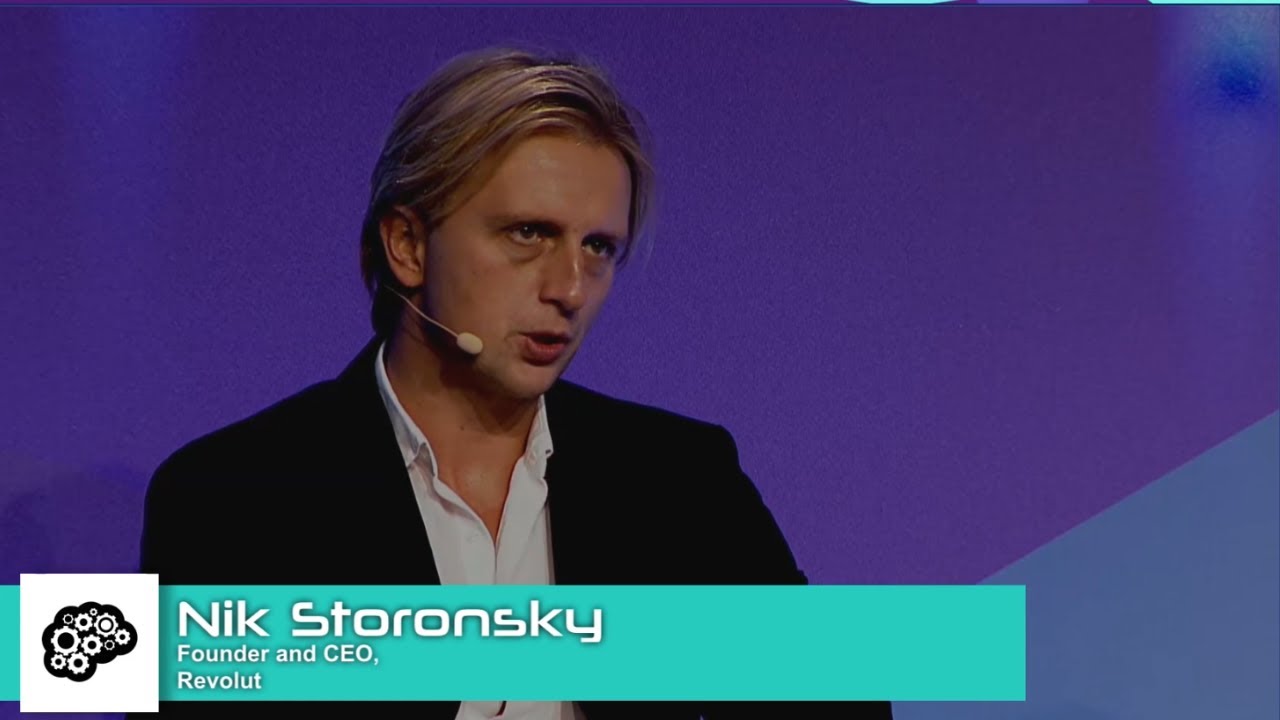
This content was created by Nik Storonsky. This content was uploaded by Nik Storonsky. This is a YouTube video titled "AI Summit London 2021 – Revolut's Vision for The Future of The Banking Industry" (published Sept 27, 2021). The excerpt is an on-stage interview at the AI Summit in London where Bloomberg reporter Stefania Spezzati interviews Revolut co‑founder/CEO Nik Storonsky. They discuss Revolut's strategy and product roadmap (the "super‑app" goal, international expansion, banking licenses in the UK and US, insurance and pension products, buy‑now‑pay‑later, crypto offerings), competition with traditional banks and fintechs, hiring and remote work practices, regulatory and compliance approaches (automation/AI), funding and listing considerations, and M&A/partnership views. The format is an interviewer–interviewee conversation in English intended for a news/audience context.
Chapters
Hi, good morning everyone. I'm Stefania Spezzati. I'm a Bloomberg News reporter. I cover finance and banking. I'm here with Nik Storonsky. Hi Nik, it's nice to have you here. So Nik is a kitesurfer and a swimmer. He studied physics in Russia. and then joined Lehman Brothers at the peak of the crash, and then you went on to Credit Suisse, and then in 2015 you started Revolut. I believe you are under 40 years old, but you are already leading the biggest private technology company in the UK and one of the largest in the world. It was valued $33 billion in the last funding in 2018. So Nik, can you tell our audience how did you make it? Can you tell us what's the secret of your journey so far?
To be honest, no secret. Just working hard and looking for opportunities and executing on opportunities.
Where do you see Revolut going forward? Like in the next 3 years, where would you like to see the company going?
So longer term, we're trying to build one simple app which allows people to get access to all the financial services they need at a price either free or significantly cheaper compared to banks. And all these services, they talk to each other and then they are personalized. So the moment— the problem that I see in the world that you've got bank account, you've got trading account, insurance account, you've got your pension in a 4th provider, they don't really talk to each other and pricing is usually, well, not good for you as a consumer. So we're solving this problem by giving you one simple app and allowing you to get access to all the services that you need. And services are also highly personalized. So that's effectively the problem that we're solving.
So you want to have everything in one super app you often mention. Is that right? Is there— how far are you from reaching this goal?
Well, we've got quite a few businesses to build. So we still need to build an insurance business. pension business, and obviously, well, these are products, and on the geographical expansion, so another 35 countries, and then another probably 50 countries will take us 5 to 10 years.
Okay, so you're at the moment in about 30 countries though, right?
35 countries, yeah.
And you have recently launched as well another service in the US. It was free commission trading. So you kind of want to go and challenge big players like Robinhood and Others like of that, that size. Do you think the UK is missing out in this kind of market, or is that possible to see something similar coming to Europe?
Well, to be honest, you're when I see competition out there, right? So obviously, you know, one of the most advanced companies are in US. So you've got Cash App, you've got Robinhood, and then in China you've got WeChat, Alipay. So I think in terms of sophistication, so I'm pretty sure that, you know, UK companies are as sophisticated as US companies. However, I think Chinese companies are far ahead compared to Western world purely because, I don't know, they are so much larger and they are 100% digital, plus adoption of population is 100% as well. So everyone in China is paying with which are the Alipay.
So you're also asking for a banking license in different countries, in the UK as well, in the US. So why a company like Revolut wants to get a banking license? Is it not going towards a model that is very similar to what you don't want to become, like, you know, traditional banking?
Several reasons. Reason number one is that we want to own our consumer wallet. And then you cannot do it without being a bank because consumers trust banks. And obviously we're a very young company, so we're 6 years old. And then competing with banks who are 150 years old on trust is very difficult. So one of the major milestones for us is to get the banking license to increase level of confidence and level of trust in our business.
So yeah, banking is about trust. Sometimes in the UK they say it's easier to change house rather than a banking account. However, you already have 16 million current accounts. I think you started from, obviously, from zero at the beginning of your journey. I'm told that you and your colleagues were at train stations giving Revolut cards for free.
Coffee shops.
Coffee shops.
Free coffee plus a card.
So how do you actually increase the penetration, especially in the UK, which is such a difficult market?
To be honest, in some countries we're moving very fast, in some countries we're moving slow. I think it's correlated whether we have a large team on the ground or not. Just to give you an example, in Ireland we have 60% penetration. So more than— if you take 10 adults, 6 6 adults in Ireland will be using Revolut products. And then recently we're also the most downloaded app in Ireland ahead of Facebook, Instagram, TikTok, and so on. So yeah, in some countries we're moving very fast, in some countries we are slower, but I'm pretty sure we'll get there. It just takes time and a bit of marketing spend as well.
Your marketing spend has not been that high so far. You've always been kind of more on the, you know, let the product basically go in the market. So do you plan to increase the spending in marketing?
So usually we relied on building great products and organic growth. And we definitely penetrated early adopters and maybe a bit of general population. But I think to go deep, to achieve 30%, 40%, 50%, 60% penetration in every single country, you do need to spend on marketing, on building brand, on building trust. That's what we slowly started doing.
So which country is the more regulatory friendly or has been so far? If there is any.
No one.
How far are you from getting the UK banking license? How long is the process you think it's gonna take?
So we applied for banking license almost a year ago. So generally timeline is 1 year, so we should get feedback in November, December this year.
Okay, so quite soon. What about the US?
US, we submitted our draft license a quarter ago, and then we plan to submit our full application either Q4 or Q1.
Okay, and if I may, I want to take a step back and, you know, trying to understand your view about traditional banking. Obviously, you went through the crisis at Lehman Brothers. You've seen so many changes in the financial sector. technology has increased, so many companies, new companies have emerged, fintech companies. So what do you think traditional banks should do to stay in the game and to not lose their business?
Well, to be honest, for them it's very hard. So I can't really see the path of it happening because they're a huge organization with a lot of legacy systems, plus they have not thousands but tens Tens of thousands of people, and just to completely change their business, they need to do a huge turnaround starting from systems and finishing with people, right? And if you have a 50,000-people organization, changing 60% to 80% of people is very hard. It takes tens of years.
So it's like cutting jobs and cutting costs?
Well, not necessarily cutting jobs, but just hiring different types of people, because I mean, the reality in the modern world, you don't need bankers. You need the software engineers, you need designers, you need product people. And then people who are traditionally hired by banks, well, they're just not tech people. So banking changed completely. Banking is now a tech game rather than a banking game. And then if you want to be in a tech game, you need to hire different types of people.
And talking about hiring, obviously we had Brexit, and I'm talking about the UK, and we also, of course, the pandemic and COVID. I think the UK has seen one of the biggest outflows since the Second World War. Are you struggling to hire talent? Do you think London has changed or can you still find the right people here?
I mean, to be honest, for us it wasn't a problem because as I mentioned, we're in 55 countries, so we have entities in every single country, so we can hire in majority of these countries. So not necessarily hiring in London, but also outside. I think during COVID we actually grew from 1,600 people to almost 3,000 people. So we almost doubled headcount, and the majority of these people were hired actually outside of London, either remotely or in, in other countries where we're in.
So that flexibility and working remotely, I guess it's also helping out, you know?
Yeah, COVID actually helped a lot. It opened eyes on what is possible and not really limiting ourselves to talent that we have in the UK, but hiring globally. Just hiring the best people.
Where are you hiring the most at the moment?
Hiring the most at the moment? Maybe India? Hard to say. I mean, we— well, we actually opened recently India entity, and then we already hired almost 200 people there. So maybe India is the fastest in terms of growing headcount. No, we're hiring globally. I wouldn't say there is any disproportion. So we're still hiring a lot in London and Europe or US. India as well.
Yeah. Do you think London is still the place for technology and, you know, new things? And even if there's been Brexit and, you know, some financial institutions are kind of leaving, going through, you know, towards Europe because of regulatory demands, have you seen a big change in London?
To be honest, no, I don't see any friction after Brexit in terms of talent or funding or just, you know, freely moving people. Also, the new— I think some kind of tech visa was introduced, which actually allowed companies to bring in even more people. So in terms of friction, I haven't seen anything after Brexit.
Okay, so are those tech visas actually working? I mean, are they in place already? Are you using them? Is Revolut using them?
Yeah, yeah.
Okay, good. So how does it work?
You can just Yeah, I mean, as I mentioned, we don't see the problem of, you know, or we'll say importing people from one country to UK.
And your company as well, so you have adopted a flexible approach to working from home, working remotely. I think you're giving your employees the chance to work away abroad for 2 months. How is that going?
No, it's good. I mean, To be honest, as soon as you have systems in place, when you have metrics, KPIs for every single team, individual, department, company level, then it just doesn't matter where people work. Because ultimately, what matters are numbers. And if the numbers are moving in the right direction, then everything's good. If the numbers are not moving, that means maybe— You need to change something. People are not working too hard, or maybe, you know, people are not the right ones, and so on. But the most important thing is you have controls in place, right? And then whether people come to the office or not doesn't really matter.
So is your office still kind of full, or is it empty, or how many people are you—
It actually became more crowded. I'm surprised. During COVID we had maybe, you know, 5% of people. Now we have 20 to 30% of people coming to the office.
20%?
Yeah, in London.
Do you plan to increase that number?
Well, I don't know whether it will increase. It's up to people. But ultimately, we're introducing certain office events. For example, we used to have Thirsty Thursdays when at the end of every month, the whole office had drinks. So we are introducing it to encourage people to at least come for drinks with their colleagues. So we're having parties as well to invite all the people in multiple offices. So all this event gathering— things we do obviously to ensure people not only work remotely but also meet their colleagues. But otherwise, it's going well working remotely. It's actually become more efficient for us.
So obviously, you know, achieving such a huge success and building such a great company takes many extra hours of work and probably weekends. And so my question is, how do you retain talent in such a demanding environment?
Well, you pay them well, that's number one, right? Number two, you hire the best people who really want to change things. And then you need to have an interview process targeting specifically these people who really are hungry, who are ambitious, who want to change things, who want to achieve things. And then, as I mentioned, you pay them well, right? As a result, you end up having— You have a good team. this specific cohort of people in your company that really do things and they build products, they build products fast, then they're faster than competition.
Talking of competition, there are so many banks that are launching new products in the UK. I think JP Morgan last week was one of those. They have a new digital bank called Chase. There are obviously many others that have the same offering. Where do you see Revolut like in this landscape, competitive landscape? Do you think, you know, what's your winning card? Why people should choose your company instead of going towards, you know, another digital bank?
Well, we really care about customers. We are extremely customer-centric company. So we even have our cultural value, one of 5, which is deliver wow to your customer. And the amount of time we spend on the product and on optimization is just ridiculous. And then if you look at our product compared versus other banks, so I do think that we have the best product and the best pricing for consumers.
Do you think, is there M&A in the future for Revolut?
I mean, we actually done, well, almost done like 2 or 3 small acquisitions. purely either acquiring or for certain niche products or for licensing inside the market. So we are doing it, but we're doing it quietly.
So which kind of products? Can you elaborate a bit?
Inventory management system. So for our Revolut business accounts, so the idea is that as soon as you have a business bank account with us, we give you everything to run your business, which includes acquiring services, banking services, FX, obviously payments, team management, card management, connectivity to all third-party software, being a sales channel for you as well. Plus, we want to give you inventory management and the website builder. So in certain niche products, instead of building, we try to buy.
Would you ever buy anything from a traditional bank, like portfolio of clients?
Only license.
All right, so because there is too much legacy cost and—
Yes, it does not make sense.
Has any traditional banks, like legacy banks, approached you for any merger or for acquiring some part of your business or some products?
Maybe several years ago, like 3, 4, 5 years ago, there were some conversations, but I was always strict that, you know, we were not for sale because there is opportunities so huge. So why would you settle for something, you know, very small?
Are you planning any other funding?
No, not really, no.
How are you using the money that you got from the previous funding? Like, where are you investing the most?
To be honest, we as a company are profitable, right? So we raise money for maybe some future potential capital requirements for our banks in the US, Australia, UK, and maybe to accelerate growth as well through brand marketing. TV campaigns above the line and so on.
Is there any plan for Revolut to get into the buy now pay later sector, which is so hot at the moment? I mean, I think Klarna has an even bigger valuation than Revolut, over $40 billion. So is your company going towards that market? And if not, why not?
So yeah, yeah, we, we, I mean, obviously we're on like at least like 10, 20 bets within the company. And one of the bets is buy now, pay later. So it's still early stage. But I do think our product will be as competitive, if not even more competitive compared to Klarna.
So it's going to be the same product like buy now, pay later? It's going to be something similar to that?
It will be better in the sense that you can use Klarna only with merchants where Klarna is set up, right? So if you think about there are millions of merchants, Klarna maybe stops within, you know, tens of thousands, maybe 30,000 to 40,000, right? So maybe they have 2%, 3%, 4% setup share, and they particularly target the fashion industry. So our product would allow you to buy now, pay later with any merchant.
When are you launching it?
Well, we're still working on it, and it's Is the regulator concerned about it?
I mean, I know that there are a few concerns because you basically, you know, there are young people just loading up debt and just buying and buying, and, you know, there are no— while traditional banks have to do affordability checks.
So our product will be fully regulated under either credit license or banking license. So if you compare us with Klarna, Klarna is obviously unregulated. We will be regulated.
In the UK?
Yeah, well, in the UK and other countries.
Okay, so it's gonna be like a European product or more like US?
I mean, usually we will launch— well, initially we'll probably launch in Europe.
Okay, and then another big offering, part of your offerings, obviously cryptocurrencies has been very popular. You're currently at the moment offering about 53 tokens or something like that in your on your wallet in the Revolut app. I mean, the Bank of England has been quite vocal about risk linked to those investments, and I think they told customers to be careful and then be ready to lose all their money if they invest into it, because cryptocurrency investments are not protected by, you know, protection scheme for savers. So how do you balance this? Because obviously you're in talks with them to get, you know, UK banking license and Are they asking you specific— do they have specific requests for—
Well, to be honest, we are very careful with customers trading crypto. So first of all, we will look at whether a customer is vulnerable or not. So out of 18 million customers that we have, we have about 700,000 vulnerable customers. And then there are, well, special kind of, you know, screens disencouraging them from trading, especially frequent trading. Also, if you look at the size of the positions for every single customer on average, it's very small. So it's about like, you know, £300 to £500. So what it means in practice, people like, you know, put a very small portion of their wealth in crypto just as an option, maybe to have upside, but they're also prepared to to lose it. So we do not see a lot of our customers, you know, putting significant amount of wealth into crypto.
But obviously you're not going to limit that, right? You know, any client is free to put as much as they like, is that right?
So there are certain limitations on frequency of trading for vulnerable customers. Again, there are like a lot of, you know, screens to ensure they're not putting a significant portion of their wealth into crypto. So yes, we do have quite a few controls to ensure that people don't speculatively gamble.
Do you think why any other banks is into it, is offering this? Like, why do you think? Just late to the party? Like, I'm talking about Barclays or more traditional banking. Why is it not into cryptocurrencies? Do you think they will get into it?
Banks and different business models, especially older banks, they are in optimization. stage, and then they're in the business protection stage. So what it means is that fintech is attacking and banking— banks are defending. So they're trying to optimize on their P&L, you know, polish their processes, but they're not in the mode of launching new products. So they'd rather slowly bleed their P&L to fintechs within, you know, 5-10 years rather than, you know, try to fight with them. Because reality Like if you look at management of the banks or like, you know, board of directors, like people will be there, what, for on average like 3, 4, 5 years, right? And their targets is 1 year, maybe 3 years, right? So they don't really think long term. The way they think probably is like, how can I kind of minimize P&L loss within the next 3 years while I am in the bank? to receive bonuses and so on. So as a result, their best strategy is defending mode for 3-4 years rather than long-term thinking, long-term strategy.
Okay. When a company grows so fast like Revolut, obviously sometimes it's difficult to keep regulators happy and there are so many compliance spend, there is so much compliance spend you have to do. How is Revolut doing? Do you plan to invest more in compliance or to hire more in compliance and risk?
So the way we think about compliance and risk is the same as about the product, right? We try to make automated machine which is independent on people. What it means is that the problem why we have so many failures with banks is actually people problem, right? You know, some old banks, you have quite a bad culture when bankers try to squeeze customers. And their product is actually people selling to people. And then it's always kind of unstable and always dangerous. We're in business when we are selling software. That means everything is automated and everything is kind of 100% as it was designed. In this particular case, risk and compliance means ensuring that your software is designed properly, right? And then you don't really rely on people. And that's a much more stable construction compared to old legacy banks which rely on people. So as a result, instead of hiring more risk and compliance people, we build more systems around risk and compliance. We're hiring more data scientists in risk compliance, more engineers, and so on. Of course, on top of it, we hire traditional risk and compliance professionals, but a portion of our investments spent on traditional additional risk and compliance people is actually much smaller compared to our investment in technology and risk and compliance. Because that's the future, it's all about automation, it's all about AI as well in risk and compliance.
And then, where would you like to see your company listed?
I mean, we don't have plans, but, you know, as we're venture funded, so probably in a few years' time.
And where, in like which in London or in the US?
I mean, we do what makes sense, where we can, you know, get better terms, better liquidity. So maybe US, maybe UK, maybe both.
If you could change something like tomorrow in regulation in London, what would you like to see changed? Like if you could just ring up the regulator and say, I want to change this, what would that be?
Well, ultimately I think that the key is to ensure that regulator or KPI is not only kind of, you know, risk reduction but also competition. And then there are clear measurable metrics that tell, you know, how regulator is doing against these 2 goals. As soon as these goals are vaguely defined, there are no metrics, no KPIs, it's very hard for new companies to get licenses in a regulated environment.
So basically making it easier to get a license?
Yeah, making the system much more transparent and much more kind of quantifiable rather than vague.
Is traditional banking taking you seriously now that your company is valued more than $33 billion? I think it's more— this is more than NatWest.
Yeah, maybe. I mean, relative to banks, our large organizations that are 50,000 people, 100,000 people, So are they all taking us seriously? Probably not, maybe some of them.
They will fear the competition, I guess.
Maybe, yeah.
Okay, cool. If you could buy a fintech company right now, which company would you like to buy?
Which company would I like to buy? Interesting. For any budget?
Any budget, like you can just get it.
Maybe I will buy Klarna. I think it's a good business.
Right, so you will have the buy now, pay later already integrated.
You guys get faster. Yeah.
Do you think big banks should merge?
No, I don't think so. It just reduces competition and it's just not good for consumer.
Okay, and then my last question is, what was the toughest challenge so far at Revolut for you?
Toughest challenge? I mean, challenges are changing every month, even, you know, Maybe even like for different stages of the company, you have different challenges. I think the same challenge is always the same, right? It's getting the right people fast enough. So hiring the right people is probably, you know, the biggest challenge in any business, not only fintech.
Okay, good. Thank you so much, Nik. It was great to talk to you. Is there anything else you would like to tell to the audience? news coming out of your company soon or any new product? I said maybe the buy now pay later.
Well, I mean, we have tons of products obviously, and yeah, as soon as we release them, we'll let you know.
Okay, cool. Thank you so much.
Thank you.
More from Nik

Revolut CEO Nik Storonsky on Building a Fintech Giant | The David Rubenstein Show


Nik Storonsky, Revolut Founder: What Revolut Needs to Do to Hit $100BN Valuation | E1233

John Doran interviewing Nik Storonsky, Founder and CEO of Revolut at the Dubai Fintech Summit