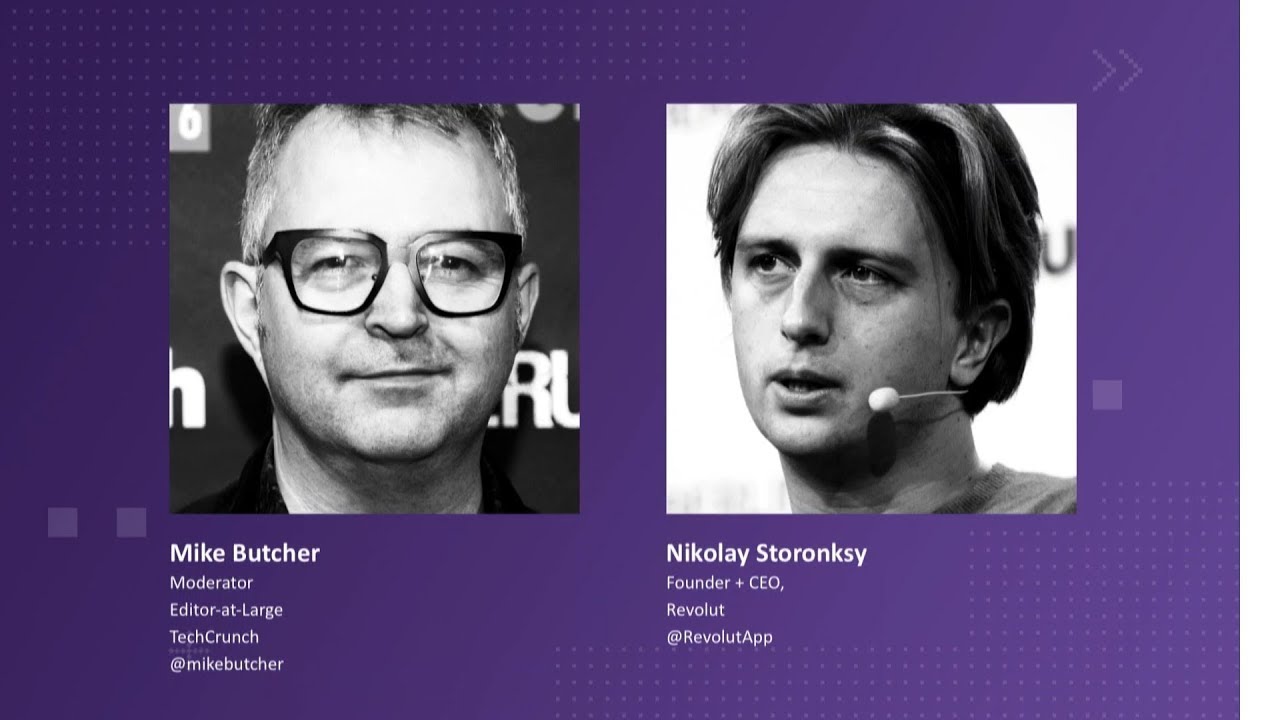
Martin Mignot interviews Nik Storonsky, founder and CEO of Revolut, at Slush

Nik Storonsky, CEO of Revolut, discusses hitting 50 million customers and a $45 billion valuation while chasing a goal of 100 million daily active users and $100 billion revenue. He explains how he runs the company through intensive reviews with 40-45 direct reports, launched a venture fund using machine learning trained on 300 startup features, and built a people-management tool now sold as SaaS. Storonsky reflects on early mistakes like underestimating regulation and reveals why Revolut's debit-only model doesn't work in the US without full banking licenses.
Chapters
All right. Good morning, everyone. Thanks for being here. I'm Martin Mignot. I'm one of the partners at Index Ventures. Index is an early-stage tech investment firm investing across Israel, Europe, and the US as one team globally based between London, New York, where I am based, and San Francisco. And we've been investing in early-stage tech for the past 3 decades. And we've been fortunate enough to work closely with Nik from Revolut for almost a decade as well. So Nik, I'm really super excited to be here with you today. There's tons to talk about, a lot of news at Revolut. I still remember the first time I met you, which was in 2015. You were pitching at Seedcamp, and at the time it was in Shoreditch. I still remember. In London, and at the time I was banking with HSBC. And things were so bad that every time I had to make a transfer, I was booking a slot of 20 minutes in my calendar. And that was really terrible. So I tried— I downloaded the app, tried it, and realized I could do it in 20 seconds instead of 20 minutes and for free. And that's when I realized this is really something special and we need to be investing in this company. Since then, 8 or 9 years later, the company has grown. This simple app that was doing mostly FX has grown a lot across all dimensions— new products, new geos, and financially. So yesterday you announced your 50 million customer mark. Congrats on that amazing achievement. Last year you announced more than $2 billion in revenue, more than half a billion pounds. More than 2. More than half a billion in net income. You are the fastest growing, the most downloaded financial app in Europe across 20 countries. And very recently you also concluded a secondary at $45 billion valuation, which makes you the most valuable private tech company in Europe. So congrats on all of that. When you're hearing all those milestones, do you take time to celebrate them or are you already focus on the next one? And what is the next one?
Well, I mean, obviously if you achieve something great, yeah, you need to celebrate. But for me, it's like 5 minutes happiness and then I move on to new big things.
And you have a big party actually coming for your 50 million.
Yeah, we have a 50 million party in London, yes.
And so if you look at Revolut today, you know, $45 billion, you've reached this incredible scale and success. Does it look like what you had in mind when you got started with the business? Is it pretty much where you thought you would be there, or is it very different?
Well, to be honest with you, when I started, I didn't really think ahead what it will be in 5, 10 years. I was just trying to survive as a business. That's it. And yeah, it's pretty simple. Back then when we started, we just had the 3-month view, what we need to build in 3 months. And then we build it and then move on for next 3 months. So we never had like, you know, long-term horizon, long-term planning. So, we were just trying to survive, trying to build features, products that people want, and it was actually very, very short-term driven rather than long-term.
And is it still the same, or has it changed as you've grown bigger?
As we've grown bigger, we started planning for longer time frame, but we still plan precisely for probably a quarter to a year, and then longer-term plans I mean, in reality, we try to do it, but it never works. You know, something pops up that redirects our resources.
So, if you were to paint a picture of where you see Revolut kind of long-term, the direction it's going, can you do that or not even?
Yeah, I mean, if you think in numbers, we just want Revolut to be the number one global bank in 100 countries with 100 million daily active customers and then $100 billion revenues a year. So it's definitely doable because market is so huge and banks are very fragmented, I would say, so they're not really competing globally.
And you personally, what is— you've achieved a lot. What is still your personal ambition?
Well, I mean, there is not much else to do, right? So, I keep doing it.
Can you just maybe describe for the people here what does a typical day for you look like?
Well, it depends on the day of the week. So, I mean, usually on Mondays I do business reviews for key departments. Half of Tuesday is also business reviews.
What is business review?
So, business review is like standardized approach for every single department when general managers report on KPIs, metrics, roadmap problem. It's 15 to 30 minutes for each department. Then half Tuesdays, uh, product reviews. All the Wednesdays, product reviews. And I start also one-on-ones on Thursday.
And product reviews, how does that work?
So product review is every single product team, or majority of product teams, they present how they want to change their product lines screen by screen in Figma. And you still Yeah, I'm still very involved. Yes, I approve.
You still approve everything?
Yes, I still comment, I still work with the designers, I still go down to kind of, you know, each individual contributor if I want to change something.
So you never got out of the founder mode? For you, that was always—
No, I think it's super important. I think as soon as you start traditionally managing, I think it's the beginning of the end for the company because really it's super important for every single manager to Well, to be strategic but also to be in detail, and then going down to the level of individual contributor through all the management layers to see what reality is, right? Because problem is with majority of managers, they are not into details. As a result, they cannot direct well.
And so, you've got about 40 direct reports?
Like a bit more, yeah, like 40, 45, yeah.
40, 45?
Yeah.
Who are they?
Well, every single general manager is responsible for P&L for products. So, because we have many products in the company, so we have probably up to 15 general managers. Then a person responsible—
And what is a product? Give us like—
Like, product, for example, it's a retail account, business account, wealth and trading, crypto, acquiring.
Credit.
Okay, so major, major products. Yeah, uh, so then I've got core functions reporting into me, like people, technology, core, my kind of, you know, own team, we call it core, and so on. So overall, if you look, it's 40-45 people, or plus new territory CEOs also report directly to to me because, uh, I think it's very good when you hire a CEO for the territory to report directly to the founder because they learn much faster.
What's your core team? You say, I have my own core team. What is that?
Uh, it started with the founder associates. I think I'm the first one in the market who invented the concept of founder associates, uh, because I was—
It's kind of chief of staff, no? What's the difference?
Well, basically, when the company scaled of more than 100 people, and then I hired all these experienced executives. I realized it doesn't work. All these experienced executives failed miserably. So I needed to fix things. So I ended up hiring my own team of 8 people, like just smart, bright young people, ex-McKinsey, ex-Bain, or ex-investment banking, have, you know, hunger and desire to build things. And then I just dropped 1 or 2 people for each of the problem— on each of the problems I face, or on each of the departments that need turnaround. That's how I kind of invented the concept of founder associates. Now it's probably a 30-40 people team. Some of them report to me, some of them report to chief of staff, but the job they do is still the same, is turnaround.
That makes sense. So on top of your day job, you also recently launched your own family office/venture fund. called Quantum Light. So what's the philosophy behind it? How does it work? I mean, it's a very disruptive approach to venture capital in particular. I don't know about the other asset class, but it's for venture. And also, what's the goal behind it? Is it, is it financial return? Is it giving back to the ecosystem? Is it keeping your pulse on innovation?
Uh, so basically, yes, I have family office and then I have a standalone, uh, business called Quantum Light. So Quantum Light is a venture fund which invests in startups, but it invests based on their models rather than human judgment. So the way it works, about 3 years ago I, I built a very small team which collected a lot of data on startups, and then they trained the machine learning model on data since the 1990s. And then the data can be who's the founder or who invested in the company, is the founder, like, you know, STEM, non-STEM, age, and so on. So we collected about 300 features across every single startup. We trained the model on the data since the 1990s. And then effectively the model predicts which startups to invest. So it's completely outbound investment. You do not really need to kind of dive deep in the company. It just gives you a list of companies to invest. So, Nik, And yeah, it works well. So I launched it 2 years ago. We've done, I think, more than 12 investments now. Team is 20-25 people. Majority are data scientists, data engineers. So standalone business. I'm not involved daily. So there is Ilya, who is the CEO of this business, but I help how I can.
And there's a— I mean, I think it's really super interesting disruptive approach, especially for kind of a Series B when you have enough data to kind of identify interesting companies. But the other thing that's really cool that you do with QuantumLine is you've started publishing these playbooks, which is basically kind of open sourcing what you learn from Revolut and how you build the company. And I've been, you know, I wrote a LinkedIn post about it if you folks want to check it out. Your first playbook was about performance and how you Manage Performance at Revolut. I recommend everyone and all the entrepreneurs I work with to read it because I think it's really interesting and really good. But do you want to talk to us a little bit about how you— what's in this playbook and how you manage performance and how much you obsess about it and how you measure it and implement it as a process? Because I think it's such a key part of the success of Revolut.
Yeah, so basically when I started Revolut 10 years ago, I didn't believe in management at all. But then I remember a lot of VCs that told me you need to hire experienced managers. And I always, I was always asking him, but what exactly they will do? Just manage people? No, I need people build products, right? Or sell the product. Anyway, so with time I learned that actually management is important. And, but I learned it from first principles and Basically, I quantify everything what a person does, a team does, a department does, a company does. So the way it works, it starts with a company goal. So we always define 5-6 company goals for the year, and then we cascade these goals to the department and on the team level and individual level, and then we build the whole software around it. It's called Revolut People. And we're actually selling it now to other companies, so revolutpeople.com. And then effectively Revolut People playbooks everything what we do in terms of goal setting, hiring, scorecards for hiring people, scorecards for performance management, performance review, how to do performance review. We do performance review every quarter, super important. So we calculate effectively how many strong people we have, how many average people We have how many people have below average. So we have system filtering out people who are not performing on a quarterly basis. So it's a proper machine which, with the only goal to produce the best quality people that we have in Revolut. And it's all kind of quantifiable, it's all very process-driven, it's all very productized as well. And in Quantum Light, we effectively wrote all the playbooks tricks that we with time developed in Revolut— how to manage people, how to hire people, how to do expansion, how to do compliance, how to do risk management, and so on. Because with time, because I, I approach everything from first principles, since I kind of hired experienced executive, it didn't work for me. So I stopped believing in, you know, traditional approach of hiring experienced people. So I developed everything from scratch just based on my experience. And of course, you know, things didn't work As expected, so I iterated, iterated, iterated until I kind of found the best way to do XYZ. And we kind of documented everything in playbooks.
And you think those playbooks could apply to any company and any type of founder? Do you think you have to be a special type of founder and company for that to really work?
Yeah, I think it can apply to almost any scale-up.
Right.
Because already if a company is small, 10, 20, 30, up to 50, maybe 100 people, you do not really need to have processes because you know everyone, right? You know who is good, who is not. As soon as you're more than 100 people, then yes, you need to have processes in place. So I think for companies more than 50 to 100 people, it is applicable to every single company. Because already as a manager or as a founder, you need to know exactly what every single person is doing in the company at this particular point of time. So it's super important. Otherwise, people start working on the wrong things. Otherwise, people start being lazy. They focus on things that are not important to the company. So super important to quantify everything and ensuring that people, A, all run in the right direction, and B, they all run very hard.
Yeah, you mentioned the word first principle quite a few times. And, you know, it's a word that's being overused these days, but I think in your case it really does apply. And I think that's something I really always hugely admired in you is that you never took— and I was one of the, you know, old VCs that was telling you to hire experienced people. So, you know, I was on the wrong end of that. I'm happy to admit it. But you really always took that first principle approach and did things your own way in a very, you know, you got to a very successful and also very unique outcome, something that really fits yourself and Revolut. But you also had some inspirations. You know, I think you mentioned Ray Dalio's kind of principle early on in your journey. Is that still an inspiration for you? Have you added some more? And also more broadly, who do you go to when you are thinking through a problem? You just do it on your own in a dark room, or do you still ask for some feedback from some specific people who may have gone through the same journey?
Yeah, I remember Principles. So I read it maybe more than 10 years ago when it was just PDF of 50 pages. I really loved it because it was not— it was very direct. It wasn't PR polished. And then I think 5 years later he published a book.
Yeah.
Which is now like 400 pages. It's very PR polished. So I don't recommend reading it. It's so much worse compared to initial Principles that I had in PDF. And yeah, I think like what he wrote makes sense and, you know, I really kind of not use it, but yeah, sometimes, you know, applied it in my own way.
It influenced the way you play?
It influenced me in another way, I thought, but I think it's more my education because I kind of, you know, studied physics, maths, so I learned to model life, right? And then I always kind of, you know, model any aspects of life in a quantitative way. How the company should operate, how a person should operate, how you need to invest as well with Quantum Light.
Yeah. And I think I kind of know the answer, but there's something that I really wanted to ask you, which was when you started the company early on, you made 3 very big strategic decisions, which were One is going multi-country, which is definitely, you know, was totally contrarian to anything that people were doing in fintech at the time. The conventional wisdom was fintech is very localized, there's a lot of regulation, you have to be one country, you can't do multiple countries. The other one was doing multi-product. It was like even most people are like, oh, you either do consumer or businesses. You decided to do both. And then the third one is you built almost everything in-house, which was very unusual. It was a time where You had to buy everything off the shelf, other SaaS providers, and you never really did that. I mean, you did for some aspects, you know, the processing for a while was a third party, but today most of your stack is built in-house.
Everything's in-house, yeah.
And so those 3 decisions were very unique, very contrarian, and eventually they turned out to be right. And how— but it's not really something that you can iterate. Like, you made them and then you live How did you make those decisions early on? How did you know that that was the right thing to do?
Well, first of all, I'm very controlling, right? I just hate outside dependencies which I don't control. And as a result, because I'm very controlling, I early on, you know, brought everything in-house. Because in business, if you are dependent on some critical vendor, I mean, it can kill you, right? And you need to go and then beg a vendor to, I don't know, solve some bugs, or it just, it's not worth it, right? So this decision to bring everything in-house and then going multi-country, multi-product, I think it's more my nature, right? So I like trying things, and I learned very early on that no matter how smart you are, just I cannot predict what happens. So for me, the best way is just try things, and then if I feel or if I get some, you know, quantitative feedback that, okay, it works, you know, I continue going in the same direction. And then if I try things and it doesn't work, you know, it's fine. I mean, no kind of strings attached.
And today, this question of global versus local, Because the argument of it should be a local business because it's locally regulated is a valid argument.
It is, yeah.
But there are also arguments on the other side. And so where do you stand in that battle, and what are the advantages that you have by being, you know, so broad?
Yeah, I think you can achieve your goals in being local and being global as well. It's just being global is much more difficult, right? And I decided for myself that I want to be global because it's, first, it's a more meaningful goal, more profitable, and larger business. Yes, it's much more difficult to build, but why not?
And so we've talked about all the things that you've done right, a lot of big strategic decisions that you got right, the most important one I would say. Are there any other big strategic decisions you got wrong?
Well, many. To be honest with you, like, for example, for a long time I wanted to be as less regulated as possible. It was a completely wrong decision. I think it would be much easier for us to receive all the bank license that we needed when we were small with a small number of customers.
That's interesting.
Because already when you have like 10, 20, 30 million of customers, 50 million of customers now, every single regulator like scrutinizes you a lot. before giving the license. If you have only, I don't know, 100,000 customers, for them it's super easy to give a license because it's much less riskier for them. So that was, you know, a wrong decision. Like, another wrong decision was the way we've done our expansion as well. So following this principle of launching things super fast, it actually doesn't work for expansion. Because when you launch things super fast, we go for lighter license like, you know, e-money or money transfer, then your product becomes much less comprehensive compared to banking product. Then as a result, there is not that much product-market fit. So we had to redo the whole expansion later, right? So we wasted a lot of resources and time doing expansion in the wrong way. So now the way we do expansion, we always not rush it. So we apply first for banking license we get bank license, we're launching all the products simultaneously that we have instead of going MVP way, launching some products. So that's another big strategic decision that is wrong.
And so talking about expansion, the US is, you know, so you launched in the Americas more broadly, Brazil, Mexico, Colombia is coming, and a few others. Any learnings from those? And then how does that apply to the US and how You know, what is your strategy to crack the US market, which you haven't really cracked yet?
Yeah, so US is a credit card driven market. So in finance, debit card makes much less money compared to credit card on the interchange. Interchange is fee that a merchant pays you as an issuer. So the way the market is structured in the US, everything is credit card driven. There is 2% interchange, so for every $100 transaction, bank is receiving $2 in interchange, and then bank spends majority of these $2 on points or air miles or some benefits. And then if you just launch a debit card, interchange is only, I don't know, half percent in the US. So you cannot really compete with credit card. As a result, if you are not a bank in the US, you cannot issue credit card online, you cannot win the market. So in the US, you need to be credit-driven.
So in the US, we need to have a banking license As a customer of a US bank, I won't name names, but I have to tell you that Revolut is much needed in terms of experience. It's basically where the UK banking system was 10, 15 years ago, so I can't wait for you to really make it there. Talking about compliance and risk and compliance, the other week I had some of your team come to present and to demo what you've built, you know, in-house. So we talked about building everything in-house, and you really built this incredible engine that basically ingests all rules and regulations and can turn it into key risk indicators that you can track in real time. Then you can go back to the original, the source of the risk indicator. And so first of all, it's a really impressive tool that you built. And also what was interesting is that it was the team that built it and that is in charge of compliance, but they were also thinking about selling it to third parties. So similar to Revolut People, the hiring people performance management tool that you are selling, you're also now working on selling your core compliance and risk engine. So I'm curious about it. So it's a bit of an AWS strategy of you build your core product and then you sell them. Is that a core part of the future strategy? Do you think that's going to be a big revenue driver for the company? And is there anything that you can't sell to third parties at all, is too proprietary?
I mean, as I said before, I'm just trying things and, you know, hopefully some of them will work. I mean, that's a very simple strategy. So we build something and then we want to try to sell it to third parties. And if third parties love it, then we continue doing it. So I don't know whether it will work or not in the future, but now we just want to try to sell it.
Awesome. Well, I think we are— I think we're out of time.
That was fast.
Yeah, that was really quick. I don't know if there is a transition. Yeah, I think we're good.
All right.
Well, thanks, Nik.
Thank you.
It's good to see you.
Thank you.
Thanks, everyone.
More from Nik
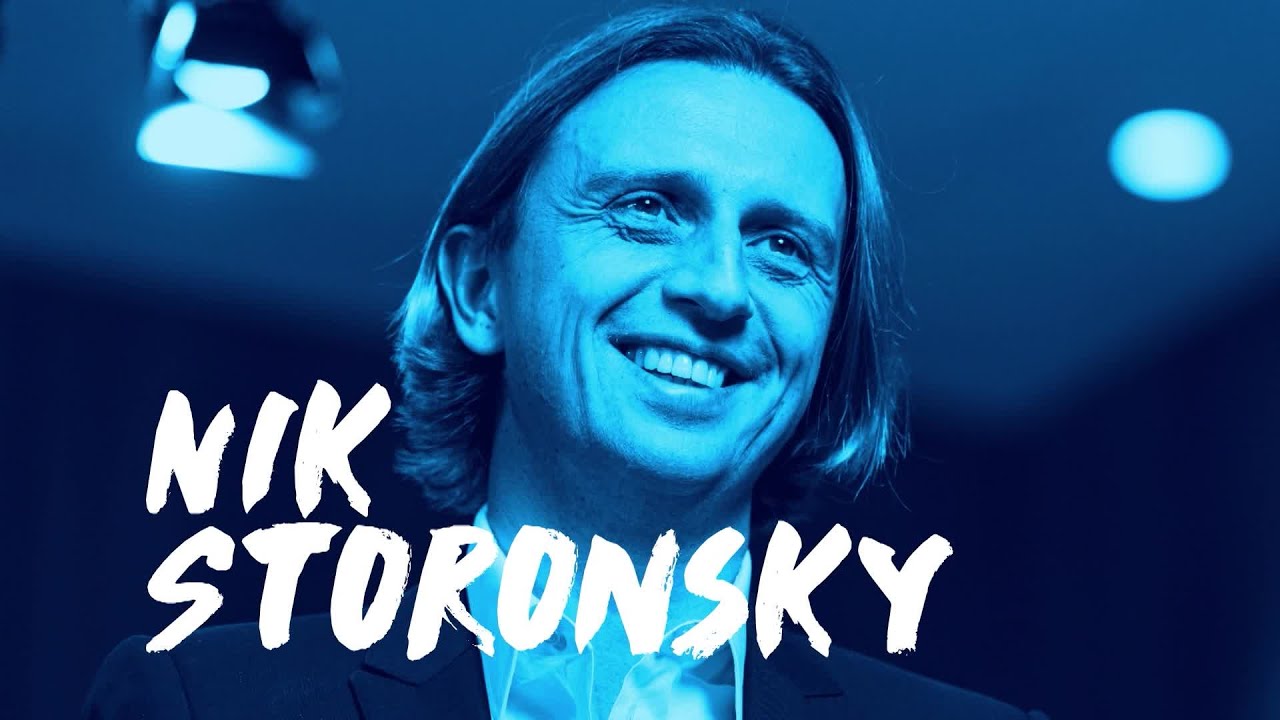
Revolut CEO Nik Storonsky on Building a Fintech Giant | The David Rubenstein Show


Nik Storonsky, Revolut Founder: What Revolut Needs to Do to Hit $100BN Valuation | E1233
John Doran interviewing Nik Storonsky, Founder and CEO of Revolut at the Dubai Fintech Summit
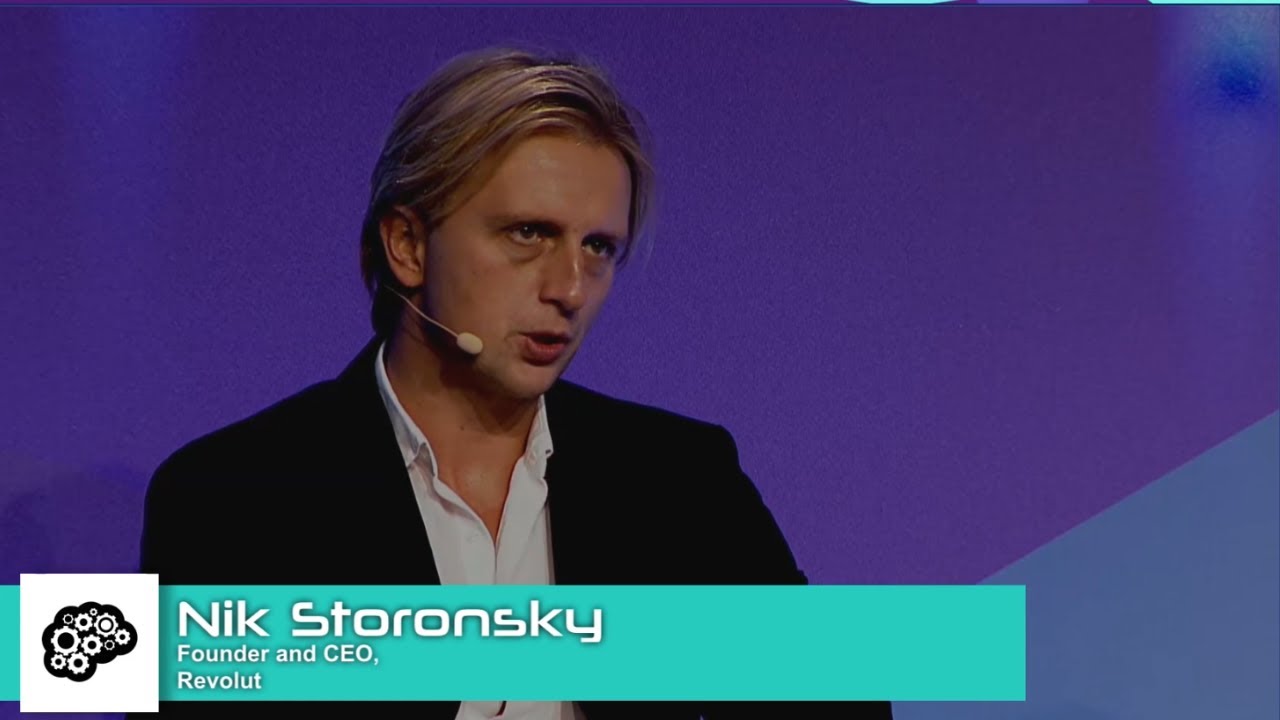
AI Summit London 2021 – Revolut's Vision for The Future of The Banking Industry