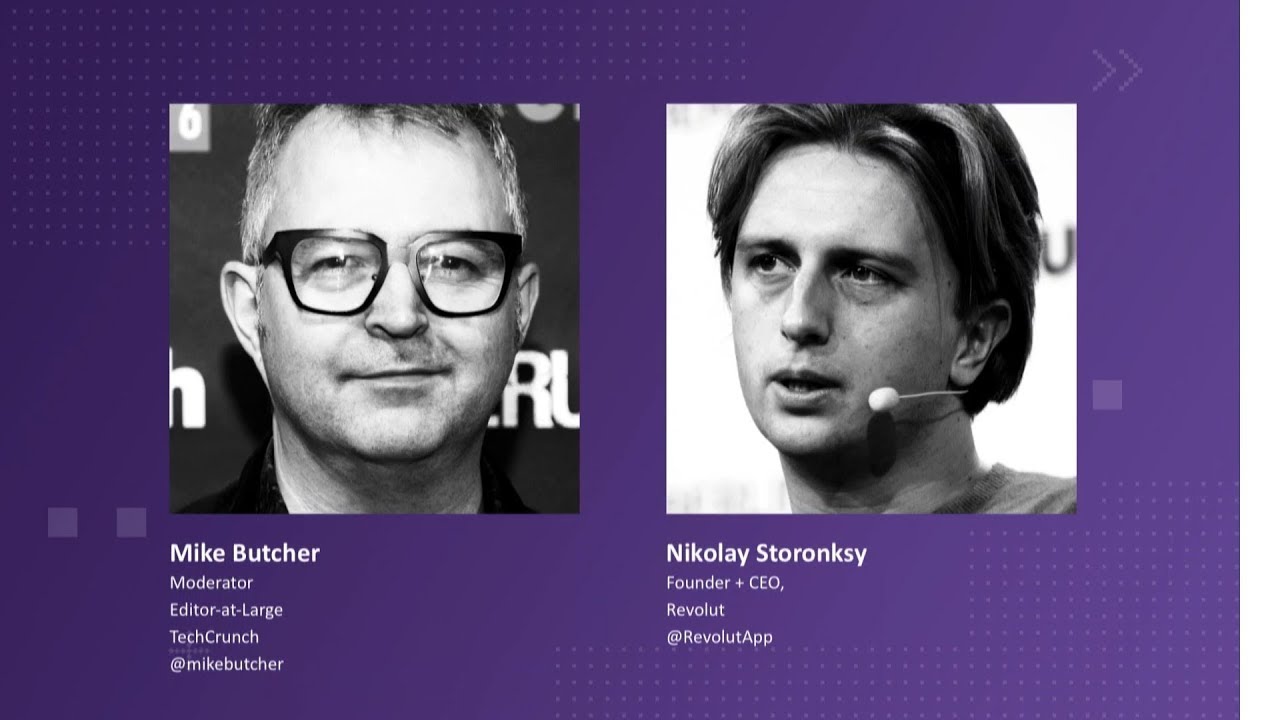
John Doran interviewing Nik Storonsky, Founder and CEO of Revolut at the Dubai Fintech Summit
Nik Storonsky, CEO of Revolut, talks growth to 40 million users, expansion into new markets including the UAE by end of 2025, and how the company uses AI for customer support and fraud detection. He discusses the modular software approach that lets Revolut adapt to local regulations across different countries.
Chapters
So everybody, my name is John Doran. I'm a general partner at TCV. I help co-run the firm. I'm based in London. TCV is a West Coast investment firm, and I'm here with one of the— I would classify as legendary founders from Europe— founder CEO of Revolut, Nik Storonsky. And we're here to chat a little bit about financial inclusion, but also hear more about Revolut and what they're up to. So Maybe if I'd start with just telling a quick story, how I first heard about Revolut, because I think it's instructive in where we've gotten today. I'm Irish, and I was in this small cafe in Wicklow, which is a county outside Dublin, and I was trying to buy a coffee and a pastry a few years ago, maybe 5, 6 years ago, and I saw this woman and she was paying with a multicolored card. And I was like, that's pretty cool. What's that? And the cashier answered for her. She's like, oh, that's Revolut. Everyone's got Revolut. You check it out. And so I did, checked it out, got the card. It's a wonderful product. And back then there were about 1 million, maybe 1.5 million users of Revolut. And today, just to give people a sense of the scale of the business, it's gone from a million customers to more than 40 million signups. And they're adding about a million a month. So at that time, they had about a million, they're adding about a million new users a month. They're operating in over 150 countries, and the app is the most downloaded app in finance app in 17 of these countries, number one on the download charts. And they continue to accelerate. So they've had 64% increase in daily actives, DAUs, in in 2023 over '22. They've just hired 3,000 people from 2021 to now, so they just passed 10,000 people. And to give you an idea of the scale of the business, they passed $2 billion of revenue in 2023 and about $350 million of net income. So it's an incredible success story, and it's my pleasure to be here with Nik today. Maybe my first question, Nik, just to get started, for those in the audience less familiar with the business, and there's probably not that many who don't know Revolut, but can you tell us a little bit about how you got started and how did Revolut come about?
Sure, sure. I started about 10 years ago in London, and I started with a very simple FX multi-currency card. So it was my personal problem. I often traveled abroad. I was also an expat I started living in London, and because back then I was a trader, so I was very good with maths. So every time when I spent with the card, I always calculated in my head how much commissions I wasted with the banks. And that's how business started. So I almost traveled across the world with a simple prepaid FX card. Later, as we get, you know, more customers, more funding, I discovered more and more problems with financial services. Then we added bank accounts, we added crypto. We did credit, stock trading, and then we tried to make every single product much nicer and much cheaper compared to everything else. And as a result, it became a truly digital bank which offers not only services for banking but also for wealth and trading, for crypto, for insurance. So we packaged it all very nicely in one simple app. So you go through onboarding process once and then you've got access to all the products that you need. Now we have more than 40 million customers. So you mentioned Ireland. In Ireland, we now have around 70% penetration of population. That means 2 out of 3 adults in the country use Revolut as their bank account, which is pretty amazing. And I think we, we're just getting started.
Yeah, that's an incredible stat. 70% of the country using the product today in only a few years. One of the things we're going to talk about is financial inclusion. I know it's really important to you, and I think Revolut is one of the— I don't say uniquely positioned to address it, but can you talk a little bit more about the goals you have for Revolut around financial inclusion?
Well, ultimately what we do as a business, we give the best product at the best price fast, right? Because if you think about what we do, we're not only about saving money, we're about saving customers' time, right? You don't need to go to the branch to open an account. It's all digital. Plus, we optimize every single click to, to make experience as seamless as possible. And because reality, current financial industry is so, so different, there are like, you know, so many corner cases. As a result, we package everything in a very simple system, so we onboard as many customers as possible digitally. As a result, we can, you know, save them Millions of millions of euros every every year, and a lot of people talk about financial inclusion.
But tell us a little bit about some of the challenges. What do you need to be successful there? How do you how do you how do you how do you get where you're trying to go?
Well, we we we want to build a truly global bank. No one in the world ever achieved it yet. I think the last time was done by Citigroup and then JPMorgan. But since then they're actually retracting from different countries. And then the way American banks did it before, they simply bought banks in other countries and then tried to merge systems together. But it's a very difficult way to expand because different systems, they don't really talk to each other. As a result, you have very different apps, different products in different countries. On top of it, you have all these regulations, compliance laws applicable to different systems. And becomes very messy. It becomes as a spaghetti, so you cannot really control it. As a result, all these banks, they kind of you know bought a lot of banks, realized it was wrong decision. Now they're kind of selling banks back locally and treating from being global to to local. So we have a very different approach. So we build unified software, unified products, and that will make all these software and products modularized. So what it means in practice is that For us to enable any single country, we are not writing things from scratch. So we are just building products as a layer of cubicles. So we enable certain screens in one country, we disable certain screens in another country, and our software is unified. As a result, we can launch the product, the same product, in every single country. And because, like, additional costs of launching these products in a new country is super small, right? You just need to hire, like, additional, I don't know, 30 or 40 50 people in the country to face regulators, then it becomes a very unique proposition because we provide the best product, like best UX, best pricing, like really saving you a lot of time in every single country. And because, you know, our costs are fixed, we're able to compete with local banks, just offering a better product.
I mean, one of the things that I think differentiates Revolut is you were multi- geo pretty early on, right? A lot of folks have tried to go international, a lot of financial apps, fintech companies, and not been that successful. And you guys have been incredibly successful. I think a number of countries today, depending how you measure it, 100 plus, 150, is that—
Number of countries? We were now around 40 countries.
And so what has been the, in your mind, the Biggest reason for you being successful? What are the learnings that others can take that maybe others haven't quite achieved, and why not?
I think we as a company are very systematic into how we approach solving problems and building businesses, hiring people. Just, we are all about our kind of, you know, know-how. As soon as we have a certain problem, then we try different things to solve this problem. And then if something works, we systemize it. So we have playbooks, steps, manuals, uh, how to do things. So very systemic about like any area in the company, including expansion. So I think that's the key to success in business, our ability to build machine effectively that kind of replicates itself all the time.
Got it. And how important is being local, local product, local partnership, local regulators, local teams, Do you think that's critical? Is that something you guys need to have, or how do you think about that?
I think by design, because our business is regulated, and then we must be local because every single country, they have their own laws, their own requirements. As a result, we need to be super local because, A, we need to follow all the rules, laws, be compliant with everything. Secondly, we need to integrate into a local payment system to facilitate local payments. Local credit as well, local you know stock trading or like you know different assets trading. So financial products, well fortunately and unfortunately are very local, right? Unfortunately because it's super difficult to expand because of that. Unfortunately because as you've done it, your benefits are very protected.
Yeah. Why have you been successful? There have been some countries that have done better. You mentioned Ireland seventy percent. I know the UK were doing amazing. I think Spain more recently, France as well. The areas, the countries where you've not done as well yet, what has been the reason in your view, or why have you been more successful in some than others?
I think it's pretty, pretty simple. So where we have our banking license from start, we were able to scale quickly because we offered all the compositional products that we have, and people love our product, right? So product speaks for itself. But then in countries where we're not able to get our banking license, as a result we went to some— to get some restricted licenses which didn't allow us to fully launch the product. We're, you know, much less successful because in the end it's about competitions, it's about like who offers the best product to consumer. And as a result, like, you know, in certain countries we're not able to offer all the products that we have, so our product is quite limited and the growth is a bit less compared to the countries where we have a banking license. So banking license in the country is usually the key.
Got it. So I guess you're investing pretty big time there, I guess, across the board?
Yeah, so our strategy is looking at the bank in any single country where we are even now and where we're launching.
Got it. One of the things that I'd say from that experience when I was in Ireland, the Cafe was the product is just delightful, and I would say what Nick—I don't use this word lightly—a lot of people describe Nick as kind of a product genius. Anybody who's used used the app, there's 50 different products integrated into the app seamlessly. It's really incredible experience. As somebody who manages, I literally manage my entire life using Revit app today. School fees, you name it. Can you tell us a little bit about your approach to product and how it is that you consistently are able to delight customers? What is it that's unique about that? There's some insights there that I'd love to unpack.
Well, I think that the key for any product person and for any CEO who really focuses on product is to review screens yourself, right? So I have quick reviews. I spend probably about 2 days a week going team by team and reviewing designs, everything. That's super important. I test the product myself. I ensure I have the best product people, best designers as well. So I have a verified talent bar for people I hire. So overall, it's an approach for excellence in product in what we do.
And I guess the most recent launch is Revolut 10, is that right?
Well, I mean, we have the other launches. Yeah, for example, we launched eSIM, which is pretty popular at the moment. So eSIM allows you to avoid roaming fees when you travel, which is pretty cool.
Is it the phone eSIM?
Home SIM, yeah.
What else? Ultra, I guess?
Well, Ultra was a while back. So right now we're actually focusing on going deeper in any single country and setting up local banking branches, local IBANs, going very big in on credit products, credit cards, loans, releasing mortgages as well, overdrafts, and some other things.
One of the topics that I want to just shift in a little bit, talk about, is AI. And there's been a lot, I would say, a lot of hype, a lot of excitement around AI. There's been a number of fintechs that talked about how they're using AI to help their business. You and I have had a bunch of conversations around this over the last 6 months to 12 months. Can you tell us a little bit about what you're doing in AI, how it's helping Revolut, where you see the opportunity, maybe you have perhaps limitations?
Yeah, for AI, there's definitely like a lot of hype around it and I mean, so far there are limited use cases, at least for, for our business. So basically with LLMs, we, we used to have a chatbot run on not an LLM but on different models, and obviously LLM is much more superior. So we fully rewrote it and now it handles about, I would say, 40 to 60% of all the chat requests with our customers. And the quality of it is pretty nice, it's in line with our kind of, you know, agents. Human agents. So we effectively are able to reduce our headcount of our customer support agents by 40 to 50%, which is pretty good, like, in terms of cost saving. Another application is obviously translation, because we're in 39 countries, like, in, I don't know, like 25+ languages, probably more. We used to have 90 translators in-house, just, you know, busy every day translating FAQs, terms and conditions, notifications, and so on. Full-time job. Like, I think it was 2 translators per language, 80 overall. Now we're using LLM to do translation in an automated way, and then translators just, you know, checking it. So again, you know, cost saving because we don't need to have so many translators. So another application of AI which we did— well, we started using quite a long time ago— is obviously anti-fraud AML as well. Works very well. So we have, you know, very high precision and high recalls on our models. And then we probably have more than 40 models against all the kind of, you know, scenarios for money laundering, for fraud prevention. What else? Customer lifecycle. So customer lifecycle is we onboard users. So what we figured out is if we just nudge certain users at a certain point of time to start spending with the card by offering like, you know, 1 month, 2 months, 3 months cashbacks. So we are able to improve for like our retention, 2-month retention, which, which yields, you know, quite, quite nice ROI. I mean, we have like, you know, pieces of our models like everywhere, like in marketing as well, performance marketing. So the whole business actually run on models, and all the models are kind You know, run on kind of, you know, modern— well, rather modern. I mean, all the models were known already for the last 20 years, like, you know, random forest boosters and so on. So we always, as a company, actually started applying all these models very, very early on before the hype. But rather than that, I think overall is the direction for AI. I still cannot really understand myself why to train a model like LLM model will cost you $10 million plus. And to train a kid, right, is actually much less, and kid will be actually smarter than LLM, right? So for me, it's like, you know, direction-wise, something is wrong with it. I think the architecture itself needs to be changed to make it much cheaper.
So you're saying the design—
Yeah, design of the neural network, you know, with Transformers, I think it's wrong, right? Because they're just too expensive to train compared to a human.
So I know you're excited to be here and you love this region. Any advice you might have for budding entrepreneurs that are out there building either, you know, fintech companies or even more broadly just tech, tech startups in general in the region? It hasn't always been easy for you and Revolut. And so any kind of words of wisdom you'd like to share with folks here?
Yeah, I mean, I love the region. We as a company, we love the region. So we are moving quite a lot of people here and we want to launch the product here as well. So thinking now, UAE is the key to Middle East, and then maybe in the future to Asia as well. And then it's, it's actually uniquely positioned to— with the working hours, because I love to work from here because like I'm 3 hours ahead of London, and that makes my morning super productive. And you know, I know other people enjoy the same experience as well. It's pretty uniquely positioned between Europe and Asia, and definitely it's the key to Middle East. So starting business here, Diving into Middle East and then hopefully expanding, you know, to Asia or to Europe. It's a very good location.
Yeah, I love that for the same reason, being 3 hours ahead. I think I'll get some work done in Riyadh. It's a great place to visit. I do want to touch on when is the product going to be available here? Can you talk a little bit about that just for people? So is it 2025 you're launching, or—
So maybe end of 2025. So we applied for licenses.
A license usually takes There's already people, I guess, on the waitlist or using it?
So we have quite a large waiting list here. It's like, I think it's about 100,000 people on the waiting list, and it's growing very fast. I mean, that's actually how we do expansion. So what we look at, speed of growth of the waiting list, so indication of demand.
That, that's really my last question. Is there anything we missed? Anything you want to talk about that Any last questions or any last points you want to make?
Well, I don't know, maybe a few more advices for entrepreneurs. I think for fintech, it's key to, well, to build the product in a very systematic way because there are so many complexities with the regulation. So unless you kind of can build it in small blocks and ensure that these blocks are compliant with the regulation, it's very hard to be compliant overall and give only analysis. It's a regulatory business. You as an entrepreneur, you have to be compliant and, well, makes things very tough if you're a multi—
Well, that's it for me and for Nik. Thank you very much, Nik. I love doing this with you and hope to do it again soon. Thank you.
More from Nik
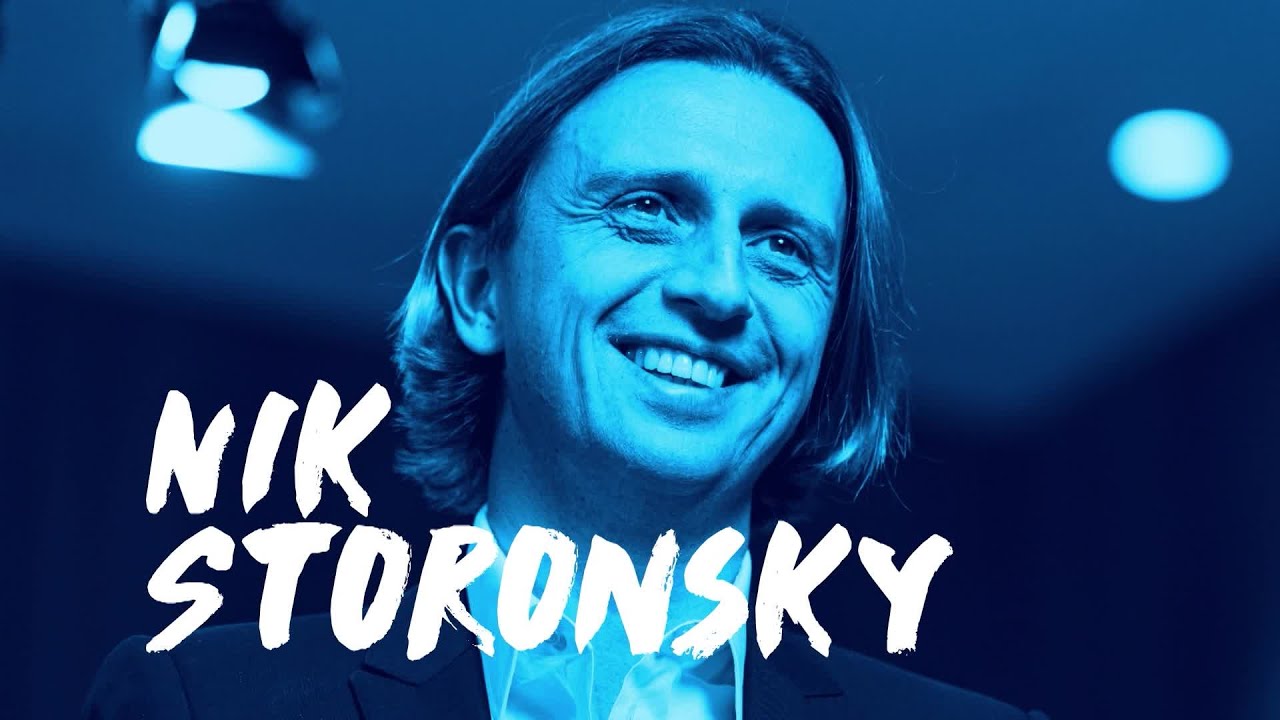
Revolut CEO Nik Storonsky on Building a Fintech Giant | The David Rubenstein Show


Nik Storonsky, Revolut Founder: What Revolut Needs to Do to Hit $100BN Valuation | E1233

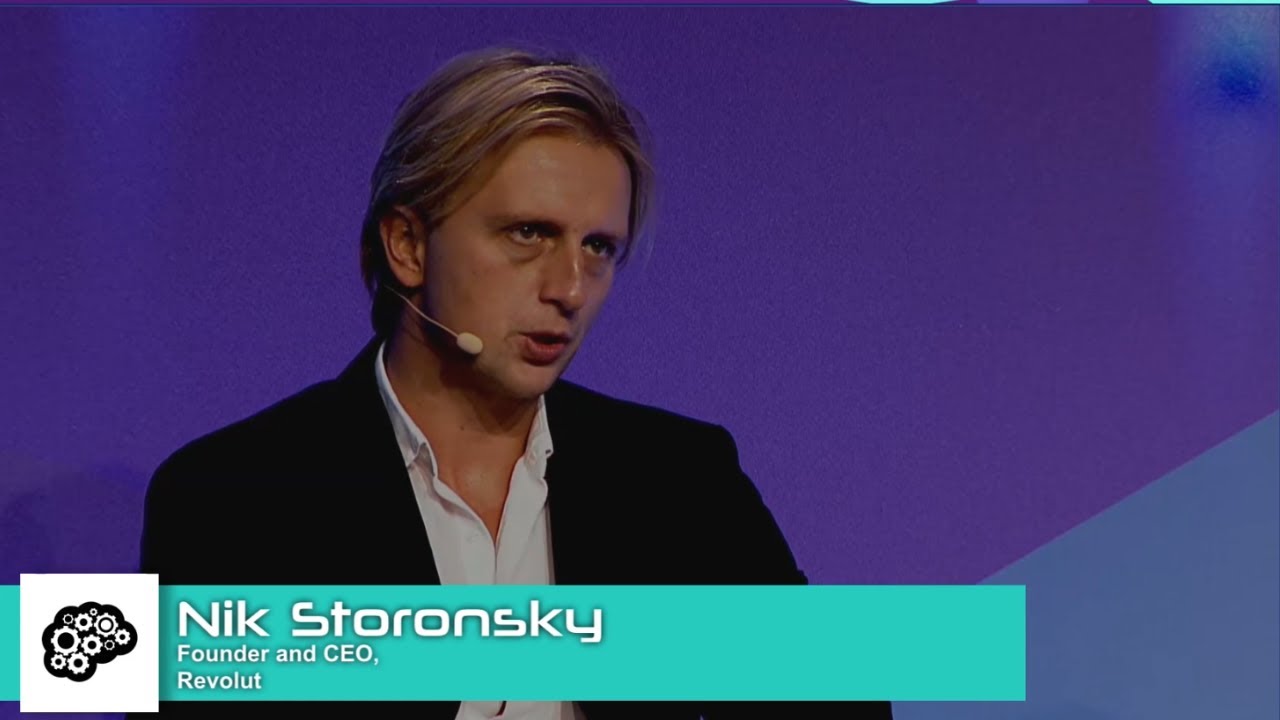
AI Summit London 2021 – Revolut's Vision for The Future of The Banking Industry