$50M wouldn’t even cause a banker to blink: Yasmine Lacaillade on SVB fallout | Seed To Harvest Ep57
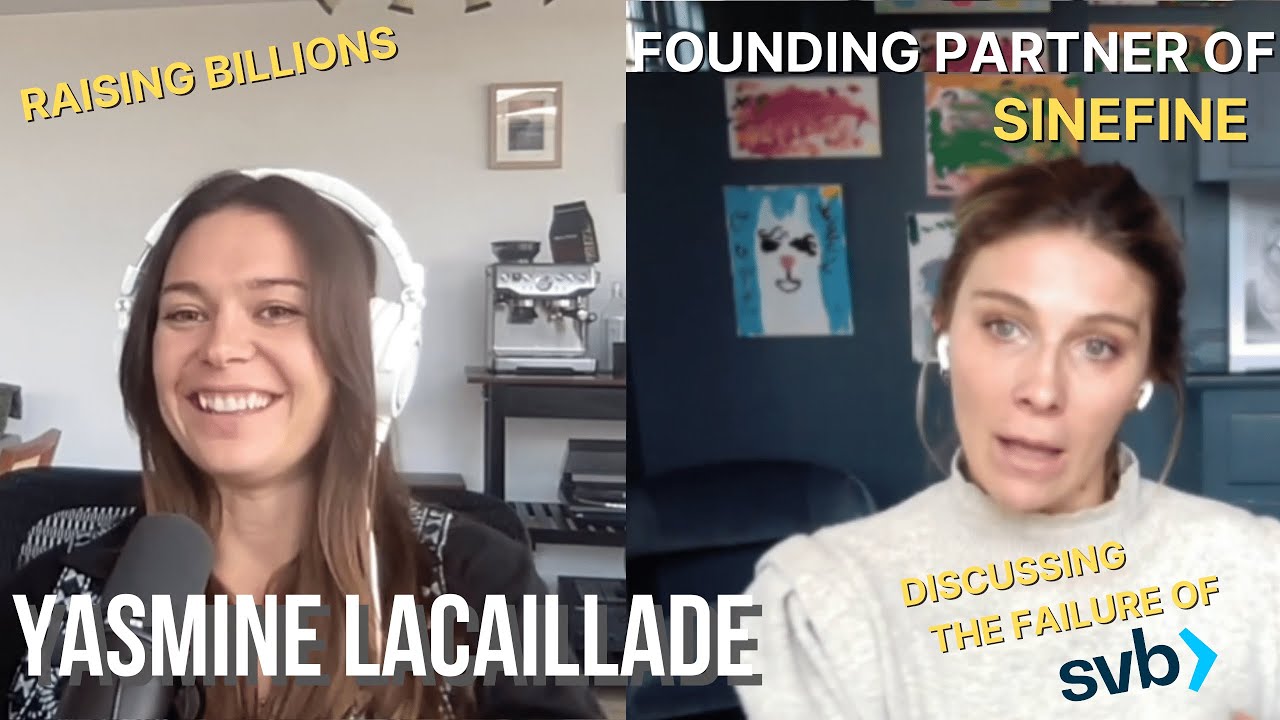
In this Seed to Harvest episode, host Paige Finn Doherty interviews Yasmine (Yaz) Lacaillade, founding partner of Cinefine and former Drive Capital leader. The conversation opens with Yaz’s on‑the‑street observations of the Silicon Valley Bank (SVB) collapse and its ripple effects across the venture ecosystem. She explains why traditional banks only engage with funds that manage $50‑$100 million or more, leaving emerging managers without credit options, and why the failure of SVB exposed a systemic gap that neither large banks nor neobanks like Brex and Mercury are currently equipped to fill. The discussion then shifts to Cinefine’s purpose: aggregating emerging managers and championing women as an under‑appreciated asset class, backed by data showing 35‑63 % outperformance of women‑led funds despite their tiny share of deal flow. Yaz describes how LP education is driven by performance evidence and how she tailors outreach to LPs with differing risk and incentive profiles. The interview also delves into personal practices—journaling with the Day One app, confronting first‑draft anxiety, and the liberating “exhale” that follows vulnerability. Finally, Yaz offers career advice for women in venture, urging confidence, community support, and the willingness to start bold initiatives regardless of fund size.
Chapters
You have to have at least $50 to $100 million under management. No way. I don't think that's even a, like, I don't think that even causes a banker to blink. Like that is just no, that's still zero money. Like they're, the amount, the dollar amounts that they deal with are so much larger.
Welcome back to Seed to Harvest, a podcast hosted by me, Paige Finn Doherty, with founders, creators, and investors. Today, I'm super excited to be joined by Yaz Lacolade. She's the founding partner of Cinefine, and she also helped raise over $2.5 billion at Drive Capital. So I think we're going to take it a bit of a different direction today and talk a little bit about the SVB situation that happened recently and its broader impact on the ecosystem, and then also Yaz's experience building both Drive and Cinefine. So Yaz, welcome to the show. Thanks for coming on.
So excited to be here. Thanks for having me, Paige.
Of course. Okay, well, we were chatting a bit before the show about how in New York you're walking down Park Avenue and hearing rumblings of SVB, and it's been really interesting to see how the broader ecosystem is like venture is a tiny crumb of the overall asset management space becoming such a large, having such a large impact on the overall ecosystem. So I would love if Do you wanna kick it off from there and talk a bit about what your experience has been seeing that from the inside? Yeah.
Yeah. You know what's really funny? I was actually, I was walking down Park Avenue and I had just finished listening to one of your podcasts cuz I was like, oh, I'm gonna go on your podcast. I need to, like, I need to hear the last episode so I make sure I don't like say all the same things as Erin, who is a super, super cool woman who I actually recently had the pleasure of speaking with at Pivotal. So I literally took off my headphones. And I'm walking down the street and, you know, Park Avenue. I lived in, in New York for 5, 7 years. I can't even remember. And New York is home to traditional banking, hedge funds, that whole bro community. And I was so surprised that everyone I was walking by was either talking about like Facebook or big tech rifts or SVB or First Republic Bank and What dawned on me, or didn't actually dawn, I mean, is very crystal clear to me, but I'm happy that the world is actually waking up to this is, you know, tech is one of the most important elements of our lives today. And to your point, while, you know, we spend a lot of time at the super early stages of technology and things that'll fundamentally change our lives 10 years from now. We forget that, you know, now we just get into a stranger's car and we sleep on a stranger's couch, and that is like a daily, like normal thing we do. And when there's an upset in that whole system, it is going to have an effect from like Park Street to Main, or from Park Ave to Main Street. And so while, you know, SVB might be seen as this You know, esoteric venture bank. It actually has a huge impact on our society, and therefore I think it's really crazy that traditional banks, like when there was a run on the bank a couple of Fridays ago and SVB declared bankruptcy and the FDIC stepped in, I was convinced that JP Morgan was going to come in and swoop in as the white knight over the weekend. And when they didn't. I was really, I was really disappointed and really upset because for 2 reasons. One, I was like, man, what a— my initial reaction was, what a waste of an opportunity to, for JP Morgan to get deeper involved into, you know, a, the fast, one of the fastest growing financial services industries. And then B, that like traditional banks did not Want to step up to, to get involved. And then, then I started thinking about it more and I'm like, it's probably because they just don't make money off it. They don't make money off, um, fund lending and they're not willing to take the risk. Yeah.
Yeah. That point, I feel like it's really interesting because a lot of the articles out there were talking about like, oh, why are all of the tech startups and funds banked with this bank? And the reality is like, as most of like the big banks won't bank funds unless they're like $50 to $100 million, which is Not the reality for a lot of emerging managers that are, you know, managing somewhere between 10, 25 million. Can't even get an intro at some of the big banks. And then for startups, for them to take out a line of credit, they have been— and like additionally, like SBB provides mortgages to founders who have traditionally not been able to leverage their equity in companies to have mortgages, provide for their families in that way. And so I think it's really interesting because SBB was portrayed in the press as very esoteric and Kind of like, oh, it was just like, why is all of tech banking here? And the reality is like, they weren't really allowed to bank other places. Yeah. And yeah, so I, I feel like you've had experience with this because you've worked in both PE and venture and been on the other side of the table. So I'd love to hear more about like that.
Yeah, I think, look, first and foremost, you're absolutely right. You don't have a choice. Right? Like there are no, there is, there aren't 10 banks for you to choose from in terms of who is going to provide your fund, your personal, and your portfolio company's credit needs. I think that it's actually way worse than, than funds that you said, okay, you have to have at least $50 to $100 million under management. No way. I don't think that's even a, like, I don't think that even causes a banker to blink. Like that is just no, that's still zero money. They're the amount, the dollar amounts that they deal with are so much larger, which is why, by the way, the private wealth management platforms are a great sort, like new LP space. But that's a story for another day. But they're, the dollar amounts are so much bigger that they don't, or whether it's from, from PWM or for investment banking, this kind of, this doesn't really appeal to them, nor do, does any, anything short-term, any short-term credit lines they can't make money off of because the numbers, the scale isn't there. And anything long-term, they just don't think it's worth the risk. I mean, they'd rather go give Caterpillar Alone because, you know, they can go sell some ditch diggers if they need to. And tech is like, you know, it's a different beast. And I do think like specialization, specialization, I'm happy I can make you laugh. Specialization is actually fantastic. But I think that maybe it means that, you know, a tier 2, tier 3 bank. steps up and sees the opportunity to become another venture bank. And maybe not just one, maybe there's several. Because I think what, what the problem is, isn't that the traditional banks need to start banking emerging managers or venture managers or just taking early-stage tech risk, but someone needs to. And so either new banks have to be created, which is a very, very hard thing to do. It's hard, like, or banks that have all the establishments Yeah.
What about like someone like for, okay, well I think this is like an interesting topic, but everyone over the weekend suddenly discovered that the FDIC limit was $250K. And like as a startup or a fund manager, for sure, the existential risk is usually not how much money in your bank account is insured by the FDIC. That's not something that's like, you know, top 10 concerns of running a company like that. And I think that that was really interesting where you saw companies like Brex and Mercury increasing their cash swap products to But I'd be curious to hear your thoughts on how you think the neobanks like Brex and Mercury will have an impact on like the broader banking rails within tech. Like, do you think one of those could end up filling the space that SVB left?
I actually think it's gonna be more like traditional banks than the tech startups because, and this is where it goes beyond my pay grade and we should talk, we should the next call you should make is to like a fintech investor, right?
Yeah.
But I think that the amount of like, whether it's like the capital balance ratios they need or just the regulatory hurdles that you have to cross in order to have those sort of full lending capacities. Mm-hmm. I think, you know, you need, you need a lot of infrastructure there and traditional banks like regional banks or, yeah, you know, Mid-market buyout specialists are more likely to already have those in place. But again, I don't know enough about like what, what is going on under the COVID at some of the, like the neobanks to know whether that would be something that they could do. I just highly doubt it.
Yeah. Yeah. It's definitely going to be interesting to see how it plays out.
I've certainly not heard any funds or portfolio companies Go to the neobanks as their, like, their, their savior. If you think about it too, it's like piling more risk onto risk, right? It's like, okay, that's not, that's not helpful right now. And the reason it's not helpful is because I cannot go to my LPs and say, guess what guys? I've replaced this failing traditional bank with a high-growth tech company. So please wire your money there. They're gonna be like, get the fuck outta here. I'm just not gonna write my capital call. You know, it's like, that's just, that doesn't, that sound any safer. So even whether it's like, whether I understand it at like a minute, like piping level or not, I think, yeah, LPs definitely won't understand it. And that's not knocking on LPs, it's just like, why would they understand whether Brex has the capacity to do that? Right.
I think—
Most of them have never heard of Brex.
Yeah, like I, I walked into like our local First Republic Bank cuz we bank with them and like the banker that I spoke with didn't know what Brex was. And I, and I think like as an investor, especially the earliest stage, like my job is to be on top of what's going on at the earliest stages and like understand that really deeply. But I think that in the early stage it becomes a bubble where you can assume that other people like know that same level of information. And especially like on the institutional LP side when you have more I would say conservative or like less risk-oriented investors. I think that there is a, like, it, it's just like a, it's interesting, different risk profile from investing in early-stage companies to managing a venture fund where you're like managing other people's money, which I think is what caused—
For sure.
Like the, the very fast flight when there were signs of trouble at Silicon Valley Bank. But Anyways, for sure. I feel like I would love to also dive into some of your experiences and stories building both Drive and Cine Fine. So to start, can you share more about what Cine Fine is and the inspiration behind the name, what you're investing in?
Oh wow. I rarely get asked what's the inspiration behind the name.
Naming is big.
Naming is big, and I've gotten a lot of flack for my name because no one seems to Understand it and I can't, I can't undo it because I don't want to, because it was the first thing that came outta my heart and soul. And I stick, I gotta say, I love my gut and I stick with it. But it's hard to, hard to pronounce and a mouthful. Signifine means limitless. And for me, gosh, that's super important in so many aspects of my life, whether it's like what I, Like the philosophy of life that I wanna impart on my daughters or how I wanna encourage the GPs that I work with. Or honestly, on like a lonely startup morning, startup Wednesday, Thursday. Yes, Thursday. Like today, like ways that I encourage myself.
Yeah.
Because it, all of us are doing something that is incredibly new, really pioneering, and it can be really lonely and you can Start looking down the barrel, but I don't want to do that. I always want to be looking up and realizing that the opportunities in life are limitless and they're yours to take. You just got to go out and grab them. And that really was somewhat of the impetus for why I built Cinefine. I saw a growing need in the market for emerging manager aggregation and platforms because As more having sat at Drive for a decade and being in charge of our LPs and building, you know, a single early-stage venture fund into a fully vertically integrated multi-billion-dollar platform. You know, I talked to everything from family offices to, you know, some of the biggest pensions and sovereign wealth firms in the world. And what became super evident to me is that ventures Venture was here to stay, not, not a trend, you know, with that comes a bigger problem, which is, you know, while it was great to fundraise from these bigger piles of money as a, as a large venture platform, if, if we had just wanted to raise for our early stage venture fund, we couldn't have done it because our first early stage venture fund was a $250 million fund. And it was, it was, was that size by design because we wanted to write pre-seed checks. We wanted to like preempt Series As, which, you know, back in 2013, 2014, by the way, weren't pricing at $200 million. Um, and, you know, probably tomorrow won't either and shouldn't, but that's again, a different topic. But the problem is, is that now that the, that the LP world is so eager to get a piece of, piece of the venture world. 75% of them cannot allocate to funds that are smaller than $300 million because of their concentration limits, which is, you know, their tickets can never be more than 10% of the total AUM. So if their minimum ticket size is $30 million, you gotta do, you know, that translates to $300 million.
Yeah.
And so that's about as good as my math skills get. So, but I saw this and I saw people doing this too. And then when I was thinking about, okay, like I wanna be a part of this because I I think the most exciting part of venture capital is that early stage risk. And it's also like we were saying at the top of the hour, you know, I want to see what's going to be different in my life 10 years from now today. That is it. That is the most exciting part of it. And then I started thinking, all right, well, if I'm going to play in this pond, what is going to be my edge? What will differentiate me from actually a lot of the bigger players that are already established? And to every great idea, I think you always need a little serendipity. Mine was having dinner with my 3 beautiful little daughters and thinking, wow, I've never looked at women as a vertical, as a sector. And today I've just said women are an asset class because when I looked at the data of women in venture, Yeah. It, it was, you know, I couldn't unsee it and seen it being, I was born because they're like such a Warren Buffett undervalued part of the world, right? They consistently outperform their male peers anywhere between 35 and 63%, depending on what samples you take. Despite the fact that only, you know, they, they're less than 2% of total deal flow, 6% of LP inflow, they make up 29% of the top quartile performers. So there's this great asymmetry between this outperforming, outperformance and an amount of money that's being deployed in and out of these managers that I was like, ah, this is, this is a great arbitrage, but more importantly, an amazing way to bring women up in, in this world. And don't get me wrong, this is not, I call myself an accidental feminist. I am doing I'm in financial services because I understand my fiduciary duty to LPs, which is always provide for the highest absolute return and try to create that in the most uncorrelated, diversified way. And women fit that bill because not only do women outperform, which I just rattled a bunch of data up around, they also are investing in completely different markets. Even when they're investing in the same markets, you know, they don't, they don't apply AI to autonomous vehicles. They're more likely to apply AI to the care economy or, wow, fem health. Who would've known? Like there's just, there's, even if they're looking at the same, at the same verticals, their, their output on it is super different and unique. And I'm not saying that's ubiquitous, but there is definitely like a good portion of the female led TAM that is going to invest or open the aperture of what we, what is venture investible.
Mm-hmm.
And I think that is super exciting and something that I wanna prove that with, you know, not just words but actual content and actually working on a really cool piece on that.
I love that. Yeah, I feel like one of the things that I was most inspired by was your like deep experience in PE and venture and coming to this understanding that women are an asset class and speaking so deeply and with data on that. I think that it's, Like a big part of the reason why I got into venture as well. I think it gets like a bad rap, like seeing the outpouring of quite negative press after SVB as a, I would say, I don't know if it's a direct result, but it's definitely correlated to venture being a boys club. I think it's an incredibly powerful tool for economic empowerment, but it is opaque and I feel like the education aspect of it is really important. I, I'd be curious to hear. More around your work of like LP education, because I also think like on the other side of the table, one of the most important things is having more women and diverse LPs writing checks to fund managers as well, since they only represent, I think it's like 6%. So I'd love to hear more about, about that.
I think that's what I spend 80% of my time doing.
Yeah.
I think like the LP education, what the best way to do it is through performance. And there's a handful of us who are really dedicating portfolios to women. And I'm so excited to be, to have those people as my peers. And I want us to raise billions of dollars because the best way to show the LP world and just the world at large that women are an asset class is by showing their showing their outperformance relative to their peers, but just also on an absolute basis. And look, in the, in the interim, you have to, you, you are, we are going to all partner with, with LPs who are pioneers. And a lot of those LPs, the best LPs will be LPs for whom, who, for whom, who believe that diverse inputs creates superior outputs.
Mm-hmm.
Those are the best. And then the other subgroup of LPs that are amazing are LPs to whom, that are really directly tied to the outcome.
Mm-hmm.
And by that I mean LPs who are investing their own money, their own family's money, who will, or who will get paid more if their portfolios pay. Because when I look at LPs, I'm always thinking about What are your incentives? Like, what do you need to be successful and how can I help you in that process? And for some LPs, that means create something super esoteric that no one else can do. And, you know, creates this really unique return profile. For other LPs, it actually has to also have an element of like safety. And that's the trickiest part.
Mm-hmm.
And that's the trickiest part with venture in, in general. Like you're always, you're always, it's a balance act where you want to, you want to show that taking risk in early stage funds and underlying portfolio companies in a diversified way is not actually out of their, like out of their risk profile, risk parameters.
Right.
That's a very hard dance.
Yeah.
So those are the hardest ones.
Yeah. I feel like it's that—
Because at the end of the day, they don't get paid more if you put up, you know, a 5x fund or a 4.5x fund, but they definitely get fired if you create any sort of reputational risk or just like squander the money away. Yeah. Right. So the, you gotta, you gotta manage the downside risk a lot more than really like show that you've got this like top, top, top, top, top returning. And so, you know, I don't like to, I don't spin my message differently for different LPs. I find that not authentic, but there you have to understand that different LPs have different motivations. Sorry.
No, I love that. I, I was gonna say, I think that's like just that dichotomy of you're taking extreme risk in investing in early stage startups, like But it's diversified across that. And as a fund manager, it's important to, as, as you said, like ensure that like safety and feeling of fiduciary duty is like very clear to your LPs.
But yeah.
Yeah.
Okay.
Well, I want to talk a bit more about, we were talking about it a little bit, but like about journaling. I would love to hear more about like your process of journaling and kind of, have you gone back and read any of your earlier journal entries? I'd be curious to hear it too. In the building stages, things can just feel like It's the end of the world, or like things are super, super exciting. Oh my God. Yes. And then you look back and you're like, dang, this was just like a small part, part of my journey, but it felt so big at the time or something like that.
Oh, totally. Oh my God. Like I could just totally break down and in this, in this part of the interview, but that's kind of me. I'm, I'm definitely not stoic. I think, you know, I just literally So I started using Day One.
Yeah, yeah, yeah. I love Day One.
Which is a great little app. And it's, I mean, I don't, I don't, if it has a lot of different bells and whistles, great. I don't necessarily use 'em for that. It's funny, you, I remember things that are really important and I hear you on, there are things when you build, start building your business that seem really big that you look back on and you're like, oh, that wasn't that big. My experience has been somewhat different. I think, for example, it was so hard for me to put out my first presentation. My first iteration of my presentation was like, I, I, I had so much anxiety about sitting down, doing it, showing the world. It was like as though I was writing a book and trying to send it to an agent.
Yeah.
And there's many, many amazing quotes that I could quote there. Like Anne Lamott, who's like, always go out with your shitty first draft. It's the second draft that's the important place. Very, very, that's one of my favorite books. Yes. I love those. I love, oh, we have so many commonalities. I can already tell if that one hit the mark. But that comes up again and again because then you're writing your first PPM and your first LPA and you've got to. negotiate your first redline to, to, to your, with your cornerstone investor. And then you've gotta put out your first piece of content and then you've gotta put out your first RFP. Everything that is a first has that first element, that same element of like vulnerability and fear and putting yourself out there. And I think that having had, having seen how, ooh. Having seen that on the other side of fear is freedom. You're so, it's so liberating and you are putting out your shitty first draft at faster and faster iterations and it makes you get better quicker and quicker. So for me, it's not that I don't look at the old stuff anymore, it's that I use it to build on it. And my first entry, by the way, is like the Teddy Roosevelt daring greatly that I stole from Brené Brown and about daring greatly and being in the arena and being covered in blood, sweat, and tears. The man in the arena.
Basically living.
Yeah. Living deliberately and having a lot of courage. Like, that's what we're doing. Like, if we wanna dope, do dope shit in our lives, I've got a mug here that says that we've gotta get out and like do something, right? Like no one's gonna do anything for us. Yes. So you've gotta get into that arena every day and it's scary. And yet, like every time I'm confronted with like the scariest thing and I get through it, I always feel this like huge sense of vitality and freedom on the other end.
I feel like I had to like take a deep breath after I heard that. I was like, huh. It's also, it's, it's, it's nice to hear like from people that have been through that process that like, I, I remember this was like one of my experiences was like my first syndicate that I ever did. I remember sending the wire and being like, and like, and I wrote about my experience and I remember Andy Wiseman from USV DM'd me and he was like, I still feel that same anxiety when I send a term sheet today and I don't know if I'm gonna like win that deal or how it's gonna come back. And I was just like, I felt so seen and I feel like the same exact experience happened for me when you talked about like putting out your first presentation. Like I remember just going through that on our first fund and it took like so many iterations and it's like so nerve-wracking cuz you're like, people are gonna see this and they're gonna remember it, blah, blah, blah. But the reality is like, and this is both a good and a bad thing, is like no one cares that much. You know, it's like, it's very much being in your head and just like You're like, all right, once I get it out, it's gonna feel better. But it does take a while to do it.
I think, I think you can care a tremendous amount. And I think only if you do care a tremendous amount are you gonna create.
Yeah.
Only if you do that are you ever gonna deliver greatness, right?
Yeah.
If you want greatness. But, and this is why I think your podcast is so amazing and you should really, you should never, like, not never, but like Stick with it. I think it'll always like encourage you, but that's why I also think if you run out of space and time to deliver content, make it more raw. Like bring your journal online. Like I'd love to do that once I'm up and running because I think that, you know, just like you were saying, it doesn't matter how successful you are.
We're all just humans.
Yeah. And it doesn't matter whether you're running 5, 5 million or 5 billion or 50 billion, like there are, everyone still has an imposter syndrome. Everyone still wakes up in like fear some days. Like just the condition of being human does not change, right? So, and we totally forget that because of this like lack of transparency. And when you bring people on podcasts and, you know, you just like, You hear their voices and you like touch their soul or there's, you just hear their heartbeat in a certain way. Oh man, it changes everything and it, it, it encourages people. And I think that, that like, that is so much of what I wanna do with my GPs. Like, I am such, I'm such a super fan. I'm such a super fan of every woman who's started a fund and I just wanna be like a cheerleader for you and every single other one and I wanna be, I wanna be the person who introduces you to your next best LP, and I wanna be the person you call on a Saturday night when you're curled up in like your shower, like, you know, like Jim Carrey styles and, and really need a pick-me-up because it's just as important to like realize we're kind of like all just trying to do some cool shit and that is inherently always gonna be hard. Yeah.
I love that. I remember when a fund manager, 'cause I feel like I, I'm pretty transparent about my journey and I think being a fund manager, being a human in general is a very emotional experience. And I remember talking about like how when we were, when we were raising our first fund, I was like, definitely had days where I was just like on the floor crying in the shower and people were just like, oh my God, amazing.
Totally.
Me too. And I think it, it's I feel like the podcast has provided an avenue to talk more about that, that I didn't quite feel in like my writing as much, especially as I got like deeper into the fund manager journey. It felt easier to like talk about it with other people.
Well, don't you feel like when you got to that, the chance to talk to another manager or LP or founder, I mean, God, you know what's cool is that like Every founder that you work with at the pre-seed stage, they have those shower moments and they wanna work with you because you have the empathy. You have been there. Yeah. You know what it's like to be them. They want to work with you because you, you can, you know, be the, a human, human capital as much as financial capital. But when you find those commonalities, I always feel like there's this giant exhale.
Yeah.
And then like with that exhale, that's kind of what I mean with like the freedom. Yeah. It's like when you exhale, it's like you unload, you unload the baggage and you clear up and you can do things like limitlessly. Yeah. You know, that's like the whole, maybe, maybe I should rename my thing Exhale cuz people will actually know how to say it. But it's very, they're very much tied.
I love that. Well, we're coming up on the end of our time together. Do you have any parting words of advice?
Oh man. My, my advice is, if like, if you feel like you can do something great, go and do it. There will always be people that see it and will support you in it. And it's so, it's so rewarding to go out on your own and especially for women. Oh God. One of the greatest lines I ever heard, and this is not a closing word so much as a closing, you know, 20-minute diatribe. I'm kidding. But there's a great manager I was talking to and she goes, she goes, yes, I just turned 41. So like now I have the self-confidence of a 25-year-old man. So I figure I could start a fund. And I'm like, oh my God, it's so true. Like Paige, your generation is different from my generation. Like us 40-year-old women, like We lived in the shame spiral for a really long time. Yeah. And like didn't own our vulnerability and like didn't have the self-confidence. And I'm so excited that you are waving the flag for, I think, a very confident demographic. And maybe I'm wrong about that, in which case we should fix it. But I think like, I just wanna empower everyone to like go out there and like do something cool with their lives because it's like the most rewarding thing to do. I love that.
Okay, well, I had so much fun chatting with you today. I love that we started with an SVB.
Me too.
And then we transitioned into a very uplifting end. But in terms of— I'll link your socials below, so if people want to follow Yaz, I'll link those below. And thank you so much for coming on. Special thank you to producer Riley Jennings and podcast editor Tate Doherty your help on this episode. If you're listening and you'd like to connect with me, follow me on Twitter or LinkedIn, Paige Finn with 3 N's. Thanks again for listening. I really appreciate it. You can look out for new episodes every Monday at 5:00 PM PST. And if you'd like to learn more about the strategies and tactics of seasoned institutional investors and rising venture stars, check out our YouTube channel at Seed to Harvest. Also, my TikTok channel, Seed to Harvest, where I post a lot of behind the scenes. Um, and if you like this episode, please rate and review this podcast wherever you get your podcasts, if that's on Apple or Spotify. Anyways, thank you so much for listening. I hope you have an awesome rest of your day. Bye.
More from Paige



Paige of Behind Genius driving an AI electric train in St. Louis (Intramotev Visit)





