Building Startup Momentum with Adam Gartenberg | Ep. 97

In this episode of Seed to Harvest, host Paige Finn Doherty interviews venture investor Adam Gartenberg about his approach to backing manufacturing‑focused startups and the broader reindustrialization of the United States. They discuss the "founder phenotype" – emphasizing deep, hands‑on industry experience and authentic AI expertise – using Ray Jung of Maneva as a case study. Adam explains how early fund LPs that own traditional factories gave the team a unique window into manufacturing inefficiencies, leading to over 200 hours of factory tours that revealed three key pain points: lack of real‑time data, an aging executive layer, and a growing appetite for AI‑driven margin expansion. This insight shaped their strategy of acting as a bridge between legacy manufacturers and founder‑led tech solutions, even facilitating introductions to large industrial customers. The conversation then shifts to cybersecurity risks as factories become increasingly connected, and how investors must anticipate and mitigate these threats. Adam and Paige also explore the challenges of building a fund’s brand for founders, LPs, and peers, and the importance of disciplined emotional equanimity for investors handling the highs and lows of startup life. The episode closes with practical contact information for founders interested in the reindustrialization thesis.
Chapters
Okay. Hello everyone, and welcome back to Seed to Harvest with your host Paige Finn Doherty. I'm the founding partner of Vine Genius Ventures, and today I am joined by a very special guest. We share a co-investment together in Maneva. Shout out Ray, who is an incredible founder. Also how we met each other. Adam, welcome on.
Thank you for having me, Paige. I'm excited to be here and Chop it up with you.
Tell me about a time with Founder where you were just like, yes, like this is what we are looking for. And like what made you feel that way?
Sure. So yeah, so maybe it's just, you know, one for us too that we're in though together, right? Maneva was the name of the company. Ray Jung is the CEO. Shout out though to Ray. And I think when we met Ray, we knew we wanted to invest in the first minute. So maybe let's back up a little bit. So what do we look for in the phenotype of a founder maybe? So what I think is so important is the operating experience in the industry you want to build in. I think sometimes we index for, it's the person who's out of McKinsey, Who's who's like super sharp, who sees a white space in an area, who can spin up an amazing story. But like when it comes time though to selling in that industry, if you haven't been in it, it's so hard. So now for Ray, he's from Ontario, Canada. He's been working in just you know like you know like assembly lines and factories ever since he's been ten years old.
Yeah.
Twelve.
Scarce has the hands to prove it.
You're right. Yeah, right. And when he was just talking about just, you know, the application, right, of AI, like in, it's like a manufacturing setting, you can tell that he was talking about though from like, here's the impact, you know, to the person who's working on sort of an assembly line or like a pack and ship area or who ingests a pallet though and just sort of automate that. So like, so what I found though with Ray was that it was a deep, deep understanding of the impact, know the industry, say, and the worker. And then of course also he has the acumen to build the AI. So what I love about that is that it's the ability to sell based on it, right? That it's authentic. It's him and his core. It's his nature. So then of course he's able to build the product. So for us, we look for that sort of like as like a phenotype in a founder. We also love that sector. So, you know, what we invest in, it's the reindustrialization, right, of the US. So it's the application of AI, robotics, automation, right, in just, you know, for those sort of sectors, right? So yeah, just, you know, we loved Ray and Maneva sort of on the second that we met them. Did—
do I have this wrong, or was Brandon involved in setting up Reindustrialize, the conference?
Yes, correct. Correct. Yeah, yeah. So yeah, you know, he lives in Michigan, Brandon. Uh, he's on the board so that it'll bring that out of Michigan there. Um, and yeah, I think, you know, for us that's just been like an amazing thing for the fund is just to be able to bring investors and founders and folks in the government who all sort of shared this sentiment, right? So, you know, reindustrialization of the US, trying to sort of invest in things that are sort of like as an impact, you know, the GDP of the US and the infrastructure, right, from energy, uh, uh, defense, etc. So that's been amazing for us. And like, it's in our blood, just, you know, we love it. I can share more for how we got there sort of out of order, but just, you know, wherever you want to take it.
Um, yeah, I mean, uh, let's see. Well, I guess, yeah, let's go in. Maybe we can spend some time on like, what about manufacturing in the US and application of AI and robotics was interesting? Was there a company that you guys invested in where you're like, oh, we should do this? Or like, was it your background on building a company and leveraging manufacturing and those technologies like in the process of it?
So like in the first year of our fund, I said to Brandon is that we need to have something though to give founders. We need to not sound like every other fund manager essentially. Right. So what happened was, and it was almost out of insecurity and luck. So we have a few LPs.
The perfect combination.
You have to be super insecure and you got to be lucky. So we have a few LPs in the first fund though, who, who own some of these businesses. Right. So like, So they are, say, like a window manufacturer, provider, like a CNC shop. And they asked to get like an update on the fund. So we went, say, to their factory and like, it was almost like we were both like smacked in the face as like a wake-up call. And we started to realize from those meetings that these were huge businesses that were still so offline. That had so many things happening, right, without any software. And we started to ask these folks and executives, hey, like, would you mind though to share with us like an end-to-end sort of a factory tour so we can understand some of the workflows in your business? Is there software here being used or not? Where are your cost centers? You know, where are the, you know, some of the redundancies, etc.? So the more that we saw that, it was like, oh my God, like, here is Here's the opportunity, right? So some of the insights that we got, right? So we did over 200 hours, right, of these sort of like showing up at a factory though to get a tour. So we really saw 3 main things. One is that you had folks that were doing $300 million in revenue or more who just installed like an ERP one year ago.
Wow.
So, the lack of the ability though to be able to see information in their own thing in business in real time was like a real thing sort of across companies, as in who's in our supply chain. So, what's the sales here, right, for this area of the company? What's the cost of the inventory or something here? It was impossible though to know that though in real time. So, now, the other thing also too that we saw is There's an aging out now here is where you had executives in these companies who were there for 30 years, who were able though to grow through a lot of M&A, but not really through efficiencies. So now they're leaving. So there was like a new guard now showing up, call it 35, let's say though to 50 years old, who said to themselves, we need to work on some of the margin expansion here for our business. We need to Figure out a way to supplement the fact is that it's so hard though to hire on the factory floor. So we need to supplement that, say, with software. So there was an openness to start though to test new AI, right, and software innovations as a way though to help the margins and though to help, you know, like with automation too. So what we said to ourselves was, is that if we start though with the customer, right? So the folks that are at these companies and we deeply, deeply understand How they run their business. So now we gain their trust. So now when we say to them, since we understand here are the shortcomings in your business, here are the pain points, should we find a founder who wants to solve that for you? We want to serve as the bridge in the middle. So we want to be able to bring you this innovation because you're not able to access it enough. And we started to do that time and time again. And then we said to ourselves, Here's the unique offering. From those factory tours, here are the insights that we have so we understand who wants innovation, who can ingest it, who will pay for it. And then for so many founders, it's the ability to give them now like a new customer who is not accessible usually, right? Like it's super easy though to make an introduction though to Uber.
Yeah.
It's not super easy though to make an introduction, let's say, say like a window manufacturer You know, who's doing $300 to $400 million in top line.
I, I have a question on this. Um, one like interesting stat that I read recently was that the top target of cyberattacks is manufacturing facilities. I'm curious to like understand more about your perspective on like, as, uh, you know, a lot of these factories, like there are risks involved in, um, expanding their technology stack because it does put like, if there is an attack on like those companies or their factory, it can take their production offline. So how have you thought about like, yep, cybersecurity in manufacturing?
Yeah. So I think, you know, what's interesting about that is, so now what's happening right on the inside of these factories is the machines are now online more, right? So there's more things like in the past, they were never online. So there's nothing really to hack into, right? So now they are. So what you're going to see now happening is the more that you start to ingest AI right in this software here is here are the ripple effects. So I think for us as investors is that if you understand that though, it's just so to get ahead of that though, more though to find solutions, say to protect them more. So the other thing also too is that it's a new frontier now here for these owners. So like in 40 years, they never thought about a cyberattack 'cause you didn't have anything really to attack.
Mm-hmm.
So I think what happens is that you wanna walk first though and then run, right? So whenever that we meet a founder who's saying, okay, well I'm gonna automate now everything on the inside of a factory. Like you can't do that.
Yeah.
So you want to walk first, you want to find is where you can start small and you could, you know, use that edge, use the margin expansion, show the ROI to the owner who then is going to start to be more open though, to expand even more. So yeah, so we love that sector. We're all in on it. We think that it's just the automation of this is going to help, you know, with the margin expansion, right, in these companies. So there's going to be like a, Revaluation now in manufacturing. So the S&P 500, right? I'll just, you know, there's only 70 firms in the S&P who are industrial. So we believe in the next 8 to 10 years, that will go from 75, you know, like 135 or 140 because of now there's gonna be not as much downtime in factories. There's more throughput, more revenue, right? More margin expansion. So like a revaluation there. And then we sit in Michigan as well, right? Which helps us because, you know, we're near the customer. So a lot of learnings I just shared for things that if I was on the phone with you about like a year and a half ago, I would not be saying any of this. Um, and I guess it speaks toward though, as a fund manager, is like you shouldn't be static, right? You have to think and observe and look, see where you have an edge or a network, and then try to use that though to help your founders.
Yeah. Yeah. Wait, I, I love that. Um, as we come to the end of our recording time, I guess, are there any questions that are top of mind for me or anything that you wanna ask me?
Yes. Yes, I actually do. Um, all right.
Yeah.
Yeah. So I think that you have done like an amazing, amazing job at showing the ability to build a brand. And I think, you know, for me, yeah. And I think that what's hard for me is like, what does it mean though to be a brand? Right. Uh, so yeah, like, so as a fund manager, like, is the brand how your founders see you? Is the brand how LPs see you? Is the brand how other funds see you? And is it possible though to build a brand for all of those, or do you look at it as separate things? Like, just, you know, what are your thoughts on the audience, I guess? And then— Some of the brand.
Okay. A couple of thoughts. So, um, my foundation in brand building comes from how do I scale the impact that I can have on people with like the highest leverage. So when I was in, when I was in college, I was studying a lot of these entrepreneurs who were building like large social followings. And I feel like that was there's still not that many like tech and entrepreneurship creators out there. Like I was just at YC Demo Day and I ran into this one who was like, oh, like I'm a tech creator. Like we're a rare breed. And it really is true. Like there's not that many people putting out quality educational content from an inside perspective of what Silicon Valley is like and what that culture is like. And so that's one is like focusing on the impact that I can have. And 2 is like something that I learned from teaching the venture capital class at SDSU Like a lot of people have no idea how ingrained— I feel like it's becoming to be more transparent, but like how important like venture capital is to the innovation economy and like what are the different elements of incentives that govern the growth of companies and like therefore the growth of the economy. And I feel like it's, yeah, definitely like becoming to be more apparent, but when I Sort of like I watched Silicon Valley the show, and I was like, "Is it? Yeah, it really." And it was literally like a gross understatement of like all of these like interesting dynamics that were happening. Like my background is in engineering, and I always think about like what are like like network systems and like how like that was just so interesting to me. So I I feel like I was naturally curious about that, and then sharing it brought me a lot of joy. So. I don't know. It was like that. And then like a revolt against like the, the AI swap, the like corporate communications, you're not saying anything like that to me was like, why don't I just tell real stories about things that I'm excited about or things that I'm learning? And like, yes, I can be wrong. And like, yes, it is cringe to put stuff like that online. But if I just like continue to practice that, I meet interesting people. So like, Yeah. Some of the cool stuff that's come of it is like, um, like that's how I met Ray. We wrote a piece called The Technical Storyteller. Um, a founder in my network saw it and was like, I met Ray through University of Waterloo. Like, you need to meet him. He is the definition of this. So now as the firm's expanded, I think about it a lot as like increasing, increasing our founder magnets. Yeah.
It's like, that's great.
Yeah. Yeah. So like that, the brand works while I sleep. Is how I think about it. And it continues to compound. Oh, cool.
That's a good tagline. I like that. So one more question too for me is this. So the emotions sort of, yeah, just the job is emotional, right?
Yes.
Of just what you see in some of the founders that you invest in, some of the progress right on the fund as a whole. So what do you do As a way to kind of try to balance yourself maybe, or sort of not let some of your own emotions then affect, let's say, like a founder that you're speaking to or not, just anything around that.
Okay. So I guess the question is more around like cultivating equanimity, which is like one of the values that we hold at—
That's a good way to put it.
Yeah. Behind Genius. So it's about like disciplined excellence. Discipline, excellence, founder empathy, and equanimity. And equanimity is maintaining a sense of emotional or spiritual balance through challenging times. And at a startup, it can be your worst day, it can be your best day, it can happen at the same time. And so what I have learned in the process, balance that as both the number of founders that we support has gone up, it's gone from balancing 2 or 3 companies, like bouncing 55, uh, founding teams who at any given time are having either like the best or worst day. Uh, I think what's kept me balanced is understanding that one of the most important roles as a firm manager is to have that equanimity, is to have like a balanced mind even when things are Going not great or really great is, and and just like having that as core focus, I think. So I'm like, oh, okay. Like I'll go do like a creative outlet. Like I'll go to a pottery class or um I'll just think about cultivating that sense of energy and having them be like a real focus. And then you can like apply different tactics to get there. But yeah, just having it be top of mind because like when you're making those big decisions on what companies or founders to invest in. You really need to be in that headspace. It's really hard to make a strong investment decision if you're not.
I totally agree. And the thing I say to myself a lot is just, whatever I have, if I'm super happy, not, if I'm right, but just, you see a founder and they have so many more worries and things. And for you ever though, to add onto that plate is just like—
It's like the meme of the person with all the arrows in their back and the person right there. It's like you have to take all of those pressures that are upon you. And shield your founders from any additional stress that you could add.
Yes. Yes. And the thing I'll just say though, is, you know, we hear this, you know, from other founders, you know, some investors, like, it's just a hard thing.
Do not do this well.
Correct. You know, and like, that's sort of like, I can understand as to why it happens, but I just think it's on us just to try to separate ourselves a little bit. Right. And just to understand, just, you know, like that it's not our job though, to add anything else under that founder. But, uh, but now look, it's an amazing talk and like, I really enjoyed it, Paige. It's about damn time that we did it. Um, and I'm really excited to work with you more and just, you know, to be your friend and colleague and all the above.
Me too. Um, Adam, thank you so much for coming on. If a founder is listening to this, where can they get in touch with you if they resonate with what you had to say about the reindustrialization of America and getting in touch with a few window manufacturers who are doing $300 million in revenue?
Yeah, yeah, sure. So on X, all my 509 followers, so it's @AdamGartenberg, or shoot me an email. So that's adam@640oxford.com, and I'd be happy to speak with anybody.
Cool. Awesome. Well, thank you so much for coming on today, Adam.
Thank you for having me, Paige. It was lovely.
More from Paige



Paige of Behind Genius driving an AI electric train in St. Louis (Intramotev Visit)






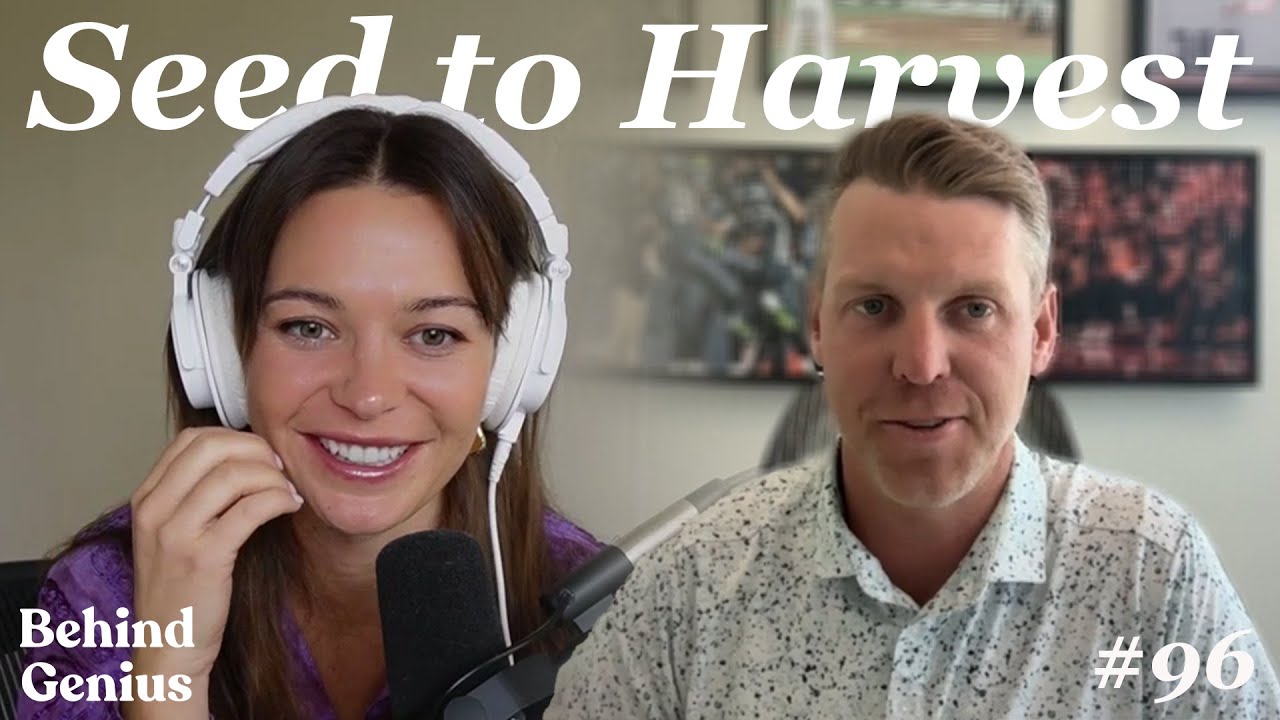
Alex Bean on Selling Divvy for $2.5B, Early Hustles, & Building Factory for Good | Ep 96