Alex Bean on Selling Divvy for $2.5B, Early Hustles, & Building Factory for Good | Ep 96
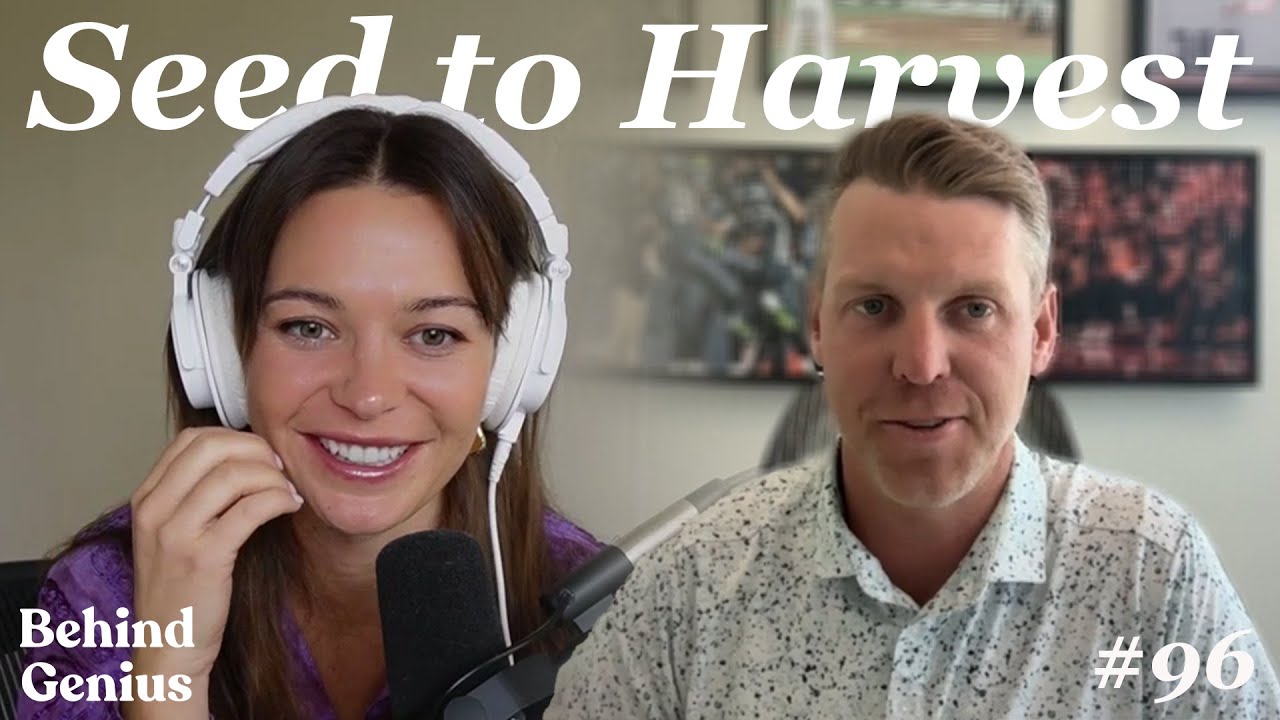
Alex Bean sold Divvy, a corporate credit card company, for $2.5 billion five years after founding it. He started with a personal frustration about employee spending limits, used guerrilla tactics like handing out $2 bills to acquire customers, and grew revenue to $150 million. After the exit, he launched Factory for Good, a philanthropic venture focused on rehabilitation, alopecia advocacy, and mentoring entrepreneurs in developing regions.
Chapters
So you realize, oh, wait a minute, I have to fire myself in order for our company to be the best version of itself. So I'm the one who's in the way.
Hello everyone, and welcome back to Seed to Harvest. I'm your host, Paige Finn Doherty. I'm the founding partner of Behind Genius Ventures. And today I'm really excited to have Alex back on the show to talk about both his personal journey before and after selling Divi for $2.5 billion after 5 years. his advice for entrepreneurs, and also taking what he's learned and building Factory for Good. Alex, welcome to the show.
Hey, I'm excited. Thanks for having me.
Yeah, of course. I would love to start with your early childhood. I was listening to a podcast prior to recording, and you talked about how your great-grandfather and your grandfather dealt with success differently. So, I'd love to start there if that sounds good to you.
Yeah. So, so when you say like my childhood, what that makes me think of is I grew up in a family of entrepreneurs. Like my great-grandpa kind of actually took over business and ran it well enough where he basically took that over and grew it. And so he was an entrepreneur. And then my grandpa took it from him and scaled it to new heights. And he was an entrepreneur. And then my dad was an entrepreneur. My brother's an entrepreneur. So it was like, as a kid, You know, we didn't necessarily go work at McDonald's. It was like, all right, what business are you going to start? And this is high school. I, I was teaching swimming lessons. I was teaching, uh, I was spreading bark. I was, you know, what else was the other one? We, we had, but there were businesses. So you had to like find customers. You had to build a business. You had to set your prices. So as a kid, it was a lot of like, you know, trial and error and trying to figure out how to be an entrepreneur at a young age.
So yeah, you had a lot. It sounds like you had a lot of practice. Do you remember what your first business was that you started?
I think the first one would have to be, um, skiing. Like, so when I turned 16, I, I like, when I was 15, I worked for the mountain. I made $5, $7 an hour. I think it was $5 an hour. It was nuts. And then the next year I was like, wait a minute, if I just go find my own clients, I can charge them $75 an hour. 'Cause that's what they were, the billing rate was. And so I ended up finding clients and I'd drive their kids up and I'd teach 'em. And so I'd work 2 days a week, uh, and I'd make, you know, I think actually because I'd get like 2 or 3 kids, they'd get in the car. I think I ended up making like $150 a night in like a 2 or 3 hour session, you know? And so, uh, yeah, so I, you know, that was my first one. And then I, we did— Yeah, that was my first one.
I won't go into all— Wait, wait, wait. I want to hear the next one because you had a little laugh.
I'll tell you, I'll tell you the embarrassing one that I was laughing about. Well, one was called Starving Students and we would spread bark at people's houses. And so you'd have to like bid, hey, you know, we'll buy the bark and then, you know, we'll charge you X amount of dollars. And to this day, because I'm still friends with those 2 guys, uh, my friend that was just telling me about the trophies was, was one of them. And Um, we would like, we still, we still joke around who didn't work when we made that. And then ultimately we'd work all day for like 2 days and we'd make like zero money because we bid it wrong. And then we're like, this business sucks. And then we make fun of each other. Like, you know, you're not the one who was working. I did all the work. And, uh, so we did that. And then actually in college, I started a business because my, my sister lived in China and she was selling jewelry. And it was great margin. She had a line, she had different distributors. And so I, being like a budding entrepreneur, was like, I'm gonna sell jewelry because look at the margin on this stuff. And I laugh because it's so— it's legit embarrassing because I bought the jewelry. It was called Plumtree Jewelry.
Oh, that's the name.
I held a, like, you know, a show, we'll call it, uh, at my college. And I had like all the mannequins, I had the jewelry set up. And, uh, no one showed. I don't think I ever sold one piece of jewelry. And it's— and, and my, my— what I tell young entrepreneurs, I'm like, look, I did it because I thought the margins were good. And that's like the worst thing ever to enter a business. Um, and I just— I learned a lot about like, I had no passion for it. I knew nothing about it. I didn't know who I was selling to. I just thought I was gonna make good money. And, and I was wrong.
So. Tip number 1, do not follow only the margins.
Yeah. And I'm not like some, like, you know, anti-money guy. I just, if you are just doing a business because you think it's like good money, you don't realize how many walls you need to knock down and how many times you need to push a ball uphill. And that takes like some level of interest and passion in solving the problem. And our target buyer was women. And I didn't, I'm not wearing jewelry. I don't know who to talk to. And so, Anyways, it was a great learning lesson of what not to do. So yeah.
I guess that's a good transition into maybe what to do. I guess I would love to hear more about the story of how you met your co-founders for Divvy and kind of like some of the lead up to that.
Yeah, so we met actually in 4th grade playing paintball. So that's when we met. Oh, okay, cool. We were friends through school and high school and stuff and knew each other in college, obviously, but we kind of went our own way for what, 10+ years in the corporate world. He was living in Utah. I was living in Seattle. I was helping their company grow, but we were building custom software. So I was in the custom software world. And he called me. It was just he and I. He called me and said, hey, I have this idea. I want to build it out. And because I was in custom software, he's like, hey, let's chat. And I'm like, oh, it's great to hear from you. Like, I haven't, you know, we haven't talked in so long.
Like, what's up, dude?
And so he came over to the house. We caught up. It was super fun. From that meeting, we talked about what ended up exactly becoming Divvy. And so from that meeting, we'd always known each other, but we started to figure out, oh, from a business standpoint, this is your strength, this is my strength, this is your role, this is my role. And, you know, what is this company we're gonna build? And, and we went from there.
I guess I'm curious to understand more of like the one, like your reaction to the initial idea. So he like pitches you on what will become Divvy. What was your like initial Yeah.
So his initial idea was basically, remember, this is 2016. So Venmo had just come out and Apple Pay was just starting to like get out there. And, uh, he was basically like, hey, I want to divvy out my credit line to my kid. Like, wow, I don't want to give them cash and they can't use Venmo because you need your own bank account. I'm going to divvy out my credit card. So when he goes to the store, he has his little allowance money. That was like his first thought. But when he came and worked and we were chatting about it, it was like, oh, wait a minute, we're both running small businesses and people are swiping personal cards and then asking for forgiveness later, 30, 60, 90 days through an expense report. And there's this element of like swipe first and figure it out later.
Yeah.
And we're like, wow, with, with Venmo and with Apple Pay, with that technology, we could, people could get approval from their like marketing manager to spend something and they could have the budget like right on their phone and they would know exactly You know, proactively as opposed to reactively. So when we started talking about that concept, like from that point, I didn't know if it was even possible, but I was like, what we're talking about, we knew was special. Um, but you know, there's a lot of things that come after that, right? Like, is it possible? How do you know? What's the go-to-market strategy? What are the economics? But, but when we first started talking about it, I'm like, no, I totally get the problem. I'm living that problem. It was like the opposite of jewelry. I actually understood this problem.
And, uh, this one I get.
Yeah. And so from there it was like, oh, budgets and, and these, and, and automating expense reports and eliminating that process. It was like a no-brainer. It's like, let's go.
Okay. So no-brainer. And then as you thought through like your responsibilities, what was the first like key hire that you thought about making?
So, okay. I actually want to say 2 things real quick and then I get into the hire. So the first thing I would say is like, Product market fit shows itself. You don't make product market fit happen. What I mean by that, and what's so— what's what I remember from our journey, when we first thought of it, we're like, great idea, we think we're smart. It's like, okay, but it doesn't really matter what we think. We got to go call our buyer, right? We weren't actually running a finance company. So the second we started talking to finance people, you could see their faces light up and you could just immediately— and Blake and I are then like, we're on fire. So we're texting and calling and like, you know, my wife thinks I'm like having an affair because I'm like on the— I'm texting Yeah. And if that's not naturally coming because you're just bursting with excitement on what you're building, then, then you should, you should sit back for a second and like, wait a minute, what am I building? Why am I building it? And who's going to care? Because if you are forcing it to happen because you want to be an entrepreneur, I think that you're in trouble. Um, the other thing I was going to say, I just think like if, if the audience, if your audience is a lot of young entrepreneurs, this is, I think, important info for how Blake and I worked as co-founders. So Blake was the CEO. Uh, it was his original idea. He held the cards, right? So he invited me to be his co-founder. And what I would tell people is like, you have to know your roles and be okay with the role early on. So my analogy is football. Blake was always the quarterback. He was always the quarterback. I was always the running back. And the reason that that helps is there's never—
Wait, sorry. For those of us that don't understand sports analogies that well, can you break down what that meant for you?
Yeah. Okay. So like on a football team, there's one person that calls the play. He's the leader. It's the quarterback. The running back is super important. He might get the ball, but the quarterback is making the decision on what play we run and what we do and where we're headed. And the analogy I would use for founders is like, a lot of times there's a lot of pride and ego to like, well, I'm 50/50 and I'm this. And it's like, It worked for Blake and I because I knew he had more equity than me. I knew it was— he was the leader and I was there to support him. So my role was to add vision, to find product-market fit, to do my stuff. But my job is actually to support and motivate the teams to follow Blake. Blake was the lead. Mm-hmm. And I think you see a lot of great entrepreneurs or a lot of great, uh, founding groups eventually start to fray and split because they're like, They all are trying to fight for control or they're not realizing what their role is inside of the founding, you know, group, like inside of the founding, your roles. And for Blake and I, and I tell a lot of founders this, I'm like, what's your role? And if you think, well, my role is to be the leader with them, it's like, no, no, no. One person is calling the play. Who is that person? And make sure that you guys know at the beginning of your journey who's in charge, what that looks like.
Yeah, I feel like co-founder splits are one of the most common reasons why early-stage companies fail. It's like that core relationship falls apart for— I feel like a lot of the time it's like that ambiguity between roles, and then that plays out on like a much broader scale once you start having like customers or investors come into play. Yeah, I think that's a really good point.
Well, because there's gonna be a lot of things, especially the bigger you get, the more money that comes, where you're like, well, why are they making that decision? Or jealousy, greed, frustration, all the stuff are going to come into play. And, you know, there were times where, where I felt like Blake would, would kind of lead without me, and I was like, oh, I want to be, I want to be there. But like, you know, my job though is not to create Uh, you know, tension and not to create— like, my job is to unite everyone and to get everyone on the same ship saying, no, let's follow Blake. So even if Blake did something that I didn't necessarily agree with, or I wouldn't have done it that way, my job as his co-founder is to follow and to get everyone to follow with us and to say, let's go follow Blake. And it doesn't mean I can't disagree with Blake, but we ultimately have to disagree and commit, and we have to get on the same page. And I can't. Try to get my own faction of followers to say, yeah, what we're doing is right. And try to, because then you're just going to blow up the company. But anyway.
Was there like a core decision that you remember that happening with? Or like an example? I guess it doesn't have to be like a core decision. Yeah.
It's not necessarily a core decision. I can just think of a lot of times where one, it was imperative for Blake to know, like the stress was on Blake. He knew that he had to make the final decision of, are we letting people go? Are we raising money? Are we, you know, what direction are we headed? And it's important for one person to own that. At the end of the day, who's making that decision? The other component would be like, as you just think it back and hiring and recruiting and raising, it's like having someone be on first and everyone to know what their role is, is extremely important. Because otherwise what can happen is a lot of finger pointing. Well, I thought they were going to do that. I thought they were going to do that. Well, they said they were going to do that. And if they don't do that, that's their problem. And it's like, you need to know who's on first for what element. And that just comes with assigning roles and being definitive. And I've seen a lot of great 50/50 partnerships. I can think of a friend of mine, they started fully equal, but his friend had the demeanor to be the CEO. So at the end of the day, they said, you be CEO. And he's like, great. Now, Fast forward 7 years, it's highly successful business. There have been times where the other one feels a little left out or he's not in every decision, but the reality is he's like, well, that this is my role and we have to accept it. And like, you know, you have to, you have to help each other grow and, and there's a lot to it. So.
Yeah. And I'm assuming too, when the, when like the product market fit is as strong as it is, there's times where you just have to like surrender to that flow and just be like, all right, I'm, I'm going where the current takes me, but I know that I can't like Yeah, can't be there for every like core decision that's happening now. It was pretty fun.
Because eventually, yeah, yeah, you cannot. Okay.
Okay. Okay. So that's kind of like more of the origin of Divi. And then to go back to the question again is like, who was your first key hire? And how did you think about like filling in the gap that you, or I guess like the opportunity for? You have like—
Yeah, so, okay, so, um, we made a mistake at the very beginning. Uh, so I'd say there's 2 things that I would, I would advise other young entrepreneurs. One is we hired our first 3 hires were C-level hires.
Wow.
You see, you see these C-suite, it's like, yes, the C-suite is meant to manage a bunch of people and teams, and we're like, yeah, We hired managers, not doers. And that was on us. That's our mistake. We had the money in the bank and we had the ego and we're like, let's go hire these super experienced people. And there's 2 things I would do, or I recommend to people when they start businesses. I'd say, one, no one's a C-level. I mean, the founders are founders, so they're going to be called CEO or whatever. And you can't get— that is what it is.
Yeah.
Everyone else, just call them head of revenue, head of engineering, head of finance. Doesn't matter.
No C's.
Well, yeah, because there's 2 things. One is you need to hire doers, meaning you need to hire developers that are willing to write code. You cannot hire someone who wants to manage people writing code. Um, now they're going to quickly get to managing and they have to architect it, but like they need to be like rolling up their sleeves with the teams and saying, let's go build this thing. And you want them to earn the C-level title because once you give them a C-level title, you either have to fire them or Stay with it. There's no, like, you can't put someone above them. You can't, like, it's just that either they're in that C-level title. And if you're experiencing a lot of growth, you're going to have to hire people that are more experienced or come in. And so you want flexibility on where people sit. Now, some people will be like, well, I'm in charge. It's like, okay, but now we're at a different level. We're not going from 0 to 1. We're going from 10 to 100 or from 100 to 200. You're no longer in charge because it's a different skill set. So that doesn't mean you, we take away your equity, but it does mean that we are, you know, that we're going to bring in a chief technical officer, a CTO. And so call them head of engineering, call them head of finance. So our big mistake was that we hired managers, C-levels way early on, and we ended up having to let actually all 3 of them go fairly early because we just were like, we needed doers. We were in the wrong position. We hired a CMO early on and that was totally our mistake because What are they going to market? We didn't have a product for a year and a half. So we made a lot of real mistakes.
I guess on that point, I think letting go of the first person that you let go in your company is one of the most nerve-wracking things. So yeah, what was that process like? Because I think for some of the founders who are listening, they may not have gone through that process.
So for us, the person we let go was the, the first person I think we let go was the CMO. Totally our fault. It was not this person's issue. It wasn't like they failed. And I would say one, we recognized it and we're like, shoot, this sucks, but we have to let them go. That's on us. And what I would say, you know, those conversations are never fun, but I would say like, there is a way to do them. And the way to do them is to just be clear. Take accountability, give the facts, and, and keep it short. Meaning, don't try to solve their problem of finding the next job. Don't try to, you know, talk through everything. Just look them in the eye, say, this was our mistake. We shouldn't have brought you in. We're sorry. We're going to let you go. Here's the severance. And, you know, we wish you the best of luck. And, and it sucks. I mean, you're going to lose sleep, but that's, that's what you have to do when you're in these positions. And Um, if it's ever easy, then I think you need to check yourself in the mirror. Uh, you might be a serial killer. Um, but you also need to, you have to do them. And so it was explained to me by a few people, it's like, but if you don't let that person go or that those teams go or, or put them in different positions for them to succeed, then you're actually putting everyone else's job at jeopardy because you're ultimately driving the ship into the ground and everyone's going to lose their job. So. You know, you have to do what's best for the company. And by the way, sometimes that means firing yourself as a founder. I can't tell you, I had to fire myself like 3, 4, 5 times because—
Really?
Yeah.
I guess like, was it like giving away certain like pieces of the responsibility? Yeah.
So like the responsibility, you do, you do everything.
Yeah.
But like, I'll give you an example. I'm not like great at marketing by any means. So when we, our first key hire, the one that I would say moved the needle the earliest, I mean, our, our head of engineering, Greg, was amazing. So he'd be there, but, but Sterling. was our head of revenue, but he started out as our head of marketing. And I was doing marketing. I had no ego on marketing. And it was like, hey, I'm going to fire myself. You come in and do marketing because I suck at it. That's easy because I didn't want to do marketing. And it's like, you come in and do it. But where it gets hard is like, I did have more of a sales background and I felt capable of managing a sales team. But I was like, but this other guy, Woody, is actually better than me. He's been doing this for 10, 15 years. Just managing sales teams.
Yeah.
I've been doing all sorts of stuff. So, you realize, oh, wait a minute, I have to fire myself in order for our company to be the best version of itself. So, I'm the one who's in the way.
Okay.
That's a lot of ego to stand up in front of your team and to be like, hey, I suck. I need to step down. This guy's going to come in and take my place. And you're constantly having to do it. And it's not easy. It's never easy because when you're the founder, you think you're the best at everything. But, you know, it was the best decision I ever made was to fire myself twice and to let Sterling and Woody come in and make the company huge. And obviously I found other things that I did that were very important to the company, but fundamentally had to fire myself. And that's, that's not a fun experience. It's really not.
I like that. The best thing I ever did was fire myself twice.
At least.
Yeah, at least.
Okay.
So also one of the things I heard in the podcast that you recorded was that it felt almost like a speedrun. Like getting to a $2.5 billion outcome in 5 years is incredibly fast. And then the other thing that you mentioned was that you had really strict boundaries around work-home balance where you would come in at at like 8, and then you would leave at 6 and be with your family from 6 to 9, and then work from 9 to midnight. And I really love that because I feel like there's this whole like element of like hustle culture, and you have to be like giving your all to the company. Um, yeah, and I guess I would be curious to hear if that was something that you instituted like as the company was growing, or like how that changed as the company got bigger. No.
Yeah, so, um, my opinion of hustle culture might conflict with yours.
All right.
Um, I think hustle culture for hustle culture purpose is not healthy and it's not sustainable. Okay.
Okay.
So there were times I was not getting home at 6 or I was getting there earlier than 8, but as we got in a rhythm and I fired myself, I started to be like, okay, if this is a marathon for me This is, I know it's short, it's 5 years, but we were stepping into the world that this isn't like a sprint. And we're like, hey, 'cause we were, anyways, it was like a sprint sprint. It was like, okay, I can't maintain that pace.
Yeah.
I had to set boundaries for myself. And what it was was, hey, in the morning, if I wanted to golf or mountain bike or work out, I needed to do that in the morning. And I could get to work by 8, which was still sufficient to be like, okay, let's get to 8. I would work, you know, till 6. My goal was to get home for dinner at like 6:30 to 9:30. I could be a dad and a husband, but then from 9:30 to 1, I was working again. So like, it was a lot of work and I would tell people, yeah, it's, trust me, a startup, if you're going to do it right, takes everything. It takes a lot from you, but you can still set boundaries and make things happen and not lose your family as you do it or lose yourself. And for me, those boundaries for myself, it wasn't like company-wide, like everyone leave by 6. Some people at different times were running different paths and different speeds. And we did have a hardworking culture. And frankly, I will tell people as an investor right now, it matters. And I could pick out companies and be like, nope, nope, nope. They have a much better chance because you can see the pace.
Yeah. Yeah.
And you can see the effort and you can see how everyone cares and everyone's trying to own it. And so I would tell people, don't just stay at the office till midnight just because you think that's what's expected of you. But when you're building something great and something you love and you have deadlines or you have times, yes, it might require that at times. And that is expected. If you don't want that, then go work for a big company and go enjoy the slower pace. But sometimes startups can be Um, actually, the advice I got once, and I'll— and I think it fits here. Someone was basically saying there's, you know, the 3 things you can choose, like in college. Remember the famous pie chart? It's like sleep, good grades, and like friends. It's like pick 2, you can't have all 3.
Yeah.
He was talking about life and he's like, well, there, there's work, there's family. And for him there was God. And he's like, you know, how do I pick all 3? And he's like, you can't pick all 3 all the time. And his response to me was there was a time in his life where work did take up a little bit more time than the other things. But once he was done with that, it allowed him to spend more time with family. So you could always pick 2, but it was like the work-life balance didn't mean you get everything an equal share all the time, but you can still set boundaries and figure it out. So yeah.
Yeah, I love that. It's kind of like it's a feature of startup life and then you kind of, you carve out the time for those other commitments in your life. Um, okay. I want to, I want to talk a little bit more concretely about the financing journey of Divvy, if you will. Um, indulge me in that conversation. Kind of like walk me through the process of what the different capital raises were and like kind of how that process went. Like at what time are you like, okay, we're gonna raise capital? Or like, was it inbound? Like how did the— what was the context of the capital raises?
So we raised our first amount of money from friends and family. Um, now we knew what we were building and it's different than other people. And I tell people all the time, if you don't have to take money, then maybe you don't take money. It's not like taking money Some like, you know, rite of passage. Like, it can be the worst thing you ever did, but it can be the best thing. For us, we knew that we were going after huge markets like banks, Concur, Expensify, Amex. Like, we sat there and like, we have to raise money because we're building, we're going against 3 markets. So it's an all or nothing thing. We raised from friends and family that got us off the ground for the first year, year and a half. And then we did our first Series A. We weren't planning on it. Um, I was actually, I don't need to go into the whole story, but we were kind of like showing up to an event because we couldn't afford a booth. So we kind of ambushed everyone. We wore suits with like $2 bills on our, on our coats and handed out cookies. And we did this like guerrilla warfare style marketing to just tell people who we were. And, um, as we did that, I ran into one of the, uh, a big local tech guy. Um, and I knew who he was. You know, it's, it's not Steve Jobs, but it's like our version in Utah of like a very well-known big tech guy. And where I was like, who was it? His name's Josh James. You know, most people outside of Utah have never heard of him, but he built, uh, he's built $2 billion companies. And so I knew who he was. Um, and I, I, I talked to him and I'm like, Divi, and I'm showing him and I'm doing the whole thing. And he's like, hey, you should go talk to like my, my VC group. And I'm like, great. So that day we had our first ever VC meeting. And then it was like, oh, there's some interest. And then from that, I was like, Blake wasn't there. I was like, Blake, I think we could raise money. And then we basically started having conversations with other VCs, um, ended up raising $10 million.
Mm-hmm.
And then we ended up raising a Series B like pretty soon after, because the group Insight was, was around. And they had already done some diligence. I think it was like 8 months later we raised $30 million or something. And then—
Do you remember like what stage the company was at? Like how many, like, like how much like revenue that you guys were at? Because I like the, the, the numbers about like changed now.
We went from $0 to $7 million our first year. Um, and then from $7 to 35, and then from 35 to like 75, and then 75 to 150. And we were acquired at the end of the 150. So I can't recall exactly how much revenue we had. That was the revenue band.
Yeah.
And yeah, so we did Series A, Series B, waited another year, then we did a big Series C, and then we ended up doing a, like a quieter D right before we sold, but We never really spent that money.
That's super interesting. I loved your comment on guerrilla warfare. We just had James Evans who sold CommandBar to Amplitude, I think around similar timing as you sold Divi, but he was talking about how they showed up at SaaStr and hired protesters on Craigslist. And I love that. I guess, are there other examples?
Yeah. We ended up— do I have a card here? I wish I did. Um, so we had our card product was a Divi card. It was like literally a credit card. And, um, one of the things we did, we said we wrote down like our top 100 target market clients that we could go after, and we ordered a card with their name and sent them a credit card with $100 on it. And we said, whoa, buy whatever you want. You don't even have to talk to us. Just buy whatever you want. And, uh, they would buy lunch or they would buy Amazon and, you know, but—
Wait, what was your like open rate on that? I'm assuming it was quite high.
Pretty high. I can't remember. We'll go with like at least half the people got it, opened it, and then bought something. So what happens though is like when they buy something, we would see the transaction. So we could call them and be like, how was lunch yet? Whatever. Or, you know, what'd you buy?
I saw this too.
So when we talked to them, we said, hey, look, now you get it, right? Like, not like, because they would have to sign up. They would see that the transaction would go instantly and it would be into a budget. And we'd be like, hey, well, now can we show you what the product really does? And, you know, I think we ended up signing a few, like, I don't want to sit here and say we signed up 50, but At the time it was like, well, if we want to get these people's attention, what's something kind of out of the box that we can do that doesn't cost that much? And for us, we could send them the $100 and if they never spent it, it didn't cost us anything. So when we sent them Starbucks, when we sent 1,000 cards or 100 cards or whatever the number was, we weren't sending out 1,000 times 100. We were sending out 1,000 and then whoever spent it. So it ended up not costing us that much money. And, you know, wasn't sustainable long-term, but it was something that we could do to get people's attention. And I would say if I were to go back to starting a company and saying, you know, what are you going to do? It's like, yes, at some point you'll do the Google and the Facebook and the standard stuff.
Yeah.
You need to just figure out how to get your audience's attention. And sometimes that's a weird out-of-the-box hiring a protester or sending them free money, whatever you need. Putting $2 bills on your shirt and, you know, like, you gotta just do stuff to get people's attention. Um, and then from there you can start to become a real company. But at the beginning, it's a little bit, uh, you know, fight or flight. You gotta do whatever it does, takes to survive.
Yeah, that's awesome. Um, I wanna transition a bit from that to the after the exit. So I, I've been reading this great book by David Brooks called The Second Mountain, and in it he describes like the first Have you read it? Yeah. Okay, cool. I, I, um, when I was like reading like parts of Factory of Forget, I feel like it stood out to me. I was like, I think he's read, he's read The Second Mountain. So the, the, the framework for anyone who's listening who hasn't read it is there's a first mountain of like monetary success or like achievements that are very like externally focused. And then the second mountain is like, you get to the top of the first and you're like, okay, like why do I not, like, I might feel happiness, but I don't feel like this sense of joy. And then he goes into breaking down the different elements of joy, which can be physical, dance, spiritual, moral. And the longest lasting one is having a sense of purpose through either vocation, relationships, and there's a couple other ones.
Yep.
But I liked your framework a lot of a factory for good. So once you reach the top of that, Mountain, like your output to get to the top of the mountain would be like money. And then when you get to the top of that mountain and you go to the next one, money becomes one of your inputs. You have time, talent, and money as your inputs, and then your output should be good. Can you talk a little bit about what bringing that framework into action has looked like for you after the sale of Dippy?
Yeah, you did a great job summarizing it. So love that. Uh, what I found— so what I found is like, I have one day I was at Divi going crazy, crazy, crazy, and then next day I was gone, right? Like, we sold. I was gone.
And you left the company too. You didn't like do like a— you weren't like working at the company that you sold. Yeah, I feel like it's quite unique.
I was gone the next day. It was very black and white, right? And the first couple months were amazing. I don't want to like You know, it was a honeymoon. I loved it. It was just awesome. It was nice to finally get my life back. And, uh, but after a couple months, like, the summer went by, we went on some trips, my kids go back to school, my friends are at work. And I remember telling my wife, we're in bed, it's like October, we sold in June. And I'm like, I can't believe I'm about to tell you what I'm about to tell you, but like, you know, you're my wife, so like, you know, please hear, hear me out. And I said, it sounds crazy, but I'm jealous of my friends in the rat race. And she was like, what are you talking about? And, and my point was, when you're in the rat race, and I know it's the rat race and it can suck, I, I don't forget it, I know. But every day you wake up with a genuine purpose, which is like, you know what, today I'm gonna go to work and I'm gonna provide for myself and my family and my spouse or whoever I'm taking care of. And you come home And you can have dinner with your family and you go to bed and be like, I did what I was supposed to do today. It was hard, but I worked hard and I had this sense of purpose. But when you don't need to have that anymore and your, and your, uh, motivations are wired completely different, it's like, well, I don't need to go to work to make money and I don't need to do anything. I started to feel like this lack of fulfillment, lack of purpose, and I really did not enjoy it. I didn't handle it well. You know, I could play golf every day, all day. Which is something I enjoy to do, but I was like, I don't enjoy hobby hill as much as I did climbing mountain. Because I think we as man, as people, are meant to create, we're meant to build, we're meant to pursue. And there's this happiness that comes from trying to accomplish something big. And for me, I'd lost that. So, it was about like, all right, well, what do we want to do? And there's a lot of hobbies and maybe I can go sit on a beach. All that stuff wasn't working.
Yeah.
So, eventually, the Factory for Good analogy led me towards like, all right, well, what good do I want to do in the world? And it's been a fun journey to go on with my wife and some of the other people I work with to figure out where can we make an impact? How can we actually change some people's lives? How do we get other people to come with us? And now, when I wake up, yes, I do venture investing and I do other things, but there's this back of mind, a purpose of any— the more money we accumulate, The more we can put towards these 3 things that we're doing. And we have a lot of fulfillment. I just came out of a meeting where we're like, hey, where do we want to give to impact? Do we want to help these people here or these people here? And it's awesome. I like— I really enjoy it. So, um, although I don't want to go work for a nonprofit full-time, I've loved the opportunity to figure out how do we do some good in the world. And in the meantime, it's really helped save Megan and I's relationship. It's given me purpose. And then my kids are engaged with it. And so it's bringing my family together, which is really what I want. And, uh, that's, that's a win-win.
Wait, that's wonderful. I, I guess, can you share a little bit more about the 3 causes that you're really passionate about right now?
Yeah, so what we're trying to figure out, we're trying to define what impact means. So if I said we really impacted someone's life, we're trying to define, um, what that means. It's not just give a man a fish, but can we teach him to fish? Or what does that look like? And so we've been dipping our toes in different causes, like One is a group here in Utah called The Other Side, um, where they, they take drug addicts off the street, um, and people that are in jail and really bad situations. And instead of just bringing them into rehab and talking to them all day, they literally put them to work.
Wow.
And these drug addicts come in and then they work in one of the 3 enterprises where it's just a moving company, um, a construction company, and a Goodwill type company. Uh, like a thrift store. And these people rehabilitate, rehabilitate their lives by working. And when you see the light in their eyes come back and they're working all day and you think most people would be like, your job sucks. And they're like, and when you talk to them, they're like, this is, I haven't felt like myself in 5 years, 10 years. And I love it.
Wow.
And so my family's, we got involved with that. Um, you know, helping them open up donut shops and other just businesses so these people can get on their feet, which has been super fun. Um, my son has alopecia, so we've been really involved in alopecia stuff. Um, and then we do a lot of entrepreneurship stuff in third world countries and locally in terms of helping people, um, create business frameworks and, and try to mentor them so that they can find businesses. And, and that's been a lot of fun. So we do a few of those as well.
Well, that's super cool. Have you done any like, um, travels for that, like in terms of the international entrepreneurship?
Uh, we've done a lot of local stuff. We, we, I think, are going to end up doing some of that international travel, um, which will be fun, you know, because we get to go to a fun place but also get to bring our kids along and interact.
Yeah.
But to me, the, the fun thing too is like, my oldest daughter's, uh, 14, almost 15, and, you know, when we go and we go to an event and we're wrapping Christmas presents and, you know, we live a sheltered life, like they live, they live in nice suburbia and, you know, they have very friendly kids. So when they're wrapping presents against— next to a drug addict who's got face tattoos, and their perception of this person is like, well, here's a bad person, but then they get to talk to them and work with them and serve with them for 2 hours. Those little conversations and those experiences are like awesome for my kids to go through. So we're doing everything we can to not get my kids involved in the numbers per se, but to try to involve them in these other causes and to have them understand that. Money and, and dad's success is not just about consuming and what can you get, but it's about who else is out there, who needs something, where can we lend a hand, where can we spend some time. And so when we do some of this international travel, it'll be fun to bring them along and expose them to different worlds that they're not exposed to.
That'll be super cool. Um, I, I asked because I, I took a trip to Guatemala with my mom a couple years ago. There's this organization called Local Hope, and they built like this incredible school. And like, they have like a school, a dentist, a doctor. And they are doing like something similar where they're helping these like entrepreneurs in the highlands of Guatemala that have like, they've suffered from like really bad literacy rates, and like not access to care. And it was just like a really incredible experience to go there and see how entrepreneurship can really positively impact the lives of people around the world. Um, so yeah, I was, I was like, that was a really special experience for me. So I wanted to—
Well, and to have like, sometimes that's, you want, you, you want to sweat and like build something and dig a ditch. And other times it's like when my daughters see this, you know, 24-year-old in Kenya Who's like learning to read and then ultimately learning to sew so she can make blankets. So that you know actually someone in Morocco is doing this where it's like they're making blankets from as a local community or rugs and you know they're selling them. You start to be like inspired by these people and one of the crazy things that I've realized is like okay, I've spent I've done hundreds of interviews with people that have lots of money. I have grown up in a family where we we had I. You know, we had family members and neighbors and I knew people with money, right? So I've seen wealth. Okay. But what's crazy is like, I've seen money from the highest ends of what that means. And I also go interact with some of the poorest people on the planet. And I cannot tell you how crazy and how often it is that these people would never want to be these people. And the rich people are infinitely more sad or more depressed or more Struggling than the person who lives with a dirt floor, but they have purpose, they have family, and they have love. And you realize like, oh, that's what matters. That's actually what matters. It's not how much money's in your bank account because you know what the difference is between someone with five million dollars and twenty million and fifty million and a hundred million and blah blah blah. The answer is like a lot of times nothing. The real question is like do they have relationships they care about? Do they have a purpose that they care about? Are they helping other people in whatever capacity? capacity that they can? And if the answers to those questions are a resounding yes, those people will be happy regardless of what their bank account says. Now, I say that and some people get mad because they're like, well, but they don't have food. And I'm like, I get it. If you can get someone to help them manage the very basics of life, like food and shelter, the rest is about happiness and love and service and doing things that are bigger than just putting money into a bank account. And that's why we came up with Factory for Good.
I love that. Well, Alex, I really appreciate the time that you spent with me and our listeners today. And as we wrap up, I guess like one question, my last question would be like, if you had to start over, $0, no connections, what do you think you would do?
I think I would go back to teaching skiing and teaching swimming and, you know, maybe sell some jewelry. No, um—
Wait, no, wait, actually, I want to touch back on that because it seems like And I share this with you is like, it sounds like teaching is one of those things that brought you a lot of joy, or at least like you started doing that a lot when you were younger. So I wanted to ask if that's like been a big part of your post-exit life as well.
Yeah. I mean, I, one of the reasons I actually, the only reason I ended up doing venture capital had nothing to do with the economics. And the reason I would try to be like, no, trust me, is I haven't even ran the numbers on what I potentially am making or not making. I don't take a salary. It's like, so. I do it because I love working with these founders and I love doing whatever I can to say, look, I had this great experience. If I can help you have a great experience, then great. I want you to be 5 times bigger than me, 10 times bigger than me. Like, go, go do it. And then, you know, there's a lot of, yeah, like mentoring or teaching. It's super fun. And again, not everything I say is going to be gold, but you're just hoping you can inspire enough people to say like, hey, my experience was one. Can I go help another 10, 20, 100 people have that experience? And yeah, it's been a lot of fun. I take a lot of pride in that.
Awesome. Um, well, thank you so much for coming on Seed to Harvest. It was incredible to have you. Uh, and then I guess if anyone like resonated with this and wants to reach out to you, where should they reach out to?
Yeah, so, um, 2 things. Like, I'm like, I guess I'm on LinkedIn, but not really on the other social channels. So if you really wanted a combo, try LinkedIn, but, um, factoryforgood.com. It's just like, it's where we're doing a weekly newsletter. We're telling these stories, helping people. We have a lot of experiences like the Happiness Audit, the Bank of Mom and Dad, your Factory for Good Finder, like quick, easy, fun experiences. We put a lot of time and money into. We think that they're going to be fun and engaging for founders. So factoryforgood.com would be awesome.
Perfect. Well, Alex, thank you so much for coming on.
Hey, thank you so much. Appreciate it.
More from Paige



Paige of Behind Genius driving an AI electric train in St. Louis (Intramotev Visit)





