Awesome People Ventures Founding Partner Julia Lipton on the Startup Track | Seed To Harvest Ep44
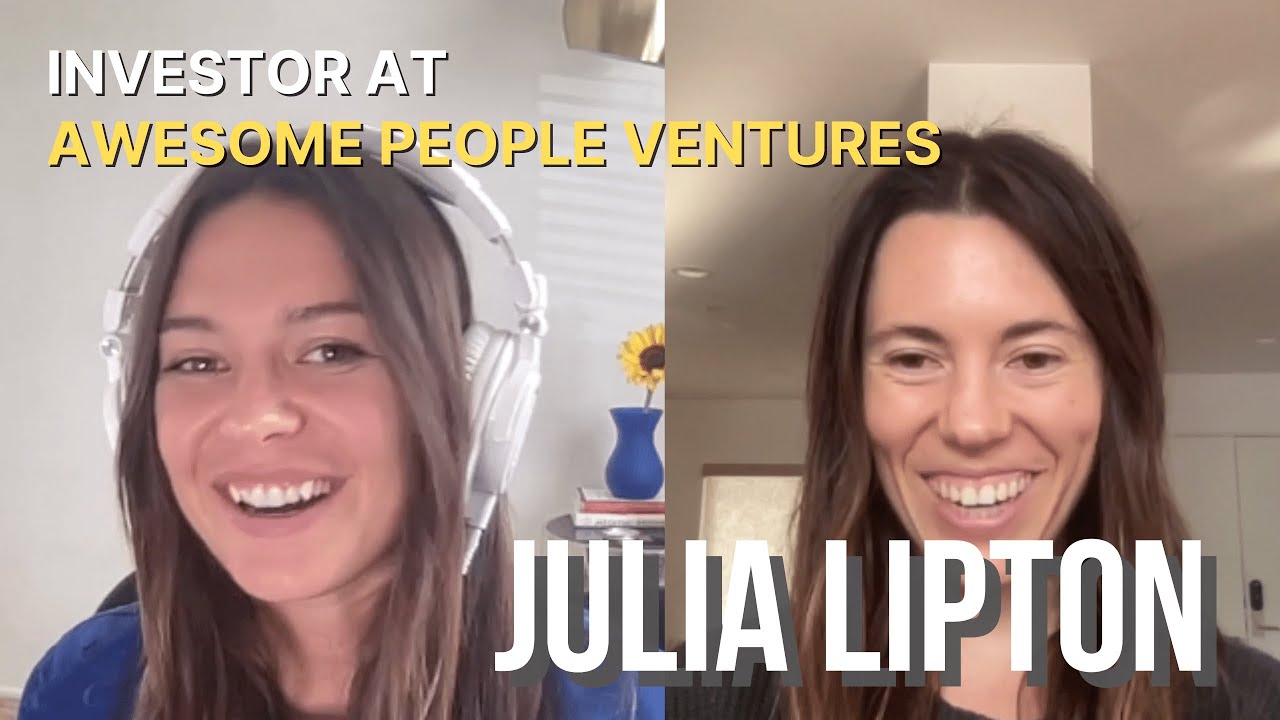
Julia Lipton, founding partner of Awesome People Ventures, started the firm remotely in 2018 after a friend became her first LP. She spent years as an operator at Quixly, Rise, and One Medical learning about unit economics and product-market fit, then took a 2017 sabbatical in Thailand that shifted how she thinks about success and the ownership economy.
Chapters
Hello everyone, and welcome back to Seed to Harvest, a podcast with founders, creators, and investors about their stories, frameworks, and tactics. Today, I'm really excited to be joined by Awesome People Ventures founding partner, Julia Lipton, investing in awesome people doing awesome things in Web3. Hey Julia, thank you so much for joining us today. I'm excited to have you on. Thanks for having me. Yeah, I feel like we, did we first cross paths on Twitter or was it through Transact Global?
I think it was Twitter. Yeah, I think it was Twitter. So remember when you joined Transact? Yeah. You're like, oh yeah, this is so exciting.
Yeah, I feel like Twitter has definitely— it, well, it's been funny cuz I feel like we met earlier on. I started Twitter in like 2020, which I think was pretty close. And so it's been incredible to follow your journey of building your fund. I think one of the things we were talking about before the show is that you built your whole fund remotely. So I'd love to talk a little bit about your initial spark on starting Awesome People Ventures, and then we'll go a bit deeper into your background and some things that contributed to that, and then also kind of some of your views for the future.
Yeah, well, on starting the fund, it very much flowed out of, at the time I was consulting in angel investing.
Mm-hmm.
And one of now my LPs, but one of my friends saw me doing this and was like, Julia, This is the stupidest thing I've ever seen. You're basically running cash flow zero. You should start a fund. And I'm thinking to myself at the time, I was 30, I think, and had a handful of angel investments and no markups and was like, who the hell's gonna back my fund? And back then there weren't tons of emerging managers, like operators turned emerging managers. A lot of the emerging managers were either— Yeah.
Well, I, What time period is this to like set us?
Um, 2018, 2019.
Got it.
Okay. Yeah. So I think the fund started deploying in 2019, but all this was going down like through 2018, 2019. Mm-hmm. And I was like, who's gonna back my fund? Like, no one's gonna take that bet. And he was like, I'll be your first LP. So basically I just put the money and ran at that point. And then emailed my friends and was like, I'm doing this. And luckily it worked out for a fund one. It was mostly people I'd worked with or friends of friends.
Whoa. That's incredible. I feel like that's one of the things that I think is really special about venture is that you can get 100 or 1,000 nos, but it just takes one person to tell you yes. And now you're like, oh, I'm doing it. I'm doing it. Here we go. And then it's, uh, it's quite a journey. From there, what, what would you tell yourself looking back at like 2018 Julia?
I think the coolest thing about that chapter is everything was very in flow. Mm-hmm. And so it wasn't that I was really taking tons of advice or searching for answers. It was very much like, what am I loving doing and how do I figure out how to double down and spend more time on this? Ooh, I love that.
And then let's, let's rewind a bit to your journey prior to starting a fund. So you had this consultancy, it was Soundboard, right? Mm-hmm.
Yeah. Yeah.
And then, yeah, it was. And then prior to that, you were the head of virtual visits at One Medical and then head of growth at Rise and the first business employee at Quixly. So you had quite an operator career. Prior to jumping into venture. So I'd love to hear kind of what are the theses that you took out of that time as an operator that now you're applying in your investing?
Yeah. So our first company, Quixi, I believe at one point was valued at like around $700 million and came crashing down to zero. Whoa. And I was one of the first business hires and ran marketing in the early days, and we were quite good at marketing. Our CEO is a very prolific storyteller. But it really ingrained in me the importance of product market fit because we never had it.
Mm-hmm.
Wow. And it ingrained in me a ton of things about early company operating. I think at one point we had like 7 different initiatives, which is just a recipe for failure before you get to some form of product market fit and repeatability. And so there was a lot of things around company building and what not to do.
Mm-hmm.
Or very close and like near and dear to my heart at this point.
Yeah.
On the flip side, there were some things that were phenomenal about that company. Like I think we had one of the better cultures in Silicon Valley at that time. Like people loved working there and it's, mm-hmm, it's pretty incredible. Excuse me. By the time we, I left, I think we were like 200, maybe 250 people. Like it's pretty incredible that you could have that many people motivated. Yeah. Not by revenue. Like not by real meaningful traction. And a lot of it was just like culture and storytelling, which was world-class. And then the next company, Rise, was super interesting because we kind of sort of had product market fit.
Mm-hmm.
And we were growing at an acceptable growth rate to our investors, but not like a world-class, holy shit, this is obviously a unicorn company.
Yeah.
And it was a fucking masterclass on like unit economics, CAC, LTV, channels, mm-hmm, distribution, retention. Like retain or die is a very real thing. And just these like underlying business fundamentals that are also just so deeply scarred into the way that I look at companies. Mm-hmm. And I tend to look at things with a really heavy lens towards can you solve distribution? Because there's so many amazing products out there for someone, but it really doesn't matter if you don't have distribution towards a large enough group of similar people.
And a repeatable way of doing it as well. Sounds like it.
Yeah. Yeah. And at this stage we invest like repeatability up to a point, but then you need the clear line of sight that makes sense. And I think really having like the personas and a perspective on the product marketing, the positioning goes a long way. A lot of the biggest investing mistakes I've made, and I always put this in the risk factor. Now I know when I'm putting this as like a risk factor in a deal, I'm like, just don't do the deal. Like, it's not going to, and it's, it's when there isn't a really clear persona and a really clear problem and use case. And a lot of that stems from. Just operating in these companies. And then One Medical was a blast because Rise, that nutrition coaching company, mm-hmm, with the unit economics CAC LTV masterclass that I was talking about, got acquired by One Medical.
Mm-hmm.
And that's how I ended up there. And then that was really neat because it was a pre-IPO stage company, so I'd never seen that.
That part of the journey.
Yeah, that comes with like a whole nother set of interesting challenges and learnings.
Wow. And then you took your sabbatical after, was that post-IPO or what?
Um, yeah, it was pre-IPO. I took it after I left One Medical after a year.
Oh, gotcha. And then we were chatting about your sabbatical a bit, but it's what launched you into doing digital nomad life a bit more. But I would love if you could talk a little bit about your sabbatical and kind of like your key takeaways from it. I feel like Not many. I don't hear many people like talk about their sabbaticals that often, so I'd love to like hear more about what it was like for you.
Oh man, I feel like everyone I know has gone through some sort of like midlife crisis sabbatical. Yeah, I mean, I think for me, so I went on sabbatical because I had been telling myself this story for 8 years that at some point I was gonna quit my job and follow my passion. And like quit my job and eventually likely start a venture scale company. And I've been telling myself this story and in between each of these roles, I, I started working at Quixy while I was in college. Mm-hmm. So I'd fly between LA and San Francisco every week. So I really didn't have a break and I just kind of went all the way through. And between each of these chapters, I told myself that I would like take a break and focus on. How I wanted to spend my time, and I never did. And so eventually I told myself that I had to take a break and do that or stop telling myself this story.
Hmm.
And so I took a sabbatical. I was intending on only being gone for 3 months. And when I was traveling, I was like, holy shit, this life is so much better than the life I was living in San Francisco by orders of magnitude. I mean, I was. Living on the beach, drinking coconuts, doing yoga all day, eating great vegan food, enrolled in like all these interesting classes and workshops, surrounded by digital nomads working on really interesting things. That was 2017, so that was kind of the beginning of the crypto boom. So like tons of just interesting conversations.
Mm-hmm.
And I was like, this beats my life in San Francisco on all accounts. Oh, and at a fraction of the price. Like I was living off of, call it like 2 grand a month.
Yeah.
Like at a fraction of the price. can't do that now cuz a lot of those markets are now more expensive cuz everyone has learned about these places like Thailand and Bali. And, but it was just absolutely incredible. And it was the first time in my life that I had gone multiple days and been like, well, what do I wanna do? Like, what does success look like today? Like what? Cuz I don't, I don't know about you. I'd be curious to hear your experience, but I grew up, I was a straight A student.
Mm-hmm.
I was like, in college it was like, oh, like go into banking. Okay. Tried that for a summer. Like wasn't my thing. Like going to management consulting, tried that for a summer. Wasn't my thing. Like then I got on the startup track and then you're like moving up the startup track and then just, it felt like my whole life there were kind of goals and milestones. And that was the first time in sabbatical where I could be like, whoa, I'm like an adult now. Like a lot of years have passed. I'd just been grinding my ass off, like, what do I want to do? I started writing. I wrote a book cuz I was so interested in whether or not I could find my own voice cuz I'd gotten so good at marketing and writing in other people's voices that I was like, I don't even know what my voice is.
Whoa.
It was just pretty transformational. I don't know.
Dang. Yeah, yeah, yeah, yeah. I, I had a similar experience. Well, I was super involved all throughout like high school and college. Oh, like in high school it was very much like. You can't get into college just because your test scores. You also have to be like super involved extracurricularly. And so, and I knew that I was going to have to like pay for my way through college. And so I was like, all right, let me just like grind so I don't have to pay as much for college. Hopefully I'll get scholarships. I ended up getting a full ride to SDSU, which was awesome. And then I was working at Northrop Grumman for 3 years during college and I worked at a growth equity fund, but I was like working and then I would be on like 6 or 7 boards. I was definitely doing the most in college. And then when COVID hit my senior year, it really— I was at home. I was living at home with my parents that like last semester of college, and it really like helped me slow down. I actually like wrote Seed to Harvest when I was at home with my family. Yeah, so it was really quiet. I wrote it and my brother illustrated it. And yeah, it, I think it's just like, it was really nice to just hang out with my family and like similarly.
Yeah.
Not have as much to do. I did start at WorkOS the Monday after I graduated on Facebook Live, so I didn't have too much of like a break between school and work. And then on the like 1-year anniversary of me starting WorkOS, I left to do BGV full-time. But I've been like, I would say I've like traveled a lot and I think that's been helpful in terms of take like some, when I travel to a place for like a couple weeks, I might be like, all right, I'm not gonna take any. calls, and I'm gonna try and write more when I'm in this place. Like intention setting, I've found to be easier when I'm traveling. Definitely like can get hectic, but, uh, I've really enjoyed it. I feel like I've learned a lot, but yeah.
Yeah, that's awesome.
Yeah.
Yeah.
I, I think, uh, definitely seeing more of the world and understanding that there's like a different mindset of like grind within a certain system and kind of like doing my own thing has been really I've enjoyed it. Like you were talking about like being in flow and like setting that intention around like, okay, what's like the, what, uh, how do I wanna spend my day today?
Yeah. Yeah. Well, it's so interesting cuz other cultures have such different ideas of success. Mm-hmm. And so when you're in those cultures, it really forces you to be like, wait, what's important? What matters to me? Why am I doing this? Like, this is kind of weird now that I think about it.
Yeah. And well, I think like this has definitely led to lot of my investments in creator tools and you invest heavily in the ownership economy, which is something that I was looking at in your portfolio recently. I think we have—
Oh, it's so out of date. I'm so sorry. We are going to launch a new website by the end of the year. It's just, we've been very busy.
You're all good. I think we have like a couple crossovers. I know Archetype for sure. And then I think there was like a couple other ones that I'd seen you on in our, um, portfolio. But I like, I would love to hear your thoughts on kind of like the creator economy or the ownership economy and how it enables people to live more flexible lifestyles and like be more in flow. Because that's been a major theme This is a thesis of mine since like me being a creator on Twitter led to me doing the fund. I was like, yeah.
Yeah. Which is awesome. Like, go you.
That's the layout.
Yeah.
It's, it's been a fun ride. I definitely feel super lucky to be on it.
Yeah. Yeah. I mean, I think you're a perfect example of like what can happen with the creator economy. I think there's like so many, I've, I've been diving in with some of my portfolio founders in this space. There's so many different ways to look at the creator economy. Mm-hmm. And also how you define it, right? Like, do you put the freelancer, solopreneur in that bucket, or do you just put traditional creators in that bucket? And then do you just put the people who are making money? Because the reality is like most people don't make money.
Yeah.
Which is a really Like not talked about.
No, definitely not.
We just talk about that second part.
I think it's, there's almost an element of like, I think my content was better when I wasn't financially benefiting from it, honestly. Like I was like posting a lot more, like constantly and like reaching out to people for like feedback. And then when it became more of like my mainstream of income, I was like, oh, this is like, I took it like way more seriously than I, I used to just be like, what do I? What am I thinking about today?
Yeah. Yeah.
Yeah.
Which I think that level of authenticity attracts people.
Yeah.
And probably still the right thing to do no matter what, but it does feel different. I, I feel you. I took about a year off in between funds and—
Oh dang.
That, that year was pretty, like pretty YOLO on Twitter.
Yeah. Whoa. What'd you do in between? Were you mostly like supporting portfolio companies?
I was angel investing and learning.
Nice. Yeah.
That's awesome. I kind of started having some, like really wondering where I thought the most venture growth was gonna come from in the coming decade. Mm-hmm. And wasn't seeing things by the end of fund 1 that I was like, mm, I'm not sure this B2B SaaS product-led growth tool is like 10x better than the last B2B SaaS product-led growth tool I've seen. You know, or like this creator monetization platform, like it isn't 10x better than the last one I've seen.
Yeah.
And so in the creator economy future of work space, I started really questioning like, okay, where is the 10x? Where's, where's the step function?
Mm-hmm.
Here. And so I just took some time to like learn, play around. I ended up spending most of that time actually angel investing in crypto. Hmm. Okay, cool. Which is what led me down full-on rabbit hole.
Yeah, that's awesome. What was kind of like your first, like, ooh, this is crazy moment in Web3?
I mean, I think my first, ooh, this is crazy moment is very early in that first startup at Quickseat. We had an engineer retire and leave in a stretch limo because he was mining Bitcoin.
Depends on the stretch limos.
Yeah, yeah, yeah. That, that was like the funniest part. That was like, I think a, a few people, yeah, like from work. Yeah, yeah, yeah. That's hilarious. And then someone, we'd have to validate if this is true, was like, oh no, this is the second time he's retired from mining Bitcoin, but he spent all this money and this was like a 22-year-old kid. So I think that was my first, if you're asking like, what was my first like kind of like holy shit crypto moment, it was Like the early 2010s being like, wait, what is this?
And like, hey, that's so funny. I can't get over the stretch limo for some reason.
That's like the weirdest part.
I know.
Well, that's kind of like the most, 'cause it's so extra, you know?
Like you could just tell people you're leaving, like to pull out from work in the stretch limo.
In a stretch limo. It's so extra. It, the whole thing was so bizarre. And of course I didn't know what Bitcoin, like this was my first introduction to Bitcoin.
Yeah.
And I'm like, so yeah, that was probably my first like, holy shit. My next like weird holy shit moment was when I was in Thailand in 2017. Crypto was booming. Mm-hmm. And people were doing this crazy, this is so not advised, like incredibly stupid. So I don't want anyone listening to go do this. And it wouldn't work that well in today's interest rates, but people were doing this crazy thing where they were taking out tons of credit card debt.
Yeah.
To buy crypto. And then the market would go up cuz there was a period of time where like it was only going up.
Yeah.
So they'd pay back their credit card debt by selling, but then they'd still have profit and their like allowance would grow. And so they'd kept taking on more and more debt. Until obviously at some point this whole thing comes crumbling down. But that probably was my second, like, what the fuck is going on here kind of moment. Like this, this is like, I'd previously been thinking about Ethereum as potentially the future of computing. Mm-hmm. And like hadn't really thought about it as a speculative asset in the same way. Yeah. And so to see people doing this was like shocking to me.
Yeah. Super interesting. Like the bifurcation of like utility and speculation. I feel like over the past couple years it's been really interesting. To see is like where people sit on like either side of the coin, 'cause it seems to be like a running debate in the crypto space.
Well, and I think it also depends like what timeline you're looking at, right?
Yeah. Yeah.
You might believe in decentralization, whether it's Ethereum or otherwise, over like a 10-year time horizon. But in the short term, people are looking at it and they're like, I don't know, this is inferior to Web2, but it's a way to make a lot of money. And you're like, well, it's possible that like both of you Both of your things. At the point in time where, right.
Yeah. That's cool. I like that. I wanna dig a bit deeper into like your day as a solo GP. So I would love if you could like walk us through what, I know no day is like super typical, but like what does a day look like for you when you're doing deep work and like building and creating stuff? Yeah.
Well, on the deep work building and creating side, just to give people listening context, I write a newsletter, I run a pallet board, and we're also kicking off, we're always running these like interesting recruiting experiments 'cause I'm very interested in talent and networks. And so when I'm not investing, I'm doing that or I'm contributing to DAOs. A lot of those DAOs are investment DAOs, but I just also love I think DAOs are just incredibly interesting. Not saying they're all investable. We actually don't invest in that many. We do invest in some, but it's so interesting to participate and to learn and be on the cutting edge of different topics, whether it's art or AI. And so my day often looks like waking up, trying to do like a little bit of yoga meditation first thing when I wake up. If possible. The next, like the first work-related thing I do, which isn't always the best, is usually just like get through all the things in my inbox that are causing me anxiety or things that I didn't get to the night prior.
Yeah.
And then, yeah.
Wait, I'm curious, like how many emails would you say that you go through on like any given morning?
Well, that are actually really important?
Yeah. Like how many do you sort through? Like I go through my Superhumans, like 80. Or something a day.
Yeah.
Something like that.
Uh, it's probably a little more than that. I have 3 inboxes. It's probably like between 100 and 200. Yeah. But a lot of them I are, I don't have to respond to. Right. Or I can respond to with like a snippet. So they aren't like, they don't need to be like super, super thoughtful, but probably every day there's like 5 to 10 where I'm like, oh, I need to be really thoughtful about this, whether it's like A pass note that I've spent a lot of time with the founder, so I feel like it really deserves a good pass note or a partnership that we might be working on with awesome people where I want to be really thoughtful about the other person's needs and how we can collaborate.
Wait, yeah, I want to talk about, so we're like an early investor in Palette and I, I like adore their products. So I'd love to hear more about what your experience as a creator on Palette looks like because you have both the—
I don't actually think we're a very good fit for it, to be honest. I think Palette works really well for people who have very large top of funnel and awesome people. A lot of VCs, I think yourself included, have really, really good top of funnel and really good brand. Mm-hmm. And we, maybe on Twitter it looks like we do, but, but that's not our strategy at all. Like we're way more bottoms up. Mm-hmm. And so I think Palette works well for people with large audiences and usually have really, really strong content funnels.
Mm-hmm.
And I personally have like no individual KPIs around content or top of mind. Yeah.
Well, I guess like I'd be interested to hear more about how you do it from a bottoms-up approach in terms of like—
That's why I don't think it works that well, to be honest. Like for talent recruitment, we do a lot of outbound. We actually run like outbound automated funnels to targeted candidates that we're interested in. Okay, cool.
And is that for portfolio companies? Palette.
Portfolio companies get access to it for free.
Yeah.
Got it.
Got it. So it's like you're running outbound for your palette then?
For on the talent side.
Got it.
We don't spend a ton of time trying to recruit companies. I think I have a guy that's been helping me with it named Shrey, who has run some outbound on the demand side. So, mm-hmm, increasing revenue. But the truth is like when we do user interviews for Palette and I, I have, I've said like we can slow our outbound because honestly I don't think for what most people need it makes the most sense. Like if you're a founder and you just need one particular hire, that founder's hiring user journey is like, oh, okay, well I need a Rust engineer. How many Rust engineers do you have? Like how many Rust engineers have you helped get hired? It's like, what's the odds that this is actually gonna work? And like, yeah, they pay you money for it and it's like, mm.
Like the subscription side.
Yeah.
It's like they're more oriented around like one specific hire.
Yeah, exactly. Especially like early stage.
So. It sounds like it might work better for like later stage companies that are like—
Exactly. Which isn't necessarily our community.
Cool.
Yeah.
Wait, I would love to hear more about like your, the outbound though. That's super interesting.
I mean, fortunately, Sheree has kind of just nailed that. So a lot of it's based on like company target lists, like you would if you were a traditional recruiter and automating it and inviting people to the talent collective. So that's one way that we do it. Mm-hmm. And then there's all the people that we feature on the newsletter, which are either people who I find fascinating by going through our palette. Mm-hmm. And then I just personally reach out and I'm like, hey, I think you could be really interesting. Like, can I interview you? There's a different level of like vetting that goes on if we're gonna put someone in our newsletter.
Mm-hmm.
And then the majority of the people on our newsletter come recommended. So a lot of those people are like. When a friend emails me and is like, this is the best person I've ever worked with. Like, can you help them find a job? And I'm like, hell yes. I wanna know the best person everyone's ever worked with.
Wait, I wanna ask you that question. Who's the best person that you've ever worked with?
It depends by function.
Okay.
Let's say, but I can tell you the first person who came to mind, which is really interesting because I went to college with him. Oh my God. If he, if he heard this, he'd be so embarrassed. Um, he'd be so embarrassed. I should tell him this to his face. I went to college with him and he was actually my really good friend's boyfriend. His name is Matt.
Mm-hmm.
He was in a band when I hired him. And I think Crystal, my good friend in college, was like, can you help Matt find a job?
Or like something like that.
And I was like, well, I need to find a customer success person. It was at Rise. Mm-hmm. And he was just always so thoughtful and thorough and on it and just like Good work ethic, but was in a band.
Yeah.
And so, I don't know, I just talked to him and I was like, I think we were really early stage startup, so you're not hiring like the ex-head of customer success for whatever.
Yeah.
You're hiring people that you can afford. And he ended up crushing our customer success. He ended up running our coaching community at Rise. Like everything he took on, I was just like, holy shit. He's like one of those direct reports where you don't really have to manage them. Yeah. And then they just like build.
Yeah.
And which is exactly what you want in a direct report when they're like, they just— and he went on to be super, super successful within One Medical as well, which was cool to see because, yeah. Yeah.
'Cause you knew the origin story. Whoa.
Yeah.
That's super cool. Yeah.
I mean, he's, he's, he's like insanely talented. I actually wanted to hire him potentially as a CEO for the Awesome People Talent Network at one point.
Wow.
If we were gonna invest more resources into it, which I'm not totally sure what we're gonna do, but yeah, that's how much I was like, you should just—
that's awesome.
You're on fire.
Dang. Okay. Well, as we wrap up, I wanna hear about 2 things. So one, I know that you have a strong tea preference. Mm-hmm. So what are you drinking today?
Reishi turmeric tea. It's the best. I also have it in loose leaf, but I didn't quite have time for loose leaf for today.
Yeah. Why do you like it?
It's so punchy. And flavorful. And obviously turmeric is a great anti-inflammatory too. So there's some mild health benefits, but it just tastes delicious. What's your favorite tea?
My friend Isabella got me a really good one when we moved into the house I'm in now. It's like a Forte, like bedtime tea, but it's like the strongest flavored, yummiest, like floral tea. And I didn't even know tea could taste like that.
So, oh, you'll have to send me the link. I love it.
I will.
I will. I have an entire tea drawer where we Like furnishing our downstairs and we're gonna make a whole tea section in our main room. I love tea.
Being an adult is lit. You get to like make all these decisions where you're like, tea section, let's go.
Yeah.
Yeah.
Yeah. It's awesome.
And then the second place is, what is one of the travel experiences on your bucket list that you want to do in 2023?
Well, 2023 is all booked up.
Unfortunately.
Okay. In 2024, I really wanna go to Iceland. Mm-hmm. It just looks so pretty and like out there. Yeah. Yeah, we'll see. I think we're gonna maybe try to do that and we were gonna try to hike the Dolomites this summer, but you have to be totally offline and I was like, I just don't feel like We have enough other things going on where I'm like, I don't feel like I can take another like 12 days totally offline this year. So we punted that and instead we're gonna do an American and Canadian road trip, probably on motorbike for like 3 months.
Whoa. That's awesome.
Okay, cool. But it'll be easier to just like work normal.
Yeah. Yeah. Well, cool. I'm excited to hopefully see you at, at South By, but I had so much fun and thank you so much for coming on. Yeah. Last, actually last thing, if people wanna follow your story or journey, where should they follow you online?
Twitter is probably best. My handle is just my first name, last name, Julia Lipton.
Perfect. Well, thank you so much for coming on, Julia.
Yeah, thank you for having me.
Thanks so much for tuning in today to Seed to Harvest. If you enjoyed this episode, be sure to subscribe wherever your favorite podcast listening platform is. I'll be releasing new episodes weekly, and if you have any questions or comments, feel free to let me know on Twitter. That's Paige Finn, Paige and then Finn with 3 N's. Thanks and see you again next week.
More from Paige



Paige of Behind Genius driving an AI electric train in St. Louis (Intramotev Visit)





