CEO of BAM and Emmy Award Winner Beck Bamberger | Seed to Harvest S2 Ep9
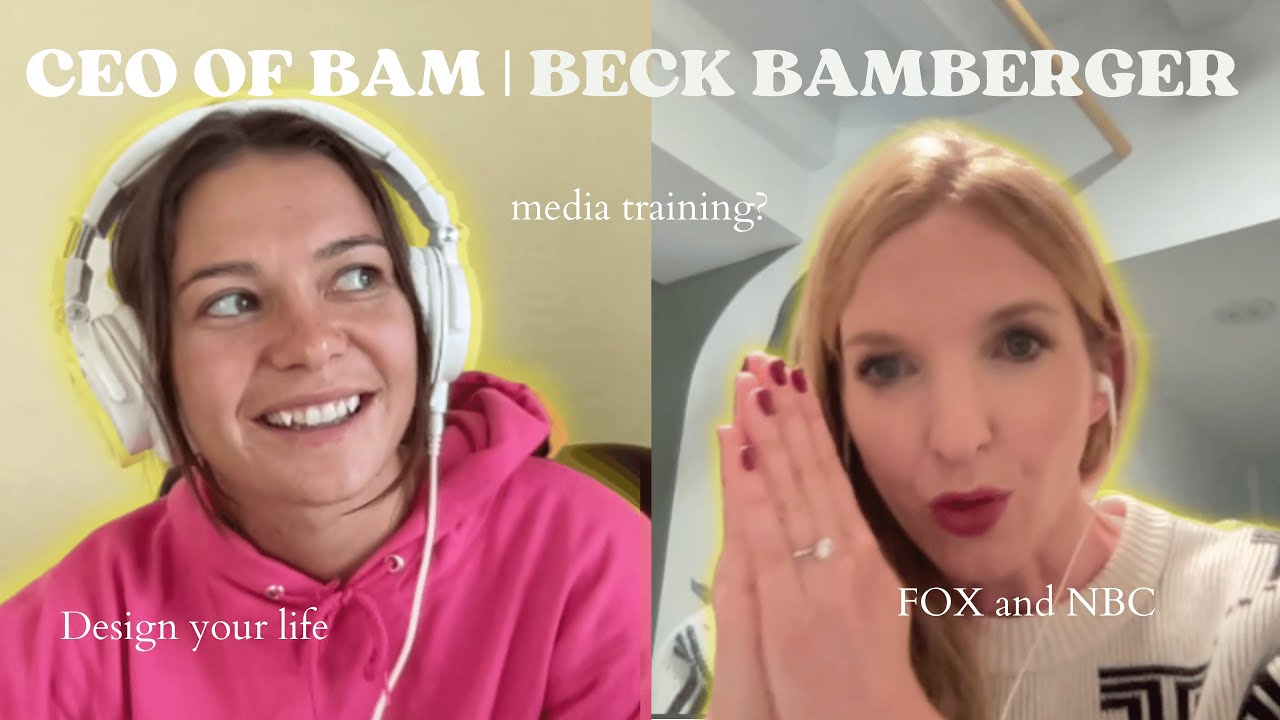
In this Seed to Harvest interview, host Paige Finn Doherty talks with Beck Bamberger, CEO of the communications agency BAM. Beck shares his unconventional career path—earning an MBA before 21, being fired from a local NBC news role, then launching his own TV show on a competing network. He describes how he built a global community of 350 VC communications professionals, the day‑to‑day responsibilities of running BAM, and the strategic focus on tech‑powered impact startups, including turning down short‑term revenue to stay aligned with mission and DEI values. Beck explains the rationale behind buying a downtown San Diego office building and leasing it to his agency, illustrating the power of owning the value chain. He delves into storytelling as a lifelong passion, emphasizing the need to amplify under‑represented voices in technology. The conversation moves to media training, where Beck outlines why founders should train for interviews, clarifies on‑record vs. off‑record conventions, and stresses that everything is effectively on the record in the digital age. Finally, he offers advice for aspiring entrepreneurs: experiment relentlessly, avoid self‑imposed “no,” seek real rejections to iterate, and leverage youthful boldness. Contact information and social media handles are provided at the end.
Chapters
Hello everyone, and welcome back to Seed to Harvest. I'm really excited to bring BAM CEO Beck Bamberger on the show today. Beck is also a grueling destination-goer, traveling to 70+ countries, a helicopter pilot, a PhD student, an Emmy Award winner, a Crisis Text Line counselor, and one-pitch SaaS founder. Beck, thank you so much for taking the time. Super excited to chat with you today. Thanks for having me. Thanks for having me, Paige. How fun.
It's been a while since we chatted, so this is gonna be good.
Yeah, we originally met when you were giving a talk at the Lavin Entrepreneurship Center at SDSU in 2018 or 2019, and I was absolutely blown away by your story. I remember taking copious notes. I think one of the things I'd love for you to share more about is after receiving both your undergrad and MBA degrees before turning 21, you ran your first marathon, came back to San Diego to start working on a TV show and your first company, BAM. While working at NBC 7. You were fired from NBC, and the following week you had your show airing on the competing network, the Fox Network. So I'd love if you could share some more of that story.
Yeah, you know, this is a more recent reflection because I've had 2 other cases of it recently, and that is— and it only increases as I get older, I have to say— I am not good. I am not good, Paige, at kissing the ring. And by kissing the ring, I mean pandering to those in whatever positions of authority, not of power necessarily, but just those seemingly in a moment of authority. So therefore, the saga continues because nothing much else has changed in these things that rubs some people in those positions of authority wrong, of course. And they just, you know, there's rejection that comes with that. And that is fine. A lot of times when you're starting out, you're dabbling in multiple things. You're exploring. So for me, at that point when I was at NBC writing up copy for the daily news in the early, early mornings and local news— this is for local television— I already knew through that experience that was— I did not want to do local news. Not at all. Not that local news is not important. but specifically broadcast local news. Because I didn't really get an interest or I didn't have a vibe of, oh, let's cover the parade that had this happen or the murder that's on 27th Street and Broadway and little type of things. It just didn't entice me. But what did entice me that was from my MBA days, and this is why you gotta really explore when you're in school and just in life in general, exploring constantly, is that I worked on a business TV show. that was in Pittsburgh, and it was interviewing CEOs and about how they made their stories, how they built it in Pittsburgh. I was doing my MBA in University of Pittsburgh Katz Business School, and I was in charge of kind of booking guests. So my job was reaching out to CEOs in the area, say, hey, you want to go on this TV program? It was a local TV program, but I saw that format. I'm like, this is way more interesting to me, to me.
Right.
And maybe there's an appetite more for this. Turns out there was, and we got the blessing of myself along with, with a scrappy little production team to run a show that went to the insides of, at the time, Souplantation, when that was a San Diego-based company. They now folded because of COVID but that was a big restaurant chain of soups and salads for, you know, if you're from San Diego, you know what I'm talking about. Souplantation, that was the place to go for your $9.97 soup and salad unlimited.
My soccer team would always go.
Right, it was the totally after-school thing. Yes, you totally get that. So that's who I had on the show, and I would go inside and such. So I knew at that point this was not for me. And also at the same time, I had this other thing going along. So in reflection, it is not really a sob story at all to go, oh, I've been let go of this institute that I really have no interest in.
Mm-hmm.
A lot of things in life happen that way where you go, yeah, this is okay. The door is shut, maybe not exactly on my terms exactly, That's okay. I think as the older you get too, the less of the ego is there. Hopefully, hopefully sometimes it goes the opposite, but hopefully the less of the ego where you're like, yeah, that's fine. All right, moving on. What do I now do?
Yeah.
And the sooner you can adopt that, the better.
Yeah. I feel like it was very similar to what's happening now with so many more folks coming up as creators and starting to make a full-time income with that, of like their day job not respecting that. And then being let go from their day job ends up being like the best thing. I remember on TikTok, There was this guy who had mixed paints and he used to work at Sherwin-Williams and they fired him because he was giving out like all the secrets or whatever. Then he started a competing paint company and he's crushing it. Yeah, that theme of creative integrity is really important to follow even if it can seem a bit stressful.
In the moment it can be horrible. In the moment it can be shocking. But a lot of times in the face of rejection comes the growth, one, but also opportunity. Interestingly enough, even if you're not the one to slam the door shut, you could be like, you know, I would have preferred to like creak it slowly shut, maybe on my own terms. Sometimes it slams in your face. You can still stay in the same approach and go, okay, that door is shut. So what other ones are open down the hall?
And I know no day is the same for you as the CEO of BAM, but to give our listeners some perspective, what aspects of the business do you work on? Like, what does an average day look like for you?
Great question. There is no average day. But I do spend— I'll chunk it into these parts.
Mm-hmm.
One is on the community that I run for all the VC comms marketing people. There's about 350 of them globally, a lot in the U.S. And they have a role and a function of being in comms to support all the portfolio companies. And we've built the only community Very organically. There's not like some membership, but it's a community that meets all the time online, in person. We produce a big annual event. So that takes a lot of time, community development. So I spend a chunk of time there. Another big chunk is with my people at BAM, mostly the leadership executive team. So what are they doing? What do they need support with? How can I be of service to those people? And then further through the other people that are here that might need help in various other realms. That's a second chunk. Third chunk is a lot on the scheming and dreaming and envisioning and going, okay, what's missing here right now? I was talking with someone today on we have a few problems with our scale. We have so many clients, we have so many people now.
Yeah.
Relative to when it was 15.
Yeah.
And so it is, everything's relative, of course. But now we're approaching 60 people, we're approaching like 100 clients. They're at all different funding rounds. They're at all different places in the world now. They're all over the place. How do you collect all that information and have everybody know what's going on amongst all these clients? Right now we don't have a solution. So problem solving is another big piece of it, just rote problem solving. Or you can call it in the positive of like, oh, dreaming, envisioning, and those types of things. So that would be third, dreaming and scheming. And then fourth would be And finally, connecting with other people that are helping you in the dreaming and scheming. So whether it be old contacts you've been nurturing, whether it be peers that are also running companies such as yourself, whether it be possible new partnerships that you don't really even know yet, a lot of it is experimenting. So as the 4th area, I'd say it's just experimenting for the purposes of the scheming and dreaming.
That's cool. I find that that's really helpful in like our line of work as well, is to talk with people who are in similar positions, and then you get to have more of the 30,000-foot view of the business rather than being deep in it for 30 minutes an hour.
Yes. Yeah, and sometimes you do need to be in it. You need to be in your business, and there is that when you are starting out. Just for every— all founders and stuff, entrepreneurs listening, that will be where you are. For a very long time. And you will do every single job. I've done every single job at BAM. Every single job. Running payroll, running the accounting books, writing blogs for clients. You know, there is that part. But then once you get bigger and bigger, you have other people, you have that context and you can rise above and work on your business, as the saying goes. And that is a different level and requirement. I think it's much better, to tell you the truth.
So I'm curious, I think storytelling is a very deep thread in your life, so I'd love if you could share a little bit about what storytelling means to you.
Thanks for asking that. That is a big piece of what BAM is here for. It took me a while to realize, and sometimes we don't know this, sometimes there are people who when they were 7 years old they knew— I'm thinking about my helicopter instructor— You wanted to fly. You were going to fly. You were going to be in a helicopter one day. That is what you wanted to do. You don't even know why when you were 7 or 8 or whatever it was, but there's something that really calls you in that moment. And then other times, the sometimes is you're in your thing, you're in your role, and you don't know how— you're like, why? Why am I here? Why am I in this thing? I like it a lot. I really love it, actually. I don't really know why I'm in it. And for me, it took me a while to unpack that. And I was thinking about this recently and knowing that way back when I was a kid— a lot of things start when you're a kid— I would play my parents off of themselves to say, oh, Dad, Mom didn't tell me a story tonight, so you have to tell me a story. And then when my mom would come and kiss me goodnight, hey, Mom, Dad didn't tell me a story, so you have to tell me a story. And she'd be like, I'm out of stories. I'm like, just repeat a story. I would ask for repeated stories. fake stories, modified stories, all types of stories. So just in thinking about that, I'm like, wow, I've been into the story realm for a very long time, interestingly. And so now here at BAM, we're interested in telling the stories that push and progress the world forward in the world we want to see.
Mm-hmm.
We pick the technology clients that we want to have exist in the world, not the tech that can be very damaging and debilitating for the planet and cultures and society. So we want to be on the good side of it and work pretty rigorously to get those stories told. Specifically, we're also into those of underrepresented voices.
Mm-hmm.
The tech industry has a long way to go with whom is running and making decisions in the technology that is emerging. We want to be on the side that showcases others who are not Prominent in technology currently.
Yeah, I think you all have such incredible DEI initiatives on the website. I'll drop it in the show notes, but you all have like very data-driven DEI initiatives and have taken on additionally like pro bono clients. I think you all pitched a story about Black VC that got placed in Forbes. To hone in on like why specifically tech-powered startups. So in a previous interview, you shared one of the challenges at BAM was narrowing in on those tech-powered startups that are making an impact in the world. So for more than a year, you had to turn down businesses that were offering you money that didn't fit that ideal client profile, and it hurt short-term to deny revenue, but—
For sure.
Yeah, what made you make that decision, and why are you so passionate about the impact startup space in particular?
So 2 factors came to a point on this decision. This was years ago. One was I had a mentor who was telling me she had sold her agency before. Her name's Karen Canale. She's here in San Diego. And then she was working on her second agency that was specialized in biotech life sciences. And she said, listen, if you ever wish to sell this entity that you are creating, you need to have a focus.
Yeah.
Because any buying entity is gonna be like, what am I gonna do with this generalist firm that has spas and a restaurant and an author and this random thing over here? It is not making sense. It doesn't— there's not value to that. Specialization is often value. So there you need to hone in on that. So that was like, oh, okay, clue number 1. If I ever want to sell this thing and I am entrepreneurial, we're gonna need to focus, which means no more little restaurants, no more random author here, no more just like, oh, anything that comes in the door, like, yeah, possibly we could work with you. There's a lot of that when you're starting out of just taking what you can because you're just trying to figure it out.
Yeah, keep the lights on.
Keep the lights on and you're experimenting with those initial clients and customers to hone in sometimes, and that is okay. But if you ever want to have an exit, specialization is going to be where it's at. So that was number one. Number 2 was also at this time we had little experiments going and introductions with tech entities that at the time were just little tiny things. One of the biggest ones we had was this company that was launching in Southern California and it was about renting, not even renting, using black cars on demand. This was called Uber, by the way. So that was a great example to us early on of, oh wow, this could potentially, everything's potentially, but potentially really change how people get around and do transportation. Not to mention the taxi industry and whatnot, but just movement and mobility in the world. And yeah, why aren't people, strangers, driving around other people? That's kind of weird as a concept. This is just as weird as Airbnb when it was like, really, would strangers rent their house to you as another stranger?
Yeah.
That's a broad— that's a big experiment. The car thing was also a huge experiment for Uber for pioneering that. So for us and for me, it was like, wow, The biggest impact is probably in technology done well. And I still stay firm to that. That is the biggest area that can have societal, cultural, international impact. That's pretty exciting. So that's what we focused on.
That's awesome. I think one of the things that I've really resonated with you on is that we're both deeply interested in the technology and venture-backed space. But we both have stuck to our roots in San Diego.
Yes.
And one business move I remember you sharing was that you actually bought the office building in downtown San Diego and then like leased it to yourself. And I remember you talking about that and being like, I didn't even know you could do that. So I'd love if you could share more about that 'cause I remembered it vaguely but not all the details.
Yes. So I'll broaden it to this because this might not be your game as an entrepreneur, but anytime, anytime, and this is a great example with Amazon, You can own the whole chain. It's going to be beneficial. You usually can't start that out on day one. That's very hard. You start out with one little rung on the ladder. But when you can run up and down the ladder and own that all or control it all, that's very powerful. That's why Amazon is so huge as it is. People are like, how is that? The simple answer is because they own the entire chain. They make the stuff. They hold the stuff, they ship the stuff, they even drive the stuff to you now. There is no supply chain issue with Amazon.
Yeah.
There is not, unlike a lot of the world. And that's where you're seeing the breakdown in our current environment of, oh, supply chain woes. Yeah, because companies aren't owning that whole stack. When we were looking at our next office space, this is when we were much smaller. I thought it upon myself, oh, wait a second. Well, I could buy the office space. Then I could do anything I wanted. We would not have a lease. We actually have an asset instead of rental money that goes out the door. And though it's not owned by BAM, the agency, it is owned as in another entity that I have, an LLC. So technically, BAM, the agency, rents from BAM, the holding company, and pays that rent.
Yeah.
But guess what? The owner over both is me.
Is the whole—
so anytime you can do that and think about the full ladder, it's probably likely that you can structure it such that it benefits both sides.
Yeah, I always thought that was so interesting. I was just totally mind-blown that you could do that. It just like never occurred to me.
You can indeed.
Yeah. And one of the things that was more tactical that I wanted to touch on is you had a fantastic article in Forbes in November of 2021 called 5 Responses for I Don't Need to Do Media Training.
Oh yeah, yeah, yeah.
And I really enjoyed your no-nonsense rebuttals to common refusals to do media training. I like give our founders resources to be prepared to be on the record as well. It can be quite intimidating to speak to journalists and not be familiar with the different like jargon. So for listeners unfamiliar with how speaking with journalists work, can you explain the difference between like On and off the record and background, and then would love to additionally hear your thoughts on media training.
Yes. Let's start with why of media training first. So people may assume, oh, I talk to investors all the time. I talk on stage all the time. I tell my employees all the time what's going on. There's no reason I need to talk to— why do I have to have training to a media person? They're just another human, blah, blah, blah. But media has its own objective. Typically, media is not there to be your friend. Media is not there to work for you. Media is there not to be impressed by you, frankly. So in considering and working with the media person, as lovely as they can be— and they are just humans, absolutely— there is an objective. And there is an objective sometimes in, I'm investigating something, I'm looking for trend analysis, I'm wondering if this theory I have is actually correct with what's coming out of your mouth. So there's some objective in creating stories that they have, and you are helping them fulfill that. It is rare that you are going to be the shining star because they want to write a story about a shining star called you. That's not the angle. So that is the why you do media training, to understand what are the tips and tricks and the gotchas and the curveballs that can happen.
Yeah.
There's many, many things to look at. The big takeaway I'd say for everybody is you absolutely should do it. Never have an ego that thinks you are immune to possibly learning how to better communicate with a certain type of entity called a reporter. There's that. And then to your point, you were asking about being on record or not on record or something. What we tell our clients, because we are in the internet age, Everything is on record. Just assume that. If you assume that first, great, because this podcast, that call, that text message, everything— and this is being shown in legal cases and everything— everything can be discovered. Everything really can. So unless you have a superior reason to go, okay, I will be off record with this person and there's some trust there that you have, okay, fine, that is a risk. But in the age of the internet— and not to blame the journalists, not to blame anything in journalism— there not even might be the intent of, oh, but they were on the record and I scooped them. Like, that might actually not be the intent. But because of the internet world we live in and just electronics, a lot of things can be discoverable.
So you must be careful on that and think deeply Yeah, really interesting part of growing up as like a Gen Z person is we all grew up quite digitally native and grew up with like, if you're an athlete and you get caught with like a red Solo cup in an Instagram picture, like you get suspended and like you can get canceled. And I feel like there's a lot of self-censorship within our generation because of that. And I feel like we all kind of had like informal media training of like, do and don't post this, do and do like—
Mm-hmm.
talk about that. It's, it's really interesting to consider that everything really is on the record.
According to the internet, it is.
Yeah. So I would love to dive a bit deeper into your background. So your business background and talk show talent started when you were just 15, and you randomly would call CEOs in San Diego and ask for meetings to chat and learn— yeah, learn how you got to where they are today. So do you remember who the first CEOs that you called?
Hmm, I don't remember offhand, but I do, I'm pretty sure Ralph Rubio got back to me from Rubio's, like emailed me back, and I was like, oh my God, now what am I gonna do? The thing that worked in tremendous favor, and I give this to anyone who's listening, is if you are young, as in under 30, even under 25, When you get over 30, it starts becoming less cute. Under the 30 set, especially if you're a teenager, man, you can get away with so much because youth is, is charming in a sense. So to get something from someone who can't even drive to the meeting is kind of shocking, and you can't even believe the boldness of that. So by all means, if you are in the under 25 set listening to this, think of how you can use that to your advantage to do some audacious things because It's even more unheard of. It's less cute for me coming now at 37 saying, "Hey, fancy CEO, I want to talk to you." It's like, "Oh, what do you want?" Because I'm I'm on the level in a sense. Like, you know, I'm that when you're younger like that, people can't believe it. So use that to your advantage. So I just I didn't know any better, number one. But number two, I was delighted to find, "Oh wow, this kind of works." But it was the benefit not probably of my approach at all or not who I was. At all, but simply as a function of just age. You can't even believe someone's talking to you.
Yeah. I got reached out to like by a handful of like 14 and 15-year-olds, which is pretty wild. I'm like, wow, this is crazy. What is in the water? So as we're wrapping up, what is the one thing you think any aspiring entrepreneur can do to set themselves up for career success, even if they are still in school or a teen?
You need to be okay with experimenting, number one, which leads to this quote I just was talking about on LinkedIn. Comes from a gal that I know in San Diego, Misty Kane. Shout out to Misty Kane from her mentor. And I just— it was from her mentor, and I do really like this, which is don't say no for somebody else. So saying no for someone else is like, oh, I shouldn't reach out to Paige because she's probably so busy, so she'll never get back to Oh, I shouldn't talk to Beck because why would she ever respond to my response for a job interview because they don't hire people like me. Oh, I shouldn't do that project or start that company because no one's going to want to buy that. You're saying no without actually getting a no.
Right.
And that's going to shut you down way, way, way sooner. Get the actual no. Get the real no. And if you're getting nos, in my book, you're now asking as much as you should be. Ask to the level where you get nos and you get the rejections and you're just like, no, that's ridiculous. It's like, great, now we're ridiculous. Okay, what's a yes that's less ridiculous perhaps? Find— push on that and don't get in the trap of already answering a false answer.
I love that. It's like don't let you say no to yourself.
Yeah, it is.
I love that.
It is.
That's awesome. Well, Beck, thank you so much for taking the time. Thank you, Paige. I really appreciate it so much. Big fan of you.
Thank you.
The feeling is very mutual. And then where can people find you on the internet?
Oh, well, I am on LinkedIn. I'm doing a real LinkedIn game lately because we use it for recruiting. So you can find me there under Beck Bamberger. Also on Instagram, it's Beck Bamberger. These are the only 2 platforms I can handle, so please don't— I don't exist elsewhere. Those are good, and you can find me on BAM and all those places.
Amazing. Well, thank you so much for coming on, and I hope you have a great rest of your week.
Thank you.
More from Paige



Paige of Behind Genius driving an AI electric train in St. Louis (Intramotev Visit)





