CEO of Grid110 | Miki Reynolds
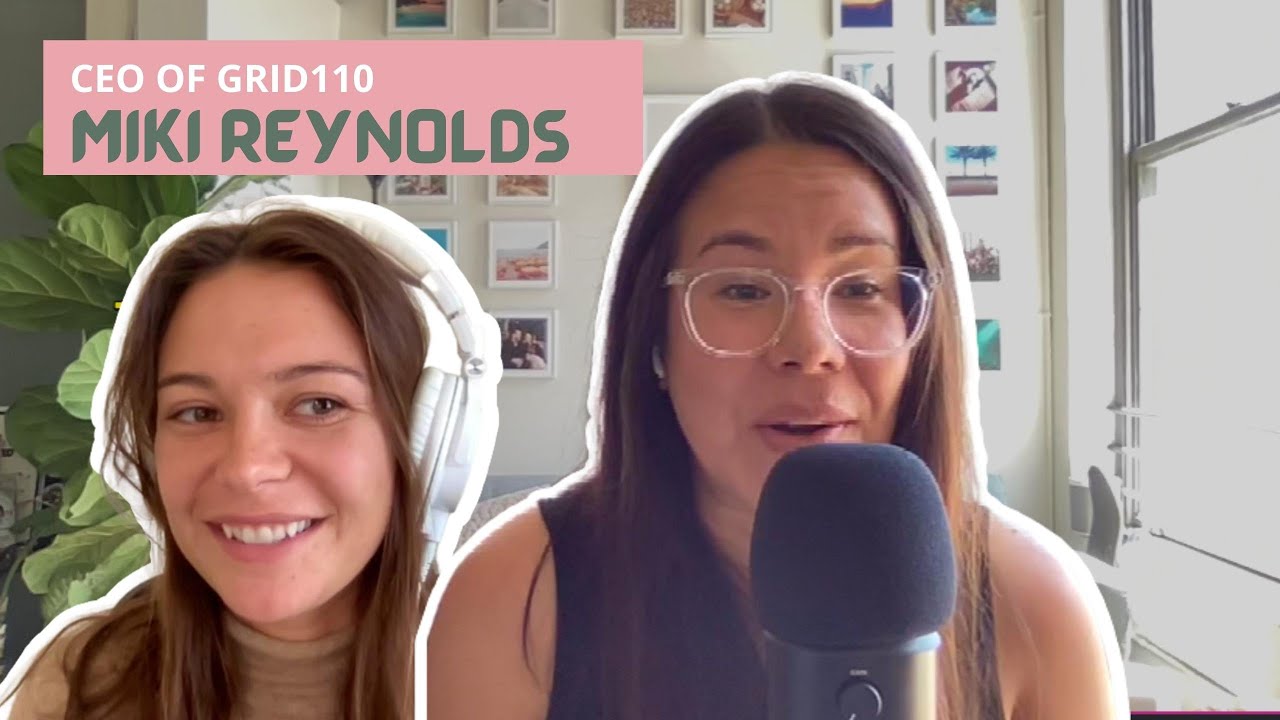
In this Seed to Harvest podcast episode, host Paige Finn Doherty interviews Miki (Mickey) Reynolds, CEO of Grid110, a nonprofit that fuels Los Angeles’ early‑stage startup ecosystem. Reynolds describes his varied daily responsibilities—overseeing accelerator cohorts, reviewing applications, fundraising, and public outreach. He shares Grid110’s impact: 22 cohorts, 235 companies, with 70% women‑led and 74% founders of color, and alumni raising nearly $80 million, most of it from women and women of color. The conversation delves into Grid110’s two flagship grant programs: the Pledge LA Founders Fund (a $25 k non‑dilutive grant for Black and Latinx founders in LA County) and the Friends & Family program (a $20 k grant and mentorship for emerging entrepreneurs nationwide, partnered with Slauson & Co.). Reynolds outlines the curriculum’s focus on fundamentals—customer discovery, value proposition, pitch crafting, and a broad view of fundraising pathways beyond venture capital. He explains how the organization pivoted to virtual delivery during COVID‑19, refining Zoom sessions and feedback loops. Reflecting on his career shift from corporate entertainment (MGM, 20th Century Fox) to the startup world, he highlights the value of agility, lean experimentation, and “scrappy” thinking. Reynolds also discusses how he leveraged Twitter to secure roles, partnerships, and funding, describing himself as a “digital extrovert.” He concludes with advice for aspiring entrepreneurs: start talking about ideas, take the first step, and focus on execution. Contact information is provided: Grid110 @grid110 and Reynolds @mickster on social media.
Chapters
All right. Hello everyone, and welcome back to Seed to Harvest. I'm really excited to be joined by Mickey Reynolds, the CEO of Grid 110. Grid 110 is an economic and community development nonprofit organization supporting the development of the early-stage startup ecosystem in Los Angeles. Mickey, thanks so much for joining us today. I know no day is the same for you, but to give our listeners some perspective, what does an average day look like for you?
Thanks, Paige, for having me. I imagine this may be even similar to you, that no day looks the same at all. I wear a ton of different hats running the organization, so it really depends on maybe what cycle of our programs that we're in. So we run early-stage accelerator programs a couple times a year. So right now we're currently in interview phase, so we're interviewing for our next cohort for this summer. So the day looks like, you know, spending time preparing, looking over some of the applications, figuring out what kind of questions we want to ask them, actually doing the interviews, which I'm doing later this afternoon, checking in with our team to see how their interviews are going. And so everything that's kind of focused on the programmatic element of what we're doing really is based around like where we're at in the application review cycle, promotion of the application, selection, actually in program, debriefing post-program. And then the other hats that I also wear, you know, I could be fundraising for the organization. So we're a nonprofit, so are always having to make sure that we're working with our funders to ensure that we've got kind of a lifeline to continue running these programs because we do offer them at no cost and no equity taken, so they're free for, for participants. It could be doing podcasts to get the word out about what we're doing and be able to share more about, you know, the success stories that we've had that just amplify the efforts of what the organization is doing. It could be supporting our team members with their respective things, whether it's on the community side, marketing side, or within programs. So it completely varies by day.
Lots of different hats. I find it's really fun to have such an external-facing position as well, 'cause you get to interface with so many different folks working on cool things. You touched a bit on the success of GRID 110 before, but I saw some pretty incredible stats. I would love for you to share a bit more about both the diversity of folks going through your program and the incredible success that they've had after they've graduated, if you don't mind.
Yeah, absolutely. I think it's the thing that I'm most excited to talk about, and I think it's usually what people kind of perk up whenever we talk about the organization, maybe like how we're different from other programs. We've run 22 cohorts of 235 companies total that have gone through our programs. 70% of the companies are led by women. 74% are led by founders of color. We just feel like it reflects the type of startup ecosystem that we would like to be a part of and that we really didn't feel like existed at the time when we started the organization. And also just when you look around the world, like in Los Angeles, 73% of Angelenos identify as a person of color. So we feel like the entrepreneurial community who is very active here should accurately reflect that a little bit better. So excited to have seen that from the very early days, very organically in terms of who was attracted to our programs. The types of businesses that they're building. So we don't solely focus on venture-scale businesses. We work with, you know, traditional brick-and-mortar small businesses, the quote-unquote like lifestyle businesses, more sustainable growth companies, as well as high-growth companies. And so I think that the diversity of the types of business that, that they're building and what they can learn from each other, you know, having a brick-and-mortar coffee shop at the same table as a like SaaS fintech platform. And just the backgrounds that they share, the potential even sometimes partnerships that can develop around them is really exciting to see. The companies that have gone on to raise have raised nearly $80 million in outside capital.
Wow.
Most of that raised by women, most of that raised by women of color. And so, you know, we all know the atrocious statistics of the less than 2% of funding that goes to women and people of color. And so it's really, I guess, exciting for us to see the inverse of that, that there are incredible women and people of color that are brilliant and smart and creative and resilient and building companies that are very much worth funding. And they're going to build them whether somebody funds them or not. And so it's kind of like, get on that ship or get off. And so just to see the success stories that have come out. You know, we've had companies go on to Techstars NYC. We've had companies that have, you know, raised their Series A now. And so it's exciting to see that when they came through our program, you know, maybe just an idea, concept of a business, into where they've taken it now is really just a testament to the founders themselves and the, the sheer will that they had to push this idea and innovation forward.
Yeah, I love that idea of like not only diversity of backgrounds that folks come from, but also the type of business that they're I think that you can learn an incredible amount from entrepreneurs working in different areas. For example, like thinking about thoughtful design from someone that runs a coffee shop and how do you incorporate that as a fintech founder into your product? It's very consumer-oriented. Absolutely.
Yeah.
And I wanted to share with our listeners, so for a bit of context, Grid110 focuses on supporting idea stage and early stage entrepreneurs by connecting them to free programs, mentors, and important resources during the most critical phase of their life cycle. So under the Grid 110 umbrella, there's 2 different programs that entrepreneurs can apply for. So the first, open to Black and Latinx-led businesses in Los Angeles County, the Pledge LA Founders Fund provides underestimated founders with $25K in non-dilutive funding, support with access to capital, and more. And then the second is in partnership with Slauson and Co. and open to emerging entrepreneurs nationwide. Friends and Family is a 12-week program focused on demystifying fundraising and giving founders guidance on becoming a category-defining company. Selected participants will receive a $20K grant and access to an incredible network and community to learn from, grow with. So Maggie, I would love if you could expand on the similarities and differences of each program, and then what entrepreneur might be best suited for either program.
Yeah, so these are 2 really exciting partnership programs that we have that really, I think, have been the culmination of the past 7 years of work that we've done. So we've been primarily funded by the City of Los Angeles to run programs here to support entrepreneurs locally. We started very hyper-local focused in the downtown LA area and then have grown to kind of support entrepreneurs all over the LA area as word about the programs grew. Our programs are no cost, no equity, but there was also no funding attached to them. And so we'd done this for about 6 years, always with the idea of like, how could we close this loop? How could we provide our founders with access to capital, whether it's connections to the local investors recommendations to, you know, the other accelerator programs, but is there something that we could actually do more tangibly? And so about 2 years ago, so it was the summer of 2020, just post the murder of George Floyd, and when there was this, you know, reckoning that was happening in the industry and beyond the world that was trying to pay attention more to the systemic issues that we've been facing as a society for a very, very long time. And there were, you know, calls by corporations and organizations about how we want to support the Black community and we want to, you know, invest in them, buy from them, but who's actually done anything since then? And one of the partners that we've been working with, the Annenberg Foundation and Pledge LA, which is a diversity, equity, inclusion initiative here in Los Angeles, to really benchmark and measure the DEI efforts of both the venture community as well as the tech community. They wanted to do something really meaningful to support Black and Latinx entrepreneurs, specifically in the South LA area and then beyond. So they actually partnered with us, and we were the accelerator program partner, and then they were— they provided funding, they provided their network and their resources, and they created what initially was called the Fund for South LA Founders, which is now the Pledge LA Founders Fund. And it supported 20 Black and Latinx entrepreneurs. that had some connection to the South Los Angeles area, so South Central as it's also known. And so we did that last winter, so January through March of 2021. And they made the commitment that they wanted to do this program 2 more years. And so we're currently in the interview process right now for the second year of that, as it's now known as the Founders Fund. They expanded it in terms of geography beyond just the South LA area to all of Los Angeles County. And we saw, you know, a number of applications come through, really excited about digging into them and talking to them. Very similarly, it follows kind of the diverse range of companies. So they had kind of a mandate that they wanted to support at least 40% brick-and-mortar companies. So these communities are businesses that have been really vital to the community and serving their communities. And then the remainder can be more digital tech-focused businesses. So that was kind of the first time that we were able to pair capital. So there were grants that were associated with this program. Every company got $25,000 in non-dilutive funding, which is huge in terms of not having to give up any equity. So you're not giving up ownership. And also it just makes more sense for these businesses because, you know, they may not necessarily go on to raise additional capital. And so why should they give up, you know, a piece of their business to be able to do that? And then Friends and Family is another partner program. We just completed the first cohort for that earlier this year in partnership with the venture capital firm Slauson& Co. They're based here in Los Angeles. We've known the, the partners Austin and AJ for, you know, several years now, pillars of this community. And when they launched their fund, they knew that they would only be able to invest in a certain number of founders every year. But they wanted to be able to do more, and they wanted to help founders that maybe fell outside of their thesis or their ability to invest. And so they wanted to partner with us to launch a nationwide program called Friends and Family that very similarly to the Pledge LA program was connecting founders with, you know, access to capital in the form of grants. So it was $20,000 in grants, incredible mentorship by some just industry titans to come in and speak. And then just the connection to each other of working with companies kind of across the spectrum and range of the nation. So we had companies from, I think, 11 different cities across the country. So primary difference between the 2 programs, slight difference in the funding amounts, and then one is specifically focused here in Los Angeles, in the LA County area, and then the other one is open to entrepreneurs kind of anywhere in the States as well as Puerto Rico. And so those, both of those programs will be continuing next year as well. So founders that are interested should definitely take a look.
Amazing. So I want to touch more deeply on kind of the curriculum of the cohort-based learning programs. What would you say that most of your curriculum focuses on? And then where are participants finding their biggest learnings coming from? I know the venture world is quite opaque, which is why I've dedicated a ton of time to creating like resources and content for both aspiring investors and founders. But I'd love to hear more about what it looks Like from a cohort-based learning perspective where you're spending a lot of time with these entrepreneurs and educating them more on the venture?
Yeah, so for the past 2 years we've been running virtual programs. So before COVID everything was in person. We actually had a physical space in downtown LA out of a coworking space. The companies actually got to work out of that space, come together over the different content sessions, build community kind of very organically that way. And then March of 2020, we all know what happened. And it really forced us, like everybody else, to think about how could we continue to do what we were doing, continue to support entrepreneurs, but do it in a way that was safe and ultimately virtual. And so we kind of, you know, we saw that all of the universities were doing it. So like, why can't we? Immediately got Zoom and started figuring out, okay, how do we run effective and efficient Zoom sessions for our founders? And what do we need to tweak, and what does engagement need to look like? And it was definitely an iterative process, and feedback, and the feedback loops that we have in our programs were really important to us to make sure that the founders' needs were being met in the way and the standards that we had set for them. And so nothing really changed in terms of the curriculum. We just got way more organized and structured in what we were doing. But the kind of similarities, and I think where the crux of our program really is starting with the basics and the fundamentals. So the first 4 weeks, you're really focusing on the foundation of your business. So what's the problem that you're solving? Do you really understand the problem? Like, who has that problem? Kind of digging into like the customer discovery and validation aspect of it. Even if you already have customers, we found that a lot of people don't truly understand like who those customers are, what their pain points are, how acute is that pain, how much would they pay for someone to solve that pain, how are they maybe solving it before or differently. So really taking the time to break that down and make sure that the founders understand that. What's your value proposition? How are you different from anything else that exists on the marketplace, and then being able to kind of wrap that up and articulate that into a 2-minute pitch. And then on top of that, we'll provide kind of different sessions, could be around sales and marketing. We definitely talk about fundraising from, I think, what more of like a unique aspect of it. It's what are the different funding pathways that exist for you as a business? So we don't solely talk about venture capital.
Mm-hmm.
It is one of the, you know, the topics of conversation, and we actually have a partner that comes in to do a really deep dive into venture capital, just in understanding the business model around it, the mechanics of it, like really demystifying it. Because I think a lot of times as founders start to think about fundraising, they don't really understand maybe the motivations on the other side of the table of what investors are looking for, how investors make money, what does success look like for them. And so a no isn't just because, oh, they didn't like your business. It's because they don't see it as something that they can get a return off of. They don't see it as being as big as they would like it to be. So really just the educational aspect of it, of whether you decide to go down this pathway or not, it's illuminating for a lot of people. But then also understanding that venture capital is not the only way, that there are a number of different pathways that you can go down that are becoming kind of more innovative every year. And so just realizing that if you've got inventory, that there are financing options for you. If you've got recurring subscription business, there are models for you. There are pitch competitions and grants and equity crowd investing. So if you've got a large community, they can invest in you. So really just being able to educate the founders on all the different aspects that exist and then helping them make the right decision for themselves.
That's awesome. I think that's something that I've thought a lot about because I started my career in growth equity, and that it's not incredibly different from venture, but it is definitely a different perspective on how investors evaluate opportunities. And I've been really excited by The the just flood of incredible new opportunities to raise capital and all of the different vehicles. I had Tyler Tringas from ComFund on an earlier episode, and we talked a lot about how different equity financing can support a more diverse array of businesses since most venture capitalists are looking for these incredibly massive outcomes. But that might not be what every entrepreneur, the type of company that every entrepreneur. wants to build. So it's really cool to hear that you're focusing on looking at all types of different funding models.
Absolutely.
Yeah, so previously you managed digital projects at global entertainment companies like MGM Studios and 20th Century Fox and headed up operations and product for a software development company. So what lessons did you learn during your time at MGM and Fox that you apply today?
Yeah, so it's really interesting going from working for these large global corporations with thousands of employees and offices around the world to working with small businesses and entrepreneurs that are kind of at the very early stages of their business. And I think it's the things that I maybe didn't like about working in corporate and entertainment that have led me to what I really enjoy about working with startups. And it's the ability to be kind of more nimble and agile. And, you know, we talk a lot about the methodology of the Lean Startup, and it's really being able to, you know, test something, iterate on it, get feedback, and continue that cycle. Like, get something out there that people can use versus building in this, you know, vacuum or bubble and then launching and realizing that nobody wants what you've just built. And I think that the red tape and bureaucracy of working in corporate America oftentimes didn't really allow you to experiment or do things. Like, the cost was too great. There were too many decision makers and people involved. There were so many layers. And so I think the opportunity to be a sole decision maker or to test something out or do something that doesn't scale at these early stages is not something that we would've conceived of working on the projects that we were working on. And so I think to not have all of these different stakeholders involved just yet and to be able to try and fail and try and fail again. Are things that we definitely talk through when the stakes are a little bit lower at the early stage, that you have the opportunity to try out these things. Like when we talk through different, whether it's marketing tactics of, no, you won't be able to do this when you have, you know, 100 customers, but make sure that the first 10 customers have a great customer experience and surprise and delight them and make them come back because then they will tell their friends and then they will keep coming back. And figuring out how then you can, from a retention aspect, you know, can you automate something to still provide that great experience, or do you still have to provide some sort of human elements to it? So I think that those are some of the things that I learned of just being scrappy that you don't really necessarily have the opportunity to do if you're working in a large corporation, that I think that small businesses and startups should really, you know, benefit.
Yeah, I think one of the areas in which being scrappy Resonates with me is that you also landed a job through Twitter. So for context, for folks listening that might not know, I got reached out to by Michael Greenwich, who's the CEO of Workwest, after he saw a bunch of my threads on venture. And he just sent me a cold email and was like, "I really like your Twitter. Are you interested in like different opportunities here?" So I ended up being there for around a year before going full time on Behind Genius Ventures. But Mickey, I would love to hear your story of how you got a job.
Yep, so that's actually right around the time that we started Grid 110. So for the first 10 years of my career, I had worked for the movie studios, I worked for a software development company. I was there at that company for about 6 years and then they shut down. And I was trying to figure out what I wanted to do next and really had no clue. I was kind of at this space where I felt really burnt out. I had been working kind of on the services side of what we were doing and building things for other people that I wasn't necessarily excited about and was looking for maybe a little bit more alignment and like meaning in my next opportunity, but feeling really like at a loss for what that could be. And really struggling to find a community that I could tap into to figure out like what was my next move going to be? How could I network my way into a job? If anybody's familiar at all with the geography of Los Angeles, most of the tech community resides on the west side. That's where all the activity is. That's where all the venture capital firms, startups, coworking spaces. I live in downtown, which is 16 miles to the east, which can take you anywhere from 20 minutes to 2 hours depending on LA traffic, and I was looking for something in my own backyard. I'm like, downtown was becoming this kind of place where people wanted to live, work, and play. It was going— undergoing this renaissance and resurgence. And I was like, there've got to be like wildly creative people on this side of town that are doing stuff in like tech and startups. So who are they? Where are they? How can I find them? And I was just struggling to— like, there were no events. There were, there were no like things from a community perspective that I could tap into, and I was really struggling with that. And so I had been a fan of General Assembly for a really long time and what they provide in terms of community. Like, I knew I could have gone to events, but their campus is in Santa Monica, which again, 16 miles away. And I saw that they were doing these pop-up classes and workshops that kind of like learn to code in 90 minutes or biz dev for startups and in like the downtown area. And I was like, I wonder if they're thinking about maybe expanding because LA is so large. And so I had actually reached out through Twitter to their LA handle, and then as well as their regional director at the time, and said, hey, I noticed that you're doing some really cool kind of events and pop-ups and, you know, in the area. Excited to see you doing more stuff outside of Santa Monica. I have some time on my hands right now. I was unemployed. Is there anything I can do to help? And so, you know, they were just like, oh, you know, send us your ideas and here's my email address. So I sent over a bunch of ideas that I had. And it led to kind of like, you know, some conversations, a coffee chat, and then finding out that they were actually thinking about expanding. And so they brought me on board to launch the expansion into downtown LA and to a campus that still exists today. So I was with them for 3 years to help build up that community and campus kind of on the east side of LA, providing opportunities to build community and make things more accessible for people. I've gotten jobs through people through Twitter. I've gotten funders through Twitter. I actually found a scout investment through Twitter. So definitely have found a lot of opportunities. You know, I'm a hard, hard-I introvert in real life, but I consider myself more of a digital extrovert. So the social media and the digital world is where I play a little bit more.
That's interesting. I've never thought of that, like, delineation of being an in-person introvert but a digital extrovert. It does allow you to have a lot more flexibility and Also scale and like the impact of your voice if you're online, but it's not as scary as talking to a room of 1,000 people versus like tweeting or something like that. That's super cool. So I know we're nearing the end of our time today, so very quickly, what's one thing you think that any aspiring entrepreneur can do to set themselves up for career success even if they're still in school?
Just start by doing something. And that could be, you know, if you've got an idea, start talking to people about your idea. I found so many entrepreneurs are so afraid to talk about their idea because they think somebody is going to steal it. But sorry, newsflash, there are no original ideas. If you thought of something before, high likelihood that somebody has also had that same idea. But it really is in your execution and how you do it and how you can do it differently from how somebody else is doing it. So I think a lot of times we see we stay in our own head, and we're so afraid to make that first step to, you know, to talk to somebody, to try and figure out like, what's the first small step that I can take towards doing this? And we— maybe it's self-doubt, maybe it's imposter syndrome, like, I'm not the person to do this. But if you get out of your own way and just take that first step forward and start to figure things out, you'll ultimately realize, is this something that I want to pursue? Does it not make sense to pursue? Maybe there's another pathway. Maybe there's another opportunity that I'll uncover after that. But it just really starts with taking that first step and honestly just getting out of your own way.
I love that. Well, Mickey, thank you so much for spending your time with us today. I really appreciate it. To close this out, where can people find you on the internet?
You can find Grid 110 on all the social channels @grid110. We've got a great YouTube library of content of events that we've done. And then I am @mickster on all the social channels as well.
Amazing. Well, thank you so much. Thanks so much for tuning in today to Seed to Harvest. If you enjoyed this episode, be sure to subscribe wherever your favorite podcast listening platform is. I'll be releasing new episodes weekly, and if you have any questions or comments, feel free to let me know on Twitter. That's Paige Finn, Paige and then Finn with 3 N's. Thanks, and see you again next week.
More from Paige



Paige of Behind Genius driving an AI electric train in St. Louis (Intramotev Visit)





