CEO of Winnie, Sara Mauskopf, on Building A Data Focused Childcare Marketplace
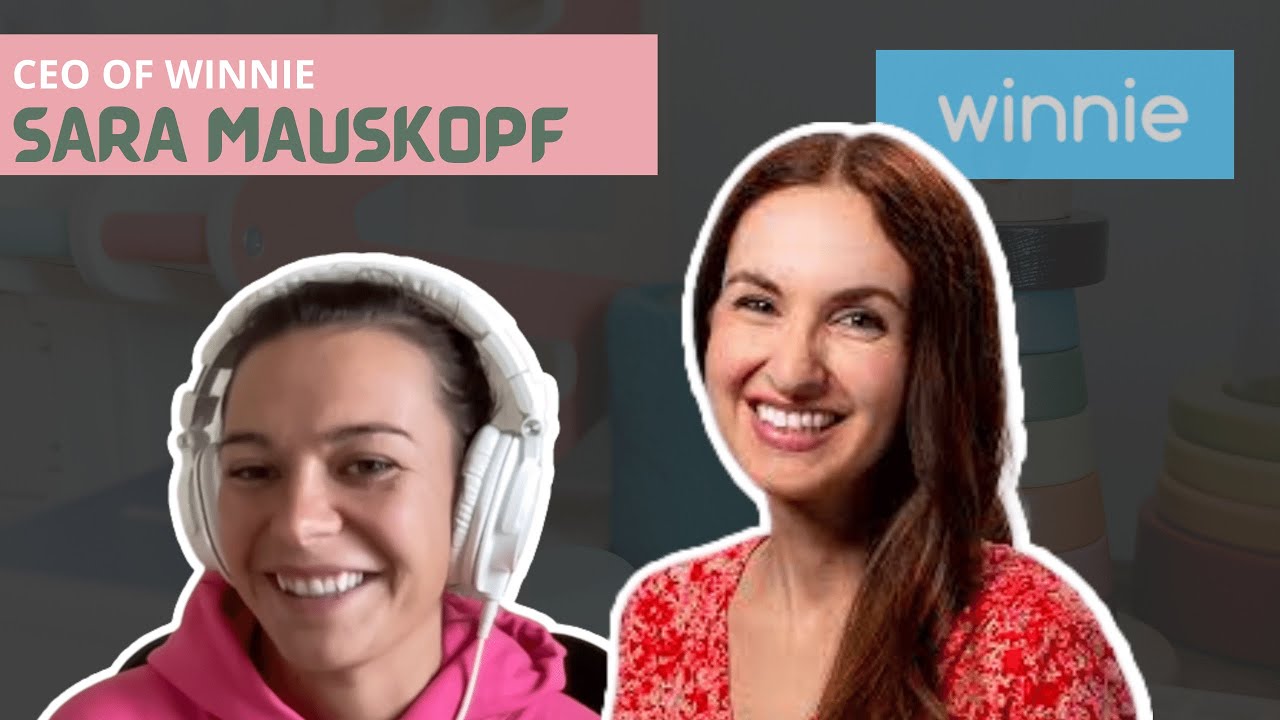
In this episode of Seed to Harvest, host Paige Finn Doherty interviews Sara Mauskopf, CEO and co‑founder of Winnie, a data‑driven two‑sided marketplace that connects parents with high‑quality daycare and preschool providers. Sara shares how fundraising while pregnant taught her the value of vulnerability and authentic leadership, describing how showing emotion builds trust and encourages open communication within her team. She contrasts her past product‑focused roles at MIT Media Lab, Google, YouTube, Twitter, and Postmates with the demands of being a CEO, emphasizing the shift from hands‑on product work to hiring, delegating, and scaling the organization. Sara explains Winnie’s current mission: strengthening the childcare industry by leveraging its massive demand side to support providers through SaaS‑enabled tools and promotion, and she outlines broader innovation gaps in childcare such as nannies, au‑pairs, camps, and tutoring. The conversation moves to personal productivity, where Sara details how parenthood forced her to prioritize, delegate, and focus on high‑impact tasks. She reflects on life lessons from her children—being present and celebrating wins— and discusses the evolution of Winnie’s product‑market fit, from an unfocused “kids‑activities” platform to a focused childcare marketplace, and finally to a revenue‑generating SaaS model. Sara also highlights the importance of storytelling and relentless communication as a CEO, and stresses that building strong networks during school and early career is a critical lever for future entrepreneurial success. The episode concludes with Sara’s social media handles and a call to explore Winnie’s free platform for parents and providers.
Chapters
Hello everyone, and welcome back to Seed to Harvest. I'm excited to bring Winnie CEO Sarah Moskoff onto the show to talk about her journey co-founding Winnie, how she's grown as a leader since then, and different tactics she uses to scale her business. Sarah, welcome to the show. Thank you so much for joining us.
Thanks for having me.
So to give you all some context for what Winnie is, Winnie is a marketplace for childcare built on powerful data systems and backed by a trusted community of parents and providers. So parents use Winnie to discover high-quality local daycares and preschools and learn all about their different programs using detailed descriptions, photos, tuition info, licensing status, availability data, and more. And then childcare providers use Winnie to fill their open spaces, build their waitlists, get support and resources to run their business efficiently. So Sarah, in 2019, you and your co-founder Annie were both pregnant at the time you raised your Series A. Uh, fundraising from my experience has been quite the emotional and grueling process, so I can only imagine what that was like going through that process while pregnant. So can you talk a little bit about how your experiences have led you to be more vulnerable with your team? You had a really great tweet about it recently, but I would love to hear more about that.
Yeah, so I mean, first of all, I have like raised most of my rounds pregnant, so for a while I didn't even know what it was like to fundraise not pregnant. So yeah, it probably would've been a lot easier. Just physically lugging around all that extra weight made it physically very grueling. But, uh, yeah, my tweet recently, there was a, just a really terrible article about a leader at Twitter kind of getting emotional and, and showing some emotion in front of Her team when she talked about Elon Musk buying Twitter, and I was just like, this is authentic leadership. I think you know to bring your human qualities and who you are outside of the office into work, I think makes you a better leader. It makes your team able to relate to you better. Makes them understand you know why you might. be acting or talking to them a certain way might be because you have other things going on in your life and they can, you know, give you a little grace and take things less personally. So I have always found it helps to kind of be authentic and, and true to yourself and to show emotion that, you know, when there's good things and there's bad things, it's okay to not be a robot.
Yeah.
Do you think you were, or were you always like that in your career in tech, or is that something that came up more when you started running I have always been pretty open and authentic, but I think I realized it was, you know, not a weakness, which you're kind of always taught, you know, don't ever show anyone that you're crying or you're sad or, you know, have a poker face. You're always told, but yeah, it's actually a strength and it's a huge asset to be able to relate to people. It helps them open up to you also and, and share things and You know, especially as a CEO, you want your team to share with you what's going on and not, you know, keep things from you that you have to discover at the last minute. So I think being kind of on a more level playing field with your team is just helpful in running the business.
Mm-hmm. Yes, that's a really great example for your team to be able to be vulnerable in the same way that you are as a leader. So you started out doing research at MIT Media Lab, and then you were a partner technology manager at Google AdSense, and then a partner technology manager at YouTube Music, 2 of the most like incredibly successful programs at both of those companies, and then a group PM at Twitter, then director of product at Postmates before starting Winnie. So I'm curious to hear how your hiring strategy shifted when you went from a director of product to running your own company.
Yeah, it's been interesting because when I was a product manager most of my career, you're always told you're the CEO of the product and it's You know, a lot like being a CEO. And I'm here to tell you it is nothing like being a CEO. In fact, I do not work on product really at all here at Winning. They've banned me from anything product related. And there's kind of all this stuff about building the business and the company. I love product and thinking about features and working with engineers, and I don't get to do any of that. So it's really. Really different. You have to kind of uplevel yourself. And I think, you know, while in the early days maybe starting a company is maybe a little bit like building a product, as soon as you get to any kind of scale and build out a team, you really can't be in the weeds anymore and you have to hire great people and trust them to do their job and kind of focus on Company building.
I think that every company, as it goes through its evolution, you as the CEO fill in different roles or spend time in specific areas of the business, whether that's, as you mentioned before, at the earliest stages building product, or as you grow more to scale, building out your executive team. So what specific areas are you focusing on this phase of the business?
Yeah, so at Winnie, we are This interesting kind of two-sided marketplace where we have parents on one side looking for daycare and preschool, and then we have the childcare providers on the other side. And we spent, you know, been at this since 2016. So we spent a good amount of time really looking at things from the parent perspective, building out this amazing resource for parents. You know, my co-founder and I are parents and we really came at this from like, what do parents need? And we sort of got to a point with Winnie where, and this was a couple years ago, where we realized like, oh, we had built this great directory for finding daycare and preschool, but none of that really matters if parents don't actually get the daycare preschool that is accessible, affordable, and high quality that they're looking for. So we need to make these businesses in this industry, the childcare industry, much stronger so that there's more spaces, more affordable spaces, more spots for exactly the kind of care you're looking for. And that's, that's a really hard problem. And so this phase of the business, I'm really focused on, um, really how we strengthen the childcare industry and what we are really uniquely positioned to do as this massive marketplace. Like we have all the demand, all the parents coming to Witte. And that puts us in a really unique position to help. Um, and so I'm really thinking about like, how do we fix the industry and, and what are we best positioned to help with at Winnie? And what should other companies help with that, you know, we can kind of let them take on those problems?
Yeah, this leads perfectly into my next question. So in a recent, recent Fortune article, you mentioned as moms and as technologists, we use our background building products at Google, Twitter, and other top tech companies to understand if we could build technology to solve problems in childcare. What we found were myriad opportunities for technology to drive much-needed innovation in childcare. So during your explorations, what other opportunities specifically do you think desperately need innovation in the childcare space?
There are so many. So I think we, our bread and butter and what we've really focused on and got our start on is daycare and preschool. So it's group licensed care. And why did we start with this? Well, it's the biggest market in childcare and no one was doing it. But I think it, it is not the only form of childcare. People have nannies and babysitters and au pairs and things like, you know, drop-in care. And so I think like those are all areas that We're sort of just scratching the surface on really trying to keep our focus on the group licensed care. And then also thinking about, you know, as you go up the age spectrum of children, we're, we really got our start with kids, you know, ages 0 to 5 or 6 who need that kind of like full-time or part-time childcare that isn't provided by Public school. But as you go up in age, and especially now that I also have older kids, you know, you need different forms of childcare, but the need is still there. You need camps, you need extracurricular activities, you may need tutoring, you need things in the summer and on breaks because the school year doesn't align at all with parents' work schedules. So I think those are also areas that are super important where we're not there yet, and there's so much to fix in really where we are kind of the leader. And so we're also kind of thinking about like, it's probably more important to us for us to focus on the things that we can really help with right now.
Yeah. Thank you so much for sharing. I found that really interesting when I was doing more research. into like the different articles that you all had had in different magazines like Forbes and Fortune. So I'm curious, like personally, what specific routines or techniques do you use to maximize your time?
I had kids. It's really amazing. Like I used to work 24/7 and I would still feel like I needed more hours in the day. Like I was. That person that was using that, you know, free dinner at Google and Twitter, they had it. I would come into the office on the weekends, like I was constantly working. And I work much fewer hours now just because I can't, like I have these other responsibilities, but I feel so much more productive. And I think becoming a parent really forced me to think about how I'm spending my time and really prioritize. And you don't need to be a parent to do this. I just needed some forcing function to focus on prioritizing the things I, I wanted to get done rather than just thinking I would have endless time to do, you know, all the things. So now I actually actively prioritize even within a day. I'll look at all the things I have to do and I'll say, these are not important. And maybe I will never do them, or maybe I'll delegate them, or maybe I'll just say, if I have time, I'll get to them. But I'm, oh, I'm constantly thinking about what is the highest priority thing for me to be spending my time on. And I think that's a good, good exercise for anyone. You don't have to wait till you Have kids to do that exercise.
Yeah. And that also leads well into my next question. So what are some of the recent life lessons that you've learned from your kids?
The biggest thing is just like being present in the moment. You know, kids are just so, they're the truly authentic creatures, not jaded at all yet. And they just enjoy The moment they're in, they don't think about what's next really to a fault. It's very hard to get them to plan ahead. But I try to take some of that, you know, back to how I lead the team as well. Like, I'm also the kind of person that we hit an awesome milestone or we sign a big customer or we raise money, I'm like, okay, but We gotta move on to the next thing, like back to work everyone. But sometimes you do just need to take a moment and celebrate your wins or reflect on things that didn't go well and just kind of, you know, take it all in because otherwise you're just constantly moving on to the next thing and, and not really enjoying where you're currently at. Mm-hmm.
I love that. To backtrack a bit, I was told that when you leave college, no one asks about your GPA. And while that's certainly been true for me, Can you share some of the challenges involved with achieving a 5.0 perfect GPA at MIT studying computer science? I studied computer science and my GPA was not a 5.0 by any means. So yeah, would love for you to share a bit about what that experience was like.
Yeah, I mean, I am very type A and I think that was incredibly limiting when I left the world of school and joined Google was my first job. I was used to, you know, getting assignments or tests you study for, then you know exactly what you have to do to get the perfect grade and you just work really hard and do exactly that. And then I joined Google and I was given this job and like no one was telling me really what to do. They were just like, oh, you're gonna work on this area and help improve it. I was like, what? Like, what am I supposed to do with my time? And it took me a long time of Working in the real world to figure out that, especially in a lot of these jobs in tech, especially as a, like a product person, no one really tells you what to do. You have to figure that out. And then a lot of times tell other people what to do.
Yeah.
And I think that is just a totally different mindset. And then again, I had kind of a big learning curve with starting my own company where not only do people not tell you what to do, but they don't tell you if you're doing a good or bad job. You have no boss really, and no one to give you any sort of feedback. Um, and it's a lot of work to get that feedback from someone. You no longer kind of have your weekly one-on-one where you hear how you're doing.
Mm-hmm.
And I think that again, that like process of like, you have to seek feedback was really challenging and took me a long time. So I would say like. I don't think school really prepared me all that well for the working world, and especially my mindset of like, you have to do everything perfectly doesn't relate well to real life where it's actually good to make mistakes and learn because that's how you kind of improve the fastest.
Right. And in addition to that, prioritizing your time as well. Like that was one of the other lessons that you mentioned.
Yeah.
It's like, it's probably not gonna be perfect all the time.
Yeah. And there are things that it's better to do a B job at or a C job at so that you can take on other things. When you're trying to do everything at an A+ level, you're missing out on maybe other other ways you should be spending your time. Mm-hmm.
Yeah, I really like that. I think it's especially like being upfront about like, okay, this is not gonna be my best work and I'm going to have like a B or C level of prioritization for this task, but it will be done, is important to communicate. So I'm curious, like at Winnie, what did finding product-market fit feel like? Most often raising Series A is sort of a mark of that. So I'm curious if there was ever a moment where you're like, whoa, like this is going pretty crazy.
Yeah. So when we first started Winnie, we were not a childcare marketplace. We were actually a million different things. We kind of had this concept of like, let's help parents find places to go with their kids, including like restaurants and parks and childcare. But it was kind of one of many things we had bitten off and we spent a long time building that. And kind of fooling ourselves into thinking we had product market fit because it was a free product and people were using it. No one was complaining. Kind of going back to my point about like feedback, we were just not getting the right feedback that it wasn't working. But after some time, we were not seeing the growth numbers in that product that we needed to sustain a free product. And we kind of dug in and realized that really there was one aspect of the product people were using, and that was the childcare piece. And that's when we kind of threw away everything else and just focused on that. And I think the big thing we saw when we started working on childcare, it was just like the growth was happening without us needing to drive the growth. We were just building the product. So we started with childcare data in San Francisco, we added the rest of California, and we moved state by state to the rest of the country. And people just started using it. We were getting tons of search traffic. People were telling other people about it. Like we didn't have to do anything besides really building the thing. And I think that was like, okay, that is one measure of product market fit where you're not just like kind of manually forcing people to use your thing. They're just using it because it's useful. But I think the other big measure is making money, which we weren't doing at the time. So we started having all this growth and usage and we were like, we got it. We got product market fit. This is awesome. But it was still completely free for parents and daycare and preschool providers. And so it was great that, you know, we had millions of people that were using us to find daycare, preschool, but We were not seeing a dime from that. Um, it wasn't until later that we figured out our business model, which is the daycares and preschools are our customers. We are not a transactional marketplace, we're a SaaS-enabled marketplace. So they pay us for tools and services and promotion with our audience. Um, and once we started signing customers and getting people to pay, I think that was Real product market fit. It doesn't, it's not enough to just have something people use. You have to have a business model. I wish I had known that from the beginning. I think we would've gotten there a lot faster, but we're there now. It's been a journey and it's exciting to kind of now be in the place where we have to think about how to scale it, but we know that It has a lot of value to our customers.
Yeah, that's so funny that you went through those 2 different iterations of like, oh my gosh, this is working. And then you're like, oh, there's another challenge ahead that we're going to have to figure out to truly be at product market fit. So I think like from my perspective, one of the roles a CEO fills as you get to a more scaled business is telling stories, whether that's about the mission of the company, Or whether that's like empowering other people to tell a similar story. So you have that like very cohesive story about the company overall. So what does storytelling mean to you and how do you think about dispersing stories throughout your organization?
Yeah, I think communication is the most important job of a CEO and it is really what I spend all my time on. I think, you know, at a minimum it's like Repeating the same message so many different times, many times in the same way, sometimes in slightly different ways to slightly different audiences. But really, if you're not repeating the same message so often that you feel like you're just a broken record, you are probably not doing your job communicating.
Yeah.
And so it can be really like Mind-numbing at times. It's like, didn't I just say this a million times in like just slightly different ways? But that's kind of the job. It's like getting that same message out there. Then sometimes—
Exactly the same. Yeah.
Slightly iterating on the message as your business grows and what you're trying to get out there changes. But really it's like, you could say the same thing over and over again.
So Sarah, what's one thing you think any aspiring entrepreneur can do to set themselves up for career success, even if they're still in school?
Focus on people and connections. I think that I really underappreciated, especially when I was at MIT. Um, and many of my classmates at MIT have gone on to be just amazing entrepreneurs or investors. A number of them have invested in my company or connected me with employees or customers. Uh, same thing with the folks that I've worked with at Google and YouTube and Twitter and Postmates. You know, my co-founder, VP of engineering are from Postmates. Like the connections that you make at these places are more valuable than anything you will learn or do. And I did not appreciate that enough when I was in it. And I think if I would've spent just a little more time on it, I, I can only imagine the kind of order of magnitude value I would've gotten outta that later. Mm-hmm.
Well, thank you so much for making the time to record this episode and being so vulnerable about the different lessons that you've learned throughout your business and sharing some of the techniques that you think about when scaling Winnie. I so deeply appreciate it. To close this out, Sarah, do you have any additional things that you wanna touch on? And then where can people find you on the internet?
They can find me on Truth Social. I'm just kidding. That's the, the Trump version of Twitter. You cannot find me there. I'm on Twitter. I'm @sm. I'm on every social media besides Truth Social or whatever that is. Wow. Or you can find Winnie at winnie.com. Um, and it is free to use for parents. It's also free for providers to sign up and get started. So there's really no excuses to people not checking this out.
I love that. Awesome. Well, thanks so much, Sarah. Really appreciate it. Thanks so much for tuning in today to Seed to Harvest. If you enjoyed this episode, be sure to subscribe wherever your favorite podcast listening platform is. I'll be releasing new episodes weekly, and if you have any questions or comments, feel free to let me know on Twitter. That's Paige Finn. Paige and then Finn with 3 N's. Thanks, and see you again next week.
More from Paige



Paige of Behind Genius driving an AI electric train in St. Louis (Intramotev Visit)





