CEOs are not born, they are created: Pear VC Managing Partner Mar Hershenson | Ep71
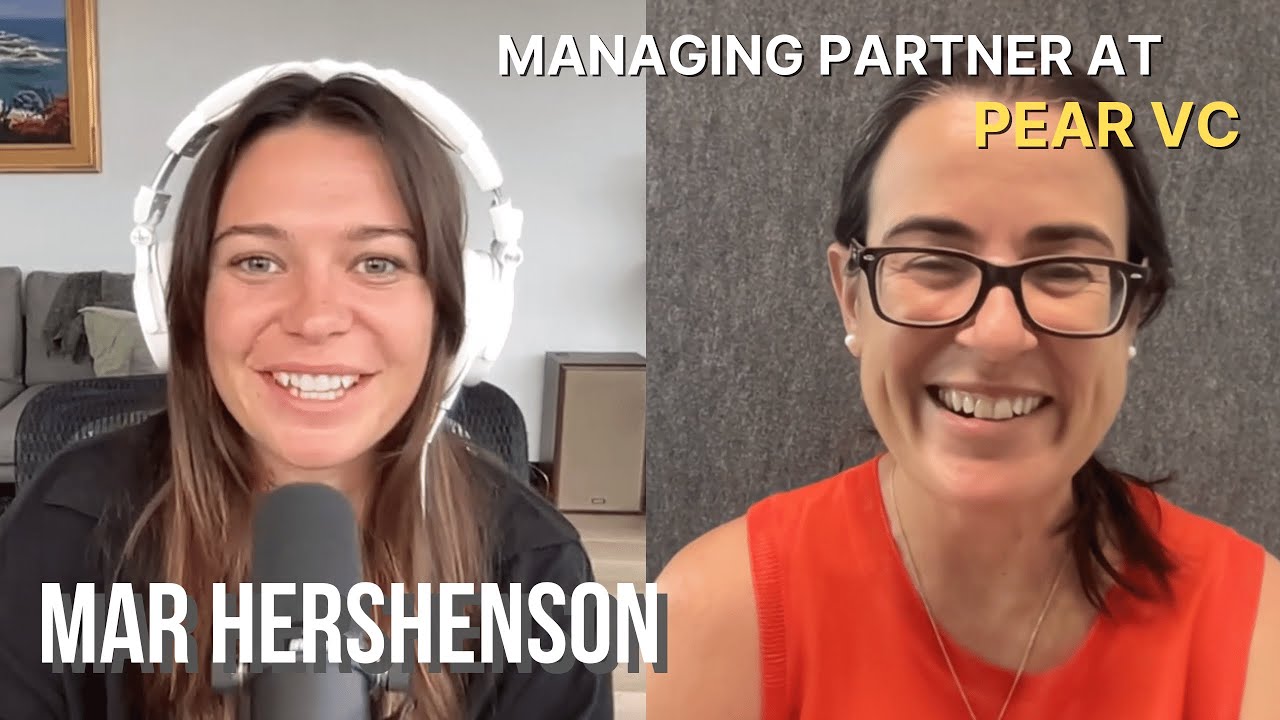
Mar Hershenson, founding managing partner of Pear VC, built a founder-first fund from scratch by buying a how-to-raise-a-fund book and leaning on mentors. He created PearX bootcamp and the Female Founder Circle to build San Diego's startup ecosystem, emphasizing small, high-quality cohorts over scale.
Chapters
Perhaps I'll start with something that has worked and evolved, you know, over time, over the last 10 years has been our, you know, our PearX bootcamp, which we started. This is every pre-seed company that comes to Pear will be put in this bootcamp called PearX.
Yeah.
You know, I think for Pear at a high level, a lot of venture folks would say that, but we wanted to invest. First in people and founders that we believed in really early.
Yeah. Welcome back to Seed to Harvest, a podcast interviewing investors, founders, and creators. Today I'm really excited to be joined by Mar Hershenson, founder of Pear VC. Mar, welcome to the show. I'm really excited to have you on today.
Thank you, Paige. It's great to be here.
Awesome. Um, do you mind introducing yourself to the audience?
Of course. My name is Mahar and I'm the founding managing partner at Pear VC, which I started with my partner, Pejman Nozad. I'm an engineer by training and also a multiple-time entrepreneur, always starting from zero. So very familiar with what it takes to start a company. I'm also a teacher at heart. I've been teaching entrepreneurship at Stanford for the last 7 years. And care deeply about, you know, building a founder from, you know, day zero all the way to successful CEOs. So.
Amazing.
All right.
Well, I wanna start with some of your earliest days. So your father was a professor in Barcelona and you used to attend his lectures. I'm curious, as you've thought about your own journey as an educator, what aspects of his style do you think have rubbed off on you, or are there ways that you differ as an educator?
Well, you know, he's a doctor, he's an endocrinologist, so he would teach medicine. I think it's a different discipline than teaching entrepreneurship. You have to be much more precise in that sense. But, you know, my dad had a really good quality, which was, you know, if you couldn't explain it simply, it wouldn't make any sense, right? Because it's nature at the end of the day that he was going about. So that comes back to me many times when I'm trying to understand something and communicate it to folks, if I, if it's not, if I can't synthesize it in a very simple way, then it's probably not true. You know, actually when I was growing up, I heard this story that just stuck with me. We had a king in Spain and, you know, people thought that the Earth was at the center of the universe. So they would have all these scientists try to explain to the king how come, you know, the Earth was at the center of the universe because no measurement made any sense, right? So The king famously told one of the scientists, well, if God had asked me, I would have come up with something simpler. And I think that's a story that I heard from my dad that really stayed with me. When things are too complicated, it's probably the wrong approach.
Yeah. Yeah. I really love that. I'm curious, like, as taking it back prior to Pear as well, you came into the U.S. in '95, right? To your PhD at Stanford? And as you were finishing your thesis in '99, the internet bubble was like, it was happening like crazier than like crypto and AI are. So your, your first company was, you were a circuits designer and so you developed web-based circuits designing application. Can you talk a little bit about how that philosophy of leading with simplicity maybe contributed to your journey as an entrepreneur? I loved hearing your stories about how it was like, Yeah.
Yeah. Well, you're right. I came here in '95. So right before, right around when the web, the dot-com was moving, there was definitely a, you know, there was, there was a boom, as you know, but I would say even compared to crypto or AI, the speed of the boom was slower than what we're seeing today. You know, it just took longer. It was 5 years or 6 years rather than 6 months as we've just had on the AI.
Yeah.
AI side. But, you know, there was a lot of excitement. Myself, I was a circuit designer, so it's super techie. I was in the electrical engineering department and we had no idea. I had very little sense of what a company was or anything like that. But my thesis, which was on a new optimization method for designing circuits, so the circuits that are in your cell phones, that's how I explain it to people. all have to be designed and there's only a few folks that know how to do that. And it's really complicated. You need to go get a PhD, et cetera. But my work was around, hey, can you model these circuits in with simple equations and then, you know, try to design them in with using a computer rather than necessarily having an artist, which is the circuit designer, be involved. So that's what we did. And I like to say that we were one of the first web applications, especially for CAD, I would say one of the first ones because it was 1999 when we put this out and our application was, you know, extremely clean. It's like, what do you want to design? Okay, here it is. But behind the scenes, you know, the server side of that was extremely complicated. So, but anyways, that's, that's, that's what it, that's what I did. And it was a big decision for me to go into entrepreneurship because throughout all my life I wanted, I thought I was going to be a professor and teach circuit design and You know, ultimately almost at the very last minute I got into the fever of the startup world and ended up doing startup.
Yeah. Yeah. And after that, I, I wanna talk a little bit about one of the funny anecdotes I heard from when you and Pejman were thinking through starting Pear. So Pejman was an angel investor in 2 of your companies, and I think the proposition was like, hey, I'm gonna rent a house, we're gonna fill with founders, we're gonna serve them tea. And you were kind of like, what? Like, I don't know if that's like the right fit. And then you both started angel investing together and spending time at the cafe on University Ave back when the South Bay was the center of the universe, as you described it. I'm, I'm curious, like your, your first fund was a $50 million fund. You had originally planned on it being $20 million. I'm curious, can you, can you share a bit what it was like raising that first fund? Because I think you mentioned it took 2 years and I think One of the most common things I hear managers talk about is like, it's really challenging. Like, is it this hard for everyone?
But yes, it was definitely super hard. But, you know, I think Peshmaan, my partner, I'm so fortunate because he's such a visionary and has this, you know, amazing ability to, you know, have almost this believing this incredible dream. So he, you know, approached me, like I said, in 2009, you said in 2009 saying, let's start this fund. We're going to, we'll rent this home and back founders that work out of there. And I was like, oh my gosh, you are insane. I am not. I've never invested. What are you talking about? But he would never give up. I mean, this guy does not give up like any good founder. And ultimately he decided, let's just, let's just do angel investing together. And we would, you know, we set house in Koopa Cafe on Ramona. A lot of people would know it, but we would go, I would, you Used to go just an hour a day. And then ultimately I was there every day, all day taking pitches, which is actually a very effective way of getting deal flow if you're in the right coffee shop, you know, where founders go. So anyways, we decided let's go raise this fund. Neither him nor I had any venture experience and neither him nor I had ever raised venture money. So that's already like, you know, a minus one when you get out to fundraise because need to learn the rules of the game. And whereas if you're a seed founder and you want to raise seed money, if you type that on Google and you say how to raise a seed fund, a seed round.
Yeah.
Um, there's so many hits and videos and podcasts and, uh, you know, at least you'll get some, you can ask ChatGPT, right? And you'll get some information about that. If you want to do the same about raising, you know, venture fund, there's not that much information people are, you know, and the LPs are not very public. Like, you know, the, the GPs on the venture side. So, you know, we almost learned it by making mistakes. You know, our first, the first thing we did, the first thing I, we did, I told Pashma, let's go buy a book because we don't know anything about this. So we, we downloaded, we bought some book on Amazon on how to raise a venture fund, which was very scary, but that's the first thing we did. It's like, okay, get up to date. And then we put our first deck together, which we We make, made a rookie mistake. It was done in a, in a software called Prezi. I think if you're maybe over 20, you would recognize.
No, I remember. I used to make my middle school presentations in Prezi and it like zooms in and out.
Exactly.
Yes.
They're used mostly in middle school and high school, but, but it's not the sort of format that you would send to, you know, the investment team or some fancy endowment. So, anyways, so we, we did that. I've actually looked at the presentation recently and it's what is amazing about that presentation is that the ethos of Pear and our strategy has not changed in 10 years, which is actually pretty impressive. But, you know, that's a mistake. You know, I think you should give the information to people in the format that they're most accustomed to, you know, it's the one-on-one of sales. So anyways, we were very fortunate. I think we were fortunate on a couple of ways. One is that we had friends that we had made around our life that helped us correct some of those mistakes. You know, one of them was Catherine Gould, which she was one of the first venture capitalists and, you know, sadly passed away, but she really took us under her wing and told us, what the heck are you guys doing? So that's one and, you know, a couple of more people. So that's, that was one. I mean, our. Other, others really helped us be better. And I think the second thing is that neither Peshma nor I were going to give up. So, you know, and we have no shame. It was gonna, I think a lot of folks feel like if they don't have a one single close, really fast raising fund, it's like failure. And we were like, no, we're just going to raise the fund. That's going to be success, right? No matter how we do it.
Dead binary.
Yeah. So I think both those things really helped us at the, at the end raise the fund. But yeah, anyways, yeah.
I would, I would love to go back to one of the things that you said was the, the ethos of Pear even 10 years ago is very much the same as it is today. And one of the things that when you've been asked in the past about these N-of-1 founders that you backed, like Tony at DoorDash, there was a clarity in which they described the way that this will lead to a $10, $20 billion outcome. It's interesting that it seems like you and Pejman had a very similar approach, maybe not in terms of the form of what Pear would be today, but in terms of the ethos. Can you explain a bit more about that ethos?
Yeah, you know, I think for Pear at a high level, a lot of venture folks would say that, but we wanted to invest first in people, in founders that we believed in really early. So be the first investor on those people, not companies, and You know, be the most helpful investor. So Pejman, by himself, he had been an angel for many years. He was able to find these folks and he had really good taste, but then when it came time to help them, he really needed an operator on his side. So that's why he partnered, you know, he said, I want to do it. I want to do this fund with you. We need to do it together. So even today, that's, you know, there, you know, even though, of course, I've learned on how to. Evaluate founders and find those founders, and he's learned more from me on how to help companies. Pair is based on those two things. I would say the the other thing that you know the other two things that are really important for pair is that we really believe in giving before we ask. So it's like if you meet somebody, whether it's a founder, an LP, an executive, whoever it is. First think about how you can, what can you do for them rather than what can they do for you. And then if, you know, the world, there is some karma and some people will come back, you know, so that's really helped us in, helped me for sure in building my own deal flow and, you know, getting folks to be supportive to my companies, et cetera. That's been a part of it, which is important. The second thing that was important to Peshman and I was to build a firm that would outlast the two of us. We didn't wanna just build something and shut it down, which is something that, you know, it's actually absolutely, you know, viable and respectable thing to do. We just really wanted something that, you know, our kids would be proud of. So I learned since then, this is called legacy funds. But so from day one, we thought of Pear as a company, not necessarily as a fund. Mm-hmm. And I think when you think that way, things run slightly different because you're thinking a little bit more long-term about, you know, how do you build something that can scale without you or can exist without you?
Yeah, I, I think like when I've talked to institutional LPs, I think that one of the biggest differences that they look for is whether fund managers are thinking about it from like, here's the fund or like, here's the firm. And those are 2 very different presentation styles. One of the things I've been thinking about more often is kind of like venture firms I find have sort of a rhythm and a melody. So rhythm is like everything that you do on like an annual or quarterly basis. It's kind of like the financial, like the bare minimum of running a venture fund. And then the melody is like everything on top from scout programs to accelerators. I'd be really curious to hear more about, I think one of the things that really stands out to me about Pear is how experimental you all are in trying different fellowships and accelerators and seeing what works to support founders the earliest stages. I would love if you could share one example of a program that's gone really, really well, and then maybe one where it didn't work out, but you learned something important.
Yeah, you know, we are, but we're always trying to innovate for sure. It's so important. And, you know, I almost, you know, I think as in venture, you have this sourcing, picking, winning, and supporting. Each of them has different products and we're always Iterating one and another, right? You know, perhaps I'll start with something that has worked and evolved, you know, over time, over the last 10 years has been our, you know, our PearX bootcamp, which we started. This is every pre-seed company that comes to Pear will be put in this bootcamp called PearX. We run them twice a year and it's like a cohort-based approach to pre-seed. So you're a pre-seed company, you come to Pear. We're almost like gonna onboard you into your journey by going through PairX. And we started this a little bit by accident. Some of the students that we had hanging around our office said, oh, we wanna stay here for the summer. So we're like, okay, you can stay. So it was very casual, not intentional. And the first summer we had them be in our office. I think there's maybe like 8, 6 or 8 teams, you know, not many. And. We gave them this $25K uncapped note. So it wasn't really for profit, I would say.
Yeah.
But at the end, we had a demo day in our office. So literally people pulling chairs, it was very casual. And we did this for a couple of years, maybe 3 years, and at a very low key, only actually focused on Stanford students. It was so limited. And then we realized, oh, there's actually really good companies coming out of this. Maybe this should be actually, and the companies that come out and go through this process. There's this sense of community and people motivate each other and you can be more efficient as to how do you deliver some of the, the things that are common to every company. So, so we decided to actually devote more of our resources into it. And it, you know, grew from something we would do casual to a marquee program of Pear to today where, you know, I actually was looking at the numbers and in 2016 we had 50 applications for our summer program, we would call it. And this last session we had 8,000, you know, it's crazy if you think about it in terms of growth.
Yeah, that's incredible.
But that's how you, you know, you have to adapt everywhere. Like things are breaking all the time because there's so much growth on that program. So like a startup, you know, how you read applications anyways, but that's been really good. And to even actually my, you know, it's interesting because We started this in 2013 and Peshman a couple years ago told me every fund will have an accelerator. And I think if you look at the last year, almost every, everybody has one now, but it took a long time to set the, the name.
Yeah.
Yeah.
It was pretty wild to see a page with all the logos of all these different funds who had accelerator programs now. What's an example of something that didn't go as planned that you learned from?
Yeah, you know, actually during, we also run from very early on, we run this community program at Stanford. It's called Pear Garage. We've been running it for many years and it's really meant to be a community of people that like to build things together. So we would get students that were computer science, engineering, hackers basically to come to our office. We'd hang out, have pizza, meet people, you know, have kind of hacking sessions together. Et cetera. It's been, again, very successful for us in, and we don't see that program necessarily as like, hey, we expect 10 companies to come out. It's really a long-term view of the ecosystem. Sometimes these folks start companies, sometimes they go to, they get a job and sometimes they start a company 10 years from now. And sometimes they become investors themselves. It doesn't really matter to us as long as we're doing something good. When the pandemic, a lot of times. People would ask us, oh, why only Stanford? You should do it everywhere. So when the pandemic came, we're like, oh, you know, we'll just do it across all campuses and this will be the, this will be our time to kick it off. So we run it remotely. We had people, students from a bunch of campuses and it was just not effective. I think part of the reason was that it's really hard to build community on Zoom. I think a lot of us are familiar with that, but you know, the, the idea of having of Scaling community to online community. We realized it was not, not the right way for this founder. So we went back to small in-person local communities for that.
Yeah, I love that. One of the things we were talking about before the show was thinking through, like, for example, I'm in San Diego and I want to like put resources to work in San Diego and invest in companies here. And we were talking a little bit about before the show, I, I think like the, the way I'd love to ask is like, what do you believe are the ingredients that you can impact as an investor to build a local ecosystem around like pre-seed and seed stage startups?
Yeah, well, if I were you in San Diego, the first thing I would do, I think you need 2 things. You know, the first thing is choose a small group. of people, high quality people that are interested in starting companies, right? So you need to be able to find those people. I think luckily in San Diego, you have great universities. There is a tech scene, right? Um, it's not San Francisco, but you don't need thousands of people. You can get a group of 10, 20 people max to be part of this, you know, MVP-like community, right?
Mm-hmm.
And just by choosing the initial cohort to be folks that have things in common and goals in common, it's half of the battle, right? Because people learn from each other and they inspire each other. So that's number one. The second is, hey, what sort of excuse do I think about to bring these people together? So that's where you have to recruit speakers or, you know, educators or people that make sense. To bring them together. So you could say, hey, I'm going to choose these people. Then I'm going to go get the top founders in San Diego, the top VCs in San Diego, the top, whatever you want to call it, to be part of that community. And, you know, by bringing, having the space and the time to bring those 2 groups together, I think good things will happen. It does require effort on your end because it's not as easy as a commercial, hey, come help me. Or come be part of that community. I think the selection process and the orchestration is actually really, really important.
Yeah. You, well, I love the way that you talked about it. What you talked about when I saw you speak at the All-In Summit in, I believe it was May of 2022, you talked about this cohort program that you had run, not anticipating that it was going to be co-founder matching, but you had noticed that the numbers in venture dollars going to all-women teams was Not great.
Yeah.
And wanting to impact that. And I think one of the things that was really interesting, I have the, I had the numbers here before, but it was basically like 60% of the 78 like high potential future leaders that you picked started businesses and 35 of those have raised over a million dollars. So I'm curious as, as you think about, you know, see, like, I think you mentioned like CEOs aren't born, they're created. And a lot of your mission at Pear is to turn founders into great CEOs. Yeah. And I'd be curious to understand like what aspects of that curriculum beyond bringing in incredible speakers with that real world experience do you really focus on in the earliest days of cultivating those communities?
The curriculum from, and you're talking about something called the Female Founder Circle. Yes. That my partner Vivian, you know, spends a lot of her time running. Yeah. So I wanna give her all the credit she deserves. I'm more of the inspiration, I would say, but we've run this now for 4 cohorts. Every cohort is different. So we'll have different speakers in every different cohort, right? By having enough speakers, a lot of the same topics will come up. There may be some common sessions, like we have a public speaking session, which is fun, and a day to the spa, which is also fun. But you know, the, the speakers are different. I think the themes for starting companies though. are often similar. And that's what people pick up at the end of the day, you know? So it's, I don't believe the content is super critical to, to encouraging these women to start, to go ahead and take the leap and start a company. And remember our cohort is, you know, our, our, our, our community is women, which what I found the most impactful thing we did It's given almost like that little push to go start that company that they can, they believe that they can do it, you know? And I think that's sometimes, you know, all that we need in our community to go do it. I think women are really good at it, but we sometimes we're our worst enemy ourselves. So I wouldn't sweat the content that much. It's almost the quality of the speaker is more important and the quality of the member of the community is the most important. Yeah.
Okay. I'm taking mental notes. Yeah.
If you had the top 5 unicorn founders come to your community, is that better or a structured curriculum that is taught at some university?
You know, it's— Yeah, probably the unicorn founders.
I think you wanna optimize for the first one.
Yeah. Yeah, definitely. I, I'm curious, can you share an anecdote of like one of the more challenging decisions that you've had to make while building Pear as a venture firm?
You know, I think challenging, there's, you know, I tell people that when I go to restaurants, I don't even want to pick what to eat because we're all, all day is making decisions.
Yeah. All day is making decisions. I'm done. That's so funny. I was like, grocery shopping's hard.
So every, I was like, I don't have the bandwidth for more decisions. So it's truly, that's what we're doing. And you know, it's decisions that are. About building company, like who do you hire and where do you put your budget and decisions on how will we structure the fund? What is the right fund size? What is, and decisions about your companies, you know, I think for me and what I take most seriously, not, not most seriously, but what I think is more impactful is ultimately, you know, the companies that we work with, right? And the advice that we give them and Mm-hmm. The, you know, how can we again help those founders be successful at the end of the day? Right. So every company and every decision that is on any of my portfolio companies is what I sweat most about, you know, at the end, you know, that's the business we're in to make good companies. Right. And if we can, then everybody wins around the table. All the other things don't really matter.
Totally.
So, but that's. You know, sometimes, you know, we have tough decisions in companies that are, you need to extend runway and what do you do? You need to, you have a tough financing or, you know, you just lost your customer or your key technical hire left or, you know, there's, there's always tough moments in companies. Pivot. I, I tell, you know, I think by having been a founder, by having Been an investor for 10 years and, you know, being with so many companies, one of the things that I bring to the table is that when a founder comes to me with one of this, oh my gosh, what do I do? You know, this terrible thing happened. I'm like, okay, this is problem 23.1. I've seen it 10 times. I'm going to help you figure it out.
Yeah. And I think just having that perspective of like, this has happened to, like, you're not the first founder this has happened to, and you're definitely not the last founder this is going to happen to. That alone is really helpful in having perspective. And I think it's true as a fund manager as well, having investors who have decades of institutional investing experience is really helpful to be like, oh, okay, this is something that these incredible fund managers that you look up to faced 5, 10 years ago. And I think that perspective has just been really helpful. I'm curious, do you Oh, okay. One thing I like to do with my guests is like, do you, what question do you have for me? Or is there anything that you're curious about?
I'm really curious about the San Diego ecosystem and should we go there and find companies? That's—
Yes. I've always definitely come here. Yeah, I was, well, I was, I was kind of thinking through it. So I, I think it was really interesting. Someone, Fred Greer, who was previously at the San Diego Business Journal, tweeted and said, we don't have enough like advocates for the San Diego ecosystem. I think that there's a lot happening here and it hasn't been shared as much on the national scale, especially like pre-seed and seed. And so one of the ways that I'm thinking about approaching it is, you talked about this in your All In talk, but like, what are the, what are the mafias in town basically? Like you talked about the Rappi mafia, you talked about the PayPal mafia. I think there's companies that spin out very entrepreneurial folks that start their own companies. And so part of that exploration is understanding like, Which companies in which sectors are spinning out really talented entrepreneurs? And then where, where is like the best place for a density of founders to interact with each other? Because I met a lot of talented founders that might spend more time like by themselves versus like in a cohort community. And I think like at the earliest stages, the cohort is, is really helpful. So I've been thinking through creating a market map of like one, like those post-Series B companies that are spinning out entrepreneurs.
Mm-hmm.
And then 2 is like mapping. There's a lot of investors in the San Diego ecosystem that might not have San Diego on their like LinkedIn page, but they, their families are here and they like live pretty much like full-time here.
Oh, nice.
Yeah. So I'm like thinking through mapping that out. So I'll keep you posted, but I definitely wanna put more money to work in the San Diego ecosystem. And yeah, so yeah, definitely come. We would love to have you.
I'm always available for a good founder.
Yeah. Yeah. Cool. Well, I think, okay, my last question would be what, what question am I not asking you?
What question are you not asking me? Well, I can tell you what the most popular questions I always get, which is what are you looking at founder and what are, what industries are you excited about? So I don't know if you care about any of those.
No, I do.
I do. Those are my most, let's ask, most asked questions.
All right. What, yeah, I would love, I would love to hear your perspective on that. Yeah, it's funny because I feel like I've been like researching, so I feel like that's really helpful context for our listeners to hear.
Well, I think there's, I think there's a lot of, I think I have a lot of videos on choosing founders and so on, but, you know, I think maybe, maybe we can end on a good note on the industry and what's going on in the world.
Perfect.
If you want.
That sounds great to me.
Awesome. So I think, you know, I think as your audience will know, I think we're, we're recording this in July of 2023. So we're already maybe like 6 quarters into the start of the, you know, crash of, you know, kind of the, the recovering from COVID Um, but anyway, so, you know, I think the market has been generally pretty tough in terms of adjusting to vol— the volume has been down in terms of number of investments for the last few quarters. But as you know, in November of 2022, ChatGPT was made public. So a fury of companies came out and there's been a little bit of an AI, I would say hype cycle where everybody's so excited about AI and about how it's going to change our future. I say it's a hype cycle because every time there is something new and exciting, Us humans, we can't help each other. We just can't help ourselves, you know? And it's happened with crypto, mobile, web, it doesn't matter. It's just humans. But it is true that I think the new version of AI, this generative AI in general, and it's going to impact the software that we use on a daily basis and that enterprise use on a daily basis. And we're like on Like literally inning zero, you know, of this. So there's a, a lot of opportunity for the next kind of version of, I'm really excited for the next version of companies that think of imaginative ways on how to use generative AI to transform, you know, primarily enterprises is what I'm looking at, but also consumer. And I think it's just going to be a, it's going to require a leap of imagination from the founder, the product person. It's not as going to be as straightforward as putting up a chatbot in your website or, or whatever people are doing right now. So, you know, it requires, it's going to require founders to go a little bit the extra step, you know, as what do I know about my customer? How could I change their daily life now that I know that I have this tool in the back, in my toolbox, and how do I deploy it and embed it in a solution? So I'm really excited to find. those companies in the next, in the next few years, which, you know, I think it's gonna pull us out of our misery, even though we're not done yet with the misery part. Yeah.
Amazing. Well, Mar, I've so enjoyed our conversation. Thank you so much for sharing your time with me. This has definitely been a dream interview for me ever since I saw you. Well, I've been watching you from afar, but I think seeing you speak at the All-In Summit and then the Angel Summit, I was like, oh, I would love to ask you some of these questions that I got to today. So thank you for being so generous with, yeah, with your stories. And I will link your websites for your Twitter and then Pears down below. Any parting words, Dayha? Thank you.
I'll see you in San Diego. So, you know, call me.
And a very special thank you to Seed to Harvest podcast editor Tate Doherty for his amazing work on this episode.
More from Paige



Paige of Behind Genius driving an AI electric train in St. Louis (Intramotev Visit)





