Closing a $31 Million Dollar Fund with Rishi Taparia of Garuda Ventures! | Ep 81
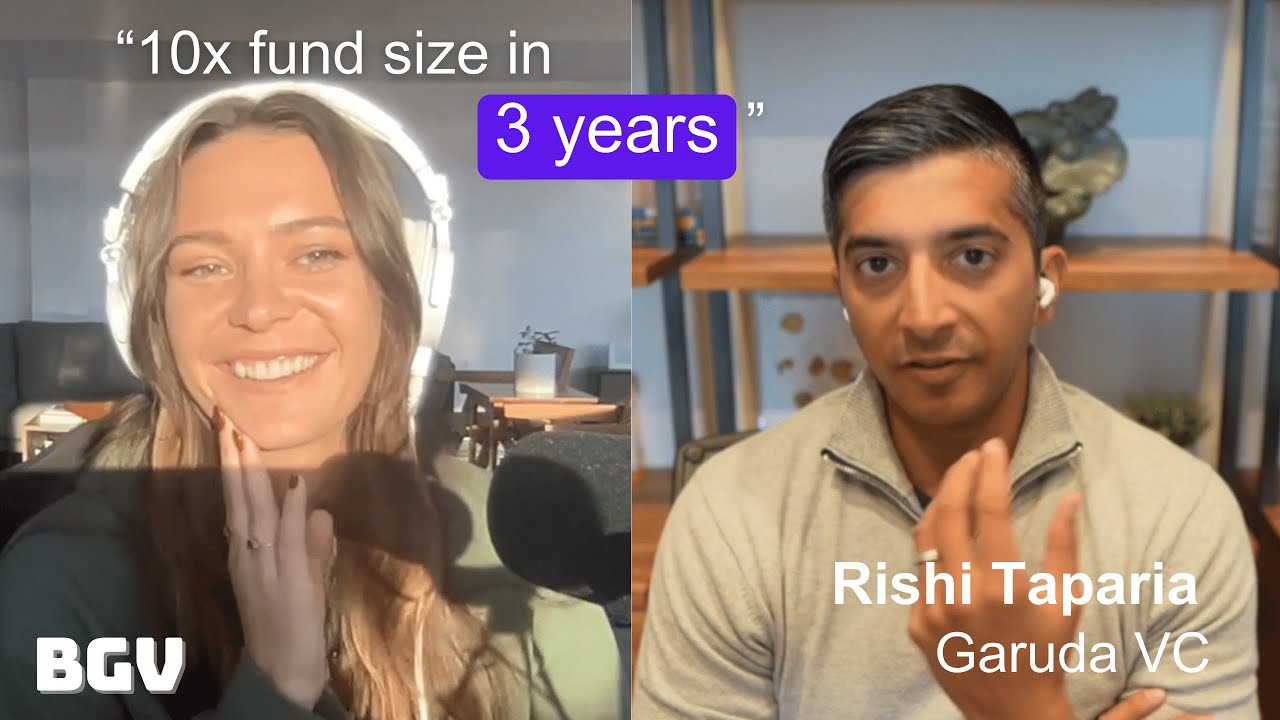
In this episode of the Seed to Harvest podcast, host Paige Finn Doherty interviews Rishi Taparia, co‑founder and managing partner of Garuda Ventures. Rishi walks through the evolution of Garuda from a $3 million micro‑fund launched in 2018 to a $31 million pre‑seed and seed fund closed in 2022‑23, describing the motivations, challenges, and strategic shifts involved in raising capital during a volatile market. The conversation delves into Garuda’s founder‑centric operating model – how they alleviate founders’ cognitive load through operational guidance, tax and onboarding advice, and a hands‑on yet evolving relationship as companies scale. Rishi explains how the firm forms conviction on early‑stage teams, the role of gut, heart, and brain in decision‑making, and how their diligence process has become more structured over time. Both guests discuss the emotional roller‑coaster of venture work, the critical importance of family and mentor support, and practical time‑management tactics for emerging managers. They also share the trends that excite them (AI, payments, SaaS, security) and reflect on how content creation has amplified personal branding and deal flow. The episode ends with contact information for Garuda Ventures.
Chapters
$31 million fund in this economy.
That's right. It's like, that's right.
Incredible. So I'm really excited.
We want to spend time working with founders at this very early stage because I think that is authentic to who we are and where we like to spend time.
Hello everyone and welcome back to Seed to Harvest. I'm really excited to have my friend Rashid Taparia on, who is the managing partner of Garuda Ventures. I was going to have you introduce yourself, but I realized I just gave it away. Do you want to start by sharing like A quick 2-sentence bio about yourself and then we'll hop into the conversation today.
Yeah, absolutely. Rishi Toparia, co-founder, managing partner here at Gurudev Ventures. We are a pre-seed and seed-focused firm investing in founders building at B2B with up to $1 million. We want to get in, we dig in early and are excited to be on this journey as we have recently launched our own fund and concluded our fundraise earlier this year. And so excited to be on the pod with you.
I was joking earlier. I was like a $31 million fund in this economy.
That's right. It's like, that's right.
Incredible. So I'm really excited.
You're very kind.
Yeah, of course. I love seeing the other emerging manager homies win. Okay, let's see. What do I want to start with? Do you want to, for the context of our listeners, explain how we met?
Yes, Paige, you and I, well, first I think we met on Twitter.
On Twitter.
As so many great relationships start. But when you can move your Twitter friends to your IRL friends, that's that much better. And so we were at a dinner together with a bunch of different emerging managers and LPs, all talking and building the network and commiserating about how hard it, I think it is to raise in this market and what we're all excited about. And that's when it was great to meet you in person.
I know. It was, I think it was like 3 years of being online.
That's right.
Tangential. And I was like, wait, I have so much context for your story.
Yes. Yeah.
Wait, so, okay, break down what was it like? Okay. First, one of the questions that a lot of emerging managers ask me, so I'm curious to get your take on this, is like, what was that like seed or, or walk me through kind of like the hours of deliberating on like, okay, I'm gonna go raise a fund.
It was, you know, the genesis of Garuda. largely was how do we support founders in the ecosystem with advice, time, and capital? You know, my co-founders and I are all former operators, founders, and when we were building companies, we, you know, naturally as one does, you get called, hey, what do you think about this? Hey, I'm raising this money. Can you make this introduction? And so on. And so, you know, Groot Ventures started in 2018 really as a micro fund MVP proof of concept. It was a nights and weekends passion project. And so we raised just under $3 million for this like baby fund, essentially to act as glorified angels, but with other people's money and then taking it very seriously since we had other people's money, investing $50,000 to $100,000 into founders and just trying to bring some of the learnings and insights we had building companies, navigating through the similar challenges and frankly the empathy for the journey to bear for And so, you know, fast forward 2018 to 2021, we deployed through that vehicle and now we're in the middle of COVID I just stepped off of a 7-year operating stint across 2 companies, was thinking about what next. And at the same time was getting a bunch of feedback from founders who we backed, LPs saying, hey, we love what you bring to the table. We love your approach. You know, we just wish you had more time to spend with us and more money to invest. And LPs were asking us, hey, when's the next fund? Yeah. And so that was really the like, oh, maybe there's a path here to turn Garuda more from a kind of off-the-desk passion project into a full-time firm and really codify our values in our approach to partnering with founders. And so came together with my co-founder Arpan Punyani, who I've known for over 10 years now. His sister-in-law is one of my best friends from undergrad. We met each other at her wedding of all places.
I love that.
And, and, you know, he spent 8 years building Okta, early employee all the way to publicly traded company. And we just sat down and, okay, like, what does it mean to be a fund? What do we want to focus on? Where do we want to spend time? And landed on, look, $30 million target for a pre-seed and seed-focused firm.
Oversubscribed. Sorry.
Yeah. Yes. Thankfully. And, and You know, we want to spend time working with founders at this very early stage because I think that is authentic to who we are and where we like to spend time. And I think that's one of the keys to doing anything is that you want it to be as authentic to you and your story as possible.
I have a question. Like, I think one of the things, because I only spent a year as an operator, I was at Workwest as a developer success engineer. And I feel like one of the things that was surprising to me when I switched into investing is what came up again and again was onboarding. And it was randomly like an area I had a ton of exposure to at Workwest. Are there any like areas of support that founders ask you about from an operational perspective that have like surprised you or been like, wow, I'd like, but I'll take, you know?
It's not any in particular, only because I think that as founders, the founder journey always ends up at the similar places. And so one of the things we try and do is like, hey, you're going to, the first year you're going to have to pay your taxes. You're going to say, how do I do this? And so like, this is how, and like, how do we make things easier for you? And again, having been, uh, you know, I was the 7th employee, first business hire, uh, at a fintech company called Points, which I joined after spending 4 years on the venture side. And so, you know, over the next 5 years, I basically experienced all of these points along the way.
Yeah.
And so one of the things we try and do is like, how do we alleviate some of the cognitive load that you founder will be facing? Through providing you insight and/or resources and/or connections to people who know how to do it. Because my goal and my, I believe my job is to focus the founders in on what they need to do at the expense of all of this other stuff in order to be successful.
Yeah.
And like, you can optimize the heck out of your ops and your employee onboarding, your customer onboarding, but is that going to move the needle? Maybe, maybe not. And so let's focus on What's the product? What's the market? Who are the customers? How do you go to market? How do you differentiate? All of that stuff as part of your day-to-day and reduce that cognitive burden.
I liked what you said. I don't know if you said this exactly, but it's like knowing the terrain. Like, I feel like from my journey as a fund manager, the first fund, one of the parts that made it so challenging is I had no idea what challenge we'd run into next. And I think like once you got there, you're like, oh shoot, like, okay, like Let's talk to like X, Y, and Z person who's had experience, blah, blah, blah. But you like don't know what those points and challenges are. And I feel like as, as you like settle into multiple fund cycles, you're like, okay, like I know this filing is coming up. I know these taxes are going to be like whatever. And I feel like knowing the terrain where it's less ambiguous in that sense, it sounds like very helpful for the founders that you work with. Are there any like other things aside from paying taxes the first year that you recommend founders like look into, or, you know, kind of like what other aspects of the terrain do you think are important?
Yeah, I think it's the, we have the same conversation with founders about how to onboard your first hires and what to look for.
And wait, what do you, please share with class. What do you look for with your first hires?
It's, it's, I think the scope, depending on the founding team, that's one of the things I always like to say. People ask me, how do you support your founders? And the honest answer is it depends because all founders are different and what their needs are different. And so we try and create a model which is bespoke to each team, obviously with a baseline level of communication and the like. And so, you know, for your first employees, these are people who you have to convince to join you on this insane thing of a new company with tremendous amounts of risk. No idea whether or not it's going to work, but your passion for the problem that you're solving, the solution that you have, and the means through which they will be able to support that vision comes through. And so this could be, and I was having this conversation earlier with some founders that we recently partnered with, this could be someone more senior. This could be someone junior and early in their career. You have to calibrate against what your objective is. and recognize that there's a job to be done today. Too often we overanalyze the hiring process in terms of what I will need 12, 18, 24 months from now.
Yeah.
Forget that. You can hire for that then. What do we need to achieve now and who's going to get it done the fastest today in order to progress forward and calibrate against that and an understanding of what you as the founder or founders are supposed to be doing and what want to bring other people into, again, supercharge this, again, group of people that can be fed off of one pizza, 2 pizzas in the early days.
A 2-pizza company.
Exactly.
That's awesome. I guess we were talking about a little bit about this at the dinner, but how do you think like your fundraising process or like tactics shifted from raising a $3 million fund to a $31 million fund?
Oh, entirely different in the sense of, you know, I think the, the micro fund was very much a group of people and LPs who we got to know over time, either we've known them a long time or we got to know and, you know, they were understanding of this is an experiment that we're going to run with.
Yeah.
And I think there's something, you know, there's a level of seriousness that maybe should be there, shouldn't be there when it's okay, now this is like the full-time thing. And so we just, we wanted to uplevel across the board on everything we were doing, you know, and look, we're constantly trying to get better in terms of our process, in terms of our communication, in terms of our reporting, things of that sort. So we tried to go, we went out and asked dear friends, you know, people who've been there and done that, like, what are some of the best practices that we can bring into the group?
What is the terrain ahead?
What is the terrain ahead? Exactly.
Yeah.
And And we were told over and over, look, it's going to be a long road. It's tough. It's tough sledding. And I think you can internally kind of, you can intellectually internalize it.
You're like, okay.
But until, yeah, but until you go through it, you don't actually realize how difficult it is. And, you know, I believe there are 3 centers of intelligence in the body, the brain, the heart, and the gut. And oftentimes one is ahead of the other and you just need all of them to be aligned. And like going through a fundraising process, starting to raise in October of 2020, uh, we did a first close in January of 2022. And then war in the Ukraine, interest rate rising, inflation, market collapse. Like all of that happened.
New bank collapsing.
The banks collapsed. And it's like all of a sudden all of these things are thrown our way. And look, fundraising is not supposed to be easy. That's for sure. I, I, but I could have never anticipated how challenging it ended up being, but looking back and having gone through it, grateful for it because like you said, we have a deep understanding of the terrain. And what is needed now as we project forward, and it's made us stronger for it. But man, it was not fun. Yeah.
People say it gets easier over time.
I think it gets different over time. You know, I think, you know, starting a firm, starting a fund, starting anything takes a big leap of faith. I think you have to just have persistence and that's the key, right? You just have to believe in what you're doing. You have to have a deep desire because people will see that over time. And so the benefit of time is people get to connect dots and make them lines. And so LPs that we talked to early on in the journey ended up coming in and final closed because they saw, okay, this is what we said we would do. We would invest in these types of businesses with this investment size and so on. And as we built the plan, as it was in the air, we got to demonstrate that we were able to do this. And then we got people coming in, you know, 18-month relationship that closed. Obviously a lot didn't, but that's okay too, because now those are relationships that we can go back to and say, hey, see, You didn't come into this one where, but you're going to be able to come into the next one. And this is what we continue to do. And you just got to survive.
And you just got to survive.
You just got to survive.
You asked me, or I guess, do you have questions for me? Or what are you curious about?
What's, yeah, let me, you know, you've gone through this. I think you've done such a great job in, again, being authentic to who you are and your approach to partnering with companies, with other investors. You know, we talked a lot about how content has been a part of your story and, and, and has elevated, I think, your, the awareness of Paige and Behind Genius probably beyond, I would imagine, your expectations when you first started.
Yeah.
And so, you know, how has that opened up new avenues for you that you Have been most surprised by, or what avenues has it opened that you've been most surprised by?
That I've been most surprised by. I think like one of the things that's been really, first of all, like I think a lot about creative constraints and like one of my constraints when I started is like there was no family money. I had like, I got outta school with no student debt and I was like living in, uh, I was living at my parents first and then I was living with like college girlfriends. And I was just like, okay, I really want to invest in venture and like be a student of venture. And creating content online has allowed me to become a meaningful part of an ecosystem that I have looked up to for a long time. And I think like imprint my own individual investing style and building behind Genius Ventures. So I definitely wouldn't be where I am today without writing online. I think It was kind of sad, but my high school English teacher always really encouraged me to write and she passed actually like a couple weeks ago, which was really sad.
I'm sorry.
Yeah, I haven't really talked about it much, but she was always like very encouraging of being critical with what you are reading and like leveraging different resources that you see in whatever ecosystem that you're in. To be the point for you to like respond to that. And so I think, yeah, that's been really interesting is to like use real-time pieces of content generated by like other venture firms or news and be able to have a thoughtful response to that and like think critically about it and trust. You mentioned like the 3 types of intelligence, like trust my gut, even if my perspective might be quite different from like other investors who've been at it for for a lot longer. So yeah, I think surprising paths might be now I'm like, like firms that I once got rejected for, for analyst positions are like reaching out to be featured on the podcast or like reaching out to be LPs, which I think that's been a very interesting journey as well.
Yep.
Yep.
Yep. Yep. Well, like the journey is long and I think That's why, you know, I say the word authentic a lot because I think you have to be true to yourself and, you know, your approach in order to be able to sustain and survive and persist and have the grit required to navigate what is the inevitable emotional rollercoaster of the journey. founders of any kind, because, you know, you walk out of one meeting, it's like, oh yeah, that was awesome. They're definitely going to, they're definitely going to come in and like, that LP is for sure going to invest. I feel so good. And then, oh, you get an email from a portfolio company. Hey, we're probably going to be shutting down. It's like, and the emotional rollercoaster is so high that, you know, finding ways to modulate oneself and keep an even keel is critical. And having mentors, having people you can turn to, having guides, For the terrain is, uh, is a key part of that.
I loved what you said too. Like, one of my mentors very early on was like, don't drink the Kool-Aid. Like, you're gonna have like press and people telling you you're great, like whatever. Like, don't drink the Kool-Aid, just focus on the craft. And I think that, like you mentioned before, like having people that have seen like your dots turn into lines and that you can come back to as like a safe, supportive space And then be like, build you up in those times when things get challenging. I feel like my family especially has been awesome for that, but yeah, it's definitely an emotional rollercoaster.
Oh yes. Um, well, and you mentioned family, like I think it's the other piece that is underdiscussed is the importance of having the support of one's family, right?
Yeah.
Or the people that are around them. Because if you're, when you choose to start something, it's not a solo journey that you're going out into the wilderness. by yourself, like you're bringing along, whether you like it or not, your spouse, your partner, your kids, your parent, like the emotional support ecosystem that you've built over your lifetime. And as you, it's, I think critically important to get them bought in because if they're planting seeds of doubt or they're not willing to support you or you're dragging them in, Unwillingly, that's a much harder place to be. And so I, you know, I, to your, to our comment or comments earlier about like advice on hiring early employees, I told this to the founding team. It's like, make sure you're talking to them, but also whoever's in their lives that you're asking them to give up their person to the company because they need to be bought in on the journey as well, because you're asking them to sacrifice their person for 16, 18 hours a day for 7, like 7 days a week sometimes for years. And so you want to build this stability, but it has to be a journey that people are taking, or it's easier to take when everyone's bought in.
Yeah. Yeah. I love that.
I would not be able to do this without the support of my wife.
I was going to say, I love that you, you thanked your wife in your LinkedIn post. I thought that was so wonderful. I haven't seen like many people do that, which is kind of weird.
The most important person to the story. For me, but I wouldn't, I wouldn't be who I am without her. I wouldn't be able to do this without her and her unwavering support of me and, and frankly, the little nudge to go do it in the first place. So yeah, my significantly better half.
I love that. I, I guess I have a question, like how, how, as your founders like build companies and you see them grow, like how has your relationship with them evolved?
I think in the early days, you're just a lot more hands-on, understandably, because the boat is smaller and there are less people rowing. And so, you know, we try and take a reasonably hands-on approach. We want to have the context, we want to partner, we want to give you the advice and again, lighten the cognitive load to help you go further faster. But as companies scale, as more people come in, as you hire more people, as you raise subsequent rounds of financing, Yeah. You don't need us in that same way anymore. And so for us, you know, our goal is always, can we build enough trust such that we're the first call? And if we can get to that level, fantastic, because we want to maintain those relationships and give outlets to founders. Again, what is a very lonely job, can oftentimes you get stuck in your own head between the ears on what you're supposed to be doing and uncertain and And can argue with yourself that leads to paralysis. Okay, how can we provide that outlet of, that's rooted in trust, that's rooted in safety, empathy, but has context that can offer situational awareness and say, hey, you're looking at this the wrong way, think about it this way, and so on. I just had that conversation here, like a founder of ours, you know, doing, you know, many millions of dollars in recurring revenue, Series A and beyond, you know, Series B on the way. And we chat, you know, 20 minutes like, hey, can I catch your, pick your brain on something? And he's thinking about how do you scale the go-to-market team and how does he balance his own relationship with the customers and get the team involved. But how do I think about then product as well? It's like, hold on, take a step back. You need to give away your Legos. You need to think about how to grow your org and how to hire the right people to then be able to focus on things that you only, you can do. But I can see that from context and he's willing to share that with me because of the depth of the relationship. And so, you know, it becomes less frequent touchpoints and less structured, which, you know, makes it a little bit more chaotic, but I think allows you to synthesize down to what actually matters and then hopefully offer insight that solves a problem.
I love that. Oh, I was talking to someone about this yesterday and a group of like other VCs, but like, how do you find you come to conviction? Is it immediate? Is it something that takes you a lot of time? Like, how, how do you think about that? And I know your answer is going to be, it depends.
You're right. We invest in areas that we know most often. And so like categories or markets or spaces. And so we have some level of depth or formed opinion on a market, on a category, on a problem. And so then it largely comes down to first and foremost, the team we're getting in at in formation stage, early stage pre-seed rounds. And so there's a deck and a dream and maybe some level of early product, maybe a customer conversation or 2 or design partners that are signed up and so on. But it's really an analysis and an evaluation of the team and I think to the earlier comments on like the head, the heart, and the gut, a lot of times the gut is like, okay, this feels bright. Like, okay, something is vibing. And, you know, I try to let myself be awash in the optimism during the pitch meeting of like, okay, what's the upside? How big can this go? What are the knock-on effects? And so on. And then you got to take a step back. You got to understand, okay, let's intellectually look at this market. What are the challenges? Who are the other players? And do the work, but largely there's an affirmation of something you felt early on about a person, about a team that then you're trying to, okay, what was that little signal that I got?
Yeah.
Um, but, you know, there have been other times where it's like, okay, there's a belief there, but I don't know if I'm fully sold yet. And then you look at the person and again, to the spirit, in the spirit of connecting dots to make lines, you have a subsequent meeting. This is a progress that I've made. You've had a subsequent meeting. Okay, this is what else has changed. And now you can see the iteration, the pace, the speed that again is indicative of determination, a greater persistence, and a cycle, that clock speed that they're on, which again helps with, okay, yeah, the early instinct is there and now I'm actually feeling it even more. That answered your question, right?
No, it did. I was thinking one of the things that can be challenging as an investor is that you don't know if you're any good. for like 7 to 10 years. Like, how do you hold that in your hand along with like operating a venture firm?
Oh, incredibly painfully. It's very, it's really hard. People ask me, you know, you made the switch from venture to operating back to venture. What is hardest now? I, you still won't know if you're any good for decades. And unlike in operating where it's like, okay, you can make a change to messaging to see what the conversion rate is. You can change the color or size of a button or, thing to see what the click-through rate, like none of that exists. And so you can have a, what you think is a great week and not write a single investment, which is most weeks. And that's a good week in venture. And that's just the hard part. And so I think it is rooted in just, again, belief in an approach to working with people, intellectual curiosity, and a love for the privilege that is this job. That keeps you going and constantly just trying to also be paranoid at the same time. Because a healthy paranoia is important. And getting to your point about conviction, like how do you just keep getting better and learn from different people, take the best of others, whether you know them or not, you can read about them. And so much is now, the venture ecosystem has exploded in terms of content and what people are putting out there, how they think and so on. How do you digest all of that? And internalize the pieces that resonate to you to make yourself better. But it's terrifying. I am terrified constantly. Uh, then you wake up one day like, well, damn, that sucked.
We're really saying the quiet part out loud. I feel like that's been the summary of this episode. I feel like it hasn't really been a question I've like asked many other people, but it's definitely one I think about constantly. Okay. I have one more question for you. What are some of the trends or movements that you're seeing that you're really excited about? That can be like from an investment perspective or just like things that you're, you've been curious about recently.
You know, I think what is constant is this, is the idea that humans never change. And so we're just an evolution of how we think about the problem sets that we're given. You know, AI is all the rage. And so you're constantly, okay, are you investing in AI? What are you looking for in AI? Okay, hold on. What do we have to think about when it comes to any shift in technology? Okay. Security, important. Like, how are we going to secure all of these things? How do we ensure that it's delivering the right message with the right data and so on? And focus area of ours. How do we spend money and make payments and all that constant? And it's just an evolution of technological set. That's an area we're focused on. You know, how do we think about the user engagement and user behavior and interacting with these new technologies? That's an area we're looking at as well as it pertains to, you know, on the SaaS side, how can software drive greater efficiency and give people back time? And so, you know, the more things change, the more things stay the same. But I think we're living in great times right now because it's difficult. And through difficult times come innovation, come breakthroughs out of necessity in a lot of cases. And so I, again, I'm just grateful to be able to partner with founders who are willing to start something in crazy hard times because they have that much motivation and are willing to do the risky thing as opposed to, which is, I'm not saying it's right or wrong, but lots of people are more likely to stay In comfortable situations, particularly during times of risk or increased risk. And so being able to partner with founders during all this is, is, is great.
I love that. As we wrap up, do you have a final question for me? Anything else? Yeah.
I mean, how, one of the things that I'd be curious to learn, cause it's something I've been grappling with is how do you think about managing time? Because one of the struggles I think as an investor Is part of our jobs is to meet a lot of founders and build out frameworks and assess companies and so on. But I think the flip side to that is so often then your calendar doesn't become yours, it becomes others. And so how, you know, you're obviously prolific in your content creation, you're prolific in your reach, and you clearly dedicate time To these things along with, you know, building a firm, working with your portfolio, you know, supporting your founders. How do you structure your days and or weeks to give yourself the space for this?
Ah, that's a really good question. I mean, I think to take the words out of your mouth, it depends. I think that a lot of things have gone back to in person. I think it was a lot easier to structure my day when I wasn't traveling as much and I was just like, taking Zoom meetings. And so now I'm thinking through like the priority of like which people in which cities do I want to invest in spending really quality time with, whether those are our founders or like some of our larger LPs or like co-investors I really like working with, beyond like obviously my friends and family. And so that's like become a bigger part of the equation when I think about how, how to manage time. So oftentimes when I travel, I like won't take Zoom meetings within that time so I can prioritize people in that city.
Yeah, totally.
Yeah. So when I'm in San Diego, like that would be like my baseline. I'm usually in Zoom meetings from like 10 to like 4:00 PM. And that can be any combination of like meeting with new founders, meeting with existing portfolio founders. I try and like structure it throughout the week. So like Monday I have time to like catch up and go through my inbox. Tuesday is like strategy and I have like 2 members on my LP advisory committee, so I have like my monthly meetings with them. And then I have a monthly meeting with our bookkeeper. So Tuesday is like long-term strategy oriented, and then Wednesday, Thursday are usually like bulk founder calls. And then I try, I, I, I've been trying to keep more of my calendar open so that I can be like open to synchronicity.
Yeah.
Like one of my founders just called me today and he was like, I have this great company for you. And like, Because I had the like time open, I was able to like take that call and have that conversation. And so I think that like sometimes there is an urge to like schedule your day to the gills, but you might miss like sitting in silence and being bored and being like, oh, I should call this person I haven't talked to in a while. And I feel like that's always resulted in the best things. Or just like texting my other emerging manager friends. I texted my friend Ariana and I was like, hey, like, how are you? Thank you again. And she's like, let's. Let's plan a tea ceremony next month. And I was like, I would love to do that. So I, I try to, I'm moving towards more unstructured time.
Yeah.
And I think in, in the fund seasonality, it, it'll be like a few months of like very hecticness and then there'll be like a longer period where I, you know, I wanna be like patient and make the best investment decisions possible. And I also think That's really difficult when you're in meetings all day. Yeah, no, that's how I think about it. I try and like be active every day and like see my friends and hang out with my fam. So.
How is, and, and in that, you know, when, when you have the unstructured time and you're, you know, get your meetup founder and now you're getting going through kind of a diligence process, as you have kind of now seen many more companies, diligence a lot more companies, invest in a lot more companies. How has your process to conviction and diligence process gotten simpler, easier, shorter, longer? How has that changed over time?
I think similar to you, it was like a lot less formal in the beginning. And now, well, especially like, 'cause Josh and I were partners in the first fund, and so like every investment we'd be like back and forth, back and forth, back and forth, and like talking through each one of them. And now like we have an investment analyst, Andy, who does like incredible research on like opportunity. I do 2 reference calls for like every founder that I'm looking to move through the pipeline with either like previous investor or previous colleague. And so I think like the process has involved a lot more context, but the first fund is performing well. So like the, and that had an informal process and I, I think I'm trying to strike the balance of like a repeatable investment framework that someone else could apply one day down the line. And one that feels like correct in my, in following my intuition as an investor. So yeah, I try and be transparent and communicative through the process. Sometimes I'm a little slow on my emails, but that's okay.
Yeah, makes sense.
Yeah.
Yeah.
So that's how I think about it. This was so fun having you on. I'm so happy that you could come on and that we got to share this conversation today. Where would you like people to follow you on the internet? Or if they're a founder listening and interested in connecting with you, where can they find you?
On Twitter or X, Taps, T-A-P-S, @Taps. Substack, taps.substack.com. We have Garuda, our Garuda Substack, garuda.substack.com. And then emails to rishi@garuda.vc.
Cool.
Thank you.
And a very special thank you to Seed to Harvest Podcast. Editor Tate Doherty for his amazing work on this episode.
More from Paige



Paige of Behind Genius driving an AI electric train in St. Louis (Intramotev Visit)





