Closing a $35 Million Fund with Springbank Collective Founding Partner Courtney Leimkuhler | Ep68
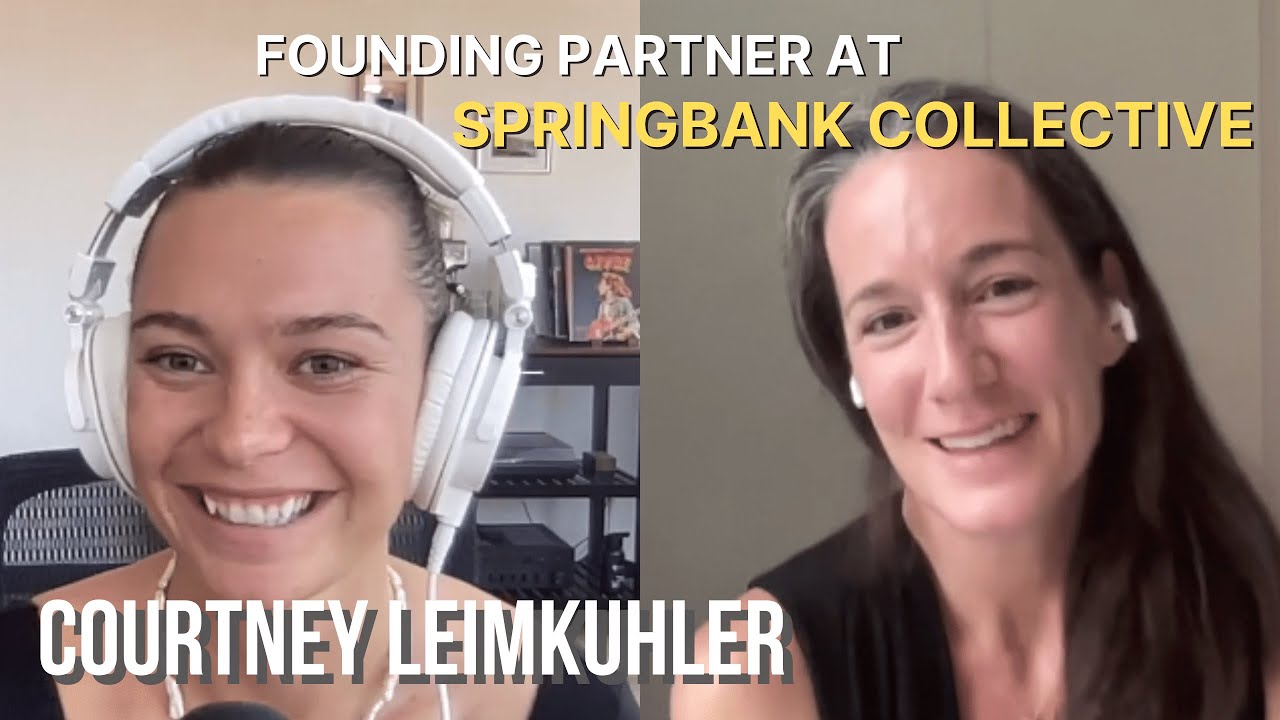
Courtney Leimkuhler closed a $35 million fund at Springbank Collective focused on caregiving and labor challenges that disproportionately affect women. She built a track record by deploying $2 million through angel checks before fundraising, with the first major commitment coming from an individual woman investor for $1 million. The fund targets 25-30 seed and Series A companies across three themes: career, care, and consumer.
Chapters
At some stage, I think we all wanna like be the captain of our own ship. So I think part of it was having worked for these really big institutions, I kind of wanted to build my own thing, but more of it was just having a lot of conviction around our thesis. We knew we wanted a pretty diversified portfolio, not just, you know, we have 3 themes, career, care, and consumer, and we're investing in things that we think, you know, disproportionately benefit women across those 3 thematics. And so we wanted diversity across that, but we—
Welcome back to Seed to Harvest, a podcast hosted by me, Paige Finn Doherty. I'm the founding partner behind Genius Ventures, an early-stage venture firm focused on founders of the future of work and the future of play. I'm also the author of Seed to Harvest, a children's book about venture. I'm super excited to be joined today by Courtney Lime Kuehler from Springbank Collective, who recently announced the closing of their $35 million fund to serve the long-overlooked needs of women and working families. You have an incredibly notable lineup of investors, including Union Square Ventures, Foundry Group, Bank of America. AIG, there's like an amazing group of LPs, but I think most importantly, you're set to make an impact on underserved sectors. So I'm excited to have you on today to talk a little bit about your journey into venture, what sparked that, how you thought about the form of building a track record in investing, some of your thoughts on your thesis, and then we're going to dig into some technical aspects of fundraising for those of you listening that are interested in Raising your own fund one day or have. So Courtney, welcome to the show.
Oh, thanks for having me. This is so great. I wish we were in person, Paige, and then I could have brought the Seed to Harvest children's book and had you autograph it for my kids.
I know. Next time. Next time. Well, okay. So Courtney, I wanna start off with like, what sparked your interest in venture originally?
Such a good question. I don't think, uh, I ever set out to necessarily be a venture capitalist. Uh, and I often say I wouldn't take a partner job at any other firm, although that may come back to bite me one day. I really see venture as like this incredible vehicle to really drive more kind of discovery and momentum into kind of these themes and white spaces that to me are fortunately becoming more obvious, but as you had rightly said, have been overlooked for a long time. So I spent my whole career actually in the corporate sector, always in financial services. Started off on a very traditional path as an investment banker, worked for Goldman Sachs, but quickly kind of got derailed a little bit, I would say, within the firm and ended up in an area that was much more entrepreneurial and was really very tied to fintech and the evolution of capital markets and the move to like electronic trading. I sound like such a dinosaur that I actually lived through that, but—
No, no, no, not at all.
It was this really like transformational time, and I think I just really, you know, that got my appetite for What does it look like when industries really need to try to embrace change? So I ended up not totally on a whim, but, you know, pretty maybe cavalierly leaving Goldman, turning down my spot in business school and going to the New York Stock Exchange, which at the time was like a nonprofit owned by its members. And I had this really cool job where I sort of did a mix of helping the NYSE turn into a for-profit company and build a budget for the first time and think about embracing electronic trading and tech and all that stuff. And it was this iconic institution, you know, felt like really important to American capitalism, but also just had so much work to do to kind of change and try to continue to be relevant in the new frontier of tech and the changing economy. So that was such a fun and awesome job. And we took the exchange public through a transaction, and then I stayed for 10 years in brand strategy and M&A and spent a lot of time acquiring tech companies. That was a big part of our strategy. We built like a $500 million business, mo— mostly through M&A. Again, really leaning into tech and where was trading going and what sort of infrastructure did clients need. And so I spent a lot of time, even though I was in this very, you know, staid and iconic and historic institution, also really leaning forward into like change in tech and fintech. And so that was an amazing experience. And then we sold the business in 2013 and I became the CFO of Marsh, which if you don't know, it is like the world's largest insurance broker. So it doesn't scream like tech. dynamism. But it was, you know, it was sort of 2013. It was the beginning of what has become like a very robust, you know, insurtech movement.
Yeah.
And I kind of saw the same thing. I saw legacy industry, you know, embracing tech or trying to figure that out. And so I just thought, you know, great, this'll be cool, which is kind of what I thought when I went to the NYSE. And it was, it was a really interesting time to be there. It's an incredibly well-run company, and I really credit a lot of what I have learned about trying to like build and run organizations at scale with having that job because we were 130 countries and, and the whole thing. But I also got to spend time thinking about what does insurance of the future look like? And even though I don't invest in that area, I'm still really interested. Yeah, I do some insurtech investing, but like, you know, blockchain applied to reinsurance is like my little geek pet project. Um, yeah, I just met an incredible founder a couple of weeks ago working on that. So, you know, I, I do still love that.
Wait, I'm, I'm so curious.
So, you know, after, yeah, go ahead.
I feel like you've had this like really interesting past of joining legacy institutions and instilling change in them. I'm You alluded to it like earlier in the show about, you know, joining a venture firm as a partner, but as we think through the form of that, how did you decide to go out on, on a limb and start your own firm versus joining like as, as you've done before, a legacy institution and creating meaningful change within it?
It's such a great question. I haven't thought about it through that frame before. I think part of it was At some stage, I think we all want to like be the captain of our own ship. So I think part of it was having worked for these really big institutions, I kind of wanted to build my own thing, but more of it was just having a lot of conviction around our thesis. So in all this time in corporate, I saw a lot of really well-intended efforts to figure out how do we get more women into positions of leadership and a lot of emphasis on something which is important, which is representation and You know, I was a part of representation and I, you know, certainly appreciated having the chance to have these, you know, leadership jobs and thought, could see that that was obviously significant. But the truth, my truth was that I had the resources to address what were obvious gaps in the system. So whether it was, you know, childcare, whether it was, you know, frankly, I was pumping and breastfeeding kids while I was traveling around the world, right? So I had the resources to kind of deal with those challenges when career and caregiving kind of clashed. And when you're in a dual income relationship where no one is at home kind of manning the home front, right? You have to, you have to sort of augment the resources that you have, right? To sort of raise your family and also raise your career at the same time. And it just became more and more obvious to me that that was a, you know, crazy privileged position that the vast majority of people working in the American workforce, you know, just Couldn't piece together. And, and to me, that was the real nut of why we were having trouble promoting women and hanging onto women and, and changing the face of the workforce was that we didn't acknowledge the fact that people were mostly in 2, you know, dual income, dual earner relationships. There was no one at home. And if work was demanding things and not helping workers fill the gaps that those demands created, of course people are gonna drop out. Like it's inevitable, right?
Yeah.
Caregiving is the number one reason people leave the workforce behind retirement, of course. And so that was really like my, what felt to me like my insight was that we weren't going to address issues of female labor force participation in the way that I had seen, which again was well intended, but it was around mentorship or it was around coaching or negotiation training around your comma power, you know, whatever.
It's kind of like the glaringly obvious.
Yeah. Yeah.
We're not talking about Right, exactly. Exactly.
So, and I just, that to me was like the light bulb, which was if you don't see these as women's issues, if you see them as huge, like labor market issues, economic issues, if you see them as everyone issues that women just happen to deal with more because of the way women have been socialized or because of the fact that a woman is maybe at the margin still more likely to have a working spouse, like really they're everyone issues. They're actually. issues there, the way we organize our labor force and our kind of corporate decision-making. And so there's an opportunity to actually invest in building solutions. And I just didn't see that happening. I saw a lot of discourse around female founders, which is great. We back loads of female founders. I am a female founder. I think of myself that way. So I think that's a super important piece of the puzzle, but, you know, I managed lots of women in my career, my time at Marsh and men as well. And no one ever came to my office and said, my problem is I can't get funding for my startup.
Yeah.
Their problems were really like day to day, right? And so were mine and everyone else's. And so I thought, gosh, if you can build for those problems that everyone has every day, you know, there's probably a really big opportunity there. So I think that's really the answer to like, why didn't I join an existing venture fund?
Mm-hmm.
I think if I could have showed up with my thesis, you know, and done it with someone else's platform, maybe I would have, but it wasn't really something that people were spending a lot of time on.
In that moment.
And of course I wasn't coming with a venture track record, so, you know.
Yeah. Well, yeah, let's talk about like the, the venture track record side of it. I, we were talking a bit about this before the show, but it can be really challenging to raise a first, uh, often the most common objection that you'll get in a first-time fund is like, where's your track record as a VC? And I think like there's a couple different ways to address this that we talked about. It can be running syndicates, which we both did before raising first funds, or it can be, you know, spending time an established firm. Let's talk about like the decision of form. So you chose to set about raising SPVs. Can you walk us through that journey?
Yeah. So I am really lucky. 2 other amazing women were thinking about same sorts of things that I was at the same time. So one was my friend Jen, who I went to college with, and she introduced me to Alana, who I was sort of at business school around the same time with. And The 3 of us really had a lot of alignment around this particular thesis. Ilana came from a government background, Jen had more of a consumer background, and I think we all saw the same thing. What we didn't see was maybe how, how much company formation activity there was within our thesis, right? So I think from an academic standpoint, it made a lot of sense. We were not yet convinced that there were enough things for us to invest in. And so we really started, instead of going and trying to raise a little bit, of capital from outsiders, we said, what if we just write really small checks? We'll just pool our money, just us, you know, and we'll write angel checks essentially. And we'll just see what's out there and we'll see if we can source and we'll see how compelling the businesses are and whether they feel quote unquote venture scale and whether we can get access. And we did that for about a year and we got pretty convinced that there was some interesting stuff out there. And we thought about, should we go and raise a fund? Should we try to raise a micro fund? But of course, as 3 GPs, You know, it's very hard to eat on a $5 million fund.
Yes. Yes.
So that didn't seem like that was gonna be the path to, to glory. And so we decided to go the route of building a track record through SPVs where we could develop warm relationships with LPs. We could practice running as a venture firm. You know, we ran our syndicates, we did all the diligence, we wrote investment memos, you know, we, we kind of acted as if we were a fund.
How much capital did you end up deploying prior to raising the fund?
Only, I think just over $2 million, so not very much.
What do you mean just only 2? That's a lot.
Maybe that's a lot.
That is a lot.
I guess it all depends.
Yeah. Yeah. It all depends on like what measuring stick that you're using, but no, that's awesome. So you all had, I think like the, the way that you phrased, I really liked like the practicing of the venture firm. Like you're doing all of the, basically all of the process minus running the small business that is a venture firm. You're running like a bunch of like tiny businesses that are the SPVs. How did your role change?
Yeah.
As you went into fundraising mode, I'd love to get a little bit into like the technical deep dive on like, what does it look like to raise a first fund? Who do you, uh, okay, wait, actually, if you don't mind sharing, who is your first LP commitment?
Such a good question. I, I'm not sure I remember exactly.
Who, who is the first one that you remember?
My first meaningful check.
Yeah.
Yeah. I, I won't say her name because it's actually an individual, but there is a woman in my network who sat at her dining room table and wrote me like an indication of interest for $1 million just at her table. And that blew my mind.
Wait, yeah. What did you feel like? You were just sitting there. How are you feeling?
I mean, I think I just felt just so much respect. Like, here is someone who is really putting her money where her mouth is, you know, obviously someone who has tremendous resources. All built from scratch. She was an immigrant herself. She built all of this completely on her own from scratch. She's an incredible person who is a champion of other women. And, um, I think to be a champion of other women is amazing. And then if you have the means to then come behind it with the, you know, hard-hitting, super meaningful economic support, yeah, is enormous. Yeah. So that was our first like really meaningful check.
Yeah.
And our second commitment was of kind of meaningful size was Union Square Ventures. And that was huge. That really changed everything for us. And we are so grateful to that firm for their support, not just their investment, but, you know, it's amazing. We have like a big brother who happens to be one of the best venture investors ever.
Yeah.
And we can, you know, talk to them and ask them everything from leaning into, you know, incredible folks on their ops team, you know, hey, we need a code of conduct, or how do you guys think about this compliance question, right? To You know, I just had a call with one of the partners 2 weeks ago saying, you know, in this environment where there's a lot of structure in a lot of deals and extensions, you know, here's how we've been thinking about it. What are we getting wrong or what are we getting right? You know, give me some feedback. So it really runs the gamut to your point. Part of this is running a small business, you know, and there's a lot of ground that's been covered before. And if someone will just help you cross that ground very quickly because it's confusing. Well, yeah.
And like not make it expensive. missed it. Like sometimes I feel like the ground can be covered quickly, but you might like miss something crucial just because you haven't like been there before. So I think that's been like the most helpful. Yeah. Andy Wiseman from USV was like my first like big commitment in the first fund. And like similarly, they've been an incredible support system.
Oh, that's so cool. I'm glad to hear that. Yeah.
Yeah. Wait.
Okay.
In the fundraising process, so I, I think like this is something that's interesting that I've thought about and talked with some like other early stage fund managers is there's like this interesting trough that happens. Like you've reached out to folks that you know and you've worked with for a long time and you're getting commitments and momentum, and then you hit a trough of like, you're like, all right, we're, we're 70% of the way, the way there. And, um, there's like this, you're like, okay, we're no longer talking to people that we like really know super well. So, And I might be naming this incorrectly, but from the way you laughed, it seems like this is something that you might've experienced. Like, how do you think about crossing that chasm?
It's such a good question. And we, we thought about it a lot and we had various lists, you know, to your point when you realize, okay, we need to shift into more cold outreach and talk to people that don't know us. I mean, forget about whether we know them, right? We know a lot of people. It's who knows us, right? And who trusts us with their With our capital. You know, we had a lot of lists. We would grab lists from conferences and we would sort of try to work the list and see who we knew. I would say cold outreach for us just didn't, it didn't really land as well. You know, there's definitely a few examples where it did, but I think especially for a first-time fund.
Yeah. On the ones that did, like what landed or like what messaging landed? Was it kind of like you were sharing deals with them prior to them investing or like what about it landed?
We didn't do that. So part of building the syndicate initially was we called it Springbank Collective and it was 100 people. Some of them were new to us. They heard our story, they liked our thesis, and they liked the optionality, right? That they could invest with us or not depending on it. So you didn't have to build so much trust. So there were certainly a large number of people in the collective who also came in as LPs of the fund, and that's how they got to know us.
Mm-hmm.
We did not do kind of deal sharing with more institutional LPs or family offices beyond the collective. And I know some people do that where they kind of trade deals or they try to offer co-invest. And I think we just had too much on, like we, we couldn't also manage running, you know, additional co-investor SVPs during the fundraise.
Yeah, that's, that's a lot. That makes sense.
It was a lot. Yeah. So I think for us, because we're such a thesis-driven fund, In cases where cold outreach connected, it was because we found someone for whom this idea really resonated. Yeah, exactly. And so that became like a really important screening device for us. You know, you can really get a sense, especially on the family office side, often of what they really care about, right? And oftentimes it's tied to the business, maybe where the wealth originated. Sometimes it doesn't tie there at all. And for us, we had some incredible helpers in the impact in particular, like Impact Family Office space, who are communities of family offices. And they were unbelievably helpful in navigating us towards folks that we didn't know already, but they knew had an interest in, in your thesis, the kind of areas that we were investing in. Yeah. Yeah.
Gotcha. Okay. That, that's super interesting.
And then the other thing is, You know, there are, as you know yourself, you know, a lot of banks and some other fund of funds who have, you know, really strong intent to back emerging managers, and they really showed up for us as well. And those were of course pretty cold relationships. And one thing I was really impressed by, especially with the banks that invested in us, is they actually moved incredibly quickly on the decision-making. And I give them a lot of credit back to this, like putting money where your I think they're pushing out a lot of capital to emerging managers and they have a process for evaluating them. And that went very well for us too. And I don't know if that's been a universal experience, but for us, those were really positive experiences that moved surprisingly quickly.
Okay. Well, that's super cool. I think, and then in terms of, we talked a little bit about form on like SPVs versus funds, but I guess I'd be curious to go to like In terms of the sizing of the fund, like why a $35 million first fund? I'm always curious about like portfolio construction or like how did that number fall out?
Yeah. Yeah, that's such a great question. And so many LPs ask that question as well, just on this notion that, you know, fund size is strategy. Um, yeah. So I think a few things, you know, I think we find that we as investors are really comfortable at the seed and Series A. That's sort of the right stage for us probably versus where I think some other emerging managers play, which is a little bit more pre-seed sometimes. That just didn't feel as naturally our wheelhouse or where we could add as much value. So we started there. We knew we wanted a pretty diversified portfolio, not just, you know, we have 3 themes, career, care, and consumer, and we're investing in things that we think, you know, disproportionately benefit women across those 3 thematics. And so we wanted diversity across that, but we also knew like there's different types of payers, you know, especially in care businesses, you have insurance payers and a lot of these, you have government as payer, oftentimes employers are payers, caregiving benefits or future of work, HR tech, et cetera. And so we also thought we would want to have diversity across payer types. We didn't want to just rely on D2C, which, you know, obviously is tricky. And so thinking about. Okay, what's the range of diversity we want across the fund? We probably want to have at least, you know, 25 investments that are in the fund. And so thinking about ownership target for us, it's about 5%. So looking at what's the size of a seed or Series A, what's our ownership target? And then we need this diversity of funds, so we want to be able to reserve for follow-on. That kind of got us in the sort of ballpark, you know, somewhere 35, 40 type of range felt like the right fund size.
Cool. That's super interesting. I'm always curious, like what, how people back into it. I feel like we took like a pretty similar approach of like our, we have a lower ownership target, but kind of around that like 25 to 30 range.
Yeah.
Was a good combination of concentration within the portfolio where it's a meaningful check to the company and can drive meaningful returns for the fund itself. But at the same time, it's not, there's not like too many companies where it's difficult to manage relationships across your base of founders.
I think it's so, so important.
Yeah, definitely. Well, speaking of founders, can you, can you talk about some of the investments that you've, or maybe let's, can you talk about 2 investments that you've made that you've seen interesting parallels with each other, maybe across like your different core thesis areas? I'd be curious to hear more about them.
What you've seen parallels with each other. Yeah, I mean, one of the things I really do find fun about our portfolio is just that there are lots of adjacencies and opportunities for companies to learn from each other's experience. So I think that's a, a really cool question and way to think about it. And I'm actually gonna go back and look at some of the other parallels, 'cause I bet we could set our founders up on some pretty cool founder dates just to share.
I love that. Um, a founder date. I, well, I think about it a lot.
A founder date. Yeah.
I think especially as the portfolio grows, you're like, oh, that's super interesting. And like, I'll like connect founders across like gaming or creator tools and they like think about like a go-to-market strategy the same, but it might be like something that has to do more with like the horizontal nature of the business. Or for example, like fundraising for hardware companies is like, mm-hmm, they face similar challenges. But yeah, I'd love to hear more about, yeah, completely what you think about there.
I'll tell you something that has parallels in my mind in terms of why, like it, they were both, I think, kind of floated to the top. For us in terms of being attractive investments, although I don't think the businesses themselves are necessarily that adjacent, but I wanna think some more about that too. We have an investment in a company called Wealthy, which is a care navigation platform. So think of it almost like a project manager that would be assigned to you, has human and digital components to help you and your family manage a really complex care situation. So I'll use like my mom as an example. Was in Florida, you know, God forbid my mom falls and breaks her hip, you know, turns out it's mostly gonna be me as the alpha daughter who's now probably helping to manage and coordinate her care, right? Yeah. The alpha daughter. Figure out how to get her to physical therapy and yeah, the alpha daughter. Exactly right. And so, you know, we always talk about care has 2 parts. It has love and work, right? And how do we isolate the work part and how do we figure out how do we kind of resource that so that people can focus on the love part and that the work part doesn't derail maybe their own Yeah. And so Wealthy, I love, is like really getting after that work part, right? There's someone who needs to call and argue with the insurance company. There's someone who needs to call and arrange a ride, you know, and Wealthy can do that for families with complex care needs. And one thing that was really appealing to us about Wealthy and the amazing founder Lindsay, when we met her in 2019, was just that so much of care felt like it was still focused on parenthood and care for babies who are very cute and chubby, you know, and everyone wants to talk about them and share photos. But so much of care is like caring for people who are chronically ill or aging, right? Or have, you know, been recent diagnosis and that care was very invisible. And so to us that felt like a really interesting white space opportunity to build into a market that a lot of people didn't even really think of as being a market, but actually was huge. And Wellthy's continued to grow and is offered as an employee benefit now because I think people realize There is this like huge unseen care burden and sometimes it's, you know, even longer than the sort of phase of like new parenthood, which is also really intensive. And, and the parallel is another company in our portfolio called Divergent. So Wealthy's employer pay, it's offered as an employer benefit. This company called Divergent is basically job skills training for young adults who are neurodiverse. And I see the parallel because it feels again, like there's been a lot of focus on kids who are neurodiverse or ADHD treatment. And we've seen a lot of companies kind of explode in that space. And what my partner Ilan always loves to say is like, hopefully, you know, a neurodiverse child becomes a neurodiverse young adult, right? And the burden of parenting and caring doesn't always change that much as, as those children age into young adulthood. And so again, felt like something that was a little bit more invisible, but what happens to these kids when they're out of the school system? How do we think about job training? How do we think about independent living? How do we think about resourcing them? And Divergent is this incredible team of founders, combination of, you know, incredible data scientists with folks who are on the neurodiverse spectrum themselves, building solutions, you know, for this kind of continuity of development and service and care and, and, you know, trajectory really.
Well, yeah.
And again, felt like a slightly unseen—
Yeah, I like the word that, well, it's like the, Unseen continuity seems like that's like the parallel there where it's like there's an opportunity that a lot of people are seeing, but there's a continuous spectrum of care that's needed across spaces that weren't as like publicly talked about or invested in. So I think that's like really interesting parallel that you called out there. I think, okay, I have one more.
And Divergent is paid for by the government on this last little bit. So state contracts. And again, I think it gets to this theme We all know that there are gaps in society, but often it's not consumer who can afford to pay more for them. And so how do you, in both cases, wealthy and divergent, how do you mobilize additional capital that's out there and available to fill some of these gaps?
That's super cool. Well, I usually ask my guests this, but what question do you have for me? Anything that's top of mind?
Yeah, so I, I thought you, I think you've reposted it from someone else, but I, I love seeing it, which is like, I think you said to me like the greatest privilege is just doing the work.
Oh yeah. I just wrote a blog post about it.
Yeah.
I read the work. Yeah.
And I, like, I just love that cuz I feel like that's where I am sort of with Springbank and in my career. It's just, it's a privilege to do the work that's really motivating. And I'm kind of curious, like for me it was sort of a long journey of getting here. Obviously you've gone this way right away out of college and I'm kind of curious, like How did you take the leap, I guess, to dive right into the thing which to you felt like the work that was a privilege to do instead of feeling like, let me slog through this other work first and then I will have the privilege of doing, you know, what I, what really speaks to me?
Yeah, no, it's an awesome question. Well, I think one of the things that's interesting is like from an outside perspective, I jumped into venture a year after college, which is Pretty quick on all other scales. But for me, I was like, I've always been really curious about the way that things worked and I always wanted to get like real-world experience in that. And so from a pretty young age, I had started like working. Like I was, my mom's an artist, so we'd like, when me and my brothers were younger, we'd go around the campsite and like sell her art cards to people and we'd try and figure out like what their motivation was for buying them. And then, uh, as I got older, I was like, I was like tutoring and babysitting, like I was just like constantly working throughout high school. And then I got to college and I got a job at Northrop Grumman. So I worked at a military contractor for like 3 years throughout college.
Yeah.
I was like, okay, yeah, this is, um, an awesome experience in a large corporation that has really strong values. And it was just pretty incredible to see how Like in a large company, yeah, there's a lot of bureaucracy, but like how quickly they moved on like really important things. Mm-hmm. And then I worked at a growth equity firm, so I, I, I was like trying to figure out what I liked to do and I hadn't really found it, but there was like this urgency in me to find something cuz I was like, I just wanna be like, I'm like decently good at a lot of things, but I wanna find out what I can be great at. And what I can be great at is something I really enjoy doing. And I actually thought I was going to manage rappers. Like, I was like booking shows and like interviewing artists and like networking in that space. And then I had this really interesting moment where I was just like, okay, lifestyle-wise, if I like want to be in San Diego and like long-term one day want to raise a family, like this is a really challenging life cycle or lifestyle to sustain over a long period of time. And then around the same time, I binge-watched Silicon Valley and I was like, whoa. This venture capital thing is really cool. It like combines all these things I was interested in. So that was, I was 19 when that happened. And then I just went super deep on like learning everything I possibly could about it. And so it came to fruition probably like 3 or 4 years after I had like started that deep dive. So I, I think it was like, I, I think I just got lucky cuz I found a passion for it early. And it took like 4 years of getting really excited about it to, to take form, if that makes sense. But yeah, it was like a very twisty, weird journey of lots of odd jobs about it. But the privilege really is to, to do the work. And I love that you brought that up. I've been writing more on my personal blog because I think I like, I have a responsibility to talk more publicly about like what it is to build an investment thesis. And like, it's a very interesting process of self-actualization to be like, what Stands out to me and what's interesting and why, and how can I scale that for a firm where other people can make decisions in alignment with that? And it's just like so, so much fun. I don't know, just like getting to think about this stuff all day is so cool. So yeah. It is so cool. Yeah.
Can I ask a follow-up question? What are you, in terms of what you're thinking about right now, one area that we would love to invest more in is this concept of play. And we, through our lens, you know, we kind of look at it a little bit through the frame of of the household and, you know, what does it mean to not just care infrastructure or productivity, but like joy and joyful family interactions. And I'd love to hear like what you're looking at right now in, in your kind of play side of your thesis that's exciting you.
Yeah, it's an awesome question. We recently invested in a company called Hearth Display, which is like a family operating system.
Oh, I know Hearth, of course.
Yeah. Yeah. So I've really enjoyed getting to know the team. There. Malin actually came out for our annual summit in April in San Diego. And I think one of the things that I've been thinking about since making that investment is like you mentioned this about like the continuity of care, but separating love and work I think is like a really important component of play. Because if the work is like very like defined, then you like leave that negative space for play. So I think like one of the beauties of Heart Display is like, because the work for the children in terms of like doing their routines and becoming more independent in that, because it's more narrowly defined, it allows them to actually like play more. And I think about this a lot, like even as an adult, like if I know what my tasks or to-do list or responsibilities look like exactly, then I have a lot more time to like play and be creative in the negative space that that creates. And so I think a lot about like that. How do companies help families draw those boundaries so that they can create more negative time to play? And then also, like, I, I think a lot about this in like the connected hardware space. We made an investment in a company called, well, 2 like connected hardware gaming companies, one called Averon and another called The Last Gameboard. And I think a lot of that has to do with like, I think there's a really big opportunity in connected gaming specifically. Because there, there, like, there is a loneliness epidemic happening. And like, so much of my generation really grew up on the internet, especially with like COVID and like younger kids like growing up through COVID when that's kind of been their like primary socialization time period, has contributed to a lot of like a mental health crisis, a loneliness epidemic. And so I think like this move towards connected gaming is something I'm really excited about around like, what are the innovations that are happening in, in that space. So I've been looking a lot in that space, but yeah, I think play's really interesting. Yeah.
Yeah. And safe play, I mean, something we've been spending a little bit of time on is like, given that we are all more connected and kids are growing up on the internet, as you say, right? Also, what does it mean to be not safe? I mean, obviously in the traditional sense of potential predators and stuff, but also kind of like from a mental health standpoint and all that. So we've been spending time in that. We haven't made an investment, but I, I totally agree. And that's a really interesting avenue. Yeah.
It's super interesting too, cuz like the people that are creating like the legislation around it, almost like it's moving so quickly that like even they don't understand it. And so I think that presents some really interesting challenges from a form perspective around like trust and safety being at the core of successful play. Like you need that fence around. Yeah. To be able to properly play, but Okay, well, I really enjoyed this conversation and it's great. Yeah, I'm so excited to publish it. I'll drop your social links down below and then if founders wanna pitch you, I'll also provide your website. But Courtney, thank you so much for coming on. I really enjoyed this. Please.
Thanks so much, Paige. Really appreciate you having me. This was great and really fun.
Special thank you to producer Riley Jennings and podcast editor Tate Doherty for your help on this episode. If you're listening and you'd like to connect with me, follow me on Twitter or LinkedIn, Paige Finn with 3 N's. Thanks again for listening. I really appreciate it. You can look out for new episodes every Monday at 5:00 PM PST. And if you'd like to learn more about the strategies and tactics of seasoned institutional investors and rising venture stars, check out our YouTube channel at Seed to Harvest. Also my TikTok, TikTok channel, Seed to Harvest, where I post a lot of behind the scenes. Um, and if you like this episode, please rate and review this podcast wherever you get your podcasts, if that's on Apple or Spotify. Anyways, thank you so much for listening. I hope you have an awesome rest of your day. Bye.
More from Paige



Paige of Behind Genius driving an AI electric train in St. Louis (Intramotev Visit)





