Co-founders of Biom Will Gahagan and Hank Schellenger | Seed To Harvest EP31
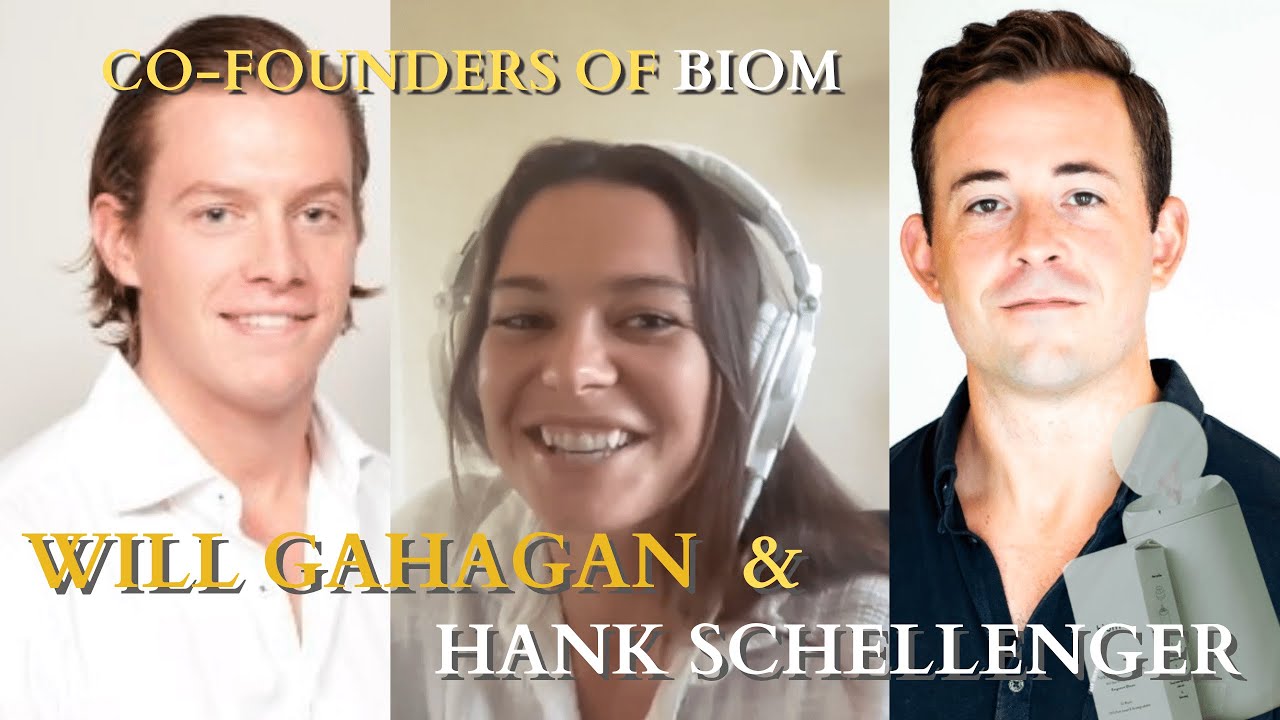
In this Seed to Harvest episode, host Paige Finn Doherty interviews Will Gahagan and Hank Schellinger, the co‑founders of Biome, a startup reinventing wet wipes with sustainable, design‑focused products. The conversation begins with eye‑opening industry statistics—260 trillion wipes consumed in North America in 2021, 90% containing plastic, and the material weight equivalent to 3.8 Empire State Buildings—highlighting the environmental impact of the market. Will and Hank recount how their long‑standing friendship from high‑school ice‑hockey led to a partnership during COVID, combining Will’s enterprise sales and recruiting expertise with Hank’s architectural and product design background. They describe the product’s patented magnetic closure, silicone hinge, and user‑centric pull mechanism, drawing inspiration from Apple, Bang & Olufsen, Sonos, Yeti, Harry’s, and Quip. Sustainability is central: Biome uses 100 % plant‑based, home‑compostable wipes, aims for plastic‑negative status, offsets ocean‑bound plastic, and explores biodegradable flexible packaging. The brand earned the Good Housekeeping Cleaning & Organization Award, reinforcing its differentiated positioning. Go‑to‑market strategy blends direct‑to‑consumer sales, a flagship launch in all 95 Container Store locations, and partnerships with online retailers like Grove.com and Maisonette, adapting to post‑iOS 14 advertising challenges. Team building emphasizes hiring “smart, hungry” people, low‑commitment contracting, and leveraging world‑class advisors. Fundraising insights reveal a focus on “no assholes” investors, value‑add networks, and alignment with CPG founders. The founders also share personal influences—books such as Hooked, High Output Management, The Hard Thing About Hard Things, Shoe Dog, and Open—and their unique ways of exploring new cities (running, driving, asking locals). The episode closes with local Charleston recommendations and a call to action to try Biome wipes.
Chapters
Welcome back to Seed to Harvest, a podcast with founders, creators, and investors about their stories, frameworks, and tactics. I'm Paige Doherty, and I'm the founding partner behind Genius Ventures. One of the core investment themes that we look at is the conscious consumer, and today I'm joined by Behind Genius Ventures portfolio founders Will Ga— how do you say your last name?
Gehagen.
Gehagen and Hank. I, this is the last thing that I forgot to check. Hank, how do you say your last name as well?
Schellinger.
Hank Schellinger.
Schellinger. There we go. We're, we talk a lot over email, but I don't say your last names very often. They're the co-founders of Biome, and Biome marries the power of good design with functionality to bring sustainable innovation to everyday wipes. After discovering that 90% of wet wipes consist of plastic fibers, they've partnered together to shake up the wipes industry as we know it. Will, Hank, thanks so much for joining us today. I'm super excited to have you on and ask you more about Biome and your journeys together.
Thank you for having us. We are stoked to be here. Thank you, Paige.
So let's, let's kick it off with you, Will. One of the things that really stood out to me during our earliest conversation was your insane fun fact knowledge of the wipes industry. So could you share some of the most outrageous statistics that you've learned while researching the, the $46 billion wipes market?
Yes, it's a funny little attribute or characteristic of mine that you picked up on, but I guess it's 100% true. So we've looked at this and kind of sliced and diced it many, many different ways. I think there are more than a few alarming ones when it relates to just kind of shock value of like how much material is produced on an annual basis. We were doing some digging for some new fun facts or just scary facts, depending on which way you want to look at them. And the most recent of which I have is 260 trillion wet wipes were consumed in North America last year. So Calendar year of 2021, 90% of them roughly did contain plastic fibers. So if you were to take that and try to visualize it in a way that might really stop someone dead in their tracks, the weight of just that fabric, so take water out of it, just the fabric produced in nonwovens specifically for the application of wet wipes would weigh the equivalent of 3.8 Empire State Buildings. So if you were just to do very basic math, it means 3.3 Empire State Buildings.
Wow.
weight-wise worth of non-woven material is produced in a single year. And the very sad majority of it, very— this is much of it will not break down.
Did you do the math for that on football fields or stadiums as well? I seem to remember that.
We, we did. We, we were trying to quantify. So there, there's 2 kind of components in it, right? Which are like, we just feel like really need to be changed. One is obviously the substrate, which contains plastic. There's no reason for that. Other than, so like, you know, it's a bit cheaper to do it. There's other benefits. The other side of wipes as an industry is the packaging is, generally speaking, almost always made with 2 different types of plastic, which makes it very difficult to recycle. And there's trade-offs to one type of packaging, one of which is a tube versus what could be done in something that's flexible, like what baby wipes are produced in. We call it a flat stacking industry. And what Hank and I were trying to figure out As we'd heard through another source that the 2 leading disinfectant brands were producing somewhere in the realm of 1 to 1.5 million of those tubes per day.
Wow.
Was, that's a lot of space, right? And you think about the air that it takes up. So how many tubes produced in a year would it take to fill up a football stadium? And it turned out that we could actually fill up more than one full-size NFL stadium, depending on which stadium you're looking at, but completely over the top. it's in packaging. So anyway, there's, it's difficult to really get like super hard, clean numbers on these, but we can share that there is a frightening amount of both plastic or excuse me, non-woven material, which contains plastic and a good chunk of packaging associated in both.
Yeah. I think that one of the things that really struck me in that earliest conversation was your attention to visual details, which I really appreciate as a visual learner. I could, very instantly recognized how massive the amount of plastic that was being produced when compared to an NFL stadium or an Empire State Building. And I think that's a really interesting tidbit that other founders can take away while they're listening to this episode, is trying to find visual representations of the impact that they're having as a business. And we'll get a bit more into that impact that you're having as a business, but I would love to focus on your relationship as co-founders. So, Will, Your background includes 10+ years in enterprise sales, including at Sequoia-backed companies such as Piazza and Untapped. And then Hank, yours is 10+ years of experience in architectural design. So as you think about your partnership, how have your individual skills set you up for launching Biome in April of this year? I think, Hank, let's start off with you.
Oh man. Well, Will and I are both like sort of passionate about Brands and products. Will brings a lot to the table just in terms of understanding, you know, how to create a company, how to reach people, how to get people to sort of, you know, gravitate towards something. And then, you know, I really focus on, you know, how to make it and how to build it well. I'm sort of obsessed with this like intersection of making things pretty, but designing them really well and, you know, trying to basically, you know, improve people's lives or change people's behaviors. So, you know, sort of in that, that world, that's where Will and I sort of intersected and, you know, we just get really fired up talking about, you know, creating a company that's gonna make something that, you know, A, makes people's lives better and, you know, even if it's something fun like a wipes company. And, uh, you know, also we, we're both really passionate about environmental impact. So, you know, we really, we've known each other for a long time and those are the things that we connect with. And, you know, it's sort of every day we get fired up talking about these things.
Yeah.
Wait, how did you two meet? Do you wanna walk through your meeting story?
Uh, I'll, I'll give you the, the summarized version. Uh, Will and I spent a year in high school together. We were captains of the ice hockey team together, Played sports together.
Please tell me you have a picture that I can include of you two on the ice hockey team together.
There definitely is.
There might be one somewhere.
Somewhere, but I don't know.
That's awesome.
Yeah. So we, uh, we, we spent, spent some really quality time together, sort of went our separate ways and then reconnected closer around COVID times. You know, Will came to me with this sort of exciting idea about a, a sort of a wipes product and, you know, off to the races.
It's a real story. I don't know how exciting he thought it was at first. I mean, the, the, I was like, I, I, I learned that Hank had, uh, Hank was running the, the, he was, you know, teaching a class as a professor at UNC Charlotte and also was running the fabrication lab. So he had access to some very, very nice high-end 3D printers. And I kind of like not even really fully knowing whether or not this idea like had legs, if it was something that consumers would want, figured a good way to start would be to like to print it out and just see conceptually how I felt about these designs that I had. And so I, Hank being a very good friend, I sent them to him. I said, you, I'll tell you what this is, but you have to promise not to laugh. And, uh, he, he in under 24 hours printed all the components, sent them to me, and I was like, did you laugh at all though, Hank?
No. I mean, this is what Will thinks. It's like I was laughing at him, but, you know, Will, Will is, you know, his excitement about things is infectious. So, yeah, I was like, Wipes. Hmm. Sounds a little bit like you've lost it, but I'm down to help. And, you know, Will, you know, explains everything and makes a ton of sense. And, you know, we saw it not only as this huge opportunity, you know, we, we both are, again, passionate about brands and disruptive companies, but, you know, also a behavior-changing product. And we saw a lot of opportunities from product design business. So we just, it's great timing for both of us. Just dove right into it. I was, you know, let's just get this thing made right away. And I'm like a sort of physical visual guy, so I just wanted to make And then start a conversation from there. And we kind of never looked back, never really questioned it.
That's awesome. And then, well, I, I'm curious what, like, one of the stories that you shared with us that was really interesting was how you came about this opportunity. You had spent, you know, a decade plus in enterprise software sales. I don't know that wipes were on anyone's bingo card when they thought about your next move. So I would love to hear more about How you found that opportunity and why it was so compelling to you.
Absolutely. So, I mean, you're spot on. I, my, my only real experience I think that I carry with me from tech sales is I very much so learned to, to not let a no get me down. And I also had the kind of fortunate opportunity at the last 2 companies of building sales teams, like really, and, and go-to-market strategies from scratch. So like the, the recruiting component is something that I think that has certainly like carried itself We wrote in your investment memo, Will said word for word, I eat, sleep, and breathe recruiting.
And that was like the first line in our investment memo.
So anyway, so the recruiting to Wipe's still probably a weird one that begs some questions and answers. So, I mean, the short of it was I'd left my last job in February of 2020, planned to take a little bit of time off, go skiing, et cetera. Basically when everything shut down in San Francisco, all the mountains followed very shortly thereafter and those plans were kind of a wash. So it was, I had a friend reach out who was brokering some PPE deals, gloves, masks, gowns, disinfectant wipes, et cetera, focused on essential businesses obviously that needed them. And it felt like a kind of an easy way to one, make some money, but also feel like I was doing some good for the, for the world. And a lot of people seemed to be having a A tough— and it was through that with a very large convenience store that will remain unnamed, where I had just a super eye-opening learning around how important it was to that particular company to have disinfectant wipes packaged in a tube. And it was the extent to which where we had found, I'm talking, there's 114 million wipes if you're looking on a per wipe basis, which is a quarter they expected to go through in roughly 6 months. EPA registered, List N certified disinfectant wipes, couldn't find them anywhere else. And We had secured this like crazy volume for them. Only thing we couldn't do is package it in a tube. And they said, we'll wait until you can get the tubes. And I said, well, I don't know if you've read the news, but like this, this isn't really like a, this is a seller's market, man. Like if you, if you got the wipes, someone else is gonna buy 'em. And so they waited and I, I, I followed up shortly thereafter with their like kind of head, their head of procurement and said, why is that so important to you? 'Cause they said we would've taken a partial, meaning they would've taken like 20% of the order, but Mm-hmm. they'd wait for the other 80% till we could package 'em in tubes. They said, we can show you 30 years of, of sales data where you put the same wipe, meaning the same brand, side by side, one in a tube, one in a flat sack like a baby wipe comes in.
Mm-hmm.
And the, the customer buys the tube 9 outta 10 times. And what they don't realize they're doing is they're, they're paying more money for fewer wipes because you're really just paying for that, that tube, that single-use tube, which is not recyclable as we really learned. I mean, there's a component of it that is, but requires separating. So my mind immediately went to just like Method and these other famous disruptors who really just made plays in packaging. And I thought, if you can't convince North American consumers to buy something in something more sustainable that takes up less space, that's cheaper to ship and produce and blah, blah, blah, then why not do what other companies had already proven to seemingly be working, which is execute like a refill as the new recycled type model. And so, mm-hmm, that opened up a whole nother, I think, like can of worms around where we saw opportunity in building something that also looked better and functioned better. But the original, like, impetus, like the, the, the trigger, so to speak, that kind of inspired both of us to really dig and kind of obsess over this was that fun fact that a, um, very senior director of procurement shared with me from a convenience store. And obviously never, never stopped thinking about it.
Yeah. The, I remember you telling me that the consumer chose the tube of wipes 99 times out of 100, which was just an insane stat to me. So speaking of the tube, I would like to introduce some ASMR sounds courtesy of the, the Biome tube on the podcast. Listen to this. That is the sound of a patent pending or patent granted magnetic closure. Let me just 2 granted. That's the sound of 2 patents granted. So Hank, on the product side, I would love for you to walk me through your thought process around Biome product design, especially like touch on some of the things that you obsessed about in your road to your retention rate is insane. It's 95% of customers are retained on Biome. But walk me through some of the small things that you obsessed over, cuz I think that's also one thing that really stood out is The attention to detail in the design where other people just weren't paying attention, weren't giving any love. And this makes it feel like such a luxury of the day. I mean, I just, I need to do it again.
Um, you're making me laugh because, you know, like that's what you're doing right now is one of the things we obsessed over. Small details like that that are sort of outside of just like your basic functionality. But, you know, going back to the beginning, what, as Will said, you know, 30 years of sales data saying that customers prefer a tube over a flat pack. So we sort of thought the tube was the starting point, sort of this like playful homage to reimagining wipes. And from there it was just all about user experience. And we always knew that wipes were this great convenient product that was just sort of a terrible experience and really bad environmentally. So, you know, most of the bad experience comes from the packaging, you know, so we knew if we could get One wipe to pull every time in a way that felt really nice. I actually really like the sound of pulling the wipes.
It's, you know, it's softer.
Yeah. Compared to like pulling out of this harsh plastic tube, it's like this soft silicone.
You can't even hear it.
It's kind of nice, you know? From there we like, we spent an insane amount of time obsessing over like the little silicone details of the hinge. We like, we custom made and reworked a bunch of times and, you know, we really Yeah, it's like, you know, it opens and closes, which is not something that you can find. Uh, so we, we really wanted, you know, we focus on the core pain points of wipes, pull one wipe every time, you know, maybe it's like really nicely, nice to easy open and close, kind of like playing with an Apple product. Keeps the wipes moist.
And touching on the Apple product thing, who or what were some of your design inspirations when you were designing the tube specifically?
I mean, Apple's like a no-brainer.
Mm-hmm.
Bang and Olufsen.
Yeah. I, I, Sonos is still inspiring us on some of our next product ideas as well. You know, I think that like Yeti is inspiring us in some ways. I also love companies like Harry's and Quip. I'm sure Willie's got some to add to that list.
Well, I mean, yeah, I mean, yeah, go ahead. Yeah, I was going to say the one thing that we get a kick out of hearing from people, 'cause we had no idea, was like the, the inspiration of that magnet was the Apple AirPods.
Oh yeah.
It's like, it's functionally, oh yeah.
It's like, I think you start playing with it. Yeah. Yeah. You sort of like, you sort of start playing with it and it becomes more than just headphones. It's like this product you fall in love with. Yeah. I mean, my background's in sort of architecture, so I look at, you know, how it's gonna impact the space and how people are gonna use it in the space.
Mm-hmm. Yeah. Did you, but mainly we just, we, did you take inspiration from kind of like bio organic architecture, like any, anything there? I, I spend a lot of time looking at like that style of architectural design. I, I really appreciate that there's an emphasis on functionality, beauty, and sustainability, which I think are 3 core tenets of how you think about product design as well.
Yeah. I mean, there's definitely like a fluidity to the design. We, we focused a lot on the shape and, you know, the sort of how it tilts towards the person. It's meant to sort of be inviting and easy to open. We thought about the, the size and shape of a person's thumb and how they were gonna use it. That sort of stuff.
Wow.
You know, it, it's, it really, the main thing that we're thinking about is how people are using it and the experience they're having. And, you know, trying to go just a little bit above and beyond at every little detail that we design so that you end up with something that has a great sound or, you know, something that you really fall in love with. We were like, you know, We looked at products that were great functionally, but then, you know, what's a product and a brand that you can really fall in love with and, and really wanna use all the time?
Mm-hmm. Speaking of going above and beyond, congratulations on winning the top spot of the Good Housekeeping Cleaning and Organization Awards with your all-purpose wipes. I think this was a massive validation as your Biome wipes were tested alongside hundreds of other products, including Febreze and other incumbents. Will, this is, this is directed to you and, and Hank, I'm happy to have you chime in as well, but As a new entrant in the wipe space competing against 50-plus-year-old incumbents, how do you approach building such a differentiated brand?
Oh, it's a great question. Well, I will start by saying this with the utmost respect towards like the status quo, i.e., the incumbents and 50 years of what we view as relatively minimal innovation in the actual like category more broadly of wipes is like, Part of what we liked about the category broadly was like, there seemed to be quite a bit of room to innovate and just do something that would be memorable. I think that, so like, right, like ex— that, that executing on actually like being able to sell something refillable is harder than that because you're dealing with a, a third-party manufacturer that you need to work with in a very iterative way to figure out how to package the thing differently than what today is, you know, Yeah. Dropped in a single-use tube. So not to like undermine, but that was, you know, that was one of the more difficult parts about this. I think as it relates to like differentiating our brand, one of the things that we went back and forth on, but we always had like aspired to is like, we didn't, like the opportunity here was not really specific to cleaning or disinfecting. Like the, the problem exists in every single category. And so they are like, interestingly, right, the same manufacturer that makes baby wipes for like a Huggies or a Pampers makes disinfectant wipes for Lysol and Clorox. And they make Armor All wipes and make pet wipes and Neutrogena makeup removing wipes. Right. And so if you look at that altogether, right, they're all using the same machines and all of them share a couple of things in common. One, there's general sense of unknowns and what formulations are substrates across the board are pretty bad. 90% of which, you know, 90% of Companies cut corners and choose to just produce them for cheaper with plastic in them. And then the packaging leaves a lot to be desired, at least in our eyes. And so our thought was, if you wanted to approach, if you wanted to, if you wanted to approach the industry more broadly in a way that made sense in the eyes of consumers when we kind of like crossed categories, well, how would you do that? And so our idea was, I mean, much of what you've kind of already mentioned today, it's like this idea of elevated design, better for you, better for the planet products. And we just try to Be as open and transparent in all the decisions that we make and will continue to make as it relates to formulation and substrate. And, and obviously I think one thing that will hopefully help us as, cuz it's not easy to cross categories, right? Like if you stay in cleaning for too long with just cleaning products, you become a cleaning brand.
Yeah.
If you stay in baby for too long with just baby products, you become a baby brand. And so, right.
You wouldn't necessarily wanna like clean your face with a Huggies baby wipe.
Exactly right. Yeah. And so like to do, like to do that, you really need to do it in a way and do it strategically with support from subject matter experts in each respective categories. Like, and then hang your hat on 2 things. And we've always thought that we could hang our hat on design and sustainability, right? Because you can make these improvements in, in those 2 areas in every single category in a way that improves people's lives, whether you're using baby wipes or makeup wipes or you know, flushable wipes or cleaning wipes, et cetera.
And to put some numbers to that, that aspect of sustainability, Biome to date has helped offset the equivalent of 2.5 million 500-milliliter bottles from entering the ocean to date. Can you talk a bit about what your 10-year goal of environmental impact is with Biome?
Hank, you want that one?
Oh man, it's a, we've got lofty goals. I'll say that. I mean, you know, We started by offsetting ocean-bound plastic, you know, before we were up and running, just because we knew it was something we wanted to commit to. And there's been a lot of hard decisions and, you know, when you look at production, hard things to overcome to get to where we are now. And it's just, it's going to be a constant journey for us in terms of the product. It's hard to put numbers to. I mean, Will, you can probably help me put some better numbers to this, but for me, it's going to be just like a roadmap of product iterations. When you look at our packaging, our wipes, our supply chain, And our product especially. Our goal is to be, you know, not plastic neutral, but, you know, truly plastic negative. Looking at our packaging, what that means is that, you know, right now we've only found a way for it to be recyclable, but there are things in the works from very smart people that can make, you know, packaging that holds a wet wipe biodegradable over time, which is just fascinating. It's this whole world that we didn't even know about with flexible packaging. With the wipes, we think that we're really in a great place, but there's some really innovative companies working on substrates that are, you know, using, you know, more sustainably sourced materials. And, you know, we're, ours are home compostable. You don't see that very often, 100% plant-based biodegradable. And then with the dispenser, we're, you know, we're really working with our manufacturers for it to be made out of recycled plastic itself. So, you know, every dispenser that we sell, every wipes that we sell, we're, we're hoping for it to, you know, sort of naturally be offsetting. And then through partnerships also be offsetting plastic from ocean-bound plastic and Yeah.
I mean, yeah, I will say we are, we were in that, we, we were, we were, have been plastic negative this year. Though it's not like a certification that we can put in our packaging, but just by running rough math, we committed to a pretty, we committed to a, a pretty good, uh, I guess upfront number for such a young company. So we are, are definitely proud of, of, of how we've started out.
Yeah, that's awesome. So switching gears a bit to the sales strategy at Biome, on October 2nd, you're launching nationwide in all 95 locations of The Container Store, which is super exciting. Congratulations. And in the wake of iOS 14 changes, the D2C landscape looks dramatically different than it did 2 to 3 years ago. So I'm curious, was the decision to enter retail planned well in advance, or did the evolution of the online landscape change your plans more recently? Will, I'll let you take this one.
Yeah, another great question. So I'll say Like omnichannel has always been part of our plan. I think that if, you know, if we had looked at what point we would've planned on entering through specialty retail, which I would say like Container Store really just kind of checked all the boxes and seemed to be like a truly fantastic partner and kind of great place for us to, you know, entering a big box retail is just a whole nother beast in itself. And this is our first go at that. And the, the, the So anyway, the long-winded way of saying, I think that what has happened is this new landscape post iOS 14 with data and just things inherently being a bit more expensive online. It just kind of moved the timeline a bit forward. And so when we were approached by a specialty retailer by the likes of A Container Store, and I mean, it took us all of, you know, a couple hours to really think about.
I was like, have you done this at all?
They, they did. Yes.
Yeah.
Their, their, their team, and we're, it was a very exciting email, I would say, for us to receive. So if anyone from Container Store is ever listening to this, just know that we love you and we're so excited for everything that lies ahead. That, and then we also made the decision to launch in a handful of what we'd consider to be like strong on-brand, like online marketplaces. So grove.com, Maisonette are the first 2 of which, and potentially maybe a few more in the future, but.
Um, cool. Yeah.
Thank you.
Thank you so much for sharing that. I think that it's interesting that you were looking at focusing on that in the future, but your timeline got shifted dramatically. And so funny as well that it was inbound too. It was like your timeline not only got shifted by the changes in the D2C landscape, but also by a dramatic opportunity that ended up in your inbox. So I think that's really cool. And on the recruiting side, we're going to get to this one because I I wanna think about, as, as you think about scaling out the team, what are your major priorities when it comes to building your team? And then how do you think about specifically thoughtfully onboarding those new team members and sharing your mission? Because your biome is a very mission-driven company at, at Attar. So I, I'm curious about that.
Continue on. Yeah, so I will say, so this is where, you know, my experience was largely in You know, I, I sold recruiting software, right? And I built teams that taught people how to sell recruiting software. But by virtue of doing that, I worked with a handful of very large companies and saw what a truly like sophisticated recruiting org looks like, like the best possible version of it. And then like a not the best possible version of it, but maybe a very fast-growing startup.
Yeah.
It's like trying to figure it out. And I all the while was also at a, I was at 2 very early stage companies. I was the 14th hire. And kind of like grew into a sales leadership position. And then I was the, I was hired as a head of sales at the second go to, to basically do what I had kind of realized I'd done in rearview over the course of the 5 years prior at my last company. Yeah, I just, I feel like I've developed a particularly unique insight around like the importance of hiring the right person for like the right role at the right time within a company. And I just think that I've watched very, very smart people who are exceptional, like salespeople or recruiters hire folks that were maybe just like a tiny bit too senior, if that makes sense. Like, like by, but for, for every reason that you can imagine on paper and like actually in real life are the best that they possibly could be respectively for that position. But it's just like the company's too early. And so I think that. For us, I think what, what, see what's, what's worked great today, and I will say like, I'm so unbelievably proud of the team that we have. I mean, it's mostly, it's, it's, it's for the most part Hank and I and, and everyone else is kind of contracted to, to run a particular channel, but everyone works incredibly well together and setting it up this way allows us to do some pretty cool things.
Mm-hmm.
Which is we really like, one, that person gets to know what it's like working with us and like Hank and I think are both pretty quick to admit what we don't know. Like, My background is not in marketing. I have strong opinions about brands that I love and I have a good idea of like what I want to accomplish, like from an impact perspective and like the brand that we're building. But we're also pretty quick just to like get outta the way. And so I think our ethos has been hire smart, hungry, great people who like hopefully believe in what we're doing and then just enable them and get outta the way.
Mm-hmm.
The way it's set up right now is it's very much so kind of like a, I wouldn't say it's like, it's just, it's low. We're not extending committed offers right out of the gates. It's like we work together for a couple months at that point in time. It's usually like, I think, a pretty clear feeling on both sides that this is something they want to continue to do.
Mm-hmm.
And so as we look at that long-term, there will probably just be a handful of people who haven't been contracted, we'll extend full-time offers to, and then just kind of continue to, to operate this way cuz it seems to be like kind of working and effective.
Yeah, absolutely. I think you've been able to bring on some pretty incredible team people on the team, so I'm, I'm super excited about that and just so excited for your trajectory.
I, I will say, I apologize to just, just very, very quickly, I will say we also have advisors who are like World-class best, like that we could possibly find.
And we've been very, very grateful. Yeah. Do you wanna shout some of them out?
I mean, I think they know who they are, but we'll just give a shout out to Fly and, and to Lance who, who are our saviors. And also to, uh, to Howie and Alicia who were wildly impactful for the first year getting this thing going.
So. That's awesome. So switching gears onto the fundraising side of things, what does your process behind evaluating investors that you're considering adding to your cap table look like? And then How did we, or Behind Genius Ventures, stand out in your conversation?
Yeah, so I think it's, it's like that how, how we evaluate, I think it kind of evolves with time. All right. Like my background is, is in, is in tech. Um, so unlike some consumer founders, like we don't have a win under the belt, but I also think that like in many ways, I mean, like we have some unique things that probably the way that we view building a business and like Hank, from a product background is not your traditional, like, person to be building a wipe dispenser. But I think that that's kind of created it. That's kind of made it into what became so special. When we were first raising, I mean, I think rule number one was, which you hear all the time, is just kind of, you know, pardon my language, but no assholes on the cap table. Wanted people who we like genuinely admired, who were value-add in either network or experience, and who we felt like genuinely were like in, you know, investing in us and a company and a vision that they believed in the same way we did. I was kind of like stoked and like maybe a little nervous when you first shared kind of behind Genius's profile. 'Cause I was like, eh, that's like, we kind of fit, but it's not like the most textbook, like perfect fit. But I'm hoping that these guys might flex a little bit. For us because like, I feel like we checked, you know, 75% of the boxes strong enough. And so anyway, obviously I had a great time getting to know you and Josh and like the timing of it was quite perfect. I'm also very flattered to be in the mix with some of the other portcos that you guys have as kind of like the, one of the more true like consumer plays. And so, yeah. I would say like the only thing, the only part of your question, which maybe I didn't answer is like, so how has that evolved with time? I think that now that We are building more confidence and conviction in like our approach to this market and category and everything else. And I've just learned like firsthand and like this landscape is just evolving rapidly. And I think that like network and advisors who have done this before is just more important than ever. So we'll very much so looking to prioritize value-add investors if they're— are former CPG founders and/or execs that have done this direct-to-consumer omnichannel, et cetera, then that would be like, yeah, yeah, absolutely. Yeah. Perfect for the bill.
All right. We were talking before the show and it was funny, Will, you had mentioned that the fun questions were at the end, so we're getting to the fun questions now. And Hank, I'll let you take this one first, but what book influenced your trajectory most as a young adult?
I guess like, you know, my background's in design. I always loved engineers who, there's like a balance between understanding that natural beauty comes from good engineering. Simplicity comes from good engineering.
Mm-hmm.
So I've always loved Jean Prouvé as like one of my founding inspirations. But I also love like Carlo Scarpa. I could talk about architect stuff all day. I, I love the book Hooked: How to Build Habit-Forming Products. I believe is the name.
Mm-hmm.
And we also, Will and I read Obsessed together, and both of those sort of brought it all together for me.
Love that.
I also like, you know, it's a little nerdy, but I like sort of business management books that focus on like just getting stuff done. So I like High Output Management. You know, you come from like a design background, it's like, you know, you can design till you're blue in the face, but you know, you get into a startup and you just have to, you have to turn those ideas into getting stuff done and constantly sort of improving. So I like books. I was inspired a lot by Andy Grove.
Great.
And High Output Management.
Great book. I reread it recently. Yeah. Well, what were, what were some of the books that impacted your trajectory?
I mean, mine are probably not too, I mean, some of them are like laughably traditional. Like, like, come on, be more of like a tech— former like tech sales—
Tech sales.
Like The Hard Thing About Hard Things is great. Like, I, I personally have a book that I read that I just really like in 2, 2 books, which are both biographies.
Mm-hmm.
Or, um, just 'cause like, I, I just find people have just like done unbelievable things and like overcome challenges. And like you try, try to think, maybe you're having a hard day and like a book that really puts Context where I'm like, what is actually a hard day?
Mm-hmm.
Being Phil Knight's Shoe Dog, I thought was an awesome read.
Mm-hmm.
I love the Andre Agassi book Open. I think, I mean, like, I think I finished that book in maybe like 3 days and ran like maybe 28 miles over the course of those 3 days. 'Cause I just could not stop listening to it.
Wow.
We listened to like, we really like, we tried to get our hands on everything. I will say just one shout out to anyone that is like doing this, and this is like a, a hot, it would be like a combo between Listening to How I Built This one day. Yeah. And then listening to, I think we've, I probably listened to this book 3 times, so I always listened to it when I was running. But Billion Dollar Brand is a very good, that I just felt like to be like highly relevant for so many different reasons as we were thinking about doing this. Cool.
Um, cool. I'm excited.
It's really well written.
I'm excited about those ones. Awesome. This, so this next question is one I've been noodling on too. See how people approach new things. So when you go to a new city, how do you research it? Will, do you wanna kick us off?
Sure.
Yeah.
I mean, my, I'll say it, it very much depends. I wasn't sure how to like interpret this, so I'll give you, I'm gonna give you 2 answers and I'll try to keep 'em short. The first of which is if I'm, if I'm, if I'm going to a new city for, you know, maybe a short vacation, say like a long weekend, then no, I mean, 9 times outta 10, I'm reaching out to Someone that I know for like, you know, personal recs prior to, to, to arriving there and trying to build out.
I like that.
Some like kind of fun, basically trying to figure out like, where would you go if the internet didn't exist? And you might have lived there or have family there or whatever. The, the true answer to this, and this is what I've done every time I've moved. So when I moved to San Francisco, like however many years ago, 10 years ago, I literally just ran. I mean, I would, I would, I would, with no particular like path in mind, I would just run and I'd say, I'm gonna, maybe I run 5 to 10 miles today and just like kind of get lost and then find my way back.
Wow.
And that was like, I mean, that was really how I learned and got a feel for different neighborhoods in San Francisco. And I've done, it's a little bit diff— more difficult here now that we're in, we're in Charleston because there are certain bridges that you just can't run across. But as it relates to like downtown and getting to another peninsula, I've basically done the same thing. And I just like find it to be a, a very cool way to develop your own like personal—
Yeah. Like finding your bearings. That's super cool. Yeah. Hank, what about you?
I like just like aimlessly driving around cities. I'm, I'm like obsessed with like where the city's gonna develop next.
Mm-hmm.
So I try to like just sort of drive around different neighborhoods and then like, you know, that sort of gives me sort of like the macro and then Like exactly like Will, I actually picked this up from my dad. It's anytime you go to a new city, just sort of go and run around and try to get sort of like that, that feel for what feels comfortable and, you know, what are the different— you, you really can't see it when you're driving. So when you're running around, you get a different understanding.
Definitely.
And other than that, I, I just ask people, you know, where's your, where's your favorite restaurant? Where's your favorite bar? You know, what's your favorite part of the city? And, um, I find that you can sort of Figure out your, your favorite neighborhoods that way.
This is awesome.
Okay.
This is the first time I've asked this question to anyone ever. When I say I've been noodling on it, I've just been thinking about it, but I absolutely love how it's an encapsulation of you both solve problems because, well, it's, you ask people for personal recommendations and you've talked a lot about advisors being really helpful in your business, and then you just like run and try and figure things out, which I feel like is like how you are in business as well. And then Hank, I love that you take like a very, you take like a design approach to it. So you're like, what does the macro look like? How does the space feel? So I love that. I think I'm going to continue asking this question in future podcasts.
It's a good one.
Okay. So one of the things that I love doing is visiting our portfolio companies, which is something I talked about before the show. So when we come visit Charleston, where would you recommend for A, finding great antiques, B, remote working, and then C, a great dinner?
Oh man. Antiques. I mean, you could really spend a lot of money on antiques here really fast.
Tell me more.
If you want to, if you want a bargain and like some very cool, I mean, incredible stuff that changes weekly, there's a spot called the Mount Pleasant Mall. Ooh.
Okay, cool.
Where there are, it, I mean, it did my, it changes every single week. Basically someone can rent out like a section of the store and then bring in whatever antiques or art or whatever they want and set up a shop and sell there. And so Yeah, that's cool.
I mean, for antiques, just walk down King Street.
King Street.
There's, you know, there's a ton of, like, there's just a ton of art galleries and there's a bunch of little antique or different shops, especially in the southern part of McCombs Street.
Cool.
Which is close to where our office is. So we see a lot of them.
And then have you guys figured out a remote working place yet? I know you said this was the one you're having a hard time with. Wait, you, you guys have an office? Is that right?
We do now.
Yeah, we do now, which is great.
Super exciting.
We were, we were remote from each other for the first, I don't know, year and a half of working together though.
Yeah.
I, I just, you know, post up in a, there's a lot of great coffee shops in Charleston. My favorite coffee shop is Harken. Um, and there's just like, not a great place to take calls, but, uh, great place to be around people and jam out for a while.
Love that.
All right.
Last one. They have a brother, another one called, called Harbinger, which is just north, which is also very nice.
Oh, cool.
All right. And then last one is a great dinner spot.
Maybe we should send you a list.
I know you might need to.
I'd say like the, the, uh, The Ordinary.
The Ordinary.
Yeah. Fantastic. Yeah. Fig. There's a new spot called Vern's that everyone's raving about that we have yet to go to, but I'm very excited to go to.
Awesome.
And then actually maybe like, this is an easy answer for me. I don't even know why we didn't get there faster, but 167 Raw Bar is, uh, 167 is what I was going to say. Yeah. If you like sushi, then it's just, it's kind of in a league of its own.
Okay. Amazing. Cool. Well, I feel like that's a pretty good list already when I come and visit you all. I, I feel like I asked the antiques question specifically because I think that they bring so much personality and story to a space where it's like you don't want your home necessarily to like look like it's out of a catalog and it's a cool representation of a story. It's like, oh, I went to visit Will and Hank at Biome in Charleston, and this is what I picked up on my travels there. And so it kind of like builds in a story to it. So that's why I was asking about that.
Okay.
I know our time is up, so thank you so much, Will and Hank, for joining me today. If you would like to acquire some Biome wipes so you can try this at home, I'll drop the website in the link. It's getbiome.co. I'll drop it in the show notes. And then your Instagram, is it Get Biome as well? Yeah. Perfect. And yeah, I just, I really appreciate your time today. This was so much fun.
We had a blast as well. Always a pleasure, Paige. Thank you.
Of course.
Yeah.
I can't wait to see you in Charleston. Thanks so much.
Yeah. Thanks so much for tuning in today to Seed to Harvest. If you enjoyed this episode, be sure to subscribe wherever your favorite podcast listening platform is. I'll be releasing new episodes weekly, and if you have any questions or comments, feel free to let me know on Twitter. That's Paige Finn. Paige and then Finn with 3 N's. Thanks, and see you again next week.
More from Paige



Paige of Behind Genius driving an AI electric train in St. Louis (Intramotev Visit)





