Exited Founder to Building a Startup Insulator: Brickyard Co-founder Cam Doody | Ep 85
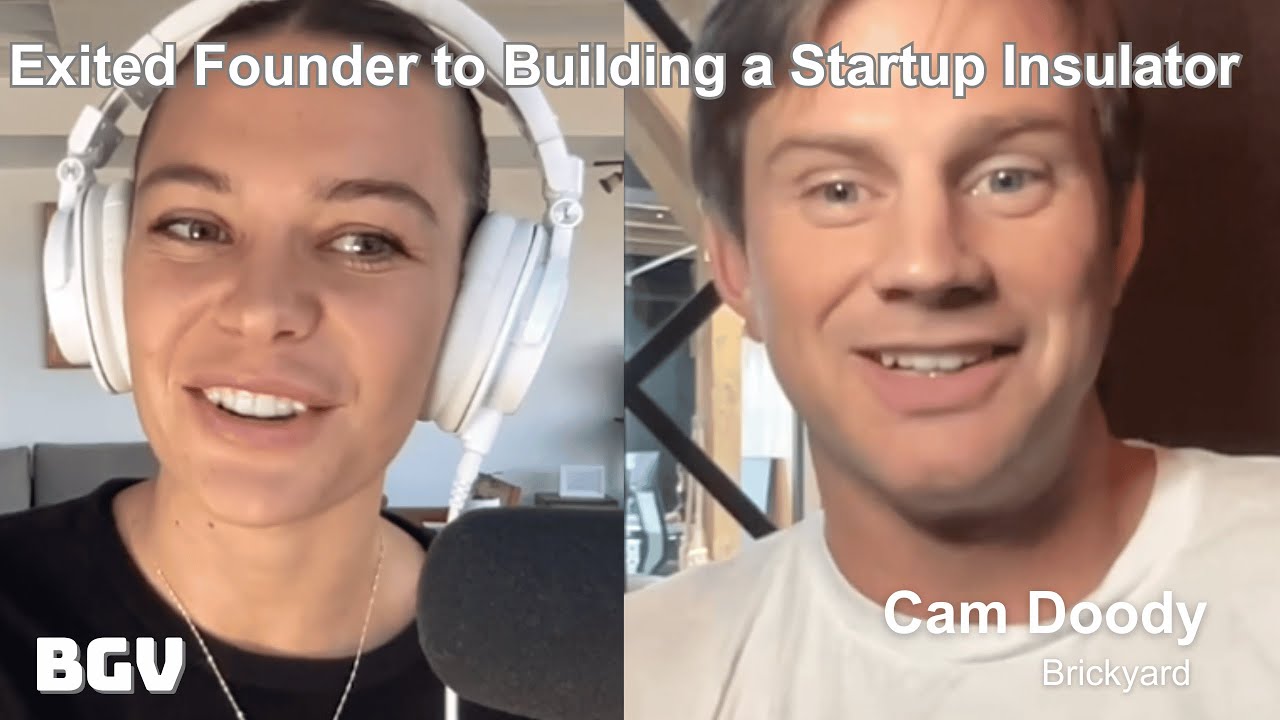
In this episode of Seed to Harvest, host Paige Finn Doherty interviews Cam Doody, co‑founder and GP of Brickyard, a venture firm that runs a founder‑residency program in Chattanooga. Doody recounts his experience building Bellhop, a logistics‑tech moving company that raised $115 million, and how that “school of hard knocks” shaped his view of venture. He describes the “trough of sorrow” – the 2‑3 year post‑seed period where startups face extreme uncertainty – and explains Brickyard’s mission to help founders navigate it by forcing a one‑year, full‑time residency in a shared 15,000 sq ft building. The model emphasizes radical focus, a community of equally ambitious founders, and a no‑frills, low‑profile sourcing approach that avoids traditional content‑driven deal flow. Doody details how the firm self‑funded its first 16 companies, later raised a $20 million fund, and now screens thousands of decks, using stricter filters and a “handshake” commitment to ensure seriousness. He shares portfolio highlights, notably Coast, which builds live API demos to accelerate sales, and anecdotes about founders logging 117‑hour weeks. The conversation also touches on Brickyard’s success metric – a 20x fund – and the investors Doody admires, such as Michael Gilroy and Haroun Makhtarsadeh. Throughout, Doody emphasizes a philosophy of burning the ships, relentless execution, and the belief that a committed founder can always achieve a Series A.
Chapters
They would, they would come into work every morning at 9:00 AM and they would leave at 3:00 AM, 7 days a week for a year. Like we were grinding for teams. And part of Brickyard is like, we're never gonna have some focused content strategy. Success is a 20x fund and that's what we're going for.
Hello everyone. Happy New Year and welcome back to Seed to Harvest with me, Paige Finn Doherty, the founding partner behind Genius Ventures and author of children's book about Venture Capital Seed to Harvest. I'm really excited to be joined today by my friend Cam Doody, who is one of the founding GPs of Brickyard. Cam, can you share a little bit about your story? I'm really excited to hop in today and talk about founder residencies and your principles on investing.
Yeah, let's do it. I guess I'll start with my background. I've been on the venture side for 2 years now, so, and I really don't even consider myself Mm-hmm. Eventually, that's right. I am doing that. But 11 years ago, I started a company called Bellhop that took on the moving and relocation space with a new logistics model and used tech to basically break out our labor platform with a, a third-party trucking platform that allowed us to grow across the country quicker than any moving company had ever done it before because we didn't own assets. So we just partnered into carriers that had these 26-foot box trucks, and then our technology platform would match our labor with these third-party carriers. And anyway, we went down the venture path and raised about $115 million over the last 10 years or so. And just an incredibly difficult build. I mean, tough business. I mean, you've got—
Yeah.
You know, you're relying on labor in a geographically, you know, dispersed footprint, different regulations, you know, by state. You got the seasonality of moving. You have, you know, it's a lower gross margin business without repeat customers baked in, at least. And it was just, you know, it was just a What a grind. It was an amazing business. It, it was a grind. And, and so that's kind of how our cloth was cut, was like nothing ever came easy. And it was this product that just laying brick, like there was never a, a point where we had, you know, we, we cracked some, you know, partnership or something and our revenue like doubled overnight. Like it was just never that. And so we were sort of like, a product of the School of Hard Knocks. Um, you know, the, the moving is such an emotional thing for customers. Like you screw up a move, it's like you're not like screwing up a taco delivery, you know? So anyway, um, that is kind of like what built Matt and me, who's my co-founder in, in Brickyard. Um, and, you know, our take, we kind of saw the venture world kind of go crazy, you know, in the later teens, early 20s, you know, 2020, 2021, obviously. And we started seeing the, the, the culture of founders start to change.
Mm-hmm.
Um, largely driven by, I think, you know, the venture industry. There was so much money flooding into venture for so long. Venture was able to build this narrative around like, you know, startups being sexy and fun and like the celebrity thing and get a, you know, professional athletes in your cap table and go to these parties and do these things. And it was like, it got to the point where it just, it was just a mania. And what we knew deep down was like, if you are going to raise venture capital, the pressures that you are going to be under for a decade are crushing. Like it is, it is, you're going to war for a decade. I mean, it is, it is, you know, most people have Um, you know, of the 5 Fs, you know, faith, family, friends, fitness, finances, like most people get 3 of those to focus on. Yeah. Founders get 2 and one of them's already picked for you, you know? And so you, you basically, it's like your company and you can pick one other thing to focus on and everything else is just gone. And anyway, it's just hard. So we wanted to build a, a venture firm that addressed the toughest period In our opinion, in startups, which is the trough of sorrow. That is the 2 or 3 years post your first raise where you fall off the peak of disillusionment, you know, your, your first TechCrunch article, and then you're in a knife fight, you know, of, of extreme uncertainty as you figure out, you know, what the customer wants and, and as you, you, you are learning into product market fit. And the only people that understand what the trough is like are other founders building in the trough or who have done it. And so YC is the best there is at getting to teams their first raise, right?
Yeah.
That's the peak of disillusionment. Every team comes outta YC, they fall into the trough of sorrow, and no one was focused on getting teams like to, you know, to the Series A.
Mm-hmm.
And, uh, and so that's what we wanted to do. So our view on, on doing that was the most important things that you can do in the trough are radical focus.
Mm-hmm.
And be surrounded by super ambitious people that are in your exact same stage. And so to sort of counteract the la-la land, you know, founder culture of, you know, Flying first class and going to parties, networking events and this and that. It was like, all right, you've got to move to Chattanooga. If we write your check, you've got to, you have to move here. It's a 1-year minimum, but really our teams, the spirit of the deal is you're coming here to get to Series A metrics. It's a forcing function to get to Series A. And so you're leaving your life behind. You are picking your one thing. You're even leaving your second thing behind, maybe.
Yeah.
Yeah. Unless it's your immediate family who's moving with you. And you're like, I am going to put it all on the field until I get to Series A and I will get there. It's just sort of like a, you know, burn the ships sort of thing. And so, um, we self-funded our first 16 teams. Um, we bought this building, this brickyard behind us. So all our teams build under this, under one roof. Um, we've got this 15,000 square foot building that we bought. It was an old Persian rug warehouse. and rent it and, and built it into, you know, what we wished that we had in the early days. And teams on a rolling basis, you know, as we do it, as we write a check, you have 60 days to get here. And then you join this sort of community of founders that have all burned the ships.
Mm-hmm.
Um, in this environment of like, this is a serious place. Like everybody here is They're, they're, they're, they're in the trough. Pushing hard, you know?
Yeah.
And I don't know, you know, the nightlife scene in Chattanooga's, uh, okay, but it's, it's not, it's not the place, you know, you, you come to, to, you know, so, so that's our deal. Um, we write $300K or $400K checks into usually like $1 or $2 million rounds. You and I have done a few deals together and hope that we continue to do that.
Mm-hmm.
And, uh, you know, our view is, is our job is to get teams to Series A through a forcing function. It's not an accelerator. There's no programming, there's no demo day at the end. You are literally just coming to an environment of a bunch of founders and team, early teams that are pushing really hard.
Yeah. Um, and I think that's one of the reasons why you're one of my favorite firms to work with. I think like for, we have very different investing styles and I love sending teams to you all because I think like the forcing function of being together with a community of founders is really important. I guess one of the like more logistical questions is how did you decide between going towards like a cohort-based model where all the teams come in and you do it seasonally versus on a rolling basis having teams come in?
So I think that the, probably the, the honest answer there is when we first started, you know, we just didn't, we didn't have a ton of deal flow.
Yeah.
You know, um, and so we wouldn't have had enough deal flow to do a cohort, right?
Mm-hmm. Okay.
And so we kind of just had, we actually self-funded our first 16 companies because we didn't know if this was gonna work. Like we didn't, we didn't know if, if we could attract truly top-tier world-class teams to Chattanooga, to move to Chattanooga until their Series A. And By about the 5th or 6th company that we invested in, it was like, okay, we can, it's something is resonating.
Founders.
Yeah. The founders that, you know, that are serious are really drawn to this idea. And, um, and so then we raised a $20 million fund, which is our second fund, but it's the first fund that we took LPs. Um, and, but yeah, we didn't have a deal flow in the beginning. Like we were grinding for teams. Um, and part of Brickyard is like, we're never going to have some focused Content strategy. Like, we're never, I'm not gonna be flying around the country going to venture events and beating the venture drum. Like, we have to stay, you know, we have to stay under the radar as this sort of, if you know, you know thing.
Mm-hmm.
Because we don't do that, uh, it, it kills a major filter for what allows us to find really unique founders that kind of fit the profile that we look for, which are those Neurotic types that don't give a crap about, uh, status or fame or any of the, you know, the, the, the other things that come with raising venture capital. They just wanna put their head down and grind.
Yeah. Yeah. Do you wanna, do you wanna talk about like one of, so one of the companies that we invested in, or the first one that we've done together is a company called Coast. Do you wanna talk a little bit about how you— Oh yeah. Coast.
Coast, uh, is a very, very special team. So Coast is building demos for any company that, that has an API that they want to sell to other companies right now. Like API documentation is where deals go to die. Like there's one person in the company can read it. It's a highly technical document. See, no, the CEO is not also the CTO, like they, they can't make a decision on this thing. And so what Coast does is they allow, they essentially will scrape the code of whoever you're trying to sell to, put it into a demo so that sales teams can say, hey, if we did this together, this is exactly how our company would look if we integrated with y'all. And so it, it makes, it turns it into like, you can send this to, uh, you know, the CEO of a company and the CEO can be like, oh yeah, I want this. It's just visualized.
Mm-hmm.
Anyway, product's great. The founders are greater. The Austin and Spencer are really unique. I mean, they're just monsters. I mean, when they moved to Brickyard, they came outta YC, they saw a tweet or something about Brickyard. Uh, Spencer got on the phone. He is like, look, we're in, our raise is done, but we'll take capital from you cuz we just want somewhere where we can just put our head down and grind. And we were like, yeah, can you be here tomorrow? Like it was just immediately, this was not a normal founder.
Yeah.
And, and so anyway, they came here, Spencer and Austin, 7 days a week. Okay. They live in, we, we bought a, a, a house next to Brickyard. That a lot of our founders live in. It's like 100 yards away from Brickyard.
Mm-hmm.
Live in Brickyard. They would, they would come into work every morning at 9:00 AM and they would leave at 3:00 AM, 7 days a week for a year.
Yeah.
In, in, in, in Spence, in their last week, Spencer logged a 117-hour work week. We have this like old school, like punch card, you know, time thing just for fun. Yeah. Um, and he punched it. I'll show you the card. I mean, it's, it's, it's just insane. But the funny thing was that last week was no different than any other week that, that he's— so anyway, he's a maniac. He's, and I love them and they're gonna do very well.
Yeah, it was funny. I was talking to some of my other friends that were in Brickyard and they were talking about there's like C tier, B tier, A tier, and then S tier and like Spencer tier founders. And that's how they would like rank other founders in Brickyard.
Who said this?
I think, I can't remember who it was. I think it might've been the June team. They were talking about it.
Yeah. But yeah, June's also a Brickyard company who are, uh, absolutely amazing.
Yeah. But yeah, I, I would love to also hear more about like How you think there's obviously like some self-selection process with the founders that you back.
Yeah.
But I would love to hear more about like your, uh, you know, I think you made a LinkedIn post about like now you have incredible deal flow and you see over like 4,600 opportunities every year. How do you think your selection process of the founders that you wanna work with has changed as deal flow has increased?
Well, So because we have this building, I mean, one, we have a tiny fund. It's $20 million. Matt and I, you know, we're taking a little salary, but we're like paying the bills for this place. You know, we got to heat this 100-year-old building. Our power bill just doubled this month going into the winter.
The sauna.
And we got a sauna, we got a cold plunge. No. So there's like cost, way more cost in Brickyard than in a typical fund that we just run out of our management fees. So we just pay ourselves less, but we're like doing what we want to do every day. So we don't really care. But because of that, we have limited, one, we're limited on space, right? And we don't have like an army of associates, like sourcing deals for us. So like Matt and I are looking at every cold inbound, every, every deck that we get, we're parsing through.
Yeah.
And we can't, you know, we're not at the point yet with our deal flow to where we can like, you know, only take warm intros or something like that. Like we gotta like dig through all this stuff. And now that we're getting, you know, we've really struck a chord and, you know, I don't know how we had 4,600 decks coming this year and we're tracking like 10 this year. Um, but it started out with like founders didn't know anything about us and now most of The founders that are applying know about what Brickyard is. So the intent's a lot higher. So like we have a lot more like quality deal flow that we have to get through now. We don't have the, you know, we don't have the budget to go hire an associate.
Yeah.
And so we're just making it harder to, to do Brickyard. Like every, you know, we just have to like create another filter of like, how serious are you? You know? And so like it was a, a 1-year minimum, you know, and that was kind of the deal. And now it's like, it's a, it's a 1-year minimum, but you gotta, you're, you're like handshake, you know, we have a, actually a handshake document that it's like the spirit of this deal is you're coming here to get to Series A. And so it's a big commitment. So we're, we're kind of like making it harder and harder so that we don't have to deal with as much, like, Noise in it. And deal flow.
Yeah.
Like we want everybody that's coming here, like they know who we are and we, they know that this is like kind of intense, you know? So, yeah.
That's awesome. What is, what is your vision for, like, what do you wanna build Brickyard into? What does your vision for success for Brickyard look like?
Well, I mean, we're gonna be judged, you know, this story's great, but we're gonna be judged on the quality of teams that we back and the teams that, that, you know, come outta here. And so, you know, success, you know, this is, I should mention, you know, this is not at all about economic development for Chattanooga. I mean, Chattanooga, shout out, greatest place on earth. I mean, but it's, but Brickyard has nothing to do with Chattanooga. And so success is a 20x fund. And, uh, that's what we're going for.
I love that. I, I think like Brickyard is very unique as a firm. I would love if you could share some more stories about like how specific founders that you've worked with have really benefited from being heads down for that intense amount of time.
Well, I think it, you know, going back to my story of building Bellhop, you know, this is actually something that we did when we took our first check from Lamppost. It's a Chattanooga-based firm and it was 3 founders in the supply chain space that started this massively profitable big business, sold for half a billion dollars and raised no venture capital. And they started taking profits of that business and investing in companies, but you had to move to Chattanooga and you had to build in their space. So this is like a—
Yeah.
of something that I did personally. And so, um, my co-founders and I in Bellhop, we credit that act of burning the ships and going to a place where we didn't know anybody, where we could work 18 hours a day for 4 years straight. That's the only reason that we got that giant Bellhop flywheel going in that complicated, just All the headwinds you could deal with in a company, all of us say we wouldn't have been able to make it to PMF if, if we had not had only one thing to think about. And so there's a thousand ways to skin a cat. We just know our way. And that's, you know, our thesis in Brickyard is we're going to find founders that, that also believe in that. way of getting there. And our belief is if you take a check from us, the Series A is guaranteed if you want it bad enough. Like if, if you fully commit to this, every team can raise a Series A. We believe the Series A is the last round that can be fully manifested out of just sheer will and determination.
Yeah.
You know, Series B, Not so, you know, uh, Series A is like hard work. If you're willing to put in the work and willing to make those painful but obvious decisions when, you know, telling you when to change course and you're willing to make those decisions fast, you'll find, you know, you will find early adopters. You will raise a Series A. You will have a semblance of product market fit. And so that's, That's what, you know, we just know that personally. And, and that's what we try to impart in our teams.
I love that. Who, I'm curious, like, who are some of the investors that you look up to or admire in the industry?
Um, you, of course.
Thanks.
I look up to the investors that wrote our first checks into LOPS, Michael Gilroy, At Coatue is one of the best investors. He will, he will, I don't know if I can say this. I think he's going to lead Coatue. I mean, he is a, yeah, the highest integrity. And now I'm just puffing you up, Gilroy. Love Haroon Mokhtarsada is the, is the, he's the current CEO of Rocket Finance, Truebill.
Hmm.
He's been on our board at Bellhop for 8 years. He believed in us like So, so early on, you know, we've been in the trenches for a long time together. And anytime shit hits the fan, he is leaning in, rolling his sleeves up, getting on a flight, coming here, canceling everything on his schedule. He's just a wonderful man. Michael Gilroy, Haroun Makhtarsadeh. I just got to give it to them. They were, they were early and they were there in the trenches with us. Wow.
So Haroun must have, was, was he starting Truebill around then? If you guys met like a while ago?
He started Truebill in 2016 or '17. Actually, his brother, his brother started Truebill. Oh, went to YC with it. And then later Haroun came back in to, to take on the, the CEO role. Haroun started a company called Webs that sold to Vistaprint.
Wow.
Um, he's one of those crazy guys. He started a, a Muslim dating app, like in past mentions. He just sold this, this, this Muslim dating app that he, that he started. And I was like, I had no idea that you'd started a Muslim dating app. He, he sold it to Match.com recently, like for a not small amount of money.
That's so wild.
It's just, he's wild. Yeah. He started, actually, this is funny, Gilroy passed. On Truebill and Gilroy sat on the board with Haroun and knew Haroun like for years. And I'm always give him crap for that.
Uh, that's so funny. This one is so smart.
But yeah, Bill sold, uh, Rocket recently for $1.3 billion. And anyway, he's, he's just the man.
Wow. That's incredible. Um, do you have any questions for me?
Yeah. What, what, what do you wanna do with Behind Genius?
I think the mission for me is, has always been the same as like master the craft. I fell in love with venture when I was, um, 20. I like, I binge-watched Silicon Valley over a winter break and I was, I thought I was gonna manage artists like in music. And I decided like I didn't want that lifestyle of like crazy late nights and parties. And I found venture kind of on accident, but it combined so many of the things that I loved and I, I Like my vision is to truly like pursue the craft at the highest level. And so I think my evolution through like leading a syndicate to raising a first fund, to raising like a second fund and learning all that comes along with like building a firm has just been like—
Wait, there's someone?
Yeah, I had a partner in fund 1, so my second fund has been like the evolution of like my solo journey so far, which I've really been enjoying. And I, I just truly want to be like the best investor and partner to founders possible. I think when I was coming in, like, I think about building an investment philosophy very much from like first principles, and it's very oriented around founders, which is I think like why we often end up co-investing. And there's 3 principles I look for. One is incredible storytellers who have a deep understanding of like qualitative and quantitative aspects because At its core, like the company that you're building is a collective fiction. You need a lot of people to believe in it for it to work. The second is a really strong mission. So they're working on a company that's deeply personal to them, that they have just like an incredible relentless drive to pursue. And the third is high execution velocity. So the thoughtfulness and ability to make challenging decisions and pursue them with speed. And Kind of like I came to those with a large degree of self-reflection because I think those are the 3 characteristics that have enabled me to do what I've done so far. And so I feel like I'm pretty uniquely talented at like spotting that in other people. But I just want to be the best investor that I can be and share my journey so I can educate the next generation of founders and investors. And I think like some of the most exciting parts of my journey have been when I like inspire other people to start their venture firms. I think that's been really cool. Like, People who have been in the industry like way longer than me or like had, you know, the, the credibility that I didn't really have, like coming from a state school or, and not having a track record and not having started a company before.
State school. State school, man.
Yeah. State school. So I think, yeah, I just wanna continue to master the craft. It's such an incredibly—
Who, who pushed you? Who, who believed in you for your first—
Who believed in me? My mom's always been my biggest cheerleader. She's so wonderful.
I think like, I know you're super close with your family, which I love.
Yeah. Yeah. My, my mom is always such a—
Was there somebody in venture that like saw promise in you and, and pushed you to do this? Or was it, was this like self-manifest?
I think, well, when I was 20, I had like a Post-it note on my wall and I was like, I wanna launch my own venture firm. I think it arose out of like, I worked at a B2B SaaS firm in San Diego, and I was like the only woman on the investing team when I was there. And I just felt like I had like a very different perspective and wanted to like pursue like a very high trust, out of the spreadsheets, like founder-first investing philosophy at the earliest stages. And I like taking that amount of risk. It's really like exciting for me and I love betting on people early. But Andy Wiseman was probably one of the first people to like I was writing a lot on Twitter when I first got into venture about what I was learning, and he was one of the first big investors who I really look up to who reached out and was like, hey, I love your writing and I'm really inspired by what you're building. And he was one of the first LPs to commit to my first fund, and his belief has really meant a lot. I think Union Square Ventures is one of the firms I look up to in terms of how they've grown thoughtfully and have a very writing and research-heavy investment perspective and just high integrity. And then who else? I don't know. It was a grind. Like we probably had like 1,700 phone calls to raise $5 million from 120 LPs.
Wow.
So there's a lot of people who believed in us early when I, I had no track record and just a crazy dream. So I'm beyond grateful for All of the people that enabled me to get to where I am today.
Nice.
Hopefully into the future.
Yeah. All right. When are you coming to Brickyard?
Uh, soon. Wow. You're really putting me on the spot. I love it. Soon. When does it get warm there?
That's a great question. I would recommend, I'd say, I'd say, you know, April's wonderful. Okay. It's a little wet. I'd come, I'd say May. You wanna be here in May? Okay. Yeah.
Okay. Yeah. I've never been to Tennessee, I don't think. So it'd be exciting to come visit. But yeah, thank you so much for coming on, Cam. This is so fun. I'm excited that we got to share this conversation. Any last words of wisdom before we, we pause?
I think we covered it.
Okay, perfect. And a very special thank you to Seed to Harvest podcast editor Tate Doherty for his amazing work on this episode.
More from Paige



Paige of Behind Genius driving an AI electric train in St. Louis (Intramotev Visit)





