Founding Partner of Banana Capital Turner Novak on investing in eCommerce | Seed To Harvest Ep36
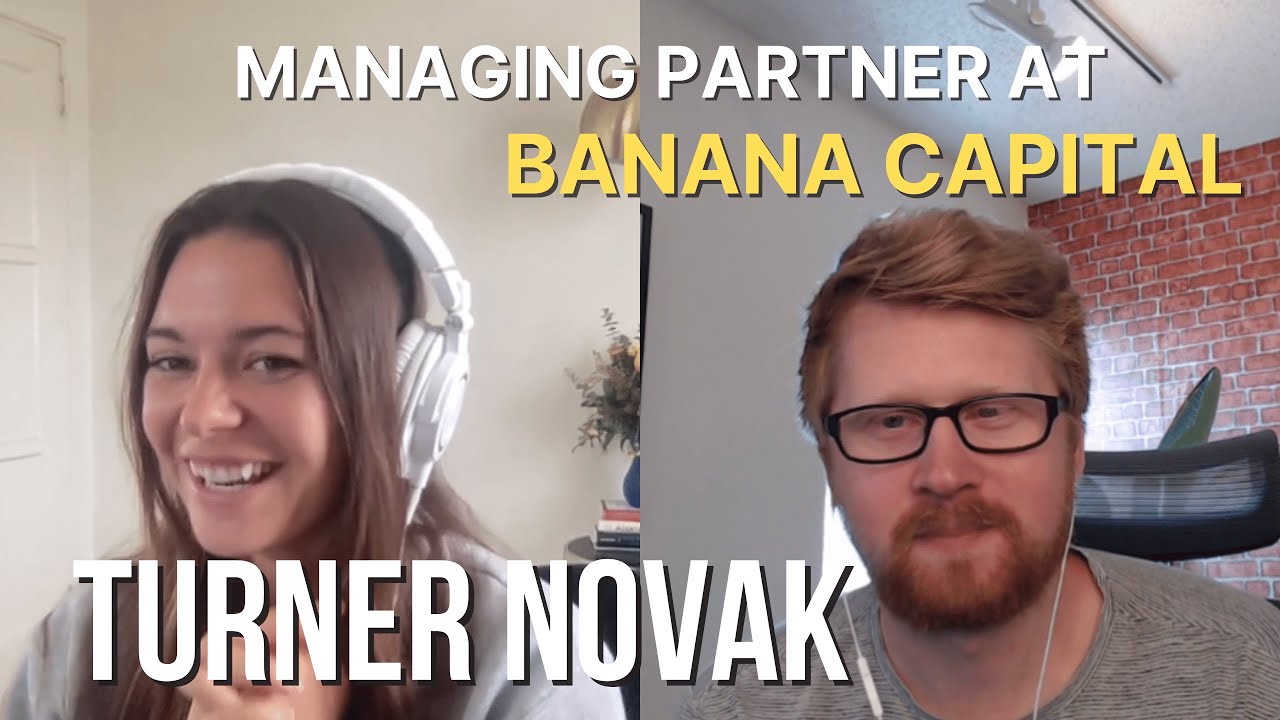
In this episode of the Seed to Harvest podcast, host Paige Finn Doherty interviews Turner Novak, founding partner of Banana Capital. The conversation opens with a recollection of the viral "I Am Alzheimer" meme movement that brought the two together, illustrating how internet culture can translate into fundraising for social causes. Turner then explains the origin of Banana Capital’s name, describing the deliberate choice of a fruit‑based, emoji‑friendly brand to stand out in a crowded venture landscape. He outlines the firm’s investment thesis: an internet‑first, content‑first approach focused on consumer‑oriented businesses, especially e‑commerce platforms in emerging markets, consumer fintech, social apps, and vertical SaaS. Turner discusses his evolving view on value‑add, emphasizing trust, rapid responsiveness, and a high founder NPS rather than hands‑on operational help. When describing fundraising for Banana’s first fund, he stresses pitching conviction over co‑investor hype, preferring to invest before other funds and avoiding hype‑driven allocations. The interview delves into Turner’s community and content strategy—leveraging memes, a large Twitter following, and genuine interaction with replies to build deal flow and brand awareness. A concrete deal‑sourcing example is provided through the investment in BeReal, sourced via a connection with New Wave’s Sean and founder relationships, with Turner highlighting retention metrics and personal “gut‑check” usage as a decision factor. Finally, Turner shares his philosophy on scaling the fund’s team, focusing on adding smart, consumer‑savvy people, shared decision‑making, and appropriate compensation. Throughout, the dialogue blends casual, humorous anecdotes with insightful commentary on modern venture practices.
Chapters
All right, everyone. Welcome back to Seed to Harvest, a podcast with founders, creators, and investors about their stories, frameworks, and tactics. I'm Paige Finn Doherty, and I'm a founding partner behind Genius Ventures and author of Seed to Harvest, which is a children's book about venture. And today I'm joined by Turner Novak, who started as my internet friend, and now I've gotten to see you at a bunch of conferences. So I'm super excited to have you on to chat all things memes, consumers, with a couple of surprise questions in there. Turner is the founding partner of Banana Capital, which was launched in 2021. Prior to that, he ran all venture capital investing at Gelt VC and invested their second fund. Prior to that, Turner was a member of the investment team out of Fort Capital, and previous to that, helped manage a $1.6 billion endowment. Prior to that, worked in credit, private equity, and corporate finance. So Turner, thank you so much for joining us today. I'm excited.
Yeah, so am I. Thanks for having me.
Of course. All right, so to kick us off, I wanted to share with our listeners how we met. So we actually met through I Am Alzheimers, which was an internet movement that started as a meme and then ended up helping raise over $250K for organizations supporting Black lives. And this was really my first experience being part of a viral movement, and I learned a ton from the experience. But I would love if you could share some more of your experience with what I Am Alzheimers was like. I was like for you.
Yeah, it was, it was an interesting time because COVID had kind of just hit, you know, maybe we were, we were all kind of finally adjusted to COVID. Like it was probably 3 months in, something like that.
End of, yeah. End of June.
Yeah.
The manic energy.
Yeah, there was definitely manic energy. And the way I kind of remember it was, I mean, it was, it, it was always kind of this meme, like this joke. I think it started on TikTok and then We kind of, there's some, you know, tech people that took, took it and ran with it on Twitter. And it was always just kind of this, like, it was a meme, like it was just a joke. And it's, it snowballed into people thinking that there was a product launching. And so people just went with it. And I, I mean, I've always participated in all the memes online and on, and on Twitter and.
Yeah.
So yeah, I kind of, kind of got involved with it like everyone else who was kind of a part of it. And I don't really remember what I did. I, I'm, I had a very small role, like I didn't, I didn't really do anything.
You were, no, you were a hype man. Okay, well let me, I, I feel like it was, it was big at the, at the time and we were all in a Discord. I was in the Discord for like 48 hours straight. I was at my parents' house and it would be like ding, ding, ding, ding, ding, like the Discord sounds. And I just remember like everyone was like, you were, you were on the meme dream team. So you had a big Figma file and you were helping helping everyone edit their memes, and then we would all post them at like certain times of the day. And, and then I think you were in the club, the Clubhouse room that, uh, iMouthEye, or the social audio app that we were like pitching to, I think Andrew Chen and Andreessen were like, give us a term sheet now. So I feel like it, yeah, that was my introduction into being very online, which is— Something. Yeah.
I was gonna say, I, I mean, I, I kind of grew up on the internet, so it was kind of, I like totally got it when it was happening. It was fun. Yeah. It was definitely fun to be a part of. And now I'm glad that we, I think, I can't remember the amount. I feel like it was like a lot more than 200, like closer to 300 than 200 if I'm remembering correctly.
Yeah. I think it was $250,000 and then additional funds got matched privately, which was super exciting. Cool. And I'm happy that we got to divert the energy from a meme into more worthwhile causes. And okay, so before we get into the deeper fund questions, speaking of niche talents, you mentioned to me before the show that you can whistle any song and people can tell what you're listening. So I was wondering if you could whistle As It Was by Harry Styles.
Yeah. Are you going to play the song or am I just going?
Oh yeah, I can play the— I don't know. Let's see.
You want me to just whistle it?
Yeah, you got it.
Okay, you wanna pause it and whistle it?
Okay, that just made my day.
Yeah, no, it's, it's, it's very entertaining for people, especially when you get into like very weird songs. I don't know, I don't know what it is that I guess it's like, I think it's the pitch, how you control your throat like that.
Yeah.
The, the, the pace, like the velocity of pushing air through and like lip, lip control, I guess. Like the little, the little muscles and like how it sounds.
I don't know what it is, but the attention to detail, like all of the tactical aspects of whistling have never been things that I've deeply thought about, but I so appreciate you sharing more about it.
I'm one of those people that's always listening to music or Making music. So like whistling or, or like snapping my fingers or like tapping stuff. So.
Dang. Have you ever tried like making actual music?
Sort of. I did. I played the viola in middle school. Oh, uh, wasn't very good, honestly. Yeah. I mean, I experimented with like Fruity Loops. It's like a DJing. Oh yeah, yeah, yeah.
My brother's like way into Fruity Loops where you can like sample and he would always make like Oh, cool. D&B music. Yeah.
Yeah, I probably, I wish I, I got more into it when I was younger. I kind of downloaded it and I think, I think I like pirated a version of it and it like wasn't a good version and like I couldn't get all the, the effects and, and all the, the, the full product suite. I didn't have any, I didn't have any money cuz I was like 16. I was like, ah, I'm, I won't get into this. So. But it's, it's fun. I listen to a lot of EDM stuff like that.
So, okay, cool. Yeah, I, I think in terms of like the money aspect, would love to dive into kind of like venture and your background there. So the first question I have for you is, why did you decide to name your firm Banana Capital?
Yeah, that's a good question. And actually a lot of people ask me that. If you, so when you were trying to come up with a name for Behind Genius or the podcast, like Seed to Harvest. It's hard to come up with the name.
It's so hard. We went through so many iterations.
Yeah. So, I mean, that's, that's the problem I ran into. It's like anything I thought of, every combination of like noun, verb, color, animal, like it's all taken. And especially when you consider not just in venture, but like there are way more hedge funds, real estate funds, There's like tens of thousands, there's like hundreds of thousands of real estate funds out there. It's like everything's taken. So it made it difficult to find anything. I think we probably spent a total, me and my wife probably spent a total of like 8 hours just thinking through. It was over the course of a couple weeks. Like we'd spend an hour one night after dinner, just, all right, let's work on this. And yeah, I think she, it was her idea. She was like, oh, isn't Apple like the most valuable company in the world?
Yeah.
Why don't you name your fund after a fruit? And then it was like, what about banana?
Dang, I love that. And then it was available.
Of course there's no funds called Banana Capital. It's like a, it's like a meme name for a fund, but it's also one word, banana. Like it's just, oh, who, who invest— who's your investors?
It's an emoji.
Benchmark Sequoia Banana. Like it's just, it's one word. It's an emoji too. So you got the banana emoji, the cap. I think it's important to like own an emoji, you know, in this, in this era of the internet. It's just, I don't know. And then, and now like anytime there's funny banana content on Online, I see it. Many people send it to me. It's, it's great. So I always, you know, you can make memes off the funny banana stuff.
I love that.
So it was, it just ended up being perfect.
Yeah. I feel like what you said about owning an emoji is definitely super relevant. Like whenever I see any banana-related content, I'm like immediately Turner.
And, you've gotta stay top of mind as a VC.
Yeah, 100%. Very competitive capital market. You have to stand out and you're fighting for attention with a lot of other firms. So, and I would love to, like, can you touch on what you focus on at Banana Capital in terms of investing?
Yeah, so the, like the core of our strategy, it's always been like internet first, content first. So we get, we have a lot of random inbound that comes in from the internet, which means we end up investing globally. It's probably in going forward, it's probably like 50 to 70% will be North America and 25 to 50% will international, just a little bit in every market. We're pretty, we try to stick to things that we understand pretty well. It's generally consumer, so it's probably over half of the investments that we're making going forward will be consumer, probably closer to 60%. These are consumer internet platforms. This is like, I describe people as Web2.
Yeah. What are some like examples of companies that you've invested in?
So We've invested in a lot of e-commerce platforms in emerging markets. So usually it's kind of like, hey, there's a model that works in China or in India. It's a publicly traded company. It's worth $10 billion or $50 billion, whatever the number is. And they did it by targeting a certain customer segment or a certain type of growth strategy, certain type of products. And it's like, hey, we're trying the same thing in Brazil. We think the timing's right. No one's cracked e-commerce for the bottom 80% of consumers in Brazil, or Mm-hmm. No, nobody's cracked selling beauty products online in Latin America, or nobody's cracked selling fruits and vegetables online in Vietnam. Like there's just all these different random categories. So, you know, you meet the founder and the, the, the numbers look really good. Like, I mean, generally we're not investing pre, pre-launch with e-commerce platforms. They're really, they're like very difficult business models. They're pretty capital intensive. Yeah. Really easy to lose a lot of money and Is both like the founder and the company, but also is the investor. So that's kind of, you know, probably the bulk of it. And then a lot of, we, so also quite a bit of consumer social, quite a bit of consumer fintech, consumer healthcare. So there's maybe like a little bit of crypto Web3-ish type stuff that we'll invest in going forward as it makes sense. We just haven't a whole lot in the past just 'cause the valuations have been kind of outta whack in my opinion.
Yeah.
Try to find like, what problem are you solving for the consumer? I think It's actually, it has been really surprising to me with investing in emerging markets. There's a lot you have to be careful of, but there's also a lot of like, oh, they're just building Robinhood for Egypt. Like they're just helping people in Egypt invest in the stock market and they're charging no commissions. And there's, you know, it's X market size and all the incumbents, it's a bank that doesn't have an app and you have to call the representative at the bank.
Yeah.
to place an order for the stock. You can't buy anything in the US, like you can only buy things in the Egyptian stock market. And then the cost structure of the bank is, you know, they have to serve all of these, or they have to pay all these representatives. So it's just like they can't sell any products to lower income consumers or like the vast majority of the population. So there's a lot of examples like that just around the world of like, hey, this has worked in 23 other countries. No one's, it hasn't worked here yet, but because mobile penetration or internet penetration, or for whatever reason, certain demographic thresholds of kind of, we've reached, we've passed a tipping point and this business now makes sense here. So done quite a bit of consumer internationally. And then we do a little bit of software investing, just boring B2B SaaS. It's a lot of vertical SaaS and a lot of, I really like vertical SaaS with marketplace, like a B2B marketplace also attached to it.
Yeah. Mm-hmm.
Because you basically build workflows and monetize the supply of the marketplace, but then you also help them sell and you basically give them lead gen with the marketplace. You can monetize with fintech. I mean, there's just like a lot of, a lot of interesting things you can do. So a little bit of that too. Yeah.
I'm kind of curious, like, how has your approach to analyzing and supporting companies that you invest in shifted, you know, as, as you, over the past couple years?
Yeah. So in terms of supporting, I mean, I think I used to try to pitch like value add kind of. Honestly, at this point, when I talk to founders, I just say there's nothing unique about anything I can do for you. Like I have no unique value add. There's so many other VCs, so many other investors, and I'm not gonna be better than anyone at any one specific thing. So typically it's, Like we just have a level of trust. I'm really responsive. I get back to you quickly. We have a high NPS score with the founders that we back. We have a good reputation. That's probably not true with all founders. There's probably some founders like, oh, I hate this guy. I want someone to provide value. So it doesn't work with everyone, but, and there's, and we do help our portfolio companies as much as we can, but I, we typically do not come in and say like, hey, we're going to hold your hand and we're We're gonna like help you code and like build the company, build the company for you. Like, it's just not, I don't, I don't think the last time I coded anything was like 12 years ago. So don't know how I'm doing that.
I love the, I love the honesty. No, I, I, I so appreciate it. And, and going back to that, I think one of the dynamics that's really interesting in venture is when you are raising and when you're investing, you're essentially pitching 2 different products because to, from the LP perspective, you have to make enough abstraction so that it is, it is like digestible and understandable for them. And then the value-add question, I would say in my experience, has most often come from the investor side versus from the founder side.
Oh, for sure.
Um, yeah, so I'm curious on, on that note, can you touch a little bit about how raising your first fund at Banana was and maybe share some fun LP stories of weird and fun internet ways that you got connected with folks?
Sure. Yeah. Um, so if, when I'm talking to LPs, You have to spin the value add. I honestly, I tell all LPs, I'm like, it's all pointless. It's all BS. Like, I think the only thing that matters is just like having conviction in things before other people. Like you can say like, hey, we're this great fund. We have great access. We co-invest with all these great funds. But if you're co-investing with these funds, they're leading the round, they're getting tons of allocation. You're fighting for scraps with everyone else with all this great value add. You can't really build a sustainable, scalable institutional fund doing that. So my pitch is typically, I don't really care who else is investing. Like, I'm trying to find things where I can potentially start to write larger checks over time as we scale the fund. And I don't, I'd prefer if there's not like a lot of signal around, like around other people investing. And I almost prefer if there's no hype, to be honest with you, because That means that we'll be able to make you more money as LPs. And typically it's like, it's a lot easier conversation with the founder when it's like, hey, I just need someone to gimme money versus we have 5 term sheets. What can you give us? Like, why should we take yours?
Yeah.
I just don't even really try to do those investments, to be honest. There's been a couple, you know, maybe we'll do a small check, like they still really want us. It's a small check, something like that. Yeah, we're typically not going out. Like my pitch to LPs is, I invest before that happens and our returns are going to speak for themselves. Like, I'll get, we'll get more allocation at lower valuations instead of co-investing. So that's generally kind of the pitch. And then in terms of the value add, when I really have to spin it and, you know, make them buy into it, I just have a lot of people that follow me on the internet and they can be helpful. So there's been, there's tons of examples where I've helped with fundraising, I've helped with customer acquisition. Help with recruiting. I'm actually terrible at helping with recruiting. So usually it's one of the things when I tell founders, it's like, I have no unique value and I cannot help you like recruit engineers. I just, I don't know any, I'm not a good engineer myself. Like, it's just not what I'm good at. So again, it definitely qualifies us out from a lot of, a lot of things I would say, just because there's, there's a lot of founders that really want that value add that, you know, an investor can bring.
So yeah, we don't do that much. But I will say, You do have 135,000 Twitter followers, so you have quite a large presence on the internet, which I feel like your approach to community and content has definitely appealed to founders, investors, co-investors. Can you talk a little bit more about your approach to community and content? You touched on it briefly at the beginning of this episode around like, if you see something that's trending, you'll try and make a relevant meme about it. There's ever like a viral video, whenever I see it, I'm like, Turner's gonna post a fire meme about how this is like. Investors fighting for allocation or whatever. So I'd love to hear more about what your approach to that is.
Yeah, well, it's actually crazy. You would think I should do a lot of B2B startup type software investing because there's actually like a tangible value add. It's like, hey, founders of a bunch of companies that are going to be your customers, follow me on Twitter. Like, let me invest in your dev tool and we'll make sure people know about you. I just like don't think it's that differentiated, honestly. There's just so many people that have a lot of people that follow me, follow them on the internet. So yeah, I think in terms of like community building, stuff like that, like I have always started off as being an investor. Like I just, I was, you know, I figured, yeah, like this is a way for me to build up deal flow if I want to get a job at a venture fund. You know, I didn't really want to be an influencer, like a creator, to be honest.
Mm-hmm.
It just sort of happened. So it, like, I, I don't, I've always played with it and I, it's very like hands-off approach to community management. Like I really don't care what people think of me, what people say. I get roasted all the time for stuff. There's memes about, um, like for, you know, people who are listening, I'm one of the VCs that's invested in, you know, one of those 15-minute grocery delivery companies that everyone makes fun of. Mm-hmm. Which I'm happy to go into the thesis if people want. But, and people like make fun of me for it and it's like, well, it's like probably like 20% of the responses to my tweets are like jokes about how this relates to 15-minute grocery delivery.
Oh my gosh. Oh, wait, I've never seen that. It's so funny being extremely online too, cuz like you are paying so much attention to, not so much attention, but like more attention than I might pay to like your comments and responses.
Um, no, I read every reply. I reply to everyone. Like I, I try to interact with people. I just think it's fun, honestly.
Yeah. I feel like that's one of the like magical parts about how you show up on the internet is like, even though you have quite a large audience, you still like interact very heavily with when people respond. I'm, yeah.
One thing I want to, I want to get this out there because it is actually easier to respond to a reply than to respond to a DM on Twitter. Just the way that the UI works. It's sometimes it's really like, it's a lot of steps and taps to like jump into a DM, especially when it's a cold DM versus just in your notifications. You can reply and see it right from the screen.
Yeah. You're so dang, and other people see it.
So that's— So there's also, there you, there was a big meme once that it's kind of died down, but it was for like a week. It was going that I never respond to cold DMs. Mm-hmm. 'Cause I don't, I don't even, I don't even get, I don't even read all of them sometimes.
Yeah.
There's like a joke that I don't, 'cause I, I don't, I don't even look at all of them sometimes. Yeah. 'Cause there's so many and it's it's hard to stay on top of. And the UI on Twitter is so bad and I'm spending more time on like my email and stuff like that. That's, that's more important. So yeah, there, I, there's a ton of these like small, weird inside jokes that people love. And like, I'll get an email from a founder like, hey, I'm not building a 15-minute grocery delivery company, but I, I think you might like this. Or, you know, I heard you didn't respond to DMs, so I'm emailing you.
That's such a funny cold email. But it's like they're, they're like in on the joke and it's like a, A good natured group, I guess.
Yeah. And I, um, I think too, in terms of like community building, I really just try to like be open and friendly to everyone. And like people, I, I am myself on the internet. Like I, I, there's no, I'm not like pretending to be anything. It's literally like, I love memes, kind of a little bit of a jokester. So I'm just, it's very natural. Like, oh, I'm just making, making, making jokes about things. So like people feel like they know you and like founders, a lot of times I'll like meet a founder or I'll meet an LP and like, oh, I followed you on Twitter for a couple years. Like, You don't need to introduce yourself. Like, I know who you are. Yeah. Like, I reached out because I feel like I already know you. So I get a lot of that too.
Um, dang, that's cool.
I, yeah, I should probably institutionalize whatever, you know, I'll get more into like the official community building stuff, but I feel like it would kind of ruin some of it, honestly.
Yeah. It's kind of like the magic is that it's a bit like less structured and that's like, yeah, what has brought the magic to it.
Okay.
So you've invested in one of my favorite social apps, which is BeReal, which I've been using like every day since I think January of this year. And, um, early adopter. Yeah. Thank you. Early adopter.
Consumer investing too.
I, well, yeah, we've invested in a, in a handful of like consumer companies. I, I really like this space a lot. Yeah.
It's so fun. Terrible space to invest in. Like the, the skew of returns are literally like, I think with SaaS there's like some more You know, fatter opportunities at the end. Like, we're a consumer, it's like 99% are just gonna go to zero.
I think the, the recurring revenue is definitely very appealing to me as an investor. However, I do love to like try out new technology. And also I think my friend group like kind of bullied each other into joining BeReal. Like everyone was like, you have to join, you have to join, you have to join. So I'm curious, what was it about BeReal that caught your attention as an investor? And then how did you source that deal?
Yeah. How did I source it? So I met the founder from just, just a friend, like another VC. It's the guy who led their seed round. It's a fund called New Wave. His name's Sean. He's awesome. He's a very smart, probably one of the best early stage investors in Europe. I mean, maybe in the world, but his thing is he does a lot of early stage consumer in Europe, specifically France. And yeah, I'd met him before I made the jump into VC. I was just writing about I wrote a lot about Snap back in, you know, back when it was the next MySpace. It was going to go bankrupt. No one uses it anymore. I just fundamentally disagreed. I was like, this is the same business model as Facebook. They're doing a bunch of stuff to the product that's going to reignite user growth. So I, I, yeah, I met John through one of the portfolio companies that he invested in that was acquired by Snap. His name's Antoine. His app was Zenly. It's the one that Snap Kind of controversially shutting down. Yeah. Yeah. There's, I think there's, I don't know. I'm interested to see what else comes out on why that happened. Totally different, different story.
Yeah.
I just kind of got to know them, have co-invested in some companies with them. I think they're both awesome. And yeah, they, John's like, hey, check, check out this app, BeReal. I think you'll like it. And they were doing really, really well in France. Very strange. Like it's unintuitive. You'd see it and think, oh, Instagram, Facebook is just gonna copy it. It's gonna go away. But they just had very strong retention. People just stick around and use it. And it reminded me a lot of Snapchat stories from back, back in the day.
Back in the day. Well, it's like a much more like intimate experience, like Instagram and Snapchat, like all the social media that I use is much more like me as a creator versus BeReal is me and 11 friends. And I'm like, I know you all so well. And I see like all the weird stuff that they're up to at the random part of the day that it sends a notification and I'm not spending like 4 hours a day on it, but I will come back every day and post a picture and see my friends.
Yeah. So when you think about how the rest of the landscape is evolving, it's all like algorithmic professional content creation being pushed to you. I think it was some leaked Instagram data on Reels. This was not related to Reels, but Instagram disclosed that, oh yeah, 11 million people are, they have 11 million creators in the US. Which I guess just people who post content. So an average of 11 million people creating content per day on Instagram. BeReal, in order to use the app, in order to be a daily active user, you must post, you must create content. And I don't know when they updated this. It was a couple months ago. They updated the careers page to say we have over 10 million DAUs. They're mostly in the US. They've been number 1 in the App Store for like 60 days in a row. I don't, I don't, maybe that's not true, but they've just, they've been right up there.
Wow.
So I don't know where you want to guess that the daily user number is at today, a couple months later, but it's like, it's like fair to say that more people are actually creating content on BeReal than on Instagram, potentially some of these other platforms. I don't have all the statistics. So I was just like, man, this is, this is just nuts. Like they've reduced the friction to posting and it's like normal people. It's, it's your friends. Like it's stuff that you actually kind of want to see. And there's like a gap in the market where people don't post, like young people don't post on Facebook and Instagram. But then also my wife and my mother-in-law, when I showed it to them, like they use it, they still use it. So I live in Ann Arbor. I'm not, I don't have a lot of like tech bros that live around me. So as a consumer investor, I just kind of like, okay, what do like real people use? You can almost like jumpstart like the seed, Series A, Series B, Series C, like What's the retention gonna look like when my wife and mother-in-law start using the product? Like they're not gonna be the ones that see it when all the tech people are, you know, using it.
Yeah.
'Cause it's the seed or Series A. So, uh, that's kind of like a gut check that I use in it on everything. And I've actually used that to make a couple other investments. Like my wife has started using a product and I will invest in it or not invest and realize 2 years later, like, man, I'm an idiot. She, I should have listened to her. She's super smart. I don't know why, why I didn't take her lead on it.
That's awesome. Wait, and then, As we, as we wrap up today, I've so appreciated your time. I have one last question for you, and that is like, what is your philosophy on scaling your team as a venture fund manager?
It's just me and Alethea on my team right now, but we discuss everything together. So we want to be able to bring like everyone's perspective to the table. Like I'm the sole decision maker right now, but I, you know, going forward, it's like taking everyone's opinion. And so as I think about building the team, it's just like finding other really smart, passionate people. People that are like really in touch with, you know, how consumers think. I'm planning on giving appropriate like carry and compensation to everyone on the team. We're managing tens or hundreds of billions of dollars, but we put up 30% IRR over like a 30-year time horizon. So, which means you have to keep a certain fund size to do that.
Dang. Well, Turner, thank you so much for joining Seed to Harvest today. And if you're listening— Yeah, of course. Of course. And if you're listening and you would like to connect with Turner, please visit his Twitter @TurnerNovak. He is Incredible memes, and great educational tweets as well. There are some sprinkled in there.
There are. Yeah.
Thanks so much for tuning in today to Seed to Harvest. If you enjoyed this episode, be sure to subscribe wherever your favorite podcast listening platform is. I'll be releasing new episodes weekly, and if you have any questions or comments, feel free to let me know on Twitter. That's Paige Finn, Paige and then Finn with 3 N's. Thanks, and see you again next week.
More from Paige



Paige of Behind Genius driving an AI electric train in St. Louis (Intramotev Visit)





