Gaby Goldberg on Club Penguin, Virgil Abloh, Web3, Pallet Boards, and Internet Native Curators
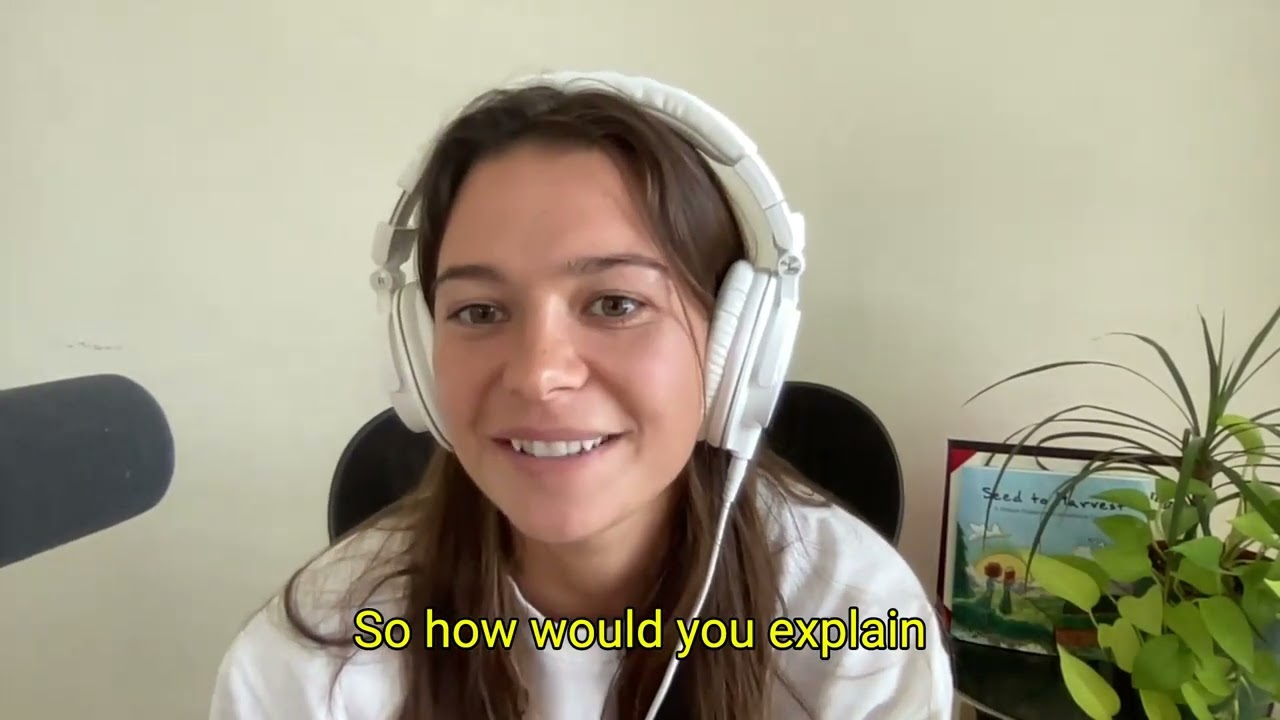
In this episode of Seed to Harvest, host Paige Finn Doherty interviews venture investor and writer Gaby Goldberg. The conversation begins with Gaby’s formative experiences in early online communities like Club Penguin, Minecraft, and RuneScape, which helped her develop a digital identity and comfort with online life. She recounts how writing on Twitter and a personal blog during the COVID‑19 pandemic led to a pivotal internship at Chapter One, launching her venture‑capital career. Gaby discusses creative burnout, emphasizing the practice of writing for oneself and the importance of staying true to personal curiosity. She then breaks down Web3 for newcomers, contrasting Web1’s open protocols, Web2’s platform‑centric model, and the promise of Web3’s decentralized ownership. Her entry into Web3 came through an NFT gallery (Bright Moments), where she experienced the onboarding process and observed a rich dataset of first‑time users. Gaby explains her role curating a Web3 job board on Palette, describing how she leverages trusted networks to match talent with opportunities. The interview also delves into her writings on curators—“Curators Are the New Creators” and “Curators All the Way Down”—exploring how curation has shifted from top‑down fashion houses to bottom‑up, internet‑native tastemakers, and how Web3 could enable ownership for curators. Finally, she offers practical advice for aspiring creators: write as if for yourself, produce polished pieces, reach out directly to thought leaders for amplification, and pay the favor forward. The episode closes with Gaby’s contact details (Twitter @Gabby_Goldberg, Mirror blog).
Chapters
Hello everyone, and welcome back to Seed to Harvest. Today, I have a very special guest and dear friend joining us, Gabby Goldberg. She's currently an investor at the Chernin Group, where she focuses on the firm's investments at the intersection of consumer and crypto, and was previously at Bessemer Venture Partners and Chapter One. She is a fantastic writer and has also put together a great Web3 reading list, which is linked in the show notes below. So we first met on Twitter in 2020 and immediately hit it off. Gabby, thanks so much for joining us today.
Thanks so much for having me. Longtime listener, first-time caller. Can't wait to be here.
I love it. So I want to start off with a juicy question. Can we talk about the importance of Club Penguin in your early digital life?
Yes, I would love nothing more than to talk about that. So it's Club Penguin, but it's also Minecraft and RuneScape. Very much just because of my age, like, I think we can relate to this. I, or like both of us, we grew up with the internet. And so I grew up like with a computer room in our house and like every day after school, my older brother and I would kind of like fight for time on the computer. And we started discovering all of these online games and digital worlds where you could basically like create a second life for yourself and hang out online. The other part of my childhood that played into this is I grew up selectively mute, which basically means I didn't say anything for A number of years, which is wild to think about because now I can't stop talking. But at the time, I spent a ton of my time just hanging out in these digital communities because I didn't really know where else to go. And so, like, on Minecraft and on RuneScape and on Club Penguin, I spent so much time, like, crafting this digital identity for myself, making online friends, people that I'm still friends with today. I think generally it just made me very comfortable with living a digital life, and now We all live digital lives to some degree. Like, we spend so much time online. You and I met online. Like, so many of our other really good friends, we all met like on Twitter or on Clubhouse in those early COVID days. And I think in large part because of my experience kind of growing up on the internet, when it happened to everybody during COVID I could actually sort of like thrive during that environment.
Yeah, I love that. And you, did you host a recent Club Penguin party?
Well, so I tried to. So I hit like a follower milestone on Twitter and I was like, you know what, let's bring it back to the start. I'm hosting an igloo party on Club Penguin. It's gonna be epic. I decorated my igloo. I'm gonna have to send you a screenshot after and you can like put it in the show notes so people can see. It was so epic. And then nobody showed up except my boyfriend and we were on like the Club Penguin dance floor.
Oh no.
I was like, this is actually more relatable than I thought it was gonna be, celebrating a milestone of like so many people following me online, but nobody wants to come to my party. But that's okay, I'll try.
I think there's a really funny scene in Julie and Julia where she's writing like this blog on the internet and she's like talking to her boyfriend. She's like, I have all these like followers and they need to like see me writing. And it's, it's just like such a funny depiction to watch from the outside in now being a part of that world.
Totally.
So I would love to hear more about some of the interesting opportunities that writing online has brought to you over the past couple years.
Yeah. I mean, it's crazy thinking about how COVID feels like so long, at least for me, of like, it was a transformative period in many of our lives. I mean, I graduated college during COVID I started my career during COVID I got my first real job through something I'd written online. So Basically, before COVID had hit, I was living abroad and I was working in Israel. And I didn't really know anybody there besides kind of like my extended family who lives in the country. And so I spent a lot of my time going to like tech meetups, meeting Americans who had moved to Tel Aviv, hearing about what they did for work. And then particularly, I was writing a lot about kind of industry trends and things that I was seeing in the Israeli tech ecosystem. Like Tel Aviv is a super hot kind of startup bed. And so I wrote an article about some of the trends that I was seeing, and I had gotten on Twitter right around the same time. And I just started following a bunch of people in tech, whether it was like startup founders or VCs, just trying to better understand the ecosystem and also kind of figure out like what I was doing with my life. And the day that COVID hit Israel and I got sent home out of the country was the day that I saw Jack Morris Jr. at Chapter One tweeted out something along the lines of, Like, the future of work is remote. I'm hiring an intern to come learn about venture capital. You don't need to know anything, just be interested in startups and be interested in technology. And you can work with me at Chapter One. And it sort of felt like the stars had aligned for me because I had been thinking about the space for a while. I'd just gotten online. And then the day that I lose my job and get sent out of the country and have to move back in with my parents is the day that I see this opportunity. And so I emailed him and I sent him that article that I just posted. And that article, Jeff later told me, is what got my foot in the door to get an interview with him. And I ended up getting to work with Jeff at Chapter One for what was supposed to be 3 months and then ended up being like 6 or 7. And that kickstarted my career in venture capital. So it's pretty crazy to think about just these small decisions that you make that can turn into something so big. But obviously I kept writing. I kept spending time in these online communities, particularly on Twitter. And then they ended up leading to the other jobs that I ended up having as well. So I'm super grateful. And anybody who kind of gets on Twitter who asks for advice, I tell them, like, start writing.
Yeah, I think one of the things that I've thought a lot about recently is how writing becomes challenging after all of the things that you're separately interested in, you've been writing about on nights and weekends, and suddenly they become your full-time job. I think Stephen King described working in a creative position as like putting your creative brain through a meat grinder. In terms of like creative process.
Did I say that?
No, no, no, Stephen King did in his book on writing, and I was reading it recently and I was like, oh, this is like— I think like I struggle a lot more like working in a creative position writing as much as I used to. So I'd love to hear more about like your writing process and how important collaboration is to you because I know you've done a couple collaborative pieces as well.
So yeah, well, I'm curious your thoughts on this too because actually I think it has changed a little bit for me recently. I think kind of what you're touching on is very much what I felt of sort of like creative burnout. Of like, at least for me right now, I don't feel burnt out professionally. Like, I love what I do, I love my job, it's very interesting to me. But in terms of like creatively, the things that I can contribute outside of what I would consider doing for work, it gets very hard to find the energy to do those things. Like, particularly writing just around topics that are interesting to me. especially as these interests and my work start to converge, right?
Yep.
So I've been trying to figure out like how to solve this creative burnout. And I was listening to a podcast with, I think it was Morgan Housel, and he gave some advice for like writing publicly and just sort of like building in public and that whole thing. And he said, you should write as if the audience is yourself. So don't think, what do people want to hear from me? Or like, what is interesting right now? Or like, what's the hot topic? But it's like, What am I thinking about and what's interesting to me? And chances are someone else out there, or a sizable amount of people out there, will also find those similar things interesting. And then you can just write about what's interesting to you and you find community, and then it kind of goes from there. And I think that that's why I started writing in the first place. And then sort of as you build an audience and you start feeling sort of responsible for something, yeah, it gets harder to do that. And so it's been funny trying to put that into practice. It's almost as It's almost as if, like, my audience gets bigger, but I'm acting as if it's getting smaller, just, like, tweeting about whatever I want, writing about whatever I want. But it has been very helpful for me to kind of hone in again on, like, why I started this in the first place. So a lot of it for me is around kind of, like, internet culture and digital identity, which does converge with work to a pretty good degree. But those are the things that I spend time thinking about in my free time. And so that's what I like to write about.
I love that idea of writing for yourself. I think, as you mentioned before, as your audience grows, it does get quite challenging because, like, in my earliest days— and I know you were like this as well— we would just, like, tweet out and be like, hey, what does everyone think about, like, X, Y, and Z? Or, like, what do you want to see me write about? And people would write in with these really thoughtful responses. And then, like, as your audience kind of builds, then those responses get like more and more varied, and it can be quite difficult to distinguish the signal from the noise.
Yeah.
So I think that definitely contributed to quite a bit of creative burnout for me as well. I think we both have a very like educational lens to our writing. I really admire how accessible you made Web3. I spent a couple Saturdays going through your Web3 reading list. So how would you Explain Web3 to a noob, someone who hasn't encountered the term before.
Yeah. So the first thing that I try to say to people, especially sort of like skeptics of the space, is I think a common misconception, or at least something that I had, is people think Web3 is new technology, but also a new value system. And I always like to sort of level set and start by saying, yes, it's definitely new technology, which like we will get into, but the value system is arguably very similar to why the internet was created in the first place. Bringing it back, taking it away from like big words or confusing terms and just bringing it back to like the internet. We've all grown up online. We spend a ton of time online. Like what is the history of the internet? And so I typically start with Web 1.0 and then I explain Web 2.0 and kind of how we got to where we are now. So the abridged version is basically the internet was created in 1989 with this vision of an open and decentralized network of information where people were in control of their data and not platforms. Like This is the big take-home message. People were in control, not platforms. So the web at that time was built on all of these open protocols, a lot of which we still use today. So think HTTP for the web or SMTP for email. And if you were technical enough to build on these protocols, then you could build on them and engage with the internet and kind of create your own sense of identity online. But if you weren't, the internet was like not that fun of a place to be. Like you can listen to interviews in the early '90s of people Like newscasters and like even celebrities trying to explain the internet and they're like, oh yeah, like it's a big internet billboard and it's online and the World Wide Web and they have no idea what it is. Candidly, pretty similar to how people talk about Web3 today, right? It's highly technical and it was very difficult for just the average consumer to use it. So then over the next couple decades, essentially until like right now, Consumers migrated from those open services on the web to more centralized ones just because the consumer experience was a lot better. So you can think of this as like the platform age of like Facebook and Instagram and these big platforms that we spend a lot of time on. And so this is where you kind of get to a trade-off. On the one hand, this was really good because as I've been saying, like, I think the internet is the best invention of our century. I grew up online. Like, everything amazing in my life has happened in some part to the internet. And so it was good because this movement to more centralized services gave billions of people across the world access to the internet and all of the things that it can do. But it was also hard because when you have platforms now in control instead of users, it becomes harder for individuals and groups and businesses to create things online without concern of these centralized platforms taking control. So particularly in, in my last job, I was investing in early-stage kind of just Web2 consumer. So thinking about the creator tools and the consumer marketplaces of, of the world that have emerged over the last decade, like Cameo and Kickstarter and Patreon and all of these platforms that essentially told us that we can build and fund and operate all of these new platforms, and you can be your own business online, and the creator economy is alive and well. And then you really look into it, and they only get you halfway there. So One good example is any creator who makes money through an app on the App Store, 30% of those revenues go back to them. Another example is like, it was like 5 or 6 months ago now when all of the Facebook apps shut down that one day, like Facebook and Instagram and WhatsApp all shut down. I think a lot of creators realized for the first time, holy shit, if these platforms go away tomorrow, I have nothing. I have no ownership of my data on these platforms. I have no ownership of the audience that I've created. I have no ownership of the business that exists on this platform anymore. And so the question now is like, how do we combine the decentralization of Web1 with the consumer experience that was so powerful in Web2? And that is what we're trying to build in Web3.
I love that. So I'm curious, how did you originally fall down the Web3 rabbit hole?
Yeah, a lot of it was through like having these conversations with myself and with my friends, thinking about the work that I was doing and like the vision that I wanted to see in the world and realizing kind of where we were falling short. Specifically, I was living in LA and a friend told me to check out the Bright Moments Gallery, which is an NFT art gallery that kind of travels the world. I think they're in Berlin now. A couple months ago they were in New York, and then their first place was in Venice. And so Maybe I had like a couple NFTs, but I certainly wasn't like spending every single day in the space quite yet. And I stopped by and the gallery is like pretty popular now, but at the time it wasn't like, they weren't even close to selling out yet. People were just kind of like meandering in. I definitely didn't have an appointment, which you need now. And I walked in and I was like, hello. And they were like, hello. And I was like, can I get an NFT? And they walked me through the whole process of like, What's the gallery? What does it mean to mint an NFT? What does it mean to have your own self-custody wallet? What does it mean for gas to be, you know, higher sometimes and lower some other times? And you go through this like initiation process.
Oh, it's so cool.
Yeah. And, and you don't have to pay. So at the end of the day, you walk out with this free NFT and it feels like a part of you because you went through this process to get it. And the NFT acted as a ticket to go back to the gallery anytime, to go to concerts that they would have, or like specific gallery showings with new up-and-coming artists, or they would have like panels and events where kind of like thought leaders in crypto would come and talk. So a lot of my friends I met through going to these events, and I got to know the Bright Moments team really well because I literally was there like every single day. And a lot of my time I just spent there watching this onboarding process for hundreds of other people who came in to get what oftentimes was their very first NFT. And it could have been anyone. It was like people my age. It was people who were more crypto native. I saw someone come in with their mom. I saw a teacher come in, someone straight up just like off the streets of Venice walked in with their skateboard and got an NFT. And what I realized is Bright Moments was building like one of the richest datasets of what it looks like to bring people into Web3 for the very first time. And that was very powerful for me.
That's so cool. I think one of our Mutual friends, Devin is one of the founders of Mad Realities, and I think every Sunday they host Proof of Love, which is like a Web3 native—
I think they just moved into a bigger space. I think they outgrew the Bright Moments Gallery. That's so exciting. But yeah, it's so sick.
But yeah, I think that what they're building is super cool. One thing I'd love to talk about is You run a very active Web3 Palette board. So for those of you unfamiliar listening, Palette is a community-oriented job platform that allows creators to kind of curate talent collectives and then connect them with jobs that, that these curators curate. I think Gabby has written extensively about curators all the way down and curators as creators, but I think that's one of your strengths is really having the foresight to bring people together that share similar interests. We're an early investor in Palette, but I would love to hear more about your experiences running a Palette board from a curator point of view.
Yeah. Well, it was a good investment. I'm a massive fan of Palette. I think the team is just awesome. And I became friends with some of the people on the team over the last couple years. And eventually, I think it was Parker I was getting coffee with in LA. And I basically was like, dude, the amount of times people DM me saying, Oh, I want to hire someone in crypto. Who do you know? Or, oh, I see your tweets and now I want to work in crypto. Where do I get a job? And I'm realizing that people go through their trusted networks to find opportunities. Right. Even yesterday, I had a friend who has his own company call me and he's like, oh, I'm looking for this type of role. Who do you know? Right. You go through your own networks and your own trusted friends to make hires. Like, how do you productize that? And how do you do it for crypto? It doesn't exist yet. So I told him, I was like, I know you guys probably have some like better process for picking who gets to start these, but like, please just let me start a Web3 board because I can just basically productize like all of these things that are coming into my inbox already. And so the point of the job board is quite broad, at least for me, of just, if you are a company in Web3 and you want to hire, or if you're a person who's looking for a job in Web3, like looking to make the leap full-time into the space, you can come onto the board and you can see this curated list of People in jobs that I know and I think are interesting and you can apply to them directly. And so it's been one of the more valuable things I've done in my career, getting to hear these firsthand accounts of people who have like stumbled across the board and ended up finding a job that they love through just this network. And so I'm really, really grateful to the whole Palette team for letting me put it.
Yeah, it really like ties in with the impact that you've had from an educational perspective, the ability to help like onboard more folks to Web3 in a very direct manner. So I wanted to dive into some of my favorite Gabby Goldberg pieces. I love going back and rereading them. I think the 2 that really stand out to me are Curators All the Way Down and Curators as Creators. I think that some of the themes that you touched on before, such as the decentralization of the web combining with like the consumer experience, I think that curators are kind of one of the things that's becoming productivized through Web3, because you have these tastemakers and they haven't really had a chance to be compensated or have ownership in the things that they curate. So I'd love to hear your thoughts on how curators have evolved through that lens.
Yeah. So the second piece that you mentioned is the one that I wrote first. It was called Curators Are the New Creators. And I wrote it probably like 2 years ago now. And I think actually it was like pretty naive. Like I look back on it and I missed a lot of the really big points, which is why I ended up writing a second version. But the first piece was basically just arguing in favor of like a business model centered around good taste. Kind of as you said earlier, like there's so much content on the internet now, we need to look for trusted people to help us kind of separate signal from noise. And so that was what I wrote about. And then in the second piece, like I said, I felt like I kind of missed a lot of the big points. And so I published like a part 2 to that piece called Curators All the Way Down in response to a lot of the questions that I started getting of like, well, who curates the curators and who curates those people? And the answer is like, it's curators all the way down. The example that I give is fashion used to be curated top-down from these big couture houses. And over time you've started to see how fashion has become kind of trickle-up. And I used a lot of this from a piece that Malcolm Gladwell wrote called The Cool Hunt, which is sort of like investigating the process of looking for new trends at street level. And you can see it happening today of like, for example, Kanye West kind of scouted Virgil and brought him up. And in turn, Virgil would find all of these people who are on the ground floor curating and creating and doing things either online or offline in streetwear. And he would bring those up and you see fashion instead of becoming top-down, it really was becoming trickle-up. And you see people curating from the bottom. You also start to see the emergence of like real internet-native brands.
Yep.
So like some of my favorites are like Hidden New York, Furniture Archive, New Bottega. You can even think of like Mischief, which is like a tech startup almost, is really like an internet-native brand. They're platform agnostic, right? They don't even have a TikTok account, but the Mischief hashtag has thousands of tags. And you start to see that, like, these platforms go away tomorrow, but these brands still exist, right? They're, like, fully internet native. And so you start to see these kind of, like, internet native personalities curating things on the web, like, quote unquote, at street level, and those become brought up and that curates back down again. And so that's generally what I write about. I think it's very interesting across Web2 and Web3. I think there are interesting ways that you could tie ownership to it in Web3. That I've yet to see kind of at mass scale, but just generally super interested in the space.
Yeah, I think I would love for you to share for someone that might have been lurking on Twitter in the past but hasn't created anything yet. Do you have any recommendations on how to get started or a content process? I think this is the question that I like most commonly get asked, so I'm curious to hear what your response to it is.
Well, again, I say you should write as if you're writing for yourself, and then I'll tell you the actual sauce that helped me grow a following on Twitter is I would write about something that I thought was interesting, maybe ask a couple friends for feedback, but really I would write it and it would be fully fleshed out, ready to publish. And I would find people who I thought would be interested in what I had to say, especially as an up-and-coming voice. I think people are very keen on helping young folks who are trying to get into certain spaces. So for example, if I wrote something about tech, I would look for tech thought leaders in the ecosystem and I would DM them the piece. It was already ready to go, but I would just say, Hey, I'm publishing this tomorrow. Would love to hear your thoughts or wanted to get it on your radar. And more often than not, like I said, these folks want to support you. And so more often than not, they would retweet it the day that I posted it out the next day. And so very quickly it was easy for me to kind of grow my following that way. Now I really like to return the favor. So if people are starting out and writing something, send me what you write and then I will try and give it a read and retweet it and like to just kind of Pay it forward.
I love that. Well, Gabby, thank you so much for making the time. I really appreciate it, and it was great to get to chat with you. To close this out, do you have any additional things that you want to touch on? And then where can people find you on the internet?
That's it. Thanks so much for having me. It was so much fun. On Twitter, I'm Gabby_Goldberg, and then I write on Gabby.Mirror.xyz. But yeah, thanks so much again. This was a blast.
Of course. Thanks so much for tuning in today to Seed to Harvest. If you enjoyed this episode, be sure to subscribe wherever your favorite podcast listening platform is. I'll be releasing new episodes weekly, and if you have any questions or comments, feel free to let me know on Twitter. That's Paige Finn, Paige and then Finn with 3 N's. Thanks, and see you again next week.
More from Paige



Paige of Behind Genius driving an AI electric train in St. Louis (Intramotev Visit)





