Gaming Special: The Last Gameboard CEO Shail Mehta x Aviron CEO Andy Hoang | Seed To Harvest Ep10
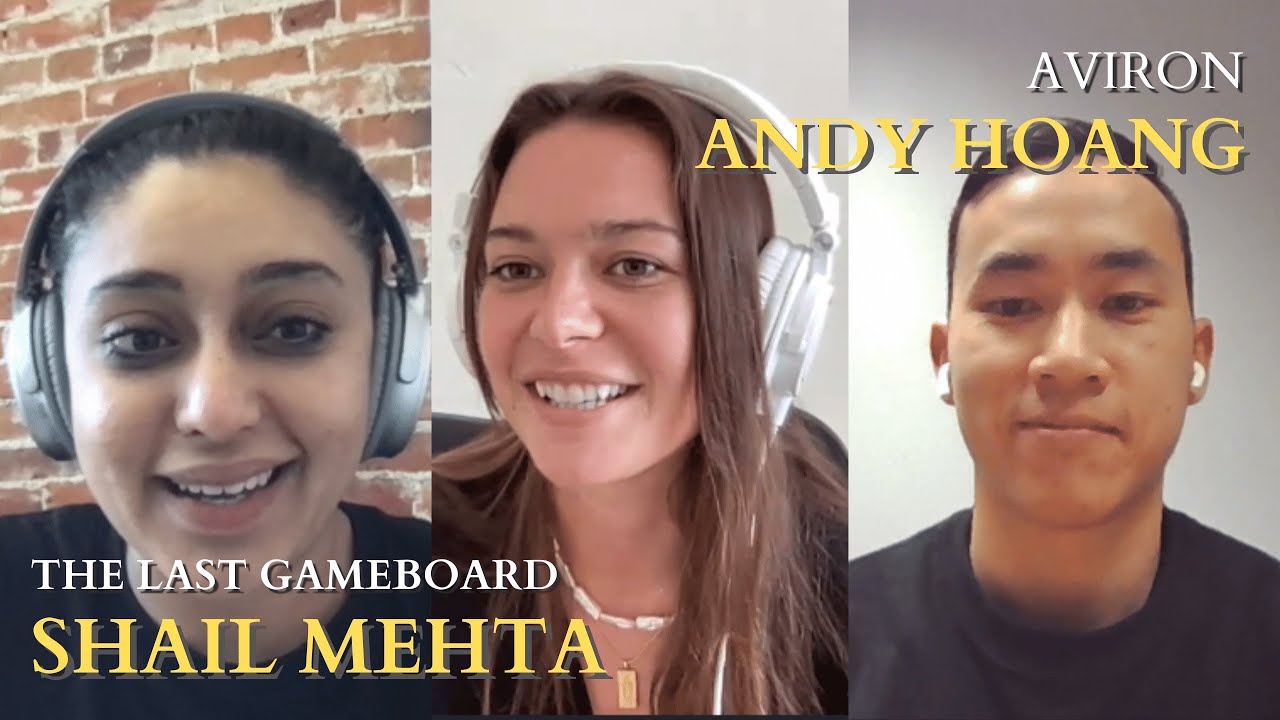
In this Seed to Harvest episode, host Paige Finn Doherty interviews Shail Mehta, co‑founder of The Last Gameboard, and Andy Hoang, CEO of Aviron, both portfolio founders of BGV. The conversation weaves through their personal origin stories—Shail’s immigrant upbringing and lifelong love of tabletop games, and Andy’s martial‑arts and fitness background—leading to the creation of hardware‑centric, community‑driven products: Gameboard, a digital tabletop platform, and Aviron, a game‑based rowing machine. They discuss early community‑building at board‑game conventions, the importance of passionate user bases, and how those communities shape product direction. Supply‑chain challenges during COVID are explored, with Shail emphasizing diversification of component suppliers and Andy highlighting strong supplier relationships and margin flexibility. Hiring philosophies are compared: Shail values passion for gaming and diversity of thought, while Andy now hires based on cultural values and recently added a COO from Nike to strengthen operations. Both founders outline their company values, investor‑update practices, and fundraising experiences, including Aviron’s rapid Series A with Stripe and Gameboard’s seed round with TBC. They reflect on the role of BGV as a supportive investor, share personal inspirations (Shail’s immigrant parents, Andy’s admiration for James Dyson), and close with hiring calls and advice for aspiring founders. The episode showcases the intertwining of community, hardware‑software integration, operational resilience, and founder mindset in building next‑gen gaming experiences.
Chapters
All right. Hello everyone, and welcome back to Seed to Harvest. I'm really excited today to be joined by 2 very special guests, Shail Mehta from The Last Gameboard and Andy Huang from Averon. I wanted to do something a bit different this episode to let our listeners hear more about inside baseball and the type of founders that we invest in at BGV. Both Shail and Andy are portfolio founders of BGV. They're hustlers, community builders, and I've deeply enjoyed getting to know And support both of you over the past year. So to back things up, I would love for Shail to share a bit more about her story, specifically what sparked the idea for Gameboard, and then after her corporate career, how you found your way back to the connecting power of games, specifically involving a 6-pack of craft beer.
Yeah. Yeah. I came to Gameboard, I guess, through, I feel like my whole life has been board games, right? And, and playing board games. I, I came, my family immigrated here from India in like the '90s and I, you You know, I made friends through playing simple board games, and I think that it's something that we all do as children. And perhaps I took it a bit further as an adult. Like, you know, I had like, like laminated Magic: The Gathering cards, and I used to play Dungeons and Dragons at like school. It was like how I felt. And now I feel like it's more mainstream and like nerd culture is much more like mainstream culture. But back when I was growing up, it wasn't like that, right? It was something that I didn't talk about unless it was like with my specific party and like my specific group of friends that I was playing like Dungeons and Dragons with because you felt like it was just something so not cool to do. Right. And everyone wants to be cool. But I think that it just like, I, I think board gaming and gaming in general is like about connecting people together and finding like your group, your, your community that is really able to enhance your experiences and make you feel like it's something spectacular, right, that you're doing. And it's just exclusive for you. And board games for me in particular are about that community and they're about that connection. And yeah, I, my career, totally different direction, right? I, I, I went to school for political science and finance. I ended up working as a consultant for the State Department for the Nuclear Regulatory Committee. I was a, I worked in finance with hedge funds and private, and private equity. I also was a consultant for like the state and the city of Colorado, which is where I'm here right now. The whole time I'm just like this gamer. I love playing board games. I love connecting people through gaming. You know, I mean, for me as a child, I learned English that way. So as I got older, it was like how I found my people. And we've all seen like Star Wars and like holographic chess, and you wonder when is that future gonna be? And I had that question of like, when is this future going to happen? When am I gonna be able to play with anyone anywhere in an instant? Where am I gonna find my community? In a virtual and a physical space because we are, you know, we're very digital. We're digitally native now. Our kids definitely are. My daughter definitely is. And it's like, how do you make connections through gaming and technology? And that's how I met Rob Wyatt, my co-founder, one of my co-founders. I have 2 other co-founders, but, you know, I needed an engineer to build Gameboard. It was a, it was an idea and it was a white paper and I knew there was a patent involved in it, but I just, it was an idea and I I showed up at his office with a 6-pack of beer because I Googled him and I found out he loves like, you know, local beer. So I showed up at his office with a 6-pack of beer and I was like, hey, I have an idea. I think there's a patent involved. And Rob, he's phenomenal. He was the system architect of like the original Xbox. He helped build like magically PlayStation. He has a random Oscar sitting in his house for like some works that he did. Like he's amazing and he's talented and he's great with like hardware and prototyping. And yeah, I just showed up at his office and we were like, let's chat about this. And he had a daughter and I have a daughter. And I think we connected on like, how do you build meaningful engagements through technology and how do you build value through gaming? And in that, Gameboard was born.
And I love that. And for folks unfamiliar with the passionate members of the board game industry, can you describe the atmosphere of the first board game conference that you attended as you started Gameboard? I think this was one of the most incredible parts of your pitch to me because I had never, never knew there were board game conferences, let alone how nuts they were.
Yeah. So, okay. Unfortunately, COVID put a damper on all of it, but they're starting up again, which is very exciting. So people, Gen Con is one of the biggest ones that happens in North America. It's like, usually it's like, you know, 200,000 people descend on Indianapolis in the middle of summer to play board games, but there are usually these massive conferences, but there's pockets of them happening all over at all times. Like there's like 3 happening in Colorado next month. People go to hotel rooms, they rent out ballrooms. rooms and like the little meeting spaces and all that stuff. And they just come together and they play board games, right? And they do tournament play and they come from all these surrounding, you know, cities. Like there's 2 in Denver, I think, come, you know, 3 in Denver coming up in the next month. And they're, they're in the main city, but you have people from like all the surrounding states, like Wyoming and stuff, like coming to play this. And at any given time, it could be like 10,000 people just playing board games. Like it's crazy. So I would show up to these conferences. I would just drive around and show up to all these different conferences when Gameboard was just a little kernel of an idea. And I'd bribe people with like, you know, booze and food, which is apparently what I do. And I'd be like, hey, I have this idea. Why don't you come listen to my little talk and my presentation? Are you interested in this? And they would tell me about like what was their vision for the future of like gaming and what they were playing and spending hundreds of dollars to do, right? On like a random weekend. And with that, like I developed like These cornerstones of what Gameboard is today of just like feeding into the community of like what it was and what they saw in the future. And I would just like get people's emails on like an Excel sheet, cuz I didn't even have a website, just like an Excel sheet of like, hey, this is, you know, keep me informed if and ever this crazy girl ever does anything with it. And those ended up being like one of the first customers of Gameboard.
Yeah.
People that I met at these conventions.
It's incredible. I think the, the running theme through both of your businesses is building strong communities. And one of the things that I talk about quite often in my conversations when I talk about Averon is that someone from the Averon Facebook group has gotten an Averon tattoo. So Andy, I was curious, have you ever thought about getting an Averon tattoo?
No, I have not. That is next level. And honestly, it was a, it was a great day, like seeing, like, I think what I didn't realize when I started the business was that we're like changing people's lives. Like for me, I really wanted to build a business, something that I'm passionate about. And then it turns out that like what we're building is helping people feel better than they've ever felt before. And that's kind of why that young lady decided to put a tattoo on her with our logo is because we changed her life and she's, you know, stronger and healthier and more confident than she's ever been before. And it's really heartwarming to like see things like that happen around me.
It's one of my Favorite stories to see the incredible impact that Avron has had. So a bit of context for our audience: Avron is kind of like Peloton but for rowing. And at the beginning of the pandemic, Andy was building Avron as a B2B business with machines in Nike and Brooks World Headquarters. And through COVID hitting, you made an incredibly quick pivot to direct-to-consumer, which has paid off incredibly. So I'd love to hear more about what sparked your initial idea for Avron. And then some of the factors that went into the decision to make that switch to direct-to-consumer.
Yeah, so always had a passion for fitness and, you know, I, I think I competed in high-level martial arts for most of my younger life. When I saw Peloton for the first time, I was like, wow, this is like a great idea. It's like fitness, which is what I'm really passionate about, but also it's really convenient. Like I can do it at home whenever I want. And so I bought the Peloton bike and found that it just didn't really resonate with me. Like the experience was, it was great and I could see how a lot of people would really enjoy it, but Peloton experience. But for me, being someone who's been very competitive growing up and doing martial arts, like I like to win, I like to, to beat other people, I like to push myself. And one of my other passions is gaming as well. So I wanted to combine the 2 things that I had passion for. So we decided to build a game-based rowing machine. Rowing because it's such a great modality that it works out all your muscles. So if I only have 5 minutes or 10 minutes, I can have a great full-body workout. And then combining it with games, probably where you're getting chased by zombies or you're shooting robots or you're racing against Olympic athletes. Lots, lots of those type of experiences. And yes, we launched in the B2B market first because that's really what I understood by coming from the B2B world. But also we bootstrapped the business in the beginning. So I'm, I'm based out of Toronto, which doesn't have like the ecosystem that like Silicon Valley has for not only hardware but consumers. So we built this business, got it off the ground, started selling in 2019, and then in early 2020, COVID hit and we pretty much almost went bankrupt because all the gyms and hotels that we were selling to, which is in the B2B vertical space, were closing down. So we had to pivot really, really quick. And that's the reason why we pivoted so quickly was because it's kind of outta necessity. And then ever since then, it's been a, a really enjoyable ride.
Yeah.
What was that initial spark that set off the, the Facebook group? And Cheryl, did you have a question? Didn't— No, I just said that's really cool.
I think I want one.
Yeah, the Facebook group, in hindsight, like we had no idea what, like what it would become. And just to give everybody a little bit of context, so one of our competitors, I'm not gonna name them, but they create a rowing machine that's very similar to Peloton. They have over 10,000 members and we have, like, we're growing super quickly, but I remember just a couple months ago, we only had maybe a 10th of the members that they had, and our engagement was twice as high. So we had twice as many people posting and twice as many people sharing their stories. And it's been such an important part of our business, being able to connect with our customers. So now we like really, we have 2 community managers. We're in there every day. I'm personally in there. I make all of our employees get in there because that's our connection with our customers. So we can hear, you know, what they like about the product, what they don't like about the product. We hear their success stories. And yeah, in the beginning we didn't think it was going to be big, but now it's such an important And that's probably why that young lady got that tattoo is because, you know, the community's there to support her and she feels great connecting with people. But yeah.
Awesome. Yeah, I, I love that so much. So both of you built incredible hardware products with deep software moats in the gaming space, which is something that both Josh and I have been really excited to invest in. So I'm curious to hear, or if you can share more with our listeners, how you've had to adapt due to supply chain issues over the past couple years due to COVID. And Shaila, I would love to start with you. We just had a great conversation with one of our fund investors about your ideas around the decentralization of suppliers. So I'd love for you to share more about your thoughts there. 'Cause I think for folks unfamiliar with hardware investing, it could be like really helpful to understand what the supply chain looks like for building a business.
Yeah.
Yeah.
Supply chain is a nightmare right now. I will sugarcoat that.
No, I'm kidding.
No, it's, I think it's difficult and I think the more complex your product is, the more difficult it's gonna be, the more that you have to have proprietary hardware structures in place, or like you're pigeonholing yourself into certain suppliers, I think that the more difficult it is for you to get product right now. And unless, you know, my, my, one of our fundamental issues at Gameboard has been like, you know, like Wi-Fi modules, Bluetooth modules, like smaller things that you feel like should be more readily available. But if you're designing a product that can take a lot of different types of Wi-Fi modules or Bluetooth modules, and it's like easy for you to get different types of suppliers. The name of the game for us, because hardware for us, like Gameboard is not a complex product, right? It is a big square tablet. Yes, we have a proprietary touch component inside of it, and then we also have the bigger part of our tech stack, which is the software, right? How do we do unlimited touch? How can you use a chat set on Gameboard where no other touchscreen can do that today? There's a hardware and a software layer that prevents someone like Apple from doing that, right? That technology is what we really double down on, that software driver. So for us, keeping the Square tablet as easy as we can with like diversification of suppliers is like what we wanna focus on on this next tranche. So we wanna be able to go out and we're not insensitive to like the geopolitical state that's going on, right?
Mm-hmm.
Like, but I get so many times like people being like, can't you just build this in the United States? Yeah, okay, for— then I'll have a $5,000 product. Like, you know, those are the difficulties that we face because the truth is the components needed to build anything still occur in China. They're still in Asia. And if you want to get the quality and the price of the products that we use today, we have to work in Asia, right? And I think that's something people feel like it's like flipping a switch and then you can immediately get out of it. You have to plan for it. You have to plan to be like, hey, I wanna expand. I need this amount of money to own the NREs, and I need to be able to diversify my supply chain. If I can do that, then I can source components, I can get bids, I can, I can really drive down the cost to us, but then also hedge against instability that, that occur, that can occur in a global state, right? Like, who knew COVID would hit? So I think having a team that can understand how to diversify is very important. Especially at, at our stage, my stage.
Yeah, absolutely. And then Andy would love to hear more about your perspective on the supply chain shifts and maybe how you've had to adapt your strategy either on how you build or source the materials that go into building Averon.
Yeah, I thought about this question a lot 'cause it's not the first time I've been asked it. And truthfully, there really isn't any secret thing that we're doing, and I think anybody else is doing. It's just This is a very pain problem that everyone's dealing with. I think we've been able to deal with it not better, but I guess maybe better than some other people. And I think the 2 things that we focus on that have really helped us is, it's not really what we've done differently compared to, compared to other companies, but having really strong relationships with your suppliers is very important. You know, you look at our product, it literally weighs over 100 pounds in steel and aluminum, and it comes in a box that's over 5 feet long. So it's not an easy product to, you know, put together overseas and then ship across the ocean. So having suppliers that you have a great relationship with that are able to help you out is, is really valuable. And I think the other piece is we have really great margins, and what that allows us to do is just be more flexible and try new things and take bigger risks because we can afford to. Um, yeah, I think we'll bring, bring up the, that name. I don't know if I should bring it up, but Peloton's kind of struggling right now. They're not really in control of their costs and that's kind of putting them in a, in a really tough situation. So being able to manage like your, your cost, managing relationships really does help.
I, I think I'll piggyback off of that. I think that cost thing is so true, right? Like you can have the most simple or more, most complex. If you don't understand your margins, where you can afford to take a hit, where you can afford to shave costs, where you can like really scale your business, like you're dead. That's very morbid, but it's true.
Yeah, I like it. No, I, I really like the straightforward approach. So speaking of relationships, hiring is a topic I'd love to spend some time covering with both of you. So Cheryl, when you think about growing Gameboard, how do you make hiring decisions and what's important to you when you're selecting candidates?
So I think great resignation, is that what it's called?
Yeah. Yeah.
That is, I was like, I was like, I always feel like I butcher what it's called, but like, you know, for, I feel like it benefited Gameboard. For any position we post, we get like 200, 300 applicants.
Wow.
Super talented because Gameboard is a passion play, right? Like when people look at Gameboard, it's like, oh, this is what I, you know, I love playing board games. I play tabletop and this is like the future of play. Like we've had people from large companies like Magic Leap, Motorola, like Hasbro, like come onto Gameboard, take a huge pay cut because we can't afford those kind of salaries because they've like, this is what I think the future of gaming is. This is what I think the future of like my passion is. And for me, passion is very important because we are a passion play right now as a startup. You're taking a big risk to come work at Gameboard, right? And so for us, like making sure that people have a passion for what build— what we're building, not that playing board games is a requirement, but it definitely helps, right? Especially if you're gonna—
Yeah, I was gonna ask if you played board games during your No, we don't.
I don't require it because I'm kind of like that. I believe in diversity of thought, diversity of everything, right? So it's like, it's very, if we only get board game players, like we're not going to understand. Like, so I'm always like, it's a great plus, but usually people that come to Gameboard that are super passionate about it, like have some sort of gaming, gaming pull, but it's definitely not a requirement for us. And I think that really understanding like where their passion lies and are you a part of something You want to be a part and build something. And I think it creates, like, it creates, like, inspiration and creativity, even from engineers, like hardware engineers, which is like the most frustrating people to get, like, creativity out of. But it instills that, you know, of like, think long-term about what we're building. Do you share that fundamental basis with us about, you know, the future of Gameboard? And do you have ownership in it? And you have stake in it, and it is yours, right? And I think that that changes the entire mindset. And I think that's what people want today. I think that's why the great resignation happened is like they want to feel like they're contributing to something that affects them personally.
Yeah, absolutely. I think this is one thing in my earlier conversations with you, Andy, that we talked about is kind of the level of talent available, like in the gaming industry in Toronto. So I'd love to also hear you touch on that before we hop into my next hiring question for you.
Hiring gaming people in Toronto? Is that right?
Yeah. In like Canada specifically.
Oh, it's like hiring in Canada is just super hard. Like there aren't, like, I'm just trying to think on the spot, but there's literally no companies that I can think of that are doing hardware and consumer. Don't even, like, not even bringing up gaming. So yeah, the market is even drier up here. So yeah, it's not easy at all.
Is there some sort of like tax, like salary tax break for the creative arts in Canada? Is that in Montreal or Toronto as well?
No, and the Canadian government is super supportive. So if you actually have your software development or any type of development in Canada, I think the government gives you back 50% of wages up to a certain point.
That's pretty incredible.
It's not like they cap it at like—
Okay, I was like, wow, that's awesome.
Yeah, no, I think they cap it at like $40,000 per employee or something like that. I might be making that up.
Yeah, that's a pretty significant investment from the government. I think that that's That's really cool. It's damn, maybe part of why we amended our LBA to invest in Canadian companies.
Nice.
I think there's like a really talented, just like pool of folks building that space, like in Canada specifically. So Andy, you just hired your first executive. Congratulations. Super exciting. I would love to hear more about why you chose to fill that specific executive role first, and then how you went about selecting the right candidate for that role.
Yeah, so the candidate we hired, I can, I think I can announce it now. Her name is Amy and she's actually an exec at Nike. So she's been at Nike for 9 years and before that she was at Lululemon for 5 years and then at Burton Snowboards before that. So such an all-star. I'm very excited to have her on board. And she's actually filling the role of Chief Operating Officer, which means she will help with supply chain and all the other issues that we're dealing with. So it's very clear why we decided to bring her on is that we are struggling. With keeping up with demand. Yeah, that's kind of why we hired her. And the way that we hire, like if you asked me 2 years ago, and it's interesting to see how much like our business and myself personally has evolved, but I didn't really believe in values or culture like 2 years ago. I was just like a builder. Like I'm just, you know, hire people and we're all going to work hard. We're just going to build. But now every single employee that we hire, I personally spend time with and it's more so me presenting to them and presenting presenting to them our values because our values are really important in, in helping us get to our vision. We kind of see it as our guardrails. And if we hire based on our values and we fire based on our values, it's going to help us get to our goal. And yeah, that's kind of how we do it. And we found Amy and she's such a great fit and brings experience and skillset to the table.
Yeah. Can you talk more about what your values are? And I, I think that that's such an incredible part of developing a company identity beyond the people that work there, the products that you're building, is developing that kind of like— Nassim Taleb calls it a shared fiction. And I think values are a very strong part of that, which allows the company that you're building to be bigger than, than all, all everyone combined, basically.
Yeah. Yeah. And just to kind of add to that, like, our values is what brings us together because you want to hire people that share the same, you know, mission and vision as you. And if they all share the same values, it makes it a lot easier. We have 7, so it's like more than I think a typical company because they're important to us and I'm actually gonna bring them up and I'll just read them. Like, I won't, I won't describe them. You want me to read them?
Yeah, I would love for you to read them.
Cool. Okay. Yeah. So being entrepreneurial is important to us. Valuing the people, and I'm gonna just touch on that. Valuing the people doesn't just mean valuing like our customers, but it means valuing our employees equally as much. We've canceled customer orders because we've had rude customers, cuz we wanna show our employees that we really care about them. We work hard and innovate with impact. You know, I think mediocrity really frustrates me. And so I see ourselves as like a sports team and I want everyone to be on the same page and working together because we're all trying to accomplish one mission. Our next value is we love to win. So we are competitive. We spend smart. I'll read this one out because I find this one interesting. If we have to spend $1 million, we'll spend it. But if we can save a dollar, we'll save it. And that's important to us because we want to build a profitable, sustainable business. Being egoless and being chill. Those are our values.
That's really great. I love that. Yeah.
Thanks so much for sharing.
Yeah. Thank you. Yeah.
It's cool to hear your journey. I feel like some people start out like from the onset, you know, like hopping in and being like, establish values. But I feel like it's nice to kind of grow and then develop the values together with your team cuz you get a better feel for like after you've had to make tough decisions based on those values, I feel like that's what really cements them into the foundation of your business.
Yeah, we didn't have our values until like recently, and we've, we've made some bad hires where we thought they were great people, but like, I don't know if this is a great example, but this person was more work-life balanced and they weren't there. Like if you sent them an email on a Saturday, they would never respond until Monday. And we felt that, okay, we really need these values so that we hire the right people. And, uh, yeah, fire the bad people.
Yeah, I, I think like, and being transparent about it is like, it's fine if you're not a fit. And I'm sure there's like great people out there that would love to hire someone with that. But yeah, so as an investor in both Gameboard and Averon, I receive investor updates from both of you. Josh and I were joking like, we love, we were hanging out and we're like, oh my gosh, like we got investor updates from Shayla and Andy. We're so excited to read them. I always enjoy reading them. And I have been struck by the similarities in what you both focus on, even though you all hadn't met before then. So do you have any advice for aspiring or early stage founders when it comes to what you found to be a good format for investor updates?
Yeah, I think structuring it around what you think your strongest value propositions are, right? And I, I, I might have definitely evolved from like the first ones that I, 'cause I used to, I, I got into the practice, especially for early stage that like I would have a lot of investors that would be like, like, you're too early, like when Gameboard was just like barely a prototype, right? That we have, you know, keep us updated on your progress, keep us updated on your progress. So I gathered like an investor list of like, you know, 75 or 100 or something of just like potential investors, somewhere like Series C, like it would be later down the line, but just like keeping people updated on a quarterly basis. But it got me into this great habit of like, what, what do I think is, is a goal and what do I think is an achievement and how is that, how do I frame it on How do I frame it on like the value proposition of Beamboard? Like, where do I truly see revenue growth? What's my marketing strategy that applies to like top of funnel to get, you know, to get that? Where is my tech? Like, where am I doing in my tech? What my progress updates are on my tech? And where do I see the future? What am I doing to achieve those goals in the future? Right? And I think it's important to kind of end and close with that for me personally, to open up with something really strong. It could be positive or negative, but something strong about, you know, an issue or a win, and then closing with kind of that same sentiment of like the future of Gameboard and what we're building and what we're achieving. And then I'm a huge proponent in a lot of information, so I tend to provide a lot of information. I probably do TMI. I don't know. Paige will have to tell me if it's like, that's a lot.
No, it's an awesome amount.
Paige, girl.
It's super helpful.
Okay.
It's like, yeah, we don't spend like all day with like each company that we invest in. So it's really helpful to have the context in your business. So then if you have an investor ask, And we're like, oh, okay, cool. Uh, we know exactly where Shail's at, what she's, um, you know, what the challenges and opportunities are and where she's really shown. And as we've been going through the process, it makes it really easy to say like, hey, like, you know, another investor that we work with, like, yeah, would love for you to meet Shail. Here's like, you know, 3 facts about her and kind of like some context on Gameboard. And it makes it really easy for us to just like snap into that narrative and advocate for you. Yeah. So keep it up with the tier 1.
I'll take that. I'll take that.
Yeah.
What are the questions? Format?
Yeah. How do you think about formatting or like what would you advise early stage founders or aspiring founders to include in their investor updates?
I think that information's like pretty accessible out there, so I'm not gonna like tell people like which metrics and whatnot. But what I will, what I will say is that I did skip investor updates early on. Mm-hmm. Because we weren't doing as well as I wanted us to do and Like now that, you know, our business progressed, I, I see how important it is to reflect and like be honest and, and open.
Yeah.
And not try to hide if you guys are struggling or not, because your investors aren't there to like beat on you. Like they're there to support you, 'cause they're in it together. So if you say that you're struggling and you're having problems with either retaining employees or hiring people or having trouble with managing CAC, Like, you should share that because investors aren't going to, like, get upset at you. They're going to want to help you. So that's my piece of advice.
I think that's a really important reframing around investor asks. It's like, it's really helpful for us to understand what you need help with because then we can help you. It's harder when I don't have much context for what founders need help with. So speaking of investor updates, Andy, it's been tough keeping this under wraps, but we're super excited that you raised a Series A from Stripe. So For context for our listeners, Stripes is a leading consumer firm whose investments include Monday.com, Reformation, Udemy, GoFundMe, Cario, and one of my personal favorites, Erewhon. If you're comfortable sharing, especially for the founders that are listening, what was that process like and how was raising your Series A different from raising your seed round?
Yeah, it was, it was really challenging but also really easy. And I'm, I hate saying that because I know how challenging Series A days are supposed to be. So we, Like I'll just tell you our story because maybe it's interesting, but I wasn't planning on raising until now. And in hindsight, maybe it would've been better if we raised now because we're just crushing it. And so what happened was in like November, October, I decided, okay, I want to reach out and get to know some investors that are Series A because you need to build those relationships. So when you are ready, you can, you know, contact them. So I was reaching out and This is kind of a lesson for everyone, but don't show all your cards when you're like talking to investors because that's kind of what we did. I pitched to a couple investors while I was pitching to a lot of investors and one of them was like, which was Stripe, they were asking a ton of questions and they were really diving deep and they said, I want usage data, I want this data. And I was like, yeah, sure, I'll like provide you with all this data. I don't really care. And provided them with all the data. And then we had a term sheet.
Mm-hmm.
And the problem was because I was nonchalant about it and I gave them all the information. I didn't have any other investors that were interested at that time. They were all moving a lot slower. So now we had a term sheet and it was kind of like an exploding offer where it's like either you take it or you don't. And fortunately for us, like, Stripe's just such an amazing investor. I'm super happy to have them on board. It's been a pleasure working with them. So I feel like we picked the right investor. But yeah, that was my advice and it happened like from pitching to them into term sheet, it was 6 days.
Yeah. They bought an Aviron for their office, right?
Yeah. So I, I like, I met with one of the guys before, then, then I called 'em up and I said, I'm looking to raise. And then that was like on a Thursday. On a, on Saturday or Sunday they bought a rower and then on, on a Tuesday they were up at our office already. And then on, I think like Wednesday they had a term sheet already.
That's amazing.
That's pretty incredible. So Jill would love for you to expand as well on your journey of fundraising and, and what key lessons you've taken from the experience so far as well.
Yeah, I, I, I resonate with like Andy a lot in that. I think that transparency sometimes is a double-edged sword, right? Like the investors that really get it, like use it as like fuel to justify their thesis and use it to like, but you don't know, like as a founder, right? Like how are they using it? And when you find that right lead and you find that right person that just like gets your vision, it's like, It's just, it's rocket fuel. So it's like, it's, I think that was true with our seed round with TBC. Like they were just incredible from the bat. She was just like, I'm so excited about what you're building. Tell me more. And so I gave her everything. Yeah, literally. And I tend to do that with a lot of investors too. I like say a lot about where we are, what we're doing, like what we're achieving, what our goals are, what our metrics are, everything. Right. And, and that, that passion, that immediate click, my seed round, it was I had a couple term sheets, and it was the passion that TBC had about what we were building and that, that future vision that like really helped me get there. And I think that's important. That alignment is so important, right? When, when I was doing my pre-seed round, I was like, I just need money 'cause I need to get here. And I was like, I just need money, whatever terms you have, just like give me money. But then it's like, as you kind of get your values right and you get traction in the right direction and you find those investors that you click with immediately, I think that that's a great partnership. And I think that leads to like the greater question, right? Of like the transparency and like your updates and like making sure that people are in alignment. I think Andy said that beautifully. Like it's about trust and, and, and faith in the founder and faith in the investor.
Yeah, absolutely. If you are both comfortable sharing, I would love for you to share a little bit maybe about what your experience has been like working with, with BGV so far, since I feel like I talk a lot about, you know, like making venture more transparent and like that's really important to me. So, I'd love to hear from the founder point of view what that's been like.
Sure. You know, I was like, Andy, do you wanna go first?
I'm gonna wait for you to go first.
Okay, fine.
Paige is a pain. You are, I think you and Josh are like, you get not just the vision, but you know the steps to execute the vision, right? So, it's about having someone that can understand your challenges, where you are, and providing the right infrastructure and resources to get to your goals, right? And, and, and the blocks. That's rare, and I hope you know that. There are investors out there that just try to think that it's, it's money and you should be doing all this work for me, and you better figure this out because I, I gave you this check, right? That's not who you are, and I think that's not what you guys stand for. I think it's about helping founders truly create that vision and alleviating as many obstacles as you can along the way. So for me, it's been an extremely positive relationship, and you answer my texts and my emails at all Which is very helpful.
Thank you. I so appreciate that. And I'm, I'm glad to hear that that is resonating. I feel like that's something that we try to work on a lot. Accessibility.
That's important. Yes.
Yeah. Yes.
Okay. So I guess I gotta say good stuff. So my take on investors is that investors aren't really there typically to help you. They're really there to get the best return for their investors. Is that right? For their investment fund?
Yeah.
So their objective is primarily like deal flow, like find a good opportunity, invest in it, and then move on and look for the next opportunity. So it's kind of, maybe not, it's not, I guess it's kind of sad, but most investors I feel like don't add a ton of value because they're, that's not their goal is to help you grow your businesses to gain more investments. But you guys have been fantastic. So, you know, you guys don't, you guys didn't give us the biggest check cuz obviously we have some big Series A type of investors. We have really big names like Samsung, but it's surprising when you find that the investors that you get along with the most that help you the most aren't always the biggest names. And, you know, you guys have been fantastic.
I so appreciate that. Small check, big heart. That's the most important part. That's awesome. Well, okay. Couple quick questions as we start to wrap up here. So one, Shayl, I'll start with you for this one. Who are your inspirations either overall as like a human or as a founder specifically? Oh my God, really? I, it was a—
yeah, I was like, oh my God, my inspirations, my, oh my God.
Okay.
You're stumping me right now. I don't know. Who are my inspirations?
I feel like they don't have to be like famous people or whatever. They can also be like people in your life that you like have qualities that you wanna emulate.
I know. Yeah. I was just, I was actually thinking about my parents a lot when you said that, because so my parents were like, they came here from India and they started, my dad, you know, got citizenship here, but it took a long time and he worked at an Indian store to do that. And that's how I grew up. And then he opened his own and I grew up going there every day after school and on weekends and on summer. My parents worked 7 days a week. Actually, they still work 7 days a week. They still have the same stores and I'm still expected to go in and help, by the way, on random days. And I got my entrepreneurship from them, right? Like their work ethic from them. Because I think that nothing teaches you about entrepreneurship than being like the kid of immigrant parents working at like a small grocery shop in like Denver, Colorado. Like it's, there's no such thing as failure. It's do or die, right? And that mentality of like push because it's important to your family, it's important to your livelihood. I think that it was embodied in me as I grew up. And so inspiration I think is like my family and like what it takes to To push harder.
I love that. That's so powerful. Andy, what about you?
So my, I wouldn't say it's like a role model, but someone I really look up to that I think not that many people think about is James Dyson, the guy that invented the Dyson vacuum.
Yeah.
And not many people know, but he, so he's like 70, almost 75 years old and he's still so hands-on in the business. Like I, like I think there's like 3 types of Businesses, I like to think there are three types of businesses. There's there's like product-focused businesses, marketing-focused businesses, and like ops-focused. Like, and Amazon would be like an operations-focused business. And we at everyone feel that we're like a product-focused business, and that's what's going to drive our our business forward. Isn't that we're great marketers? It's that we're creating amazing experience through our product. And I think James Dyson has done that for his business. He's like a real hands-on founder that loves to tinker and build the product, and. And I love his products. I think they're beautiful and they work really well. And so I really admire him as a leader.
That's incredible. Yeah, it's nuts how he's still so involved in the business as it's grown. I had, I recently have had acquired a Dyson. I was like, I like cleaning now. This is fun.
Exactly.
Um, well, I thank you so much for both making the time to do this. I appreciate it so much. And it was great to both connect you and talk a little bit about the challenges, opportunities, the ideas that sparked the businesses that you both are building, and I feel so lucky to be able to support both of you. To close this out, do you have any additional things you wanna touch on? And then what are you hiring for? 'Cause I know both of you're hiring and I know there's some listeners that are looking for positions.
Kiana, do you wanna go first?
Yeah, sure. Yeah, I, we're definitely hiring. We are always looking for game devs like Unity, Unreal, anything like that. Like I think that's always a great pipeline that we can build up. We actually just filled a role that I was looking for for 6 months. 'Cause I couldn't find the right fit for an open source Android engineer. So there's another position available for that 'cause I'm realizing how long it's gonna take to find the next one. So if you, and not an app Android developer, but an open source Android developer, so infrastructure structure-based, OS-based, that is always a key critical component to what we're building.
Parting thoughts?
Startups, you wanna get into them? They're crazy and they're fun. I wouldn't do anything else with my life.
I love that. I love that. Andy, what are you hiring for? And then anything else you wanna touch on?
Yeah, so the best place to just look is to go to our website at the bottom of your careers page. And there's honestly like a dozen jobs, so I'm not gonna like list them all and they're always changing all the time. But we have a, a ton of different positions from performance marketing to brand-related stuff, brand manager, technical support. We're kind of hiring across the board just because we're in that growth stage right now. And closing thoughts. Kind of just echoing what Shail said. I like to tell people this when people ask what it's like to be building a startup, because obviously it's super challenging. I feel like most people's lives on an emotional scale of 1 to 10, people are in a 4 to 7 or 5 to 7 range. Your worst days are 4 or 5 because you can go home and forget about work or quit your job. But that also means the highs aren't crazy high. But as a founder, like there's a lot of days that you're in the 2s and 3s, which really sucks. And if, you know, no one's really there to support you, you kind of have to figure it out yourself and push through it months at a time. But on the plus side, there are days when you are at an 8, 9, or 10, and that's what really makes entrepreneurship amazing and exciting and why it's worth it.
I love that so much. Thanks so much for tuning in today to Seed to Harvest. If you enjoyed this episode, be sure to subscribe wherever you're favorite podcast listening platform is. I'll be releasing new episodes weekly, and if you have any questions or comments, feel free to let me know on Twitter. That's Paige Finn, Paige and then Finn with 3 N's. Thanks, and see you again next week. Bye.
More from Paige



Paige of Behind Genius driving an AI electric train in St. Louis (Intramotev Visit)





