General Partner of Calm Company Fund | Tyler Tringas
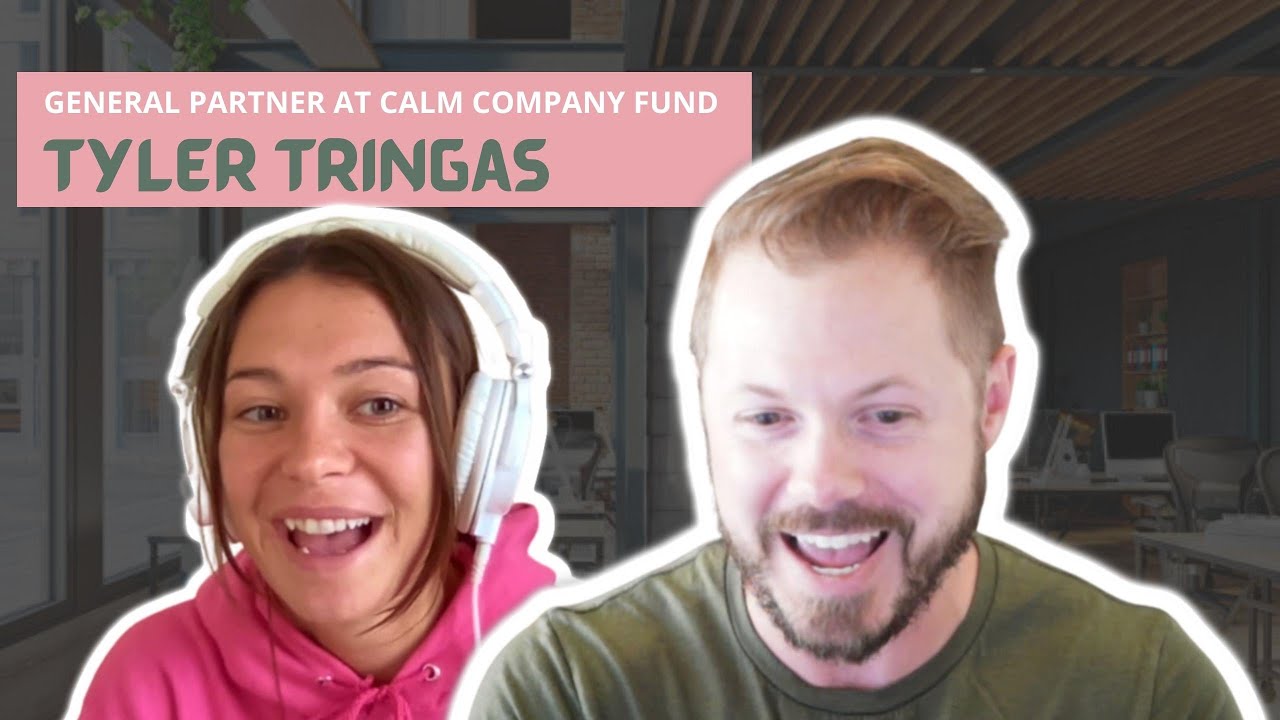
In this Seed to Harvest episode, host Paige Finn Doherty interviews Tyler Tringas, the solo general partner of Calm Company Fund (formerly Earnest Capital). Tyler explains the philosophy of "calm capitalism" – backing sustainable, low‑growth B2B micro‑SaaS businesses that serve niche markets rather than pursuing winner‑take‑all, high‑growth models. He describes the fund’s focus on micro‑monopolies in small, protected industry niches (e.g., construction, plumbing) where modest revenue caps are acceptable. Tyler outlines how the fund operates asynchronously: a distributed team across several countries, a thesis‑driven, upfront application process that reduces Zoom calls, and the dual role of being both CEO of the management company and the sole investment decision‑maker. He introduces the Shared Earnings Agreement (SEAL), a hybrid financing instrument that combines uncapped equity upside with profit‑sharing based on founder earnings, allowing alignment whether a company stays profitable or later raises a larger round. The conversation moves to the fund’s innovative WeFunder crowdfunding campaign, which raised about $1.3 M from 746 investors to provide capital for the management company and build a team before scaling AUM. Tyler also details the Founder Summit events – intentionally non‑pitch, highly interactive gatherings designed to foster community, with varied formats (workshops, meals, outdoor activities) and a focus on inclusivity and family‑friendliness. He discusses the fund’s commitment to transparency, publishing detailed writings about its processes, and how this openness builds trust with founders and LPs. Finally, Tyler advises aspiring investors to build trust by consistently writing and sharing thoughtful analysis online, emphasizing that reputation, not capital, is the primary barrier to entry.
Chapters
All right. Hello everyone and welcome back to Seed to Harvest. I'm excited to bring Calm Company Fund GP Tyler Tringas on today to talk about micro SaaS businesses, bootstrapping, and building a venture firm like a startup. So Tyler, welcome and thank you so much for joining us.
Thanks, Paige. Excited to be here.
Likewise. I mentioned before we started to get to record, but we've kind of known each other over the internet for the past handful of years. I think we initially got introduced by My Lavin Entrepreneurship Program mentor in 2019. I actually went through the original iteration of your Trailhead process just to see what it was like to pitch asynchronously. And you've been a pioneer in the solo GP and calm capitalist game after selling a bootstrap software business. So Mario from The Generalist had a really great piece where he described Calm Funds as an investment firm that backs companies that do not risk survival for growth. So what does What does calm capitalism mean to you and why are you passionate about different funding routes for founders?
Yeah, yeah, that's a great summary. So, I mean, building calm companies is in many ways, it's the way that most entrepreneurs writ large think about building companies, right? They think about sort of a balance between risk and growth, you know, using capital, but using it opportunistically versus, you know, building a business that requires a constant infusion of capital. These kinds of things are To some extent, almost common sense. But one thing we found is that this sort of venture capital model has kind of come to dominate the options for early-stage entrepreneurs, right? You know, there's hundreds and hundreds of VC firms, can't access a bank loan. So what are you supposed to do? Well, you end up kind of changing your original business idea into something that fits what a venture fund wants to back. And we think that there's a big opportunity there to basically back these companies that are maybe not necessarily in a winner-take-all market. Maybe they don't have huge technical risks, and they're just wanting to build a great modern business and they want some early stage capital, mentorship, and community, all the good stuff you get from a fund, but that's aligned with more just kind of sustainable growth trajectories, if that makes sense.
And to provide some context to our listeners who aren't as familiar, when you're building a venture-backed company, it's very much an all-or-nothing grow-at-all-costs model. And not all investors enforce that, but it is quite common across the industry. So what would be some examples of calm companies?
Yeah, the kind of like canonical calm company these days, and what we end up doing a lot of our investing in, is B2B software in industries that are kind of maybe too small to ever justify like a multi-billion dollar company, right? And so we're doing a lot of investing into different niches of the economy where, you know, they're still using spreadsheets or clipboards or things like that. You can think of like all kinds of industrial applications, Every part of construction, like all kinds of things like that. Like all kinds of service businesses that are just like standard small businesses, right? Plumbers, electricians, this kind of stuff. They can all be improved by bringing in good modern software. But, you know, it's very unlikely in a lot of these cases that you're going to be able to build a massive company. You could build a great company. And, you know, as long as you don't raise too much capital, it's okay to be going into a market that You know, is ultimately you're going to top out at, you know, maybe a few tens of millions of dollars a year in revenue because, you know, you didn't raise too much money, right? If you raise too much money, then you kind of can't go after these markets. So that's like the most common example. It usually revolves around kind of the inverse of the market analysis for venture capital that I think you've done a really good job of explaining with your book and Twitter threads and things like that, where it's like, okay, I need to understand how this is a huge market. With winner-take-all dynamics and, you know, all this kind of stuff that I'm gonna be able to put a lot of money in and get a really large outcome out of. We kind of look for the opposite of that. We're like, where are there these little protected niches where you can build what I call like a micro monopoly, right?
Mm-hmm.
Where like you have the best product in this space for this one part of the film production industry process. It's the best product, but it's not a big enough market for someone to want to come in and compete with you. And you just kind of run away with that and build a great business.
Yeah. Thank you for expanding on that. I think one of the things that's really interesting about Calm Fund is that you're relatively asynchronous in relationship to other venture firms. So to give our listeners some perspective, what does an average day look like for you as a solo GP?
Yeah, I mean, as you know, the average day, there's really nothing that's an average day. Yeah. So we're kind of weird in a couple of ways. I mean, less so since COVID but we've been doing this since before COVID We've been fully distributed as a team from day one. So we're now 11 folks in 4 or 5 countries. I'm not totally sure. And we also do all of our investing asynchronously. So we invest in founders, well, not all of it asynchronously, but we do it all distributed and mostly asynchronous. And we invest in founders all over the world. We're very comfortable with remote companies that are not domiciled anywhere in particular. And so an average day for me, I mean, We try to, it's really interesting because you kind of have to wear 2 hats. I think that's maybe the most interesting part about this job is you're both the CEO of the company and this kind of like super individual contributor in the form of being the GP. So you have this very specific role, which is analyzing all the companies and making the final investment decisions. And then you're also the CEO of a small company and you have to decide like, you know, compensation structures and where are we going to do our team retreat and all this kind of stuff. So, I end up switching back and forth between those gears a lot. But in terms of like, as a GP, a typical day for me, we have moved a lot of the investment process to an upfront asynchronous process. So we're very thesis-driven, so we can ask a lot of very specific questions and we can just ask those upfront. There's no need for me to hear them as a cold pitch on a Zoom call when I know pretty much exactly what I'm going to ask on that first 30 to 45 minutes of that. So now we just ask it upfront in a sort of asynchronous application process. And, you know, there's definitely some founders that don't like that, but by and large, I think a lot of them realize that it's a lot more efficient. So I do a lot less Zoom calls than I did when I started. These days, you know, it's probably like maybe 6-ish Zoom calls with founders per week, down from a lot, lot, lot more than that.
Mm-hmm.
And that's mostly just getting like more efficient, right? Being able to sort of make sure that we can either pass or move things forward before we even know, use the founder's time, which is also valuable, uh, as well as our time on a call.
Yeah, absolutely. I think asynchronous is an aspect that's been underutilized in traditional venture capital. And to your point, I think it's an incredible tool in helping scale an investment process, especially when you are a solo GP and you're the only one making the investment decisions. So thank you for digging into that. And then digging into your investment style, who would you say are the people, either investors, founders, or Just folks in your life who've had the most profound impact on your investment?
Hmm. That's a good question. I mean, we, one of the things, one of the muscles that has been the most useful for us to build over time has been just really first principles thinking, right? So not really working backwards from what models work for other funds and more listening to the founders that we're trying to back and then trying to build and scale up the solutions that they want to see. So on the investor front, we don't have like a ton of folks that we sort of really look up to in terms of the process or style. We're kind of mostly really just listening to the founders and trying to build what they want. I will say this is, it's interesting in a couple of different ways, but I was really impressed hearing stories from folks who met with Tiger Global where they just showed up with a term sheet and had done all the research and were ready to go. And I don't know that we're completely aligned with some of the other elements of Tiger Global strategy, but I love that, right? Because it's so different from this kind of power dynamic of, I'm going to sit here having done no preparation. You're going to cold pitch me like everything about the business. I'm going to ask you a bunch of dumb questions that you've answered a million times before, and then I'm just going to make a decision on the spot right there with like no time to research. Like a lot of funds work that way. And I really love the kind of inversion of that, of like showing up, having already done the homework. And it definitely was an inspiration for some of the work we've done on DealFlow where we show up, we have like, you know, sometimes we don't even use the whole hour that we've booked with the founder. We like crank through it in 28 minutes. We let them ask their questions and then we have everything we need to decide.
Yeah, that's awesome. I think it's been really interesting to see Their shift into earlier stage venture and how that's impacted. I think some of the other funds have gotten quite nervous or have like privately been nervous about it. So it's been really cool to see like the shifts that are happening. And I think that it will be interesting to like continue to follow that trend. So to get into the technicalities of funding, Can you describe what a SEAL is to our listeners, including what the acronym stands for?
Yes. Yeah, so the Shared Earnings Agreement is a product that we designed. One thing that I think is a little bit of a common misconception about what we do is we don't really consider ourselves like a product-led fund. Like you have some of these funds out there that they're some kind of investment vehicle and the main thing about them is the structure that they've created, right? A lot of like revenue-based financing and recurring revenue prepayments and things like that. Like it's all about, we have this cool product and that's what we're selling. For us, we're much more around like a thesis-driven fund where we're trying to back these kinds of calm companies and make sure that we're aligned with the different trajectories that are going to be considered success for them. One of the main things we're trying to solve for is the zombie startup situation where you raise some money and then you build like a really solid company, That isn't growing fast enough and everybody's unhappy about it because everybody wants it. So we're like, okay, how can we work backwards from you build a company like that and we're actually high-fiving you, right? You raise whatever, $500K from us and a few angels. You sell the company for $25 million, you know, 2 years later. How are we high-fiving about that versus mad? And the shared earnings agreement is a way to basically align our interests in that sense. So it works a lot like, uh, say for the other convertible instruments that folks use early on to, uh, in venture, right?
Yeah.
So there's an equity component, it's an uncapped kind of upside, but it has a profit sharing piece. So the idea is some of the companies we invest in become steady state profitable. They realize they're doing well and they say, hey, let's just take our foot off the gas spending a little bit and start to harvest some profits out of that. If you only have equity or even like a SAFE, you really don't want that as an investor, right? Because they're just taking money out of the business. You're not seeing any benefits and you're going to be like, we invest that in growth. You know?
The SEALs are based on the founder's salary, is that correct? So when the founder's salary goes over $100,000, then the comm fund receives 20% after that.
Is that correct? So yeah, what we did is we defined this term that we call founder earnings, which is basically net profit of the business plus compensation to the founder, right? So sometimes you get into this when you start talking about profits, sometimes you get into this nitty-gritty thing where, you know, the founders can kind of decide like, oh, I paid myself, we paid ourselves a million bucks each in salary, so the business wasn't profitable. Okay.
Yeah.
We don't wanna get into that debate with you. We're just gonna put those numbers into the same number. And if that number goes above a certain level, then we get a certain percentage of that. Whether you call it salary, dividends, whatever you want, we get a piece of that. The number's not fixed. Much like setting the valuation on the seed round, we kind of set those terms for every deal on a case-by-case basis. But that's the gist, is that if you want to run the business profitably, we're actually aligned with those outcomes essentially.
Yeah, I think that was the most interesting thing reading about it for me is not only do you have the ability to participate in venture-scale returns should that company want to flip into more of a venture-backed company, but you also have the ability to support the entrepreneur should they choose to run a profitable comp company, which I think is cool because some, I think one of the misconceptions with funding models that are separate from traditional venture is that they have to be like totally separate. And I think the SEAL is really interesting in that it's more of a hybrid model that supports the entrepreneur, whatever decision that they are looking to make.
It was important to us not to close off that route, right? Not to force entrepreneurs at the very earliest stages to pick one path or the other. And so we have had companies in our portfolio, like go through YC, raise Series As, all that kind of stuff. And, and our seal just converts into standard equity, you know, and all the, every other special provision goes away and we're just along for the ride down that path, you know, like a normal investor.
Yeah, I think one of the other really innovative things that I saw you and the team at Calm Fund do is launching a campaign on WeFunder. So your team raised around $1 point, almost $1.3 million from 746 investors. And this was sort of like the version of that for you all, where it was, they, those investors will make a percentage of your future earnings, which I think is a really cool meta version of your business. I think one of the challenges that, that we run into of running early stage funds, especially smaller sized ones, is the constraint of capital when you're thinking about scaling an organization as, as the CEO of that small business. So can you speak to what led you to launch that campaign to allow investors to invest in your stake in the management company?
Yeah, definitely. So the WeFunder campaign was kind of a 2 birds with one stone situation. So the first one is exactly what you described it, and it's most of it is just that, you know, the economics of running a small fund are really challenging, right? You know, especially if you use like the very traditional, you know, 2% of AUM kind of management fee structure, you end up with like, Just not nearly enough money to do anything and pay any salaries. And also it's spread out over 10 years. You see people hacking this now more commonly with pulling those forward to like the first couple years. But it's still just like not very much, you know, and you're trying to prove your track record and meanwhile you're wearing 18 different hats and, and then, you know, you, you deploy that fund and then you're like, okay, now it's time to go raise our $150 million fund. And they're like, well, show us the team who's going to do that. You're like, well, I don't have them because I have such little management fees. And so we felt that, you know, sort of pressure as well. You know, the first fund, until then, I think we had like one full-time employee and 2 part-time folks until we launched that campaign. And as I said, we scaled to 11 people now. So that was like the main reason was we wanted to inject some capital into the management company to build ahead of our AUM so that, you know, now as we go to raise larger funds, We already have the team in place. We, we don't have to, they don't have to guess at like how we're gonna scale up to it.
Um, I think like one thing that could be interesting to dive into for our listeners that aren't as familiar with the structure of venture firms is the management company is paid by the limited partnership, and the limited partnership is the collection of all of the investors in the fund. And then they pay a management company, which employs you as the GP. You get guaranteed payments. It also employs any employees of the business, and then Various expenses come out of it as well. So investing in that stake of the business, while it receives the management fee, it also receives the carry, which are the percentages of profits from returns that you make. And so investing in the management company is sort of like investing in the startup version of a venture firm. So now it's becoming more common to provide either GP liquidity, where the GP can take maybe $1 million off the table so they're not worried about traveling or the costs that are associated with fundraising and things like that. Or you can use it as management capital to build your team. So I think that that's a very innovative model. I believe Arlan Hamilton did a similar move with Backstage Capital as well. And there's been changing regulations with Reg CF or like the crowdfunding regulations that allow these innovative structures to be seen. And I think it's really cool to, to see that you did that as well.
Yeah, definitely wanna give a shout out to Arlan and, and Backstage Capital. It was not even on our radar at all. Like literally we saw them do it and I was like, that's awesome. Maybe we should do that. And then I tweeted out like an Airtable form and I was like, hey, if we did this, would you be interested? You know, fill out this form. And we got like a ton of interest. And so I was like, okay, we're gonna do this now. But, you know, they did like 95% of the heavy lifting for us.
Oh, it's like, I think like half of it is just the education around what that looks like and entails from both an investment and what that money is used for.
Yeah.
I'm super excited. I'm interviewing on Friday for the podcast as well, so I'll get a chance to talk to her about how that structure went. Another thing that I think you all do really well is events, so Heard great things about Founder Summit 2021 in Mexico City, and on the website, one of the selling points of your gatherings are it's essentially like the hallway of a conference. So all mostly team bonding exercises, exploring the local scene, and no pitching allowed. So your summit this year will be held in Asheville, North Carolina. So can you give us some insight into what, selfishly, I wanna know, 'cause I wanna start planning more events, but like what planning and production looks like for those events?
Yeah. So, yeah, so the good thing that we had going for us from day one was we thought about doing an event and I told the team, I was like, look, we don't have to be an events company, right? Like 5 years from now, we can just not do events if we are not good at them or people don't like our particular take on them, we'll just stop doing them. So let's do exactly the kind of event that we want. And if people like it, we'll keep doing it. And if not, we'll stop. And so that was kind of a really fun framework to sort of design an event. So we ended up bringing about 150 people. All, almost all of them themselves, like founders, a few exceptions of a couple of investors basically, but almost all founders brought them here to Mexico City. And, you know, I basically just, I've had over my career a lot of experience going to different conferences across different industries. And there's a lot of stuff that I just didn't like about them. And I felt like everybody else didn't like it either. You know, I just don't think that the concept of speakers and everybody sitting there listening to someone talk in real time, you Fly like halfway around the world. You paid thousands of dollars to listen to something that frankly should have been a podcast, right?
You gotta whisper in the audience.
Yeah, exactly. Like I would rather have heard this content while I'm in the gym in my headphones, you know, than sitting here just kind of typing out notes and listening. And all of the value that I got going to conferences came from, you know, the coffee breaks and the meeting people and the dinners afterward and And then eventually I just started, like, I just stopped going entirely to any of the keynotes. I would just book little coffee meetings with people throughout the day and just call people out, you know?
Like, I know everyone's gonna be in town, so let's just start up meetings.
That's the whole value is all the people who came there. And yet most conferences just don't give you hardly any time to meet them and certainly very little structured time to meet them, right? Structured networking, structured interaction, that sort of stuff. So we just decided we were gonna go pretty much all in on that. So we designed like a 3-day conference. It was very focused around a lot of inter— like there was some kind of like talks and workshops and stuff, but it was all structured around being very interactive. So we brought people in to do more of a workshop than a talk where you actually got the people there involved and talking to each other and hanging out.
And it's not delineated between speakers and attendees as well, which I love.
Yeah, no, there was no VIP sections. There was no green rooms or anything like that. I mean, it was nice. We had nice environments and Good part about Mexico City is like we had the Four Seasons, we had all kinds of stuff, you know, involved. So everybody had a good experience, but it wasn't, you know, sort of segregated in the way that a lot of conferences are. And, and then we did a ton of stuff where we just like kept some space in the schedule. We did organize like breakfasts and happy hours and, uh, we broke everybody up for one day into smaller groups. We took over 3 restaurants and took for the whole day.
Mm-hmm.
So we just had 3 really cool restaurant spaces that we did like small talks and games and all kinds of stuff like that. And that's so cool. But like mostly it was just about like our goal was, hey, we want you to come away with 3 friends because being a founder is kind of lonely and having folks that, you know, you had this adventure with and then, you know, really something tough is happening in your business and you wanna call someone up and, and have a heart-to-heart with. Hopefully we helped you find a few more of those folks. And so, yeah, that's the idea.
That's super cool. So do you like, pick a venue and then schedule the event around it and then pick a handful of spaces that you can rent out for the day. And then in terms of the pricing aspect of it, is it mostly like you book out all of the accommodations and it's like an all-inclusive thing? I wanna get into like the nitty-gritty here.
Well, so we did it in Mexico City, the first one. And so it, it, it wasn't all-inclusive because there's just tons of hotels and stuff. And if some people would bring their whole family and get a huge Airbnb and stuff, cuz there's just infinite options here in Mexico. Mexico City. We are doing the reverse of that. So the next one we're doing this October, we're going to come back to Mexico City again next year in the spring, about this time, March of next year. But in October, we're doing one in North Carolina, very different location. We've rented out like an entire, basically retreat center, private lake, dozens of cabins, an entire inn. Like the whole thing is all, we booked the whole thing. So, but there's no other accommodations nearby. So this one, we are making it kind of like basically all-inclusive, but you know, Yeah. Same deal. We've tried to make it, both of these be very family friendly because we have, I think our community of entrepreneurs weights much more heavily towards folks who have kids and families and want to get them involved. So same deal, like for this one, you can, you can rent out an entire, you know, 4-bedroom cabin. We have onsite, you know, childcare/summer camp happening, like all that sort of stuff. And then yeah, we're just, we're just leveraging that space to Create a lot of format for interaction and conversations, bring in some folks to run some workshops that are gonna be really exciting. And also just take advantage of, in this case, it, you know, in Mexico City it was take advantage of Mexico City, which meant eating out at a lot of amazing restaurants. Um, in North Carolina it will be more of like hiking and rock climbing and kayaking and that sort of stuff.
Cool. Yeah, I'm really looking forward to planning some events. I think that bringing together the community is been one of the most rewarding aspects of my work as an investor. You might have a small team internally, but you have a very large community externally, which is really cool. One of the things that I really resonate with and have admired as an outsider to venture before, when I discovered Calm Fund in, in 2019, then called Earnest Capital, is you are incredibly transparent about your investment and firm decisions, and you've continued to write heavily about how you operate and make decisions. Highly recommend that folks check out Tyler's Fund 3 writing. I'll link it in the show notes. But how does your writing process work internally? Do you have certain like style or content guides?
So we are in the process this year of evolving from Tyler just YOLO publishes whatever he wants to, to something more structured and, and logical now that we have like an awesome head of marketing, head of storytelling, people who are actually professionals at this, but For sure. For at least the first 2 years, it was literally just whenever I got the itch to write something, I would just clear my calendar, write it, publish it, typos and all, and just put it out there in the world and get feedback on it in real time from folks. So I've kind of always been that way. It works really well, I think, in the early days when one of the things you're trying to build as an investor, especially from from scratch in the early days is just like that sort of trust bank with folks.
Right.
And being very transparent, I think helps a ton with that. There's a lot of like, we were so gratuitous in sharing exactly how the fund works and stuff that, for example, our audience of entrepreneurs that we're working with might be inherently pretty skeptical of investors, right? Because maybe they met with some VCs and they're like, this isn't for me, right? So now we gotta like overcome that. And In part, just being so gratuitous and transparent with exactly how everything works kind of gave them that confidence that like, hey, if there was something fishy going on here, somebody would be able to point it out because so much of it is in public. There's an open source aspect to it that I think is really valuable. But yeah. Yeah.
Especially when you have something that's a bit outside of the, I mean, like traditionally venture firms haven't written much about how they operate. I think that was one of the challenges that I went through when I was You know, building out BGV is there was not a ton of public information about like how to raise your first fund or how to structure a management company. It's all things that you learned on the fly. And so I think that builds like a deep trust if you can be an efficient translator of that information to your broader audience, especially, I'm sure many of your investors were first-time LPs. That was the case for our fund. So we had invested a lot of time in education. I know we're coming up on time, so last question. I want to ask you before we wrap up is what is one thing you think any aspiring investor can do to set themselves up for career success, even if they're still in school?
Yeah, I think it's kind of the same answer in the sense that I think, so the main hurdle, if you want to be a fund manager or investor, the main hurdle that you're going to run into is going to be probably not necessarily capital. It's not going to be anything else except like trust, right? You need to build trust in a group of people that say, hey, this person thinks clearly, has good insights into the market, and can logically structure their opinions on things. And so I think the best way to do that, and it doesn't require any money, it's just, it's a function of time, is writing on the internet. I think just like blogging and then sharing that through Twitter is where I would focus. But doing that now, even if you want to start 3, 4, 5 years from now being an investor. It doesn't have to be all about investing or like, here's my phantom angel portfolio or any of that kind of stuff. Just literally writing about interesting topics, doing deep dives and showing that you are a clear thinker, finding interesting things in the economy or in the world is incredibly valuable. So I would start doing that now and start building that kind of like public trust bank with folks because that's going to be Such a valuable thing. I mean, it's probably the only reason that I was able to launch our fund one is that I had been blogging and writing and building trust within a community for about 7 years before that. And so a bunch of people were just like, oh, I already know Tyler. He's a smart guy. He thinks about stuff in a way that I believe. Sure, I'll put some money into his fund and see how it goes.
Right? Yep. Yep. I, yeah, we're definitely in a similar position. Mike Dempsey gave me like the exact same advice in 2019. He was like, write on the internet. People like build trust in you and they see you doing it consistently. That compounds over time. And then you can choose to like pursue your interests based off the trust that you built with really great people in the ecosystem. So I think to everyone listening, start writing online.
Yeah.
Well, Tyler, thank you so much for making the time. It was really great to have a deeper conversation about you and what you're building at Calm Fund and close this out. Where can people find you on the internet so they can read some of your writing?
Yeah, we are easy to find on the internet. So for me personally, Tyler Tringas, T-R-I-N-G-A-S, on Twitter is going to be, you know, the good starting point. And then for the fund, calmfund.com, C-A-L-M fund.com, where you can find us.
Awesome. Thanks so much for tuning in today to Seed to Harvest. If you enjoyed this episode, be sure to subscribe wherever your favorite podcast listening platform is. I'll be releasing new episodes weekly, and if you have any questions or comments, feel free to let me know on Twitter. That's Paige Finn— Paige and then Finn with 3 N's. Thanks, and see you again next week!
More from Paige



Paige of Behind Genius driving an AI electric train in St. Louis (Intramotev Visit)





