Hustle Fund GP Elizabeth Yin on Building An Investor’s Oasis with Camp Hustle | Seed to Harvest Ep32
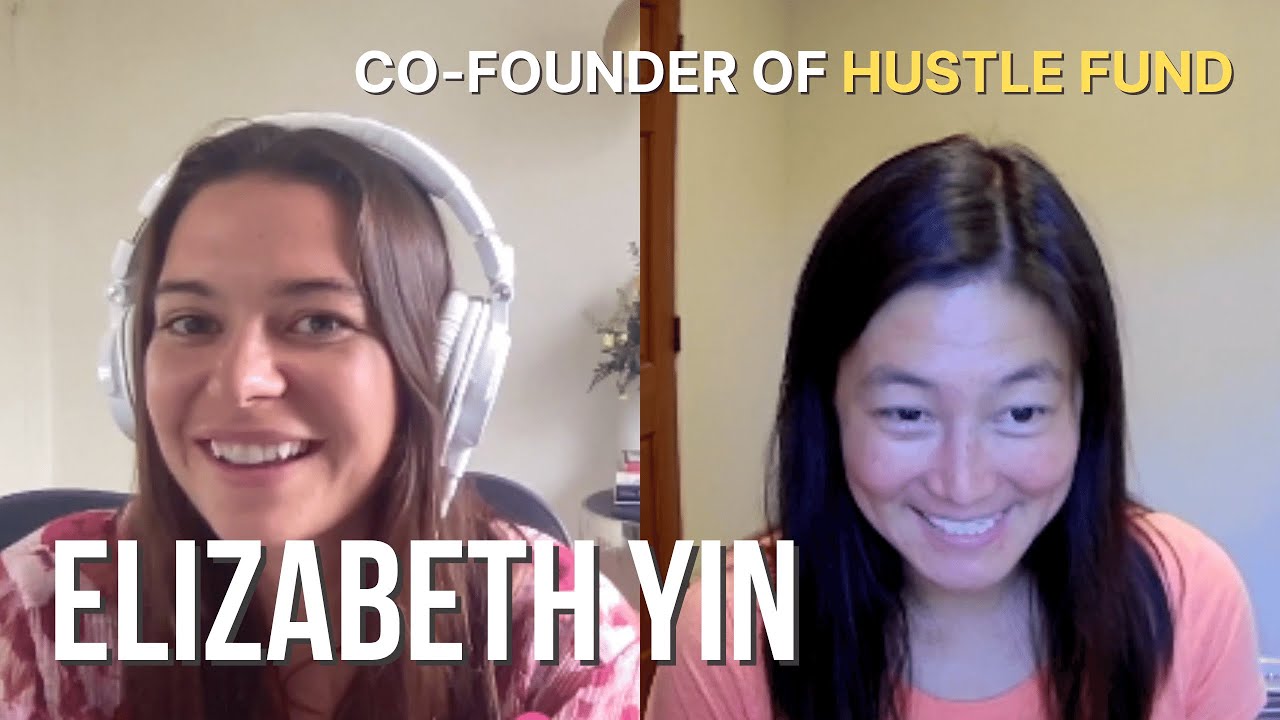
In this episode of the Seed to Harvest podcast, host Paige Finn Doherty interviews Elizabeth Yin, co‑founder and general partner at Hustle Fund. The conversation covers Yin’s early influences, especially the Lean Startup methodology, and how that shaped Hustle Fund’s experimental culture. Yin explains how she evaluates startups through a founder’s lens, focusing on six‑month plans and operational details. The discussion moves to Hustle Fund’s internal initiatives—Camp Hustle, Angel Squad, and other projects—describing how ideas are spun out to general managers when the right talent and strategic fit align. Yin shares insights from her international experience, highlighting how different communication styles affect pitching to US investors. She details the practice of VC backchanneling, why founders should understand the specific concerns VCs raise, and how she translates those conversations into educational Twitter threads. The episode delves into fund mechanics, including SEC limits on accredited versus qualified‑purchaser investors, the decision to keep a single‑fund structure, and lessons learned transitioning from Fund 1 to Fund 2, such as follow‑on and recycling capital strategies. Yin recounts fundraising tactics—high meeting volume, persistence, and leveraging surface area—and discusses loss aversion, advocating a portfolio‑centric view for angel investors. Finally, she outlines what makes a great investor update, citing Meowtel’s consistent, metrics‑driven reporting and Hustle Fund’s own approach. The interview blends personal anecdotes, practical advice, and strategic reflections on building and operating a venture fund.
Chapters
Welcome back to Seed to Harvest, a podcast with founders, creators, and investors about their stories, frameworks, and tactics. I'm Paige Finn Doherty, and I'm the founding partner of Behind Genius Ventures and host of Seed to Harvest. Today, I'm really excited to be joined by Elizabeth Yen, co-founder and general partner at Hustle Fund. Previously, Elizabeth was a partner at 500 Startups, and in a prior life, Elizabeth co-founded and ran an ad tech company called LaunchBit. She's reviewed over 30,000 startup pitches, which is absolutely astounding numbers, from around the world in the last few years. Her work and writing on startup fundraising has been featured in numerous publications, including TechCrunch, Forbes, Huffington Post, BetaKit, and more. Elizabeth, thank you so much for joining us today. I'm super excited to have you on.
Likewise. Thanks for having me, Paige. Of course.
All right. So could you start us off with the origins behind your Twitter handle @DunkHippo? 33 and when your love for hippos and roller coasters first started?
It— there's no great story here, but I will tell you that years ago I also had a Twitter handle that had my name in it. It could have been Elizabeth Yin or it could have been Eliz Yin. And a friend of mine who's a marketer told me, you know, you really need to abandon this crazy hippo Twitter handle and use something more professional like your name. And so I did the opposite.
I love that. I feel like that's definitely been a big theme that I've seen as you all have built Hustle Fund is just doing things against the grain that really resonate with you as people. So it's cool to see Dunk Hippo 33 is a perfect encapsulation of that. And you also read a lot, or so I'm told. I would love to hear about what book influenced your trajectory as a young adult. Oh, wow.
Okay. That's a really broad question, but I think as it pertains to this audience and More tactically this profession, I would say that probably the book that has had the most impact on my startup life is Lean Startup, like by Eric Ries and Steve Blank. I think, you know, I, I didn't get into venture until much later. I have always known I wanted to be an entrepreneur. I started my company with my best friend from high school and You know, back then actually everybody just kind of built products ad nauseam until something happened. And that was a terrible way of building a company. And then I started reading some of Eric Ries's very early blog posts and it dawned on me that actually we were going about building a startup all the wrong way. So that book, Lean Startup, I think many of you have probably read it, but it certainly had probably the biggest influence on my startup life for sure. Mm-hmm.
That's a great book. We read it in our Lab in Entrepreneurship program at San Diego State. It was the first book that we were assigned, and it totally changed my perspective on what, how I thought about building a company or my assumptions on it. And I'm curious, have you taken some of the learnings from The Lean Startup in terms of how you're thinking of building Hustle Fund as well?
Certainly. I mean, actually, I think the best example is from my days at LaunchBit. So, you know, we were building all this other stuff, before reading this book. And then when we read Lean Startup, we were like, oh gosh, we were doing things all the wrong way. And so with LaunchBit, which was for all intents and purposes an ad network, you know, an ad network, there's a lot of tech in there. You know, you can build all kinds of algorithms on how to place ads and stuff like that. But I think even ahead of doing all that, what we needed to test really was demand. And so I just remember one of the earliest versions of that, you know, that ad interface was Literally, it was just a couple of form field boxes where people could bid. And when they hit the submit button, you know, the only thing that happened was it sent an email to my co-founder with the new bid of whatever the company wanted. And she would manually like change like how many ad impressions that company got. And then there were some clients of ours who would change their bid like every 2 seconds. Like they thought it was really a dynamic tool, but she would just be recalculating how many ad impressions to give everyone. But that was the early days. Until we actually proved out, okay, this is, this is actually something we should build out. So that's a good example of where we were able to capture demand and then build out the efficiencies and the processes to support it later. And so with Hustle Fund, while I don't have any dramatic stories like that, we do think in that way where it's like, all right, what is the smallest test we can do both in terms of time and money to decide whether we're all in? And there are some things that we have done where we decide actually we're not doing it anymore. And that's okay. So I think having an experimentation culture is really important at, at every company.
I love that. I love the idea of the small, kind of like an MVP, like a minimum viable test of some sort. You wrote a really beautiful article covering your reflections you've gathered from over your 40 years of life, and in it you wrote how the first startup you worked for when you were just a freshman in high school, That company eventually was acquired by Microsoft and the founder Tony Hsieh eventually became the CEO of Zappos. Could you share with us how you've evolved your perspective as an investor coming from a founder-operator background?
Yeah, so that experience, and by the way, I wasn't really working there, I was just volunteering there for one day. I don't think we were any help, but that experience set me down the path of this because I don't come from a family of tech or entrepreneurship, but it was very inspiring to be at LinkExchange and kind of just soaking it in. I think, you know, now as an investor, I still very much see everything with a founder lens. Like when I'm looking at a business, I kind of think about, all right, if I were in the driver's seat, which I'm not, but if I were as a founder, what are the things that I would be doing? Like what would my 6-month plan be?
Mm-hmm.
And I think, you know, having that perspective of, all right, what are all the like little things I would need to do as an operator? I think that really helps. me at least wrap my head around a decision like, okay, you know, does this seem like this path is viable or do I think, gosh, it's going to be a real slog? And it's not to say that the company wouldn't work out, but just, you know, how easy or hard is this is kind of how I think about things when I evaluate businesses.
That's super interesting on the driver's seat perspective. I would love to touch on some of the interesting initiatives that you have going on at Hustle Fund. You're wearing a Camp Hustle shirt right now. To Scale, to Angel Squad. I would love to hear about how you've approached splitting priorities between investing, fundraising, and strategic projects in the past. And then would love if you could touch on some of the initiatives that you're working on as well.
Yeah. I think it's important to be focused. And so although you might be wondering, well, where's she going with this? Because they have all these things. For me, I, I spend the bulk of my time on our existing portfolio, like working with our existing founders. You know, if they're running outta money, helping them raise, if they're thinking through, you know, hiring or firing issues, that kind of thing. I spend probably depending on the time of the year, I spend You know, even upwards of 80% of my time on our own fundraise. But of course, when we don't have that going on, it's, it's closer to, you know, 10 to 20%. So I think those are probably the 2 primary things I split my time on. I'm actually not doing that many new deals myself these days. It's mostly my team.
Mm-hmm.
And then in terms of these other initiatives, Camp Hustle or our other events, Hustle Fund Scale, Angel Squad, et cetera, those are all run by individual GMs. general managers. And so they get all the credit. They are running with it. I often have no idea what's happening. Yeah. And I think that's great. It's like Hustle Fund is a place for entrepreneurs and, you know, we love working with entrepreneurs both in our portfolio as well as within our own organization.
So when you think about spinning out an initiative to a GM, how does that develop? Is it an idea that you nurture internally? Is it dependent on the opportunities that are presented by the people that come into your orbit? I'm curious to hear more about that stage.
Yeah. So first and foremost, I think any idea that we're doing this in this manner, because they're not funded by any of our funds, they're funded internally by our own budget and it's limited budget. It's gotta be something that is strategic and makes sense. So, you know, it's gotta be something within the start— general startup orbit of we're helping with startup ecosystems. And so, for example, Angel Squad is about, you know, teaching and cultivating more angel investors, helping them build network, helping them with deal flow, helping them learn more about angel investing. Like that's very complementary to our core business, which is, you know, I think deploying capital. It's a, it's another form of deploying capital. And so it makes total sense to do that. And everything has to fit together like that. I think, so that's first and foremost. And then secondly, because I, I am not running any of these businesses, we need the right GM, the right general manager to be running it per their skillset, their level of interest, and what the idea is in itself. Having all those things come together is actually really hard. Like for Angel Squad, that was just very fortuitous that Brian, who had, you know, been running certainly his own angel syndicate, which is huge, the Lift Syndicate. And also had done On Deck Angels for On Deck. Like he, he is Mr. Angels, like, you know, so, so it was just fortuitous. We ran into him and we thought we could build something together. And I would say actually it's largely him and then he's just run with it. And that I think is, that's a lot of luck in getting all the components together. So I think there's certainly many other things that would, would fit in a complementary way, but it, we don't have the right general manager kind of in our sphere, or we know about the right general manager, then we're not going to go and pursue it.
Interesting. So it's kind of, you have this list of ideas that you're interested in pursuing, but the ones that are prioritized are the ones where you know the right people to really take it and run with it at the right time.
Partly. I think it also depends on how many projects we have at the nascent stages going. We can't also have too many of those because then it's like, Okay, now we have 5 startups within our own company, which is just, even though I'm not working on it, it just becomes unmanageable because obviously startups in themselves have different budget needs and those are a little hard to predict in the beginning. So we wanna make sure to give whatever we're working on its best shot until it kind of gets to a good level.
Cool. And then I would love to dig deeper on Camp Hustle. Where did that idea originate and can you Walk us through how your annual meetings at Hustle Fund are different from other venture funds.
Yeah, well, so Camp Hustle is essentially our flagship event for investors. They could be other VCs, they could be angel investors, really people who are interested in investing in startups, however you wanna call yourself. And I think, you know, we're a big, big fan of events. We You know, previously run other events in the past and just know that those are really energizing for people. It's a great way to network in person in a way that online's not. And Kara DeMars, who runs Camp Hustle and our events more generally, has an events background. She used to run HustleCon at The Hustle. So, you know, she, she's the one who works her magic on all that. And we just want to build community because I think. The more we can foster different groups within the startup ecosystems everywhere, the more startups we can get funded. Hustle Fund has, you know, its own limited fund, but the world has so much more capital. Mm-hmm.
That's super cool. I, we think a lot about events at BGV and we do monthly events in different rotating cities. And some of my favorite moments in our fund have been introducing people where I'm like, oh, this is like Such a good synchronous match at this time, whether they're looking for investors or candidates or just like 2 interesting people that I think should meet each other. So I'm really excited about scaling that out and I'll have to pick your brain on that more offline soon. Yeah. Yeah. Yeah. And then in, in terms of like speaking more about traveling more generally, previously you worked all across the world, including in Switzerland, Japan, India, and New Zealand. So I'm curious, how has your experience early on in these countries and others evolved your perspective on people and your overall identity as an investor?
Yeah, I kind of landed in those roles just a little bit on accident, but it, going to those places and working taught me a lot. I think, you know, these days as an investor, I have kind of just internalized some of those lessons from working elsewhere when I see companies today. So I'll give you an example. I don't think we talk very much about this or think very much about this, but communication style, so not even language, but communication style actually matters a lot when pitching. And, you know, in the US when people pitch, like a good pitch tends to be like Hey, I'll answer your question and then I'll expand on it, right? So somebody asks you, what's your revenue? You say, my revenue is whatever, $5,000 a month, and we're growing this and this and doing this and that, and we'll probably get to $20,000 a month next month or something. That's a good answer in the US. In other countries, and I'll, I'll point out maybe Japan here, that is not how people answer questions. And I've backed a number of founders over the years from many different countries, and that's not how they would answer a question. It might be more like, well, we're doing all these other things and these other things, and then we think we're gonna get to $20,000. And then at the very end, it's like we're at $5,000 a month. And to Americans, that kind of answer sounds cagey. It sounds like you're not concise. It sounds like your head is not like thinking in a logical manner. It sounds like we have all these preconceived notions based on how you answer a question.
Mm-hmm.
And I actually think that that comes to bite a lot of entrepreneurs who are not from the US who are who are pitching US investors because we have a very certain type of communication style we are expecting. And I think that, you know, having gotten familiar with some of these other communication styles, that's just one example like that. It definitely shows up a lot. We invest internationally. We try to help our founders pitch American investors. And I think the more that we can do to help them change even, you know, how they pitch is important and, and, you know, can potentially make them a lot more successful.
Mm-hmm. One of my favorite moments, like early on in our Fund 1 fundraising process, was when your, your partner at Hustle Fund, Eric, told us about his like style of pitching, which is you kind of figure out whether an investor is logical or emotional, and then you have a story bank. So you have 3 to 5 stories that fit either logical or emotional, and then you try and figure out in the first couple moments of conversation which persona your investor fits into. I think that was one of the most interesting and tactical pieces of advice that I got about adjusting my pitch, but I'd be curious to hear other tactical pieces. And I know you have some great Twitter threads, so I'll link those in the show notes as well, but would love to hear about other tactical advice on, on pitching.
Yeah, so that's a whole nother level, right? So I think, um, elaborating on what he means by that, I'll give you an example. Like when we pitch our fund, there are many different reasons why people might be interested in investing in our fund. I mean, one could be that they just love the state. Another could be they, they want to be backing people who are supporting global ecosystems. Another could be that, you know, because we actually tend to have more underrepresented founders and, and, and female founders in our portfolio, they may want to, you know, further a mission around those lines. It could, it could be a whole, for a whole variety of reasons. And so trying to assess like in the first minute or so, like what that person cares most about is the storyline we try to run with. I mean, we don't always guess correctly, but I think sometimes you can guess and, you know, then we run with that and, you know, of course your story is everything, but the angle that you go in with is what gets people.
Mm-hmm. Right, right. And it's the story that they can take from their conversation and pass along to other folks who might be interested in investing, which is definitely a very important part of the process as well. And like going back to your international travel, this is a question I've been noodling on to see how people approach new things. So when you go to a new city, I'm curious, how do you research or explore it?
Oh, you mean for, for fun or for work?
For fun, for work. Like I'm, I'm, yeah, I'm just like curious about, like other people have said that they run or they'll ask their friends for recommendations, but everyone has had kind of a different answer that I feel like is synchronous with how they think about discovery in, in like products or investing. So I'd love to hear yours.
Yeah, I, I, a couple of ways. I like walking around, so that's always fun for me. The weird thing that, sort of the weird thing that I started, I guess, collecting over all of these places was unusual snack food or unusual junk food.
Mm-hmm.
I love junk food. I try not to eat it so much, but you know, in these places, like the different flavors of Lay's potato chips or Coca-Cola products, or even something that is not a mainstream conglomerate, you know, whatever the snacks may be. Like, I just find that so fascinating. And those are actually the kind of souvenirs I'd bring back. Like, I remember I would just bring back suitcase fulls of this stuff. You know, I think when I was in Switzerland, they have this drink closer to the Italian border called— I don't even know if I'm pronouncing it right— chinotto. I think it's a type of citrus. It could be a kumquat relative. It's like a soda product of kumquat flavor. I'd never seen that before. In Japan, they certainly have all the chocolates. I don't know if you've had any of those. Certainly the Kit Kat bars are a little bit more popular, but variations on chocolate Kit Kat bars. And then there's just like a whole nother level of chocolates in Japan and snack food You can, and India, I, you know, there are off the beaten path snacks that are not made by major conglomerates, all the different sort of lentil variations that may be fried or whatever it is. So that's the kind of thing that I love, just going to the, I don't know, the 7-Eleven or the grocery store and just getting.
Yeah, that's super cool. I found that it's really helpful to supplement like your language learning as well if you go to the grocery store and you're learning more about like different words, cuz I find that that's like really helpful for reading menus if you're eating out and just like fun to see all the different snacks. So I love that. Yeah. So you are a prolific threader on Twitter, which I so appreciate. You provide great detailed education for investors and founders alike on things like tactical fundraising advice, etiquette, which I think given your context of investing internationally is super helpful. I think that's one of like the least talked about things. Can you walk me through what your creation process looks like from blocking out time to coming up with ideas and then Executing on them. Also, I think you're at, I think you might be at $100K when we publish this episode, but I know Eric has some pushups on the line.
I, I don't actually have a process. I probably should. Usually when I have a conversation, typically it's with a founder, but sometimes it's with an aspiring investor or a current investor about something. Mm-hmm. And then I'll just, after that conversation happens, I'll think, hmm, I wonder If a lot of other people should probably hear about this, and then I'll basically turn that conversation into a tweet thread. And that's kind of that. So I don't really have a cadence or schedule in which I, I tweet, nor do I have a list of topics. Cool.
Okay, sweet. That always makes me feel better cuz I also do not have a schedule in mind. People always ask me, I'm like, does, does anyone have a schedule? What, what are some of like the questions, like as you're, as you're having that discussion in your head and writing a thread, what are some of the questions that you might ask yourself about a topic, maybe like one, for example, one of my favorite threads about, of yours is on VC backchanneling. And for the context of our listeners, I would love if you could explain how VC backchanneling works and maybe some of the questions that you asked yourself in the process of, of writing that thread.
Yeah, so that stemmed from an email thread that I sent one of our founders. Basically, I, I just shot him a note saying, hey, I just wanted to let you know That I had a phone call with such and such VC about your company this past weekend, and these are the things we chatted about, and these were his concerns. I wanted the founder to kind of understand where they are in that process with that VC and, and, and if they could better address those concerns, that would give them a good shot. And in the process also of talking with that VC, I was going to bat for that founder and, you know, trying to, to really give compelling answers on some of these questions.
Mm-hmm.
And then the founder wrote, my founder wrote back and was like, oh wow, I didn't realize VCs talk so much. And I was thinking, oh my gosh, like, this is just the tip of the iceberg. Yeah. Like, gosh, I can't even tell you how many conversations I have with VCs every week. I guess I've never really talked about that with my founders typically. Maybe I should just write a thread about it. And so that's where that came from about like Why VCs backchannel, like what they're hoping to get out of it and why it can be helpful to you as a founder. Because typically, actually, I find my conversations with VCs are a lot more straightforward. Like they have specific questions that are top concerns for them that they want answered. They want my perspective on it, but also it illuminates what their top concerns are because if the founder can address those top concerns, then, you know, you have a much better shot at getting funding if you can answer those concerns, right?
Mm-hmm.
And, and sometimes it really works. Like, you know, I have one founder who was pitch, you know, he was pitching some VC and the VC had one concern, just one concern. And the founder had been telling him about all these other compelling things and I was like, hey, that's not his concern. You need to come up with a really good answer around this. And I can push talking points on that, but that's all this guy wants to know. He doesn't care about all the other great things that are happening in your business.
Dang, that's super cool. Because I've thought about it from like a, from the other perspective of, I actually got like an email from Eric when we were evaluating a company that I had gotten introduced to like separately, but Hustle Fund was an investor and Eric sent me an email and was like, hey, I know you're looking at this company. Let me know if you have any questions. I was like, how did he know that? And I thought that was really cool because I hadn't really seen any other investors that are doing it, but it's definitely something that's deeply at play. It's kind of like the, it's a, it's kind of like a parallel of like an intro, but deeper in the conversation, I guess. But that's super cool. And then like, I, like, as you were writing about that, what are some of the questions that you used to unearth maybe some of the context that might have felt like obvious to you?
Yeah, that's always the hard part because in my mind I was like, well, this is my day in the life. I don't, I didn't realize that nobody realized this is a VC talk all the time. I, I thought that was sort of a trope. But yeah, then I think it's just, okay, if I'm approaching this topic for the first time, what are the natural questions that I would have as a founder about why are VCs backchanneling? What did they talk about? How can it help me? You know, how can I actually use it, actively use it to my advantage? Like, what do I need to empower my VCs with so they can go to bat with that for me better? Just more from the customer perspective of who's reading this, like what are the questions they would have? And that's kind of how I think about it. In this case, the customer is the founder. Yeah.
You put yourself in the driver's seat, like similar to how you evaluate companies. That's super cool. So I, I'm scaling out like a bit. Oh, what I'm curious, what are some of the biggest lessons that you've learned as an investor or as a firm manager as you've transitioned from Fund 1 to Fund 2 at Hustle Fund?
Oh, so many learnings along the way. Although I had been an entrepreneur before, I had never managed a fund before. And I think there's certainly similarities. You have to build brand, you have to fundraise, but there are also some differences, right? And I think some of the differences are actually more in the weeds and things I certainly didn't realize. So for example, one of the, one of the things that's always top of mind for us is the number of investors we can have in our fund. Yeah. So per SEC rules, you can have 99 accredited investors or, and you know, that means that you can't have more than 99 of them. There's certainly ways around it, which we don't need to go into, but— Okay.
Wait, I want to, I know that you don't want to go into it, but I'm curious about it. So there's, for the context, I, correct me if I'm wrong, but you can also set up a parallel fund that's only qualified purchasers who have a net worth of over $5 million, and you can have up to 1,000 investors. In that one, which is a very— 2,000, which is kind of wild to me. But yeah, that's like a structure that I've seen more often when folks are trying to increase the number of investors. And I think like, yeah, is that, is that more complicated from a setup process or is it not too much additional admin work?
It's fairly common. So if you go with AngelList, they will automatically take care of that. And so everybody, every fund manager who's on AngelList automatically gets more slots. You can have 99 accredited investors and up to 2,000 qualified purchasers. So that's a lot of slots. So that's one way you can have more investors in your fund. If you're not on AngelList, then typically your admin fees will be double because it's essentially like you're running 2 funds.
A second fund.
So then if you If you wanna pay twice for your fund admin, your accounting, your audit on all, all of those fronts, then you can get that as well. And, and then yeah, I think those are the 2 primary ways. Some people just do a qualified purchaser fund where it's just one fund and you get up to $2,000, but you can only bring in qualified purchasers. And the difference between qualified purchasers and accredited investors is Accredited investors, although there are different ways to be accredited, one way is you have a net worth of $1 million excluding your house, or you make a certain salary depending on your marital status, $200K or $300K. Qualified purchasers, the stakes are a lot higher. You're, you're worth, at least on paper, somewhere in there you're worth over $5 million. So it's harder to be a qualified purchaser. So yes, there are lots of different hacky ways of trying to handle this and it can be handled, but You know, you either pay for it in time or money or both. And I think so we, for that reason, we've always just stuck with a bread and butter one fund, 99 accredited investors. And, but it's a question we always ask ourselves, should we be changing it? Because, you know, we have had investors who wanted to invest. We've had to turn them down because we haven't had enough slots, which I'm quite sad about. And in fact, we've lost investors from Fund 1 to Fund 2. Uh, which really pains me because I, you know, I want to reward loyalty. And, you know, unfortunately, if you want to raise a bigger fund, your check size has to be, your average check size has to be bigger.
Right, right. And what are some of the, aside from the number of investors, what are some of your other learnings as you've transitioned from Fund 1 to Fund 2?
Other learnings. I think, you know, we've thought more about, uh, strategy around later stages as well. So for Conduct, we're a pre-seed fund. You know, our bread and butter is writing a pre-seed check. On occasion, we may write a seed check into a portfolio company. But then I think, you know, as you get further along, our Fund 1 is almost 5 years old, there become opportunities for later stage investments. Do you do the A? Do you do the B? If you do, do you do it out of the fund? Do you do it out of a separate vehicle? Questions like that. And, and then I think just overall, how do you think about follow-on strategy? So those are the things that we've thought more deeply about in this transition period over the years. Of course, those were not questions we needed to, to tactically figure out in year 1 because we were just getting started.
Right.
Yeah.
Yeah. I'm finding that in, in my transition from one to fund, from fund 1 to fund 2, one of the biggest questions that keeps coming up is follow-on, 'cause it's closely tied into how you think about scaling as a venture, as a venture fund as a whole, whether that's through SPVs or whether it's through a higher ratio of follow-on in a core dedicated fund. I'm curious, like, And, and I think it's different for every investor based on their style, how their fund's set up, kind of, you know, what, what is that true strategic core? And I think different strategies can work for different people, but I'm curious to hear more about how you thought about scaling that follow-on strategy.
I think the thing actually that is hard to figure a priori, because everyone can create their own model around follow-ons, right? But the real issue here is once you start having companies who exit, And that's hard to model. You don't know when companies are gonna exit. You don't know for how, how big. And cash comes back. And the question is, what do you do with the cash?
Yeah.
Do you send it to your LPs? Do you reinvest it? If you reinvest it, what investment opportunities are you looking at? Only things in pre-seed, seed, or are you also looking at things in A? And I, I would say that's actually where you deviate. You end up deviating from the model because you don't know when those things are gonna come back. And every single time capital comes back, Big or small, you're making a new decision on what makes sense based on sort of the opportunities at hand. And I think there haven't been major learnings, but I would say that we have had to be more flexible than we initially modeled. I think we initially modeled, we're just doing pre-seed and seed follow-ons. But at this point, we've done a number of A's because of some of the exits that have come back. We didn't feel, we felt like it was too early to return the capital. And we would be better off recycling it into Series A opportunities, but only certain Series A opportunities depending on valuation and all these other things. So, so we've ended up doing way more As than we anticipated or modeled out. In fact, we didn't model out any As.
That's super interesting. Oh, it's interesting that you bring up like recycling in the context of fund follow-on, not just like follow-on that's initially reserved, because that you can more model out. You're like, all right, we'll, we'll try and do It's either 1 to 1 or we'll do 50% or whatever. But when it's recycling, you're like, oh, I have this random sum of money that I don't really know what size it's going to be, and I need to either give it back to our investors or reinvest it. And then if, especially if you're 5 years into a fund, you probably don't have too many companies that are still in pre-seed, seed land.
Right.
And so you're like, all right, that's super interesting. Yeah, I guess we haven't reached that point because we're only 2. No, 1 and 1 and a half years old so far. So I'm assuming that'll be something that'll come up in the future. So I appreciate your context on that. And then on the, the fundraising side, can you share some of your favorite fundraising stories from earlier in your journey?
Fundraising is really a numbers game. For Fund 1, which was an $11.5 million fund, Eric and I did over 700 meetings.
Yeah.
And when you think about it, that's not a very efficient hit ratio, but I think you have to meet with a lot of people to, number one, get your story right. We did 20 iterations on our story. Number two, you don't really know like who is actually interested. Just because somebody's rich, it doesn't mean they're interested investing. Yeah. Conversely, we have LPs whom we actually didn't think could even write a check, right? So Yeah. So you, it was really hard for us to kind of, I guess you could say lead qualify. And so we had to meet with a lot of people and I think the key thing, the key learnings there are follow every lead just to even see where it goes. You can drop it quickly. Don't try to convince people, but follow everything. Follow up. Like we had an LP in, in Fund 1 whom Eric followed up with 13 times. There was no answer, but on the 13th time he was like, I'm in. So, you know, it. Just because you haven't heard back from somebody, it doesn't mean they're not interested. People are busy. And so that was a learning. I think the last thing is just people come from out of the woodwork from everywhere. I remember one day, uh, she and Eric and I were, we were actually abroad and we were fundraising abroad and we had our Hustle Fund backpacks on and it had been a long day and we just wanted to grab a quick bite to eat.
Mm-hmm.
We walked down some nondescript alleyway. I don't even know what street it was on and found some like little restaurant and we're like, great, we're just gonna get some quick food there.
Mm-hmm.
This lady who is also ordering food there noticed our backpacks that say Hustle Fund on it and she's like, oh, I read about you in the paper. And anyway, long story short, you know, you just never know where you will end up picking up leads.
Wow.
She turned out she was in finance. And we just happen to be in this sort of small restaurant, rundown restaurant, but you know, you just, things just show up. So I think the more you're out there, the more you're talking with people, et cetera, like the bigger your surface area is and, and the greater your chances are for raising money.
Yeah. I, I love that. I think it's similar to this concept of input metrics. I had Jean Grosser, who's the Stripe head of America's revenue on. And she talked about that's how she built the sales team at Stripe. So they never had, they didn't have quotas. They had like activity quotas. So it's like you had to do, you know, this amount of outbound emails and book this amount of calls, but you don't have like a target necessarily for how much you're going to close. And I feel like fundraising is very similar to that. And it is so funny and wonky from a fund perspective. I was trying to explain it to one of my Uh, friends who's a founder, and I was like, for a founder, you have like VCs and you have angels, but there's not necessarily like a big sign at, at an LP office. You never really know who's in market or out of market. So a lot of it is just putting feelers out wherever you can and seeing what comes up. So definitely resonates with my experience. Um, and so in one of your pieces, you wrote that loss aversion is probably one of the biggest roadblocks to more people investing. So I'm curious to hear more about your perspective on that frugality abundance paradigm as a person versus the mentality of maybe like a venture investor.
Yeah, I think that loss aversion is really natural and I think that everybody has it where it's, you're more afraid to lose what you have than afraid of missing out on what you could potentially get.
Mm-hmm.
And I, I think that just given how risky, say, startup investing is, it's natural that many people do not want to become angel investors. However, I think, you know, I got a lot of my learnings in venture through 500 Startups around the time. So after I had sold my company and I, I started mentoring other startups and doing a little bit of angel investing, I really got my lessons at 500 Startups because You know, they invest on steroids. At 500 Startups, they invest in, you know, hundreds of companies a quarter. And so I, I got to see a lot. And I think in particular what I got to see was what a portfolio looks like rather than, oh, I'm putting money into this one company. It's like, okay, now we're putting money into 100 companies.
Right.
What does that look like? And so the way I see startup investing now is less about the one company, but more about I need to build a portfolio big enough to protect my downside risk, but also capture enough upside. And that's how I think about things, just very much from a portfolio perspective. So I'm never worried about any particular investment. It's more about it. I am more worried about, am I constructing the portfolio correctly? And I think that's something that is not a natural learning. It's something that I actually think has to be taught.
Yeah.
You have to see the data and you have to see it play out. And I, I think that if we could get everyone that learning, we would certainly have a lot more angel investors.
Yeah. And I think angel education has been something that you all have focused on a ton at Hustle Fund. So hopefully you're helping change a lot more folks' perspective on that, which is really exciting. And as we're wrapping up, I so appreciate your time. I have one more question for you, which is who in your portfolio writes the best investor updates and why? Which is a question I've been asking a lot more investors and I always, I, I think it's just like really interesting to hear about.
Interesting. I'll give you 2 answers. One is in my portfolio and I think the other is actually Eric. So one is, uh, in my portfolio, I would probably say this company called Meowtel. Uh, they are a cat sitting platform. Wow. They write the best updates. Here's what makes them great.
Okay.
Number one, they always send out updates consistently. Mm-hmm. Every month. And I think a lot of portfolio companies send out updates on a regular cadence, but then they forget and then they hop back on it a few months later or whatever. I very rarely see a company actually send it consistently for years.
Mm-hmm.
Number 2, I think it's really important to be metrics-driven. And revenue driven for most companies.
Mm-hmm.
And so they, they are, they keep track of their metrics really well. It's not for investors, it's more for them.
Mm-hmm.
But then they just put that in there. And so that actually has allowed them to be very lean. They have not raised very much money. Mm-hmm. And to scale quite high, pretty much under the radar.
Wow.
Because they know their numbers, they know their operational costs on a unit basis, like They know what's working, what's not, and things that are not working, they just like kill that immediately. And I don't think most startups have a good grasp on that. And then lastly, they do have some qualitative about the direction they're going in and what they wanna accomplish over the next couple months. Wow. But amazing updates, I'd say.
Cool.
Um, for Hustle Fund, we also try to do the same. Mm-hmm. We send out our Updates every day on the month, first of the month, and Eric spearheads that. And again, I think trying to take a page out of even let's say Meowtel's playbook, we try to be metrics oriented, and we try to also talk about you know what we're doing specifically. Like we invest in these companies, this is what they do, etc., and just be very factual, not flowery or or try to add. You know, a lot of dancing around, as I call it.
I love that. Well, thank you so much for sharing this time with me, Elizabeth. If you would like to connect with Elizabeth on Twitter, her handle is @DunkHippo33, which I think is quite difficult to forget, but if you do, I'll put it in the show notes. And thank you so much for your time. I had so much fun.
Thanks, Paige. Me too.
Thanks so much for tuning in today to Seed to Harvest. If you enjoyed this episode, be sure to subscribe wherever your favorite podcast listening platform is. I'll be releasing new episodes weekly, and if you have any questions or comments, feel free to let me know on Twitter. That's Paige Finn, Paige and then Finn with 3 N's. Thanks, and see you again next week. Bye.
More from Paige



Paige of Behind Genius driving an AI electric train in St. Louis (Intramotev Visit)





