Initialized GP Alda Leu Dennis on Negotiating Term Sheets | Seed To Harvest Ep7
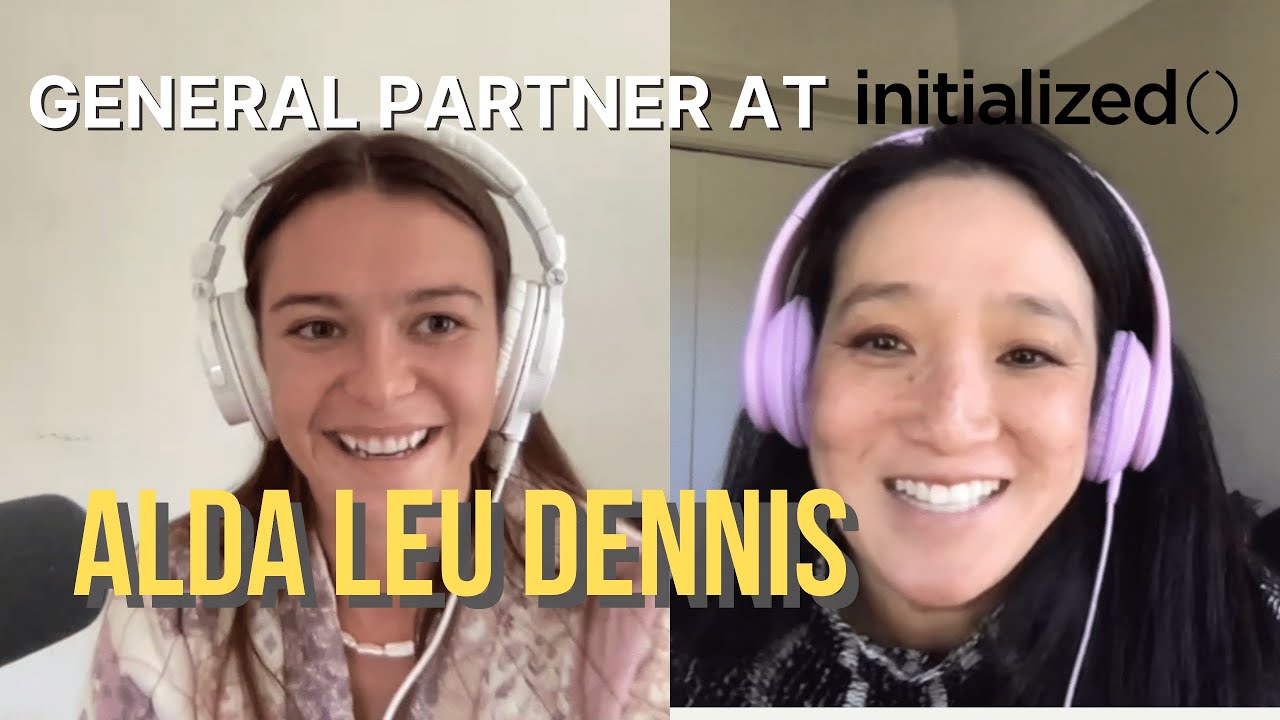
In this Seed to Harvest episode, host Paige Finn Doherty interviews Alda Leu Dennis, General Partner at Initialized Capital and former General Counsel at Founders Fund. Alda walks through a typical VC day—office hours, board meetings, deal sourcing, and reading—while emphasizing the firm’s hands‑on operator model. She highlights a strong investment focus on women‑founded and female‑focused companies, citing The Mom Project, Maven, and Tia as examples, and explains why she views this market as an untapped opportunity. Alda credits Peter Thiel’s contrarian mindset and partner Gary Tan’s relationship‑driven approach as key influences on her investing philosophy, stressing the importance of seeking white‑space sectors. When discussing founder pitches, she outlines four pillars: clear problem/value proposition, strong execution team, large market, and the intangible of excitement/storytelling that sparks investor enthusiasm. She shares a recent fintech‑for‑financial‑inclusion pitch that moved her to a rapid six‑hour diligence and term‑sheet offer. The conversation then shifts to term‑sheet negotiation tactics, focusing on board composition, liquidation preferences, and aligning motivations behind protective provisions. Alda notes a broader shift in venture capital: more non‑institutional capital, growing interest in emerging managers, and emerging opportunities at the intersection of technology and biology. Hiring at venture firms is treated like investing—extensive diligence, cultural fit, and long‑term partnership. Finally, she advises aspiring investors to start early (even with a $1,000 investment), build a network, continuously read, and learn from successes and failures. The episode closes with contact information for Alda and Initialized Capital.
Chapters
Hello everyone and welcome back to Seed to Harvest. I'm really excited to be joined today by Alda Lou Dennis, general partner at Initialize Capital. Alda is a lawyer, previously a litigator, and also the general counsel at Founders Fund. A mom of 3, she grew up in Texas and her parents owned restaurants. She's always looking for women founders to invest in and has invested in The Mom Project, Maven, and Tia, all companies founded by women and focused on women. Alda, thanks so much for joining us today. I know no day is the same in the life of a venture capitalist, but to give our listeners some perspective, what does the average day look like for you?
Thanks for having me, Paige. The average day is different, and I think that's part of the great thing about being a VC is that there's a lot of different dynamic changes that happen every day. But usually there are office hours or board meetings with portfolio companies.
There is some time working with other teammates on various inter-firm initiatives.
And just, just right before this meeting, I was talking to a founder about potentially investing in their company.
And so certainly looking at deals and working on our investment memos is a big part of it. And one thing that I don't have enough time for that I'd love to have more time for is to be able to spend more time just reading, educating myself, and thinking about what's what's ahead and what are the interesting areas to invest behind going forward.
I feel like that's a resounding theme with most folks I talk to in venture. It's a very interrupt-driven field in the best way. It means every day is different, but it's difficult to have what my mentor, Judy Estrin, calls greenhouse days. I was talking about them on an earlier podcast episode, but those times where you really get to synthesize information and think about what's happening next. I would love to hear more about the office hours that you mentioned. That's something that we've been thinking about implementing at BGC. We would love to hear more about how you use office hour time at Initialize.
Absolutely.
It's sort of modeled after the YC office hour, what they do at YC, which is, you know, we ask our founders if they'd like to meet and on what cadence.
Usually it's once a month, but there's certainly some groups that prefer more frequently or less frequently.
And it's, it's not a requirement by any stretch of imagination, but, you know, it's a great thing to check in with the founders. Make sure that things are on track, head off any potential problems that may be ahead, and see what areas we can provide help to the companies with.
Awesome. Sounds like one-on-one office hours then.
Yeah.
I mean, sometimes it's, you know, 2 founders or 3 founders and a couple of team members, but at Initialize, we spent a lot of time putting together a fantastic team of operators who can really work with our companies from recruiting to product design, brand, PR. And so a lot of times other team members get involved as necessary.
That's awesome.
For a bit of context for audience, Initialized is a venture firm that invests in early-stage companies with conviction before it's obvious. And they work with visionary founders using software to tackle some of the world's biggest problems and support them through product-market fit and beyond. And they're an incredibly diverse group of founders, builders, and experts in their fields who understand how hard it is to build a company. They strive to do the right thing and be the best partner that founders can rely on when they need them most. Some of the companies that you all backed include Coinbase, Instacart, Flexport, and Cruise. So, Alda, I would love to hear more about your specific investing areas that you focus on and why.
Absolutely, Paige. So you've already touched upon my interest in companies with female founders and female-focused companies. I think that is probably my number one soapbox to get on, is that women control so much of the buying power in this country and consume so much technology that as a consumer, you know, we're not spending as, as much time as we could focused on female-focused companies.
And certainly as the stats would indicate on, on female-run companies. And that's certainly something that I feel very passionate about because I think it's an untapped opportunity and one that people, more people should be taking advantage of.
Couldn't agree more. And digging into your investment style in particular, who would you say are the people, either investors founders, people from your past who have had the most profound impact on your investment approach?
Well, it would be hard to not point to Peter Thiel, who I worked for early on in my career, as you mentioned, the general counsel at Founders Fund.
I also worked at his hedge fund and, you know, everyone who worked for Peter sort of heard a lot about and was sort of inundated with the concept of trying to be a little bit contrarian with our thinking.
And you'll, You'll see allusions to that when I talk about sectors that are ignored. And because, you know, where there is white space, I think that there is often a lot of opportunity.
I love that. Anyone else that you wanna mention in that, or specifically Peter Thiel?
You know, Peter's fantastic and certainly my partner Gary Tan is a fantastic investor as well. And he did it in a really fantastic way by building out his reputation, by building out his relationships with founders and trying to be hands-on and helping them. And that's something that I've tried to do with working with some of my portfolio companies is be available and be caring, be high integrity, and, you know, most importantly, try to be helpful.
Thanks so much for sharing. I always find it interesting to ask other investors who their inspirations are, who they've worked with most closely, and try and build that net around how you shape your investment philosophy. It's really interesting to hear that you apply your contrarian approach to investing in spaces where there's overlooked opportunity.
No, I was going to say, you know, I think that what I've noticed about really strong investors is that they trust their gut. And I know that when I was starting out investing, which, you know, wasn't a super long time ago, I was a lot more nervous.
And I know, Paige, that you're, you know, starting out with your fund.
Definitely can resonate with that.
Yeah. I mean, taking chances and, you know, something that may not check all the boxes is scary and there's a lot more cover to be had by going where the herd goes.
And so It's a really difficult thing and it wasn't until I got sort of later in life that I really started to formulate the strength to be able to take some chances on things that were a little bit more controversial.
Yeah, I love that you said that. I think that it's a misconception that everyone starts out as an investor and is confident in their investing abilities. There's definitely an element of nerves. One of our investors recommended that we write down which rule we had broken in our investing assumptions because he said, Most often the exceptional investments come from places where you've made exceptions in your investing framework, where you're not looking where other people are looking. So, absolutely. Yeah, I love that framework. Uh, going, going deeper on that, would love to hear your top tips on how to pitch a VC as a founder.
I've actually been thinking about this a lot because, you know, there's a lot of questions that I ask myself and that we ask our founders and prospective founders to discuss. And, you know, I can touch on those. You know, obviously we, it needs to be clear what you're building.
It needs to be clear what problem that solves, what the value proposition is.
You know, we're looking for a strong team that can actually execute on the vision. You're looking for a large market, but sort of the last thing, and this is what I've been thinking about a lot, is this intangible of you have to excite your investor, right? And so it could, it could check all these boxes, but If you're not excited and I'm not excited to get up every morning and help this founder work on this problem, if it doesn't sort of spark something in you, it's not gonna, it's not gonna, you know, sort of make it pass the line in my opinion. And I, I think that that is something that sort of, especially in this market where it's super busy and it's very frenetic and there's very high valuations, it's sometimes you can get wrapped up in this, you know, oh, well that group did it and I have this.
I, I'm very similar in this way and sort of forget about that intangible part of storytelling and pitching, which is to, you know, spark excitement in your audience.
I love that. So it sounds like for founders out there listening to this, clarity, team, market, and an intangible excitement, which is often carried through storytelling and emotion, which is something I feel has been ignored in a lot of traditional ways that folks have taught how to pitch VCs. So I love that that's coming more into effect now.
And you can take like a, a boring industry and make it exciting, right? And that, that shows a lot of, of skill.
And that skill can translate into more fundraising, into recruiting, into business development partnerships. It actually is a talent.
Yeah.
Going off that, tell me about the last pitch that really blew you away.
Well, there's a company that I invested in and it hasn't, it hasn't been publicly announced yet, but you know, My partner Gary took the pitch. He sent it over to me. I said they already had 2 term sheets and I met with the founder and really, you know, it resonated with me on so many different levels.
It's in the fintech space around financial inclusion. And, you know, we managed to do our diligence, do reference calls within, you know, 6 hours and put together an offer. And that excitement I still feel today when I talk to the founder almost on a weekly basis and what they're working on.
And it's very exciting. And I think coupled with sort of a great mission of financial inclusion makes it something that I, I feel super excited about.
Absolutely. I, I love that feeling of just a matured excitement where you get to know the founder more deeply and it matures from an initial gut reaction to really being able to put more plot points to a story on why you're so excited about working with them. You've been heavily involved with fundraising both at Founders Fund and Initialized.
I'm curious to hear more about how your fundraising strategy has shifted over Well, I don't know if it's necessarily time or experience or, you know, being at, at different funds. You know, I was also at 137 and worked on fundraising then. You know, I would say that there has been more attention on the venture industry and the returns that we can generate.
Mm-hmm.
And so I have been surprised at how many non-institutional investors have sort of entered the space.
More recently, and I view that as a type of financial inclusion that, you know, this asset class, which has generated at least in the top 4 times really exceptional returns, shouldn't just be available to large institutions, but it should be available to more. And I have definitely seen more interest from both individuals, you know, younger professionals, as well as family offices in the space. So that's been a really positive, a really positive thing. And even in just the last couple of years with the exits that we've seen in the public markets, It seems like there's renewed vigor for even on the institutional side in deploying capital. And what I would really like to see is that increasing vigor directed at emerging managers, which I think you can really generate those outsized returns from because they tend to have smaller fund sizes, differentiated networks, and unique perspectives.
I love that. Speaking of that, what would you say is your secret sauce?
I don't know that I have any secret sauce. I mean, this Business is, is work. And, you know, every morning you ask me about my day, I get up and I'm excited to do the work and I want to do the work.
And nothing makes me happier than being able to help out the founder, whether it's through a problem or with an introduction or highlighting, you know, a landmine that might be ahead. And, you know, getting satisfaction and excitement out of that, those, those sort of interim steps for something successful or not successful really do, you know, make, make the job worthwhile in my opinion.
So, I mean, that's certainly what keeps me motivated, but I, I'm not sure if it's a secret sauce or thing that you do.
No, I think it is.
I think it's again with like the emotion and storytelling. One of the things people don't talk about enough is do you enjoy the work that you do? Because there's a lot of people out there that don't. And I think venture is unique in that there's a much higher percentage of people who really enjoy the work that they do and turn down other opportunities to work in a space that really excites them.
So I don't know if that's part of it. Yeah, I mean, you know, I, I, in this country, you know, you, you sometimes hear people joke that we do our jobs to make money so that then we can spend the money on things that we enjoy. And that's, that's really unfortunate.
And what we are looking for is founders who are passionate about what they're building. And so they get up, you know, and, and wanna do it regardless of the paycheck.
Yeah. I always ask like, why do you, why is this the company you wanna run for the next 10 years? So what are the trends that you've seen that you're really excited?
One that we haven't talked about is the intersection of technology and biology and science. And certainly it's been top of mind as everyone is now like a science expert with COVID But what we've seen is that there's just been a lot of innovation in research and testing and the ability to run machine learning models and structure and tag the data in such a way that you can actually do research faster than you could, you know, 50, 70 years ago, you know, and And beyond that. And I think that that's, that's really interesting. It's, it goes beyond sort of, you know, sort of stronger research tools into the ability to search and discover and find new therapeutics. And I think that that's really fantastic, especially as, you know, we sort of go into an aging population in this country. And I think that that intersection is something that's, that's super exciting.
Yeah, absolutely. There's an emerging manager would love to connect you with named Ariana Thacker that runs a fund called Conscience VC who invests At the intersection of consumers and science. So we'd love to connect to you after this. Yeah, that's a trend she's really excited about as well. Switching gears, I would love to ask a couple tactical questions about your earlier career time. So as the chief legal counsel at Founders Fund, you prepared and reviewed hundreds, if not thousands, of legal documents. What would you say are the most common mistakes that you've seen and how can founders or investors avoid them?
You know, I, gosh, I, I, I did that. More than 10 years ago. Yeah. So I can give you some examples from, you know, just companies that I've worked with more recently. Yeah. There was one company where they had 2 competing term sheets, one from a, from an investor that they felt a lot of kinship with. It was a really strong brand, but that term sheet was less good than the other term sheet in a lot of ways.
And most of the time, you know, people just think in terms of valuation, but this one called for a 2 and 2 board with an independent, which is basically a neutral board. And would cause them to lose board control, which I think was unusual for a company that was, that had the growth and the prospects of this company.
And so, you know, they, that, that required some discussion and negotiation on how to, you know, amend that clause or, or, or get it out.
There are other things like sort of stacked liquidation preferences that fortunately I haven't seen in the last couple of years, but there's another company that we, that's in the initialized portfolio that had a term sheet with sort of a stacked liquidation preference.
And so there, there are certainly things some venture funds will put in their documents that are not as company favorable.
And it's always a calculus of what the, where the strength of the negotiating position lies and how to sort of get the most favorable terms.
Yeah, I would love to hear more about your experience in negotiating term sheets. I think this is a really interesting thing. I, for context, I teach a venture capital class at San Diego State and a lot of what we focus on is term sheets and how we can identify risks in the business and then mitigate those through different terms. But being that it's a very founder-friendly market, there are some terms that if you put in the term sheet will cause you to lose a negotiation. So would love to hear you talk more on negotiation. I think a lot of folks don't realize that you can negotiate terms in the term sheet, but that's very much on the table. And like you said, it's dependent on their leverage in the negotiation.
Yeah, as with any negotiation, you know, certainly you would start with a calculation of what, where the balance of power is.
And then secondly, you would take into consideration sort of what the motivation is of the negotiating, the party you're negotiating against. And so let's use the board as an example, because I think it is next to sort of this dilution term, the most important one.
Even maybe even more important than valuation and dilution is the board because it fundamentally dictates You know, the balance of power at your company going forward. And there are certainly some firms that as a matter of policy prefer to have a neutral board or board control.
And, you know, maybe that's shifting a little bit with the market, but I, I know of large, you know, name brand firms that insist on having at le— at least a neutral board. And so understanding the motivations behind that, maybe the particular partner has had to replace the CEO a couple of times, or they've gotten burned in, in specific situations. Maybe you can enact other protective provisions to prevent against certain concerns. Like, are you concerned that I'm going to issue shares to my cousin or, or whatever? You can put in protective provisions for those things rather than having sort of a blanket board seat.
Interesting. So it's addressing the underlying— Under— addressing the underlying concerns that would push for the venture capitalists to have a board that's more favorable towards them.
Yeah, absolutely.
I would agree.
Most, most of those are, are based off of battle scars that they've gotten in previous companies that have haven't gone well, but I think bringing a sense of less trust into a new relationship can be really tricky.
And, you know, it's from, it's logical that you would want to have, you know, independent oversight by the board. So it's, it's not an offensive proposition, right? But certainly I would say that it's not market, especially at the earlier rounds at this point in time.
And, you know, just referencing the market dynamics can also help as a negotiating tactic because These firms are aware that their own reputations in the market matter, and it's perhaps not about this company, but about the next company that's even more competitive. And so certainly those things can, can be additive when trying to advocate for your position.
Love that. Thanks for expanding on the negotiation aspect. I'm curious, as you shifted from the legal side to the investing side, what were the most dramatic shifts you saw either in your own practice day to day or things that you might've noticed Being on the inside of investing?
Well, certainly when I was at Founders Fund in 2006, and I'm dating myself now, it's, you know, almost 15, 16 years ago, there was not as much capital coming into venture.
And I mentioned how there were, there was new interest from family offices and other investors in investing in venture. But even the institutional capital that we see coming in now and interested in investing in this asset class is new. And so, That has resulted in plenty of new funds emerging, new managers, and, you know, certainly it sort of trickles down to, you know, more, more entrepreneurs and more companies that are trying to tackle a certain space and basically a very vibrant entrepreneurial ecosystem, which is super exciting. It's sort of, you know, being able to watch it evolve and to watch the wonderful things that have come out of it.
Absolutely agree. I think seeing the trend of more attention into venture being invested in a more diverse array of managers, regardless of like background or kind of like their thought philosophy. You can do venture thousands of different ways, but because there's so much renewed interest in the ecosystem, it means that a lot more folks are turning into check writers, which means there's more opportunity to invest in different areas that might've been considered niche to certain investors. So I'm Quite excited by that trend as well. So one thing I'm thinking about as we're growing Behind Genius Ventures, we've been thinking about hiring. So I'd love to hear more about how you've made hiring decisions either in the past or how you think about making them at Initialize.
Well, we are certainly growing our team at Initialize. So if anyone, if anyone great, please, please send them our way.
You know, I talked about the way we do business and it is pretty hands-on and we have spent our resources and allocate our resources to building out our team to provide strong support for our companies when they need it. And so, um, we have had the, the occasion to do a significant amount of hiring.
And, you know, it's funny, I was sort of asking my friend at Facebook, you know, how do these big companies hire so many people? Because, you know, it's hard to find really talented people who are a cultural fit and have the same work ethic as the rest of the team. And the answer I got, I don't know if this is true or not, Paige, was that they hire a lot of people and then, um, the really good ones they keep promoting up and then the ones that are sort of weaker, they just Let them stick around until they, you know, through natural attrition, may, may leave the company.
Wow.
And obviously at venture firms, do you not enough budget in a venture fund to really afford to do that?
Totally. So, for us, we invest a lot in the process prior to bringing someone on. And, uh, I was just talking to someone last week and I said, listen, it's gonna take a few months, right? Because we wanna get to know you. And, you know, this is, you know, for a, a partner role, uh, which we've put an open rec out for, that We wanna make sure it's a great fit on both sides.
And that's sort of the good thing about this process is that it allows both parties to get to know one another. And, you know, we ask for, you know, sample investment memos. We ask for a whole series of interviews, and the process does take a little while. And hopefully it's allowed us to make great decisions and bring on people that will be with us for the next, you know, 100 years.
Yeah, it sounds like you diligence folks that you hire similar to how you diligence companies, then have an opportunity to get to know them. Um, so what would one thing that you think any aspiring investor can do to set themselves up for career success, even if they're so—
You know, I made 2 venture investments when I was in law school.
So I was, you know, I don't know, like 23 or something.
And one of them was LegalZoom. So any— and this was $1,000. So like anyone can be an investor. And literally, like, you know, I was— that was like a lot of money for me. It was $1,000. So I think, you know, network is obviously really important. I don't think, you know, if you can invest $1,000, like, great. And, and, you know, making, making actual investments is what makes you an investor. And learning from those investments, keeping, keeping track of your network, thinking about how a company succeeds and doesn't succeed, and proactively reading and thinking about markets that are, are primed for innovation.
And I don't think that You need age or experience to do any of those things.
I love that. That's one thing I always recommend folks do is read an extensive amount of material and then synthesize it. As you mentioned before in this episode, a lot of investors don't have the time to have that synthesis and reading time, and so it really can provide so much value to have someone's perspective on a market where they've done deep research. It's so valuable. Well, awesome, Alda. Thank you so much for taking the time today. I appreciate it so much and really enjoyed our conversation. To close this Do you have any additional things that you want to touch on? And then where can people find you on the internet?
I have, I'm on Twitter and Initialize has a, you know, follow Initialize on Twitter as well and follow my partner Gary Tan on YouTube.
He has a bunch of great tips for everyone.
Love that. Awesome. Thanks so much.
Thanks, Paige.
Thanks so much for tuning in today to Seed to Harvest. If you enjoyed this episode, be sure to subscribe wherever your favorite podcasts listening platform is. I'll be releasing new episodes weekly, and if you have any questions or comments, feel free to let me know on Twitter. That's Paige Finn— Paige and then Finn with 3 N's. Thanks, and see you again next week!
More from Paige



Paige of Behind Genius driving an AI electric train in St. Louis (Intramotev Visit)





