James Evans’ Lessons in Building a $50M YC-Backed Business & Selling it to a Public Co | Ep 95
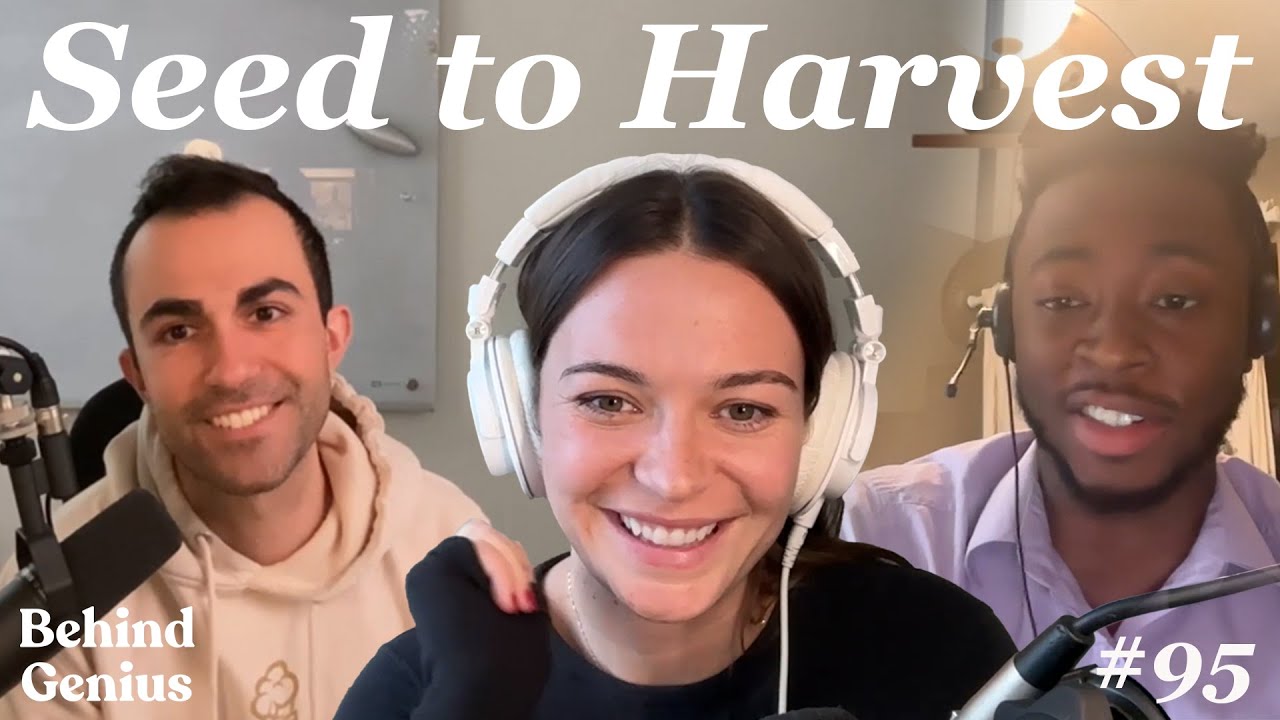
James Evans built CommandBar into a $50M company with Y Combinator backing, then sold it to Amplitude. He shares how shifting from product-led growth to sales, obsessing over metrics, and staying disciplined on price made the difference, plus what it felt like to leave the founder role after the exit.
Chapters
I just built up this narrative around how I thought long and hard about the right entry point to start a company with. Bullshit. Okay, let's start a company.
I am so excited to have James Evans on the show today. James, welcome to the show.
Thank you for having me. Big fan.
Yes. Thank you so much for saying that. I'm going to have Chumba take it away with our questions.
Thanks for hopping on, James. Really appreciate it. The first question I had was around your upbringing with your parents both. Being business professors, I'm pretty sure.
We did some homework. Okay.
Yeah. And so did you always know you were going to be an entrepreneur then?
I feel like when most people get asked this question and say yes, it's like, cannot be true. It's okay, you started like a lemonade stand, good for you. For me, the answer is very true, and in an embarrassing way, because I remember going around the circle at soccer camp when I was like 4, and people were like, oh, I want to be an astronaut, I want to be a fireman. And I was like, I want to be an entrepreneur. And everyone was like, what the What the fuck does that mean? My, yeah, so my parents worked in business, but I think like I always, I grew up like in the Bay Area watching the Apple keynotes, but I wouldn't say I really like, I'm not, I didn't start a cool business when I was like 12. It wasn't like one of those people who learned to program at 5. It was just something I knew I always wanted to do, but I didn't really know, like I didn't have a good entry point. And I got in my head, I think, about building up like, oh, I want to be a founder, but I have to choose an idea that's like worthy of me going to do it. So TLDR, yes, but it took me a while to actually start a company.
Okay. And then when you got to college, you ended up like starting a project with your buddies, ended up being the antithesis of Command AI. Can you talk a little bit about that and how you flex that entrepreneurial muscle while in college? So curious to hear about that.
Yeah, we started a tool. So I went to Princeton and it was, it struck me as odd that studying computer science at Princeton, they used to print out your code and like hand annotate feedback, which is crazy. It's sick, right? Yeah, I know. I kind of regret deleting that.
Yeah, I was like, I was like, dang.
Yeah, it really forced you to read as a grader, like actually read. But anyways, that just seemed like really archaic. And so we built, my 2 co-founders. At CommandBar slash CommandAI, we're on the team, but so is my future wife.
I feel like she deserves it. Whoa.
Um, yeah.
That's cool.
We're romantic. Met in Introduction to Programming Systems. She hates when I say that. Anyway, yeah, so we built this like kind of Google Docs for code thing. And we just built it as use at Princeton. And we did that and like it was used at Princeton. And then we all went and got jobs after college and then we all Actually met up at a startup. We were all working for a crypto startup, short-lived, called Basis.
Very cool.
The original algorithmic stablecoin. And anyway, Basis returned capital after 6 months. So we were like sitting around and we were like, okay, let's start a company. What should we start? Oh, we have this thing we built in college that like other universities started using. Let's just turn this into a business. So many things about, there were so many, like, I just built up this narrative around how I thought long and hard about the right entry point to start a company with. Bullshit. We just started doing this because it was like available to us and we couldn't figure out, like, we didn't have the activation energy to really work on anything else. And we thought it was a cool product. A lot of things along the way.
That's a very honest answer to that question. I feel like a lot of people are like, we have this massive world-changing vision.
You're like, No, it was just, it was a startup of convenience. It wasn't really a startup. It was like a practice. We thought of it as originally as like a practice startup. And it was that because you mentioned it being the antithesis to CommandBar. It just, yeah, there were 3 of us building it. Like any SaaS thing pre-AI, it was just like a clunky, became a clunky collection of like buttons and menus and stuff. And so a lot of our like users would write in that little Intercom chatbot being like, how do I do X?
Yeah.
And so we thought we would solve that problem by giving them a little search bar thing where they could just type what they were trying to do. And it would just like highlight the part of the UI where you could do it or show you the support doc or take you to the page. That became CommandBar, the original product.
Okay. I want to go, I want to go back. So when you did leave college, you went into private equity instead of something that was like technology. Obviously you were working in technology investing. What was the thinking behind that? Why didn't you become a software engineer? Why did you go into finance instead?
Following smart people. I don't know. It felt like I was more likely to have a 10x experience than as like a random software engineer. So at the time, like, it was pretty— I feel like now the kind of like smart money move as a computer science person Competitive and it was a competitive program. So like that felt good.
Yeah.
A lot of my youth, different track, is just like chasing the thing that seemed the, the most credentialed. And this also felt pretty credentialed if I'm being honest.
Yeah. Yeah. Bain Capital is no small firm, so that does look good on your, like your resume.
So important. I think about it every day. I pull my LinkedIn and I'm like, man, good decision. People bring it up all the time. It's ace decision.
Yeah. So you then start CommandBar at the time before CommandAI with your buddies from college. And then tell me about going into YC after that and where were you guys at in terms of building the product before you got into YC?
We basically had been working on it for 3 weeks. We used YC as the—
The testing grounds.
Yeah.
Even the application, we were basically like, we don't know, this is like a weird We had an intuition that it was a weird product. It's embedded. It was like not competing with anybody. Good thoughts, by the way, both of which turned out to be like reasons I think our company in some ways was like a hard mode startup. But we were like, let's let YC make the decision for us. If we apply with 3 weeks of work and YC lets us in, we'll go work on this CommandBar idea. And if not, we'll keep working on CodePost, which was our edtech thing. And we got in. So in hindsight, really not a good idea because not doing YC, but like using YC as like the good idea oracle. Because I think having done YC now and like having seen a lot of YC startups, I think YC is like mostly picking the team and not like judging your idea. And so I don't know, it did. I don't know if we, it, I don't know if I'd use YC as like a good idea oracle going forward, but it was very helpful in that it was like the springboard. And by the way, I think that's such a valuable, like societal function of YC and other incubators. It takes these people who are like, in our case, we were already working on a startup, but I talked to so many people who are like working in whatever, in finance, and they wanna start a company and they all apply to YC because they feel like if they get in, it's that validation that they can tell coworkers, Mm-hmm. Oh yo, I'm going to Start a YC-backed startup instead of, I'm going to leave my job and piddle around trying to think of a startup idea. It's like that validation to be a founder. I wish there were other ways of achieving that, but I feel like YC has done an excellent job at that.
Yeah, I talked about it before. It's like it provides the activation energy that's necessary for someone who is looking for like a sign from the heavens.
Totally.
The Y Combinator logo shows up in the email.
Literally, it's like people will be like, oh, I'm ideating on nights and weekends. But I'm unwilling to go full time until I like get into YC or now there's others as well. I wish more people would just take the leap and just rip it. Yeah. Cause what if you don't get in? I know people who don't do it cause they don't get in.
I feel like I've known people who like apply a bunch and then it's like the right time and they get in. So I have the second side of that coin. I'm curious to hear more about like how YC changed I guess your lens as an entrepreneur, like how did it shift?
Speed. I think the best thing of YC is it gives you an objective measure for what is fast in startup. Because I didn't know, like you always say move fast, but what is, it's just so hard to know what that means. Like how long should a $30,000 B2B contract take to, to negotiate? What does like, what's the difference between sort of LOI, like moderate customer interest versus like actual pull. Those things are, it's kind of like the whole like, oh, you'll know PMF when you feel it kind of thing where it's like really hard. I think if you don't, if you haven't done it before, if you don't have friends who are founders, just to get those data points. And I think that's for, that for us was so valuable to show up to the group sessions and people would just be like, oh, what's your ARR? What's your ARR? And if your ARR is like zero, like 5 weeks in a row and this like random guy with some idea you thought was ass is like at $10K of MRR, you're like, holy shit. And so it just, it, it forces you, it just puts you in like tournament mode, which was, I could have seen us. And frankly, with our edtech thing, we, we thought we were moving fast, but we, we just had no measure of it and really kicked us in the ass.
Dang. The measuring stick of the top fastest, like, I feel like it's less like about the relative and more like How absolutely fast can you move? And like, what is an organization that is moving like that look like? And what are like the key decisions at your stage?
I think that's the key. And then you lose that because you leave YC and then you're now a 30-person company or whatever. You raise like a $15 million Series A and now you're like, how fast? What should we do now? And that's why my advice is always just find founders who are like a stage ahead of you and just What were some of the things that for you, you got, you felt like you were moving fast at?
Or yeah, and just in terms of company building, like how did you go about it? The, at the early—
Things that I think we were, we turned out to be good at, like fast at. I think we became something I think we, we did a good job of early on was realizing we were going to be a sales-driven, it's less, I think, Of a mind virus now, but in 2020, like PLG was hot. If you if you didn't have a self-serve plan, like you must have a terrible product because who wouldn't be? Who why would you make someone talk to a salesperson? Like that's so oracle of you. We definitely subscribed to that at the beginning, and we had a sign up onboarding flow, and it was ironic because our product. Was also an onboarding tool. People thought of it as like PLG enabling, and that's definitely a use case. But I think we, I don't really know why, but I think we made a good decision early on to be very, to pivot away product led and just really focus on sales led, building stuff to inform, building stuff on the basis of sales conversations. I think people can get really, midwit meme is life, is everything in life, right? So like people get really. Midwitty, I think about getting to million of ARR. People will be like, oh, is this the right customer set? Is the feature I'm building scalable across a thousand customers versus my first ten? And I think something we embraced was just like just work with company, like just win contracts. You can sort out the okay. Do I need to focus on four of the ten first customers I signed? Because I think that there's a thousand more of them, and there's not that many of. The others out there, but it's so much easier to solve those problems when you actually have paying customers and we're giving you attention, trying to pre-solve the problem and get like cute getting to a million of ARR, I think slows a lot. And whether it's a million, million is just a random number.
Wait, how long did it take to get to a million in ARR?
I think it took us like a year, 18 months or something.
Yeah. Dang.
We were kind of slow. We were slow to launch. We were, there were a lot of things we weren't. Fast at. For example, we did the, we waited to announce our seed fundraise for like almost a year because we wanted to like, you're like, we're building in stealth. Like, yeah, I don't know. I think it was like, oh, are people going to copy our idea? Oh, we want to like announce and then announce our Series A at the same time. And I think so many people talk about that now. Like I talked to so many founders who raise a cool seed and then they're like, yeah, I think we're going to wait until we sign like I'm like, no, please. Yeah. Big logo. And I'm like, dude, like you can just announce your Series A again, but like, it doesn't, people get this idea of the first marketing moment in their head and feel like they have to nail it. And it's, dude, people are not going to notice probably.
It's like on the off chance that like your day that you announce it gets like overblown by some other wild thing on Twitter.
And you built it up for a year and then it's oops, OpenAI launched ChatGPT. ChatGPT.
Dang. So do you think going back that you would have told yourself to announce things earlier or like?
I think for marketing in particular, I think really just you have to embrace the, if you, if you fail at marketing, no one notices.
Yeah.
It's not all your friends are looking at you being like, oh, this little loser did a Product Hunt launch and no one engaged. Like people just don't notice in particular. I don't know anything about B2C. Like it's a totally different world. I think probably same is true. But I think in B2B with like marketing and like public-facing stuff, for me, a big realization was you just have to do it all. Like, I think my approach to marketing was, oh, let me figure out, again, the midwit meme. Let me figure out what our channel is gonna be like. What's our, what's the thing?
Oh, well that was gonna be like my question was like, what were the channels that you found early on that grew well?
I mean, early on it was just kind of like a chaos.
Let's get contracts in the door, figure it out later.
Just early on, we were really lucky with just referrals and like YC. We did some outbound. It's like early on, we just got really lucky. For growing like post-Series A, I was, I would approach things like, okay, we're going to try ads this month. And then next month we're going to try content and then we're going to try podcasts. And like, I'm waiting for the crazy, oh, we generated $10 million of pipeline from this thing. I think with B2B. My realization is just that doesn't really exist. It probably doesn't exist until you're like a bigger company. You find like this, the scalable channel. And even then, like B2B marketing is just a collection of activities, all of which should have pretty good ROI in the early days. And I think I wasted like a year on marketing specifically, like trying to run these experiments and decide what to invest in instead of just like saying yes to everything in an 80/20 way and not expecting like any one channel, whether it's like SEO or our blog or LinkedIn or whatever, just adopting a do everything mindset, which I think is very, people don't really talk about that. Like people talk about, oh, you don't want to spread yourself too thin. You want to focus on the channels that differentiate you. And I just think as a B2B SaaS company, it's really hard to do that.
How do you think I, this is more of a broader question than Tim, but we can get back to your structured ones.
I was curious about. You growing as an entrepreneur from when you started to the acquisition? How did you change as a person? What did you learn about yourself in all the phases to the acquisition?
Dude, I love the focus on the psychology.
This is good.
I think the biggest thing that, that I got better at, um, was not overthinking stuff. I think in the beginning you've got a bajillion— there's— you're like drunk with the ability to make decisions because it's your company and you think you've been working inside of other companies and finally you get the chance to do it your way. And there's so many opportunities to get stuck in analysis paralysis. Like what CRM should we use? What should our values be? Like, you know, all the standard operating procedures and stuff. And I think I now think of it in 2 ways. One is I didn't, I know I didn't make this up, but I can't find the source. Conserving innovation, like really only choosing your bets of like the things that are going to differentiate your company. That could be product risk. It could be like someone else's product, but we're differentiating with execution and just like limiting the number of those that exist and focusing on the ones that are your key bets. Like for example, I think a great example of this that I'm really proud of that I talked about during the pandemic and I think turned out to be correct, being remote. I think being remote is a non-consensus. Now it sounds obvious because everyone's doing return to office, but I think this is true in 2021, 2022. Being remote was a non-consensus decision. There have been way more startups that succeeded purely in person than remote. Everyone likes to talk about like GitLab. Yes, there are like other examples. But it was, it is a deviation from the standard playbook.
Mm-hmm.
And so I think if you're gonna do, if you're gonna be remote, and obviously there's a global pandemic and you have to be remote, whatever, but if you're gonna choose to be remote when you don't have to, you should know that's like a, you're innovating model. And it could be your thing. You could be a crypto company and you super async or you're Loom or whatever, but know that it's a bet you're making. Don't just do it because it sounds cool.
Mm-hmm.
So I think that's number one, limiting the places we innovate. Same with marketing. Just if you're not gonna differentiate, if you don't have, if you're not a, marketing-oriented founder, like I wasn't and my co-founders weren't, just do the standard marketing channels. Don't try to do crazy shit or limit— we did some crazy shit. Limit your crazy shit. Do it in addition to standard and make it easy and cheap.
What were the expensive and hard marketing things you did?
We did have like a, just a do easy, creative, cheap stuff. One of my favorites was, uh, at SaaStr. We like hired a bunch of people on Craigslist to protest our company outside of SaaStr. And we, you know, really cheap, like it was like $500 and everyone was like, oh yo, dude, people are like protesting your company. I was like, yeah, I know, bro. And now you're here talking to me. Stupid thing. It's like, we didn't calculate the ROI on that, but it costs $500 and like good LinkedIn posts.
Oh gosh. Wait, that's amazing.
Just easy. And like we did, we did, we had a plane. Uh, at a couple of conferences with a banner. Turns out that's not that expensive to hire like a prop plane and then you get a cool banner you can put in your office. That was cool stuff like that. Just, I was gonna wrap my car at the end with our company's logo. Just cost $1,500 or whatever. You get a permanent billboard in San Francisco, just like fun stuff like that. But that wasn't like the core of our marketing.
Yeah.
The core of our marketing was like blog, SEO, Google Ads, just like the standard.
Okay.
Sorry, going back to your question around how it changed. The other thing was just like not overthinking things, like realizing that it's really, I think every founder experiences this. You'll have, you'll be, especially if you have smart co-founders who you debate a lot of stuff with, you'll have an intense debate with your co-founders about something, some like architectural decision or like, how do I send this email to this Potential prospect. How do I phrase this? When you're all like behind the laptop, oh no, different word and stuff like that. We had a lot of those moments or else we were all smart and like we enjoyed working together and it wasn't like combative. It was just like a lot of mental energy into every activity. And then 6 months later you're like, oh my God, that didn't matter at all. Like we never shipped that feature. That person like never read my email. You know what I mean? Like it just, you realize that so many of these things don't.
Yeah.
Pan out and it's just a volume. It's like volume in baseball hitting. Like if you hit .300 versus .200, you're an all-star versus you're going back to the minor leagues. And so I think just get building that pattern recognition for, it's not like you don't spend time on anything. You're prepping for a big meeting or fundraising or whatever. Like sure, prep. But the fact you just build intuition for when it makes sense to invest a lot of time and energy into things, when it just makes sense to make a decision and run with it.
Have you done like a— I'm curious to hear if like angel investing changed your, any of your perspectives as a founder as well, because it sounds like you've been pretty active.
I dabble. I dabble.
Dabble. Or I guess what you've learned from it outside of your—
I think it's just fun to step into other business. I think you just pick up like cool tactics. It's also inspiring to see companies like do really well and move really fast. I think there can be this. Sometimes people perceive angel investing to be like a hierarchical thing. It's, oh, you like, you have some degree of success and then you like start angel investing. And I think it's like, I think it's just great as a non-successful founder to like angel invest in companies and just get those updates and be like, oh, it's kind of like what we were talking about at the onset with the YC tournament thing. Like, oh my God, this company is like totally ripping. You also learn about different spaces. It's just cathartic, I think, also to spend time talking to a founder about Not your business.
Not your business.
Just seeing how like obsessed they are.
You're like, I can fix this and then I do not have to be the one that fixes it.
Yeah, it's fun. It's you feel sometimes you feel valuable. I think also being able to I try to be the like founder and I can only do this up to a certain stage and then you graduate from me being a useful source of advice. But then I try to be that person who's yo what I say to companies my pitch for taking my money is like. Yo, just whenever you feel like you're spending too much time on a decision or you feel like, oh man, I wish I could just see how other companies do this, just like text me and I'll— people will be like, oh, is this a good deck for the 3rd sales call? Like when we were trying to pitch a pilot and it's, that's the kind of thing where you can spend so much time doing it, or I can just send you a good one and just copy it. Don't innovate.
Don't innovate. Just copy it.
Just copy. Steal like an artist. Yeah. Like no one's. People just, yeah. Anyway, we've talked about it. People, it's very fun. It's very fun to do everything from scratch cuz you can, and like they're smart and have good ideas and it just learning that you don't have to do that.
Constrain the bets. Constrain. That's what I learned in like my engineering education was like the best engineering takes place when you can constrain variables in your equation. That's when you like actually learn what changes things.
I was gonna ask about building the team as you were growing the business. And how you thought about that and also like how it changed.
One of the, again, one of those hard things I think that's really hard to do unless you have someone who can help you out or you've done it before is just like knowing what good looks like by role. It's crazy that like we expect founders to hire, you're, you've been under 25, you've been whatever, software engineer or private equity titan, and then you have to hire like a marketer and An eng manager. It's just, it's I think the failure mode is just it takes teams a long time to hire because of that. Because you wait, you kind of build just in the same way people build up the like first fundraising announcement. I think people a common pattern I see in first-time founders that I work with through angel investing is like just taking a really long time to hire the first five people because they don't have good instincts for oh that's what good looks like and they. You hear the classic trope of how if you haven't fired someone before, like, it can be really scary. You really want it to work out. You hear the, I think it's a Collison Brothers thing of ask yourself for your first 10 hires, would you 10x that person? Because they're going to be the foundation of your company culture. And I think that causes people to kind of psych themselves out for the first few hires. And I think I learned to just accept the fact that One, you build pattern recognition for what good looks like. I think tactical advice is like, just try to find someone who's been good. I know it's hard, but like you can lean on your investors or a founder that, you know, who's got a bigger company to just like gut check final interview. Does this person feel like a good startup X salesperson, engineer, or whatever? Being comfortable with the fact that it's some early, they're just not going to work out. There's a bunch of people you're going to hire in your first 10 people that are just not going to work out. It's not good for you to try to make it work. It's not good for them. And just accepting that. I think joining a startup, like the people who join the first like 5 hires of a seed stage company are like heroes. Like it is a crazy proposition to join a seed stage company and get 1% or less of the company, take on all the risk, Work with someone who's probably not a good manager. So like hats off to all those people. They make startups work. And the flip side, and the other thing they take on is there's a really high rate of letting people go early. And I think as a founder, just learning to become comfortable with that was important.
Okay. One more.
Also one more thing.
Yeah, go ahead.
I think it's totally okay to hire people because you're like, you think you will work well with them. Instead of hiring the best person. I think it's a, I love when I see founders like hire teams that are like, for example, if you're like really bad at async communication, hire other people who love to communicate, not async. Don't hire the person with the best resume who's going to be sending you like long Slack posts and you're just going to be huddling them. Like, it's totally fine to build the team around your style of, and I think a lot of people feel like they shouldn't do that and they should instead optimize for the best. person instead of the best person they're going to work with. It's like finding a co-founder, honestly, in that you can't expect them to work anywhere near as hard as a co-founder.
Yeah, that makes sense. And switching to the acquisition, I know you weren't shopping around Command AI at the time, but Amplitude felt right. What was the—
Did you say were, were, or were not?
Were not shopping around.
Were not.
Yeah, we're not.
Shopping around is fine. It's just, we weren't, you know.
Yeah, you guys weren't. How did the acquisition come to be and what was the internal decision-making process for that?
Yeah, it's a boring story. Like they, they Amplitude, we had worked a lot with Amplitude. Our product, like super complementary. Like you can't really use a product like ours without having good, a good product analytics situation. So we co— we had co-sold alongside Amplitude. We coexisted in a lot of accounts. We had integration. I didn't actually have any sort of relationship with the co-founders. It was more of a, more of a tactical. Company relationship, which I think is, by the way, there aren't that many things I think companies can do to increase the odds of a good acquisition. I do think one of them is just like writing down the 5 companies that could acquire you and just having a relationship with the founders, just getting an intro through investors or whatever. I think that can materially increase the odds that when that bigger company, if they happen to be in an acquisitive mood, They'll be like, oh, I remember that person. Like Paige was cool. Like I should talk to them. 'Cause that's, I think literally how a lot of these things go down. We didn't have that. So I just got like a LinkedIn DM from someone on the Amplitude team being like, hey, we're looking to deepen our partnership. And I was like, oh, okay. It's like the corporate you up text. And so we chatted and yeah, the decision-making is, it's obviously so much into it, but I think what people don't often talk about is the price part. Everyone has a price and I think just being Being that you feel like is fair for you and fair for the team and fair for investors given your current situation. I also think it's very fine to say like in most cases startups getting acquired are not like top 1% businesses. 'Cause if you're a top 1% business, unless you're like Wiz level acquisition, but like top 1% businesses like that have raised $30 million raise again. And it's like, that's the first hump is just like realizing that, okay, it's okay to acknowledge the fact that that's like not us.
Yeah.
And if we can get a great price, that is totally fine. So I think getting over that emotional hump and our investors were really great of helping me through that. I was really afraid when we, we first had the conversation about, hey, Amplitude came inbound and wants to buy us. I was afraid that I was going to say that and someone was going to be like, you said no, this isn't for sale. Right? And I was even like, ah, I should have— should I? But no, of course not. It was like, oh my God, James, that's so amazing. Like, it's so cool. They want to buy you for this kind of big— this cool outcome. This isn't like a failure situation. This is exciting. And I had psyched myself out, I think. But then, yeah, I think people don't talk about is once you've gotten over the hump of we could sell the business, even if things are going— pick a price, pick the price at which you'd be like, yeah, that makes sense. And then If you've got an inbound situation, see if the company is like willing to pay that price. And if they're not, it's, hey, thanks, great, but that's not interesting to us. Um, and so I think we did a good job of having alignment, of being like, this is our price, and then being clear, and then ultimately getting there.
Okay.
Was—
how was the negotiation? Was there like a first offer and then they said— and then you guys said no? Was there—
There was a first offer that we said no to. Yeah.
Okay.
I think it's just like with any negotiation, I think when you say this is our price, they always, people always assume that it's not and that you have a lot of wiggle room. Um, and so that's, I think that's what happened. We were very cordial and be like, it's been great spending time. Like, we'd love to continue the partnership, but that doesn't make sense for us given everything about our business. And then we continued the conversation. So very just negotiating like a SaaS contract or Negotiating salary with, uh, a hire. Um, yeah, and I think if we hadn't had that clarity, it would've been a lot harder, but we just took the position of this was what makes sense for us. Totally understand if it doesn't make sense for you.
But now that Command AI is part of the, part of the Amplitude team, what is the, what did the integration look like? Is it keeping the full team product, how they're integrating the product? Usually I read. You guys were shipping a product like 4 months after you joined the team. Usually with these integrations, it takes a year to get the architecture all together. So just talk about like how that's been making this transition. Yeah.
So almost the whole team joined. Unfortunately, we, there were a few folks who, who didn't, but almost everyone came over. So that's been great continuing to work with this team and others. Yeah, we, the like logic for the acquisition is like super clear. Like these, what we do is so complementary to product analytics and there are other products out there that already combine them. So it wasn't a, it's kind of execution mode, honestly. Yeah, we really wanted to ship fast. We didn't want to have the classic like post-ac malaise. We didn't want it to be like, oh, you log in, like. It's CommandBar by, or we'd rebranded to CommandAI. We rebranded to CommandAI 3 weeks before the acquisition, which is funny and a bit painful because we paid $100,000 for the command.ai domain name. Some guy out there has made a killing on the command.ai domain name. Um, but anyway, yeah, we just wanted to ship fast. We wanted it to be a seamless experience. The big thing is just like the leverage of the Amplitude sales team. Like we. We had a sales team of 7 and Ampd has a sales team of 250. So it's awesome. It's so fun. Like these, there's a channel and we got to a million of ARR in like days. It's just, it's truly easy mode from a leverage perspective. Of course, there's like things about working at an existing company that are very different. I think mostly for me and my co-founder, hopefully, or maybe not just, I think it's, it probably feels a little bit more similar to The rest of our team. So it's been yeah, that's been cool to learn how to work inside an existing functioning software company. But the leverage is the coolest thing. It's so fun because we always felt like I think deep down our big fear was man, we feel like we built an amazing product, but like scaling a company, there aren't that many companies scaled selling into our core persona, which is product. And I think we were afraid it was just we were going to fail on scaling the distribution front, even though we built. what we thought was an amazing product. And now it's been very gratifying to see the, that start to become true of just, oh yeah, that the product has become, it's been pretty easy to sell so far.
I have, wait, I have one more question.
Okay. One more question.
Yeah. I have, what are you looking to, like, how are you looking to now grow as a person, both internally at Amplitude and also outside of work now that you're no more, you're still probably Like still dived in, but maybe your space is expanding.
I think Amplitude's like totally different problem space for me in terms of product, but like way bigger, much, like I said, much more leverage. Um, I'm working on AI outside of our products as well. So I think just figuring out how to use that scale, develop a new product that takes advantage of everything that they've already built at Amplitude. So yeah, I've never, I mean, I've never worked at like a tech company really. So I'm figuring that out. And then I think on the personal side, like it's such a trope where like people stop doing a startup and feel purposeless, but I definitely have struggled with the identity piece of if I'm not, if I'm not, it's all you do for like just, and it's, what's funny is like we're still doing the product, but there's the company building aspect. And obviously there's certain elements of company building or company shaping that I'm totally working on as part of, as someone at Amplitude, team company culture being is a growing thing. Incorporating our team into Amplitude, but it's not, it's not the same. Like you're not trying to create your own brand voice. You're not coming up with the marketing funny things to do. So I'm still trying to like bring that energy, but it's just so different. You're not the sole owner of everything that you used to own. So honestly, that is definitely like a personal— it's work. It's a lot of neuroplasticity going on.
Yeah.
Something as simple as people can be awesome, but like I said earlier, you're, I think it's important to hire people who are purpose-built to work well with you as the founder. And then you step into a company and it's, there's a ton of people that you haven't, that it's not the case. And that doesn't mean they're not great and you can't work well with them, but it's just a very different job. So working on that, it's fun. It's, uh, I feel like I'm growing more as a person in this new challenge than I was in the kind of final years.
Awesome. Cool. Thank you, James.
Thank you so much, James.
Thanks guys. See ya.
More from Paige



Paige of Behind Genius driving an AI electric train in St. Louis (Intramotev Visit)





