Jenny Lefcourt, General Partner at Freestyle VC | Seed To Harvest S1 Ep2
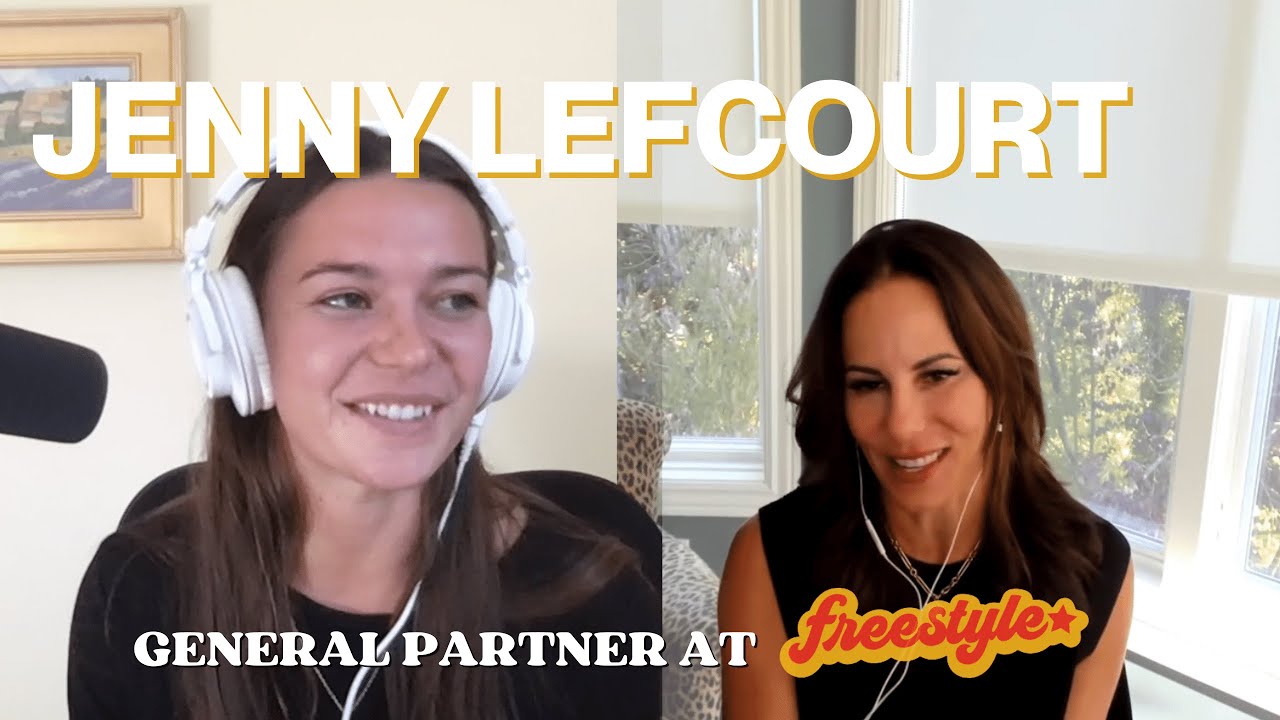
Jenny Lefcourt, General Partner at Freestyle Capital, shares her path from accounting at Wharton to founding a gift-registry startup backed by Kleiner Perkins, then to venture investing. She uses a framework called "Reverse Engineer Success" focused on mission-critical metrics and applies a "hell-yes" rule when evaluating founders. She also co-founded AllRaise to increase women's representation in tech and venture.
Chapters
Hello, everyone. Welcome to Billionaire Girls Club. I'm here with my friend Jenny Lefcourt. I'm going to have her introduce herself, and then I'm going to ask her some questions. I'm super excited to dig into it. So Jenny, I'll let you take it from here.
Sure. So I am Jenny Lefcourt. I'm a general partner at Freestyle Capital. We are a seed stage venture capital firm based in San Francisco. And I am a founder 2 times over. I am a mom of 3, happily married woman. I own a dog. I mean, what else do you want to know, Paige?
Well, let's start with where you grew up. So you grew up in Miami, and from my understanding, you had a great time in high school. But I think from listening to previous interviews, one of the things that you struggled with was you Got good grades and like did well in school, but you didn't really find that spark of learning and like that pleasure of discovery. So I'd love to hear more about how you found that spark again after spending a bunch of days in high school not feeling that way.
Yeah, I, I would say, look back on my high school days, they were definitely fun, but they were, they were not inspired. I would say I was pretty bored and I went to this huge high school. I mean, the closest thing that it comes to is Fast Times at Ridgemont High. Big public high school, maybe a thousand kids per grade, and about eight hundred would graduate. So I mean, it was it was it was different than I think a lot of people that I now hang out with went to. And I cut corners. I didn't read books. I read Cliff Notes. I was very goal-oriented. Didn't understand that. And so I could get good grades and cut class, and everything seemed good. And I ended up because I had good scores and grades to. At Penn. And at University of Pennsylvania, I suddenly was surrounded by a bunch of people who actually liked to learn. And I was in these small, interesting classes where it was interesting. And it was the first time I was sort of lit up, where I was not driven to get the A and get out and be efficient. I was driven to want to learn.
Mm-hmm.
And so I had a real transformation in that time where I felt like I kind of Understood that learning could be fun and it wasn't just this thing to try to like sort of check, do school. Yeah.
Right. And did you study accounting like in your undergrad program?
Did I what?
Did you study accounting during your undergrad program?
Yeah, I did. So there was a lot of gravity at Penn into Wharton, their business school, because it's so good that even I would argue people who didn't grow up knowing they wanted business, when you're at Penn, you think long and hard, am I sure I don't want to do Wharton? And so I decided to switch into Wharton. So I did Wharton undergrad. And the way it works is you got a business degree. And if you took 4 classes in one subject, 4 extra classes, that was your concentration. And I came from a family of accountants. My father was an accountant, my sister, my grandfather. I mean, I could go on and on. So it's something I knew. And it just felt super practical, so I did it. And it's funny because every time I've done these practical things that are kind of easy, it's led me a little bit down the wrong path. So I end up, you know, saying, oh, Wharton, all the classes at business school came easy to me. Oh, I should go into Wharton. And then it's like, well, since I know accounting so well and that comes so easy for me, I should do accounting. Well, as long as I'm doing accounting and all the accounting firms come knocking on your door and offering you awesome, you know, jobs before you're even Oh, I should go do that. And I end up in a place where it was sort of not thoughtful, not thought about what I wanna do or where I get joy, and realizing I need to get the hell outta here. And so that's how that story ended, where I end up working in New York City for Arthur Andersen, and I realize I have no interest in being here. And I look up and I realize I don't wanna be the people that are here. It's not even like, oh, put in the rough couple years, but then I wanna be them when I grow up. I knew I didn't. And so I said, I, being goal-oriented still, I earned— I stayed 2 years to my day so I could earn my CPA. But then I, I got out of there and I took a year off to backpack with a friend.
Yeah, I would love to hear more about your story of quitting. I think it, it sounds like you had planned in advance, and then when you got to your present, it just didn't hit the same as, as what you thought it would. before, or maybe you hadn't even thought about it, but I would love to hear more about your quitting story at Arthur Andersen.
Yeah, and once again, I wish I could take credit for what I thought it was going to be. I didn't really think it was just, oh, they're offering me a job, that's great pay, I want to live in New York, okay. And so I never really thought about what I thought it would be or if that's where I should go. But yeah, my quitting story is funny because I went in to HR and I said I'd like to to quit. And she said, why? Where are you going? And I said, oh, I'm gonna backpack with a friend of mine. I'm gonna take a year off. And she said, oh, well then you shouldn't quit. You should take a leave of absence. I said, no, I actually, I would like to quit. She's like, oh no, honey, you don't understand. A leave of absence is just an option. So when you come back, you can work here, but it's not a commitment. And I said, oh no, I fully understand what it is. And I need you to put in my record to not hire me because if I'm gonna come back, I'm gonna be broke and I may be weak and I may come thinking I want a job here, but I don't. I don't belong here. So if you could put that in my record now while I know it and I have the clarity, that'd be great. And she looked at me like I was crazy, but I needed to know that door was sealed shut because I could come back and know that, well, I don't know what I want to do, and that would be an easy job to take on again. And I did not want to— I didn't want to go back there.
So I would love to touch on your backpacking story in a bit, but I do want to hear, as you've gone through your career as an entrepreneur and an investor, have you ever been Have you ever been on the other side of that conversation with anyone else?
You mean when they know they don't belong where they are?
Yeah.
Not that I can think of. Not where they were that open with me to say, you know what I mean? Like, I'm sure someone has left and gave me a good reason why, but I don't remember anyone saying, I don't belong here, I need out.
Yeah, I was so curious about it because I, I remember listening to that story and being so struck. I always— there's one instance in my past where I had an opportunity. I was like, nope, this like doesn't fit me. And people are like, what do you mean? Like, that's crazy that you wouldn't choose to go down this path. And I was like, nope, not the right one for me. Like, shutting this door for now. I— so after that, you went backpacking. And I would love to hear, is that something that you would suggest to your children to do? As I understand it, your oldest was on a gap year this past year.
He was. He's now in college, but he did take a gap year. And he only took a gap year— he didn't want to travel or anything. He only took a gap year because of COVID He didn't want to burn his freshman year in COVID times.
Right.
I don't know that I would recommend it for someone. I would say if you desire to do it, it was a great time to do it before I had a career that I was disrupting or before I had kids, before I had a mortgage. So it was a great time for me to do something like that. In general, I feel like the thing that I recommend to people is know thyself, right? Know what makes you happy. Know what you want. And then figure out a way to do it and get creative. There's never a one-size-fits-all. So it's rare on anything where I think that I'm prescriptive, that everyone should do blank.
I like that. In terms of know thyself, what were the specific moments in your journey where you picked up those breadcrumbs of things that would become really instrumental into knowing yourself?
Well, I think for me it was learning how much I— I think I knew when I was starting at Arthur Andersen that this was not like where I should be, and I had accidentally slipped into it. And so when I went traveling, I made a vow to myself. I had no idea what I wanted to do when I got back. I mean, literally no idea. And because I thought that was business, I didn't know about the Silicon Valley tech way of business. I thought I did not want business. But I made a promise to myself that I wasn't going to do anything because it was good on the resume or would set me up in my future, but I was going to do something that I actually was genuinely enjoying in the moment. And that doesn't mean I wouldn't pay my dues.
Mm-hmm.
It just meant I wasn't going to do something just because, oh, well, that will be good, and then in 3 years after that, I could go do something else. Because I just don't think that's my personal happy place. I don't do good work when I am there for the wrong reasons. And so that's sort of like a deal I made with myself when I went traveling. And then along the way, with every step, the other thing I do, every time I was in transition career-wise, I always left where I wanted to leave. And I never went straight into something else because I wanted to give myself that time to really reflect on the experience I had had and figure out what I wanted to do next. And I wanted to always make sure that I was going towards something versus running away from something.
Mm-hmm.
So I'd never— if I was unhappy in a job and I'd saved up enough money that if I was unhappy in a job, I would leave the job and then breathe and think and then go figure out what I was going to do next. And because I thought that would be a safer— knowing myself, that would be a safer place to be.
That's so interesting. It sounds like you really kept your goal-oriented roots. You just applied them in a different way after you had that revelation when you were traveling.
That's right.
That's awesome.
I think that's fair.
In, in terms of pivot points, were there any points in your backpacking journey where you either got fatigued or like anxious, or there were parts of the experience that were really grueling for you?
I mean, there were definitely times that were grueling just because we were backpackers and we were on such a budget. And so, you know, a 24-hour bus ride in Indonesia from Bali to Sumatra was brutal. If you name 24 hours I would never want to go back and repeat, I'd rather do natural childbirth than get on that bus. But no, for the most part, travel was just awesome. And anytime I started to think about, oh geez, what am I gonna do when I get back, I would just say, Like, I would talk to myself a lot, Paige. You're going to hear that in this whole podcast. And I would just tell myself, uh-uh, you made a deal. You get a year off. And you'll figure it out when you get back home. And so I really— I kind of thought I maybe would come back with some ideas of what I wanted to do. But I didn't.
I remember there was a story you were talking about where I think you were at Stanford Business School. And they had all the folders on the wall. And you were jealous of the other people that were picking out folders and knew exactly which ones they were heading for. And you're like, what? Like, why doesn't that work for me? I think that it's really interesting. Was there a point for you where it became more obvious of like what your folder was?
Well, so, and just to give your listeners some background, basically my husband— now husband, then boyfriend— was at Stanford Law School. And that gave me access to the Stanford Career Center. And you guys may have trouble believing this, but there was no internet yet, or it wasn't yet, you know, for the consumer to use. And so I'd go physically into this office, and they had binders full of jobs, and each binder had a name on it on the spine, like nonprofit, teaching, business, you know, medical, whatever it was. And I would grab 8 of them and sit down and start reading job descriptions. And that's what Paige is referring— you're referring to the time that people walk in and they knew which one to pull.
Exactly.
And I was like, oh man, I wish I knew which one to pull. But in time of reading all the job descriptions, I did my— did find myself really enjoying the sound of these marketing or business development jobs. So I did find myself in a business folder, and I was surprised because I thought that's what I did not want. And I don't think I've ever told this story, but there was this company I thought was the dumbest name I had ever heard of. So I figured, well, that'll be a good first interview. It was called My Software Company. And so, but the job sounded really cool, and I went there to interview, but more thinking it wouldn't work out, but it would be my first time interviewing. And And it blew my mind. I mean, I met with the smartest people I think I'd ever met with, and they're all wearing shorts and t-shirts. And I was terribly confused because I didn't know this world. At Arthur Andersen, we weren't even allowed to wear pantsuits. We had to wear skirts with pantyhose and stuff. So like smart people doing great work in t-shirts, like this can't be real. And so they offered me the job. It was a super entry-level marketing position, and I happily accepted it. So it was a pretty short job search, and I was really happy there. It was one of those, you know, you could figure anything out, and you were— if you're willing to take on more work, they're willing to give you more work, and it was really rewarding and exciting.
I would love to hear more, since it sounds like this was definitely a period where your curiosity was piqued and that spark of learning was very much alive for you. Would love to hear more about Maybe some of the funny stories or pivot points that happen in that business where you're like, oh, this is, this is definitely startup land?
Well, it was a— I mean, it actually wasn't that much of a startup. I mean, it went public when I was about 2 years into it. So I didn't join— I joined as an entry-level marketing person, but there was a marketing department that was probably, I don't know, 10 deep. And so it wasn't an actual startup, but what I loved was it was just figure it out and go do it and discuss it. And that was really interesting to me. So there was a time where here we are in Palo Alto at a software company and we're all sitting around a table discussing, so was the internet AOL? Is AOL the internet? Are they different? Are they the same? And I was like, oh, you know what? I'll go figure it out. And they're like, wonderful. And I came back and I explained the difference between the internet and AOL and how they're the same and how they're different. And then I was promoted to be the head of the internet department. And so, and it was sort of along those lines. And so, you know, I often refer back to the— there was this time where it took me a long time to sort of see the flaws of Silicon Valley because I really had my rose-colored glasses on. The whole time because I was brought up in a meritocracy and they didn't care that I was a woman. They didn't care I was junior. Whoever was going to go figure it out and make a compelling pitch on something was how this comp— this particular company operated.
Yeah, it's so interesting. I feel like the culture of Silicon Valley shifts depending on the, like, the lens of whatever company that you're at. And it takes a while to get enough integrated into the community to see it from a broader scale. I'm curious, did you have other friends that were working at growing companies, and did you ever compare notes with them?
You know, it's funny, I've— I'm sort of odd in that most of my friends are not in tech. My really close friends, especially from those early days, a lot of them are graphic designers or designers. One of them works at IDEO. So it's— it's— I was always amusing them with my tech stories, but they were not in tech. And so while I made friends with the people I worked with, I didn't have a ton of friends that were in tech. And most of the, the, the people I went to college with from Wharton were more on Wall Street than they were out in the Valley.
So your, your relationships have, have spanned a long time. I would love to touch on one of the closest ones, um, about the friend that you went backpacking with and kind of like more in that story and perhaps the pivot point That led to a business decision later on?
Oh, yeah. So I was, so I was backpacking with one friend. And at one point, we were in the Philippines, and she wanted to stay there. We were basically scuba diving in the Philippines. And I was meeting a friend of mine from a good friend that I'd met at Arthur Andersen. She was meeting me in Nepal. So I left my, my main friend, my main backpacking friend in the Philippines, and I headed over to Nepal and met my friend Risa there. And while we're there, and we're trekking, She said to me, "When are you and Craig going to get engaged? Like you've been you've been together for so long." That's Craig, my now husband, then boyfriend. And I said, "I don't know. I guess the day I desire China, we'll get engaged. We get but I don't even remotely desire China." And then literally there we are trekking in Nepal, having a conversation of like, "Wow, we've changed so much in how we all live and the things that we would want versus our grandparents would want." But here we are still registering as if we're in the '50s. And so we came up with this business idea while trekking in Nepal. And then when, when it ended, she was starting business school and she was going to— at NYU. And she's like, I'm going to start that business. Do you want to join me? And I said, oh, I'm here at this company and I'm enjoying it. No, but by all means, go take it and run with it. And then she ended up getting sort of brought into something else and ended up doing a different startup. And so then when I started business school, I— The same thing. That same thread of an idea, but now the internet had come to town, and I got together with my business partner Jessica, and we kind of married this idea of like, yes, we should register differently, but plus now with the internet, gift buyers shouldn't have to buy the gift— have to go into the store to buy the gifts. You should have an aggregated gift registry. So it was like a little bit Nepal meets, you know, Yep.
And you and Jessica met at Stanford Business School, right?
Yes. So Jessica, we weren't friends, but we were— I had seen her at similar events, entrepreneur events or venture capital events. And there was a contest where you could learn— I don't know if you learned how to write a business plan, but write a business plan. And then the judges were venture capitalists who would give you feedback on the idea. And that sounded great. I don't think there was even a prize. And so I asked her if she wanted to work on it with me. And she said, sure, do you have any ideas? And I told her my idea and her jaw dropped open. She's like, I wrote a business plan for the same idea a year ago that I hadn't— she hadn't pursued. So we sort of put our ideas together and we entered it into this contest. And I like to joke that, you know, we were one of the winners. But truly, by the time they announced all the winners and all the winners came up on stage, you looked out in the audience and it was empty. Like, basically, at Stanford, everyone was a winner. But the winning part of it was that a venture capitalist followed up with us. He was at Kleiner Perkins, Dave Wharton. And he said, hey, guys, are you really pursuing that? Because I think it's a great idea. And we said, yeah, we'll really pursue it. So that— we got really serious about it after that.
Yeah, talk about coincidences. That's so funny that you and Jessica had the same business plan and ended up In an almost empty auditorium. I would love to hear more about what that decision was like to drop out of business school to start your first company, especially in like the— it was a bit of a different time back then, right? In terms of like the—
People were not dropping out of business school at all. It was— Amazon had just kicked off, but it really— the dot-com craziness hadn't quite kicked in. And so Jessica and I, we kept on working with Kleiner Perkins, basically going round and round. You know, he'd challenge us, we'd hear his challenges, we'd go back, we'd work it. So for about a semester, we were working on the business plan. And by the end of that, our first year, we had Kleiner Perkins committing to $1 million into our startup, which was just us and our idea. And so we went to the dean. So we worked on it that summer, but then we ended up going back to the dean and saying, hey, We have this opportunity and it's just too good to not pursue. So we would like to pursue it, but if and when it doesn't work out, we would love to come back. We love it here. It's just like opportunities knocking loud and clear. And it was a very different time. And his response was, well, if you wanna come back, it's 'cause you failed and we don't want failures here. And we were like, okay, I guess that's a wrap. Like there was nothing more to discuss. And so we then went out to lunch And the conversation of, okay, do we want to quit business school, was actually oddly easy for both of us. Everyone's like, oh, that must have been such a hard decision. And it really wasn't because it was everything we would have— I mean, I would say to Jessica, I don't dream this good. Like, to say it was my dream come true, it's like, that's not— doesn't even do it justice. So in an ideal world, that would have happened at the end of my second year because Business school is really great. And there were great people that I think I could have gotten closer with, but definitely was not going to complain that such an incredible opportunity came so early in my life.
That's incredible. I love that story of you two going out to lunch. I feel like after having that conversation, the decision might not have been as hard given that sentiment. I— and then who was the first person that you and Jessica hired?
Say it one more time.
Who was the first person that you and Jessica hired?
The first person we hired was a guy by the name of Jez Holland, and he was our systems architect. So we knew we needed technical, a technical co-founder. And so Kleiner Perkins and a man by the name of Jerry Held was, were really helpful in helping us identify that person. And he was integral to like kicking off. And that was before there was all this no-code, low-code stuff. Everything was built. from scratch. You were integrating with these crazy legacy systems that all the retailers used. So it probably took a solid year before we launched, and a lot of engineers. Yeah. Wow.
That— yeah, it's, it's incredible to think about how different it is today to like spin up products.
Different.
Yeah, that's, that's nuts. Um, so I guess like I'm curious, in your discussions with Jessica and like that co-founder relationship? How did your relationship evolve as your company grew together?
Yeah, it was interesting because there we were, co-founders doing everything, and the beautiful thing about our relationship was we're really comfortable seeing where the other one— discovering, we didn't know— where one of us was stronger than the other. And so we would use each other rather than fight that. We would, we would appreciate it and use each other. So Jessica is just fantastic at sales. She can sell anyone anything. So I'd find someone that I wanted on my team, I'd move them along beautifully, and then I'd say, you know, I'd love for you to meet my partner. I'll bring him right in. And I would be like, Jessica, go do your thing. And she could close them. She could close everybody because that's who she is, and it's a real gift. And what we discovered was I was better with like the the long-term partnerships with the retailers. And so we used to divide and conquer all the— you know, we took the important retailers we wanted to work with and split it in half. And then she's like, actually, why don't you— you seem to be more natural at this and I'm better at product. And she was just stronger dealing with technical people. She was more technical than I was. And so we just kept on kind of passing batons back and forth. But it was done with real openness to, okay, let's play to each other's strengths. And that's just something I think I almost took for granted because it was so natural to both of us. And now, you know, having done another startup and also just seeing lots of founders, a lot of people fight that, right? They're uncomfortable that their partner is better at something where I sort of don't. I'm so goal-oriented. I don't really care. How I get there. I just want to get there. I like to win. And so if someone else is better than me at something, I am very happy to have them do their thing.
Yeah. So have you found that passing the baton is different when you're working with a team that works for you rather than a co-founder?
Well, I don't view any of my teams as working for me. In fact, I work really hard to make sure that all founders know that they do not work for their investors. investors. And so as an investor, I feel really lucky to be on a journey with the founders who I work with, and I do my damnedest to add value, just like Doug McKenzie at Kleiner Perkins and many other VCs added value to me. And so I share opinions, I share my network, I share frameworks, I challenge their thinking, but by no means do I view them as working for me. And in fact, I just earlier today, Anne Mariko at Floodgate and I did this, you know, how to manage a board meeting or strategic meeting of startups. I was really clear that to me, it's a sin if you, if you as a founder are ever saying, you know, well, I'm doing this because my investor told me to. It's like, never do a damn thing that your investor tells you to. If your investor tells you something and you think it's smart, then you can do whatever you want because you think it's the right thing to do. So it's great if your investor, you know, opens up your eyes to something, but never do something because your investor told you to.
I think that's an interesting switch, especially for people that are new to the industry, is really owning your perspective and realizing that, like, you know your business better than anyone else does. And like, other people's opinions are just that— opinions— and by no means are like— they can be points of experimentation if If you think that they align. But yeah, people give a lot of advice.
Well, I just think in general, all of us should just listen deeply to everybody and then make our own decisions, right? Because everyone has different perspectives, and sometimes you'll agree with them, sometimes you won't. But to not hear them, I think, is a mistake. So I do, you know, highly recommend to founders, listen to every investor deeply. Because we do see the movie over and over and over again. So there is a perspective that we can bring. But then you make the call because, to your point, they know their business better than anyone else.
I'm curious, what are some of the lessons from those periods that you take now into your investing practice? That, as you said, you've seen the movie over and over again, both as a founder and an investor. What are some of the lessons that, that you share?
One lesson that I deeply share that I appreciate that my first VC, Doug McKenzie, shared with me is really understanding there are usually 2 or 3 things that are going to make or break you in each milestone that you're trying to prove. So let's say from seed to Series A.
Mm-hmm.
And then there's a lot of other stuff you're gonna do. Never confuse those things. And so if we ever went to Doug and say, hey, you know, look at our new logo, isn't it great? He'd say, I don't give a shit about your logo. Where are you with Macy's? Right? Like, what are the things? And every day I want you guys to wake up and say, do I have the retailers I need on board? And if not, what the hell am I gonna do to move them? Then you could do that other stuff on the side. But don't confuse yourself between what is mission critical and what is not. And so I work really closely with my founders to tease out from them, because I don't know the answers, but I can give them the framework of what is mission critical versus not, and really trying to provide that same clarity for them. Because I think as a founder, you can get overwhelmed. You can get really busy, especially in today's world, right? You can constantly—
Absolutely.
You can listen to a million podcasts. You can read everything and like, and then you have to get your job done. So I think sort of taking this really noisy environment and just being really clear on what you need to do and not be confused. If I can do that for founders, that's the greatest gift I think I could give them.
Is that clarity of focus?
Yeah.
That's incredible.
And obviously I can't tell them what the answers are, but I can work with them with frameworks to get that, you know, to help them get there.
I would love to hear more about the specific frameworks that you use in that. I think that, you know, being new to the venture world, it's definitely something that I think about very intentionally and quite honestly, like, struggle with. It's hard and definitely a new skill that I'm working on.
So one of the things, one of the first things I do when I invest is I work with founders on a framework that I wrote called Reverse Engineer success. And it's working with the founders to say it's— and I usually say pick a random period of time. It's a year from now. Imagine you're raising your Series A and you want to be able to make— imagine the conversation you're going to be having with that venture capitalist. What are the things you want to be able to claim? And let's talk about that. So a lot of times they want to be able to claim they have found a market fit. They want to be able to claim that they can recruit and retain top talent. They want to be able to claim it's a really scalable business model. Right. So pick the things because you can't, you know, you're always in risk mitigation mode. Every from Series C to A, A to B, B to C, you're mitigating some risk. And so be really clear about what you're looking to prove. And then you say, okay, great. If you're going to prove that you have product-market fit, what would product-market fit look like? And I said, well, gosh, it would look like— and then you start to define it. For a consumer business, it would look very different than for, you know, a SaaS business. But it could be that, you know, lots of our potential customers are hearing about us and coming to the website. A great number of them, when they hear the proposition, see the price, want to sign up. A great number of them refer out to other people they know who need the same product. So I'm making stuff up that probably doesn't make sense here, but every business is different. And they say, okay, so if you do feel like your conversion rate should be strong, right? It's hard to claim you have product-market fit if 1% of the people who see— come to your website or that get your sales pitch sign up. And you're also not going to get 100 out of 100. So what number would look like product-market fit? And then you say, okay, let's just— I'm making it up. It's, let's just say it's 50%.
Yeah.
So great. So where are you today? And you want to get to 50%. Let's map that metric out from here to there. And, you know, I always say like the first desire is to say, great, I'll do 20% better every month. That's not how it works. You want to think about what features do I have that's going to get better? What hiring do I have that's going to be an inflection point? Because you're really out for improvement. inflection from Series Seed to A. And so you kind of get that, you get all that mapped out where you now know that's where I'm hoping to get to, right? And it's usually something about product love. There's something— or product love, product-market fit. There's something about it being a lucrative business or a business that scales. And I don't know, I'm blanking on what the third thing is. I have the document written up that I can share with you. So There's 2 or 3 things, and then there's things that you would see if that were the case. And then you pluck out a couple out of each category and you map them out. And those are your 5 kind of growth metrics. It's very rare, if ever, that it's revenue. Revenue kind of takes care of itself. If you know I need this many customers who have an ACV of about this, then you've got yourself your revenue. So it's more the, the levers that you're going to pull. And then as a team, it becomes really clear to know who you have to hire, what product features you need, and decisions become so much easier because as you're debating things, it's like, well, does that move the needle on those 5 key metrics? Okay, then let's not. Let's just park that for later. And so it's a hard process to do with founders because I think a lot of founders are used to getting things right. And you have to feel comfortable saying this isn't about right or wrong. It's a stake in the ground, lets you know you're headed in the right direction. You can change course whenever the hell you want, but it's a way to kind of make sure that you're headed in the right direction.
I think metrics can be either very positive or like very detrimental to businesses depending on which ones are the success. I'm curious if you've seen founders perhaps use one that isn't aligned with them and that went negatively and how You saw them change course.
Well, I think that's a super important point that you just made, and that's why I think obsessing over these metrics matter, and actually exactly how they're worded matters. So one of the companies I work with knew that they wanted a high referral rate because they were going to claim there was major product love and that a great percentage should— once again, this is the reverse engineer success. And a year from now, they wanted to say tremendous product love. And we know that because look how many people refer. Like, and I think they wanted a third of our new customers now come from our current customer base. So, somewhere along the lines, as they trickled those down to metrics for the team, someone on the team had the metric of new user, the referrals per new user. And so I, I was doing a— I like referral programs. So I was doing a, like a review of what's your plan and whatnot, and was going to pressure test. And everything she was doing was on this new signup flow. I said, that's great, but like you have 10,000 other users. How are they getting the referral program? She said, oh, well, they're not. And I said, but don't you want as many referrals as possible? You have all these happy customers. She's like, well, I was given the metric of referrals per new user. And I was like, right.
Whoa.
So it wasn't her— like, there she was being told, like, your key metric is this. And so it got lost in translation. But the point is, whenever someone thinks that's their metric, they're going to do everything in their power to, to make that metric. It's just like salespeople, right? They get a quota, they try to hit that quota. And so you have to be really careful that you're picking the right things. And sometimes founders will say, if I get to $1 million ARR, and I say, okay, so if you get one customer who gives you $1 million, you think you're good?
Well, no.
Right, exactly. It's how do you get somewhere? What are the key pieces that you need to do? But like how you kind of split that atom, how you define that metric is kind of critical. And it really shows what you're trying to figure out.
It's like one of your favorite sayings is purpose before action. I feel like that like slots really nicely in, in terms of like reverse engineering success.
Purpose before action is my motto. I mean, it's like I can't do anything, even it could be my children, my husband, my work. When someone's like, okay, here's what we're doing, what do you think? I'm like, I don't know, like what are you trying to achieve? Like how can I know if it's a good plan if I don't know what your goals are? So knowing what the purpose is, then I can look at an action plan and see if it makes sense.
Have you seen your kids mirror that behavior?
Oh, totally. Totally. Even just seeing my son as he's trying to decide where he wants to apply for college, he did this whole, like, scoring system on what he cares about, what he doesn't care about, different weights to figure out which schools he should do. But this idea of what do I want? Okay, let me work backwards. How do the schools rate on the things I want? Okay, I'm going to apply to those schools. Where most normal children would just be like, oh, I'm going to apply to these schools, aren't they great? So yes, I— one of them has it in a hearty way. I'd say one is more normal but has it, and then TBD on the 15-year-old.
The third one raises themselves, right?
What'd you say?
Oh, you— I remember you joking somewhere that the third one raises themselves.
Oh, totally, totally. And that's why I'm the third.
It's like, yeah, yeah, we're feral. I love that. I would love to like keep on that, that train because I know you mentioned before this that, that I would love to hear that story about how you held your career back for 10 years while raising 3 young kids and, and what you might have done Yeah, so it's interesting.
So I was—I am definitely intense. Like if any of you follow Enneagram or know Enneagram, I'm a type eight, which is which is intense in all caps nature. And and so I thought I really wanted to be home and present with my children. And so after, and I was tired after my first startup, so I left. To breathe. I had 3 months before I was giving birth to my first kid, and after about 6 months I was like, okay, I'm not— I, I thought I wanted to be a full-time stay-at-home mom. I don't. I give full credit to all that do. It's an— it's, it's a different kind of intense, and it— I just missed using my brain, and I— my confidence kind of went to shit, and I, I, I— there was something missing for me. So I started consulting, and then I had a second child, and then I did another startup, but I was really clear, hey, I'm part-time. So I got half my— half the salary and half the equity, but all the responsibility. But I did that to myself. And, and, and then after that startup, I then sort of also felt a little bit fried. And so I then took about 2 or 3 years where I was more advising and angel investing, and that was a way to to stay relevant, use my brain, but not, not be too deep in. And I had 3 young kids and a husband that worked a lot. And so I can't say that I have regrets because I feel like I did what I wanted to do at the time. And I had that luxury. And I want to be clear, I know that that's a luxury when you have that choice. But I had the choice and I made conscious choices every step of the way. But I do think now that I've read more and understand more, about sometimes how we women can hold ourselves back. I do think it was this idea of I didn't want to fall short of expectations. So rather than fall short, I'll just take myself a little bit out of the game. And I know that Sheryl Sandberg's book Lean In is a little controversial, but when I read that, it really spoke to me as someone who was not leaning in at that time and sort of holding myself back because I was nervous about being in that uncomfortable tension point. Rather than just embracing that's life and it's messy. And yeah, so, so I like— I see how women are doing it now, and I think it's just smarter and better. And it's a more whole self showing up for work. And I think for men too. And you can talk more about your kids. You can have to leave at 3 o'clock for a doctor's appointment. I didn't know that that was possible as a full-time worker. Like, to me, full-time was like 24/7 and always on the, you know, ready to answer the phone and answer the email. And so I like, I feel like some reality, even though a lot of people are burnt out and work too much, I did, I do feel like most women know that they're allowed to have kids and have maternity leave and have to leave work to go to the doctor. And that's absolutely acceptable. So I guess my point is if I had had that perspective, and didn't hold myself up to such a high bar, I think I could have been a little bit more in, even while raising the kids. But it's hard for me to regret anything I did because I really had a good time at each stage.
And you, you moved to Marin when both— all 3 were born? After that?
Yes, we had all 3 in San Francisco and we moved to Marin when the youngest was just under 1. So 1 and then 4 and then 6 years old. And then at that time, I was working with my second startup, Bella Pictures, and that was in San Francisco. So I would take the ferry into San Francisco, and that was hard. Even though it was quote unquote part-time, yeah, it was intense, and it sure didn't feel part-time, especially because, you know, it was, it was just an intense time for me.
The ferry is such a fun way to commute though. I hope you enjoyed your like 20 minutes in the beauty of the bay.
Yeah.
That's awesome.
Civilized way to get into work without parking. Yeah.
Yeah, all sorts of transportation. Going back to that, I know that you were at Arthur Andersen when you were living in New York, but I would love to hear more about some of your favorite memories from the city because I, as I understand it, you are still a pretty big fan of New York.
I love New York City. So, um, I love walking everywhere. I love never being bored but not having to make plans. And so I would sometimes have plans, but let's just say I didn't have plans. I could walk out my door and be entertained, right? And such, such good people, such good food, such good entertainment. And I just loved it. And I still love it. Yeah. And I visit frequently.
It's awesome.
Or I used to visit frequently. Post-COVID, or, you know, COVID.
Yeah, I'll be back.
I'll be back in New York.
Yeah, I love that. Well, I would love to dive more into, like, your investing philosophy, specifically, like, how you've shifted going from angel investing and advising to now full-time venture investing. Possibly, like, how your investment philosophy has shifted is one of the things I'm most curious about.
Well, it's It's interesting. To me, angel investing and venture investing or investing as a VC are night and day. And so, as an angel, I either was sort of following somebody else who was leading and I felt comfortable doing so, or it was a small enough throw-in. Oh, I love this person or I love this idea. And so, the amount of diligence I did was was pretty small. Like, I was offered— I was an investor in an incubator called Studio 9+, and Hammer and Chisel was incubated there, which is now Discord. And because Discord, they had pro rata rights in Discord's A, but they didn't have money, they're like, hey, if anyone wants, you can throw in to Discord. And I was like, yeah, I'll throw into Discord. Greylock was leading, and I knew the numbers were up and to the right. But I'd be lying if I told you that I had done all this diligence and I had this whole thesis. I was just like, yeah, that looks like a rocket ship I'd like to get on. And so now as a VC, it's very different, way more thoughtful. I'm going to be working closely with the team. I have to believe that there's good chemistry, there's value I can add. It's a team that I want to work with. I believe in their vision. And so it's just dramatically different. And so my framework now for investing is because I'm sort of low volume, high conviction, and I do work so closely with my teams or the teams I get to work with, I know that I, one, need to enjoy working with them and that I have to really believe in what they're doing. Right. They believe in. So typically, first trying to buy into the future they're painting for me. Like, do I see the world 5 years from now the same way they're painting it for me? And if so, if they can become a market leader in that space, do I believe that's a prize worth winning? Because sometimes I believe they could become a market leader in that space, but I'm not sure there's a pot of gold at the end of that rainbow. So I have to really decide that that's that's a prize worth winning. And then I have to say, okay, does it make sense for a startup to be the market leader in that space, or is there somebody else where it just makes more sense for it to be them? If I believe it should be a startup, then I look at the team and say, is this the team I believe can do it? And some ideas are just great, and I hang up the phone and I'm impressed with the people and the idea. But if I'm not obsessing about it, thinking about it when I take a shower, go for a run, or talking about it at dinner, it's usually a sign that it's not for me because I like loving what I do. And it's important that I actually care about what I'm working on. Now, what I care about is as much, as much a surprise to me as anyone else. So, you know, I could be in consumer things. I could be— I'm in a lot of B2B2C businesses, but I'm also in a commercial real estate transaction platform called CREXi that you would not— I wouldn't have known would excite me, but it did. So I would say you'd be surprised what I can be interested in because I'm surprised what I can be interested in. But I do have to want to work on the problem that the founders are working on.
I love that. That's a metric that we use is like, if it's not a hell yes, it's a no from us. And it's like, if you're not, it's like, all right, we're gonna wait on it for 24 hours. And if it's not popping up like multiple times within that 24 hours without being prompted, then it's probably not the best fit for us as investors, 'cause we wanna be like randomly thinking about the companies, and we'll be like, oh cool, like text the founders, see how they're doing, like see how we can be supportive to what they're up to. It's hard if you don't have that same love for it.
I love that.
So in terms of angel investing, I would love to go back to something that you said around how, like, did you think when other people were angel investing that there was some narrative around them doing like a lot more diligence From the way that you phrased it, it seems like that might have been, or that you might assume that other people have that notion.
I think a lot of people don't, that they more just like, that seems like a good idea, like that team, I like the lead investor, and they join in. But I guess it was to the question of how similarly it— or similar of an activity. And for me, it wasn't similar at all. I did not put myself through tremendous rigor to decide. And so, you know, I think there's different ways of angel investing. And so some people probably are working their own deal flow, doing diligence, and then committing to be the first check. And if so, then I would say it's probably similar to the job that I'm doing. But there are some people who are like, that sounds like a great idea, and so-and-so is leading, and I like them, and I'm in. And so I just think sometimes some people will say, I'm looking for an investor who's angel invested. Like, if someone's looking for a GP, let's say, they'll say, I want someone who's angel invested. I'm like, I don't know if that prepares you for this role, but okay. Like, I understand why people connect those two, but I don't think they always connect as the same job.
That's so interesting. I wanted you to dig on more that point because I think one of the assumptions that I've been seeing a lot from people is that there's a much higher barrier to angel investing than they think there is.
Yeah.
And a lot of people make investments just based on the team. And that's also, I would say, like, with more diligence, like you said, a respected, like, investment philosophy in venture. And I think that from what I've understood about you and Freestyle, you are very much founder-first investors as you invest more opportunistically and just focus on the team. And ideas that excite you?
Yeah, so I guess when I give advice to angel investors, especially— I don't know why especially women, but I am often speaking to women who are new at angel investing— the advice that I give on my port— based on my past is to— I think being on a cap table where you have someone who is leading that deal who has a good reputation and it's their day job to make that company successful, I think your odds of success will be way greater. And I, you know, when I look at what I angel invested in back in the day, the 2 greatest returns were one was led by Greylock and that's Discord that I, you know, that I, when I invested. And then the other one was a company called Main Street Hub And that was led by Michael Deering. And so the others were fine, or maybe they weren't fine, I don't even remember. It's absolutely buried by the success of those other 2. And so I really like when people can get on a cap table where there's a hardworking lead, because I just think that the odds of success will be much higher.
Yeah, I think it makes it So much easier for you as an angel as well, especially if you're looking at doing it in a more passive way. I'm so— with that and talking about like women and investing, I one, want to hear more about what you and Anne had to say about sitting on boards, and then I would love to chat more about AllRaise as well.
Sure. I mean, it was kind of a random thing that Anne and I did this morning, but it was— we both, I think, had a similar take on a lot of things. High level, I'm often not on a board. When I invest, I'm fine with the founder board. And the only time I've really joined the board, or maybe in the early days I would join the board, but now when I invest, I just ask the founders, do you want founder board or do you want me on the board? And I'll do either because it's the exact same thing for me. Either way, I'm going to be involved in the same way. And I think somehow when it's called a strategic meeting versus a board meeting, it ends up being a more real conversation. And founders are like, I'm having a board meeting. They feel the need to get really prepared and create tons of slides and have the lawyer in the room. And it's like, not so fast. Like, we're really trying to be like, have a good strategic conversation. So whether it's quote unquote a board meeting or quote unquote a strategic meeting, it's the same. And Anne and I were just discussing how as founders— and I could never do it in a few minutes because it was an hour long— but how as founders, what you want to do so that you get the most out of it. Because we as investors are not there for an update. We are there to understand how things are going, what you're working on, and how we can help you get unlocked. What you're stressing about, what you're excited about, what's working, what's not working, and then bring our perspective and try to be, you know, have you come out stronger from that meeting. And so it was more talking about the different tactics to take to make that happen.
That's cool. I was just before this, I was on the phone with one of our other investors and one of my mentors, Judy Estrin. She's the former CTO of Cisco and was like very early in the internet days as well. But she had literally the exact same, same thing to say, is you can't do tactical things and brainstorm in the same meeting. You have to be like very specific about which one you're doing. And if you're doing one, like stick to it because it'll be so much more productive. And like have 2 meetings if you need to, but you will not get those combined.
I totally agree, which is why whether there's a board or no board, I think in the startups, every 6 to 8 weeks, having a strategic meeting or a board meeting where it's really a chance for you to lift your head out of the weeds and only talk strategically. And sometimes you can bring up tactics that worked or didn't work, but you're really— it should be a strategic conversation because day in, day out, you can really get swallowed by a lot.
Oh, yeah. Yeah, definitely. I think it's important to remember as investors, you also need to do that and make sure you're like absorbing other things from the outside world. I, yeah, so I would love to talk more about the formation of AllRaise and kind of how you've seen it develop over the past years and what you're excited about in the future there.
Yeah, so it's interesting to me. That I didn't know there was a problem with diversity in tech until I became a venture capitalist. And then I started looking and I was like, where are all the women? And there really weren't that many. And then little by little, I was told it was harder as a woman to raise money. And at first I was like, no, that's not true because I raised money. And but I think the times had changed. And for a host of reasons, the data just showed That tech was not particularly diverse and that the sort of the people— I'm sorry about the dog barking, by the way.
No, you're good.
The powerful, you know, the people writing checks at the VC firms were, for the most part, not women. And the majority of the venture capital was not, for the most part, going to women. So, and then there were some bad behaviors. So I was aware of that, but I have great women friends and we networked and I felt fine. And then there was some bad behavior. It was Justin Kalbach and a few others that were sort of abusing some power that caused Aileen Lee to send an email to— I don't know, I think she said it was 20 of us— and said, hey, this feels like a window of time to get together and try to make our industry better, this industry we're all in and all love. And 17 of us said yes really, really fast. I mean, crazy fast. And we didn't know what we were gonna do, but we got together and we had dinner and we were just talking about the different ways we could go. Do we go help the people that have been abused, you know, have had some abuse or things done wrong by them? Or— and where we came out is like, no, let's like, let's go be a part of the positive world we wanna be a part of. And so let's just start shipping product and doing things that we think could help. And that was the beginning. We didn't— That's amazing. Try to start a nonprofit. We didn't have a name. And so we had a few initiatives. And I remember the first, Jess Lee at Sequoia and I did this Female Founder Office Hours. And it was at Sequoia. And we're just trying to demystify the funding process, setting up founders to be more successful. I did that one with her. But then after that, Jess Lee took that program and ran with it and has done beautiful things with it. And then I started working on something with a number of other women called Founders for Change. Because we recognized that founders actually cared about the diversity of their cap table. And so we could use their voices and not put it on them, but it was real to then put some pressure on the venture capital community to recognize that to stay relevant and competitive, the firms needed to be diverse. And so there was that. That one, I would say, hasn't Has we we need to bring that back to life. But anyway, it it did a good thing, and we started just doing more and more initiatives. And then we recognized I think I'm not sure if I'm allowed to say the name, but someone very important and powerful offered us money and said, "Why don't you guys have a nonprofit and hire you know headquarter and hire staff and like keep going with this momentum?" And so we named ourselves Always and hired a team and we're off. And so we have a— we've had a great CEO, Pam, who's now leaving. So for anyone listening to this podcast, I'm not sure when you're putting it out. We are actively looking for a new CEO and it will be to take— I mean, it's been just tremendous progression, but it's now time to kind of get to that next level where I think we've seen a lot of women become investors, but we haven't seen the percentage of venture capital going to women change the same way that we know it could and should. And so I think whoever our new CEO will be will really understand how to best impact that.
I love that. Any specific profile that you're looking for there, like funder, founder?
Yeah, we think— we're not sure. And once again, I'm Very sorry about the barking dog, but we think— this is work-from-home world— we think that they will likely have been a founder or on the founding team. We know for sure that they will need to understand the dynamics between founder and funder to then build the right team and put on the right programs.
Gotcha. Well, awesome. I feel like With that, is there anything else that you'd like to touch on that we haven't in this wonderful hour that we've spent together?
Nothing that I can think of.
Okay, amazing. Thank you so much for coming on, Jenny. This was such a pleasure, and thank you for sharing your knowledge. It's been really interesting. I was split between like taking notes and doodling about what you were saying and paying attention, so I, I so appreciate you and Yeah, I'm honored to be your guest.
I remember the first time that you pitched me and I was like, I don't know what you're doing, but I need in. I need to be a part of this. And so when you offered for me to be on your podcast, I'm like, anything you ask me, I will always say yes. So thrilled to be here.
Oh, I so appreciate that. Thanks so much for tuning in today to Seed to Harvest. If you enjoyed this episode, be sure to subscribe wherever your favorite podcast listening platform is. I'll be releasing new episodes And if you have any questions or comments, feel free to let me know on Twitter. That's Paige Finn, Paige and then Finn with 3 N's. Thanks, and see you again next week. Bye.
More from Paige



Paige of Behind Genius driving an AI electric train in St. Louis (Intramotev Visit)





